We just sent you a verification email. Please verify your account to gain access to
theCUBE + NYSE Wired: Mixture of Experts Series. If you don’t think you received an email check your
spam folder.
Sign in to theCUBE + NYSE Wired: Mixture of Experts Series.
In order to sign in, enter the email address you used to registered for the event. Once completed, you will receive an email with a verification link. Open this link to automatically sign into the site.
Register For theCUBE + NYSE Wired: Mixture of Experts Series
Please fill out the information below. You will recieve an email with a verification link confirming your registration. Click the link to automatically sign into the site.
You’re almost there!
We just sent you a verification email. Please click the verification button in the email. Once your email address is verified, you will have full access to all event content for theCUBE + NYSE Wired: Mixture of Experts Series.
I want my badge and interests to be visible to all attendees.
Checking this box will display your presense on the attendees list, view your profile and allow other attendees to contact you via 1-1 chat. Read the Privacy Policy. At any time, you can choose to disable this preference.
Select your Interests!
add
Upload your photo
Uploading..
OR
Connect via Twitter
Connect via Linkedin
EDIT PASSWORD
Share
Forgot Password
Almost there!
We just sent you a verification email. Please verify your account to gain access to
theCUBE + NYSE Wired: Mixture of Experts Series. If you don’t think you received an email check your
spam folder.
Sign in to theCUBE + NYSE Wired: Mixture of Experts Series.
In order to sign in, enter the email address you used to registered for the event. Once completed, you will receive an email with a verification link. Open this link to automatically sign into the site.
Sign in to gain access to theCUBE + NYSE Wired: Mixture of Experts Series
Please sign in with LinkedIn to continue to theCUBE + NYSE Wired: Mixture of Experts Series. Signing in with LinkedIn ensures a professional environment.
Founder and Chief Investment OfficerSpear Advisors LLC
Dave Vellante
Co-Founder & Co-CEOSiliconANGLE Media, Inc.
HOST
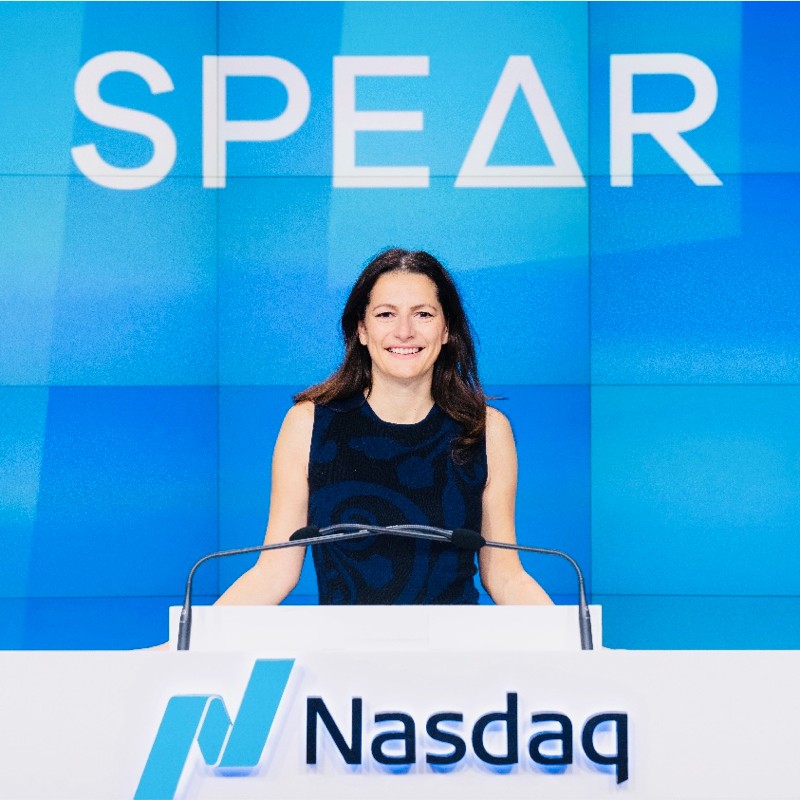
In this Mixture of Experts segment from the New York Stock Exchange, theCUBE’s Dave Vellante sits down with Ivana Delevska, CIO & founder at Spear Advisors, to unpack where value is accruing across AI data infrastructure and what that means for enterprise strategy. Delevska explains why Spear doubled down on the data center buildout beyond GPUs – targeting networking and power generation – as NVIDIA’s Blackwell-era systems drive brand-new capacity. She shares a clear thesis on ROI: hyperscalers will face tougher competition over time, so the more compelling r...Read more
exploreKeep Exploring
What is the current investment strategy and outlook mentioned in the discussion?add
What is the outlook on returns for hyperscalers in comparison to the previous cycle?add
What is the current status and outlook for Arista, Astera Labs, and their respective product launches?add
What factors are influencing the market leadership of companies in the tech industry, particularly in relation to their custom chips and business performance?add
What factors contributed to the strong performance of cybersecurity stocks in the first half of the year compared to other stocks, and what shift in investment strategy was observed regarding data center names?add
What is the current state of companies in the tech industry regarding their evolution from tools to platforms, particularly in relation to AI advancements?add
>> Hi, everybody. Welcome back to the New York Stock Exchange. I'm Dave Vellante, and welcome to our Mixture of Experts series, theCUBE plus NYSE Wired. Ivana Delevska is here, she's the CIO and founder of Spear, Spear Invest. Good to see you again, thanks so much for coming in.
Ivana Delevska
>> Thanks for having me, Dave.
Dave Vellante
>> Yeah, you bet. Well, things are good. I'm looking at the fun performance, you're up, wow, just unbelievable, 88% year-to-date for the full year, because you started in December, I think, right? Wow, just up and to the right, amazing. So tell me, what's the big thesis these days, what are you betting on?
Ivana Delevska
>> Well, David, the big thing that we're seeing here as we look into the second half of this year is that we think there is going to be a new wave of investments on the data infrastructure side. That's been where we're doubling down on, because basically, the prior generation of chips, Hopper, was going into existing infrastructure, and as we look further, Blackwell and the Blackwell systems, which are going to ramp in second half, all those are going to go into brand new data centers. So we've been looking for ways to leverage that beyond the chip side, so looking at networking, looking at power generation, those have been pretty solid risk-rewards, especially as they sold off on the tariff risk. Some of these companies, like the US power generators, they're not really negatively affected by tariffs, so those were very attractive entry points to get into those names, and that's when we doubled down on the data center trade.
Dave Vellante
>> Okay. So before we come back into the names, I want to ask you, it feels like a one-lane highway that's getting pretty crowded, it's really the CapEx story from the hyperscalers. Does that worry you? I heard a stat the other day that the return on invested capital for these hyperscalers is actually still really good. But my question was just, well, what's the return on invested capital for the AI piece of it, do you have any thoughts on that and insight, are you concerned about this running on one cylinder?
Ivana Delevska
>> Well, 100%, that's where we're watching very closely. I think on the hyperscaler side, I don't think the returns are going to be as good as in the prior cycle. There is a lot more competition, and even though they're very good right now, as we look 10 years out, everybody's going to have access to this technology. So I think returns are not going to be as strong on the hyperscaler side, so this is why we don't own many of the hyperscalers. Some are building up on top of the infrastructure. So for example, somebody like Google, they may be able to monetize what they're building on top. But the cloud business itself, while it's growing pretty rapidly right now, I think at some point will tail off and I don't think the returns will match the price.
Dave Vellante
>> Well, it's interesting, because they all said they're supply-constrained, but your play is, great, they're supply-constrained, that means the demand is there, that's a good check, and they're going to be purchasing GPUs from NVIDIA, networking from Arista, et cetera. So is that part of your thesis?
Ivana Delevska
>> Absolutely. So basically, you want to invest right there where the value is in the value chain. So if they're supply-constrained, you want to invest in how you're going to be able to add supply. And if you look at the returns on that side, they're fantastic. So somebody like Arista or somebody like NVIDIA, they don't need to invest $80 billion in CapEx, they've already made the investments, they've made the R&D, so you are going to see significant returns, as you look forward, as they rake in these revenues.
Dave Vellante
>> I know you're not investing in the hyperscalers, but as an investor, when you see the type of capital that they're spending there, do you think they're missing something, that the ultimate prize is maybe not as big? Because if it is as big as they think it is, then maybe you're missing an opportunity. How do you think about that?
Ivana Delevska
>> Well, I think we analyze it pretty closely and it's all about return on invested capital. So returns are going to be good, they're not going to be bad, they're just not going to match what they were in the past where you had just AWS, and then Microsoft entered and then Google was third. Now, you're going to have a lot more players over the cycle. So I think the returns are going to be okay, they're just not going to be what they used to be before.
Dave Vellante
>> Interesting.
Ivana Delevska
>> I think that the value will be added in whoever builds something on top. So if Microsoft can leverage their customer base and build a tool like a Copilot that gains broad adoption and they can monetize it, that would be very interesting. AWS, that's why you see it struggle a little, because they're not adding CapEx as fast as the rest of the players, they're a little more capacity-constrained. They're working internally, but it's a bit risky that those efforts will pan out.
Dave Vellante
>> Yeah. If we squint through the AWS numbers, I think the last quarter was 30 billion in CapEx, maybe 25 of that goes to AWS, but they're all supply-constrained. When you say they'll face more competition, do you mean from the likes of a CoreWeave and the neoclouds, or maybe even the Dells and the Supermicros and the on-prem crowd, the HPEs, is that how you see it?
Ivana Delevska
>> Yeah, all of the above, all of the above. I think there's new entrants, there's also companies like Cloudflare that are playing in a different angle. So I think the way that the lay of the land will evolve is going to be much less centered onto one platform like an AWS, I think it's going to be much broader. So it's really going to go where the available capacity is. But really, the bottleneck in available capacity is NVIDIA right now, so whoever they sell to, they're the one that can capture the most value.
Dave Vellante
>> What do you make of the news today that NVIDIA and AMD are going to basically pay a vig, it looks like, to the US government in order to secure their China sales? I guess that's a positive. What's your reaction to this?
Ivana Delevska
>> Well, I think it's a positive, even though at the face value, it's a negative, where they're paying 15%, it's better than not selling anything. So to the extent that they're allowed to sell, that the incentives are aligned, so the US government now does have more incentive to allow them to keep upgrading the technology and the chips that they're selling, because at some point, the H20s are not going to cut it. So they're going to have to, even though don't match maybe the Blackwell systems, they will have to improve over time. So to the extent that they are allowed to keep up the innovation, they can price for the 15% tariff.
Dave Vellante
>> It's almost like the Trump administration is saying, "Look, if it's that important that Chinese developers are developing on the full stack, then great, then pay the price."
Ivana Delevska
>> "Why don't I get a cut?"
Dave Vellante
>> "And you're making plenty of money," right, this is kind of crazy. Okay, so Astera Labs is your number one holding, why? What do you like about that stock?
Ivana Delevska
>> So we sized it up on this downturn, as I mentioned. I think a lot of people panicked out of these names, thinking that the data investment cycle is over, AI is over. As we saw the impact from tariffs, I think a lot of people panicked out of the sector. So there were a lot of dislocations created in companies like Astera. Arista also got hit pretty hard, even though their numbers, they continued to keep surprising to the upside in terms of fundamentals. So what we like about Astera Labs in particular here is that they keep launching new products that have multi-billion dollar TAMs. So the first product that they launched was these Retimers, and they have almost 100% market share there, so people are concerned, are they going to lose share. Now, they're launching another new product, Scorpio, which is yet another multi-billion dollar opportunity. So as those ramp, that's going to be their biggest product, according to the company, going forward. So there's a lot of these new networking products that weren't even used before, and that's what they're really innovating and introducing.
Dave Vellante
>> And you got out of AMD and back in, or maybe you reduced your-
Ivana Delevska
>> That's right, we got out of AMD for a while.
Dave Vellante
>> Explain that logic.
Ivana Delevska
>> So basically, what ended up happening with AMD, when they introduced their first GPU to compete with NVIDIA, there was a lot of interest and they got to over $10 billion in revenues or commitments from customers. However, when customers kept trying the products, NVIDIA remained superior, so they weren't really able to build on that momentum. I think as we look forward, customers are getting more and more familiar with the AMD platform, because the difference is, with NVIDIA, you have CUDA, so you can build right on top, with AMD, you need to do quite a lot of in-house heavy lifting to be able to use the AMD chip. So we're hearing that customers are now getting more familiar with that, so we think that revenues are going to be able to scale. I think it's not one of these situations where they're going to take the crown from NVIDIA, so we still like NVIDIA significantly more, but I think there is an opportunity here as the market maybe doesn't appreciate that their product is equally good, it's just a little harder to use.
Dave Vellante
>> Yeah. My thinking is they may have an angle with inference especially, they have the larger high-bandwidth memories, and they'll get there, whatever, 10%, 15%. It's almost like they took on Intel, they were a nice compliment to Intel, then Intel stumbled, so they've killed it in x86. I don't see NVIDIA stumbling in a similar way.
Ivana Delevska
>> That's right.
Dave Vellante
>> But they'll get their piece of the pie.
Ivana Delevska
>> Exactly, of the pie. So I think the big picture here, Dave, that I think people are missing is that the pie is really growing rapidly. So you hear a lot, "Is NVIDIA going to capture all the networking pie, doing their in-house stuff, or are they going to capture other parts of the value chain?" They're going to capture and grow, but the pie is growing even faster, so there's going to be plenty of space for companies like Arista and even the custom chips.
Dave Vellante
>> And you're in Marvell, now, they supply AWS to a certain extent. Why do you like Marvell, is it because of their hyperscale connection or is it more broad-based than that?
Ivana Delevska
>> So we like both the networking side and the custom chips. I think that last year was custom chips, and those have disappointed, which is why you see the stock coming under pressure. But I think people don't appreciate that their networking side is also very strong. So as you look forward, the stock is trading lower than where it was during the prior cycle, even though you have this AI boom, so I think it's a pretty decent risk-reward here as an entry point. So we've maintained our position there and haven't really changed much over the downturn.
Dave Vellante
>> I want to talk about networking. You put out a great tweet talking about AI data center networking. I remember interviewing Jayshree Ullal in 2012 and she was explaining how traffic traditionally was north-south in the hierarchical networks and it was moving to east-west and they were in a really good position to do that. Your point in your tweet was now we're tapping both, both scale-up and scale-out, explain your thesis there.
Ivana Delevska
>> So that's exactly right. So I think when people hear about NVIDIA entering the market, they will be more on the scale-up side, and the point is that there is a much broader opportunity. So NVIDIA is not really going to be doing anything on the scale-out side, and this is a market that could be very attractive for Arista. So it's not only that you need to improve the connections inside the chip, you also need to connect multiple chips in an efficient way, and this really is where a lot of the value is coming on the performance side, because the chip itself, we've kind of perfected it, in a way, so a lot of it is going to come from how multiple chips are getting connected to each other. And if you see even with Blackwell, Blackwell is almost like two Hoppers connected together in an efficient way, so I think that's going to be the story of the development on the chip side.
Dave Vellante
>> You mean like the NVLink 72, with the link between them, that's NVIDIA's secret sauce, but won't they be connecting horizontally with, say, Ethernet or Ultra Ethernet? They don't own that proprietary advantage that they have with InfiniBand, but they'll still sell their software and their GPUs.
Ivana Delevska
>> That's right.
Dave Vellante
>> That's why you like NVIDIA.
Ivana Delevska
>> Exactly, that's why we like NVIDIA. I think there is a lot of market share to be captured in that space. But to my prior point, the market is growing, so that's really how companies like Arista are able to surprise to the upside as well.
Dave Vellante
>> So everybody talks about power being the big constraint. You own a bunch of companies in that space, not just Constellation, but several other names. Give us your lowdown on energy.
Ivana Delevska
>> So on the energy side, the two main ways we have exposure here is on the equipment side and the power generation side. The power generation side is a lot of these companies are going to have to sign proprietary deals to supply power to these brand new data centers. So as I mentioned, the brand new data centers is really the crux of the thesis here, so power general companies will benefit that way. So Constellation is an example, they operate the largest nuclear fleet in the US, Vistra is another example. So those are on the power generation side. Then you have the power equipment side, and that's even better risk-reward, because no matter who gets selected to provide power to a certain project, the equipment will likely come from either GE or Siemens. So it's a duopoly there, where they not only make money on the new equipment, but they also make money on the aftermarket. Interestingly, this market has been in a significant downturn. Margins, there is a pretty significant opportunity. They've gone from high teens to low 20s, all the way down to zero. So now, they're coming back up to mid-single high single digits, but we think ultimately, they're going to go back to the 20s. So a lot of the thesis are company-specific, so we're trying to find which companies on the power side are the ones that will deliver outsized returns, but the broad team is there as well.
Dave Vellante
>> How much of a blocker is just regulatory constraints? How much is the administration doing, in your view, to remove those, and what does it tell you about your investment thesis?
Ivana Delevska
>> Well, that's actually been a relatively positive with the new administration, it does seem like they're working hard on removing some of the bottlenecks in bringing new generation. There were a few large nuclear projects announced, that when we saw them, we were like, no way they're coming on that timeline, even as shareholders of the stocks. But it does seem like they're checking the milestones. So it's been a positive surprise that they're actually able to deliver on what they're saying, and we're not even assuming that they will be able to come that quickly, but it has been a positive surprise.
Dave Vellante
>> And I want to double click on something you said earlier, there's a bunch of new data center capacity going. And so, as it pertains to Blackwell, I want to understand what you said and put a finer point on it. Those existing data centers, the hyperscalers, et cetera, they're going to get Blackwells, they're in line to get them, the neoclouds are going to get them, and you're saying there's all this new capacity coming online, so what's your base case for how long we remain supply-constrained?
Ivana Delevska
>> So I think we're going to remain supply-constrained for a while, mostly because of the way the demand is ramping. So I think people are adding capacity as fast as they can, but the demand side is ramping even quicker, and a lot of it this year in this first leg is coming from...
Dave Vellante
>> Okay, so you hear the bell
All right, there we go.
Ivana Delevska
>> Hopefully we made some money.
Dave Vellante
>> Yeah, yeah, that's right. I see some green on the options board. Okay, so you were saying that we're going to remain supply-constrained for a while, what's a while?
Ivana Delevska
>> So on the demand side, the big driver right now is these AI agents. So they're just getting introduced, and as those ramp, you're going to see pretty significant increase in inference demand. So I think that Blackwell is going to remain sold out until the next generation of chips comes to market. And the upgrade of Blackwell is going to be a significantly simpler architecture, yeah, exactly, it's going to be significantly simpler to transition, so I think it's going to be a pretty significant ramp on the capacity side. But the real question here is the demand, and that's where we're tracking closely, and that's ramping really well with these AI agents.
Dave Vellante
>> I was just doing some work with George Gilbert and he laid out the three areas of agents. Era one was the consumer agents ChatGPT, era two was coding agents, Anthropic and Cursor were the best example, and then era three is these enterprise agents, which we can maybe get to. Interesting, first of all, what'd you think of GPT-5, have you played with it much?
Ivana Delevska
>> Yeah. A lot of it is pretty significant improvements over the prior versions. I think you're going to see a lot of tools being built on this model, specifically on... I think we're most excited about the enterprise agent side. So I think the consumer side is going to continue to ramp, but really, as you go forward, I think the enterprise is really going to be where the market really opens up to a very wide range.
Dave Vellante
>> The word is, let's see, OpenAI's valuation is now up to, what, half a trillion, is that what we're hearing?
Ivana Delevska
>> Yep, yep.
Dave Vellante
>> And then, yet, when you look at how fast... First of all, a lot of people are poo-pooing GPT-5, saying, "Well, it's okay." At the same time, my understanding that Cursor's switching from Anthropic to OpenAI, have you heard that?
Ivana Delevska
>> Yep, yep, yep.
Dave Vellante
>> I heard that today. So that's-
Ivana Delevska
>> An interesting data point.
Dave Vellante
>> The coders are telling me that GPT-5 is actually really good at coding, which was one of their intents. They're saying they're throwing all their GPT-4 code at the GPT-5 and saying. "Fix this," and it does it very quickly and very well. So it's going to be interesting to see how that plays out. As it pertains... One other point, actually, and this is nuanced, because you said earlier, maybe that's why AWS is struggling a little bit at 17.5% growth when Microsoft's growing at 39%, but they have a GPT tiger by the tail. A lot of their Azure is coming from ChatGPT inference, probably about half of OpenAI's COGS go to Azure, so it's very narrow. The other thing is, I don't know if you've caught this, but Microsoft changed the definitions of Azure and they timed it perfectly, and then they announced this past quarter, "Azure's 75 billion." That's after they changed the definition. So brilliant, they have the benefit from a marketing and optics standpoint of high growth rates and they announced a big number, so they out-marketed AWS there, and so we'll see. But they have a GPT tiger by the tail, it's very narrow, but maybe gives them time to expand. Any thoughts on that?
Ivana Delevska
>> Well, I think they have a lot of things going for them, even with their own chips, I think eventually, they will be able to crack the code and introduce this and be able to leverage them for the customers that are willing to use them. So they're still in the lead in terms of market share. Whether they're able to continue to grow that is going to be the big question and maintain the leadership position, but it's really going to come down to whether their custom chip is a big success or not.
Dave Vellante
>> Which leads me to, so Microsoft, my understanding is their non-cloud business, they're on-prem business and their hybrid business, is actually doing quite well, and they probably have a better story than anybody, so that gets me to the enterprise. So a couple of things. Actually, before we get there, I want to ask you about security. You're keeping your toe in the water with Zscaler, CrowdStrike and Palo Alto Networks, so it's not like you don't like them, they've run up quite nicely. Am I correct, you've scaled down your positions there a little bit, but you're holding onto them?
Ivana Delevska
>> Absolutely. So basically, cybersecurity performed really well in the first half of this year when all of these other stocks were getting crushed, because they weren't as exposed to tariff risks and they were actually benefiting from uncertainty. So Zscaler, CrowdStrike, all of those stocks performed really well. At this point in time, data center was a lot more attractive. So in terms of adding to positions, we continuously try to find the better risk-reward, so at some point, data center names, like Arista and Astera Labs, were so beaten up that the reward was significantly higher, so that's why we took some profit on the cyber stocks and shifted on to data center. The cyber stocks still look very attractive, especially there's been a little bit of a recent pullback after the Fortinet results and after the Palo Alto deal got announced, I don't think that deal is a bad deal, I think it's going to ultimately end up being a pretty solid deal.
Dave Vellante
>> I like that deal.
Ivana Delevska
>> Exactly. And the stock has gotten killed on that. So I think there's going to be some interesting opportunities as we get into the second half, and especially if prices get reset a little lower, so the upside will be a little bit larger. I think the risk for the stocks is pretty limited, so that's the attractive part, that they're usually a very good risk-reward, because you're getting decent returns, but you're not really taking all that much risk.
Dave Vellante
>> If you're Nikesh Arora and you've got, what, a $115 billion market cap, what, $9 or $10 billion in revenue, you've got to expand your TAM, and if you're pushing platformization and you have a big gap in endpoint, identity, CyberArk is a great option there.
Ivana Delevska
>> Absolutely.
Dave Vellante
>> Now, you're taking on Okta.
Ivana Delevska
>> Absolutely. And even though they haven't done a large deal in the past, they have done quite significant progress with them, smaller M&As. So they've really integrated their acquisitions very well, and I think they're one of the better M&A playbooks in the cybersecurity space, where they've been able to show and demonstrate growth. So now that the company has a larger market cap, it is just natural that the deal sizes will become a little larger.
Dave Vellante
>> And CrowdStrike is probably still rich, even though people were taking some profits, but what's your take on CrowdStrike?
Ivana Delevska
>> Well, CrowdStrike is really unique in that Palo Alto is a bit of a patched-up solutions, where they're going the other way around, where they're like, hey, everything we have is developed from scratch here, so it's a pretty solid platform. It is much more expensive, so that's always the pushback on the stock is on the valuation side. But as a platform, I think they're doing a really good job, they managed the incident that they had pretty well, so I think they were able to recover from that. I think it's going to look even more interesting as they annualize the impact of that incident, so we're keeping a very close eye on them, Palo Alto and Zscaler as we get into second half to see if there is an opportunity to add and resize.
Dave Vellante
>> Yeah. Not only did they communicate fairly well, some people might disagree with that, but I feel like they acted quite responsibly, but they also, I think, brilliantly came up with this... They put their Flex pricing in front of their customers and said, "Look, we can get you in," and now there's a renewal cycle coming in, so the discounts that they had to give, they were giving some really significant discounts that they communicated to the street, and now those things are coming up for renewal and they're going to be getting... I think they've earned the trust at least back for most customers.
Ivana Delevska
>> Spot on. So I think that's going to be the interesting thing to watch, how that ramps now that they have expanded with Flex, and how the pricing impact would be to the renewals.
Dave Vellante
>> Okay. So we touched on that portion of software, which leads me back to the whole enterprise agent, which you would really think that some of your SaaS companies out there are going to really thrive in that space. When we first met, I think it was 2021, you were obviously doubling down on companies like... You were buying the dip of Snowflake and Coupa and Zscaler at the time was, I think I wrote a piece around that. Like many, you've dialed down your investments in SaaS, SaaS is struggling right now. What's going on, from your perspective, in SaaS?
Ivana Delevska
>> Well, the big thing that's going on is that there is a divergence between who has grown to a point where they've become a platform and an essential solution versus who has stayed as a tool. I think the companies that are still more of a one-point solution or a tool are really struggling, because people are wondering whether, with AI, you're going to be able to come up with cheaper, faster, newer tools that are going to overtake some of the older, now legacy. They were the hot stocks five, 10 years ago, now they're almost legacy solutions. So pretty much for every one of these companies, there is a show me story. So whether you're a CRM, you need to prove yourself now, that in the age of AI, you can leverage what you've built in the past and introduce AI agents to streamline the sales process. I think it's a huge opportunity, but there is also a huge risk associated with it, because we haven't really seen the numbers come through on the agent side. So I think AI agents will be pretty significant. I think it's a little tough to tell who will be the winner. In the cyber stocks that we touched on, I think that's a relatively easy risk-reward, because who doesn't want a cybersecurity analyst for free, basically, as an AI agent? And it's very easy for them to implement it, because cyber by nature is tons of data that is well-organized. So AI agents on the cyber side, I think, are almost guaranteed to be successful. On the sales side, I think they're definitely going to be successful, but are they going to be effective, or when do they become effective? So that's what we're watching. They're not effective as of yet. We use a lot of these CRM tools that I would've expected that they would be a little bit further the development curve in terms of how useful they are to people. So I think productivity is another area that we're watching closely. That one is a little tricky, because the companies won't be able capture as much of the tool, if you will. So you really need somebody like Microsoft that has a very large install base and they can charge $20, $30 per user, but you're not really going to be able to charge $100, $200, $300. So I think that's going to be the interesting thing on the productivity side. But those are the big areas, is sales, costs, that you could really improve as a company.
Dave Vellante
>> So let's drill into analytics a little bit, and specifically Snowflake. If I recall, you had a very large position in Snowflake. You dialed that down, and then when it ran down to below even 120, I think was the IPO price, and then you got back in, you timed that well. And now, you've pared your position a little further.
Ivana Delevska
>> Exactly.
Dave Vellante
>> Explain your thinking there.
Ivana Delevska
>> So for us, the way it works, Dave, is we cover a universe of about 120 stocks, and at each given time, we only own 20 to 25 stocks. So every time we need to add a new position, we need to pare down another one. And each company in our universe has a risk-reward. So usually, what ends up happening, and this is what happened to a lot of the software stocks, the risks grew and the reward was still the same, so didn't grow in line with the growth in risk, so they became a lot less attractive risk-reward profiles than some of the other stocks. So usually, the way it works is when we add a new holding, we need to pare down some of the other holdings. It doesn't mean that they're not going to be successful, because the reward is still there, it's just a little bit more risky in terms of whether they will be able to execute and capture.
Dave Vellante
>> But as we were chatting beforehand, it's relatively straightforward to take an agent, bring it into Snowflake and help you manage your analytics. What's actually more interesting is the SaaS companies that have access to all the process data and the business logic, the Salesforces, the SAPs, Oracle, ServiceNow is another one, they have, on the one hand, an inherent advantage in that they have access to that data. On the other hand, they're big and they've got a legacy install base, and so then it may be not as nimble. What are your thoughts on a company like a Salesforce, or even a ServiceNow?
Ivana Delevska
>> So we don't own either of the companies, and the reason behind not owning it is that they're just not showing... ServiceNow is a little bit better than Salesforce, but they're just not showing the progress on the revenue side from AI. And I think it has to do with the fact that they've grown into larger companies, even Google, we're very disappointed by the pace that they've been introducing products. By now, they should have had a monopoly on AI-driven Chrome browser. As an investor, it always seems easier than it is to do it-
Dave Vellante
>> No, but that feels like a miss, yeah.
Ivana Delevska
>> But it does seem like a miss, that these sort of tools should have already been there in the market, especially with what a big advantage they had on the AI side, they were the first ones to use the transformer model.
Dave Vellante
>> And Gemini, we're a Google email shop, Gmail, you'd think Gemini would be much better integrated into Gmail in a whole workspace, it's not.
Ivana Delevska
>> It's not, and it's been few years now, where it's like, when is this innovation coming?
Dave Vellante
>> Let's go.
Ivana Delevska
>> Yeah. So I feel similar about a lot of the enterprise companies. I think it must be more complicated than it seems to investors looking from the outside to be able to leverage this data. The data is there, but we haven't really seen groundbreaking solutions come to the market where the customers are excited and the revenues are growing, growing investors.
Dave Vellante
>> Have you ever owned Palantir?
Ivana Delevska
>> We've owned Palantir in the past, yeah. So basically, Palantir would be a comp to us with Cloudflare. So we want to pick one versus the other, and I think Cloudflare right now looks a little more interesting than Palantir, mostly on valuation, because valuation is a big driver for us. What happens with stocks like Palantir ultimately with the valuation, it doesn't necessarily mean that the stock will crash. People think, oh, this multiple, in two years, is going to get cut in half. Usually, the way it works is if you don't see the revenues come through, the stock will stall out. So that's our biggest worry here, that if they don't keep delivering outsized growth numbers, then all of a sudden, you may not see the same momentum on the share price performance.
Dave Vellante
>> C3 AI, that's been... The only thing that's AI I heard somebody say was the name, that's it.
Ivana Delevska
>> Exactly.
Dave Vellante
>> It's just a big disappointment, their fortune's changed quickly. But the reason I bring up Palantir, and thank you for those comments on the valuation, and I understand that, but it seems like, and it's hard to get information on them, but you certainly see architectural diagrams and you can speak to their engineers, they have built actually a system that has a 4D map of an enterprise, the people, the places, the things, the processes or activities in a knowledge graph, and they're taking advantage of that process data to really drive massive productivity gains. And we talked earlier, Salesforce is moving in that direction, they seem to be doing the engineering with the Data Cloud, but they've got such a big install base and such a legacy business, it's probably not as interesting to you.
Ivana Delevska
>> Yeah. So interestingly on the Palantir side, I would've thought, let's say, two, three years ago, that companies would be apprehensive with putting their data in one solution versus building it on their own, but it doesn't seem to be the case. I think people just want the problem solved. So I think, for example, comparing them to somebody like Snowflake, you should, in theory, be able to use Snowflake and build something similar to what Palantir is building for their customers, and in that way, you control your data and how the data is being used. But it doesn't seem to be the case. It does seem like people just want, hey, here's my data, it's all in different ERP systems, just put it somewhere and give me a solution. So I think they've done a pretty good job on that front.
Dave Vellante
>> Our take is that the value, really isn't in the LLMs. It's going to cost... I don't know what it cost, GPT-5 probably cost, I don't know, many billions to train, four or five billion perhaps. GPT-6 will probably be closer to 10 billion. GPT-7, it'll be closer to 30, 40 billion, I don't know, 50 billion.
Ivana Delevska
>> Yeah, and the pace that you have to upgrade, right?
Dave Vellante
>> Well, yeah. And you think about the pharmaceutical industry, I don't know if you've ever invested in pharma, but they have 10-year patent protection. These guys have like six months.
Ivana Delevska
>> Three months, yeah, exactly.
Dave Vellante
>> Three months before DeepSeq comes out with an open source model. And so, the point being the value's not in the underlying LLM, it's the agent on top of it. And when you get into the enterprise, if you don't have that 4D map of the enterprise, that digital twin, if you will, of the enterprise and your data really in one place, to your earlier point, it won't work. You can do collaboration, like Copilot, or even Glean. Glean does what Copilot should have been. That's nice, but it doesn't get deep into the processes and the workflows of the organization beyond that collaboration and the transaction systems, and that seems to be the missing piece, so whoever can figure that out... It seems like Palantir has a model there, notwithstanding the valuation.
Ivana Delevska
>> Yeah, yeah, no, I absolutely agree with that. And I think you're spot on on the model side, that's the view we share. I think if I were an investor today on the private side, I would be pretty cautious about investing in some of the model companies. I think if they can build something on top of it, like Meta is doing, where they have the model, but they're also using a lot of it internally and now they're like, well, maybe most of it is open source, but some of it is not. So I think if you can find a way to use the model in a proprietary way, I think that could be a value-add. But just the models themselves are really going out of style in less than a year.
Dave Vellante
>> Brutal economics.
Ivana Delevska
>> Yeah, it's a pretty tough business.
Dave Vellante
>> Now, are you always risk-on, is that your promise to your investors is that you will always be fully invested?
Ivana Delevska
>> Yes.
Dave Vellante
>> No cash, really.
Ivana Delevska
>> Yeah, no. So we're always risk-on, we try not to play with the cash and time-to-market. What we do during downturns is we increase risk. So during this pullback with tariffs, we were able to capture some of these riskier names that really got sold off in a way that wasn't really commensurate with their fundamentals, so we talked about some of them. And what we also do on the risk management side is try to cut out losers or analyze who doesn't have the risk-reward. So we really try to manage the risk rather than cutting it during downturns and missing out on the next leg up. So really, the key is, during downturns, we try to find will this stock be able to capture a higher high after the dust settles, or is there a problem in the model where it's going to tail off, and we try to cut those companies out.
Dave Vellante
>> And you get liquidity from selling existing positions and then shifting them to new positions and inflows.
Ivana Delevska
>> Exactly.
Dave Vellante
>> How's that going? When we first met, you were just getting started, and I remember after our interview people called me up, "Hey, I put a little bit of money into Spear." I'm like, great, let's see how it does, and it's done great.
Ivana Delevska
>> Yeah, it's been growing. Part of it has been performance, the performance has been very, very strong, and then we've gotten inflows as well. So we're at about 75 million, which is a good number. But hopefully, with the cycle ahead of us, we'll continue to grow.
Dave Vellante
>> What's your North Star? You obviously worked for these big institutions and had a very successful career. Congratulations on going out on your own, we love that entrepreneurship. Do you want get giant? Do you want to keep it small and manageable? What's your goal?
Ivana Delevska
>> Well, in terms of the capacity of the business, we invest in highly liquid stocks, that really, the limit would be in the billions where you would hit liquidity type concerns, so there is no real limit from a liquidity perspective. From my personal perspective is I make a lot of my returns on my investment in the fund, so to me, it's more important that the fund performs well rather than that I grow the number of investors, so that's why you've seen a slower growth in AUM from inflows rather than performance. But yeah, I think over time, both will come, it's just a matter of-
Dave Vellante
>> Okay. So you're aligned with your investors, obviously. And you keep it to, what'd you say, 25?
Ivana Delevska
>> Yeah. That is the key, basically, way we generate alpha. If you have 100 names, all of a sudden, your returns will start mimicking the indices. So really, the key for our strategy is to keep the numbers of names down and keep the mistakes low. So if we can have a high hit rate with decent win-loss ratios, those are metrics that we track closely that will translate into alpha for our investors.
Dave Vellante
>> Well, you're an extremely competitive business, your differentiation as you go deep into the supply chain. I've always loved your story, Ivana, thanks so much for coming back on theCUBE.
Ivana Delevska
>> Thank you for having me.
Dave Vellante
>> You bet. All right, and thank you for watching. This is Dave Vellante for theCUBE plus NYSE Wired, Mixture of Experts series from the New York Stock Exchange. You heard the bells. Thanks for watching. We'll see you next time.