Join us for an in-depth conversation with key industry leaders at theCUBE's studio at the New York Stock Exchange. We explore the convergence of technology and finance with insights from innovative minds shaping the future of enterprise technology.
Tim Piemonte, president and co-founder of Tribeca Softtech Inc., and Ankur Patel, CEO and founder of Multimodal, engage in a conversation at theCUBE and the New York Stock Exchange Wired event. They share their expertise on bridging technology and enterprise, focusing on connecting buyers with groundbreaking tech solutions in an accelerated market environment.
The discussion highlights the importance of matching new technology with enterprise needs. Piemonte discusses Tribeca Softtech's role in helping Chief Information Officers vet and select game-changing technologies. Patel delves into the challenges and solutions of integrating artificial intelligence agents into operational workflows within financial services, sharing insights from recent market trends. The discussion is led by John Furrier of SiliconANGLE Media and includes insights from theCUBE Research analysts.
Key insights from the discussion include the transformative potential of AI automation in business processes. Piemonte stresses the need to align technology strategies with people, processes, and platforms for successful deployment. Patel emphasizes the importance of having well-permissioned AI agents to ensure security and operational efficiency. Both guests highlight that the road to practical AI involves iterative, return on investment-focused strategies for scaling enterprise solutions.
Forgot Password
Almost there!
We just sent you a verification email. Please verify your account to gain access to
theCUBE + NYSE Wired: Mixture of Experts Series. If you don’t think you received an email check your
spam folder.
Sign in to theCUBE + NYSE Wired: Mixture of Experts Series.
In order to sign in, enter the email address you used to registered for the event. Once completed, you will receive an email with a verification link. Open this link to automatically sign into the site.
Register For theCUBE + NYSE Wired: Mixture of Experts Series
Please fill out the information below. You will recieve an email with a verification link confirming your registration. Click the link to automatically sign into the site.
You’re almost there!
We just sent you a verification email. Please click the verification button in the email. Once your email address is verified, you will have full access to all event content for theCUBE + NYSE Wired: Mixture of Experts Series.
I want my badge and interests to be visible to all attendees.
Checking this box will display your presense on the attendees list, view your profile and allow other attendees to contact you via 1-1 chat. Read the Privacy Policy. At any time, you can choose to disable this preference.
Select your Interests!
add
Upload your photo
Uploading..
OR
Connect via Twitter
Connect via Linkedin
EDIT PASSWORD
Share
Forgot Password
Almost there!
We just sent you a verification email. Please verify your account to gain access to
theCUBE + NYSE Wired: Mixture of Experts Series. If you don’t think you received an email check your
spam folder.
Sign in to theCUBE + NYSE Wired: Mixture of Experts Series.
In order to sign in, enter the email address you used to registered for the event. Once completed, you will receive an email with a verification link. Open this link to automatically sign into the site.
Sign in to gain access to theCUBE + NYSE Wired: Mixture of Experts Series
Please sign in with LinkedIn to continue to theCUBE + NYSE Wired: Mixture of Experts Series. Signing in with LinkedIn ensures a professional environment.
Are you sure you want to remove access rights for this user?
Details
Manage Access
email address
Community Invitation
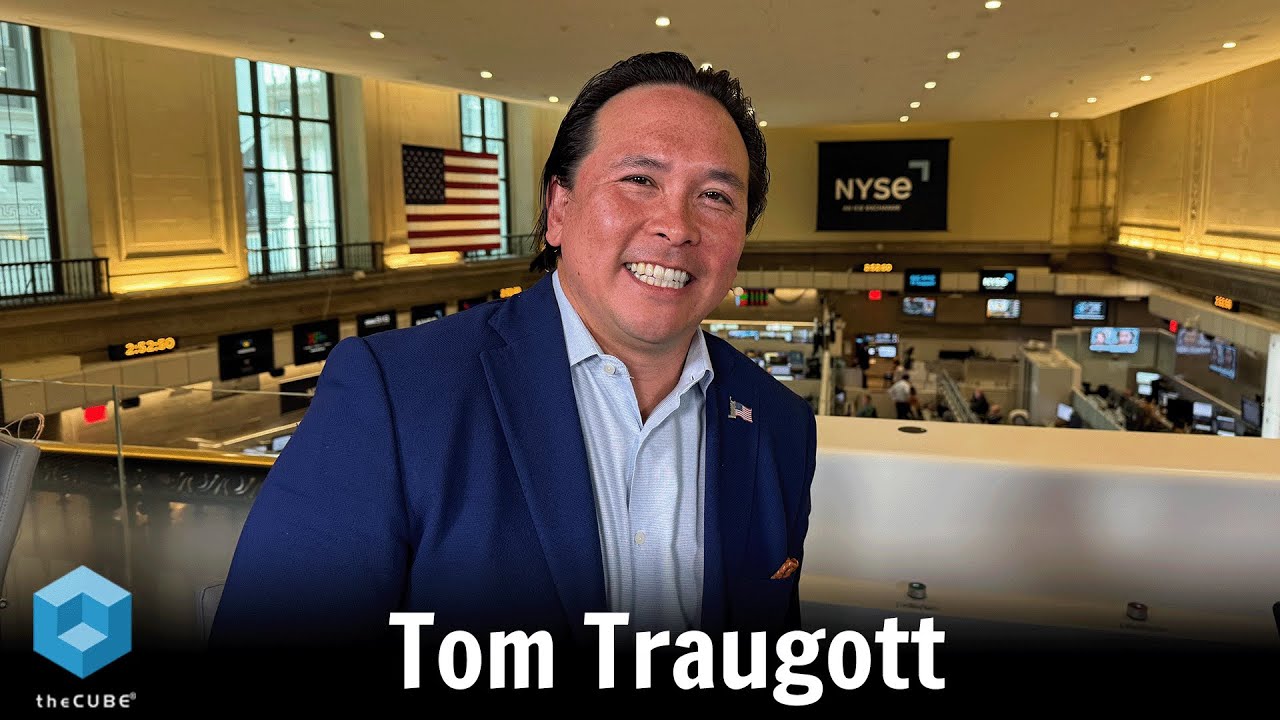
Tim Piemonte, Tribeca Softech & Ankur Patel, Multimodal
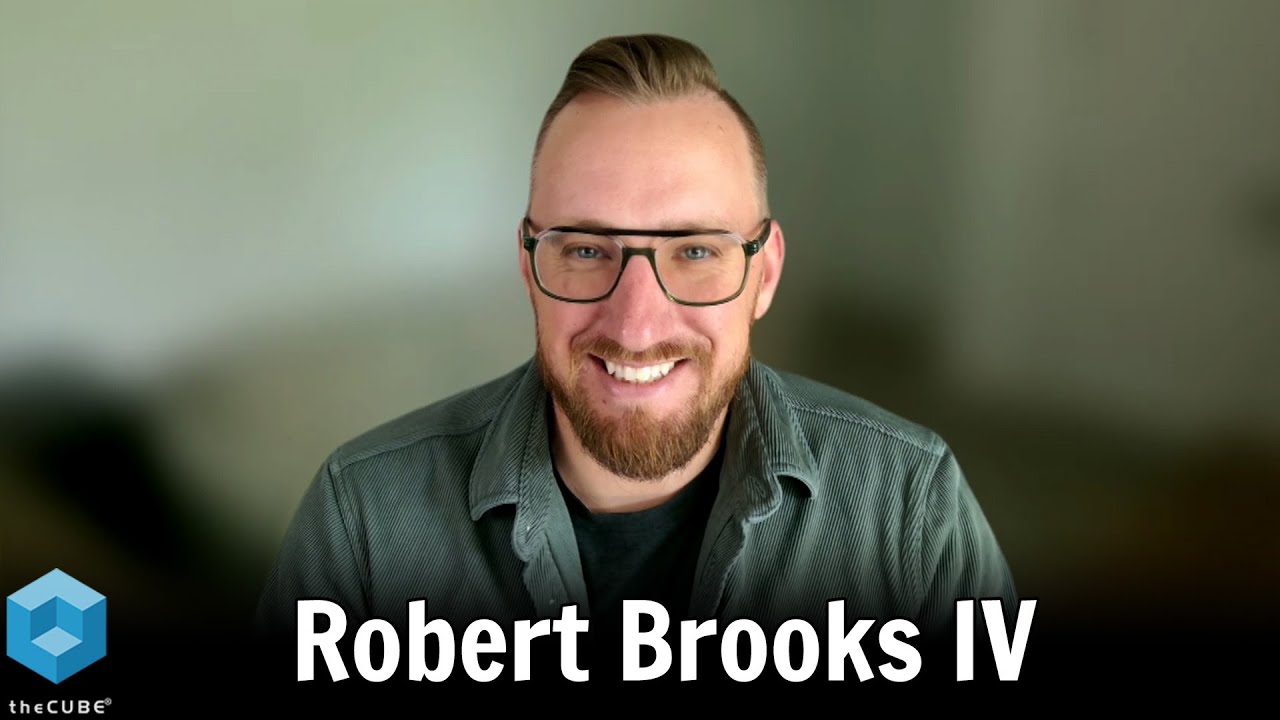
In this theCUBE + NYSE Wired: Mixture of Experts interview, Robert Brooks IV, founding team member at Lambda, joins theCUBE’s John Furrier to unpack the realities of scaling AI infrastructure as enterprise demand surges. Brooks details Lambda’s $480M Series D equity round (taking total funding to “over $800M”), participation from investors including NVIDIA and why capital intensity, power density and liquid cooling (50–150 kW per rack) are redefining data center strategy. He shares how Lambda abstracts DevOps for math-first ML teams with a plug-and-play stack, one-click clusters that spin up hundreds of GPUs on NVIDIA InfiniBand, and an inference API with no rate limiting – enabling POCs that seamlessly graduate to production. The conversation ties tech execution to financial outcomes: from securing megawatts and supply chain to early access on Blackwell (a B200 test cluster planned around GTC) so customers can move faster with predictable economics.
The discussion also explores market-shaping enterprise strategies at the intersection of tech and finance: DeepSeek’s “test-time compute” moment, open-source momentum (and why transparency and controllability matter) and the shifting cost curve – billions to 10x training vs. ~13 cents more per token for reasoning at inference. Brooks explains how Lambda’s “platform engineering for ML” meets teams where they build – managed Kubernetes/Slurm, full lifecycle from training to inference and developer-controlled scale across thousands of GPUs. Real-world signals include material-science ML wins, enterprises hosting open-source models on Lambda’s inference API and hands-on R&D from a video model leaderboard to a humanoid robot. He closes on focus as strategy – saying “no” to non-AI workloads to move faster for one customer profile – and the five-minute, credit-card path to get started.
Tim Piemonte, Tribeca Softech & Ankur Patel, Multimodal
Tim Piemonte
President & Co-FounderTribeca Softech
Ankur Patel
Founder & CEOMultimodal
search
John Furrier
>> Welcome back out to theCUBE. We are here at our NYSC studio. Of course, we've got our Palo Alto studio and here in Wall Street connecting tech and money. I'm John Furrier, host of theCube. It's our mixture of experts here. We've got two great guests, Tim Piemonte, who's the president and co-founder of Tribeca Softtech Inc. Really doing a great job of bringing the people, the practitioners to the technology, Ankur Patel, CEO and founder of Multimodal, doing some really cool agents in the enterprise at scale. Guys, thanks for coming on to our studio. We're here above the option floor, connecting Wall Street with tech. Good to see you.
Tim Piemonte
>> Always a pleasure to see you. You guys do a great job, good format.
John Furrier
>> I want to start with you first before we get into some of the agent stuff that I think that's really compelling. There's a real wave right now in the work that you're doing is connecting the buyers with the companies that are really aligned with what they're trying to do.
Tim Piemonte
>> Correct.
John Furrier
>> We are in a rapid accelerated market. Time to concept to deployment and production is shrinking fast. There's technical debt, brittle IT systems in the enterprise, and a lot of demand for getting stuff into production.
Tim Piemonte
>> Yes, yes.
John Furrier
>> You guys are doing a great service, so hats off to you. Explain what you guys are doing.
Tim Piemonte
>> Sure, absolutely. As you mentioned, the market is crazy today, right? So many new technology companies, great technologies that are coming out. So, we address a very critical component in the market today of matching technologies with enterprise buyers because like Ankur's multimodal, it's a great technology. It's hard for him to get his name out there and get exposed to some of these companies. On the buyer side, think of a CIO. I have CIOs telling me all the time, every company looks the same. I can't validate 100 different companies, so I need you as an expert in the field based upon my background in cybersecurity, hardware, software, DevSecOps, to come in and bring me those technologies that are truly game changer. That's what we do.
John Furrier
>> Yeah. And the pressure to have scale too, Ankur, you guys are working on some cool stuff. Explain what you guys are working on.
Ankur Patel
>> Yeah. So, we have a platform to build out AI agents for core operational workflows and financial services. So a good example is lending. So think auto lending, retail lending like mortgages as an example. The idea here is you have agents that do start to finish. So they look at documents, pull information out, do that diligence that's required and make decisions. It's akin to having AI labor that is supporting human labor to deliver better end user outcomes.
John Furrier
>> What are some of the challenges you see? And I just was covering IBM's acquisition of Confluent. Some would say that they're on the one side of the stream, but they have a lot of customers. Obviously IBM will bring them in. You're seeing the pieces of the puzzle starting to form around agents because they got to talk to each other.
Ankur Patel
>> That's right.
John Furrier
>> What's the database look like? There's a lot of online transactions going on between agents. You got the protocols, you get the frameworks. But it's not that easy because these are large scale horizontal systems crossing multiple databases. What is the challenge you're seeing on the agents right now? Because certainly people want these agents, but it's not like hitting an API. It's a little bit more challenging.
Ankur Patel
>> That's right. Yeah. I think the easy version of an agent is it's within an application. So having an AI feature, an AI agent within a closed wall, that's easy to do. But in most cases, if you want to deliver tremendous value, you need to work with disparate systems. So there's the hard work of how do you go and do context engineering as it's become known to get context that flows from one system to another. And that's underpinned by usually not one agent, but several agents. So, you're orchestrating agents across disparate systems, often which are old, they're legacy, they're clunky. And you have to somehow find APIs to go and power the backend.
John Furrier
>> Talk about the origination story and how you got here, because previously Glean, I just saw their numbers. They nailed the internal search there. They were on the RAG side. They were looking at that horizontal data platform layer. Machine learning's been super hot. That was the gateway drug to generative AI. So hardened market on ML.
Ankur Patel
>> That's right.
John Furrier
>> Good financial services. Everyone's doing fraud detection. There's some clear winning use cases in machine learning. Now you've got transformer technology. Now you have this generative process. What's the difference between the two? What's your learnings? How did it all get started?
Ankur Patel
>> Yeah. So, I think generative AI today, people still use it, but it's primarily for search and retrieval. So, you're searching across information, getting answers back. Think of like a ChatGPT-like experience, but in an enterprise setting. It is still valuable, but it's mostly assistive. We think that the 10X experience is having autonomous agents that work in the background doing work very similar to how people do it today. That is massively transformative to a business. You could power all sorts of end user experiences because intelligence is on demand and it's available at scale. And that's what we're playing in this game of agentic AI. And I think you're seeing that breakout use case in coding as an example. So the likes of Anthropic with its Claude code, cursor with its agents. You have longstanding coding agents that are able to run for hours doing work for a programmer. We're trying to take that similar experience, but do it for operational workflows.
John Furrier
>> Yeah. I was interviewing Jensen Wong from Nvidia just last Thursday, and we're talking about AI Factories, one of our most popular series here on the Cube. And his narrative, obviously he's is a little biased, but of course he's super relevant right now in terms of powering the tokens. And of course, his version is tokens produce intelligence. The tasks themselves are the super important role. So you got intelligence with tokens. Now, on the capture side with agents, that's going to spawn more agents, a bigger context window, more reasoning, the scaling laws kick in. How do you see that connecting? Because now you're going to have these agents with more of an intelligent view. How hard is it for the enterprises to get this? Because AI factories are coming fast. So you got Amazon launching AI factories in the cloud, on prem and edge. You're going to have data domain specific intelligence in agents. So if you got an app with an agent, you got domain specific issues and data to rock down. So, you got data problem, you got the scaling problem. How do you see that all coming together from the intelligence standard? Because agents got to get the job right. You can't screw up an agent.
Ankur Patel
>> That's right. The good thing is that the foundation models keep getting better. So the labs are doing a phenomenal job of shipping that. I think the hyperscalers like AWS are building more of these factory approaches where you get to leverage multiple LLMs. You have building blocks that like a hyperscaler like AWS has, for example, the storage and the compute and such. But I think what's hard is taking that same capability and making it vertical specific. Because now you need to inject domain expertise that you as an organization have that's very unique to your business and you somehow need to inject that into agents. So I think the horizontal capabilities are being provided by the foundation model labs and the hyperscalers, but then you have this big flurry of startups who are building the vertical AI versions for their respective verticals.
John Furrier
>> Talk about that gap, because I was talking to some folks about this. And there's been well quoted cliches or lines. "Oh, and LLMs like having a bunch of interns or jack of all trades." So the large language models are broad. They search the internet, but they don't search the data of say JPMorgan Chase.
Ankur Patel
>> That's right.
John Furrier
>> They have their own data. So that's uncrawled or unindexed or whatever you want to call it. So, now you say, okay, I want to bring my data, proprietary data, which is worth a lot. That's their value. To a model, you're starting to see these half-baked models. Amazon announced what I think could be groundbreaking. We'll see, but okay, it's open weights. You can figure out the weights. Here's a half-baked model. Bring your data. It's fully secure. Run it on prem, run it in the cloud on a VPC, run it on an edge, which hasn't been talked about yet, but that's going to be coming faster at Mobile World Congress. You got the hyperconverged data. So, that data, enterprises have been voting with their wallets saying, "Hey, we're not jumping into the gen AI until we actually see a resilience bar of security that's high. And by the way, is my data not getting leaked? And let's kill these hallucinations."
Tim Piemonte
>> I think you just nailed it because when you look at it from a macro level, you've really got to look at when you're setting up a strategy, you've got to look at the people, the process, the platforms that they're using today and make sure that all of those are incorporated. Because when you talk about things like model decay, you're actually opening up security risks, right? And the CISO is a critical part. One of my other clients, Vistrada, actually deployed something called a VCSO, which is a burstable CISO on demand to address things like that, which is really cool. But I'm working with, one of my clients is PPAC Private Bank and Trust and they brought us into actually look at their strategy first, develop that strategy, the use cases, put an ROI around it, and then methodologically look at what use cases we're going to roll out.
John Furrier
>> Well take me through a use case, because the psychology of the buyers they're under pressure, gun to the head, let's get scale. I want the benefits of AI, but then they have to figure it out. What's it like? What's the engagements like? What's on the table? When you go to a meeting and hit the whiteboard, what happens?
Tim Piemonte
>> Yes, I will tell you, and I'll let you chime in too, because he's got some great advanced use cases, but I like to start with the low hanging fruit. There's low hanging fruit like operational automation, right? Onboarding of clients, pretty simple. And that's not going to touch every facet of your organization. So, it provides a lot of great ROI without breaking things. It's a great entry point into AI, right? Automation of all those systems. And then, you get into international wire transfers that are certainly more complex. That's where platforms like Multimodal incorporate those things.
John Furrier
>> What use cases are you seeing? What's the working meeting look like?
Ankur Patel
>> Yeah. So I think that the low hanging fruit are these operational workflows like lending. And the reason why lending is so valuable is by having an agent, you're able to reduce the time to quote. And the time to quote, if you reduce it, you are the first quote out the door, which gives you a disproportionate chance of converting. So we love these operational workflows where the use of an agent means that you could actually win more business because a lot of people view this from an efficiency lens, let's cut costs. And that of course is valuable, but the far more valuable piece is having agents that can drive more revenue growth.
John Furrier
>> Yeah. Yeah. One of the things you bring back here is a good one, because like last year the conversation around search was reduce the cost, we get our knowledge systems integrated, we can find out, put stuff into Slack and where's that form, normal productivity, less of a top line revenue drive.
Ankur Patel
>> That's right.
John Furrier
>> So you're getting at the revenue. This is the number one conversation the past three months we've had in the past month at reinventing all the other conversations like, "Okay, great. How can I drive revenue?" Because then the wins stack up, the wins keep it going versus the boil the ocean strategy of, "Hey, we're going to have this pan AI strategy across the globe and we'll have sovereign cloud." It gets less IT like, more line of business thinking.
Ankur Patel
>> Yes.
Tim Piemonte
>> Yes.
John Furrier
>> Are you seeing the same thing?
Ankur Patel
>> Yeah. We sell primarily into the business functions. IT and engineering is always going to be involved, but it's business first. It's about helping map their business process to Tim's point, because you have to have the strategy right. But then you have to do the forward deployed work, so like a Palantir style motion where you work with the business units to define their process, get the plumbing in order through the disparate systems. But what you end up with is a series of autonomous agents that are working as if they were members of the team to then all focus on top line revenue growth. And that excites that business unit owner and excites the C-suite and it's where the bulk of the value from AI I think will ultimately accrue.
John Furrier
>> Yeah. You mentioned teammates because I think that's the theme that's coming out of agents. Are they working as a team and do they know the team issues, not a generic token, experience or context window with an answer. And very nuanced when you have these teams. How do we write code? How's it documented?
Ankur Patel
>> That's right.
John Furrier
>> What's the workflow? The workflows are very specific.
Tim Piemonte
>> Yes.
John Furrier
>> They're end to end. They have an outcome. Sales or some task completion.
Tim Piemonte
>> Absolutely.
John Furrier
>> This is where the new enterprise is going.
Tim Piemonte
>> You're absolutely right. You're absolutely right. And to be a CISO in today's market is a bigger job, a much bigger job than what it traditionally was, right? Because you've got to factor in all this new stuff.
John Furrier
>> All right, talk about the security posture because security is, I won't say the gift that keeps giving because it's really not a gift when someone's trying to manage the inbound surface area. With AI, that opens up more of the same security challenges. What are you guys seeing on security? Actually, a lot of work's been done with machine learning. Ankur, you have experience in that. How is that advancement with machine learning and now generative AI vectoring into the security practice? More automation, more autonomous agents. Is it an operational benefit? Is it a threat detection opportunity? Where do you see security? Because it has to be built in from day one. It's not like, "Oh yeah, it's built on-"
Ankur Patel
>>
Tim Piemonte
>> That's the key really. So, the worst thing you can do is ignore the CISO's job, right? They've got to be incorporated in from the very beginning as you're planning these strategies so that everything can be accounted for. You've seen some very specific things in the market as well.
Ankur Patel
>> Yeah. Yeah. So, I think one big thing is where does the data reside? So, I think there's this push to keep the data residency and even the models themselves within the virtual private cloud of the customer. But then the other big thing though is how do you permission the agents? Because just like employees have certain levels of access, you want to make sure the agents are properly permissioned or not overly permissioned. And on the flip side, employees that are working with agents should also have restricted access because the agents could be overly permissioned. So the employee that shouldn't have access to information internally has more access than they should. And so you have to go and figure that out. So it's both external provisioning and security, but also within the organization.
John Furrier
>> It's interesting, you mentioned scale at the beginning of this interview about scaling up and having that scale benefit. If you look at the work you guys are doing with on the agent sides, a lot of line of business, but then there's been a whole decade of Kubernetes and cloud native build out. So, you had that whole SRE, still the same persona that they serve, app developers. So app developers now AI native. You have this convergence between like the large scale cloud native communities and now these domain specific applications converging, because a lot of the shift left stuff we saw in AppSec reviews, for instance, had a lot to do with, okay, what microservices you're running, we have a hard infrastructure. The DevSecOps, they've been doing hardcore engineering for a decade. Now it's boring and good, like Linux. It's good. It's stable. How do you see that scaling in? Because now that's going to open up the IT hybrid environment to be the substrate to allow this new runtime agent model. So you got the substrate is the infrastructure, and then you've got the runtime. And then I'll throw in another curve ball. Architectural storage networking can compute. You mentioned data. Move the data, move the compute to the data was the concept. Now it's like, "No, leave the data where it is."
Tim Piemonte
>> Correct. Yeah. .
John Furrier
>> Put it on solid stage. You don't have to put an HBM memory, maybe put the fresh stuff in these large scale clusters. Have the agents go to the data.
Tim Piemonte
>> That's right.
John Furrier
>> So everything is changing architecturally
Tim Piemonte
>> It's basically flipped on its head, right? The way it was.
John Furrier
>> Explain what you guys see there, because I think this is confusing a lot of people at the same time, people who figure it out, get the spoils of the scale, they get the operating leverage of say cloud native, and then usher in the AI native piece.
Tim Piemonte
>> Yeah. To be honest for me, I think there's a happy medium in finding that even keel, right? Where you're deploying concepts of both to get the advantages of both. That's the tricky part that you need to figure out as you develop your infrastructure.
John Furrier
>> Any best practice you're seeing in terms of general architecture of thinking about this for an enterprise?
Ankur Patel
>> I think a couple of things. One is you still have all the things that hyperscalers deliver in terms of microservices. S a lot of the Kubernetes stayed, for example, still very, very relevant. I think what's changed though is from a security stance, it used to be you would have user interfaces and that would be the single point of entry. And that's what you protected the front face. Now, all of a sudden with agents, they're able to go and really traverse multiple microservices on the back-end. So now it becomes how provisioned are the agents, how do you prevent like threat vectors there and how do you detect them and ward off against them? It's opened up a whole new arena that I think is in some ways not entirely figured out. I think all of us are trying to figure out as we go, but that is the new surface area.
John Furrier
>> I want to double click on that if you don't mind, because I think one of the things that came out of Reinvent this year I thought was pretty significant shift was if you look at what Amazon did, Nova was cool. We're looking at that very closely, but their agents that they released, they released three, what they call frontier agents. Obviously frontier is a word that implies the next level. They put a Kiro agent, which is a autonomous coding agent, a DevOps agent and a security agent. That's right. And now if you unpack that, I've been using Amazon since 2008, covering them since 2013, that's their DNA. Okay. So now you got autonomous coding, that means agents will be coding. So it's essentially having this coding resource. Then, you have DevOps agent, which they have tons of data on their cloud. So they're essentially giving their customers a DevOps agent for all their working knowledge, and obviously security has to be built in. That means clients, your customers, are going to be deploying their agents. So I think that's a tell sign to what will come because why wouldn't Amazon offer a DevOps agent to saying, "Hey, roll me up a cluster." Ultra servers with Lambda, they got container native. Shit's good. Why wouldn't a company then deploy the same strategy?
Tim Piemonte
>> Think of the benefits that companies are going to be able to deliver to their clients with all that good stuff.
John Furrier
>> I'm envisioning customers having such good domain knowledge. They would want to have their own agents. Do you guys think, am I overreacting on this or what's your reaction to that?
Ankur Patel
>> No, no. I think Amazon got a lot of applause at Reinvent for introducing those agents because AWS, and I'm a huge fan of AWS and the other clouds as well, it is still clunky to work with. So now all of a sudden, if you could make the lives of programmers easier and get the security posture right and get the DevOps done through agents, that's a quick win. So if you look at things like vibe coding, the hardest part is not building the application, building the service. The hardest part is getting the security posture right and doing the deployments. Now all of a sudden, if you pair that up with the AWS agents, you could build a production grade application from start to finish there.
John Furrier
>> Yeah. The vibe code is a great example because like when you do vibe code, yeah, throw up a Postgres, thanks to all the guys that are doing that. I interviewed Superbase, they default for Anthropic. Yeah. Okay, Postgres is great, but that's not scaling. Now I got to harden the APIs. What's going to be my protocol, MCP or A2A. So, okay, when you have to go to that next level of taking that vibe code prototype, if you will, and make it hardened, there's some plumbing. You can't screw that up. That's like-
Tim Piemonte
>> That's the thing you don't want to do is break existing interactions and interdependencies by releasing some of this stuff.
John Furrier
>> Well, you guys got a great opportunity. Congratulations. I just want to wrap up and get into the psychology of the customer, because you guys doing a lot of work together. And again, great work, how you bring companies together. What's the psychology in the enterprise? Last year we saw a lot of enthusiasm. Obviously RAG was a low hanging use case.
Tim Piemonte
>> Yeah, sure.
John Furrier
>> People are knocking those down like it's nobody's business. Okay, great. Now you're starting to get into the practical AI value creation extraction.
Tim Piemonte
>> Yes.
John Furrier
>> Lending, you guys see good line of sight on that. What's the psychology of the enterprise environment? The people deploying operations, the pressure to get revenue. What's the current state like? Are they confident? Are they have some confidence? Enthusiasm? Is it drop down to challenging? What's the attitudinal scale of the buyer and a deployer?
Tim Piemonte
>> That's a great question. And I see some incredible things. I see people wanting to scale without adding headcount, corporations wanting to scale. However, they're excited and scared at the same time. They don't know how to go about all this and what technologies to use. That's our expertise, that's what we come in and deliver. But it's a real mix of excitement and trepidation. It really is.
John Furrier
>> Ankur, what's your thoughts on the psychology of the enterprise right now?
Ankur Patel
>> Well, I think the era of experimentation is over. I think there's been a lot of experimentation. I think people have POC fatigue at this point. So I think for developers, I think agentic coding has been so strong that they are giddy, they're optimistic. On the business side, I think is where I think people are much more focused on ROI. And I think it's been somewhat of a downer in the sense that they're more realistic about what is and isn't possible. But I will say people are looking beyond RAG. RAG was great for the last two, three years. Now it's like, what comes next? Where do we drive that revenue impact? So I think 2026 will be the year of show me the impact, show me the return on investment.
John Furrier
>> And so like as I say in baseball, hit a few singles, get a double, don't try to swing for the fences. And then once you get these wins, the productivity curve and the revenue curves kick ups like three to six months in some of the stats.
Tim Piemonte
>> It's going to be exciting to see some of those high impact use cases .
John Furrier
>> Guys, this is the year of practical, show me the money.
Tim Piemonte
>> Yes.
Ankur Patel
>> .
John Furrier
>> Right. Show me the money, that famous scene in Tom Cruise's movie. That's the world we're in.
Tim Piemonte
>> Yes.
John Furrier
>> Thanks for coming on. I really appreciate it. Great conversation.
Tim Piemonte
>> Appreciate it, John. Thank you so much.
John Furrier
>> Conversational AI goes to chatbots. Generative AI shows the value. Road to AGI is really going to come down to, one, just getting practical stuff done right. Then we'll see the advancements. Of course, we're doing our part here in theCUBE at the NYSE, part of the NYSE Wired program. I'm John Furry, your host. Thanks for watching.
Tim Piemonte, Tribeca Softech & Ankur Patel, Multimodal
search
John Furrier
>> Welcome back out to theCUBE. We are here at our NYSC studio. Of course, we've got our Palo Alto studio and here in Wall Street connecting tech and money. I'm John Furrier, host of theCube. It's our mixture of experts here. We've got two great guests, Tim Piemonte, who's the president and co-founder of Tribeca Softtech Inc. Really doing a great job of bringing the people, the practitioners to the technology, Ankur Patel, CEO and founder of Multimodal, doing some really cool agents in the enterprise at scale. Guys, thanks for coming on to our studio. We're here above the option floor, connecting Wall Street with tech. Good to see you.
Tim Piemonte
>> Always a pleasure to see you. You guys do a great job, good format.
John Furrier
>> I want to start with you first before we get into some of the agent stuff that I think that's really compelling. There's a real wave right now in the work that you're doing is connecting the buyers with the companies that are really aligned with what they're trying to do.
Tim Piemonte
>> Correct.
John Furrier
>> We are in a rapid accelerated market. Time to concept to deployment and production is shrinking fast. There's technical debt, brittle IT systems in the enterprise, and a lot of demand for getting stuff into production.
Tim Piemonte
>> Yes, yes.
John Furrier
>> You guys are doing a great service, so hats off to you. Explain what you guys are doing.
Tim Piemonte
>> Sure, absolutely. As you mentioned, the market is crazy today, right? So many new technology companies, great technologies that are coming out. So, we address a very critical component in the market today of matching technologies with enterprise buyers because like Ankur's multimodal, it's a great technology. It's hard for him to get his name out there and get exposed to some of these companies. On the buyer side, think of a CIO. I have CIOs telling me all the time, every company looks the same. I can't validate 100 different companies, so I need you as an expert in the field based upon my background in cybersecurity, hardware, software, DevSecOps, to come in and bring me those technologies that are truly game changer. That's what we do.
John Furrier
>> Yeah. And the pressure to have scale too, Ankur, you guys are working on some cool stuff. Explain what you guys are working on.
Ankur Patel
>> Yeah. So, we have a platform to build out AI agents for core operational workflows and financial services. So a good example is lending. So think auto lending, retail lending like mortgages as an example. The idea here is you have agents that do start to finish. So they look at documents, pull information out, do that diligence that's required and make decisions. It's akin to having AI labor that is supporting human labor to deliver better end user outcomes.
John Furrier
>> What are some of the challenges you see? And I just was covering IBM's acquisition of Confluent. Some would say that they're on the one side of the stream, but they have a lot of customers. Obviously IBM will bring them in. You're seeing the pieces of the puzzle starting to form around agents because they got to talk to each other.
Ankur Patel
>> That's right.
John Furrier
>> What's the database look like? There's a lot of online transactions going on between agents. You got the protocols, you get the frameworks. But it's not that easy because these are large scale horizontal systems crossing multiple databases. What is the challenge you're seeing on the agents right now? Because certainly people want these agents, but it's not like hitting an API. It's a little bit more challenging.
Ankur Patel
>> That's right. Yeah. I think the easy version of an agent is it's within an application. So having an AI feature, an AI agent within a closed wall, that's easy to do. But in most cases, if you want to deliver tremendous value, you need to work with disparate systems. So there's the hard work of how do you go and do context engineering as it's become known to get context that flows from one system to another. And that's underpinned by usually not one agent, but several agents. So, you're orchestrating agents across disparate systems, often which are old, they're legacy, they're clunky. And you have to somehow find APIs to go and power the backend.
John Furrier
>> Talk about the origination story and how you got here, because previously Glean, I just saw their numbers. They nailed the internal search there. They were on the RAG side. They were looking at that horizontal data platform layer. Machine learning's been super hot. That was the gateway drug to generative AI. So hardened market on ML.
Ankur Patel
>> That's right.
John Furrier
>> Good financial services. Everyone's doing fraud detection. There's some clear winning use cases in machine learning. Now you've got transformer technology. Now you have this generative process. What's the difference between the two? What's your learnings? How did it all get started?
Ankur Patel
>> Yeah. So, I think generative AI today, people still use it, but it's primarily for search and retrieval. So, you're searching across information, getting answers back. Think of like a ChatGPT-like experience, but in an enterprise setting. It is still valuable, but it's mostly assistive. We think that the 10X experience is having autonomous agents that work in the background doing work very similar to how people do it today. That is massively transformative to a business. You could power all sorts of end user experiences because intelligence is on demand and it's available at scale. And that's what we're playing in this game of agentic AI. And I think you're seeing that breakout use case in coding as an example. So the likes of Anthropic with its Claude code, cursor with its agents. You have longstanding coding agents that are able to run for hours doing work for a programmer. We're trying to take that similar experience, but do it for operational workflows.
John Furrier
>> Yeah. I was interviewing Jensen Wong from Nvidia just last Thursday, and we're talking about AI Factories, one of our most popular series here on the Cube. And his narrative, obviously he's is a little biased, but of course he's super relevant right now in terms of powering the tokens. And of course, his version is tokens produce intelligence. The tasks themselves are the super important role. So you got intelligence with tokens. Now, on the capture side with agents, that's going to spawn more agents, a bigger context window, more reasoning, the scaling laws kick in. How do you see that connecting? Because now you're going to have these agents with more of an intelligent view. How hard is it for the enterprises to get this? Because AI factories are coming fast. So you got Amazon launching AI factories in the cloud, on prem and edge. You're going to have data domain specific intelligence in agents. So if you got an app with an agent, you got domain specific issues and data to rock down. So, you got data problem, you got the scaling problem. How do you see that all coming together from the intelligence standard? Because agents got to get the job right. You can't screw up an agent.
Ankur Patel
>> That's right. The good thing is that the foundation models keep getting better. So the labs are doing a phenomenal job of shipping that. I think the hyperscalers like AWS are building more of these factory approaches where you get to leverage multiple LLMs. You have building blocks that like a hyperscaler like AWS has, for example, the storage and the compute and such. But I think what's hard is taking that same capability and making it vertical specific. Because now you need to inject domain expertise that you as an organization have that's very unique to your business and you somehow need to inject that into agents. So I think the horizontal capabilities are being provided by the foundation model labs and the hyperscalers, but then you have this big flurry of startups who are building the vertical AI versions for their respective verticals.
John Furrier
>> Talk about that gap, because I was talking to some folks about this. And there's been well quoted cliches or lines. "Oh, and LLMs like having a bunch of interns or jack of all trades." So the large language models are broad. They search the internet, but they don't search the data of say JPMorgan Chase.
Ankur Patel
>> That's right.
John Furrier
>> They have their own data. So that's uncrawled or unindexed or whatever you want to call it. So, now you say, okay, I want to bring my data, proprietary data, which is worth a lot. That's their value. To a model, you're starting to see these half-baked models. Amazon announced what I think could be groundbreaking. We'll see, but okay, it's open weights. You can figure out the weights. Here's a half-baked model. Bring your data. It's fully secure. Run it on prem, run it in the cloud on a VPC, run it on an edge, which hasn't been talked about yet, but that's going to be coming faster at Mobile World Congress. You got the hyperconverged data. So, that data, enterprises have been voting with their wallets saying, "Hey, we're not jumping into the gen AI until we actually see a resilience bar of security that's high. And by the way, is my data not getting leaked? And let's kill these hallucinations."
Tim Piemonte
>> I think you just nailed it because when you look at it from a macro level, you've really got to look at when you're setting up a strategy, you've got to look at the people, the process, the platforms that they're using today and make sure that all of those are incorporated. Because when you talk about things like model decay, you're actually opening up security risks, right? And the CISO is a critical part. One of my other clients, Vistrada, actually deployed something called a VCSO, which is a burstable CISO on demand to address things like that, which is really cool. But I'm working with, one of my clients is PPAC Private Bank and Trust and they brought us into actually look at their strategy first, develop that strategy, the use cases, put an ROI around it, and then methodologically look at what use cases we're going to roll out.
John Furrier
>> Well take me through a use case, because the psychology of the buyers they're under pressure, gun to the head, let's get scale. I want the benefits of AI, but then they have to figure it out. What's it like? What's the engagements like? What's on the table? When you go to a meeting and hit the whiteboard, what happens?
Tim Piemonte
>> Yes, I will tell you, and I'll let you chime in too, because he's got some great advanced use cases, but I like to start with the low hanging fruit. There's low hanging fruit like operational automation, right? Onboarding of clients, pretty simple. And that's not going to touch every facet of your organization. So, it provides a lot of great ROI without breaking things. It's a great entry point into AI, right? Automation of all those systems. And then, you get into international wire transfers that are certainly more complex. That's where platforms like Multimodal incorporate those things.
John Furrier
>> What use cases are you seeing? What's the working meeting look like?
Ankur Patel
>> Yeah. So I think that the low hanging fruit are these operational workflows like lending. And the reason why lending is so valuable is by having an agent, you're able to reduce the time to quote. And the time to quote, if you reduce it, you are the first quote out the door, which gives you a disproportionate chance of converting. So we love these operational workflows where the use of an agent means that you could actually win more business because a lot of people view this from an efficiency lens, let's cut costs. And that of course is valuable, but the far more valuable piece is having agents that can drive more revenue growth.
John Furrier
>> Yeah. Yeah. One of the things you bring back here is a good one, because like last year the conversation around search was reduce the cost, we get our knowledge systems integrated, we can find out, put stuff into Slack and where's that form, normal productivity, less of a top line revenue drive.
Ankur Patel
>> That's right.
John Furrier
>> So you're getting at the revenue. This is the number one conversation the past three months we've had in the past month at reinventing all the other conversations like, "Okay, great. How can I drive revenue?" Because then the wins stack up, the wins keep it going versus the boil the ocean strategy of, "Hey, we're going to have this pan AI strategy across the globe and we'll have sovereign cloud." It gets less IT like, more line of business thinking.
Ankur Patel
>> Yes.
Tim Piemonte
>> Yes.
John Furrier
>> Are you seeing the same thing?
Ankur Patel
>> Yeah. We sell primarily into the business functions. IT and engineering is always going to be involved, but it's business first. It's about helping map their business process to Tim's point, because you have to have the strategy right. But then you have to do the forward deployed work, so like a Palantir style motion where you work with the business units to define their process, get the plumbing in order through the disparate systems. But what you end up with is a series of autonomous agents that are working as if they were members of the team to then all focus on top line revenue growth. And that excites that business unit owner and excites the C-suite and it's where the bulk of the value from AI I think will ultimately accrue.
John Furrier
>> Yeah. You mentioned teammates because I think that's the theme that's coming out of agents. Are they working as a team and do they know the team issues, not a generic token, experience or context window with an answer. And very nuanced when you have these teams. How do we write code? How's it documented?
Ankur Patel
>> That's right.
John Furrier
>> What's the workflow? The workflows are very specific.
Tim Piemonte
>> Yes.
John Furrier
>> They're end to end. They have an outcome. Sales or some task completion.
Tim Piemonte
>> Absolutely.
John Furrier
>> This is where the new enterprise is going.
Tim Piemonte
>> You're absolutely right. You're absolutely right. And to be a CISO in today's market is a bigger job, a much bigger job than what it traditionally was, right? Because you've got to factor in all this new stuff.
John Furrier
>> All right, talk about the security posture because security is, I won't say the gift that keeps giving because it's really not a gift when someone's trying to manage the inbound surface area. With AI, that opens up more of the same security challenges. What are you guys seeing on security? Actually, a lot of work's been done with machine learning. Ankur, you have experience in that. How is that advancement with machine learning and now generative AI vectoring into the security practice? More automation, more autonomous agents. Is it an operational benefit? Is it a threat detection opportunity? Where do you see security? Because it has to be built in from day one. It's not like, "Oh yeah, it's built on-"
Ankur Patel
>>
Tim Piemonte
>> That's the key really. So, the worst thing you can do is ignore the CISO's job, right? They've got to be incorporated in from the very beginning as you're planning these strategies so that everything can be accounted for. You've seen some very specific things in the market as well.
Ankur Patel
>> Yeah. Yeah. So, I think one big thing is where does the data reside? So, I think there's this push to keep the data residency and even the models themselves within the virtual private cloud of the customer. But then the other big thing though is how do you permission the agents? Because just like employees have certain levels of access, you want to make sure the agents are properly permissioned or not overly permissioned. And on the flip side, employees that are working with agents should also have restricted access because the agents could be overly permissioned. So the employee that shouldn't have access to information internally has more access than they should. And so you have to go and figure that out. So it's both external provisioning and security, but also within the organization.
John Furrier
>> It's interesting, you mentioned scale at the beginning of this interview about scaling up and having that scale benefit. If you look at the work you guys are doing with on the agent sides, a lot of line of business, but then there's been a whole decade of Kubernetes and cloud native build out. So, you had that whole SRE, still the same persona that they serve, app developers. So app developers now AI native. You have this convergence between like the large scale cloud native communities and now these domain specific applications converging, because a lot of the shift left stuff we saw in AppSec reviews, for instance, had a lot to do with, okay, what microservices you're running, we have a hard infrastructure. The DevSecOps, they've been doing hardcore engineering for a decade. Now it's boring and good, like Linux. It's good. It's stable. How do you see that scaling in? Because now that's going to open up the IT hybrid environment to be the substrate to allow this new runtime agent model. So you got the substrate is the infrastructure, and then you've got the runtime. And then I'll throw in another curve ball. Architectural storage networking can compute. You mentioned data. Move the data, move the compute to the data was the concept. Now it's like, "No, leave the data where it is."
Tim Piemonte
>> Correct. Yeah. .
John Furrier
>> Put it on solid stage. You don't have to put an HBM memory, maybe put the fresh stuff in these large scale clusters. Have the agents go to the data.
Tim Piemonte
>> That's right.
John Furrier
>> So everything is changing architecturally
Tim Piemonte
>> It's basically flipped on its head, right? The way it was.
John Furrier
>> Explain what you guys see there, because I think this is confusing a lot of people at the same time, people who figure it out, get the spoils of the scale, they get the operating leverage of say cloud native, and then usher in the AI native piece.
Tim Piemonte
>> Yeah. To be honest for me, I think there's a happy medium in finding that even keel, right? Where you're deploying concepts of both to get the advantages of both. That's the tricky part that you need to figure out as you develop your infrastructure.
John Furrier
>> Any best practice you're seeing in terms of general architecture of thinking about this for an enterprise?
Ankur Patel
>> I think a couple of things. One is you still have all the things that hyperscalers deliver in terms of microservices. S a lot of the Kubernetes stayed, for example, still very, very relevant. I think what's changed though is from a security stance, it used to be you would have user interfaces and that would be the single point of entry. And that's what you protected the front face. Now, all of a sudden with agents, they're able to go and really traverse multiple microservices on the back-end. So now it becomes how provisioned are the agents, how do you prevent like threat vectors there and how do you detect them and ward off against them? It's opened up a whole new arena that I think is in some ways not entirely figured out. I think all of us are trying to figure out as we go, but that is the new surface area.
John Furrier
>> I want to double click on that if you don't mind, because I think one of the things that came out of Reinvent this year I thought was pretty significant shift was if you look at what Amazon did, Nova was cool. We're looking at that very closely, but their agents that they released, they released three, what they call frontier agents. Obviously frontier is a word that implies the next level. They put a Kiro agent, which is a autonomous coding agent, a DevOps agent and a security agent. That's right. And now if you unpack that, I've been using Amazon since 2008, covering them since 2013, that's their DNA. Okay. So now you got autonomous coding, that means agents will be coding. So it's essentially having this coding resource. Then, you have DevOps agent, which they have tons of data on their cloud. So they're essentially giving their customers a DevOps agent for all their working knowledge, and obviously security has to be built in. That means clients, your customers, are going to be deploying their agents. So I think that's a tell sign to what will come because why wouldn't Amazon offer a DevOps agent to saying, "Hey, roll me up a cluster." Ultra servers with Lambda, they got container native. Shit's good. Why wouldn't a company then deploy the same strategy?
Tim Piemonte
>> Think of the benefits that companies are going to be able to deliver to their clients with all that good stuff.
John Furrier
>> I'm envisioning customers having such good domain knowledge. They would want to have their own agents. Do you guys think, am I overreacting on this or what's your reaction to that?
Ankur Patel
>> No, no. I think Amazon got a lot of applause at Reinvent for introducing those agents because AWS, and I'm a huge fan of AWS and the other clouds as well, it is still clunky to work with. So now all of a sudden, if you could make the lives of programmers easier and get the security posture right and get the DevOps done through agents, that's a quick win. So if you look at things like vibe coding, the hardest part is not building the application, building the service. The hardest part is getting the security posture right and doing the deployments. Now all of a sudden, if you pair that up with the AWS agents, you could build a production grade application from start to finish there.
John Furrier
>> Yeah. The vibe code is a great example because like when you do vibe code, yeah, throw up a Postgres, thanks to all the guys that are doing that. I interviewed Superbase, they default for Anthropic. Yeah. Okay, Postgres is great, but that's not scaling. Now I got to harden the APIs. What's going to be my protocol, MCP or A2A. So, okay, when you have to go to that next level of taking that vibe code prototype, if you will, and make it hardened, there's some plumbing. You can't screw that up. That's like-
Tim Piemonte
>> That's the thing you don't want to do is break existing interactions and interdependencies by releasing some of this stuff.
John Furrier
>> Well, you guys got a great opportunity. Congratulations. I just want to wrap up and get into the psychology of the customer, because you guys doing a lot of work together. And again, great work, how you bring companies together. What's the psychology in the enterprise? Last year we saw a lot of enthusiasm. Obviously RAG was a low hanging use case.
Tim Piemonte
>> Yeah, sure.
John Furrier
>> People are knocking those down like it's nobody's business. Okay, great. Now you're starting to get into the practical AI value creation extraction.
Tim Piemonte
>> Yes.
John Furrier
>> Lending, you guys see good line of sight on that. What's the psychology of the enterprise environment? The people deploying operations, the pressure to get revenue. What's the current state like? Are they confident? Are they have some confidence? Enthusiasm? Is it drop down to challenging? What's the attitudinal scale of the buyer and a deployer?
Tim Piemonte
>> That's a great question. And I see some incredible things. I see people wanting to scale without adding headcount, corporations wanting to scale. However, they're excited and scared at the same time. They don't know how to go about all this and what technologies to use. That's our expertise, that's what we come in and deliver. But it's a real mix of excitement and trepidation. It really is.
John Furrier
>> Ankur, what's your thoughts on the psychology of the enterprise right now?
Ankur Patel
>> Well, I think the era of experimentation is over. I think there's been a lot of experimentation. I think people have POC fatigue at this point. So I think for developers, I think agentic coding has been so strong that they are giddy, they're optimistic. On the business side, I think is where I think people are much more focused on ROI. And I think it's been somewhat of a downer in the sense that they're more realistic about what is and isn't possible. But I will say people are looking beyond RAG. RAG was great for the last two, three years. Now it's like, what comes next? Where do we drive that revenue impact? So I think 2026 will be the year of show me the impact, show me the return on investment.
John Furrier
>> And so like as I say in baseball, hit a few singles, get a double, don't try to swing for the fences. And then once you get these wins, the productivity curve and the revenue curves kick ups like three to six months in some of the stats.
Tim Piemonte
>> It's going to be exciting to see some of those high impact use cases .
John Furrier
>> Guys, this is the year of practical, show me the money.
Tim Piemonte
>> Yes.
Ankur Patel
>> .
John Furrier
>> Right. Show me the money, that famous scene in Tom Cruise's movie. That's the world we're in.
Tim Piemonte
>> Yes.
John Furrier
>> Thanks for coming on. I really appreciate it. Great conversation.
Tim Piemonte
>> Appreciate it, John. Thank you so much.
John Furrier
>> Conversational AI goes to chatbots. Generative AI shows the value. Road to AGI is really going to come down to, one, just getting practical stuff done right. Then we'll see the advancements. Of course, we're doing our part here in theCUBE at the NYSE, part of the NYSE Wired program. I'm John Furry, your host. Thanks for watching.














































 John Furrier