Alexander Gallego, founder and Chief Executive Officer of Redpanda Data, discusses the company's recent developments and strategic positioning at the forefront of data streaming technology in theCUBE's "Mixture of Experts" series, filmed at the New York Stock Exchange.
In this insightful episode hosted by Dave Vellante, co-founder and co-Chief Executive Officer of SiliconANGLE Media Inc., Gallego shares the latest updates at Redpanda Data, highlighting its Series D funding led by Google Ventures. The conversation delves into the challenges and innovations within data streaming, as well as Redpanda's position in the market, particularly through its significant partnerships and technological advances such as the rollout of Apache Iceberg.
Key takeaways from the discussion include Redpanda's strategic milestones and growth, as highlighted by Gallego. Notably, Redpanda now powers the New York Stock Exchange's cloud data feeds, underscoring its capability in mission-critical environments. Furthermore, the conversation addresses the shift from batch processing to real-time streaming, an essential change driven by new capabilities in AI and the innovative use of data for business process improvements, which Redpanda enables, as Gallego explains.
Forgot Password
Almost there!
We just sent you a verification email. Please verify your account to gain access to
theCUBE + NYSE Wired: Mixture of Experts Series. If you don’t think you received an email check your
spam folder.
Sign in to theCUBE + NYSE Wired: Mixture of Experts Series.
In order to sign in, enter the email address you used to registered for the event. Once completed, you will receive an email with a verification link. Open this link to automatically sign into the site.
Register For theCUBE + NYSE Wired: Mixture of Experts Series
Please fill out the information below. You will recieve an email with a verification link confirming your registration. Click the link to automatically sign into the site.
You’re almost there!
We just sent you a verification email. Please click the verification button in the email. Once your email address is verified, you will have full access to all event content for theCUBE + NYSE Wired: Mixture of Experts Series.
I want my badge and interests to be visible to all attendees.
Checking this box will display your presense on the attendees list, view your profile and allow other attendees to contact you via 1-1 chat. Read the Privacy Policy. At any time, you can choose to disable this preference.
Select your Interests!
add
Upload your photo
Uploading..
OR
Connect via Twitter
Connect via Linkedin
EDIT PASSWORD
Share
Forgot Password
Almost there!
We just sent you a verification email. Please verify your account to gain access to
theCUBE + NYSE Wired: Mixture of Experts Series. If you don’t think you received an email check your
spam folder.
Sign in to theCUBE + NYSE Wired: Mixture of Experts Series.
In order to sign in, enter the email address you used to registered for the event. Once completed, you will receive an email with a verification link. Open this link to automatically sign into the site.
Sign in to gain access to theCUBE + NYSE Wired: Mixture of Experts Series
Please sign in with LinkedIn to continue to theCUBE + NYSE Wired: Mixture of Experts Series. Signing in with LinkedIn ensures a professional environment.
Are you sure you want to remove access rights for this user?
Details
Manage Access
email address
Community Invitation
Sharad Kumar & Harshit Omar, FluidCloud
Alexander Gallego, founder and Chief Executive Officer of Redpanda Data, discusses the company's recent developments and strategic positioning at the forefront of data streaming technology in theCUBE's "Mixture of Experts" series, filmed at the New York Stock Exchange.
In this insightful episode hosted by Dave Vellante, co-founder and co-Chief Executive Officer of SiliconANGLE Media Inc., Gallego shares the latest updates at Redpanda Data, highlighting its Series D funding led by Google Ventures. The conversation delves into the challenges and innovations within data streaming, as well as Redpanda's position in the market, particularly through its significant partnerships and technological advances such as the rollout of Apache Iceberg.
Key takeaways from the discussion include Redpanda's strategic milestones and growth, as highlighted by Gallego. Notably, Redpanda now powers the New York Stock Exchange's cloud data feeds, underscoring its capability in mission-critical environments. Furthermore, the conversation addresses the shift from batch processing to real-time streaming, an essential change driven by new capabilities in AI and the innovative use of data for business process improvements, which Redpanda enables, as Gallego explains.
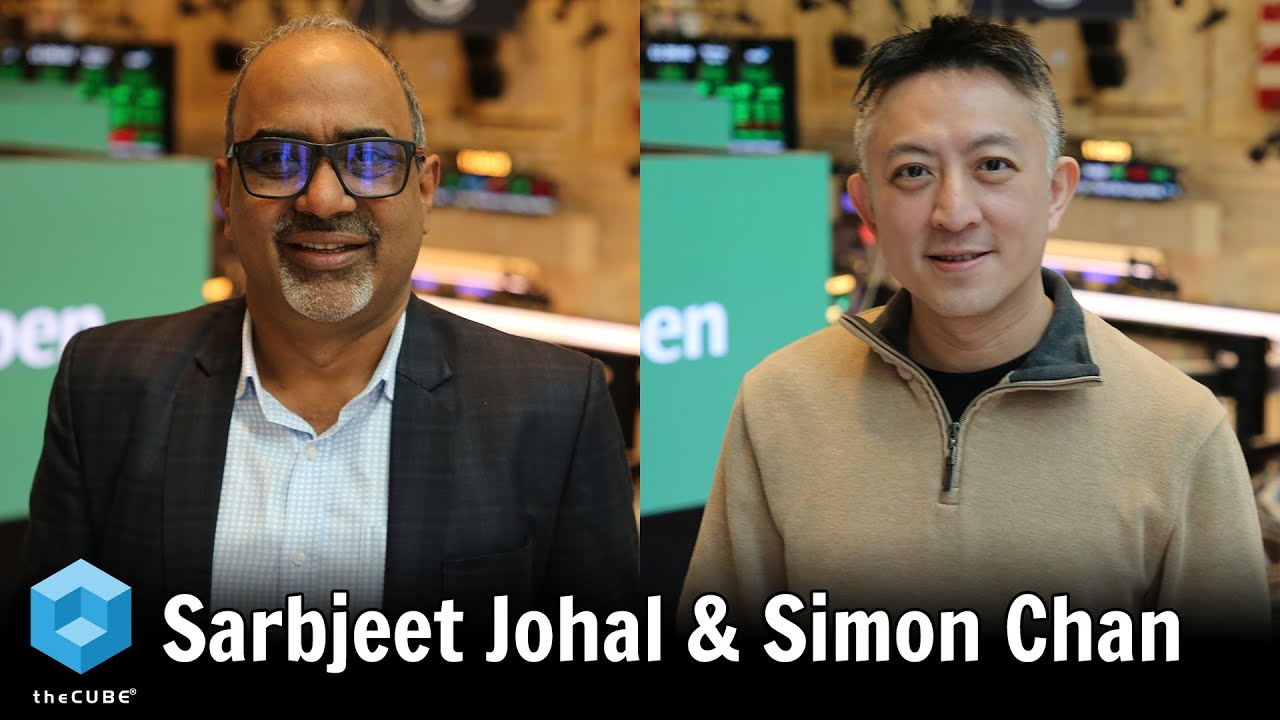
In this Mixture of Experts segment from theCUBE + NYSE Wired, FluidCloud co-founders Sharad Kumar and Harshit Omar join theCUBE’s John Furrier to unpack how “cloud cloning” enables copy/paste replication of full infrastructure across clouds, accounts and regions. They describe FluidCloud’s claimed “world’s first cloud cloning platform,” built on deep, attribute-level mapping across providers and a pipeline that verifies API changes multiple times per day. The founders walk through read-only discovery, cloud-agnostic snapshots and a “time machine” roll-back fo...Read more
exploreKeep Exploring
What is FluidCloud and how does it function?add
What makes the process of mapping between different cloud providers challenging, and what measures have been implemented to simplify it?add
What capabilities does the product provide for managing cloud infrastructure and snapshots?add
What are the challenges faced when adopting multiple cloud providers in a DevOps environment?add
What capabilities does VMware have regarding cloud migration compared to Nutanix?add
>> Hello, welcome up to theCUBE here at our New York Stock Exchange Studio. at the NYSC Wired program. I'm John Furrier, your host. This is our mixture of expert series of a course featuring the leaders in technology, AI, crypto, all the key areas, robotics that are making the change over happen. There's a lot of change happening certainly, and we love featuring hot startups. We have a hot startup here that just launched a couple of weeks ago. Very disruptive, very scalable product. FluidCloud. We got the two founders, Sharad and Harshit here guys, you're the co-founders, you're entrepreneurs and grinding Away you just launched->> Yes, absolutely.>> Congratulations.>> Thank you so much.>> A launch video->> Thank you.>> For you guys. But it really is compelling news because you guys have kind of cracked the code on what people have been trying to do with the infrastructure, DevOps, whatever we want to call it, cloud, private cloud, hybrid cloud, super cloud as we call it, solving the problem that was created by Broadcom buying VMware, which there's been a huge revolt from the increase in prices of course, obviously VCF 9.0, very targeted towards private cloud, which is intentional by Broadcom and VMware. But yet a lot of that market, they're not servicing it. And so there's been a scramble, a revolt on the licensing side, but ultimately the bigger companies will stay in there. I can see that play. I've been very critical of Broadcom on one side, but complimentary with how they're playing. But it's clear that's what they want to do. So it's a huge market that's migrating. There's a lot of players trying to crack the code on it. It's hard.>> It's very hard.>> You know how the hypervisor works and how the system works. It's plumbing, it's institutionalized. It's hardened inside these enterprises or small, medium-sized growing enterprise. So it's just hard to pull out. It's like nested in there. And so this is the problem. So let's get into what you guys have done, the company FluidCloud, explain what you do.>> Absolutely.>> When you started, how big you are, how much did you raise and then we'll get into and what problem you solve.>> Absolutely, absolutely. So thanks, John, first of all, for all the opportunity you have given us. So FluidCloud is the world's first cloud cloning platform. Primarily you can replicate your infrastructure, it's like a copy/paste from your source to->> Cloud cloning.>> Cloud cloning.>> So make a clone of the cloud->> Absolutely.>> Replica.>> Whatever you want.>> Can you call it a digital twin?>> Digital twin is a simulation. We are literally copying it to another, so you can literally call it->> So Google Docs copy.>> Maybe you can say that it's just a copy/paste.>> I do it all the time.>> Absolutely.>> Okay, .>> So it's like you can have from a source to destination and the source to destination could be a cloud provider. So you can go from one cloud to another cloud, one infrastructure provider to another infrastructure provider. It could be between the accounts. Within the AWS, it could be between one account to another account or within the accounts, it could be between one region to another region if you want to move it. So it just gives you plethora of opportunities when it comes to just replicating your infrastructure and the demand is literally very high.>> So cutting and paste the cloud. I love how simple that simple sounds. Like I said in my intro, this is hard. I mean, there's a lot of dead bodies have been trying to do this. Why is it hard and what did you guys do to make it easier?>> Yeah, so I can answer it and then Harshit, you can take it from there. So the way, what we did was we have created a seamless mapping between cloud APIs and just not at a base level. We are doing it from the resource perspective, the services. Then you have the attributes and the value level mapping. So we are able to create an exact replica on the mapping side across the cloud providers. Harshit.
Harshit Omar
>> So each cloud providers have their own dependencies, they have certain complex rule sets. So we have actually taken that hard work of creating that mapping. All of these cloud providers have infrastructure as a services, similar services, compute network and storage. If you go dig deeper into that, they have their own complexities. We have taken that when we translate from one cloud to another, we take care of the dependencies as well as what is needed in the different cloud programs.>> And so you guys essentially go in and learn every cloud's nuance, every switch, every button, every kind of thing that's going on there. In a way, cloning them or knowing them. Basically, in and taking audit inventory, knowledge, software layers and then every cloud. So you get the knowledge base of the clouds and then create kind of a super cloud layer knowledge base so you can just move it anywhere.>> Yes, that's .
Harshit Omar
>> So we have a very tight pipeline where every day, multiple times in a day, we actually go ahead and verify those APIs. If there is a change in the cloud, we are the one who know it first and we make sure that, okay, we are always updating our mapping based on whatever the changes on these clouds are.>> All right, so tell me about the origination story. And I'm asking because one, I'm always curious about the origination story, what the idea came from. Two, a lot of companies trying to do this had another business and saw and had to go because they're being asked to do it and so they kind of go after it and then once they go after it then they say, "No, no, we're really over here." So, was this intentional and then is the vision more bigger? Is this just low-hanging fruit for you guys? Can you explain the origination story and then how you view this opportunity? Is it just in the path or is it intentional?>> Absolutely. So I'll talk about the origination and then what's the day two operation looks like. From an origination perspective. This is the second startup which we are doing, basically the third company what we are doing and second startup. The first one->> You guys were both together on?>> Yes.
Harshit Omar
>> Yes.>> Okay, good. Yeah, you know each other.>> Very coincidental, we are related too, so that definitely... So our wives are sisters, so he's my co-brother. So when we were working together, happened to be Accurics got acquired from Tenable very interestingly, it took almost a couple of months for us to do a whole integration from Accurics to Tenable. And this is just moving accounts within AWS. It took a lot of time and that point in time we were like, okay, can this->> You were grinding that deal-
Harshit Omar
>> Yes. And->> Through->> So deal was done and then after that you have to do sales and then doing sales, you have to do all these integrations and everything else. Everything works absolutely fine. So at that point in time it was so frustrating that we were like, "Can there be something in the world which can actually take care of this?">> , "We fix this.">> So our knowledge, because of what we build in CSPM space about cloud APIs was so refined that we were able to understand that more in detail. And that's from there a couple of events happened where Broadcom acquisition from VMware and then Terraform, HashiCorp said their business source license. So a lot of things happened->> And the multi-cloud wave or we called it super cloud was happening.>> Absolutely.>> Distributed computing was happening.
Harshit Omar
>> Absolutely. And then that multi-cloud as it was growing, people are going now from multi-cloud to being cloud agnostic, because nobody wants themselves to be in this position of what they are in today of getting absolute lock-in. So we saw a huge opportunity and the knowledge base from our previous company definitely was very helpful in building all of what we have built and from the perspective of yes, this is a low-hanging fruit, but there are a couple of data operations so it's not the cloud cloning part of it, but we also do a lot of management of multi-cloud. So maybe Harshit, can you comment that?>> So when changes happen inside the cloud, you're taking care of that and extracting that away?>> Absolutely.
Harshit Omar
>> Yeah. So how our product works is we just get a read-only credentials of any cloud and we take a snapshot, the discovery and that snapshot is cloud agnostic. So if a snapshot is taken from AWS, that snapshot can be replicated in Google or any other cloud provider. What we do is we give that option to the customers to take that snapshot at a regular interval of time. So you have a time machine for infrastructure and you can roll back your infrastructure at any given point in time.>> You can always think a Cohesity VM, Rubrik auth infrastructure. So they take care of more or less the data part of it. We can take care of the infrastructure part of it because we are taking snapshots every single hour, whatever you want.>> I like the time machine example because people can relate to a of Mac, they know what that means. You just roll back and that's an operational benefit. Talk about the business opportunity from a technical perspective, because if multi-cloud goes, and our premise years ago we saw the super cloud and saw this need happening, but ultimately hybrid cloud is basically like environmentally agnostic you guys are going after that.>> Yes.>> So what does that mean for the customer? Because for them they're like, "Wait, I need to, I got Teams, I got this in Amazon, I want to do on-prem.">> That's correct.>> I mean a lot of the folks here in New York City, the banks->> They love on-prem.>> They love on-prem because that's where their jewels are. The crown jewels are the data, money.
Harshit Omar
>> So the major challenge and why it's hard to adopt, as you said, it's super complicated. As many cloud providers, our company on-boards, the DevOps teams increases. Our DevOps can only have an expertise at one of the cloud providers. So that's where we are trying to solve that problem wherein we are actually reducing the threshold of understanding a new cloud provider for the users. We can actually do that translation really well. Person doesn't have to have any expertise on the target cloud.>> All right, so what do you guys see, if I threw this out there at you, okay, I want to go to CoreWeave, I want to use CoreWeave. How do you look at that? I mean, that's a neo-cloud, the same mechanics on your end. Do some discovery, map it, or is already mapped or is it-
Harshit Omar
>> So all these cloud providers have API first. They have all these APIs to provision things on their cloud providers. And CoreWeave has compute network storage and managed Kubernetes and->> That's a feature for you guys. Any kind of new environment that customer says, "Hey, I'm in." They just roll into your API ingestion or whatever you call it and then you map it and then it's like a resource pool.>> Absolutely. So you can always think like we are building a marketplace for cloud providers here. And the way, when you asked about the business opportunity-wise from the go-to-market perspective, actually three options to it when we look at it. First is cloud service providers, which are like for them it's like rollout, because the migration timelines are lower and they can just roll into this whole ecosystem and they have their own migration programs which are billions of dollars, which they're giving to SIs. So that's saving huge money there. And for the SIs, they have resource constraint. If I get you a, NYSE gives a contract or ICE gives a contract to SI and what happens tomorrow is they're going to call out all the people, "Hey please, we have to do this whole thing of moving the infrastructure, get all the people." And they won't get it on day one. And so they save a lot of costs. So most of these things->> The prep work, the readiness is huge.
Harshit Omar
>> It's already done.>> You guys save a lot of time and money on that.>> They save all the time there. And then the third one is the enterprise, direct enterprises where the DevOps teams are mature enough and they can use this tool and do a lot more.>> All right, so take me through, I'm going to be at VMware Explorer next week. So we've been covering VCF 9.0. It's big. I mean, it's bulky. They put all the kitchen sink in that. Obviously that's their strategy. Subscription. You got everything you want in there. It used to be easy, just spin up some vSphere and now you got everything and that's intentional. Where do you see them playing and what are some of the migration examples you guys have done? Now that you're launched, what's been the reaction? So what is the VMware situation on the migrations? Give us some examples on use cases and then how's it going post-launch?
Harshit Omar
>> Sharad, go ahead.>> Go ahead, please.>> From a VMware standpoint, I think one of the thing which we have definitely created, so we can go in and out of VMware. So if somebody wants to move out of VMware, we have from a resource perspective coverage from AWS, GCP, Azure, OVHCloud, Vultr Cloud. So Vulture and OVH are our partners and now we are coming to Nutanix and OCI. So all of these cloud providers, you can move from VMware or either if you want to move from the cloud provider->> You work with Nutanix.>> Yes, we are getting the partnership with Nutanix at this point in time.>> Are they doing this too or no?
Harshit Omar
>> They have a tool which is called move, but that's just for the workloads. But beyond the workloads, you have network groups, you have subnet, you have->> You're more comprehensive than them.
Harshit Omar
>> It's more comprehensive.>> So they like you.>> Yeah, absolutely. That's the reason one of the partnership, the premise of the partnership is they'll be able to do it much more faster. You have IAMs and all that. So all of these are highly->> So my point about they have a business and this has become a sideshow opportunity for them. You come in shore that base, they get lift, they can do their thing. I interviewed Rajiv many times, he was at the RAISE conference as well in Paris. They're doing great.>> Absolutely they're rocking.>> But some say that was a distraction from Nutanix.>> That's right.>> They have a better brand opportunity that's much bigger than they're the migration tool of VMware.
Harshit Omar
>> That's correct. So now I think we have taken that hard burden on us and then we are honing that whole tool at this point in time.
Harshit Omar
>> What we are seeing is when we are talking to all these cloud providers, they actually get a lot of deals which they actually win. Out of those win deals, 20 to 25% of those win deals gets canceled just because they couldn't have a successful migration.>> All right, so talk to me about the cloud guys. Do they like you? Like Amazon, I mean, if I'm Amazon, they used to do a deal with VMware. VMware walked that back. But if I'm a customer, if I'm the AWS, I want that on AWS. Yeah, no absolutely. Do you work with those guys? How do you engage the clouds?>> So we are in charge with them. However, the thing is AWS is $100 billion today and they want to go to 300 billion. They cannot go to 300 billion by getting other cloud providers to them. They have to get from more from on-prem and getting more from on-prem at this point in time, a very fertile land is your VMware part. And that's where we are able to help them out. So from a cloud service provider, be it->> AWS is a migration to the cloud for them.>> Absolutely. And then now it depends on which cloud provider you're talking to. It's like if it's AWS, GCP, or Azure or OCI, they have very different use cases. Somebody's more focused on more cloud to cloud. Somebody is more on-prem to cloud. If you're talking to Dell, that's more repatriation side and we can help in all across the board.>> All right, so how does AI fit into all this? You can't talk about technology without talking about AI. What's your views and how does that impact you? Obviously, there's network for AI, AI for network, AI for storage, all kinds of benefits that operations.>> Yes, that's right.>> Thoughts on just how you guys are seeing that? Are you leaning into it? Are you leveraging it? What's your thoughts?
Harshit Omar
>> Obviously we have been struggling that from past one year actually. When we started, we had all the plans to use AI and we tried every other model just to get the infrastructure right. The challenge with AI is when it comes to infrastructure, you need absolute accuracy on the configuration.>> Zero hallucinations.
Harshit Omar
>> Yeah. And that is not possible with today's technology. So we went ahead and actually built a lot of the core functionalities in-house and we can actually leverage customers, can use our core functionalities, our APIs to create as many workflows you want. You can create agentic flow with our MCP server. We have a multi-cloud agent MCP server at this point in time and we->> I mean, APIs with MCP, you're going to take that API first, make it MCP first or A to A.>> It's kind of multi-cloud MCP, which is going to be the single source of truth for you. And then a couple of agents-
Harshit Omar
>> Yeah, either use our CLI tool or UI to just call the API or LLM can call those APIs and do a customer workflows for you.>> It's funny because I think five years ago we coined the term super cloud, Dave and I. It was very critical. Charles Fitzgerald was like, "It's bullshit. It's a construct." Well our vision on that was not to say... And then Berkeley coped it with us and sky something they called it. But what you guys are doing is essentially what we had saw as a pattern. You see people building on the clouds, they become platforms. Like Snowflake, they call themselves a data cloud.
Harshit Omar
>> That's right.>> They don't have a cloud. Databricks on AWS, now they're on Azure. So multi cloud was obvious, but it was not tied together.
Harshit Omar
>> Yes.>> It was just, I have instances on Azure and I have stuff over here, data processing on whatever. Amazon was winning it all. But we saw a vision where it was invisible to the customer. It was a super cloud in the sense of it was just cloud, it was, everything's just like one big thing.>> So exactly what the way you're describing what we are trying to build as like a hypervisor on hyperscalers.>> Yeah.>> That's eventually->> Super cloud.>> That's super key.>> And that works all the interoperability. Okay, so where are you on that progress? If the north star is to be the hypervisor across hyperscalers to use that VMware term or original term, what does that look like? What's beyond it? Because that's an enabler. When you connect that together operationally, what else falls into your hands there? Servability, you got services, what is the key growth?
Harshit Omar
>> So what we are trying to build here and we are trying to give feeling to the customers that, okay, multi-cloud management is not difficult and you can actually have certain services running on AWS, certain services running on other cloud providers. And as you can see, we are actually trying to make that a seamless experience for the users where they can actually... And with that, I mean, some crazy use cases we are coming across with our customers where you can actually have a total cap on your infrastructure that okay, make sure how many clouds you want to use. Don't go beyond $1,000 a month and->> To your lock-in point, I don't have to get leveraged over on pricing.>> Absolutely.>> I can move around, I can move the workloads to the best->> Absolutely.>> I mean, there's almost some differentiated services just on workload management.
Harshit Omar
>> Yep.>> So even from a price side, from the sovereignty of the cloud side perspective, all these, it's all customer who has got the power back.>> All right, so what's been the reaction in the market? Obviously you got some inbounds, word of mouth's kicking in.>> Yes, absolutely.>> Capital markets, investors running to fund you. Probably got some inbounds.>> You're absolutely right. So yes, we have a lot of inbounds at this point in time. I think from a customer perspective, the way the thought process from all the learning we have gone through in previous startup, in this startup is where's the beachhead and where's the head pin when it comes to all the bowling pins? So we are able to see that that, where's that the head pin is there. I think it's more coming from the financial side of the world, more from the healthcare side of the world where people have got cease-and-decease letters from VMware. People have got the 1,000% price increase and they have a timeline on their neck that they have->> They have operations. They can't just pull the plug.>> Exactly. So either they agree to the terms for a three-year contract or they just kind of... So that's where we are able to see a lot of traction. From investor perspective, definitely there is a ton of at traction at this point.>> How much did you guys raise? Can you talk about it?>> Yes.>> Can you guys share about that number?
Harshit Omar
>> Absolutely. We are very lucky and fortunate to partner with Unusual Ventures, John Vrionis.>> Great investor.
Harshit Omar
>> Amazing investor. And one of the things that we are also learning is the desperate buyer. And I think Unusual Ventures is also highly proficient when it comes to finding the right product market set. And this itself is an invention, so we are just kind of right now just trying to get the J-curve right. It's like regards to putting all the resources in the right format together. So we have raised 8.1 million for now. Yeah, so that's where we are.>> Modest round.
Harshit Omar
>> Yes.>> That's not heavy. Was it a seed?>> It was a seed round, yeah, absolutely.>> Seed rounds are like $8 million seed rounds, I still think I'm living 20 years ago when that was a series B.>> I just had to add .ai, it could have been 80.>> The market didn't like AI last week, yesterday. So guys, congratulations. I'm so happy for you guys are both great entrepreneurs. The journey begins again.>> Thank you. Absolutely.>> Coming back to the plate, back in the arena.>> Yeah, absolutely.>> Excited?>> Super excited.
Harshit Omar
>> Oh, yeah.>> The kind of opportunities we are having and I think we are coming up with this whole vision of solving this big industry problem, which was not solved from past 20 years. So I think we're really proud of it that we finally cracked the code>> And we can say, "Hey, that's super cloud right there." And call it cloud. Thanks for coming on. Appreciate it.>> Thank you.>> All right. The hot startups coming out of stealth, they're launching. Again, this is blocking and tackling infrastructure. Software and infrastructure continue to be the enabling technology, making things easier, simpler to use. And of course the economics and AI is building and build in this as well. I'm John Furrier, thanks for watching.>> Thank you.