In this theCUBE + NYSE Wired: Mixture of Experts segment from the New York Stock Exchange, theCUBE’s John Furrier sits down with Raj Verma, CEO of SingleStore, to unpack how the intersection of technology and finance is shaping enterprise strategy. Verma shares why SingleStore is “on course” for the public markets, reflects on brand-building through the company’s partnership with golf Hall of Famer Padraig Harrington and connects that ethos to how SingleStore helps organizations fix struggling data “swings.” The discussion zeroes in on what’s next as Wall Street watches the AI infrastructure buildout: after chips and systems, the software and data layers set the pace for value creation.
Verma outlines why enterprises must modernize “brown” data estates into “green” ones to safely bring corporate context, governance and compliance into LLM workflows via RAG – and why commoditized data-at-rest puts the advantage at the query layer that unifies data in motion with data at rest. He predicts agentic AI will gain reasoning capabilities in roughly 18 months, cites industry indicators like Google reporting ~25% of its software now built by AI and argues that high switching costs will give way to disruption as buyers reassess legacy vendors. The conversation closes with concrete momentum: ~33% YoY growth, ARR in the ~$135M range, gross dollar retention ~98%, cloud NDR ~130, ~50% of business now in the cloud, landing ~3 new customers per day, a path to cash-flow breakeven in the next two quarters and a teaser for AI-related announcements in the next two months. Listeners will find notable stats, real-world use cases and forward-looking views on how databases power reliable AI at enterprise scale.
Forgot Password
Almost there!
We just sent you a verification email. Please verify your account to gain access to
theCUBE + NYSE Wired: Mixture of Experts Series. If you don’t think you received an email check your
spam folder.
Sign in to theCUBE + NYSE Wired: Mixture of Experts Series.
In order to sign in, enter the email address you used to registered for the event. Once completed, you will receive an email with a verification link. Open this link to automatically sign into the site.
Register For theCUBE + NYSE Wired: Mixture of Experts Series
Please fill out the information below. You will recieve an email with a verification link confirming your registration. Click the link to automatically sign into the site.
You’re almost there!
We just sent you a verification email. Please click the verification button in the email. Once your email address is verified, you will have full access to all event content for theCUBE + NYSE Wired: Mixture of Experts Series.
I want my badge and interests to be visible to all attendees.
Checking this box will display your presense on the attendees list, view your profile and allow other attendees to contact you via 1-1 chat. Read the Privacy Policy. At any time, you can choose to disable this preference.
Select your Interests!
add
Upload your photo
Uploading..
OR
Connect via Twitter
Connect via Linkedin
EDIT PASSWORD
Share
Forgot Password
Almost there!
We just sent you a verification email. Please verify your account to gain access to
theCUBE + NYSE Wired: Mixture of Experts Series. If you don’t think you received an email check your
spam folder.
Sign in to theCUBE + NYSE Wired: Mixture of Experts Series.
In order to sign in, enter the email address you used to registered for the event. Once completed, you will receive an email with a verification link. Open this link to automatically sign into the site.
Sign in to gain access to theCUBE + NYSE Wired: Mixture of Experts Series
Please sign in with LinkedIn to continue to theCUBE + NYSE Wired: Mixture of Experts Series. Signing in with LinkedIn ensures a professional environment.
Are you sure you want to remove access rights for this user?
Details
Manage Access
email address
Community Invitation
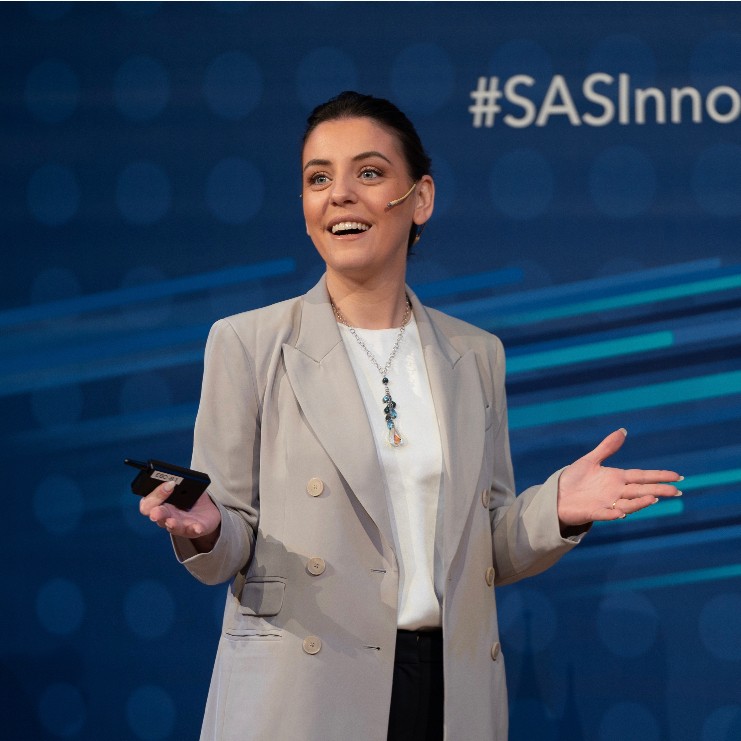
Marinela Profi, SAS
In this theCUBE + NYSE Wired: Mixture of Experts segment from the New York Stock Exchange, theCUBE’s John Furrier sits down with Raj Verma, CEO of SingleStore, to unpack how the intersection of technology and finance is shaping enterprise strategy. Verma shares why SingleStore is “on course” for the public markets, reflects on brand-building through the company’s partnership with golf Hall of Famer Padraig Harrington and connects that ethos to how SingleStore helps organizations fix struggling data “swings.” The discussion zeroes in on what’s next as Wall Street watches the AI infrastructure buildout: after chips and systems, the software and data layers set the pace for value creation.
Verma outlines why enterprises must modernize “brown” data estates into “green” ones to safely bring corporate context, governance and compliance into LLM workflows via RAG – and why commoditized data-at-rest puts the advantage at the query layer that unifies data in motion with data at rest. He predicts agentic AI will gain reasoning capabilities in roughly 18 months, cites industry indicators like Google reporting ~25% of its software now built by AI and argues that high switching costs will give way to disruption as buyers reassess legacy vendors. The conversation closes with concrete momentum: ~33% YoY growth, ARR in the ~$135M range, gross dollar retention ~98%, cloud NDR ~130, ~50% of business now in the cloud, landing ~3 new customers per day, a path to cash-flow breakeven in the next two quarters and a teaser for AI-related announcements in the next two months. Listeners will find notable stats, real-world use cases and forward-looking views on how databases power reliable AI at enterprise scale.
Global Market Strategy Lead for AI Agents and Generative AI - Advisory LevelSAS
search
Gemma Allen
>> Welcome back to theCUBE. I'm Gemma Allen, here at our studio in the New York Stock Exchange, connecting Wall Street to Silicon Valley. Joining me now, I have a leader who's been in this space for quite a while, has hedged her bets on the future of AI and agentic systems, Marinela Profi, Global Marketing Leader at EPSAS. Welcome Marinela.
Marinela Profi
>> Hi Gemma. Thank you for having me here. I'm so excited to be here.
Gemma Allen
>> So you are somebody who is all in on AI and agentic strategy, really demonstrating to clients and customers what that means in practice, what the value is. Those to me are still two very separate concepts. Unpack that a little bit for me. Explain to me how you differentiate the world of AI from a sales and marketing and solution perspective, to agentic, and what the customer conversations are shaping out like.
Marinela Profi
>> Absolutely. So that's a great place where to start from. So agentic AI, you're right, it's a type of artificial intelligence, right? And specifically agentic systems are a type of artificial, because they're not human, they're artificial systems that they are able for the first time to take actions and execute complex tasks. So think about it this way, we've had traditional artificial intelligence. So there are systems that basically they're able to do things like forecasts, the weather, predict demand. So they are only able to say something about a specific point data in time, and that's it, based on historical data. Then we had generative AI, and that terminology exploded with the launch of ChatGPT in November, 2023, which feels like decades ago, but it's been only two years. And with large language models, with generative AI, we started for the first time to entering an era where human can interact with technology through a prompt, whether it's written prompt or whether it's a voice prompt. And then you can ask and it would be able to generate anything, whether it's an image, a video, a code, text, and that's why it's generative AI. Now what happens? Why are we moving to agentic? We're moving to agentic because generative AI pretty quickly showed its limitations. You can ask ChatGPT, "Help me set up a meeting with Marinela." Or, "Help me set up, write an email to ask Marinela for a meeting," and it's going to do it for you. But if you ask ChatGPT, "Hey, when is my meeting with Marinela?" It's going to say, "I don't know Gemma, because I cannot access your calendar." And so when you pass into and move into the need to have tools, the system to access tools and do things for you, like access your calendar, accessing Google Maps, accessing Booking.com and book travel, or any other booking platform, that's where it becomes agentic. It's able to take... It has agency. It's able to take actions and execute tasks for you.
Gemma Allen
>> So systems, managing systems, agents, managing agents.
Marinela Profi
>> Yes.
Gemma Allen
>> Tell me about the world of AI. Because while we talk about agentic as the next big bet, and certainly I think a narrative that's gaining hype, right?
Marinela Profi
>> Mm-hmm.
Gemma Allen
>> There is still a narrative out there that a lot of enterprises aren't actually even today getting the value and the promised output from AI. What are you seeing? What are you hearing? How do you respond to that?
Marinela Profi
>> So what I see, and what I hear, and what I think, most of all, is that the honeymoon phase of AI innovation, and let's just justify every budget for AI innovation, it's over. I think we're past that. I think now CIOs and CXOs and leaders in general are starting to ask brutal questions around, what's the cost? What's the accuracy, what's the ROI of this? How much money am I going to make out of it? So how do I govern this? Can I even trust it? And so we are past that honeymoon phase, and now it's going to be all about finding a way to make sure that we can trust these systems, and we can trust the decisions and the actions that these systems take for us. And how do we do that? So it's not going to be a lot more about AI innovation. Now we're starting into proving the ROI of these agentic systems. Is that easy? No, that's not easy. And the reason is because ROI, traditional ROI models fail. We cannot use them. Leaders cannot use the same systems and the same models they use to measure the impact or the value of having a new CRM system. This is like, I like to say that this is when websites were invented and everybody would be like, "You need to have a website, otherwise you're going to be dead." But you'd be like, "How do I measure the value of having a website?" You couldn't, but you knew that you needed one, otherwise you would've been outdated. So we are seeing the same inflection point right now with agentic AI, where we're recognizing that there is potential. We know that this is where we're going. We don't know when, right, exactly, and how yet, but we know that that's where we need to go from an enterprise or a business stand... Processes standpoint. But it's a lot about how do we prove, how do I justify this to my board? How do I justify this to my leaders? How do I even justify that I'm spending my own money on it? And so the entire focus now, next year, I expect, and I strongly believe it's going to be on how do we govern the system, how do we make them decision-oriented?
Gemma Allen
>> And if we think about that for a second, if we think about other technology waves and revolutions that we've even lived through, right? SAS, the company, has been around a long time. It has been pre-cloud, pre-enterprise data, before a lot of these were daily buzzwords, SAS has been outselling and adding value to customers. But there have been certainly, pace to adoption cycles. Like if we compare cloud, for example.
Marinela Profi
>> Yep.
Gemma Allen
>> There was skepticism, public-private, specific requirements based on industry requirements, practicalities.
Marinela Profi
>> Yep.
Gemma Allen
>> AI has just come so hard and fast. It sometimes, to me, I wonder, all of those problems that existed 10 years ago, governance, compliance or understanding the real value of data, even cleaning data to get value from it. I'm sure for a lot of companies those problems are still there.
Marinela Profi
>> I love that you said that.
Gemma Allen
>> How do they address them? What has changed? What's the magic wand here?
Marinela Profi
>> I love that you said that Gemma, because every time a lot of people ask me, "What do you think it's going to change in the next five years?" And I always say "The right question is, what do you think is going to stay the same in the next five years?"
Gemma Allen
>> Yeah, that's great.
Marinela Profi
>> And if I have to take a bet in the next five years, all the problems that we have had with data, data quality, data management, they're still going to be there. And they're still there, and they're even going to be bigger because now we are dealing with new data types, which is language, which is our own language, words. With large language models, we don't have just numbers and tables right now, we also have text. And that brings a whole new set of challenges with data, the need to clean the data. And so I find it very interesting, and also I would say funny, that no matter what the latest technology innovation is, right. You mentioned had to cloud, we had the NoSQL phase at some point, God. And always, no matter what it is, we always go back to talk about the importance of data. And we are seeing the same thing with artificial intelligence. Well, SAS has seen this before. You said, you mentioned yourself, the company's been around almost five decades, we're celebrating in next years, and what we have seen throughout the decades with work customers is that it all starts with the data. You cannot get anything right. You cannot get agentic AI right if you don't get your data right, if you don't get your data now right.
Gemma Allen
>> And what are you seeing in enterprise? Is it a case of understanding, okay, these are workflows with specific parameters that have agent interoperability, that I guess, if you like, are like lifts and shifts for this kind of AI paradigm. Or is it a case that a lot of companies are still in discovery mode trying to understand what exactly they have in situ, and where the quick win might take place?
Marinela Profi
>> Absolutely. A lot of companies are still... So I see two different ways, right? So the last year and this year as well is all about agent AI and generative AI experimentation. So everybody was jumping headfirst in pooling a budget. I think now we're entering a phase where it's going to be like a new era of awareness, and people are going to start to think, okay, well how do I get things into production? What I'm seeing companies are, and this obviously depends on the budget, right, that a company has, but I'm not seeing lots of huge use cases that make it to production right away. The secret is to start small. So I always say to customers and enterprises, you need to start with something with a task that it's highly repetitive in nature within your organization, for which you already have historical data. How much time does it take to complete that task? How much time that task has reported failures in the past year? So you have historical transactional data for that task, and that's where you need to start. Because that is an easy task to pull in some automation and understand and see then in benchmark, the before and the after, and that's how you prove ROI. And then from there you can start to scale, right? There is a lot still though of misconceptions that we're seeing, and key factors that on the other side are enabling the success.
Gemma Allen
>> Talk to me about industry alignment. You said you work across all industries, you're a jack of all trades. I'm sure you're a busy woman, but are there certain industries that you feel are getting the value, realizing the opportunity faster and even able to adopt faster? Where do you really see those companies that are actually seeing it play out immediately?
Marinela Profi
>> So the past year and a half, my job has entirely been just focused with working with customers, working with enterprises and partners just to identify use cases. Let's get started, let's see what we can do, and how this works. So obviously, the potential of agentic AI, what I'm seeing is that it is cross-industry, I'm seeing use cases in a lot of industries. But I want to say that, surprisingly maybe, the financial services sector or the banking sector, so companies that historically may have been considered or may be perceived as the ones that are slower at jumping first head into adoption or innovation, are the ones that are actually more curious about it. I've been at several financial services events over the past months, and we're seeing a lot of success stories in the collection operations. We're seeing a lot of success stories in loan decisioning, so applying agents to help better loan decisioning, collection operations, sanctions screening. But I'm also seeing a lot into the manufacturing and industrial space as well. So for example, we're working with Georgia Pacific to optimize their manufacturing line and the worker safety with agents that are able to monitor the environment around the worker to make sure that they are behaving in a safe way with their environment, and triggering alerts if that doesn't happen. But also in the startup space. Smaller companies, I have this example that I love. We're working with this university called Faith Science, is an NC state-based university, and they have developed a digital twin of the ocean.
Gemma Allen
>> Oh, wow.
Marinela Profi
>> And so what they're doing is that they're monitoring and applying agentic AI systems to basically anticipate and tell Marines and the boats where are going to be in dangerous whales, so that they don't get in the middle of it. So the adoption is really very-
Gemma Allen
>> Wow.
Marinela Profi
>> And healthcare. Healthcare is another big one.
Gemma Allen
>> Yeah.
Marinela Profi
>> We call workflow automations.
Gemma Allen
>> Hugely necessary industries too. It's interesting when you mentioned financial services, you also hear that some large legacy institutions are still running off on COBOL, right? So the scale of agility versus legacy challenge, it's quite, it's just extraordinary. Tell me about use cases more generally though. Could you have any other examples of clients or customers you guys work with where there's a real, I guess demonstrable value?
Marinela Profi
>> Yeah.
Gemma Allen
>> Especially for agentic, which like I said, I still think causes people a little bit of hypothetical confusion, right?
Marinela Profi
>> Absolutely. So we're seeing, Frankfurt University Hospital, I would like to mention. So in the healthcare space, this use case had proved that using artificial intelligence and agentic AI systems, we were able to help clinicians to understand what drug and what antibiotic was the best for which scenario, and also in terms of resource optimization. And so beds management, resource optimization for hospitals. So all of those are non-new things that are being discovered today. But we are seeing that agentic, so implementing tools and systems that are now able to be more autonomous in taking actions, has a big impact. Where we're not seeing success, is that there is still a lot of misconceptions from enterprises where they think that an agent is essentially just a large language model. So you ask something to a large language model, whether it is a ChatGPT, a Gemini or whatever the system they're working with, and whatever they spit out, that's value. So that is not what an agent is. So an agent is actually an integration of large language models, of traditional analytical models, say AI of memory, of business and deterministic guardrails, which believe it or not, have become sexier again. And now everybody's talking again about the importance of putting boundaries, putting rules, putting determinism around this, and to be able to control and govern them. And so the use cases where agentic AI is not succeeding or should not be implemented with such an ease are for high-stake decisions. So you cannot let LLM make credit scoring decisions. You cannot let an LLM make financial, like fraud detection, because for those cases, you cannot afford an error. You cannot afford a mistake, you have to be 100% accurate.
Gemma Allen
>> The cost for hallucination is just too huge, I guess.
Marinela Profi
>> It is always there, it's always going to be there, the hallucination. So you still have to use traditional AI for those high-stake decisions. You can use an agent, you can use an LLM to do something else like create a summarization of the result, create a dashboard.
Gemma Allen
>> Yeah, or part of a modular workflow?
Marinela Profi
>> Exactly. Parts of pieces, but not let the LLM make the high-stake decisions.
Gemma Allen
>> Wow. So you yourself mentioned governance being sexy again, which is kind of comical really, but let's roll with it, right? You are a data scientist by trade, by background?
Marinela Profi
>> Yep.
Gemma Allen
>> Being with SAS a number of years now, tell me a little bit about, I guess your own personal journey, especially from Italy here to the US, another fellow European woman.
Marinela Profi
>> Yeah.
Gemma Allen
>> And I'm really interested as well to understand from you, data is obviously at the core of everything, right? It is the oil by which the future will be built. But there is certainly a level of skepticism around what it means to be a data scientist in 2025 to 2030. Where are these skill sets aligning to opportunity versus risk? How do you think about that?
Marinela Profi
>> I love that question. So my background, I am a data scientist as a statistician, so that's what I started doing when I started my career in the corporate world. And when I started, data scientists, and probably some of the people that are watching us, they remember the headlines which was, "Data scientists is a sexier job of the 21st century," and that seems to not be the case anymore. So I'm like, do I need to change it?
Gemma Allen
>> You're going to make it sexy again, don't worry.
Marinela Profi
>> I'm like, "No, I'm not data scientist. I'm not." So what has changed is that again, the way that we interact today with data, and with software, and with computers, and with artificial intelligence systems, is different than what we did 15 years ago, right? 15 years ago you had to download a table, you had to clean your data manually, you had to do it all by yourself.
Gemma Allen
>> A schema, all of that good stuff.
Marinela Profi
>> Correct, right. And now it's all about, how do you ask AI to do that for you properly? And how do you check and control that the output is correct, and how can you trust it? So we've moved not from, you don't need to be a statistician anymore, you don't need to be a coder anymore. I don't believe in that. I absolutely don't believe that we should stop learning how to code, that we should stop learning statistics. Because if you don't know even what you're talking about, you cannot even judge the outputs of an artificial intelligence, so you still need to study those things. But on top of that, you're now demanded and requested to have critical thinking and judgment. And that's probably the most important skill today. And so-
Gemma Allen
>> I guess it's contextualization, right? Which is a huge part of this whole world we're in right now too. And such an important part both for people and I think for enterprises, it's understanding the context, everything we do and say.
Marinela Profi
>> Correct.
Gemma Allen
>> Tell me a little bit about what's ahead for you from the perspective of the agentic journey. How do you, I joke sometimes that I feel like people have been saying agentic is coming every 5 years for the last 20 years, but do you think it's finally here, it's landed? What do you think the next five years will look like?
Marinela Profi
>> That's the million-dollar question. So I would be superficial to say, "This is what's going to happen." I can take guesses. I do think that we are far away from AGI. I know there are two sides of that thought, thinking today, and I am on the side that thinks that we still have a lot of work to do. I do not believe that right now we can go out and just leave autonomous systems and believe that they are magic unicorns that are going to solve everybody's business problems, that is absolutely not going to happen. They are not that intelligent. They don't have the same human reasoning. They are probabilistic in nature. And so the way they reason is different that the human definition of the human reasoning. So we either go back and we create a definition on the vocabulary for artificial reasoning versus human reasoning. And then I can say, "Okay, they reason." But if we are going by the definition of human reasoning, these systems cannot do that. And so I still think that there is a lot of work to do in slowing down the hype, not forgetting that we have been using artificial intelligence in the proper way for the past decades in form of traditional AI, that it's still very valid, incorporated with LLMs today can have a lot of potential. But that is different than saying, "Now autonomous systems are going to run, humans are going to be replaced, you're not going to have a job anymore. Or if you're a leader, you don't need to hire people anymore, you can"... Like, jobs are going to shift. I believe that, but that is true for every revolution. If you think about the industrial revolution, it used to take 100 people to build a car. It takes two, and how many robots?
Gemma Allen
>> Yeah.
Marinela Profi
>> We used to have somebody 100 years ago that used to go around the street and turn on every lamp. We don't need that anymore. It's normal in human history.
Gemma Allen
>> It's interesting though because when we hear about agentic, when we talk about it, the one thing we hear first is, "We can't afford it right now. We don't have the energy, we don't have the compute spend. It's not there. It's not where it needs to be." You don't really often hear about the maturity, readiness element to it. It seems as though the speed, cost, energy restrict constraints are kind of driving the narrative. But you make it obviously a hugely important point, right? It's that we need to be ready at a societal level for these things-
Marinela Profi
>> Absolutely....
Gemma Allen
>> to become mainstream.
Marinela Profi
>> Yeah. I do see this as an analogous technology shift. I do see this as a human shift.
Gemma Allen
>> Yeah.
Marinela Profi
>> And I speak as a woman, right. I don't think I'm saying anything new if I say that this is a very male-dominant, predominant space, right?
Gemma Allen
>> I want to ask you about that. Data scientist, moved from Europe to the US, had a phenomenal career. We are at a point where the number of women in the field is not growing at the rate that we certainly hoped it would 10 years ago. In around 25%, and even those numbers can be kind of nuanced.
Marinela Profi
>> Yeah.
Gemma Allen
>> What are your thoughts, especially now that it seems as though the paradigm shift of what it means to be our particular skill sett, or to align yourself to a particular practice is shifting so much? Why do you think it is that so few women are still entering the fields?
Marinela Profi
>> Well, I'm not going to tell you what I think why, I'm going to tell you what data says why. There is a research that is publicly available that shows that even with generative AI tools, women are using them less than men.
Gemma Allen
>> So interesting.
Marinela Profi
>> And that's across every age range. But if you drill down into Gen Z, the gap becomes even wider. And you know why?
Gemma Allen
>> I want to know why.
Marinela Profi
>> Lack of confidence.
Gemma Allen
>> Really?
Marinela Profi
>> Research has shown that women, before they jump into something, they have so much imposter syndrome and they're like, "I don't know how to do this. This is too complicated. I'm never going to be able to." Versus men are like, "I don't care if I know how to do it, I'm just going to start, and I'll learn it and I'll figure it out." And so they have started with this mindset to adopt and just play and experiment with AI tools and generative AI tools to a point that just trying and making mistakes and learning, they've become better. Versus women, we feel like until we are perfect at something, then we give permission to ourselves to say, "Okay, I can now jump into it."
And so my advice, and my hope, is that we need absolutely more women in this space. We cannot build a history of artificial intelligence without women, because AI is going to shape who will have the power to lead in the next decades. And we cannot be left out, not just for ourselves, but for our kids, for the future generations. We cannot build a world that is such biased when we have systems, artificial systems that make decisions for us, for our lives, that can have impact from, that could be even death- deathly. And so I encourage women to, don't feel like you're not enough. Nobody has figured this out.
Gemma Allen
>> No right place to start.
Marinela Profi
>> And if you think that somebody has and somebody told you they have, they're just good at being louder about it.
Gemma Allen
>> Yeah, for sure.
Marinela Profi
>> We are all figuring it out. So you have to have the confidence to start experimenting, open ChatGPT, open Gemini, make mistakes, fail, try again, ask your friends, show it to your daughter, show it to whoever. And not just women, men, men also have to drive this a lot, because the women they love are going to be impacted.
Gemma Allen
>> Yeah, well, I guess the consumer experience side of this alone, we need a future that is designed by everybody, for everybody. If we look at some of the mistakes that have been made in the tech revolution we've been on for the last 20 or 30 years, they're so obvious. So it's so important, I couldn't agree with some more. And I hope any woman who is listening, encourage your daughters, encourage the younger women in your life too, right, to just get out there and play around with it and take risks.
Marinela Profi
>> Yeah.
Gemma Allen
>> Well Marinela, wonderful statue here in theCUBE. Before we go, tell me, here in New York for another few days, I think, what's ahead? What's ahead for you between now and I guess this time next year?
Marinela Profi
>> Oh, wow. Well, first of all, I love New York, every time I come here I get to meet with my favorite people all the time. So my work is going to be focused a lot on the trust component right now. So as we go into using artificial systems, in trusting them sometimes more than we trust humans. And not just for business questions, also for, "I feel alone, I have a problem. I don't know what to buy. I don't know what dress, my friend says this dress is not good for me, what do you think?" As we involve AI, artificial intelligence, as a companion in our life and allowing them to make decisions, what future will trust have? And so how is that going to be impacted? And from a human standpoint and from a business standpoint? And we have started, I've started this work already. So at SAS, we just did a research with IDC where we showed that leaders that actually invest earlier on in the AI journey in trustworthy technology, they end up having a higher ROI after. And so investing in trustworthy explainability tools from a business standpoint in itself, it is not just a good for the society, but it's good for the money as well, like higher ROI. Yeah, the data and AI trust study showed this. And from a human standpoint, how is that going to change the way we make decisions and how we build trust? We might have to go back and change the definition of trust in our vocabulary and how we build it, and how we shape it.
Gemma Allen
>> Wow. Well, that is a huge thought to leave us with, but thank you so much. It's a fascinating conversation, and hope to have you back here again soon.
Marinela Profi
>> Thank you, Gemma, it was a pleasure to be here with you. Thanks everyone.
Gemma Allen
>> I'm Gemma Allen here at our studio in the New York Stock Exchange connecting Silicon Valley to Wall Street. Thanks so much for watching.
>> Welcome back to theCUBE. I'm Gemma Allen, here at our studio in the New York Stock Exchange, connecting Wall Street to Silicon Valley. Joining me now, I have a leader who's been in this space for quite a while, has hedged her bets on the future of AI and agentic systems, Marinela Profi, Global Marketing Leader at EPSAS. Welcome Marinela.
Marinela Profi
>> Hi Gemma. Thank you for having me here. I'm so excited to be here.
Gemma Allen
>> So you are somebody who is all in on AI and agentic strategy, really demonstrating to clients and customers what that means in practice, what the value is. Those to me are still two very separate concepts. Unpack that a little bit for me. Explain to me how you differentiate the world of AI from a sales and marketing and solution perspective, to agentic, and what the customer conversations are shaping out like.
Marinela Profi
>> Absolutely. So that's a great place where to start from. So agentic AI, you're right, it's a type of artificial intelligence, right? And specifically agentic systems are a type of artificial, because they're not human, they're artificial systems that they are able for the first time to take actions and execute complex tasks. So think about it this way, we've had traditional artificial intelligence. So there are systems that basically they're able to do things like forecasts, the weather, predict demand. So they are only able to say something about a specific point data in time, and that's it, based on historical data. Then we had generative AI, and that terminology exploded with the launch of ChatGPT in November, 2023, which feels like decades ago, but it's been only two years. And with large language models, with generative AI, we started for the first time to entering an era where human can interact with technology through a prompt, whether it's written prompt or whether it's a voice prompt. And then you can ask and it would be able to generate anything, whether it's an image, a video, a code, text, and that's why it's generative AI. Now what happens? Why are we moving to agentic? We're moving to agentic because generative AI pretty quickly showed its limitations. You can ask ChatGPT, "Help me set up a meeting with Marinela." Or, "Help me set up, write an email to ask Marinela for a meeting," and it's going to do it for you. But if you ask ChatGPT, "Hey, when is my meeting with Marinela?" It's going to say, "I don't know Gemma, because I cannot access your calendar." And so when you pass into and move into the need to have tools, the system to access tools and do things for you, like access your calendar, accessing Google Maps, accessing Booking.com and book travel, or any other booking platform, that's where it becomes agentic. It's able to take... It has agency. It's able to take actions and execute tasks for you.
Gemma Allen
>> So systems, managing systems, agents, managing agents.
Marinela Profi
>> Yes.
Gemma Allen
>> Tell me about the world of AI. Because while we talk about agentic as the next big bet, and certainly I think a narrative that's gaining hype, right?
Marinela Profi
>> Mm-hmm.
Gemma Allen
>> There is still a narrative out there that a lot of enterprises aren't actually even today getting the value and the promised output from AI. What are you seeing? What are you hearing? How do you respond to that?
Marinela Profi
>> So what I see, and what I hear, and what I think, most of all, is that the honeymoon phase of AI innovation, and let's just justify every budget for AI innovation, it's over. I think we're past that. I think now CIOs and CXOs and leaders in general are starting to ask brutal questions around, what's the cost? What's the accuracy, what's the ROI of this? How much money am I going to make out of it? So how do I govern this? Can I even trust it? And so we are past that honeymoon phase, and now it's going to be all about finding a way to make sure that we can trust these systems, and we can trust the decisions and the actions that these systems take for us. And how do we do that? So it's not going to be a lot more about AI innovation. Now we're starting into proving the ROI of these agentic systems. Is that easy? No, that's not easy. And the reason is because ROI, traditional ROI models fail. We cannot use them. Leaders cannot use the same systems and the same models they use to measure the impact or the value of having a new CRM system. This is like, I like to say that this is when websites were invented and everybody would be like, "You need to have a website, otherwise you're going to be dead." But you'd be like, "How do I measure the value of having a website?" You couldn't, but you knew that you needed one, otherwise you would've been outdated. So we are seeing the same inflection point right now with agentic AI, where we're recognizing that there is potential. We know that this is where we're going. We don't know when, right, exactly, and how yet, but we know that that's where we need to go from an enterprise or a business stand... Processes standpoint. But it's a lot about how do we prove, how do I justify this to my board? How do I justify this to my leaders? How do I even justify that I'm spending my own money on it? And so the entire focus now, next year, I expect, and I strongly believe it's going to be on how do we govern the system, how do we make them decision-oriented?
Gemma Allen
>> And if we think about that for a second, if we think about other technology waves and revolutions that we've even lived through, right? SAS, the company, has been around a long time. It has been pre-cloud, pre-enterprise data, before a lot of these were daily buzzwords, SAS has been outselling and adding value to customers. But there have been certainly, pace to adoption cycles. Like if we compare cloud, for example.
Marinela Profi
>> Yep.
Gemma Allen
>> There was skepticism, public-private, specific requirements based on industry requirements, practicalities.
Marinela Profi
>> Yep.
Gemma Allen
>> AI has just come so hard and fast. It sometimes, to me, I wonder, all of those problems that existed 10 years ago, governance, compliance or understanding the real value of data, even cleaning data to get value from it. I'm sure for a lot of companies those problems are still there.
Marinela Profi
>> I love that you said that.
Gemma Allen
>> How do they address them? What has changed? What's the magic wand here?
Marinela Profi
>> I love that you said that Gemma, because every time a lot of people ask me, "What do you think it's going to change in the next five years?" And I always say "The right question is, what do you think is going to stay the same in the next five years?"
Gemma Allen
>> Yeah, that's great.
Marinela Profi
>> And if I have to take a bet in the next five years, all the problems that we have had with data, data quality, data management, they're still going to be there. And they're still there, and they're even going to be bigger because now we are dealing with new data types, which is language, which is our own language, words. With large language models, we don't have just numbers and tables right now, we also have text. And that brings a whole new set of challenges with data, the need to clean the data. And so I find it very interesting, and also I would say funny, that no matter what the latest technology innovation is, right. You mentioned had to cloud, we had the NoSQL phase at some point, God. And always, no matter what it is, we always go back to talk about the importance of data. And we are seeing the same thing with artificial intelligence. Well, SAS has seen this before. You said, you mentioned yourself, the company's been around almost five decades, we're celebrating in next years, and what we have seen throughout the decades with work customers is that it all starts with the data. You cannot get anything right. You cannot get agentic AI right if you don't get your data right, if you don't get your data now right.
Gemma Allen
>> And what are you seeing in enterprise? Is it a case of understanding, okay, these are workflows with specific parameters that have agent interoperability, that I guess, if you like, are like lifts and shifts for this kind of AI paradigm. Or is it a case that a lot of companies are still in discovery mode trying to understand what exactly they have in situ, and where the quick win might take place?
Marinela Profi
>> Absolutely. A lot of companies are still... So I see two different ways, right? So the last year and this year as well is all about agent AI and generative AI experimentation. So everybody was jumping headfirst in pooling a budget. I think now we're entering a phase where it's going to be like a new era of awareness, and people are going to start to think, okay, well how do I get things into production? What I'm seeing companies are, and this obviously depends on the budget, right, that a company has, but I'm not seeing lots of huge use cases that make it to production right away. The secret is to start small. So I always say to customers and enterprises, you need to start with something with a task that it's highly repetitive in nature within your organization, for which you already have historical data. How much time does it take to complete that task? How much time that task has reported failures in the past year? So you have historical transactional data for that task, and that's where you need to start. Because that is an easy task to pull in some automation and understand and see then in benchmark, the before and the after, and that's how you prove ROI. And then from there you can start to scale, right? There is a lot still though of misconceptions that we're seeing, and key factors that on the other side are enabling the success.
Gemma Allen
>> Talk to me about industry alignment. You said you work across all industries, you're a jack of all trades. I'm sure you're a busy woman, but are there certain industries that you feel are getting the value, realizing the opportunity faster and even able to adopt faster? Where do you really see those companies that are actually seeing it play out immediately?
Marinela Profi
>> So the past year and a half, my job has entirely been just focused with working with customers, working with enterprises and partners just to identify use cases. Let's get started, let's see what we can do, and how this works. So obviously, the potential of agentic AI, what I'm seeing is that it is cross-industry, I'm seeing use cases in a lot of industries. But I want to say that, surprisingly maybe, the financial services sector or the banking sector, so companies that historically may have been considered or may be perceived as the ones that are slower at jumping first head into adoption or innovation, are the ones that are actually more curious about it. I've been at several financial services events over the past months, and we're seeing a lot of success stories in the collection operations. We're seeing a lot of success stories in loan decisioning, so applying agents to help better loan decisioning, collection operations, sanctions screening. But I'm also seeing a lot into the manufacturing and industrial space as well. So for example, we're working with Georgia Pacific to optimize their manufacturing line and the worker safety with agents that are able to monitor the environment around the worker to make sure that they are behaving in a safe way with their environment, and triggering alerts if that doesn't happen. But also in the startup space. Smaller companies, I have this example that I love. We're working with this university called Faith Science, is an NC state-based university, and they have developed a digital twin of the ocean.
Gemma Allen
>> Oh, wow.
Marinela Profi
>> And so what they're doing is that they're monitoring and applying agentic AI systems to basically anticipate and tell Marines and the boats where are going to be in dangerous whales, so that they don't get in the middle of it. So the adoption is really very-
Gemma Allen
>> Wow.
Marinela Profi
>> And healthcare. Healthcare is another big one.
Gemma Allen
>> Yeah.
Marinela Profi
>> We call workflow automations.
Gemma Allen
>> Hugely necessary industries too. It's interesting when you mentioned financial services, you also hear that some large legacy institutions are still running off on COBOL, right? So the scale of agility versus legacy challenge, it's quite, it's just extraordinary. Tell me about use cases more generally though. Could you have any other examples of clients or customers you guys work with where there's a real, I guess demonstrable value?
Marinela Profi
>> Yeah.
Gemma Allen
>> Especially for agentic, which like I said, I still think causes people a little bit of hypothetical confusion, right?
Marinela Profi
>> Absolutely. So we're seeing, Frankfurt University Hospital, I would like to mention. So in the healthcare space, this use case had proved that using artificial intelligence and agentic AI systems, we were able to help clinicians to understand what drug and what antibiotic was the best for which scenario, and also in terms of resource optimization. And so beds management, resource optimization for hospitals. So all of those are non-new things that are being discovered today. But we are seeing that agentic, so implementing tools and systems that are now able to be more autonomous in taking actions, has a big impact. Where we're not seeing success, is that there is still a lot of misconceptions from enterprises where they think that an agent is essentially just a large language model. So you ask something to a large language model, whether it is a ChatGPT, a Gemini or whatever the system they're working with, and whatever they spit out, that's value. So that is not what an agent is. So an agent is actually an integration of large language models, of traditional analytical models, say AI of memory, of business and deterministic guardrails, which believe it or not, have become sexier again. And now everybody's talking again about the importance of putting boundaries, putting rules, putting determinism around this, and to be able to control and govern them. And so the use cases where agentic AI is not succeeding or should not be implemented with such an ease are for high-stake decisions. So you cannot let LLM make credit scoring decisions. You cannot let an LLM make financial, like fraud detection, because for those cases, you cannot afford an error. You cannot afford a mistake, you have to be 100% accurate.
Gemma Allen
>> The cost for hallucination is just too huge, I guess.
Marinela Profi
>> It is always there, it's always going to be there, the hallucination. So you still have to use traditional AI for those high-stake decisions. You can use an agent, you can use an LLM to do something else like create a summarization of the result, create a dashboard.
Gemma Allen
>> Yeah, or part of a modular workflow?
Marinela Profi
>> Exactly. Parts of pieces, but not let the LLM make the high-stake decisions.
Gemma Allen
>> Wow. So you yourself mentioned governance being sexy again, which is kind of comical really, but let's roll with it, right? You are a data scientist by trade, by background?
Marinela Profi
>> Yep.
Gemma Allen
>> Being with SAS a number of years now, tell me a little bit about, I guess your own personal journey, especially from Italy here to the US, another fellow European woman.
Marinela Profi
>> Yeah.
Gemma Allen
>> And I'm really interested as well to understand from you, data is obviously at the core of everything, right? It is the oil by which the future will be built. But there is certainly a level of skepticism around what it means to be a data scientist in 2025 to 2030. Where are these skill sets aligning to opportunity versus risk? How do you think about that?
Marinela Profi
>> I love that question. So my background, I am a data scientist as a statistician, so that's what I started doing when I started my career in the corporate world. And when I started, data scientists, and probably some of the people that are watching us, they remember the headlines which was, "Data scientists is a sexier job of the 21st century," and that seems to not be the case anymore. So I'm like, do I need to change it?
Gemma Allen
>> You're going to make it sexy again, don't worry.
Marinela Profi
>> I'm like, "No, I'm not data scientist. I'm not." So what has changed is that again, the way that we interact today with data, and with software, and with computers, and with artificial intelligence systems, is different than what we did 15 years ago, right? 15 years ago you had to download a table, you had to clean your data manually, you had to do it all by yourself.
Gemma Allen
>> A schema, all of that good stuff.
Marinela Profi
>> Correct, right. And now it's all about, how do you ask AI to do that for you properly? And how do you check and control that the output is correct, and how can you trust it? So we've moved not from, you don't need to be a statistician anymore, you don't need to be a coder anymore. I don't believe in that. I absolutely don't believe that we should stop learning how to code, that we should stop learning statistics. Because if you don't know even what you're talking about, you cannot even judge the outputs of an artificial intelligence, so you still need to study those things. But on top of that, you're now demanded and requested to have critical thinking and judgment. And that's probably the most important skill today. And so-
Gemma Allen
>> I guess it's contextualization, right? Which is a huge part of this whole world we're in right now too. And such an important part both for people and I think for enterprises, it's understanding the context, everything we do and say.
Marinela Profi
>> Correct.
Gemma Allen
>> Tell me a little bit about what's ahead for you from the perspective of the agentic journey. How do you, I joke sometimes that I feel like people have been saying agentic is coming every 5 years for the last 20 years, but do you think it's finally here, it's landed? What do you think the next five years will look like?
Marinela Profi
>> That's the million-dollar question. So I would be superficial to say, "This is what's going to happen." I can take guesses. I do think that we are far away from AGI. I know there are two sides of that thought, thinking today, and I am on the side that thinks that we still have a lot of work to do. I do not believe that right now we can go out and just leave autonomous systems and believe that they are magic unicorns that are going to solve everybody's business problems, that is absolutely not going to happen. They are not that intelligent. They don't have the same human reasoning. They are probabilistic in nature. And so the way they reason is different that the human definition of the human reasoning. So we either go back and we create a definition on the vocabulary for artificial reasoning versus human reasoning. And then I can say, "Okay, they reason." But if we are going by the definition of human reasoning, these systems cannot do that. And so I still think that there is a lot of work to do in slowing down the hype, not forgetting that we have been using artificial intelligence in the proper way for the past decades in form of traditional AI, that it's still very valid, incorporated with LLMs today can have a lot of potential. But that is different than saying, "Now autonomous systems are going to run, humans are going to be replaced, you're not going to have a job anymore. Or if you're a leader, you don't need to hire people anymore, you can"... Like, jobs are going to shift. I believe that, but that is true for every revolution. If you think about the industrial revolution, it used to take 100 people to build a car. It takes two, and how many robots?
Gemma Allen
>> Yeah.
Marinela Profi
>> We used to have somebody 100 years ago that used to go around the street and turn on every lamp. We don't need that anymore. It's normal in human history.
Gemma Allen
>> It's interesting though because when we hear about agentic, when we talk about it, the one thing we hear first is, "We can't afford it right now. We don't have the energy, we don't have the compute spend. It's not there. It's not where it needs to be." You don't really often hear about the maturity, readiness element to it. It seems as though the speed, cost, energy restrict constraints are kind of driving the narrative. But you make it obviously a hugely important point, right? It's that we need to be ready at a societal level for these things-
Marinela Profi
>> Absolutely....
Gemma Allen
>> to become mainstream.
Marinela Profi
>> Yeah. I do see this as an analogous technology shift. I do see this as a human shift.
Gemma Allen
>> Yeah.
Marinela Profi
>> And I speak as a woman, right. I don't think I'm saying anything new if I say that this is a very male-dominant, predominant space, right?
Gemma Allen
>> I want to ask you about that. Data scientist, moved from Europe to the US, had a phenomenal career. We are at a point where the number of women in the field is not growing at the rate that we certainly hoped it would 10 years ago. In around 25%, and even those numbers can be kind of nuanced.
Marinela Profi
>> Yeah.
Gemma Allen
>> What are your thoughts, especially now that it seems as though the paradigm shift of what it means to be our particular skill sett, or to align yourself to a particular practice is shifting so much? Why do you think it is that so few women are still entering the fields?
Marinela Profi
>> Well, I'm not going to tell you what I think why, I'm going to tell you what data says why. There is a research that is publicly available that shows that even with generative AI tools, women are using them less than men.
Gemma Allen
>> So interesting.
Marinela Profi
>> And that's across every age range. But if you drill down into Gen Z, the gap becomes even wider. And you know why?
Gemma Allen
>> I want to know why.
Marinela Profi
>> Lack of confidence.
Gemma Allen
>> Really?
Marinela Profi
>> Research has shown that women, before they jump into something, they have so much imposter syndrome and they're like, "I don't know how to do this. This is too complicated. I'm never going to be able to." Versus men are like, "I don't care if I know how to do it, I'm just going to start, and I'll learn it and I'll figure it out." And so they have started with this mindset to adopt and just play and experiment with AI tools and generative AI tools to a point that just trying and making mistakes and learning, they've become better. Versus women, we feel like until we are perfect at something, then we give permission to ourselves to say, "Okay, I can now jump into it."
And so my advice, and my hope, is that we need absolutely more women in this space. We cannot build a history of artificial intelligence without women, because AI is going to shape who will have the power to lead in the next decades. And we cannot be left out, not just for ourselves, but for our kids, for the future generations. We cannot build a world that is such biased when we have systems, artificial systems that make decisions for us, for our lives, that can have impact from, that could be even death- deathly. And so I encourage women to, don't feel like you're not enough. Nobody has figured this out.
Gemma Allen
>> No right place to start.
Marinela Profi
>> And if you think that somebody has and somebody told you they have, they're just good at being louder about it.
Gemma Allen
>> Yeah, for sure.
Marinela Profi
>> We are all figuring it out. So you have to have the confidence to start experimenting, open ChatGPT, open Gemini, make mistakes, fail, try again, ask your friends, show it to your daughter, show it to whoever. And not just women, men, men also have to drive this a lot, because the women they love are going to be impacted.
Gemma Allen
>> Yeah, well, I guess the consumer experience side of this alone, we need a future that is designed by everybody, for everybody. If we look at some of the mistakes that have been made in the tech revolution we've been on for the last 20 or 30 years, they're so obvious. So it's so important, I couldn't agree with some more. And I hope any woman who is listening, encourage your daughters, encourage the younger women in your life too, right, to just get out there and play around with it and take risks.
Marinela Profi
>> Yeah.
Gemma Allen
>> Well Marinela, wonderful statue here in theCUBE. Before we go, tell me, here in New York for another few days, I think, what's ahead? What's ahead for you between now and I guess this time next year?
Marinela Profi
>> Oh, wow. Well, first of all, I love New York, every time I come here I get to meet with my favorite people all the time. So my work is going to be focused a lot on the trust component right now. So as we go into using artificial systems, in trusting them sometimes more than we trust humans. And not just for business questions, also for, "I feel alone, I have a problem. I don't know what to buy. I don't know what dress, my friend says this dress is not good for me, what do you think?" As we involve AI, artificial intelligence, as a companion in our life and allowing them to make decisions, what future will trust have? And so how is that going to be impacted? And from a human standpoint and from a business standpoint? And we have started, I've started this work already. So at SAS, we just did a research with IDC where we showed that leaders that actually invest earlier on in the AI journey in trustworthy technology, they end up having a higher ROI after. And so investing in trustworthy explainability tools from a business standpoint in itself, it is not just a good for the society, but it's good for the money as well, like higher ROI. Yeah, the data and AI trust study showed this. And from a human standpoint, how is that going to change the way we make decisions and how we build trust? We might have to go back and change the definition of trust in our vocabulary and how we build it, and how we shape it.
Gemma Allen
>> Wow. Well, that is a huge thought to leave us with, but thank you so much. It's a fascinating conversation, and hope to have you back here again soon.
Marinela Profi
>> Thank you, Gemma, it was a pleasure to be here with you. Thanks everyone.
Gemma Allen
>> I'm Gemma Allen here at our studio in the New York Stock Exchange connecting Silicon Valley to Wall Street. Thanks so much for watching.




















































 Gemma Allen