In this theCUBE + NYSE Wired: Mixture of Experts segment from the New York Stock Exchange, theCUBE’s John Furrier sits down with Raj Verma, CEO of SingleStore, to unpack how the intersection of technology and finance is shaping enterprise strategy. Verma shares why SingleStore is “on course” for the public markets, reflects on brand-building through the company’s partnership with golf Hall of Famer Padraig Harrington and connects that ethos to how SingleStore helps organizations fix struggling data “swings.” The discussion zeroes in on what’s next as Wall Street watches the AI infrastructure buildout: after chips and systems, the software and data layers set the pace for value creation.
Verma outlines why enterprises must modernize “brown” data estates into “green” ones to safely bring corporate context, governance and compliance into LLM workflows via RAG – and why commoditized data-at-rest puts the advantage at the query layer that unifies data in motion with data at rest. He predicts agentic AI will gain reasoning capabilities in roughly 18 months, cites industry indicators like Google reporting ~25% of its software now built by AI and argues that high switching costs will give way to disruption as buyers reassess legacy vendors. The conversation closes with concrete momentum: ~33% YoY growth, ARR in the ~$135M range, gross dollar retention ~98%, cloud NDR ~130, ~50% of business now in the cloud, landing ~3 new customers per day, a path to cash-flow breakeven in the next two quarters and a teaser for AI-related announcements in the next two months. Listeners will find notable stats, real-world use cases and forward-looking views on how databases power reliable AI at enterprise scale.
Forgot Password
Almost there!
We just sent you a verification email. Please verify your account to gain access to
theCUBE + NYSE Wired: Mixture of Experts Series. If you don’t think you received an email check your
spam folder.
Sign in to theCUBE + NYSE Wired: Mixture of Experts Series.
In order to sign in, enter the email address you used to registered for the event. Once completed, you will receive an email with a verification link. Open this link to automatically sign into the site.
Register For theCUBE + NYSE Wired: Mixture of Experts Series
Please fill out the information below. You will recieve an email with a verification link confirming your registration. Click the link to automatically sign into the site.
You’re almost there!
We just sent you a verification email. Please click the verification button in the email. Once your email address is verified, you will have full access to all event content for theCUBE + NYSE Wired: Mixture of Experts Series.
I want my badge and interests to be visible to all attendees.
Checking this box will display your presense on the attendees list, view your profile and allow other attendees to contact you via 1-1 chat. Read the Privacy Policy. At any time, you can choose to disable this preference.
Select your Interests!
add
Upload your photo
Uploading..
OR
Connect via Twitter
Connect via Linkedin
EDIT PASSWORD
Share
Forgot Password
Almost there!
We just sent you a verification email. Please verify your account to gain access to
theCUBE + NYSE Wired: Mixture of Experts Series. If you don’t think you received an email check your
spam folder.
Sign in to theCUBE + NYSE Wired: Mixture of Experts Series.
In order to sign in, enter the email address you used to registered for the event. Once completed, you will receive an email with a verification link. Open this link to automatically sign into the site.
Sign in to gain access to theCUBE + NYSE Wired: Mixture of Experts Series
Please sign in with LinkedIn to continue to theCUBE + NYSE Wired: Mixture of Experts Series. Signing in with LinkedIn ensures a professional environment.
Are you sure you want to remove access rights for this user?
Details
Manage Access
email address
Community Invitation
Amanda Kahlow, 1mind
In this theCUBE + NYSE Wired: Mixture of Experts segment from the New York Stock Exchange, theCUBE’s John Furrier sits down with Raj Verma, CEO of SingleStore, to unpack how the intersection of technology and finance is shaping enterprise strategy. Verma shares why SingleStore is “on course” for the public markets, reflects on brand-building through the company’s partnership with golf Hall of Famer Padraig Harrington and connects that ethos to how SingleStore helps organizations fix struggling data “swings.” The discussion zeroes in on what’s next as Wall Street watches the AI infrastructure buildout: after chips and systems, the software and data layers set the pace for value creation.
Verma outlines why enterprises must modernize “brown” data estates into “green” ones to safely bring corporate context, governance and compliance into LLM workflows via RAG – and why commoditized data-at-rest puts the advantage at the query layer that unifies data in motion with data at rest. He predicts agentic AI will gain reasoning capabilities in roughly 18 months, cites industry indicators like Google reporting ~25% of its software now built by AI and argues that high switching costs will give way to disruption as buyers reassess legacy vendors. The conversation closes with concrete momentum: ~33% YoY growth, ARR in the ~$135M range, gross dollar retention ~98%, cloud NDR ~130, ~50% of business now in the cloud, landing ~3 new customers per day, a path to cash-flow breakeven in the next two quarters and a teaser for AI-related announcements in the next two months. Listeners will find notable stats, real-world use cases and forward-looking views on how databases power reliable AI at enterprise scale.
In this interview from Mixture of Experts at NYSE Wired, Amanda Kahlow, chief executive officer and founder of 1mind, joins theCUBE and NYSE Wired's Gemma Allen to discuss why AI-powered "superhumans" are poised to replace traditional sales teams across the entire go-to-market lifecycle. Kahlow, a third-time founder whose previous company 6sense grew to a $5 billion valuation, explains how 1mind compresses the fragmented buyer journey — from SDR to AE to sales engineer to customer success — into a single AI-driven experience that uses reasoning and contextual...Read more
exploreKeep Exploring
Can you describe your personal background and your journey as an entrepreneur?add
What is your thesis or approach for using AI to handle buyer interactions and potentially replace human go-to-market/sales roles?add
How do you plan to use the $40 million you just raised, and what are your investment priorities for the next 12 months?add
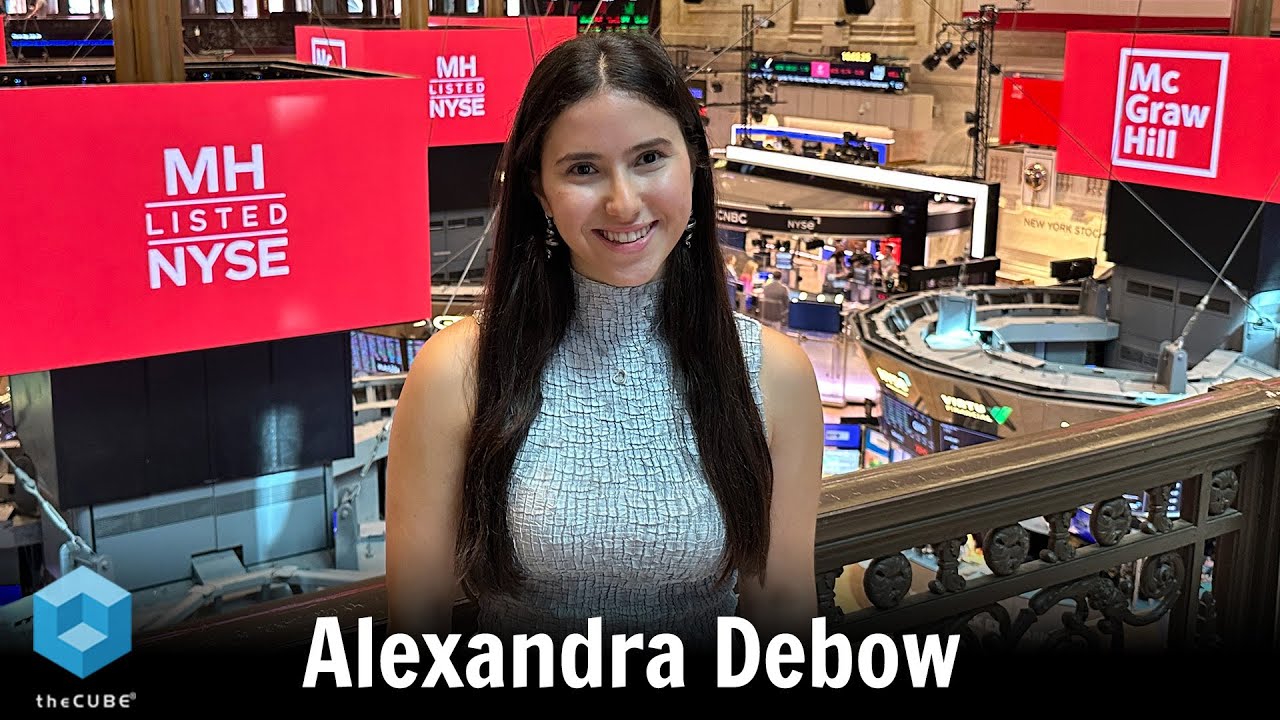
>> I'm Gemma Allen coming to you from theCUBE Studio here at the New York Stock Exchange. This is Mixture of Experts, one of our programs at NYSE Wired, and join me now as a woman who's going to have a conversation around what happens when buyers no longer have to buy directly from sales teams and can instead buy from a superhuman. Welcome, Amanda Kahlow, CEO and founder of OneMind. Welcome.
Amanda Kahlow
>> Thank you for having me. It's great to be here.
Gemma Allen
>> So Amanda, I really want to get into what a superhuman is for a number of reasons, but first I want to get into what a superwoman is and I want to talk a little bit about you. So you are a third time founder. You founded a company that is now at worth valued at $5 billion. Multi, multiunicorn. There aren't too many Amandas, especially in the female entrepreneurial space. Talk to me a little bit about you, specifically, and your journey.
Amanda Kahlow
>> Yeah. So my journey was unexpected and accidental. I grew up below the poverty line. I lived at 18 houses before I was 22 years old, drank powdered milk and block cheese. But I always say that my mom gave us an extraordinary amount of belief in ourself. And so despite all the challenges and the trauma that I had, I always knew I could do whatever I put my mind to and I just get an idea and I'm 100% kind of person. If I do something, I'm all fucking in.
Gemma Allen
>> I love it.
Amanda Kahlow
>> Am I allowed to say fucking?
Gemma Allen
>> So you founded 6sense, which is really around intent data back in 2012. Am I correct?
Amanda Kahlow
>> Correct, yeah.
Gemma Allen
>> In around that time.
Amanda Kahlow
>> Yep.
Gemma Allen
>> I mean, in some respects, even though that was like little over a decade ago, in tech, it feels like it was a century ago, because we are at the cusp of something so different that is coming at us so fast. You had an exit. You possibly could have lived a very nice life maybe playing tennis or something, right? Far from the-
Amanda Kahlow
>> A lot of golf.
Gemma Allen
>> Far from the childhood you were reared and all that, but instead you decided to come back with OneMind. Talk to me about what happened, what changed for you and what market opportunity you saw.
Amanda Kahlow
>> Yeah. Yeah. Similar to what I was saying before, anything I put my mind to, I would do 100%. So when I took time off on my LinkedIn, it said I was permanently on the bench. I played a lot of golf. I gave myself an unachievable goal, had the best round of golf of my life and said, now what? But really it came down to the market and where we are right now with AI. How could I sit out what's happening in this world and being a part of something that, I think we only get this opportunity once in our life. When I have the idea for OneMind to replace, basically what we're doing is replacing sellers with AI, we call them superhumans. It does the job exponentially better than a human. And when I saw the world and the technology would allow for what the vision was, I just had to be a part of it and I had to take one more swing. And honestly, I missed the highs, I missed the lows. The lows are what make the highs so good. I miss the rollercoaster of early day startup and the culture that you can build. And I look at 6sense as my training grounds for OneMind now, which hopefully will be my legacy.
Gemma Allen
>> Wow. So the product itself, it is an AI, a digital twin almost of you was the original concept, right? Which ...
Amanda Kahlow
>> Not of me, but-
Gemma Allen
>> -
Amanda Kahlow
>> .
Gemma Allen
>> Of a hustler.
Amanda Kahlow
>> Yeah, yeah.
Gemma Allen
>> .
Amanda Kahlow
>> I never want to clone myself.
Gemma Allen
>> Me neither. That's a .
Amanda Kahlow
>> Yeah. No, I'm not in the business of cloning Amanda. One is enough for this world.
Gemma Allen
>> Likewise. But it is essentially a GTM, but where buyers can go and engage with this sales representative, per se, a superhuman on a variety of topics, right? Ask it questions about the policies around the product, the user experience, et cetera, et cetera. Talk me through how AI fundamentally shifts the opportunity to use a superhuman versus an original, an OG hustler.
Amanda Kahlow
>> Yeah. So there's two places that we look at that were juxtaposed. There was the world of chatbots that we have on websites that are basically just there to qualify and book a meeting. And that's the way that most people would go-to-market, is they put those on the website, then you have humans that go in the loop. But if you actually think about the buying process and put yourself in the shoes of buyers, the journey that we send them through is atrocious. We say, go onto Google or the LLM, do your search. You end up on a website and you look around and you've got thousands of pages to find what resonates with you. And then you go to a chatbot and talk to it and it's just there to try to get you to a junior SDR human. Then you talk to this junior human who's only there to qualify you to pass you to an AE, another human, who's only there to give you the full pitch. Then when you have technical questions, you get past to a sales engineer and then a solutions engineer, and then you buy and you get to a customer success person. Are you exhausted? I'm exhausted. That process is atrocious. And what we do to buyers is really awful. So our thesis is what if we can compound that all together in a contextual graph that understands everything about the buyer, everything about the product, can have an empathetic conversation, solution sell, remember past conversations, and do it better than a human. So it's not a deterministic set of rules. It's using reasoning, like humans do, in our brains to know, hey, I'm talking to Gemma today. She's exponentially through her process. This is where she is. This is what her needs are. These are the questions that are going to resonate and can sell better than a human and then can do the actual actions better than a human. So yeah, we're leaning into the concept that we are replacing humans across go-to-market. It's a challenging thing to say, and it's a world that I'd rather be a part of driving the bus than get run over by the bus. And I think it's the most humane thing that we can do is to share with people what's actually coming.
Gemma Allen
>> So in larger organizations where sales structures are quite complex, there are multiple touch points. You have that entry demo stage, then you grow the account. So you have your designated AE. And oftentimes, again, I worked in a subsidiary of a sales organization for quite a while, there is an element of knowledge is power in the sales process and relationships are power too, in terms of who owns those connections. In this model, in some ways, it democratizes that because it's really one experience until a certain point. What is that point? Like what is the point by which human connection takes back over?
Amanda Kahlow
>> Yeah, it's a really great question because the biggest pushback we get is people buy from people, like you said, and there's a relationship and there's a sale, that people are looking for that trust. And if you break it down, when I think about why is it people buy from people? Do they? And they want a relationship with their salesperson. I'm like, do people actually want a relationship with your salesperson or do you want a relationship with your coworkers, your family, your friends, your network? Nobody gets excited to wake up in the morning and say, "Oh my gosh, I have a demo with this salesperson today," said no one ever. Then it comes down to trust. So people feel they trust humans more than they trust AI. Now, the reason for that is because we've seen so many broad cases where AI hallucinates, right? It doesn't say the right thing. We don't know that we can trust it. However, when you're building application-specific AI and you put it on tight guardrails, that trust and that chasm's going to shift. And when people realize they're going to get a better answer from the AI than they get a human, buyers are going to demand to talk to an AI and not talk to a human. And one of my favorite things when people ask me, "Well, does your AI hallucinate?" I'm like, "Do your sellers hallucinate? Do humans hallucinate? And do they do so nefariously, knowingly to get the deal done?" So I think we're coming into that point in the evolution of this technology and what we can do and where buyers are and their journey. But when buyers realize they're going to get a better response and they don't have to say the same, repeat themselves 15 times, the handoff from one human to another human is awful. And we have the best of intentions as humans, but we forget. I'm on 10 sales calls a day and I forget what we talked about last time and I'm trying to read my notes and I just go with the core pitch because I can't remember. I have the best of intentions, but I don't remember. And so that's what happens. And so when you can put an AI in the mix, it can remember, it can pull in context. It knows what you're trying to solve for. So it takes you to the next stage so you're never having to repeat yourself and you can get deeper in the process. And it can do something that we try really hard to solution sell and understand our buyer's needs, but we don't do a great job of it. So we don't really understand the nuances of the business challenges that we're trying to solve for, but the AI can and can do it exponentially better than a human.
Gemma Allen
>> Talk to me about where the gap for this is most visible because when you say, do people like to talk to their salespeople? I guess at a certain level in an organization where you're golfing or you're going to the Ryder Cup or whatever. I'm just thinking of the Irish, the Irish example coming up, people do like that. They like the ego of that experience. But for small businesses, for like mid-market players, it's difficult. It's difficult to have a sales team and also to compete on like the same comp structures. It's the typical scenario. The middle guy gets squeezed. But in this model, are you saying that potentially, you can plug and play this into your ... It's an API where you can just into your organization and it can take over your sales execution for you. Who's that appealing to the most right now, I guess?
Amanda Kahlow
>> There's different places. So we do everything from replace like the SDR, the more junior person. We replace the sales engineer, the solutions engineer, who's doing the deep technical discovery, the legal questions, really understanding the business model. Now the AE, which you're saying, they're the ones who bring you to the golf tournament. In fact, we just brought 15 of our prospects to the Super Bowl a few weeks ago.
Gemma Allen
>> Oh wow.
Amanda Kahlow
>> We still believe in events and high touch with the enterprise and a C-suite executive. And so I think there is a balance between where the humans will come in and have that high touch human relationship and that's when humans are still buying. So what we haven't talked about is what happens when AI is the buyer.
Gemma Allen
>> I know, interesting.
Amanda Kahlow
>> Right? So right now humans are more the buyer and we're moving into a world where the selling can be done by AI, but when it shifts and when it's agent to agent and AI to AI, there's no more Superbowl. So I don't think the world is there yet, but we're absolutely moving in that direction. And then to your other point about the mid-market and smaller companies, one of the first things I always challenge our prospects and customers in the world to think about, where is there no business model for a human? So you have things like your PLG motion, product-led growth companies who have free trials and have small ASPs, like small ticket items that they're selling, and they can't put a human in the mix. It's a $500 deal or a $1,000 deal. There's no business model to have a human pick up the phone and call that person because your margins would go out the window. So what if you could put a human-like experience right when somebody signs up. Let me show you how to use the product, let me walk you through this. Let me move you from free trial to paid. So that's the big thing, is like with so many companies come in, you have hundreds of millions of people that download the free trial and one to 3% convert. What if I can change that 1% to 6%? What would that do for the business? And it's remarkable. So a lot of companies on the enterprise side, we're going to work and be the SDR in their early stage, we'll be the solutions engineer. And then on like a PLG or mid-market type of product, let us be the full salesperson. Let us take this all the way to close. Let us move them along their journey, onboard them, upsell them, share about new products, new technologies that you have when you can't have the conversation because we can't scale humans. Humans have time, capacity and recall limitations and humans only scale and they scale at a linear growth model. And this gives you the ability to scale exponentially.
Gemma Allen
>> And are there industry verticals you're seeing where this is having like a very clear use case, like an immediate low hanging fruit from the perspective of you selling in?
Amanda Kahlow
>> Yeah. I mean, my world, just to be fully transparent, I know a lot of people in the tech world. So those are the first doors that we're knocking on and talking to, other tech companies, especially like your traditional SaaS company. They are experiencing a squeeze like never before. So growth costs twice as much to acquire a new customer, up to like $5 to require a $1 of revenue, which is wild to think about like what we're doing. And growth still in the New York Stock Exchange is valued 3X that of efficiency costs. So in a world where you're trying to grow versus just cut costs, I think it's really important. And not only does it cost twice as much to acquire a customer, and the growth is shrinking, but the growth is down. We're down to 8%.
I had a CEO tell me the other day that he was proud of an 8% growth rate. I was like, "What world do we live in where that is exciting?" So I mean, some companies are just happy to be flat right now. So the traditional model was throw a bunch of humans at it and let's buy growth. Can't do that anymore. They're too expensive. They're too resource intense. We have to do it a new way. So the world, the opportunity right now demands a new way of doing things and it just so happens that AI is here to allow us to think about the playbooks differently.
Gemma Allen
>> Talk to me a little about the tech because in the world of AI right now, it does feel as though it's moving literally-
Amanda Kahlow
>> So fast.
Gemma Allen
>> At the speed of sound. You can't keep up with the different releases across the frontier models. It's hard to know who has any like marginal advantage in anyone's space. I mean, we hear a lot about Anthropic and enterprise et cetera. But broadly speaking, it just seems like a lot of noise. When you're building in that space, are you building a lot of proprietary stuff? Are you building on top of these models? And how are you, from a technical execution perspective, seeing just abreast of what's happening? Is that an ongoing challenge?
Amanda Kahlow
>> Yeah. I mean, we have a whole team dedicated to understanding the latest and using the latest and greatest models and which ones we should use. We always optimize for three things. We're optimized for accuracy. Obviously we want the answers. If she's going to go in and sell, she has to be accurate. It has to be bring the cost down and then speed, latency. So how fast? If I'm having a conversation with an AI and it waits 10 seconds to respond, that's not going to work. So in a lot of those areas, so we are using the foundational models, but we're using it agnostically. We use OpenAI, we use Anthropic, we use Google, we use multiple at different turns. And then we have our own small, we call them like small language models where if she's just answering the question of, "How are you? How was your day?" I don't need to go ping open AI. I don't need to go ping the LLM, the foundational models to get that response back. Or if I'm on a call, because she joins calls, she joins Zoom calls, Teams, Google Meet. In that scenario, we have to build models to know when is it her turn to talk. So those are things that the foundational models aren't going to help us with. So the speaker diarization, the understanding, if you're speaking slow, I'm a fast talker, but if you're speaking slow, maybe she should slow down as well. So there's a lot of research that says that people really resonate with people who sound and look and talk like them. So we're building a lot of around like the emotion. And when you say, "Oh yeah, I'm going to buy," but you actually mean you're not going to buy, how does she turn that into, "Oh, that was actually a negative cue, even though she said she was going to do it." So there are pieces of the equation that we're solving ourselves. We're also solving the ability to give the live demo, so she can, on the Zoom pull up a virtual machine, click around, share the screen, say, "Hey, no, you're in the wrong spot. Go here, do this." Those are the things that are super exciting for me. So yes, we use the foundational models. Yes, we use some other things for face and voice. We do some of our own. It's a mix, but we just want to stay ahead. I think this world right now, where anyone can build anything that I, back in my days at 6sense, we were a culture of no, in the sense we had to stay focused. We had to stay clear to our roadmap and stay on that journey. And it was, no, this is what we're doing because we can't afford or we don't have the time and the resources of our engineering team to say yes to anything new. I think it's a complete shift today, but we have to be a yes culture. It's almost like we're moving into a services business that then after we put it to market and put it to use for a customer, how do we then turn it into a product? So it's a completely new mind F for myself to think about like, I've got to lead this company in a very different way if I'm going to stay ahead and I'm going to win and I'm going to ring the bell out here one day.
Gemma Allen
>> Well, I hope. I'll certainly be watching.
Amanda Kahlow
>> When, not if.
Gemma Allen
>> I'll be there with the champagne on the sideline. So tell me, you just raised, well, in total 40 million, you're here, actually, because you're meeting with some of the LPs at primary. I know Cassie Young is a big fan of yours. That's how I first came across you on LinkedIn. I read a post from Cassie and I was like, "I need to meet this woman. She sounds so cool." But talk to me a little bit about the investment process. I mean, I guess you've just, that was an A.
Amanda Kahlow
>> Yep.
Gemma Allen
>> I guess you're now going to spend that cash and put that cash into the business, optimize, but what's ahead from the perspective of investment and, I guess, the next 12 months?
Amanda Kahlow
>> Yeah. I mean, we're experiencing some of that really exciting AI growth. I was just recently looking at our growth numbers and 18 months being in market. We've been around for two years, but been in market for 18 months and, without sharing our numbers, we are where I was at 6sense at year five, 18 months in.
Gemma Allen
>> Amazing.
Amanda Kahlow
>> And so, and similar to any other go to-market tech company today. And the really exciting thing about what we're doing, which of course we all love Lovable and what a lot of other AI companies have massive growth curves. However, there's a lot of experimental AI happening in those companies, so there's a ton of churn. On our side, we have enterprise deals, they're 12-month contracts, they're paid upfront, they're six figure to seven figure deals, there's no churn. We had 211% NRR last year. So people are renewing and they're growing. Within 30 days of going live, they're expanding to an additional superhuman. As soon as they see that this actually can work, they're like, "Oh wait, let's add another one. Let's add another one," in a different place across the journey of their life cycle of their customer. So it's super exciting. So my goal right now is, I'm taking that money, of course, be mindful of it, of where we're spending, but a lot of it is going on the engineering and the resources just to stay ahead of the curve and stay ahead of the market. And like I said, build to what our customers need and build this services organization within a SaaS framework or AI framework.
Gemma Allen
>> Well, Amanda, I am very excited at the though of watching a female ring the bell one day, so I will certainly be rooting for you from the sight lines. Thanks so much for coming on theCUBE.
Amanda Kahlow
>> Yeah, thanks for having me. Less than 1% of enterprise founders are women. So I have an obligation to women to be successful, so I'm really excited to be here. Thank you for having me.
Gemma Allen
>> I'm Gemma Allen coming from our studio here at the New York Stock Exchange. This is Mixture of Experts, one of our segments with NYSE Wired. Thanks so much for watching.

















































 Gemma Allen