In this theCUBE + NYSE Wired: Mixture of Experts segment from the New York Stock Exchange, theCUBE’s John Furrier sits down with Raj Verma, CEO of SingleStore, to unpack how the intersection of technology and finance is shaping enterprise strategy. Verma shares why SingleStore is “on course” for the public markets, reflects on brand-building through the company’s partnership with golf Hall of Famer Padraig Harrington and connects that ethos to how SingleStore helps organizations fix struggling data “swings.” The discussion zeroes in on what’s next as Wall Street watches the AI infrastructure buildout: after chips and systems, the software and data layers set the pace for value creation.
Verma outlines why enterprises must modernize “brown” data estates into “green” ones to safely bring corporate context, governance and compliance into LLM workflows via RAG – and why commoditized data-at-rest puts the advantage at the query layer that unifies data in motion with data at rest. He predicts agentic AI will gain reasoning capabilities in roughly 18 months, cites industry indicators like Google reporting ~25% of its software now built by AI and argues that high switching costs will give way to disruption as buyers reassess legacy vendors. The conversation closes with concrete momentum: ~33% YoY growth, ARR in the ~$135M range, gross dollar retention ~98%, cloud NDR ~130, ~50% of business now in the cloud, landing ~3 new customers per day, a path to cash-flow breakeven in the next two quarters and a teaser for AI-related announcements in the next two months. Listeners will find notable stats, real-world use cases and forward-looking views on how databases power reliable AI at enterprise scale.
Forgot Password
Almost there!
We just sent you a verification email. Please verify your account to gain access to
theCUBE + NYSE Wired: Mixture of Experts Series. If you don’t think you received an email check your
spam folder.
Sign in to theCUBE + NYSE Wired: Mixture of Experts Series.
In order to sign in, enter the email address you used to registered for the event. Once completed, you will receive an email with a verification link. Open this link to automatically sign into the site.
Register For theCUBE + NYSE Wired: Mixture of Experts Series
Please fill out the information below. You will recieve an email with a verification link confirming your registration. Click the link to automatically sign into the site.
You’re almost there!
We just sent you a verification email. Please click the verification button in the email. Once your email address is verified, you will have full access to all event content for theCUBE + NYSE Wired: Mixture of Experts Series.
I want my badge and interests to be visible to all attendees.
Checking this box will display your presense on the attendees list, view your profile and allow other attendees to contact you via 1-1 chat. Read the Privacy Policy. At any time, you can choose to disable this preference.
Select your Interests!
add
Upload your photo
Uploading..
OR
Connect via Twitter
Connect via Linkedin
EDIT PASSWORD
Share
Forgot Password
Almost there!
We just sent you a verification email. Please verify your account to gain access to
theCUBE + NYSE Wired: Mixture of Experts Series. If you don’t think you received an email check your
spam folder.
Sign in to theCUBE + NYSE Wired: Mixture of Experts Series.
In order to sign in, enter the email address you used to registered for the event. Once completed, you will receive an email with a verification link. Open this link to automatically sign into the site.
Sign in to gain access to theCUBE + NYSE Wired: Mixture of Experts Series
Please sign in with LinkedIn to continue to theCUBE + NYSE Wired: Mixture of Experts Series. Signing in with LinkedIn ensures a professional environment.
Are you sure you want to remove access rights for this user?
Details
Manage Access
email address
Community Invitation
Jake Diamond-Reivich, Jupyter Foundation
In this theCUBE + NYSE Wired: Mixture of Experts segment from the New York Stock Exchange, theCUBE’s John Furrier sits down with Raj Verma, CEO of SingleStore, to unpack how the intersection of technology and finance is shaping enterprise strategy. Verma shares why SingleStore is “on course” for the public markets, reflects on brand-building through the company’s partnership with golf Hall of Famer Padraig Harrington and connects that ethos to how SingleStore helps organizations fix struggling data “swings.” The discussion zeroes in on what’s next as Wall Street watches the AI infrastructure buildout: after chips and systems, the software and data layers set the pace for value creation.
Verma outlines why enterprises must modernize “brown” data estates into “green” ones to safely bring corporate context, governance and compliance into LLM workflows via RAG – and why commoditized data-at-rest puts the advantage at the query layer that unifies data in motion with data at rest. He predicts agentic AI will gain reasoning capabilities in roughly 18 months, cites industry indicators like Google reporting ~25% of its software now built by AI and argues that high switching costs will give way to disruption as buyers reassess legacy vendors. The conversation closes with concrete momentum: ~33% YoY growth, ARR in the ~$135M range, gross dollar retention ~98%, cloud NDR ~130, ~50% of business now in the cloud, landing ~3 new customers per day, a path to cash-flow breakeven in the next two quarters and a teaser for AI-related announcements in the next two months. Listeners will find notable stats, real-world use cases and forward-looking views on how databases power reliable AI at enterprise scale.
play_circle_outlineAdministering the Jupyter Foundation: Community, Projects (Notebooks, Lab, Hub, Light), Maintainers, Users, and Company Collaboration
replyShare Clip
play_circle_outlineJupyter Foundation Leaves NumFOCUS, Joins Linux Foundation; Jake Elected Marketing Sub‑Chair and Executive Council Steward; Community Proposes AI Tooling Hires
replyShare Clip
play_circle_outlineJupyter AI v3 Adopts ACP to Integrate Claude Code, Codex, and Gemini in Notebooks
replyShare Clip
play_circle_outlineDeterminism required for regulated industries; notebooks produce reproducible outputs.
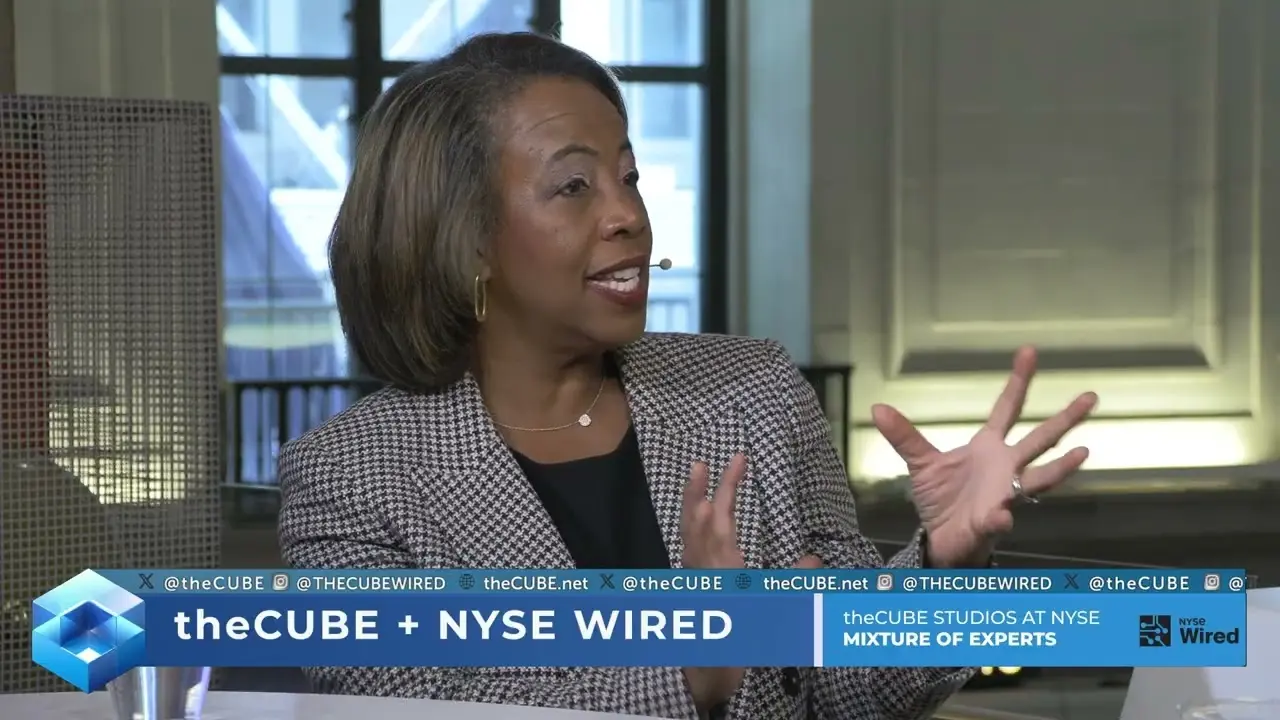
>> Welcome back to theCUBE Studio here at the New York Stock Exchange. This is Mixture of Experts, one of our programs at NYSE Wired, and today we're talking all things Jupyter Foundation. Joining me now is Jake Diamond-Reivich, co-founder of Mito and also board member at the Jupyter Foundation. Welcome, Jake.
Jake Diamond-Reivich
>> Super excited to be here. Thank you.
Gemma Allen
>> So, the Jupyter Foundation. For those not familiar, talk to me a little bit about what exactly you guys are. What is the big goal here?
Jake Diamond-Reivich
>> Yeah. So a few years ago, Jupyter left NumFOCUS and joined the Linux Foundation. And in doing that, created the Jupyter Foundation. We have a lot of awesome companies on the board. We have Apple, Uber, Snowflake, AWS, Google, and then some companies comprising some other memberships as well. The goal for us is to administer the community of Jupyter Notebooks. These are the people who make Jupyter Notebooks, Jupyter Lab, JupyterHub, Jupyter Light, and help that community flourish from the maintainer perspective, from the user perspective, and also from all the companies that are on the board and building collaboration between those companies and the community itself.
Gemma Allen
>> So foundations broadly. I think a lot of people in the periphery of tech may not know a lot about how these were formed. Talk to us a little bit about how you maintain communication, dialogue.What's a week look like for you? Are you talking to folks on the board? Are you talking to audiences in different sectors? Break it down. Bring it to life.
Jake Diamond-Reivich
>> Yeah, yeah, yeah. So I'm the marketing sub chair for the foundation. So there's sort of two sides to it. There are the companies on the board. I'm trying to work with Google and Anaconda, Snowflake. We're running an event next month, co-located in San Francisco and London, hosted by AWS and Snowflake for AI, an AI dev summit for AI and notebooks, bringing together developers, new users, leaders in the AI space. So that's one of the resources you get from working with these amazing companies on the board is having them host you with their offices and connect with the community. So that's a big part of the work is working with the companies. But then there's the community side. I'm also on the Jupyter Executive Council. So I was elected by the Jupyter community, the open source maintainers, the open source contributors, to sort of help be a steward and communicate with the board. So we're running things like community proposals. We can take the funding of the community and hire someone to work specifically on community management and JupyterHub or build out some of the new Jupyter AI tooling. But those projects obviously also impact the companies around the board. So it is all very connected, but there definitely is some multiple sides to it, whether it's the companies or the open source. But I think a foundation run well is sort of taking the benefits of open source and bringing them between the community and the companies that are involved there as well.
Gemma Allen
>> In terms of the foundational, I guess, philosophy, we were just recently at one of the Linux Foundation events here in New York. They have also founded the agentic AI Foundation, AAIF. And it was interesting because we were talking to some guests and Linux is also 30 years older, even more. I think it was founded in 1991. It's even longer, right?
Jake Diamond-Reivich
>> Minus Torvalds, right?
Gemma Allen
>> Yeah. For sure.
Jake Diamond-Reivich
>> Yeah. Yeah.
Gemma Allen
>> Yeah. Yeah. And we were talking about to some guests at the show, what has happened in the industry in 30 years and how dynamics and competitive dynamics have suddenly become, in some respects, even more dog-eat-dog than ever before. Especially in the AI space, we look at what's happening in that race and how we need to ensure that there's also this collaborative nature to the industry. And the three main sponsors of that are Anthropic, OpenAI and Block. And I was kind of riffing with people like, what really happens with Anthropic and OpenAI? How earnest are they with each other? Yeah. Talk to me a little bit about for Jupyter and these different competing players, how that really comes to play. How do you ensure that there's a level of candidacy and I guess collective culture that's just leaning in particular direction when companies are competing more aggressively than ever before?
Jake Diamond-Reivich
>> Yeah. I mean, let's take an example. So Jupyter AI V3 just launched using agent client protocol to bring all these other great AI tools into Jupyter, which we could talk more about. A lot of the big developers on that were from Apple, AWS, and QuantStack, which is a really great company out of Paris. I think what the dynamics here is that the people at those companies who sort of elect to work on those things, or especially elect to be board members, it's very self-selecting. They're passionate about Jupyter often as a equal priority to their work at the company. So I'm sure there are very competitive people in each of those companies, but maybe there's a little bit of a selection bias of the more community oriented folks who end up on these boards that are really passionate about open source. And that's not like a panacea for competitive dynamics and it's something that does happen and needs to be worked through. Linux Foundation does a really great job of like every call you join, the first thing they say is a sort of antitrust policy that we all need to abide by. But I do think the people who are involved in open source just sort of have that collaborative spirit, which is great for things like AIF to sort of bring all those people together and amplify their passion for collaboration.
Gemma Allen
>> For sure. So talk to me about Jupyter, which is a space you're obviously very, very, very passionate about. You've also built a company yourself in this space. Talk to me a little bit about what brought you here, I guess, and also tell me about the company you built.
Jake Diamond-Reivich
>> So Jupyter AI V3 just launched. The AI experience in Jupyter Notebooks, which I should say, if anyone's unfamiliar with Jupyter Notebooks, it's probably the most common data science environment in the world, tens of millions of monthly active users using Jupyter. It's used in every Fortune 500 company. It's used in every university in the world. And that's a really great thing that it sort of spans the most intense enterprise use cases to someone's first experience with Python or R is in a notebook. It's really this environment that spreads across all levels of data work. Jupyter AI V3 just launched, which uses something called ACP, Agent Client Protocol, which what that does is it allows you to use all the great AI tools that exist like Claude code, like Codex, like Gemini inside of Jupyter instead of competing with those tools with an AI experience inside Jupyter. I would say like, in product development, I think about this at Mito a lot, you can either sort of like meet users where they are right now in terms of what's available in AI or you can skate to where the puck is going to be. That's a big decision a lot of places make. I think what's awesome about this Jupyter AI V3 release is that it's about sort of skating along the puck with the users. So as Claude gets better, as Codec gets better with every release, all of that is available inside of Jupyter. Jupyter used to have sort of their own thing called JupyterKnot, which has been relegated a bit. And now you can use Claude Code directly inside Jupyter, allowing you to do the most advanced AI workflows inside that. Mito, the company I founded, also builds a lot of AI extensions for Jupyter, often specifically for financial services. And one of the great things about the Jupyter AI V3 release is that it sort of broke down what was the much more opinionated Jupyter AI into these building blocks. So any company, a company like mine can build very custom AI experiences inside of Jupyter. So really exciting for the open source democratization of AI and data science.
Gemma Allen
>> So Mito, you guys are part of a YC intake in 2020? Am I correct?
Jake Diamond-Reivich
>> Yeah, we did our seed round in 2022, at their demo day.
Gemma Allen
>> Okay. And talk to me a little bit about what's actually happening. You mentioned you do a lot with financial services. What are you seeing broadly? Are you seeing a lot of quants, a lot of people, data scientists in this space looking for new ways to record, to improve, to, I guess, reiterate how are things actually playing out technically within these industries?
Jake Diamond-Reivich
>> So we have a pretty high density of users and financial services. We also have a big open source community of people from tech, academia very similarly matches up with what you see in Jupyter. Jupyter actually started a lot of the early developers came out of quant finance. The piece of Mito that was really strong in the beginning and important was transitioning spreadsheet users over to Python. We have this thing called the Mitosheet, which feels like a spreadsheet, but every edit generates the equivalent Python and we were able to deploy that at some really large banks and encapsulate some really large user bases there. Around COVID, a lot of banks were actually spending time retraining Excel users on Python. Obviously there's been a big shift since then, which is that ChatGPT came out. Now AI is this amazing tool to get people to start using Python and start doing more advanced data workflows. So Mito shifted a little bit about me more focused on helping someone from a spreadsheet audience, someone from a bit more analyst background turn into a data scientist using AI. One of the really important pieces there is that you need determinism. So if you go to ChatGPT and have it do some data workflow just based on its LLM, you might ask to get the same question three times to get three different answers. That doesn't work for a bank. That doesn't work for a regulated industry. You need Python code in the background to make sure that when you're running something, the same output is generated each time. So what Mito does is it uses these LLMs, but also is really good at generating notebooks with Python to make sure that you're generating deterministic processes. And that's one of the things that Jupyter is really awesome at. And one of the valuable pieces of Jupyter for the future is that you have an environment where LLMs can run code and see the output of that code in the same environment. So I'm not just running code, but I'm seeing, okay, I have a chart that was generated as well. An agent can run the code and also look at the output of that chart to iterate. It's like a mini reinforcement workflow inside of one document over and over again, which is the most efficient way to let these agents do these really strong data processes, which could definitely talk more about that. But yeah, I think there's a big future for notebooks there.
Gemma Allen
>> When you talk about what's happening inside these industries, right? And you say something interesting there, like somebody within a particular practitioner space can become a data analyst, right?
Jake Diamond-Reivich
>> Yeah.
Gemma Allen
>> With these tools, right? Using Claude Code, using Mito, using different types of vibing tools, for example, vibe coding tools. Do you think that that is, realistically speaking, like where we're headed or do you think that there has to be some level of silo from the perspective of what skill sets need to really be in place to be able to have determinism, to be able to have context, to be able to really add to what is already quite a complex skillset and not just suddenly consolidate into something that is more like mass available?
Jake Diamond-Reivich
>> Yeah, that's a great question. I think that we definitely are going on a route of heavily democratized access to data. I don't think we can stop that. If a company started siloing people off from data, I think people would leave that company because they realized that, oh, at another company I can do much more innovative things. So people are craving the ability to use AI to refine their workflows and build interesting things. But so what I think is necessary is an environment where you create a data platform, people can access the data, vibe, do data analysis, but in a way that has the right context available for them, is secured in the right way, is provided them access to the right data sources and giving different levels of persona and access so people can access the data in their company that's appropriate to them. This is one of the things that Jupyter's really good at. It's an open source environment, which means you can customize it as much as you like, which is why you see a lot of companies, banks like TD Bank, JP Morgan, Bloomberg, not a bank, but a financial company building really rigorous heavy data platforms on top of Jupyter. It has all those necessary tools, but it's customizable. It's open source so they can run it fully locally. There's no vendor lock-in. They've been using these things for 20 years, or not 20 years, 10 years. And so I think that the importance of these sort of open source, customizable data platforms will continue to increase because you're going to have a much larger percentage of your company is going to consider themselves a data person as AI tools make it easier to use data.
Gemma Allen
>> And when you go under the hood of these things, you said you're using multiple LLMs, multiple versions of multiple LLMs, right?
Jake Diamond-Reivich
>> Yeah. Yeah, yeah, yeah.
Gemma Allen
>> All of which have their own policy concerns, their own, I guess, question marks in terms of their enterprise applicability. We hear a lot about Claude and it's like, I guess, prominence and enterprise from the perspective of what it brings from a governance perspective. What are you actually seeing? Because if you're building something that is really somewhat of a mishmash, how are you balancing the various, I guess, speeds and integrations with the policy concerns on the other side?
Jake Diamond-Reivich
>> Yeah. Well, what's nice about Mito is you can connect any LLM. So if you have an API key for an LLM, you can attach that to the tool. So we work with some banks that want to use specifically their enterprise open AI key. Great. That's all I use. We work with some companies who only want to use open source models. We work with some of the national laboratories. They want to use internal models they've built or open source models. Great. You can just use those models. And it's a similar thing with Jupyter AI's V3 launch, which is one of the things that's important for the community right now is, as I was saying before, you can connect any AI tool that you have. It's actually even easier than that, which is really cool. If you have Claude Code on your computer and then you open Jupyter with Jupyter AI V3 launched, it will actually detect that you have Claude Code and you can tag Claude Code right from the chat interface inside Jupyter don't have to do any extra setup, which I think is pretty cool. So you're absolutely right that there are different levels of, or different companies have different preferences about what models they want to use, and maybe not all models should be interacted with in the same environment, but at Mito and at Jupyter, we're really putting that power with the user to decide what models they want to use because we recognize, yeah, it's a different policy for a lot of different places and different types of industries.
Gemma Allen
>> Wow. Okay. So in terms of what's ahead for the Jupyter Foundation, you guys are like two years old. Am I correct?
Jake Diamond-Reivich
>> Yeah. About two years old.
Gemma Allen
>> Okay, two years old.
Jake Diamond-Reivich
>> Jupyter has been around since about 2014, but the foundation is two years old.
Gemma Allen
>> For sure. So talk to me a little bit about what's on the horizon. Are you planning to, more global engagement, more events, more bringing people together in rooms. What does this look like?
Jake Diamond-Reivich
>> Definitely going to be some more events this year, not announced yet. So would love to come back and tell you about all the awesome events that will happen later this year around the world. But the one event or one series of events I can tell you about is the Jupyter AI Dev Summit. So the next one is set for end of May 27th and 28th in the Bay Area and in London and the co-located. It's really cool they're at the same time. So we'll have developers from the companies on the board that I mentioned, open source developers and the Jupyter community, people from these AI companies that we've been talking about come together and talk about how to make AI and notebooks work better together. And as we're forward-looking, I think that Notebooks are going to become a much more important tool for agents. As I mentioned before, a notebook has code that can be ran, has access to compute through the kernel. It has outputs. You can have images, you can have videos, you can have graphs inside of this one document. And so giving a notebook to an agent is really strong, it can touch all these different things, run them in order or in different sequences, test just parts of the code, and see the results within the document so it can iterate really quickly. It's a mini reinforcement learning, as I said before. So I think it's the perfect environment for agents to be able to interact with other agents and also with humans who they can go in and see what's happening. It's sort of, I don't mean multimodal in ... I think you could think of notebooks as the best multimodal environment for an agent.
Gemma Allen
>> And how real time is that use case right now? For Mito, for example, do you have agents running, using Mito autonomously, like fully autonomously on behalf of firms and institutions or like how far out are we from that?
Jake Diamond-Reivich
>> Yeah, yeah. So for Mito and Jupyter, it's a little bit different. So we have the Mito agent inside of the notebook experience for the user. That agent can generate notebooks. That agent's really good at taking Excel processes and turning them into a Python process, which is really important for the AI age because AI models work much better with Python than they do with Excel. And so much of the institutional model for banks, all the companies down there are kept in Excel.
Gemma Allen
>> But do you have an agent on behalf of a customer working directly with your agent?
Jake Diamond-Reivich
>> Oh, that's interesting. So we don't have an agent on behalf of a customer working with our agent. Mito is open source and local as well. So people will use our agent within their company to sort of replace maybe the need for building their own data agent. But in the Jupyter example, in Jupyter AI V3, which just launched, totally. Maybe you have a custom model that you built, you can use that immediately. You can also do that in Mito too, but you can use Claude Code, you can use Gemini, you can use Codex inside of your Jupyter environment, not working with the Jupyter agent, and this is the big distinction, working as the Jupyter agent. Your local agent becomes the agent that's operating inside your tool, which has access to all these amazing things, the outputs, the code, the compute from the kernel. So yeah, it's pretty cool.
Gemma Allen
>> Wow. Well, it's a fascinating time, Jake, right?
Jake Diamond-Reivich
>> Yeah, yeah.
Gemma Allen
>> So much is changing so quickly.
Jake Diamond-Reivich
>> Absolutely.
Gemma Allen
>> And I think these foundations and these conversations and these communities are so important, especially as we build a future that has to serve everybody.
Jake Diamond-Reivich
>> Yeah.
Gemma Allen
>> Thanks so much for coming on the show.
Jake Diamond-Reivich
>> Yeah, yeah. Great to be here.
Gemma Allen
>> I'm Gemma Allen coming to you from theCUBE Studio here at the New York Stock Exchange. This is Mixture of Experts, one of our programs of NYSE Wired. Thanks so much for watching.
>> Welcome back to theCUBE Studio here at the New York Stock Exchange. This is Mixture of Experts, one of our programs at NYSE Wired, and today we're talking all things Jupyter Foundation. Joining me now is Jake Diamond-Reivich, co-founder of Mito and also board member at the Jupyter Foundation. Welcome, Jake.
Jake Diamond-Reivich
>> Super excited to be here. Thank you.
Gemma Allen
>> So, the Jupyter Foundation. For those not familiar, talk to me a little bit about what exactly you guys are. What is the big goal here?
Jake Diamond-Reivich
>> Yeah. So a few years ago, Jupyter left NumFOCUS and joined the Linux Foundation. And in doing that, created the Jupyter Foundation. We have a lot of awesome companies on the board. We have Apple, Uber, Snowflake, AWS, Google, and then some companies comprising some other memberships as well. The goal for us is to administer the community of Jupyter Notebooks. These are the people who make Jupyter Notebooks, Jupyter Lab, JupyterHub, Jupyter Light, and help that community flourish from the maintainer perspective, from the user perspective, and also from all the companies that are on the board and building collaboration between those companies and the community itself.
Gemma Allen
>> So foundations broadly. I think a lot of people in the periphery of tech may not know a lot about how these were formed. Talk to us a little bit about how you maintain communication, dialogue.What's a week look like for you? Are you talking to folks on the board? Are you talking to audiences in different sectors? Break it down. Bring it to life.
Jake Diamond-Reivich
>> Yeah, yeah, yeah. So I'm the marketing sub chair for the foundation. So there's sort of two sides to it. There are the companies on the board. I'm trying to work with Google and Anaconda, Snowflake. We're running an event next month, co-located in San Francisco and London, hosted by AWS and Snowflake for AI, an AI dev summit for AI and notebooks, bringing together developers, new users, leaders in the AI space. So that's one of the resources you get from working with these amazing companies on the board is having them host you with their offices and connect with the community. So that's a big part of the work is working with the companies. But then there's the community side. I'm also on the Jupyter Executive Council. So I was elected by the Jupyter community, the open source maintainers, the open source contributors, to sort of help be a steward and communicate with the board. So we're running things like community proposals. We can take the funding of the community and hire someone to work specifically on community management and JupyterHub or build out some of the new Jupyter AI tooling. But those projects obviously also impact the companies around the board. So it is all very connected, but there definitely is some multiple sides to it, whether it's the companies or the open source. But I think a foundation run well is sort of taking the benefits of open source and bringing them between the community and the companies that are involved there as well.
Gemma Allen
>> In terms of the foundational, I guess, philosophy, we were just recently at one of the Linux Foundation events here in New York. They have also founded the agentic AI Foundation, AAIF. And it was interesting because we were talking to some guests and Linux is also 30 years older, even more. I think it was founded in 1991. It's even longer, right?
Jake Diamond-Reivich
>> Minus Torvalds, right?
Gemma Allen
>> Yeah. For sure.
Jake Diamond-Reivich
>> Yeah. Yeah.
Gemma Allen
>> Yeah. Yeah. And we were talking about to some guests at the show, what has happened in the industry in 30 years and how dynamics and competitive dynamics have suddenly become, in some respects, even more dog-eat-dog than ever before. Especially in the AI space, we look at what's happening in that race and how we need to ensure that there's also this collaborative nature to the industry. And the three main sponsors of that are Anthropic, OpenAI and Block. And I was kind of riffing with people like, what really happens with Anthropic and OpenAI? How earnest are they with each other? Yeah. Talk to me a little bit about for Jupyter and these different competing players, how that really comes to play. How do you ensure that there's a level of candidacy and I guess collective culture that's just leaning in particular direction when companies are competing more aggressively than ever before?
Jake Diamond-Reivich
>> Yeah. I mean, let's take an example. So Jupyter AI V3 just launched using agent client protocol to bring all these other great AI tools into Jupyter, which we could talk more about. A lot of the big developers on that were from Apple, AWS, and QuantStack, which is a really great company out of Paris. I think what the dynamics here is that the people at those companies who sort of elect to work on those things, or especially elect to be board members, it's very self-selecting. They're passionate about Jupyter often as a equal priority to their work at the company. So I'm sure there are very competitive people in each of those companies, but maybe there's a little bit of a selection bias of the more community oriented folks who end up on these boards that are really passionate about open source. And that's not like a panacea for competitive dynamics and it's something that does happen and needs to be worked through. Linux Foundation does a really great job of like every call you join, the first thing they say is a sort of antitrust policy that we all need to abide by. But I do think the people who are involved in open source just sort of have that collaborative spirit, which is great for things like AIF to sort of bring all those people together and amplify their passion for collaboration.
Gemma Allen
>> For sure. So talk to me about Jupyter, which is a space you're obviously very, very, very passionate about. You've also built a company yourself in this space. Talk to me a little bit about what brought you here, I guess, and also tell me about the company you built.
Jake Diamond-Reivich
>> So Jupyter AI V3 just launched. The AI experience in Jupyter Notebooks, which I should say, if anyone's unfamiliar with Jupyter Notebooks, it's probably the most common data science environment in the world, tens of millions of monthly active users using Jupyter. It's used in every Fortune 500 company. It's used in every university in the world. And that's a really great thing that it sort of spans the most intense enterprise use cases to someone's first experience with Python or R is in a notebook. It's really this environment that spreads across all levels of data work. Jupyter AI V3 just launched, which uses something called ACP, Agent Client Protocol, which what that does is it allows you to use all the great AI tools that exist like Claude code, like Codex, like Gemini inside of Jupyter instead of competing with those tools with an AI experience inside Jupyter. I would say like, in product development, I think about this at Mito a lot, you can either sort of like meet users where they are right now in terms of what's available in AI or you can skate to where the puck is going to be. That's a big decision a lot of places make. I think what's awesome about this Jupyter AI V3 release is that it's about sort of skating along the puck with the users. So as Claude gets better, as Codec gets better with every release, all of that is available inside of Jupyter. Jupyter used to have sort of their own thing called JupyterKnot, which has been relegated a bit. And now you can use Claude Code directly inside Jupyter, allowing you to do the most advanced AI workflows inside that. Mito, the company I founded, also builds a lot of AI extensions for Jupyter, often specifically for financial services. And one of the great things about the Jupyter AI V3 release is that it sort of broke down what was the much more opinionated Jupyter AI into these building blocks. So any company, a company like mine can build very custom AI experiences inside of Jupyter. So really exciting for the open source democratization of AI and data science.
Gemma Allen
>> So Mito, you guys are part of a YC intake in 2020? Am I correct?
Jake Diamond-Reivich
>> Yeah, we did our seed round in 2022, at their demo day.
Gemma Allen
>> Okay. And talk to me a little bit about what's actually happening. You mentioned you do a lot with financial services. What are you seeing broadly? Are you seeing a lot of quants, a lot of people, data scientists in this space looking for new ways to record, to improve, to, I guess, reiterate how are things actually playing out technically within these industries?
Jake Diamond-Reivich
>> So we have a pretty high density of users and financial services. We also have a big open source community of people from tech, academia very similarly matches up with what you see in Jupyter. Jupyter actually started a lot of the early developers came out of quant finance. The piece of Mito that was really strong in the beginning and important was transitioning spreadsheet users over to Python. We have this thing called the Mitosheet, which feels like a spreadsheet, but every edit generates the equivalent Python and we were able to deploy that at some really large banks and encapsulate some really large user bases there. Around COVID, a lot of banks were actually spending time retraining Excel users on Python. Obviously there's been a big shift since then, which is that ChatGPT came out. Now AI is this amazing tool to get people to start using Python and start doing more advanced data workflows. So Mito shifted a little bit about me more focused on helping someone from a spreadsheet audience, someone from a bit more analyst background turn into a data scientist using AI. One of the really important pieces there is that you need determinism. So if you go to ChatGPT and have it do some data workflow just based on its LLM, you might ask to get the same question three times to get three different answers. That doesn't work for a bank. That doesn't work for a regulated industry. You need Python code in the background to make sure that when you're running something, the same output is generated each time. So what Mito does is it uses these LLMs, but also is really good at generating notebooks with Python to make sure that you're generating deterministic processes. And that's one of the things that Jupyter is really awesome at. And one of the valuable pieces of Jupyter for the future is that you have an environment where LLMs can run code and see the output of that code in the same environment. So I'm not just running code, but I'm seeing, okay, I have a chart that was generated as well. An agent can run the code and also look at the output of that chart to iterate. It's like a mini reinforcement workflow inside of one document over and over again, which is the most efficient way to let these agents do these really strong data processes, which could definitely talk more about that. But yeah, I think there's a big future for notebooks there.
Gemma Allen
>> When you talk about what's happening inside these industries, right? And you say something interesting there, like somebody within a particular practitioner space can become a data analyst, right?
Jake Diamond-Reivich
>> Yeah.
Gemma Allen
>> With these tools, right? Using Claude Code, using Mito, using different types of vibing tools, for example, vibe coding tools. Do you think that that is, realistically speaking, like where we're headed or do you think that there has to be some level of silo from the perspective of what skill sets need to really be in place to be able to have determinism, to be able to have context, to be able to really add to what is already quite a complex skillset and not just suddenly consolidate into something that is more like mass available?
Jake Diamond-Reivich
>> Yeah, that's a great question. I think that we definitely are going on a route of heavily democratized access to data. I don't think we can stop that. If a company started siloing people off from data, I think people would leave that company because they realized that, oh, at another company I can do much more innovative things. So people are craving the ability to use AI to refine their workflows and build interesting things. But so what I think is necessary is an environment where you create a data platform, people can access the data, vibe, do data analysis, but in a way that has the right context available for them, is secured in the right way, is provided them access to the right data sources and giving different levels of persona and access so people can access the data in their company that's appropriate to them. This is one of the things that Jupyter's really good at. It's an open source environment, which means you can customize it as much as you like, which is why you see a lot of companies, banks like TD Bank, JP Morgan, Bloomberg, not a bank, but a financial company building really rigorous heavy data platforms on top of Jupyter. It has all those necessary tools, but it's customizable. It's open source so they can run it fully locally. There's no vendor lock-in. They've been using these things for 20 years, or not 20 years, 10 years. And so I think that the importance of these sort of open source, customizable data platforms will continue to increase because you're going to have a much larger percentage of your company is going to consider themselves a data person as AI tools make it easier to use data.
Gemma Allen
>> And when you go under the hood of these things, you said you're using multiple LLMs, multiple versions of multiple LLMs, right?
Jake Diamond-Reivich
>> Yeah. Yeah, yeah, yeah.
Gemma Allen
>> All of which have their own policy concerns, their own, I guess, question marks in terms of their enterprise applicability. We hear a lot about Claude and it's like, I guess, prominence and enterprise from the perspective of what it brings from a governance perspective. What are you actually seeing? Because if you're building something that is really somewhat of a mishmash, how are you balancing the various, I guess, speeds and integrations with the policy concerns on the other side?
Jake Diamond-Reivich
>> Yeah. Well, what's nice about Mito is you can connect any LLM. So if you have an API key for an LLM, you can attach that to the tool. So we work with some banks that want to use specifically their enterprise open AI key. Great. That's all I use. We work with some companies who only want to use open source models. We work with some of the national laboratories. They want to use internal models they've built or open source models. Great. You can just use those models. And it's a similar thing with Jupyter AI's V3 launch, which is one of the things that's important for the community right now is, as I was saying before, you can connect any AI tool that you have. It's actually even easier than that, which is really cool. If you have Claude Code on your computer and then you open Jupyter with Jupyter AI V3 launched, it will actually detect that you have Claude Code and you can tag Claude Code right from the chat interface inside Jupyter don't have to do any extra setup, which I think is pretty cool. So you're absolutely right that there are different levels of, or different companies have different preferences about what models they want to use, and maybe not all models should be interacted with in the same environment, but at Mito and at Jupyter, we're really putting that power with the user to decide what models they want to use because we recognize, yeah, it's a different policy for a lot of different places and different types of industries.
Gemma Allen
>> Wow. Okay. So in terms of what's ahead for the Jupyter Foundation, you guys are like two years old. Am I correct?
Jake Diamond-Reivich
>> Yeah. About two years old.
Gemma Allen
>> Okay, two years old.
Jake Diamond-Reivich
>> Jupyter has been around since about 2014, but the foundation is two years old.
Gemma Allen
>> For sure. So talk to me a little bit about what's on the horizon. Are you planning to, more global engagement, more events, more bringing people together in rooms. What does this look like?
Jake Diamond-Reivich
>> Definitely going to be some more events this year, not announced yet. So would love to come back and tell you about all the awesome events that will happen later this year around the world. But the one event or one series of events I can tell you about is the Jupyter AI Dev Summit. So the next one is set for end of May 27th and 28th in the Bay Area and in London and the co-located. It's really cool they're at the same time. So we'll have developers from the companies on the board that I mentioned, open source developers and the Jupyter community, people from these AI companies that we've been talking about come together and talk about how to make AI and notebooks work better together. And as we're forward-looking, I think that Notebooks are going to become a much more important tool for agents. As I mentioned before, a notebook has code that can be ran, has access to compute through the kernel. It has outputs. You can have images, you can have videos, you can have graphs inside of this one document. And so giving a notebook to an agent is really strong, it can touch all these different things, run them in order or in different sequences, test just parts of the code, and see the results within the document so it can iterate really quickly. It's a mini reinforcement learning, as I said before. So I think it's the perfect environment for agents to be able to interact with other agents and also with humans who they can go in and see what's happening. It's sort of, I don't mean multimodal in ... I think you could think of notebooks as the best multimodal environment for an agent.
Gemma Allen
>> And how real time is that use case right now? For Mito, for example, do you have agents running, using Mito autonomously, like fully autonomously on behalf of firms and institutions or like how far out are we from that?
Jake Diamond-Reivich
>> Yeah, yeah. So for Mito and Jupyter, it's a little bit different. So we have the Mito agent inside of the notebook experience for the user. That agent can generate notebooks. That agent's really good at taking Excel processes and turning them into a Python process, which is really important for the AI age because AI models work much better with Python than they do with Excel. And so much of the institutional model for banks, all the companies down there are kept in Excel.
Gemma Allen
>> But do you have an agent on behalf of a customer working directly with your agent?
Jake Diamond-Reivich
>> Oh, that's interesting. So we don't have an agent on behalf of a customer working with our agent. Mito is open source and local as well. So people will use our agent within their company to sort of replace maybe the need for building their own data agent. But in the Jupyter example, in Jupyter AI V3, which just launched, totally. Maybe you have a custom model that you built, you can use that immediately. You can also do that in Mito too, but you can use Claude Code, you can use Gemini, you can use Codex inside of your Jupyter environment, not working with the Jupyter agent, and this is the big distinction, working as the Jupyter agent. Your local agent becomes the agent that's operating inside your tool, which has access to all these amazing things, the outputs, the code, the compute from the kernel. So yeah, it's pretty cool.
Gemma Allen
>> Wow. Well, it's a fascinating time, Jake, right?
Jake Diamond-Reivich
>> Yeah, yeah.
Gemma Allen
>> So much is changing so quickly.
Jake Diamond-Reivich
>> Absolutely.
Gemma Allen
>> And I think these foundations and these conversations and these communities are so important, especially as we build a future that has to serve everybody.
Jake Diamond-Reivich
>> Yeah.
Gemma Allen
>> Thanks so much for coming on the show.
Jake Diamond-Reivich
>> Yeah, yeah. Great to be here.
Gemma Allen
>> I'm Gemma Allen coming to you from theCUBE Studio here at the New York Stock Exchange. This is Mixture of Experts, one of our programs of NYSE Wired. Thanks so much for watching.




























































 Gemma Allen