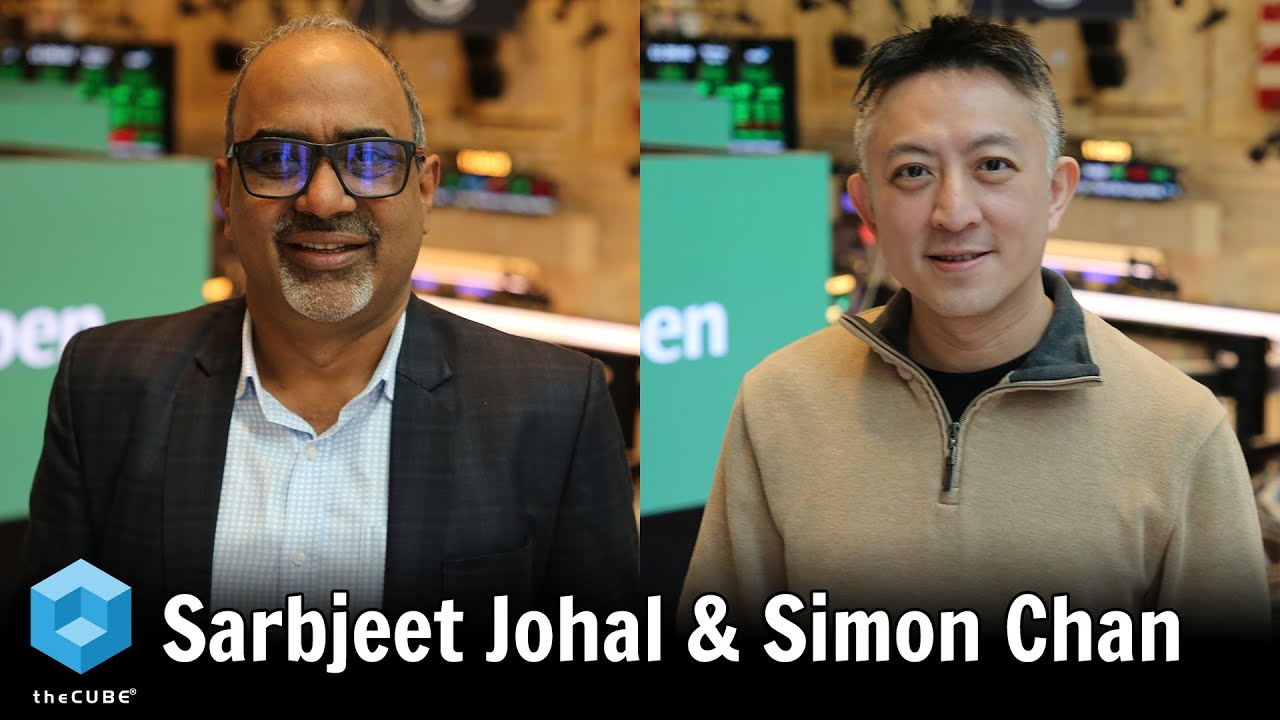
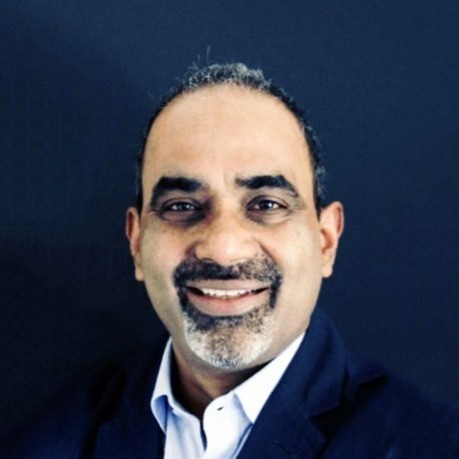
This conversation examines artificial intelligence infrastructure, open-weight models and emergent cloud strategies. Sarbjeet Johal of StackPane appears on theCUBE Research at the NYSE studio for theCUBE and NYSE Wired's Mixture of Experts to discuss trends in AI infrastructure and cloud economics.
Johal explores open-weight models, NVIDIA's strategic moves, NeoClouds such as CoreWeave, talent flows in Silicon Valley and implications for enterprise software as a service mergers and acquisitions and cloud economics. They argue that open-source weights and programmatic development accelerate adoption of specialized AI globally and that graphics processing units and token economics determine NeoCloud viability. Johal recommends that enterprises partner strategically with providers such as Salesforce and Anthropic, move control points up the stack and prioritize efficiency and orchestration to remain competitive in a rapidly digitizing economy.
Forgot Password
Almost there!
We just sent you a verification email. Please verify your account to gain access to
theCUBE + NYSE Wired: Mixture of Experts Series. If you don’t think you received an email check your
spam folder.
Sign in to theCUBE + NYSE Wired: Mixture of Experts Series.
In order to sign in, enter the email address you used to registered for the event. Once completed, you will receive an email with a verification link. Open this link to automatically sign into the site.
Register For theCUBE + NYSE Wired: Mixture of Experts Series
Please fill out the information below. You will recieve an email with a verification link confirming your registration. Click the link to automatically sign into the site.
You’re almost there!
We just sent you a verification email. Please click the verification button in the email. Once your email address is verified, you will have full access to all event content for theCUBE + NYSE Wired: Mixture of Experts Series.
I want my badge and interests to be visible to all attendees.
Checking this box will display your presense on the attendees list, view your profile and allow other attendees to contact you via 1-1 chat. Read the Privacy Policy. At any time, you can choose to disable this preference.
Select your Interests!
add
Upload your photo
Uploading..
OR
Connect via Twitter
Connect via Linkedin
EDIT PASSWORD
Share
Forgot Password
Almost there!
We just sent you a verification email. Please verify your account to gain access to
theCUBE + NYSE Wired: Mixture of Experts Series. If you don’t think you received an email check your
spam folder.
Sign in to theCUBE + NYSE Wired: Mixture of Experts Series.
In order to sign in, enter the email address you used to registered for the event. Once completed, you will receive an email with a verification link. Open this link to automatically sign into the site.
Sign in to gain access to theCUBE + NYSE Wired: Mixture of Experts Series
Please sign in with LinkedIn to continue to theCUBE + NYSE Wired: Mixture of Experts Series. Signing in with LinkedIn ensures a professional environment.
Are you sure you want to remove access rights for this user?
Details
Manage Access
email address
Community Invitation
Sarbjeet Johal, StackPane
This conversation examines artificial intelligence infrastructure, open-weight models and emergent cloud strategies. Sarbjeet Johal of StackPane appears on theCUBE Research at the NYSE studio for theCUBE and NYSE Wired's Mixture of Experts to discuss trends in AI infrastructure and cloud economics.
Johal explores open-weight models, NVIDIA's strategic moves, NeoClouds such as CoreWeave, talent flows in Silicon Valley and implications for enterprise software as a service mergers and acquisitions and cloud economics. They argue that open-source weights and programmatic development accelerate adoption of specialized AI globally and that graphics processing units and token economics determine NeoCloud viability. Johal recommends that enterprises partner strategically with providers such as Salesforce and Anthropic, move control points up the stack and prioritize efficiency and orchestration to remain competitive in a rapidly digitizing economy.
>> Welcome to theCUBE, I'm John Furrier, host. Here, of course, we have our Palo Alto Studio connecting Silicon Valley to Wall Street. Part of the NYSE Wired programming community. And Sarbjeet Johal is here as the founder of StackPane, independent analysis firm, CUBE Collective member, friend of theCUBE, and theCUBE contributor. He's also a frequent guest on our Reporter Notebook, an analyst notebook series, I should say. Sarbjeet, great to see you. You're in town for the US Open. IBM had a big event there. You just did some video down there at FinTech TV. You're all over the news. Congratulations. You're tracking all the top trends. I have to ask you, NVIDIA's just continuing to crush it. Salesforce had good numbers. SaaSpocalypse doesn't seem to be there. I'm more pro software's going to be there. If they get the moats right, as the AI infrastructure people can't get their hands on memory, still huge demand. What are you seeing in the market right now? I know you're scouring the web and scouring the events.
Sarbjeet Johal
>> Yeah, thanks John for having me here, and thanks for giving me that tour. Even though I've been here, I just got more.
John Furrier
>> Mayor of NYSE now. I'm working my way up the system. It's like high school, freshman, sophomore, junior, senior year. NYSE is the greatest institution. Einstein of Wall Street has got a statue now. He's been a good friend. Dan Ives, a lot of people collaborating. CNBC folks down there doing great work. So it's a great environment here.
Sarbjeet Johal
>> It's one of the best institutions we have in the U.S. And the U.S. is more mainstream.
John Furrier
>> They're really trading behind us. That's the options floor. Markets down today. It's a little quiet around lunchtime. But you're seeing a lot of media here. It's just like the iconic on the global stage, the NYSE is a symbol.
Sarbjeet Johal
>> Yeah, it is.
John Furrier
>> It's not just a building. It's historic. It's like a museum slash Hollywood set for us. Exactly.
Sarbjeet Johal
>> They love it. Yeah. There can't be any better venue than this. Yeah, coming back to your question, the AI is chugging along, right? So the whole economy, U.S. economy is betting on it. The whole world economy in a way is betting on it because the U.S. economy is betting on it because the world economy sort of depends on how the U.S. does and how U.S. dollar does. So that the fear of our bill we pay on the interest, our government has so much debt we're carrying is $40 trillion or so, right? So is that 40 or?
John Furrier
>> It's trillions and trillions of dollars. On your Twitter feed, you commented on the MediaTek NVIDIA bet, $3 .5 billion. What are you seeing? You go to all the events. What's the trend? What's the keynote? Everyone has their favorite flavor of the month. What's the flavor of the month for the second half of the year?
Sarbjeet Johal
>> I should say?The flavor of the month is open source, right? Open weight models, NVIDIA is pushing it. NVIDIA just did a couple of acquisitions in that space. Hugging Face was one. So they want to hold the supply chain of the open source models so they can push these models, this approach to the enterprises. So they are giving their gear to hyperscalers Frontier Labs, now to bigger enterprises and mid -sized enterprises. So they want to cover the whole world, actually, not only U.S., of course. And they are putting the sovereign sort of narrative out there as well.
John Furrier
>> I got some comments on my LinkedIn feed. I want to get your reaction. It was to my post around the great land grab, the next billion dollars is at the edge. The comment from Ziggard, one of the consultants said, NVIDIA has a lot of orders. will keep them busy for years. they're insulated from even the cloud providers hitting a wall, but nobody's insulated from the vibe shift if it turns out that there's nothing other than coding agents that will deliver value. So that's the comment I want to get your reaction to. And he then goes on to say, there's never been a multi-trillion dollar business in software development tools. Microsoft's experienced this, but no one's paying attention to that experience yet. So, okay, infrastructure's looking good, and it's going to be insulated, they've got tons of business. Cloud, we'll see. But if it shifts and it turns out there's no value other than coding, what's the value?
Sarbjeet Johal
>> Would you agree with that statement? Yes and no. Let me tell you, yes, we need to widen the sort of scope there of the application of AI. But no, because most of the economy is becoming digital, right? So because the coding is being done by using AI, so coding is helping in healthcare. Coding is helping in self -driving cars. Coding is helping in launching a rocket. coding helps all sectors of life, and even the water supply, the oil pipelines and whatnot. So those are all getting automated, and we are digitizing our infrastructure. All industries are getting digitized. So in a way, I think coding is the frontier sort of workload.
John Furrier
>> I kind of don't agree with it. I see his point, but I think coding has applications that can enable and accelerate a lot of things. Software tools might even be free. That's why I want to circle back to the open weights and the open source, because why NVIDIA is into this and why everyone's into it, it's going to spawn programmatic programming. Whether it's machines coding or humans or humans directing, you can do a lot more specialized intelligence with open source models. Because one, they're free. Two, you can actually tailor it to data sets that have not been yet unlocked.
Sarbjeet Johal
>> Yeah, that's true because if you think about it, we normally tend to think of the U.S. as the whole economy. It's not, right? So the whole world economy, these developing nations, they have so many developers at their disposal. Look at India, how many developers they have. And their SIs are suffering a little bit, their system integrators, right? They say, oh, no, no, no. They're suffering? Suffering, yes, they are. Because they're automating. They're getting automated away. Yes, and then they need to move on to something else. They are propping up their indigenous data centers now. Even the US vendors are going there too, so open source helps the whole world, adopt the technology, which helps in turn US vendors to push our technology to the whole world. And open source is sort of a bellwether in many ways of how technology will do.
John Furrier
>> Alright, your thoughts on cloud players and the Neo clouds emerging. Seeing a lot more, if you asked me in 2015, 2016, 2017, time frame if we'd see another cloud provider other than AWS Azure or Google i would have said no way the barriers to entry are way too high enter the shift from general purpose computing CPUs to GPUs and ASICs these new systems means ai systems are basically a paradigm shift they're mathematics based the density and the architectures are different but the game is still the same, pump out tokens, which is basically output.
Sarbjeet Johal
>> It's I/O. Token equals money, actually, for these data centers, right? So more tokens, they spit out with lower cost, lower power, the better their economics is, right? And most of these guys who are financial people who are investing in these companies, they just do simple math, like, what's the token cost, how many tokens you're spitting out, and how much you are charging for that. There's a cost and there's the value you're providing and the pricing you're doing. And that delta, that's their margins, right? So they're doing great actually. I think there's a space for them, at least for the next few years before any clever software approach comes and says, oh we don't need that many tokens, or we can do with less. But having said that, not all hyper, not all NeoClouds are built equally. There are different approaches. Frontier ones are, they're frontier. CoreWeave's looking good. New clouds are doing great actually.
John Furrier
>> People were poo -pooing CoreWeave a couple years ago. Oh, they'll never survive, the debt they're carrying. Look at the results. Yeah, yeah. They cracked the code. Yeah. Essentially kind of a cloud hyperscaler. They're an AI cloud.
Sarbjeet Johal
>> They have their IP there. They have their IP of orchestration software, right? So there are three, four max neoclouds which have figured that out. So the whole idea is to get the most juice out of your GPUs, right? So how quickly you get to recycle? How much automation you have there? How quickly you're cleansing it?
John Furrier
>> Comes back down to five nines and the factory model. You got to have high efficiency, get those tokens out fast. All right, we're in New York City at the NYSE at theCUBE Studio, and NYSE Wired program has been very successful for theCUBE.
Sarbjeet Johal
>> That's great.
John Furrier
>> The work Brian Baumann and I have been working with, with our teams has been phenomenal. We just have great guests coming through all the time. So New York, we get a lot of folks in here, mostly East Coast. Obviously in Palo Alto, our Palo Alto studio, as you know, is more Silicon Valley. You're from Silicon Valley. For the folks that aren't from Silicon Valley, tell us in your words, what's going on in the Valley, Bay Area, San Francisco. Startup scene's booming, it's frothy, Dave calls it a bubble, I don't think we're in a bubble, but it's the debate we have on theCUBE pod every week. It's fun to debate it, but it's just growth is phenomenal, NVIDIA's results are great. What's going on in the Valley? If you had to explain to someone here on the East Coast who's not following inside the ropes.
Sarbjeet Johal
>> Yeah, number one thing in the Valley, what's happening right now is the big fight for talent. Google was bleeding some talent. We heard that news like a couple of weeks back, right? Some big shots left from there. And then Elon Musk is pulling talent from all different sources. The Cursor is with them now. So yeah, I think talent movement is huge and that tells you where the puck is moving and or which vendors are gaining traction. And just before the IPO, OpenAI, there's a lot of turmoil in OpenAI, just like always there.
John Furrier
>> And the valuations are so high. SpaceX, which includes xAI, can buy Cursor for massive numbers. Just the bump on their IPO alone covers the entire acquisition. So you're seeing unusual economic valuations of these companies. So you can expect a lot of inorganic activity as these bigger companies get richer.
Sarbjeet Johal
>> The M&A actually is another interesting part. People are doing, all these bigger guys are doing M&A and they're going around. They just get the talent and the rights to that IP. They don't buy the whole company. So they're doing work around.
John Furrier
>> I mean one thing I'm seeing, I'd love to get your thoughts on it, riff on it a little bit. Is that the bigger companies are staying private longer, like Databricks. And the younger companies are going public faster. We're seeing AI native companies less than a year old either getting bought for billions or lining up and getting ready to go public at two years old. They're already prepping for an IPO because they want access to the capital markets. So you start to see kind of a tale of two lanes. Databricks is on series F or K. I mean, K or M, they're on some number. They have a valuation that rivals most public huge companies. So they got flush with cash, got billions and billions of dollars on the books. I don't think they feel any pressure to go public. Maybe their investors want to get liquid, but they're already doing secondary. So you have that later stage private company that has to compete at the mega scale. And then the rising escape velocity companies that are hitting product market fit super early and then rocketing up.
Sarbjeet Johal
>> I think there's a talent angle to that one, too. Once you go public, then you sort of plateau at that point. And then we know how the big IPOs do. they don't go 5X in the next four years, so then the talent leaves. Because to keep the talent there, it's bait. Okay, we will go public, we will go public. Keep the best talent there. I think that's one way.
John Furrier
>> To do that.Yeah, and I saw Anthropic actually made a call to let some of their employees get liquid and extended their holding period for their IPO that's coming out. So they had a problem with these SPV secondaries, these rogue employee sales. Yeah. And they had to rein them all in. All right, Sarbjeet, what's next for you for events? Are you going to head back to the Bay Area tonight?
Sarbjeet Johal
>> Yeah, heading back to the Bay Area. And then next big one is IBM TechXchange. Then the regular local events.
John Furrier
>> CoreWeave this month, September, in the last week of the month. I'll be there. We'll be in San Francisco. We'll see you there. Dave and I are going to do that event. It's going to be very much a groundbreaking event for CoreWeave. their first conference, and it's like a different user developer conference, it's a multi -faceted event. They got builders, operators, and investors. They're going to have a ton of data. I talked to Jean English, who's the CMO, friend of theCUBE. there's a lot of ex -CUBE alumni at CoreWeave. you've seen CoreWeave, you've got Anyscale, Baseten, Scale, Salesforce. There's a lot of DNA flowing from the cloud players into the new players.
Sarbjeet Johal
>> Yeah, we talked about Salesforce numbers are great. Actually, they did their deal with Anthropic, and everybody's sort of going with everybody, but I think on the SaaS side of things, I have been saying that all along. We have talked many times. Salesforce is smart. The SaaS is not going anywhere. The SaaS with thick core, that's the Salesforce that the ServiceNow folks, right? They will stay strong going forward.
John Furrier
>> I think people are going to capitulate to the big models when they're coming into their territory, like Salesforce. Couple things I kind of like about Salesforce is they're moving their control point up into the stack, so they recognize that the user interface is going to change. And what they did that was a genius move, because Benioff and Salesforce were an early investor in Anthropic, they did a deal with Anthropic called Claudeforce. So you do a deal with the devil, as they say. It's not really the devil, but you're saying, why not? Partner. And so now Anthropic doesn't have to go aggressively into that market. They can partner and win with Salesforce. So Salesforce essentially did a good biz dev. I've dealt with Anthropic. So either get out of the way of the train or you just take it on or good luck trying to outrun the train.Some experts are saying.
Sarbjeet Johal
>> That is a very bold move or risky move for Salesforce. But I don't think so. No, it's a good move. I think it's a good move.
John Furrier
>> Well, look, they can differentiate. Every SaaS company, if they don't move, they die. Bad software always dies. That's my rule of thumb, right? So that's actually a quote on theCUBE from another guest. But you can move up the control point. And I wrote a post on that, on the big land grab on Substack and LinkedIn. I gotta get on SiliconANGLE. Sarbjeet, great to see you, thanks for coming on. Good to see you always. I'm John Furrier, host of theCUBE. Back with more Mixture of Experts series after this short break.
>> Welcome to theCUBE, I'm John Furrier, host. Here, of course, we have our Palo Alto Studio connecting Silicon Valley to Wall Street. Part of the NYSE Wired programming community. And Sarbjeet Johal is here as the founder of StackPane, independent analysis firm, CUBE Collective member, friend of theCUBE, and theCUBE contributor. He's also a frequent guest on our Reporter Notebook, an analyst notebook series, I should say. Sarbjeet, great to see you. You're in town for the US Open. IBM had a big event there. You just did some video down there at FinTech TV. You're all over the news. Congratulations. You're tracking all the top trends. I have to ask you, NVIDIA's just continuing to crush it. Salesforce had good numbers. SaaSpocalypse doesn't seem to be there. I'm more pro software's going to be there. If they get the moats right, as the AI infrastructure people can't get their hands on memory, still huge demand. What are you seeing in the market right now? I know you're scouring the web and scouring the events.
Sarbjeet Johal
>> Yeah, thanks John for having me here, and thanks for giving me that tour. Even though I've been here, I just got more.
John Furrier
>> Mayor of NYSE now. I'm working my way up the system. It's like high school, freshman, sophomore, junior, senior year. NYSE is the greatest institution. Einstein of Wall Street has got a statue now. He's been a good friend. Dan Ives, a lot of people collaborating. CNBC folks down there doing great work. So it's a great environment here.
Sarbjeet Johal
>> It's one of the best institutions we have in the U.S. And the U.S. is more mainstream.
John Furrier
>> They're really trading behind us. That's the options floor. Markets down today. It's a little quiet around lunchtime. But you're seeing a lot of media here. It's just like the iconic on the global stage, the NYSE is a symbol.
Sarbjeet Johal
>> Yeah, it is.
John Furrier
>> It's not just a building. It's historic. It's like a museum slash Hollywood set for us. Exactly.
Sarbjeet Johal
>> They love it. Yeah. There can't be any better venue than this. Yeah, coming back to your question, the AI is chugging along, right? So the whole economy, U.S. economy is betting on it. The whole world economy in a way is betting on it because the U.S. economy is betting on it because the world economy sort of depends on how the U.S. does and how U.S. dollar does. So that the fear of our bill we pay on the interest, our government has so much debt we're carrying is $40 trillion or so, right? So is that 40 or?
John Furrier
>> It's trillions and trillions of dollars. On your Twitter feed, you commented on the MediaTek NVIDIA bet, $3 .5 billion. What are you seeing? You go to all the events. What's the trend? What's the keynote? Everyone has their favorite flavor of the month. What's the flavor of the month for the second half of the year?
Sarbjeet Johal
>> I should say?The flavor of the month is open source, right? Open weight models, NVIDIA is pushing it. NVIDIA just did a couple of acquisitions in that space. Hugging Face was one. So they want to hold the supply chain of the open source models so they can push these models, this approach to the enterprises. So they are giving their gear to hyperscalers Frontier Labs, now to bigger enterprises and mid -sized enterprises. So they want to cover the whole world, actually, not only U.S., of course. And they are putting the sovereign sort of narrative out there as well.
John Furrier
>> I got some comments on my LinkedIn feed. I want to get your reaction. It was to my post around the great land grab, the next billion dollars is at the edge. The comment from Ziggard, one of the consultants said, NVIDIA has a lot of orders. will keep them busy for years. they're insulated from even the cloud providers hitting a wall, but nobody's insulated from the vibe shift if it turns out that there's nothing other than coding agents that will deliver value. So that's the comment I want to get your reaction to. And he then goes on to say, there's never been a multi-trillion dollar business in software development tools. Microsoft's experienced this, but no one's paying attention to that experience yet. So, okay, infrastructure's looking good, and it's going to be insulated, they've got tons of business. Cloud, we'll see. But if it shifts and it turns out there's no value other than coding, what's the value?
Sarbjeet Johal
>> Would you agree with that statement? Yes and no. Let me tell you, yes, we need to widen the sort of scope there of the application of AI. But no, because most of the economy is becoming digital, right? So because the coding is being done by using AI, so coding is helping in healthcare. Coding is helping in self -driving cars. Coding is helping in launching a rocket. coding helps all sectors of life, and even the water supply, the oil pipelines and whatnot. So those are all getting automated, and we are digitizing our infrastructure. All industries are getting digitized. So in a way, I think coding is the frontier sort of workload.
John Furrier
>> I kind of don't agree with it. I see his point, but I think coding has applications that can enable and accelerate a lot of things. Software tools might even be free. That's why I want to circle back to the open weights and the open source, because why NVIDIA is into this and why everyone's into it, it's going to spawn programmatic programming. Whether it's machines coding or humans or humans directing, you can do a lot more specialized intelligence with open source models. Because one, they're free. Two, you can actually tailor it to data sets that have not been yet unlocked.
Sarbjeet Johal
>> Yeah, that's true because if you think about it, we normally tend to think of the U.S. as the whole economy. It's not, right? So the whole world economy, these developing nations, they have so many developers at their disposal. Look at India, how many developers they have. And their SIs are suffering a little bit, their system integrators, right? They say, oh, no, no, no. They're suffering? Suffering, yes, they are. Because they're automating. They're getting automated away. Yes, and then they need to move on to something else. They are propping up their indigenous data centers now. Even the US vendors are going there too, so open source helps the whole world, adopt the technology, which helps in turn US vendors to push our technology to the whole world. And open source is sort of a bellwether in many ways of how technology will do.
John Furrier
>> Alright, your thoughts on cloud players and the Neo clouds emerging. Seeing a lot more, if you asked me in 2015, 2016, 2017, time frame if we'd see another cloud provider other than AWS Azure or Google i would have said no way the barriers to entry are way too high enter the shift from general purpose computing CPUs to GPUs and ASICs these new systems means ai systems are basically a paradigm shift they're mathematics based the density and the architectures are different but the game is still the same, pump out tokens, which is basically output.
Sarbjeet Johal
>> It's I/O. Token equals money, actually, for these data centers, right? So more tokens, they spit out with lower cost, lower power, the better their economics is, right? And most of these guys who are financial people who are investing in these companies, they just do simple math, like, what's the token cost, how many tokens you're spitting out, and how much you are charging for that. There's a cost and there's the value you're providing and the pricing you're doing. And that delta, that's their margins, right? So they're doing great actually. I think there's a space for them, at least for the next few years before any clever software approach comes and says, oh we don't need that many tokens, or we can do with less. But having said that, not all hyper, not all NeoClouds are built equally. There are different approaches. Frontier ones are, they're frontier. CoreWeave's looking good. New clouds are doing great actually.
John Furrier
>> People were poo -pooing CoreWeave a couple years ago. Oh, they'll never survive, the debt they're carrying. Look at the results. Yeah, yeah. They cracked the code. Yeah. Essentially kind of a cloud hyperscaler. They're an AI cloud.
Sarbjeet Johal
>> They have their IP there. They have their IP of orchestration software, right? So there are three, four max neoclouds which have figured that out. So the whole idea is to get the most juice out of your GPUs, right? So how quickly you get to recycle? How much automation you have there? How quickly you're cleansing it?
John Furrier
>> Comes back down to five nines and the factory model. You got to have high efficiency, get those tokens out fast. All right, we're in New York City at the NYSE at theCUBE Studio, and NYSE Wired program has been very successful for theCUBE.
Sarbjeet Johal
>> That's great.
John Furrier
>> The work Brian Baumann and I have been working with, with our teams has been phenomenal. We just have great guests coming through all the time. So New York, we get a lot of folks in here, mostly East Coast. Obviously in Palo Alto, our Palo Alto studio, as you know, is more Silicon Valley. You're from Silicon Valley. For the folks that aren't from Silicon Valley, tell us in your words, what's going on in the Valley, Bay Area, San Francisco. Startup scene's booming, it's frothy, Dave calls it a bubble, I don't think we're in a bubble, but it's the debate we have on theCUBE pod every week. It's fun to debate it, but it's just growth is phenomenal, NVIDIA's results are great. What's going on in the Valley? If you had to explain to someone here on the East Coast who's not following inside the ropes.
Sarbjeet Johal
>> Yeah, number one thing in the Valley, what's happening right now is the big fight for talent. Google was bleeding some talent. We heard that news like a couple of weeks back, right? Some big shots left from there. And then Elon Musk is pulling talent from all different sources. The Cursor is with them now. So yeah, I think talent movement is huge and that tells you where the puck is moving and or which vendors are gaining traction. And just before the IPO, OpenAI, there's a lot of turmoil in OpenAI, just like always there.
John Furrier
>> And the valuations are so high. SpaceX, which includes xAI, can buy Cursor for massive numbers. Just the bump on their IPO alone covers the entire acquisition. So you're seeing unusual economic valuations of these companies. So you can expect a lot of inorganic activity as these bigger companies get richer.
Sarbjeet Johal
>> The M&A actually is another interesting part. People are doing, all these bigger guys are doing M&A and they're going around. They just get the talent and the rights to that IP. They don't buy the whole company. So they're doing work around.
John Furrier
>> I mean one thing I'm seeing, I'd love to get your thoughts on it, riff on it a little bit. Is that the bigger companies are staying private longer, like Databricks. And the younger companies are going public faster. We're seeing AI native companies less than a year old either getting bought for billions or lining up and getting ready to go public at two years old. They're already prepping for an IPO because they want access to the capital markets. So you start to see kind of a tale of two lanes. Databricks is on series F or K. I mean, K or M, they're on some number. They have a valuation that rivals most public huge companies. So they got flush with cash, got billions and billions of dollars on the books. I don't think they feel any pressure to go public. Maybe their investors want to get liquid, but they're already doing secondary. So you have that later stage private company that has to compete at the mega scale. And then the rising escape velocity companies that are hitting product market fit super early and then rocketing up.
Sarbjeet Johal
>> I think there's a talent angle to that one, too. Once you go public, then you sort of plateau at that point. And then we know how the big IPOs do. they don't go 5X in the next four years, so then the talent leaves. Because to keep the talent there, it's bait. Okay, we will go public, we will go public. Keep the best talent there. I think that's one way.
John Furrier
>> To do that.Yeah, and I saw Anthropic actually made a call to let some of their employees get liquid and extended their holding period for their IPO that's coming out. So they had a problem with these SPV secondaries, these rogue employee sales. Yeah. And they had to rein them all in. All right, Sarbjeet, what's next for you for events? Are you going to head back to the Bay Area tonight?
Sarbjeet Johal
>> Yeah, heading back to the Bay Area. And then next big one is IBM TechXchange. Then the regular local events.
John Furrier
>> CoreWeave this month, September, in the last week of the month. I'll be there. We'll be in San Francisco. We'll see you there. Dave and I are going to do that event. It's going to be very much a groundbreaking event for CoreWeave. their first conference, and it's like a different user developer conference, it's a multi -faceted event. They got builders, operators, and investors. They're going to have a ton of data. I talked to Jean English, who's the CMO, friend of theCUBE. there's a lot of ex -CUBE alumni at CoreWeave. you've seen CoreWeave, you've got Anyscale, Baseten, Scale, Salesforce. There's a lot of DNA flowing from the cloud players into the new players.
Sarbjeet Johal
>> Yeah, we talked about Salesforce numbers are great. Actually, they did their deal with Anthropic, and everybody's sort of going with everybody, but I think on the SaaS side of things, I have been saying that all along. We have talked many times. Salesforce is smart. The SaaS is not going anywhere. The SaaS with thick core, that's the Salesforce that the ServiceNow folks, right? They will stay strong going forward.
John Furrier
>> I think people are going to capitulate to the big models when they're coming into their territory, like Salesforce. Couple things I kind of like about Salesforce is they're moving their control point up into the stack, so they recognize that the user interface is going to change. And what they did that was a genius move, because Benioff and Salesforce were an early investor in Anthropic, they did a deal with Anthropic called Claudeforce. So you do a deal with the devil, as they say. It's not really the devil, but you're saying, why not? Partner. And so now Anthropic doesn't have to go aggressively into that market. They can partner and win with Salesforce. So Salesforce essentially did a good biz dev. I've dealt with Anthropic. So either get out of the way of the train or you just take it on or good luck trying to outrun the train.Some experts are saying.
Sarbjeet Johal
>> That is a very bold move or risky move for Salesforce. But I don't think so. No, it's a good move. I think it's a good move.
John Furrier
>> Well, look, they can differentiate. Every SaaS company, if they don't move, they die. Bad software always dies. That's my rule of thumb, right? So that's actually a quote on theCUBE from another guest. But you can move up the control point. And I wrote a post on that, on the big land grab on Substack and LinkedIn. I gotta get on SiliconANGLE. Sarbjeet, great to see you, thanks for coming on. Good to see you always. I'm John Furrier, host of theCUBE. Back with more Mixture of Experts series after this short break.