This conversation examines generative artificial intelligence, AI, and interactive video for enterprise production, training and enablement. Victor Riparbelli of Synthesia, co-founder and chief executive officer, outlines the company's decade-long development of AI-native video tools and avatar technology. Riparbelli highlights avatar lip-sync breakthroughs, the Syren one-prompt-to-finalized video engine and Sessions for interactive real-time avatars, and they explain how web-native rendering and 3D capabilities transform enterprise video for training, enablement and external content.
Riparbelli explains that Syren leverages Opus 5.5 and web-native rendering to generate agency-quality videos from a single prompt. They emphasize enterprise adoption for scalable training, enablement and video digitization. The hosts consider implications for media workflows, personalization and interactive formats and the transition from passive viewing to actionable video experiences.
This episode provides practical insight into generative AI strategies, AI-native production, avatar deployment and interactive video use cases for organizations seeking scalable content solutions.
Forgot Password
Almost there!
We just sent you a verification email. Please verify your account to gain access to
theCUBE + NYSE Wired: Mixture of Experts Series. If you don’t think you received an email check your
spam folder.
Sign in to theCUBE + NYSE Wired: Mixture of Experts Series.
In order to sign in, enter the email address you used to registered for the event. Once completed, you will receive an email with a verification link. Open this link to automatically sign into the site.
Register For theCUBE + NYSE Wired: Mixture of Experts Series
Please fill out the information below. You will recieve an email with a verification link confirming your registration. Click the link to automatically sign into the site.
You’re almost there!
We just sent you a verification email. Please click the verification button in the email. Once your email address is verified, you will have full access to all event content for theCUBE + NYSE Wired: Mixture of Experts Series.
I want my badge and interests to be visible to all attendees.
Checking this box will display your presense on the attendees list, view your profile and allow other attendees to contact you via 1-1 chat. Read the Privacy Policy. At any time, you can choose to disable this preference.
Select your Interests!
add
Upload your photo
Uploading..
OR
Connect via Twitter
Connect via Linkedin
EDIT PASSWORD
Share
Forgot Password
Almost there!
We just sent you a verification email. Please verify your account to gain access to
theCUBE + NYSE Wired: Mixture of Experts Series. If you don’t think you received an email check your
spam folder.
Sign in to theCUBE + NYSE Wired: Mixture of Experts Series.
In order to sign in, enter the email address you used to registered for the event. Once completed, you will receive an email with a verification link. Open this link to automatically sign into the site.
Sign in to gain access to theCUBE + NYSE Wired: Mixture of Experts Series
Please sign in with LinkedIn to continue to theCUBE + NYSE Wired: Mixture of Experts Series. Signing in with LinkedIn ensures a professional environment.
Are you sure you want to remove access rights for this user?
Details
Manage Access
email address
Community Invitation
Victor Riparbelli, Synthesia
This conversation examines generative artificial intelligence, AI, and interactive video for enterprise production, training and enablement. Victor Riparbelli of Synthesia, co-founder and chief executive officer, outlines the company's decade-long development of AI-native video tools and avatar technology. Riparbelli highlights avatar lip-sync breakthroughs, the Syren one-prompt-to-finalized video engine and Sessions for interactive real-time avatars, and they explain how web-native rendering and 3D capabilities transform enterprise video for training, enablement and external content.
Riparbelli explains that Syren leverages Opus 5.5 and web-native rendering to generate agency-quality videos from a single prompt. They emphasize enterprise adoption for scalable training, enablement and video digitization. The hosts consider implications for media workflows, personalization and interactive formats and the transition from passive viewing to actionable video experiences.
This episode provides practical insight into generative AI strategies, AI-native production, avatar deployment and interactive video use cases for organizations seeking scalable content solutions.
>> (INTRO)Hello, I'm John Furrier, host of theCUBE. We are here in theCUBE's New York City NYSE Wired studio. Of course, we're at Palo Alto studio connecting Silicon Valley to Wall Street. This is our AI Mixture of Experts series where we talk to leaders who are exploring the frontiers of AI. This next one is super interesting as we look at generative AI as it hits video. Victor Riparbelli is here, co-founder and CEO of Synthesia, doing some compelling AI generation work, something I'm super interested in. Love to have my own avatar voice dubbing. Victor, thank you for coming on our program. We're live in person, just in case people are wondering.
Victor Riparbelli
>> Still, thank you. Maybe next time we'll
John Furrier
>> be—thank you for coming on. Appreciate it. Glad to be here. Explain what you do, because this is something that we watch every day. We're in the media business. We do video, a lot of long form. But video, since we started upping our editorial game, is by far the most popular consumption vehicle. Certainly we still have written news on SiliconANGLE. But just from our unique perspective, video is hot. People love video. They love short form. They love long form. They love to learn, communicate. Yeah, video works, but it's always been kind of janky when it comes to online avatars. It's not like full motion graphics. It hasn't been cool.
Victor Riparbelli
>> Exactly.
John Furrier
>> And you can tell the difference
Victor Riparbelli
>> for sure. I think we lived in this sort of what we call the false trade-off of how difficult is it to create text content versus audio content versus video content. And historically, that's been a massive gap. Now that's collapsing. And 10 years ago we founded Synthesia as the AI video platform for business. And a lot of stuff has changed in those 10 years. But we had two big ideas, and that's the same ones that we're still working on. The first one being when you can create content with AI, the cost of doing that is going to collapse, not just in dollars, but in the time it takes and skill it takes to create a video. And we're bang in the middle of this right now. We just launched Syren, which we talk more about, an amazing one-prompt-to-finalized video product. And the second big idea was the idea that New media technology brings new media formats. So what does truly AI-native video actually look like? It's probably not going to be a broadcast that you record once and everybody sees the same thing. It's going to mirror more the experience you have on a website, for example, where it's personalized, it's interactive. And so we launched our Sessions platform. We can actually talk to the avatar. The avatar can help you if you're a salesperson, roleplay as a customer. You can simulate a real sales call and a bunch of other exciting use cases.
John Furrier
>> it's interesting, in business, the cost to shoot a video Edit it, chop it up, put it into multiple channels. We have our producers here, our social media team. we're experts at slicing and dicing. I call it the chop the vegetables. Yep. But ultimately everyone might have a different experience. AI changed the game. Share your vision because this is becoming a creative opportunity.
Victor Riparbelli
>> Yeah.
John Furrier
>> Not just production. There's two elements going on here.
Victor Riparbelli
>> So this is actually a great time to be here because 10 years ago, we wanted to create How can someone in just one click create an amazing video? And getting there takes time. We've launched our kind of core product, many years back, which is an awesome product. But like 3 weeks ago, 2 weeks ago, we launched a new product, Syren, which takes all the generative AI (GenAI) capabilities of the latest LLMs using specifically Opus in this instance and enables you— which one? Opus 5.5. And what it does, it enables you to literally write in a single prompt and it will come out with a video that looks like you paid an agency $15,000, $20,000 to do it. It writes a script, it puts together motion graphics, it uses avatars, it edits everything together, and the results are just absolutely mind-blowing. We're now— and I think what's exciting here is that this is, I think, the ChatGPT moment for video, where all of a sudden this becomes like creating a video becomes not something you actually have to know much about video to do. You just need to know what you want to make a video about. You tell the system and then it spits out a video
John Furrier
>> that's—Okay, so I'll put my devil's advocate hat on. Okay, what corpus of video are you working with? Is it generative? Is it a library of videos? And you're starting to see people on Instagram do this now with these, Instagram Reels where it's like, okay, goes to some stock photography, layers in, you should wake up early and brush your teeth and do some calisthenics. It's always the self-help kind of stuff, kind of generic. 100%. A Ferrari, get rich. Yeah. There's now, that's kind of very elementary.
John Furrier
>> 100%.I think. What's the difference
Victor Riparbelli
>> now?So the difference is our system is fully generative today. We will add the ability for you to drop in your normal video as well. But when everything is fully generative, it goes a bit back to the idea of what does AI-native video look like, right? The amazing thing is that when everything is generated, everything is the same style. The music track is also generated. So it crescendos exactly when you make a super interesting point, which is what a great video editor would do, right? So the fully generative concept, I think, makes it much easier for these agents to put together like 10/10 quality. You're adding the ability to also make them interactive. You can talk to them, it becomes a new media format. And I think that's what has always excited me the most is what will video that's truly AI video look like? All right.
John Furrier
>> So I have to ask, how did you get here? What was the inspiration? Were you doing video? Were you creating videos? Or did you come in from the software side? Explain the origination.
Victor Riparbelli
>> So before, I was 25 when I started the company and it's 10 years ago, it's been a while. It was one of those instances where on paper I actually had not a lot of qualifications to build this company. I wasn't a researcher. I hadn't done professional work around content. I've been involved in startups sort of before I started Synthesia. But on a personal level, I've always loved this stuff. I make music, made film editing, 3D rendering. It's always a really big interest for me. And I started the company because I wanted to do something more frontier AI. I was very interested in this stuff 10 years ago. And I met this guy who's my co-founder today called Matthias Niessner. He was a Stanford professor at the time. He'd done a research paper called Face2Face, which is the first AI video paper. You look at it now, not very impressive. Back then it was a holy s— kind of moment where I saw that thing. I was like, this is magical. Today it is what looks
John Furrier
>> like—he was pulling the right strings. He was on the right track.
Victor Riparbelli
>> He was pulling the right strings. And it was like, if you take the progress and you extrapolate it, then the tagline of the company the first couple of years was like, In 10 years, you can make a Hollywood film on a laptop with just your imagination. And I actually think we are going to be almost right in that prediction now, being in 2027. But getting there was really hard. And I think one of the hardest things about entrepreneurship, if you are building for a vision, is how do you sequence it? what are the steps along the way where you can build a business even though it isn't like the final end goal? The really hard thing is kind of all the stuff that happens in between, right? And it took us a lot of twists and turns and pivots. We figured out early on that the first market for AI video was for training, enablement, learning, low-stakes content in big companies, but it's a very high volume, but the quality requirements is a lot lower. Yeah. And then we've kind of evolved on that. The model got better and better, which unlocked more and more use cases, taking us all the way up to today where we have these two big breakthroughs in truly prompt-like video creation and interactive video.
John Furrier
>> When was the moment you broke through? It was like, wow. We got it. All that hard work, the grinding, eating glass, spitting out nails, falling down, getting back up. What was the moment you go, wow, this thing has legs? This
Victor Riparbelli
>> isgoing to— so the sort of commercial moment was end of 2020. But actually leading up to that, I just love being in a room with all these researchers. And we would get in the morning and the neural networks would have generated like 4.8 seconds of videos by running for like 24 hours, right? And we look like, oh my God, the lips are actually
John Furrier
>> moving.This is huge.
Victor Riparbelli
>> And I remember that childlike feeling of, that's just so amazing. Yeah, yeah. But at the end of 2020, we kind of took all the stuff we learned from the first few years. We realized this is not for video professionals, it's not for Hollywood, it's actually for much more simple video. And we built this avatar technology, right? Which is the idea of a talking head style video. You just put in some text. The smart thing we did there was we said we can't generate every pixel in the video with AI, but we can generate just the mouth. So if you replay a video of you talking but change the lip movements, it kind of looks real. It looks—
John Furrier
>> lookingat it today, every theCUBE video is a great training video. We don't really move much except our lips, talking heads.
Victor Riparbelli
>> And the big breakthrough for us was we actually built a web app where you could do this, which sounds totally rudimentary today, but back then was actually really hard to build a self-service thing. You go in, type it out, put your credit card and get a video out. And when we did that, We just had one of these, which we see all around us today, right? These crazy viral moments where it's just, we got pummeled by traffic. Everyone was like, this is cool, jaw-dropping, scary, all those things people cared about. And then what I think we were very good at compared to maybe some of the peers we had at the time that didn't sort of make it was we said, okay, now we had like hundreds of thousands of people making videos. That's great. But who's making those videos because it's cool, it's fun, you want to show your mom and your colleagues how crazy this is versus who's actually doing something real with it. And we found that group of people and then we built for those. And that's how we managed to actually build a really fast-growing, venture-backable business that could then take us to all the next stages of which the chapter right now is, I think, probably one of the biggest ones in the company where after launching this product like 2 weeks ago, just seeing the usage.
John Furrier
>> Well, give some stats on the company where you guys are at. Backing, employees, revenue, if you can share what's the momentum?
Victor Riparbelli
>> Yeah, so we're a Series E company valued around $4 billion earlier this year, around 800 people, work with 95% of Fortune 100, growing super fast and have a massive install base of especially enterprise customers, which is what we decided to really double down on how do we help—
John Furrier
>> like Canva cracked that code for creators, but you're taking the B2B.
Victor Riparbelli
>> We're taking it. We took it more B2B, we took it more enterprise. That has changed throughout the last 12 to 18 months where— and the unlock has really been that the video models have now gotten so good, right, that we're seeing that people want to consume this stuff on social media and more external-facing sort of content. And you see other video companies—
John Furrier
>> I was watching NVIDIA, I got briefed by their head guy at digital on their digital twins, Omniverse. Yeah, really. Cool rendering. Again, they got large-scale systems, so it's NVIDIA. But the stuff they're doing with ad agencies and how they're designing campaigns was one thing. They did partnership with Adobe, I covered that. But also when you get into designing product,
Victor Riparbelli
>> yeah,
John Furrier
>> so there's a whole nother level of video meets CAD meets rendering.
Victor Riparbelli
>> For sure,
John Furrier
>> there's a real intersection. So talk me through some of the breakthroughs on the tech side because the tokens are getting cheaper, the systems are getting more scalable. Vera Rubin is rocking the production side of AI intelligence right now.
Victor Riparbelli
>> For sure. So one of the big unlocks have been— we made a bet like 3 years ago that the future of video creation— and here I'm talking not about this sort of camera footage like you talking, but all the motion graphics, everything around it— and that's going to move to web technology. So instead of using C++ backend, like Adobe Premiere or something like that, right? If you can render all the animations, everything around it as web technology, that's super scalable. And so we built this engine called Syren, which essentially expresses all the video, the editing, the cuts, et cetera, in web technology. And that means that LLMs are really good at using these tools. And on the 3D point, we actually built something called Skia into it, which is a library for 3D rendering. And so this thing can actually do 3D rendering. I did as a fun test the other day, I took an IKEA assembly manual and I gave it to the Syren thing. And this is a bunch of flat images explaining how to put something together. And from that, it actually generated a 3D model, how to put this thing together in 3D. And it just does—
John Furrier
>> where the hell was that when I was moving and putting cribs together and all these?
Victor Riparbelli
>> I know, right? You're stuck with this piece of paper. But I think it's such a great example.
John Furrier
>> everyone goes to YouTube. How do I install
Victor Riparbelli
>> this?Everyone goes to YouTube and it's great if the content is there, but if it's not there now, you can create it and very soon it'll be something you can talk to. So you can actually watch the video. And while you're watching the video, you can just ask, hey, I didn't understand that last step. Can you show me again? So I think we're in these very early phases still of just— I think we almost won't call it video in a couple of years because it's going to be much more like I'm speaking to an agent. It can visualize things in front of me. It can, do the kind of video as we know it, but it could also be, talking to you, collecting
John Furrier
>> information.I should write you a consulting check because I'm going to ask you the next question. How should I do my interviews? Should I do more hand waving? Should I get more interactive? What do I do? I'm going to be replaced. tell me, how do we get better? How does a traditional old
Victor Riparbelli
>> school—So I think the most obvious one is the way most media companies operate today is that the most important pieces of content you turn into video. And then there's a whole bunch of content which doesn't get turned into video, right? It just lives as an article somewhere because this sort of ROI of making it into a video doesn't exist. But that ROI, it's going to look very different very soon because you're going to be able to say, okay, here's all my videos I've already created. Our system can actually go in and extract the brands, like your colors, your style of motion graphics, and create an avatar of you. Do you say this is like the video that we create today? Now someone writes an article, or you maybe generate an article even just through an LLM and say, I want to visualize this article. It'll go in and say, let's say it's a video about NVIDIA stock price or something, right? They'll go in, they'll write the script, they'll use your avatar, it'll do all the motion graphics for you, it'll build a graph that sort of gets animated with red and blue numbers. And so what you're going to be able to do as a media company soon is that you can actually have— there's not just a great reason to not have everything you do available as video. And I think some of what you do, add a button in the video which is, if you have a question, click it, and then you ask the question and your avatar responds back, right, based on Yeah, all the knowledge that you'll have fed into the system. Right. They have so much content. I'm sold.
John Furrier
>> I say I love this idea because it's about merchandising content.
Victor Riparbelli
>> Yeah,
John Furrier
>> this is what you're getting into. You're just doing kind of low-hanging fruit. Let's get the product catalog, how-tos, basically a digitization. It's a video. Maybe there's a word for it.
Victor Riparbelli
>> Exactly.
John Furrier
>> Video digitization of our world. Exactly. With video.
Victor Riparbelli
>> Yeah, exactly.
John Furrier
>> It'swhere should I go in Manhattan?
Victor Riparbelli
>> Exactly. Which we did one the other day just for fun internally with some of the new tech. Like, where can we get the best donuts in London around the office? And so it asked, where do you live? I live. Then it created a video where it just showed a map, put the donut places in, and then it ended up with an avatar just asking the question, what kind of donuts do you like? Do you like, do they have to be super healthy or do they just have to taste good? And you talk to it and it's just this like mind-blowing.
John Furrier
>> I'm thinking about all these traders behind us yelling the
Victor Riparbelli
>> orders.It's definitely happening.
John Furrier
>> I'd love to have an avatar of people trading. NVIDIA stock, it's up. Oh, little trading places. This is serious though. I want to get into the mechanics of the business because I think this is fascinating. What's it like selling to businesses? Because, I can see a creative shop like ours or studio loving this, but a business head of marketing, hey, let's get our lead gen emails going. Yeah, you're talking about a generation of marketers and brand folks who are trying to figure out what to do. Yeah.
Victor Riparbelli
>> Exactly. And I think you're seeing this in real time. Of course, like a lot of young native tech companies is ahead of the curve showing what's possible. Then enterprise sort of picks it up. And I really think the story that I see a lot, working with enterprise companies is that what you see on X of where are we in AI adoption versus what you see in what are a lot of the sort of real economy companies. Very big gap, right? Yeah. What these enterprises want is usually they know they should be creating more video because people want to watch and listen. They have a young workforce. That needs to be talked to in a manner that works for them. They are right now going through this absolutely crazy transformation where the way that everyone works is changing. So making sure your staff is upskilled and knows how to do that is really important. And what we can do now is we can basically say to all the people in those companies, look, before, if you wanted to create a video, which all of them wanted to do, you would have to go through your internal video agency, which comes at a time lag, comes at a cost, prioritization workflows, prep meetings,
John Furrier
>> agile
Victor Riparbelli
>> waterfallprocess. Yeah. And so what I think this is, is really right. It's like there was a time in which your average office worker didn't know how to use a computer. There was a time when they didn't know how to use PowerPoint, right? They have now become a completely standard way of working as an office worker. You're expected to know how to operate a PowerPoint, right? And that's going to be for video as well, where it's going to be so
John Furrier
>> integrated.Well, Victor, I'd love to continue this conversation. We should definitely do a follow-up. Definitely love to engage with you guys. Talk about some of the key features that you guys It's the top sellers, top usage. Yeah. You mentioned the platform. Talk about what you guys have. What's the hottest selling, using features? Is it the dubbing? Is it the avatar? Is it the
Victor Riparbelli
>> system?It's the avatar. Then it's our latest product, Syren, that's taken off just incredibly fast where it is again, this prompt-driven. So you say, hey, here's my document, here's my PowerPoint, here's a link to a blog article I wrote. Now turn it into a video for my company. Works phenomenally well. And then it's our Sessions platform, which is for real-time video. So a lot of historically our customer base today use Synthesia for training, enablement, education, essentially. Now we can expand from just, hey, I'm going to show you a video with something you need to learn to saying, you're going to see that first and then you're going to go in and talk to an avatar. And if it's a salesperson, it's going to pretend to be a customer. So you do like a flight simulator, but for people so they can learn how to, handle a difficult
John Furrier
>> conversation.It's like Grok, give me something snarky. It turns into
Victor Riparbelli
>> like—Exactly. This is like someone who's very interested in buying your product. This is like someone who's like, please just leave me alone. And then you get a score more based on that. You get to practice as a learner. And very interestingly, for the managerial layer, you now get observability into the enablement process. So you actually can see which teams, which individuals know what they're supposed to know and who don't. Right. Back in the day, most companies today still use a multiple choice question. Right. Everybody knows that doesn't tell you much. But if you're actually doing a 20-minute simulation call with an avatar, you can't fake that. You're actually going to be there. You're going to be talking. And it's just so crazy powerful.
John Furrier
>> That's awesome. What's next for you guys? Obviously the headroom's huge. You're just scratching the surface. Video's exploding on the scene. Yeah, obviously we are feeling it, but the creativity, the engagement, the personalization, the generative side of it, tons of opportunity. What are you focused on? What's the next step?
Victor Riparbelli
>> So we're focused on making the world's best platform for business video. So we're not looking at super creative content, films, ads, even that sort of stuff. Very much about for business. And then what I'm very, very, very excited about is that right now I think we're in this bridging phase of this technology where we use new technology to create videos that we've always known it, right? Like this, a broadcast style video. I think if we go a couple of years further from now, every video is going to be interactive in some way, shape, or form, especially if it's one of these types of videos that's pitching your customer or training your sales team. And they're going to melt together different modalities. And that is super exciting. It's going to make video move from being passive consumption to being video that actually does work for you. And that's the really exciting—
John Furrier
>> Synthesia, great company opportunity, synthetic data. We've seen a lot about that actually making it real.
Victor Riparbelli
>> Yes,
John Furrier
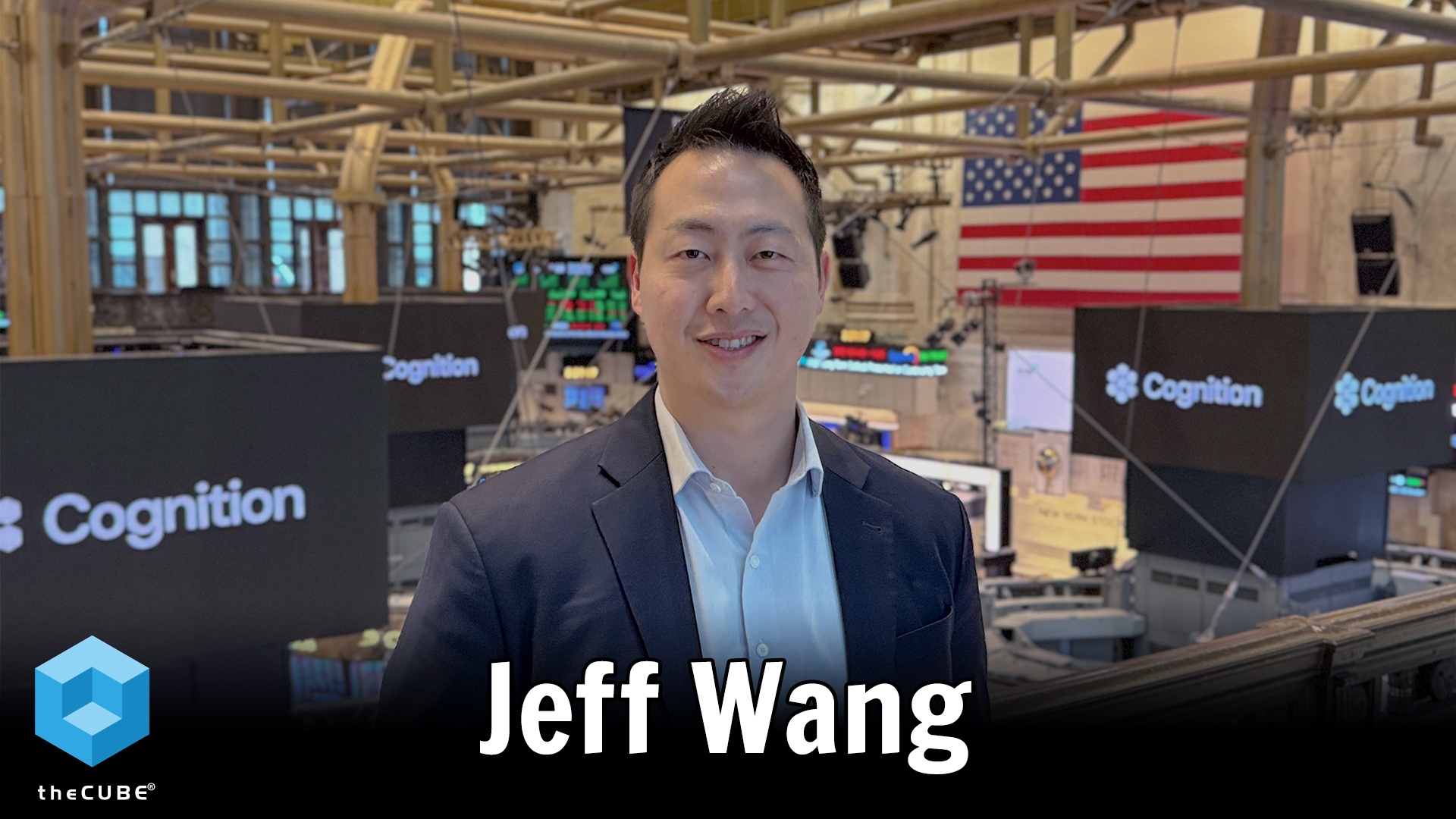
>> is the key. Thanks for coming in and sharing. Congratulations. Love what you do. Love your mission. Obviously, we love video and doing our part here with theCUBE video. We are in person, soon to be avatars, but our trust won't be replaced. The quality of the content still has to be there. You see a lot more education, a lot more learning, interaction. It'll bring people together. That's our view here on theCUBE. I'm John Furrier, your host. Thanks for watching.






















































 John Furrier