Alexander Gallego, founder and Chief Executive Officer of Redpanda Data, discusses the company's recent developments and strategic positioning at the forefront of data streaming technology in theCUBE's "Mixture of Experts" series, filmed at the New York Stock Exchange.
In this insightful episode hosted by Dave Vellante, co-founder and co-Chief Executive Officer of SiliconANGLE Media Inc., Gallego shares the latest updates at Redpanda Data, highlighting its Series D funding led by Google Ventures. The conversation delves into the challenges and innovations within data streaming, as well as Redpanda's position in the market, particularly through its significant partnerships and technological advances such as the rollout of Apache Iceberg.
Key takeaways from the discussion include Redpanda's strategic milestones and growth, as highlighted by Gallego. Notably, Redpanda now powers the New York Stock Exchange's cloud data feeds, underscoring its capability in mission-critical environments. Furthermore, the conversation addresses the shift from batch processing to real-time streaming, an essential change driven by new capabilities in AI and the innovative use of data for business process improvements, which Redpanda enables, as Gallego explains.
Forgot Password
Almost there!
We just sent you a verification email. Please verify your account to gain access to
theCUBE + NYSE Wired: Mixture of Experts Series. If you don’t think you received an email check your
spam folder.
Sign in to theCUBE + NYSE Wired: Mixture of Experts Series.
In order to sign in, enter the email address you used to registered for the event. Once completed, you will receive an email with a verification link. Open this link to automatically sign into the site.
Register For theCUBE + NYSE Wired: Mixture of Experts Series
Please fill out the information below. You will recieve an email with a verification link confirming your registration. Click the link to automatically sign into the site.
You’re almost there!
We just sent you a verification email. Please click the verification button in the email. Once your email address is verified, you will have full access to all event content for theCUBE + NYSE Wired: Mixture of Experts Series.
I want my badge and interests to be visible to all attendees.
Checking this box will display your presense on the attendees list, view your profile and allow other attendees to contact you via 1-1 chat. Read the Privacy Policy. At any time, you can choose to disable this preference.
Select your Interests!
add
Upload your photo
Uploading..
OR
Connect via Twitter
Connect via Linkedin
EDIT PASSWORD
Share
Forgot Password
Almost there!
We just sent you a verification email. Please verify your account to gain access to
theCUBE + NYSE Wired: Mixture of Experts Series. If you don’t think you received an email check your
spam folder.
Sign in to theCUBE + NYSE Wired: Mixture of Experts Series.
In order to sign in, enter the email address you used to registered for the event. Once completed, you will receive an email with a verification link. Open this link to automatically sign into the site.
Sign in to gain access to theCUBE + NYSE Wired: Mixture of Experts Series
Please sign in with LinkedIn to continue to theCUBE + NYSE Wired: Mixture of Experts Series. Signing in with LinkedIn ensures a professional environment.
Are you sure you want to remove access rights for this user?
Details
Manage Access
email address
Community Invitation
Kevin Tian, Doppel
Alexander Gallego, founder and Chief Executive Officer of Redpanda Data, discusses the company's recent developments and strategic positioning at the forefront of data streaming technology in theCUBE's "Mixture of Experts" series, filmed at the New York Stock Exchange.
In this insightful episode hosted by Dave Vellante, co-founder and co-Chief Executive Officer of SiliconANGLE Media Inc., Gallego shares the latest updates at Redpanda Data, highlighting its Series D funding led by Google Ventures. The conversation delves into the challenges and innovations within data streaming, as well as Redpanda's position in the market, particularly through its significant partnerships and technological advances such as the rollout of Apache Iceberg.
Key takeaways from the discussion include Redpanda's strategic milestones and growth, as highlighted by Gallego. Notably, Redpanda now powers the New York Stock Exchange's cloud data feeds, underscoring its capability in mission-critical environments. Furthermore, the conversation addresses the shift from batch processing to real-time streaming, an essential change driven by new capabilities in AI and the innovative use of data for business process improvements, which Redpanda enables, as Gallego explains.
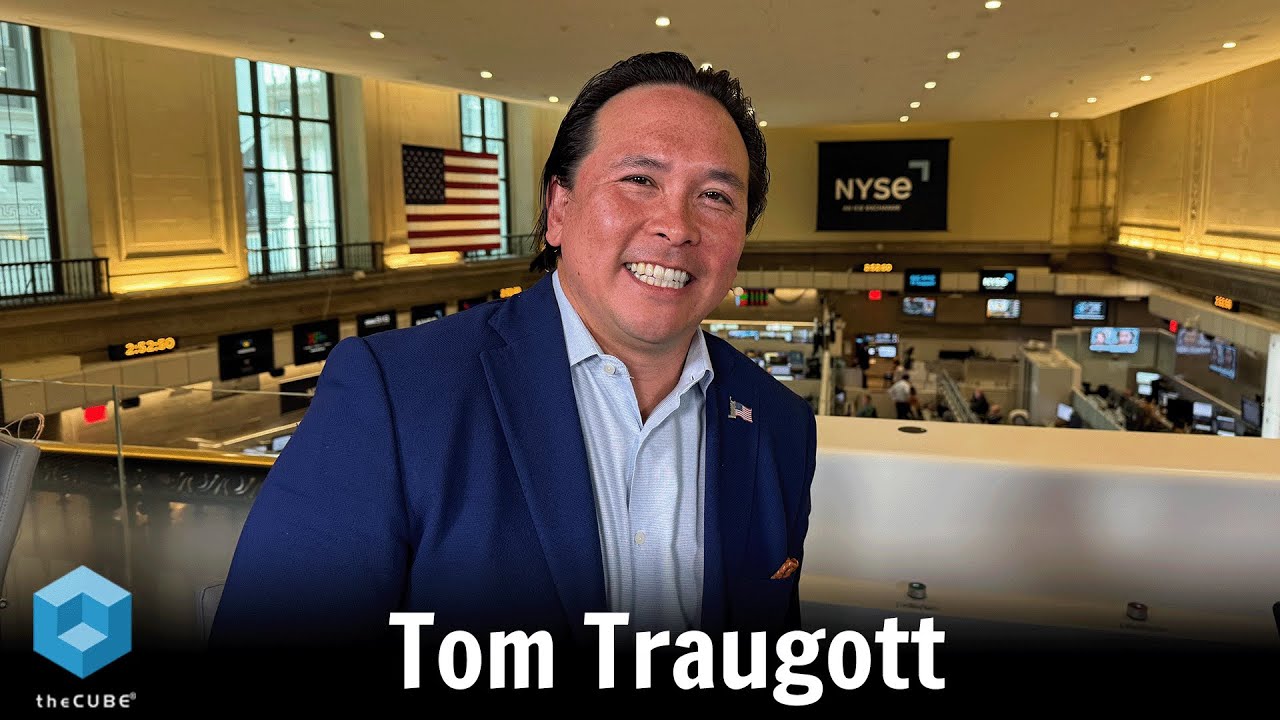
In this Mixture of Experts segment from the NYSE studio, Kevin Tian, co-founder and CEO of Doppel, joins theCUBE’s Dave Vellante to unpack the future of cybersecurity in an AI-native world. Tian shares the origin story behind Doppel’s launch just before the generative AI wave and how a close connection to OpenAI helped shape their early conviction. Framed as a next-gen digital risk protection platform, Doppel is taking a bold stance against social engineering threats by focusing on the human layer of enterprise security.
Tian reveals Doppel’s unique ap...Read more
exploreKeep Exploring
What inspired the founding of Doppel and who were its co-founders?add
What were the circumstances and motivations behind starting the company in 2022?add
What are the challenges and strategies in combating cyber threats in the context of evolving AI technologies?add
What is the role of Doppel in the deployment of agentic AI, and how does it handle the challenges associated with high volumes of security alerts?add
>> And you're watching the 'Mixture of Experts' series here with NYSE Wired plus theCUBE. And I'm excited to say that Kevin Tian is here. He is the co-founder and CEO of Doppel, a really interesting, I guess security startup, but with a little different twist. Welcome to theCUBE. Good seeing you.
Kevin Tian
>> Thank you for having me, Dave. Really excited to be here.
Dave Vellante
>> Yeah, you bet. Okay, so you're a co-founder and CEO. Why'd you start the company?
Kevin Tian
>> So the company started, really before all this actually, I was a software engineer at Uber and Lyft. Met my co-founder, Rahul there, and we started the company in 2022. This was right before ChatGPT came out, and we knew that AI was about to blow up because he was roommates with the head of research at OpenAI. So for us, we started the company-
Dave Vellante
>> Get out of here. That's awesome.
Kevin Tian
>> No, it's crazy, right? The stories that we get to hear, but for us, it really was about the opportunity to solve the greatest threats with AI and with Doppel, we're doing that by solving all things social engineering.
Dave Vellante
>> So you knew that the AI heard around the world was going to be big.
Kevin Tian
>> Exactly.
Dave Vellante
>> Did you know it was going to be this big?
Kevin Tian
>> It's a good question. I mean, we knew it was going to be big, big. Just the stuff that was coming out, the stuff that we were hearing about in rumors, right? In Silicon Valley. And of course it's hard to predict exactly how that plays out, but we knew that this was different, right, than just the traditional machine learning and traditional AI from the 2010's.
Dave Vellante
>> Yeah. Yeah. Okay. So you're described as an AI native digital risk protection platform, but you shared with me a little sort of new messaging, which is social engineering defense. Explain that, and where were you in 2016 at the election?
Kevin Tian
>> Good question. Well, look, the premise of Doppel, right is, especially we're seeing a lot with today, right? Where if I'm a threat actor, like Scattered Spider, some other cyber criminal, trying to get into your organization. With AI, there's more channels than ever before. I'm not just doing a phishing email now. I'm sending you SMS campaigns with AI. I'm doing deep fake voice calls, I'm running fake personas on LinkedIn, pretending to be part of your company, things like that. And so for us, we view this as much more than just digital risk, brand or executive protection. It's really all things that touch the human layer.
Dave Vellante
>> So that's your why, I mean, the risks are exploding.
Kevin Tian
>> Exactly.
Dave Vellante
>> And you need a new approach.
Kevin Tian
>> A 100%.
Dave Vellante
>> Because AI is essentially rendered our ability to combat conventional phishing, nearly useless because humans used to be able to handle that one percent that would get through. Don't ever click on links if you don't know where they come from, but I know they do. But notwithstanding bad user behavior, humans could generally keep up. No more with AI. And so the threat vectors are multiplied by 10 or a 100X. That's where you guys come in.
Kevin Tian
>> Exactly. Exactly. I mean, just look at the past 18, 24 months with AI and how, if you look at how companies have been breached today, it really is the fact that it's not just the email anymore, but it's multi-touch campaigns. It's multi-touch campaigns. So what we talk about at Doppel all the time is how do we do two things? How do we one, use a multi-channel threat graph to combat this? Anytime we see a particular email or a phone number, how do we actually tie it to the whole threat actor infrastructure? And then second, how do we use AI itself to combat AI? Just because if these bad guys can spin up these attacks for just a few cents, right? We got to make sure that you can run the analysis, run the response playbooks, and do the takedowns of that infrastructure, which is something special that we do at Doppel. Make sure that, that also scales from a unit economics perspective.
Dave Vellante
>> So Kevin, part of your IP is you've created a knowledge graph database, if you will. That's your IP, is that right?
Kevin Tian
>> That's correct, yep.
Dave Vellante
>> Okay. So tell us more about whatever you can share about your secret sauce. We kind of get your superpowers, but how are you actually able to achieve that technically and architecturally? What are the differentiators?
Kevin Tian
>> Yeah, I mean the key thing is we collect data that no other security company collects. We're not just collecting the traditional dark web data and domain data and phishing email data, but we will collect the fake telephone numbers pretending to be Dave. We'll collect the fake LinkedIn accounts of folks pretending to be part of Doppel or whatever organization. We'll collect the Telegram accounts, WhatsApps, the paid advertisements, things like that. So because we've got more pivot points, that's how we can then map out threat actor infrastructure with our graph-based architecture that other folks can't.
Dave Vellante
>> So I mean, don't the big threat intel companies, whether it's Apollo or a CrowdStrike or Mandiant, they're not collecting this type of data? Is it because they're trying to solve a different problem?
Kevin Tian
>> Exactly. So I think a lot of traditional threat intel focused on the traditional network security model where we're collecting IP addresses, we're collecting domains, we're collecting URLs, but rarely do we see folks collecting WhatsApp accounts. Rarely do we see folks collecting a Google Advertiser ID or maybe a Telegram page. And that's where we've seen the evolution of threat actor tactics. And just because you're not covering it doesn't mean the threat actors won't be taking advantage of it.
Dave Vellante
>> What's fascinating about that, Kevin, is that, I mean, we know that, I don't know what the number is, but a preponderance of the stolen credentials are from phishing. And there are companies of course, that focus on just that space, but the big multi-hundred billion dollar market cap companies generally don't more responding and XDR and so forth. But that's the number one problem. And you guys, so when you're doing your business plan, it seems obvious, but maybe that was the obvious epiphany.
Kevin Tian
>> For sure. I mean, look, there's no 800 pound gorilla yet for all things social engineering, right? CrowdStrike, of course great on what they're doing with endpoint. great about what they're doing with firewall. So for us, from a business plan perspective, this is the great opportunity for Doppel.
Dave Vellante
>> You say that, but I'll tell you, there's no real 800 pound gorilla in security. I mean, Microsoft is probably the closest at maybe a 20 billion business and a lot of hair on that dog. Yeah, you got CrowdStrike in Palo Alto, big evaluations. But even like Palo Alto, probably in the next largest, I bet you they have less than 10% market share. So it's a really wide open and fragmented business. So I guess my question is how do you deal with, okay, here's another shiny new toy that is going to add to the number of vendors in the security stack and increase complexity. How do you respond to that?
Kevin Tian
>> Well, the good news is that we're often actually simplifying security stacks for our clients, helping them consolidate multiple vendors. For example, maybe they had a siloed dark web solution, maybe they had a siloed social media solution, maybe they had an email solution. But with the graph based architecture, the whole value prop is that if you put that in one data lake, that's how you can then map out a whole bunch of threat actor activity that you couldn't before. So I think that's one value prop pitch. And then otherwise, execution is key in terms of the business results. You could show the risk reduction you can show. That's always important.
Dave Vellante
>> Can you do a little AI one-on-one. We should all be experts in AI by now, but what are the techniques that you're using? Deep learning, machine learning, generative AI, agentic is now obviously you're using agents. Take us through kind of the basics.
Kevin Tian
>> For sure. I mean, well, I think you've got traditional ML, which has always existed in 2010's. You've got new AI techniques developing with deep learning, especially with self-driving, things like that. To us, really the big breakthrough with 2022 was the LLM, right? And then the agentic work behind it. And so look, I know a lot of security vendors claim they use AI, and they certainly do in some way. But the stuff that we found most exciting at Doppel, and specifically with our special relationship with OpenAI is how the reinforcement learning loops are being developed with these agents. So there's stuff that we do that no other security company in the world does with AI in particular, and basically gotten access to API's that are still in beta, things like that. And that's where we've been able to uncover a lot of efficiency gains with AI.
Dave Vellante
>> What is your relationship with OpenAI?
Kevin Tian
>> So we work closely with them. We've done case studies with them around how do we deploy agents at scale and production. What's great about Doppel is that we're full end-to-end service. So when we deploy agentic AI, we also have the humans in the loop to correct it. We have the tier two, tier three analysts where just like a self-driving car, it might need some interventions. And so from what we've seen, our use case is perfect for agentic AI because we're facing high volume of alerts every single day, hundreds of millions. It doesn't require deep context into internal systems to figure out, "Hey, this is a fake Dave." And that's exactly what we're doing with AI agents, is we've actually been able to automate away entire security operations teams within Doppel.
Dave Vellante
>> So I want to come back to the volume because it's pretty impressive and your accuracy level. But given that reinforcement learning is such a critical part of quality AI, how are you feeling about the scale AI deal with the whole Meta thing? I know there are alternatives out there, by the way, we just had some folks on last week whose business is going through the roof now.
Kevin Tian
>> Exactly,
Dave Vellante
>> Because they, they're quite capable. But how will that affect your business, if at all?
Kevin Tian
>> Yeah, well, I think it's just validation of the approach. The big AI opportunities today is how do you not just do AI as a copilot, but how do you actually totally automate the end to end? And in order to get there, we started very similar to scale. We today still have teams in Philippines, we still have teams in India, we still have teams in the US. We have a 24/7, 365 SOC. But the way you get to full automation is you need that feedback loop with those teams. And so in our view, it's validation of that approach where the real opportunity with AI is how do you take something and automate it end-to-end and own that end-to-end workflow.
Dave Vellante
>> So over a hundred million alerts daily. So these teams all over the world. I'm presuming they're not wearing beepers, achieving 90% accuracy in identifying genuine threats. So you're eliminating a lot of false positives.
Kevin Tian
>> Correct.
Dave Vellante
>> And then the human in the loop is both to increase that efficacy and to address the other 10%?
Kevin Tian
>> Exactly. I mean, I think being someone new to security and coming in, it's been interesting to see how precision and recall is always the battle, right? In security, how do you get your system more and more accurate and reduce false pauses, but how do you also make sure you don't sacrifice on recall and miss something important? And so what we found quickly, for example, with our AI agents, they actually started becoming better at recall than the humans from a numbers perspective. We're actually now at the point of 99% plus on recall. So then it was precision that became the problem for the humans to solve. But yes, base the article with the humans is whatever is the key gaps right now with the AI, whether it's a precision use case, whether it's a recall use case, that's the focus for the team.
Dave Vellante
>> Voice fakes are scary.
Kevin Tian
>> Yes.
Dave Vellante
>> How good are they? How can we best combat them?
Kevin Tian
>> They're really good, right? In the sense that we've seen them actually successfully breach people, or at least cause significant financial loss to some big companies in the world. Best way to combat it. I mean, you got to throw everything at it. And so our approach at Doppel is, again, it's that multi-channel piece where if we know about a voice call that's happening, we're immediately linking it to is there also an email going out? Is this person even real? Is this a fake business? Things like that. So how do we collect that data? And then also we're actually developing new capabilities on the simulation and awareness side as well. So because we see these campaigns, how do we help you prepare for them?
Dave Vellante
>> The company you've raised, am I correct? Almost well, about 59 million, right?
Kevin Tian
>> 54.4.
Dave Vellante
>> 54?
Kevin Tian
>> Yep.
Dave Vellante
>> Okay. And through series B, is that correct?
Kevin Tian
>> So we just announced our series B with Bessemer. Yep.
Dave Vellante
>> All right, congratulations. Awesome. So where do you want to take the company? I mean, if you look out four or five years, where do you want to be? Even seven, eight years, because that's probably what it's going to take. But you never know. Things are moving so fast these days.
Kevin Tian
>> I mean, for us, we want to build the CrowdStrike for social engineering, right? Again, there's no 800 pound gorilla yet. You argue not even in security and especially in social engineering. So for us, just again, the data we collect makes us very unique. It gives us very unique AI applications, and that's how we just continuously add new products to our platform. So we've started off with what's traditionally been called digital risk. Executive protection has been one of our hottest in-demand products since the December incident with United Healthcare. And then now we're even rolling out simulation products as well. So we just see a lot of opportunity in this particular space.
Dave Vellante
>> It's interesting, you said CrowdStrike for social engineering. I had great admiration for CrowdStrike and George Kurtz.
Kevin Tian
>> Likewise.
Dave Vellante
>> They move fast.
Kevin Tian
>> They do.
Dave Vellante
>> Founder-led, hardcore, low key in the sense that they're not chest thumpers. They do some really good work. Explain your rationale with the CrowdStrike versus there are other companies that you could have aspired towards.
Kevin Tian
>> Yeah. Well look, I think what they do well, and really what every great company does well is I'd say two things. One, customer obsession of course is really critical. And something I admire about Kurtz, right, is how much he's out there in the field, even to this day, seeing customers, being there with customers, things like that. And that's something that's very important here at Doppel. And then two is innovation. How do you add something new for someone who's looking at buying a new vendor and providing value that they couldn't have before? And so we're a product-led company. Me and Rahul, our backgrounds are in the software engineering space where not necessarily the traditional cybersecurity founders. And for us, that's what gets us excited every day is to build new products and new capabilities that really solve customer pain points.
Dave Vellante
>> What's your go-to-market? Do you have relationships with other security firms? You got some direct, some indirect, how do you go to market?
Kevin Tian
>> Yeah. Yeah. So go-to-market, right? We've hired some great security, go to market leadership, ex-Okta, CrowdStrike, Tanium, a lot of big companies. And for us it's working closely with the ecosystem and the partner community. So we work very closely with the value added resellers. We find ways to partner with other vendors as well. And that's been critical for us is security is an ecosystem and how do we play nicely in it?
Dave Vellante
>> So do you feel like you have product market fit?
Kevin Tian
>> Yes.
Dave Vellante
>> How do you know? Andreessen says it's when your servers are blowing up. I never really liked that answer. I'm like, "All right, what if your servers aren't blowing up? Does that mean you can't have product market fit? Or you just maybe have crappy go-to market?" And so how did you determine that you had product market fit? This is a really important question for a lot of entrepreneurs out there. What were the signals that gave you confidence that you had product market fit?
Kevin Tian
>> Yeah, I think it's similar to the Andreessen answer, which is like you're getting so much demand now and the key is repeatable demand as well, of course, right? Repeatable demand for the same sorts of products. And the battle that we have today at Doppel is how do we just scale faster? And so the meetings that we have today with the board are around, "Hey, we actually need to go even faster and even go more aggressive with our plans and grow to go the market team more, grow the engineering team more." And that's our top focus here at Doppel.
Dave Vellante
>> Interesting how you got here. Am I correct? This is your first CEO job?
Kevin Tian
>> Correct.
Dave Vellante
>> Okay. So awesome taking that on at such a young age. I love it. That's because you're fearless. So Uber and Lyft, so we've had Uber on, we love Uber, they're awesome.
Kevin Tian
>> Great team.
Dave Vellante
>> Kiran Medisetty. I don't know if you know that name.
Kevin Tian
>> Yes, of course.
Dave Vellante
>> And amazing. He's been on our show many, many times.
Kevin Tian
>> He's been one of my engineering mentors when I was a engineer.
Dave Vellante
>> They've done some really, really great work. And then you're an advisor for several years and four years at Tola Capital, so you kind of learned where to go, where not to go, and then jumped in. Really phenomenal story that you guys got going. I wish you the best and really appreciate you coming on. I hope you can come back and help us track your progress.
Kevin Tian
>> Absolutely. Well I appreciate you having me on. Really enjoyed this conversation and yeah, looking forward to next time Dave.
Dave Vellante
>> All right. You bet. Thanks Kevin. All right, and thank you for watching. This is Dave Vellante for John Furrier and theCUBE plus NYSC Wired, our 'Mixture of Experts' series here at our NYSC studio. We'll be right back right after this short break.













































 Dave Vellante