This conversation examines marketing leadership in the age of artificial intelligence with a focus on small language models, data sovereignty and marketing AI. Claire Darling of Uniphore, chief marketing officer, discusses the company's AI and data platform and how it delivers customer choice through small language models, data sovereignty and composable architectures. Darling explains practical marketing use cases including marketing AI, digital twins, personalization and tokenomics, and they outline the platform's role in category creation and enterprise adoption.
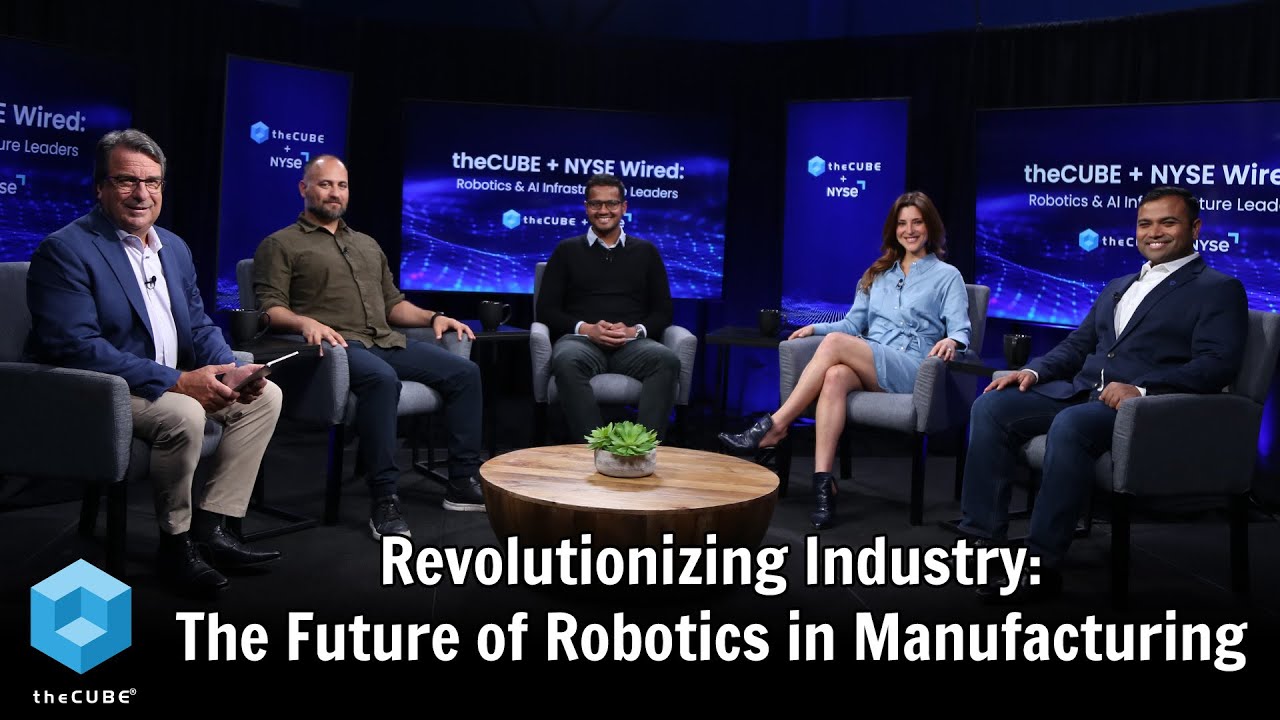
In this theCUBE Research segment at NYSE Wired, hosts Gemma Allen, John Furrier and Dave Vellante probe Uniphore's market positioning, messaging and use cases. Darling emphasizes that small language models can materially reduce compute and token costs and that sovereignty and model choice are central to enterprise adoption. They state SLMs may be roughly 100× cheaper per query than large language models. The discussion highlights practical recommendations for marketers: optimize for answer engine optimization driven discovery, provide structured content for agents and leverage simulation and personalization to drive measurable pipeline and return on investment.
Forgot Password
Almost there!
We just sent you a verification email. Please verify your account to gain access to
theCUBE + NYSE Wired: Marketing Leaders. If you don’t think you received an email check your
spam folder.
Sign in to theCUBE + NYSE Wired: Marketing Leaders.
In order to sign in, enter the email address you used to registered for the event. Once completed, you will receive an email with a verification link. Open this link to automatically sign into the site.
Register For theCUBE + NYSE Wired: Marketing Leaders
Please fill out the information below. You will recieve an email with a verification link confirming your registration. Click the link to automatically sign into the site.
You’re almost there!
We just sent you a verification email. Please click the verification button in the email. Once your email address is verified, you will have full access to all event content for theCUBE + NYSE Wired: Marketing Leaders.
I want my badge and interests to be visible to all attendees.
Checking this box will display your presense on the attendees list, view your profile and allow other attendees to contact you via 1-1 chat. Read the Privacy Policy. At any time, you can choose to disable this preference.
Select your Interests!
add
Upload your photo
Uploading..
OR
Connect via Twitter
Connect via Linkedin
EDIT PASSWORD
Share
Forgot Password
Almost there!
We just sent you a verification email. Please verify your account to gain access to
theCUBE + NYSE Wired: Marketing Leaders. If you don’t think you received an email check your
spam folder.
Sign in to theCUBE + NYSE Wired: Marketing Leaders.
In order to sign in, enter the email address you used to registered for the event. Once completed, you will receive an email with a verification link. Open this link to automatically sign into the site.
Sign in to gain access to theCUBE + NYSE Wired: Marketing Leaders
Please sign in with LinkedIn to continue to theCUBE + NYSE Wired: Marketing Leaders. Signing in with LinkedIn ensures a professional environment.
Are you sure you want to remove access rights for this user?
Details
Manage Access
email address
Community Invitation
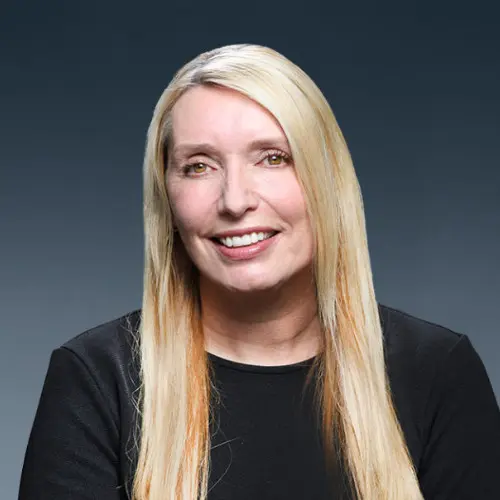
Claire Darling, Uniphore
This conversation examines marketing leadership in the age of artificial intelligence with a focus on small language models, data sovereignty and marketing AI. Claire Darling of Uniphore, chief marketing officer, discusses the company's AI and data platform and how it delivers customer choice through small language models, data sovereignty and composable architectures. Darling explains practical marketing use cases including marketing AI, digital twins, personalization and tokenomics, and they outline the platform's role in category creation and enterprise adoption.
In this theCUBE Research segment at NYSE Wired, hosts Gemma Allen, John Furrier and Dave Vellante probe Uniphore's market positioning, messaging and use cases. Darling emphasizes that small language models can materially reduce compute and token costs and that sovereignty and model choice are central to enterprise adoption. They state SLMs may be roughly 100× cheaper per query than large language models. The discussion highlights practical recommendations for marketers: optimize for answer engine optimization driven discovery, provide structured content for agents and leverage simulation and personalization to drive measurable pipeline and return on investment.
>> Thank you. Here at the New York Stock Exchange, I'm Gemma Allen, host of NYSE Wired, and today we are talking all things marketing leadership. Everyone says AI is transforming business, but turning that promise into something customers can truly see and understand is a very different challenge. Joining me now for a conversation is Claire Darling, Chief Marketing Officer at Uniphore. Welcome, Claire.
Gemma Allen
>> Thank you. I'm really pleased to be here.
Gemma Allen
>> So, very interesting company at a very interesting time. You're two months in the door, maybe three months.
Gemma Allen
>> Yeah, it's just two and a half months.
Gemma Allen
>> Two and a half months. Who's counting? Seems like a lot going on in your space. Maybe, Claire, just set out the stall a little bit. Talk to me about Uniphore. Lay out the product for me. We've had Umesh on the show back in November, but that feels like a century ago, really, in the world of AI and tech.So bring us up to speed.
Claire Darling
>> Yeah, for those that don't know Uniphore, we're a Series F company, private company based in the US. We've got about 2 ,000 customers. We primarily focus on enterprise, so large, complex organizations. We deliver an AI and data platform, and our platform is pretty unique, and it's what drew me to the company in terms of, we're an open platform, so we give our customers choice in terms of what models they run. We are based on small language models, so small language models, you can customize those based on your data, your domain, and basically on economics they're a lot cheaper to run your query. We have a data point that I share is an SLM is a hundred times cheaper to run a query than an LLM, so very unique differentiation there. And then we talk about sovereignty, so we give the customer control over their data, their models, their IP, the governance. So in a nutshell Uniphore is all about giving freedom of choice and then also peace of mind that you're protecting your data and protecting your IP.
Gemma Allen
>> So there's a lot to unpack there, and I want to touch on many of those points, which we will. But first, just to start, an AI and data platform. Those words are used interchangeably. There's a lot of noise in that space, right? A lot of enterprise claims to now be AI and data -led.
Gemma Allen
>> Yes.
Gemma Allen
>> How do you think about it from a marketing perspective specifically? because it's a space that's more opportunistic, but also noisier than ever before. How do you think about landing that message in a unique way with your customers?
Claire Darling
>> Yeah, it's something that we're doing. So just how I introduced is like, how do we get very quickly into why are we different? What do we offer? And what's the value of the platform? I think a lot of companies now are trying to tack on AI. They just slap AI on and maybe they've come from SaaS and they're trying to agentify their SaaS platform and they're not an AI native platform, I think it's very confusing to the market. And I think there's deliberate confusion in that because they want to kind of cash in on this trend. And if they're a private company, they want to tie that to the valuation. So for us, I have a test that I always do is when I'm doing any messaging or narrative, I put a couple of words up on a whiteboard. And if I wasn't in the room, would somebody understand without me saying in five minutes what we talk about from what we're offering and what the market is. So I do think simpler gets straight to the point. Not too much technical jargon. You can bring in the technical jargon and aspects of AI when you're talking to a certainCIO, for example, or a CISO, if that's who you're going after.
Gemma Allen
>> Share some of those keywords with us. What words are top of mind for you right now?
Claire Darling
>> So right now I think we talk about the customer choice and openness of a platform. So you don't want to be locked in. You want to be composable. So you want the customer to be able to not rip out their tech stack, but bring you in and bring value integrating with their tech stack. So that's a big thing for us. Small language models are a big thing for us because that is a very big differentiator. And largely misunderstood or misused, I would say.
Gemma Allen
>> Largely, yeah.
Claire Darling
>> I don't think people understand, if you think about you run an AI query, a lot of the large language models are just not, you don't need to have a large language model for a query. If you think about all the use cases that are in an enterprise, they can be done on a small language model. So small language models are something that we really focus in on. And then sovereignty, the control over your data, control over your IP. You don't want that going out into the world and other people accessing that. You keep that within your contained environment, and the small language models are actually learning from that. So those are the things that we focus in on. And value, as well. So what is your value to the customer? What are you delivering? And what are they going to get in terms of outcomes? Rather than, I think a lot of companies talk about their technology rather than what the customer impact is.
Gemma Allen
>> Absolutely. And in terms of messaging outcomes, you mentioned there, there can be a lot of technical jargon. we talk like we're talking to technical audiences. We aren't necessarily. And the buyers of this AI wave are not necessarily all technical folks by background. They're category leaders, right? Uniphore, I will say, from what I have seen of this company and the conversations we've had with you, has done a unique kind of job and also distinguishing in categories like telecom, various, I guess, industry verticals. Talk a little bit about that and how you think about that from a marketing perspective, especially around prioritization.
Claire Darling
>> Yeah, so we have an ICP that we focus in on. we have our ideal customer profile that we go target. That gives us a lot of focus. But then we have industries that we're really focusing in on. And you have to customize your messaging. It's what am I going to get if I'm in financial services? What am I going to get if I'm in telco? what is the value you have to talk in their language there are what we call use cases and that's how i think about messaging from an industry specific to a company but then you have to think about personas we go after and talk to CIOs we go after CEOs talk to CEOs CMOs and chief customer officers they're all different conversations i talk about those as customer conversations and anything that we do in marketing goes out around a customer conversation and very very specific to the value that that person is going to get.
Gemma Allen
>> When we think about technology spend historically, that top of funnel, right, where folks typically in a marketing department or a finance department or an HR department get a little bit of direction or intrigue, it used to come from tech leaders in the business or vendors that are serving that business, right? That, I think, is maybe, and maybe correct me on this, but I imagine changing or shifting somewhat. Where do you think buyers are going now for information and knowledge and awareness? Where do you think that top of funnel is changing to?
Claire Darling
>> It's a really easy answer. I'm friends with the G2 CMO, and they do research every quarter, benchmarking. And I think the number is 75 % of buyers are going to LLMs. They're going to do their search in Claude or Anthropic. They're looking at ChatGPT. They're asking, and they're doing their research there. So you really need to make sure that you're getting picked up in that search and the agents are doing this. The OpenAI models are going and looking on your website. So you have to have your website ready for AEO You have to make sure that they can find the content So if you think about a human and an agent does not look for the same content Agents are looking for much more structured content. It's all happening in the LLMs. It's all happening in AEO. And I think it's going to get a lot more prevalent. So the number keeps going up every quarter. But I think what's really changing as well is they're not just asking questions. They're asking for recommendations. So they're asking, well, which one should I buy? If you're not turning up in that conversation, then that's a challenge. So that's a challenge for marketers. There's a lot of marketers still trying to figure that out and what they do and how they make sure they're turning up in those searches.
Gemma Allen
>> I mean, we won't get into this now, but it's a unique challenge too from the perspective of competitive dynamics, right? If you think about who owns those platforms, if you're going to Claude to ask Claude for advice, are you going to get told to buy Claude, right? That's a real question.
Gemma Allen
>> Yes.
Gemma Allen
>> I won't ask you to solve it. Hopefully they'll be fairly neutral on the searches and stuff. But let's get into your customer use cases a little bit. And let's talk about it from the perspective of what's unique about Uniphore. So data sovereignty, for example. We talk a lot about that of late. There's a lot of concern around the control plane, the data plane, what that looks like in the future. You're so right in what you said earlier. There is a real fear around who is going to own your data and what the next wave or the next era of vendor lock-in could look like.
Gemma Allen
>> Yes.
Gemma Allen
>> Talk to me about how you message that and to who. Who is the kind of unique buyer? Who are you seeing rising to the fore in that space?
Claire Darling
>> I honestly think, so if I think about Uniphore buyers, it's all of our buyers. So the CEO cares about it. The CIO cares about it. The chief AI officer cares. CMO cares. They all should care about where their data, what's happening with their data. I think a lot of people are still learning AI and they're still learning, okay, there's certain things you have to switch off. If you're doing searches in, say, LLMs, so that that data doesn't get shared with everyone else or they don't learn on your data. So this is where we talk about the sovereignty. You control your data, you own your data, you govern your data because you're actually running it on an SLM and it's contained in your own environment. That's a big thing for everyone that's in the C-suite right now.
Gemma Allen
>> And on the small language models, they are lower compute costs, lower energy costs, right? So there is a lot of value.
Claire Darling
>> There is.
Gemma Allen
>> We hear people say you don't necessarily need a Ferrari to drive around a village. Right.
Claire Darling
>> Yes.
Gemma Allen
>> How do you think about that from the convoluted narrative that's out there right now around tokenomics? And spend, spend, spend, spend to be better. Yeah. act now, think later, which tends to be the new kind of wave we're in. Yeah. I think small language models are getting a little bit lost in that messaging so much when they have so much to add from the perspective of tokenomics.
Claire Darling
>> Yes. I think people are still learning what the difference between LLMs and SLMs is. Uniphore was built on SLMs, so that is one of our unique differentiators. It's interesting because we have a market conversation that we're taking all of our thought leadership, all of our PR, all of our market awareness. It's called The Hidden Cost of AI. And we talk about tokenomics. We talk about where SLMs come in. I think if you can translate it into this is the how. The SLM is the how. What is that impact? So my compute costs are going to be lower, my token costs, my teams aren't going to run out of tokens all the time. I'm going to be able to manage, as a CFO, I'm going to be able to manage those costs. That's a big topic right now. So, we talk about it from that perspective and what the market is also talking about in terms of, tokenomics. We talk about compute. We talk about energy consumption with SLMs. we're about to come out with a thought leadership report that shows SLMs and how much less compute they're using because I think they're really topical right now for the markets.
Gemma Allen
>> Talk to me about being your own best customer at Uniphore. You run a large marketing department, I don't know how large but I'm sure it's a very successful marketing department.
Gemma Allen
>> Yeah.
Gemma Allen
>> How do you use the product and bring that to life for us?
Claire Darling
>> Yeah so we just launched yesterday I'll do a plug for a marketing AI product. It's a horizontal solution that's built on our data and AI platform. We're just starting to use that. We've got our customers on that. We've got our partners on that. Marketing team is now starting to use that. Now, it's more for, budgets that are about 50 million. I wish I had a 50 million budget for ad spend. I don't have that. But it's more for that size of customer. But we're going to use it because our marketing AI products basically has, we can simulate before we spend. So we basically are creating digital twins for each individual and each individual customer. So instead of doing segmentation, the old world of segmentation, personas, segment averages, we are now doing digital twins. So I can tell you as an individual, I know what you're doing, I know your behavior. So we have that in our marketing AI. that's going to give us from a marketing team a lot more ability to understand you your behavior and personalize personalization is huge right now we also are following obviously the SLM model for marketing AI so obviously our compute costs are going to be lower for using Uniphore Marketing AI and then we're able to simulate which is our unique differentiation in terms of we can go simulate how you will behave as a digital twin of yourself in our system. We can test hypothesis, we can test what channels potentially would work for you. So before we even commit to spend, we can actually test and then we can launch it and then what happens is anything that you do in interacting with us as a customer, it will feed back into our system and the system will learn and it compounds and it learns and it learns all the things that you reacted to. So it's just a self -learning system. So the more that we use it, the more knowledge we have on everyone and the better results we're going to get. So think about that. You're no longer testing as a marketer. You're no longer thinking, okay, we'll test this for three weeks and then we'll see. You can actually do it before you even commit. So the simulation is huge. So we are moving on to our MAI, Marketing AI.
Gemma Allen
>> With my own monkey mind and the amount of tabs I have open in my head at any one time, the idea of my digital twin.
Claire Darling
>> Hopefully learn you.
Gemma Allen
>> you yeah terrifies me so Claire you're a five -time CMO
Gemma Allen
>> yes
Gemma Allen
>> marketing as a concept as a practice is also undergoing radical change right we feel like we've been saying that for a while but we think about the rise of social the rise of short -form content so many spaces are changing quite quickly how do you think about this industry like how do you process some of the change that's happening around you and what excites you about the next five years and what kind of scares you?
Claire Darling
>> Yeah, so I would say the last year and a half really been focused on AI and how marketing is getting impacted as the one function really impacted by AI. I think a lot of CMOs right now are trying to work out what they do. So if you think about how is your team organized, so organization design, because you've got humans and agents now working in a marketing organization, how do they work together? When do you bring in humans to check the agent's work? They have to have the authority. Then you have to think about how are we going to work? So there are certain work that can just go through autonomous workflows. How do we think about the work that we're doing? So you can free up your teams to work on something that maybe is more strategic because there's a process that can just be run through AI. So there are those areas. Meanwhile, I think we've got the expectation from the market in terms of customers. They expect a lot now. So they expect you to know them. You know their data. You know their behavior. How do we, and they expect personalization. So how do we do all this, at scale and deliver very personalized experiences at speed? And with the ROI, we need to deliver. There's all of that going on in marketing right now because of AI. So for me, it's exciting because playbooks of the past, they don't work. all the stuff we learned 10 15 years ago they don't work so you have to relearn and rethink and test so that's exciting because you're learning about AI you're learning my organization doesn'tlook like the same organization I had as my first CMO role
Gemma Allen
>> so Claire three months almost into the role
Gemma Allen
>> yeah
Gemma Allen
>> a lot happening talk to me about the next six to twelve months What's ahead for you? What are the priorities? Break it down.
Claire Darling
>> So it's moving fast. We are obviously in a space in AI that we're defining the market. The market is not there. So this has been a very different CMO role for me in terms of there's a lot of market definition, category creation, which I definitely have done in my past. So category creation is a big focus. Market awareness in terms of what do we deliver? What's the value? Uniphore has changed over the years. And we need to make sure the market understands where we started, what was our foundation and where we are now and how we built off that and pivoted. And then obviously, as with any CMO, it's growth and revenue. So how do I deliver pipeline? I actually own all of pipeline at Uniphore. I did at my last company, too. So I own the pipeline number. It doesn't matter where the pipeline is coming from or sourced. I own that. So I have a lot of pull in terms of how, where does our sales team focus? Where does marketing team focus? That's a big, big thing for us. And that's a new muscle that we're obviously learning at Uniphore. So I would say it's not 12 months. Every CMO that's going into a new role, they don't have six months, 12 months. they have probably three months to make an impact and do things really quickly. I'm going to be on a panel coming up next month on that very topic.
Gemma Allen
>> Wow.
Claire Darling
>> Because it's gotten faster, the expectations are higher, and it's exciting.
Gemma Allen
>> Well, Claire, the stakes are certainly higher than ever before. Wish you all the best on the journey.
Claire Darling
>> Thank you.
Gemma Allen
>> We'll be watching the journey from theCUBE and NYSE. Thanks for joining us.
Gemma Allen
>> Thank you so much.
Gemma Allen
>> I'm Gemma Allen here at theCUBE studio at the New York Stock Exchange. This is NYSE Wired Marketing Leaders. Thanks for watching.
>> Thank you. Here at the New York Stock Exchange, I'm Gemma Allen, host of NYSE Wired, and today we are talking all things marketing leadership. Everyone says AI is transforming business, but turning that promise into something customers can truly see and understand is a very different challenge. Joining me now for a conversation is Claire Darling, Chief Marketing Officer at Uniphore. Welcome, Claire.
Gemma Allen
>> Thank you. I'm really pleased to be here.
Gemma Allen
>> So, very interesting company at a very interesting time. You're two months in the door, maybe three months.
Gemma Allen
>> Yeah, it's just two and a half months.
Gemma Allen
>> Two and a half months. Who's counting? Seems like a lot going on in your space. Maybe, Claire, just set out the stall a little bit. Talk to me about Uniphore. Lay out the product for me. We've had Umesh on the show back in November, but that feels like a century ago, really, in the world of AI and tech.So bring us up to speed.
Claire Darling
>> Yeah, for those that don't know Uniphore, we're a Series F company, private company based in the US. We've got about 2 ,000 customers. We primarily focus on enterprise, so large, complex organizations. We deliver an AI and data platform, and our platform is pretty unique, and it's what drew me to the company in terms of, we're an open platform, so we give our customers choice in terms of what models they run. We are based on small language models, so small language models, you can customize those based on your data, your domain, and basically on economics they're a lot cheaper to run your query. We have a data point that I share is an SLM is a hundred times cheaper to run a query than an LLM, so very unique differentiation there. And then we talk about sovereignty, so we give the customer control over their data, their models, their IP, the governance. So in a nutshell Uniphore is all about giving freedom of choice and then also peace of mind that you're protecting your data and protecting your IP.
Gemma Allen
>> So there's a lot to unpack there, and I want to touch on many of those points, which we will. But first, just to start, an AI and data platform. Those words are used interchangeably. There's a lot of noise in that space, right? A lot of enterprise claims to now be AI and data -led.
Gemma Allen
>> Yes.
Gemma Allen
>> How do you think about it from a marketing perspective specifically? because it's a space that's more opportunistic, but also noisier than ever before. How do you think about landing that message in a unique way with your customers?
Claire Darling
>> Yeah, it's something that we're doing. So just how I introduced is like, how do we get very quickly into why are we different? What do we offer? And what's the value of the platform? I think a lot of companies now are trying to tack on AI. They just slap AI on and maybe they've come from SaaS and they're trying to agentify their SaaS platform and they're not an AI native platform, I think it's very confusing to the market. And I think there's deliberate confusion in that because they want to kind of cash in on this trend. And if they're a private company, they want to tie that to the valuation. So for us, I have a test that I always do is when I'm doing any messaging or narrative, I put a couple of words up on a whiteboard. And if I wasn't in the room, would somebody understand without me saying in five minutes what we talk about from what we're offering and what the market is. So I do think simpler gets straight to the point. Not too much technical jargon. You can bring in the technical jargon and aspects of AI when you're talking to a certainCIO, for example, or a CISO, if that's who you're going after.
Gemma Allen
>> Share some of those keywords with us. What words are top of mind for you right now?
Claire Darling
>> So right now I think we talk about the customer choice and openness of a platform. So you don't want to be locked in. You want to be composable. So you want the customer to be able to not rip out their tech stack, but bring you in and bring value integrating with their tech stack. So that's a big thing for us. Small language models are a big thing for us because that is a very big differentiator. And largely misunderstood or misused, I would say.
Gemma Allen
>> Largely, yeah.
Claire Darling
>> I don't think people understand, if you think about you run an AI query, a lot of the large language models are just not, you don't need to have a large language model for a query. If you think about all the use cases that are in an enterprise, they can be done on a small language model. So small language models are something that we really focus in on. And then sovereignty, the control over your data, control over your IP. You don't want that going out into the world and other people accessing that. You keep that within your contained environment, and the small language models are actually learning from that. So those are the things that we focus in on. And value, as well. So what is your value to the customer? What are you delivering? And what are they going to get in terms of outcomes? Rather than, I think a lot of companies talk about their technology rather than what the customer impact is.
Gemma Allen
>> Absolutely. And in terms of messaging outcomes, you mentioned there, there can be a lot of technical jargon. we talk like we're talking to technical audiences. We aren't necessarily. And the buyers of this AI wave are not necessarily all technical folks by background. They're category leaders, right? Uniphore, I will say, from what I have seen of this company and the conversations we've had with you, has done a unique kind of job and also distinguishing in categories like telecom, various, I guess, industry verticals. Talk a little bit about that and how you think about that from a marketing perspective, especially around prioritization.
Claire Darling
>> Yeah, so we have an ICP that we focus in on. we have our ideal customer profile that we go target. That gives us a lot of focus. But then we have industries that we're really focusing in on. And you have to customize your messaging. It's what am I going to get if I'm in financial services? What am I going to get if I'm in telco? what is the value you have to talk in their language there are what we call use cases and that's how i think about messaging from an industry specific to a company but then you have to think about personas we go after and talk to CIOs we go after CEOs talk to CEOs CMOs and chief customer officers they're all different conversations i talk about those as customer conversations and anything that we do in marketing goes out around a customer conversation and very very specific to the value that that person is going to get.
Gemma Allen
>> When we think about technology spend historically, that top of funnel, right, where folks typically in a marketing department or a finance department or an HR department get a little bit of direction or intrigue, it used to come from tech leaders in the business or vendors that are serving that business, right? That, I think, is maybe, and maybe correct me on this, but I imagine changing or shifting somewhat. Where do you think buyers are going now for information and knowledge and awareness? Where do you think that top of funnel is changing to?
Claire Darling
>> It's a really easy answer. I'm friends with the G2 CMO, and they do research every quarter, benchmarking. And I think the number is 75 % of buyers are going to LLMs. They're going to do their search in Claude or Anthropic. They're looking at ChatGPT. They're asking, and they're doing their research there. So you really need to make sure that you're getting picked up in that search and the agents are doing this. The OpenAI models are going and looking on your website. So you have to have your website ready for AEO You have to make sure that they can find the content So if you think about a human and an agent does not look for the same content Agents are looking for much more structured content. It's all happening in the LLMs. It's all happening in AEO. And I think it's going to get a lot more prevalent. So the number keeps going up every quarter. But I think what's really changing as well is they're not just asking questions. They're asking for recommendations. So they're asking, well, which one should I buy? If you're not turning up in that conversation, then that's a challenge. So that's a challenge for marketers. There's a lot of marketers still trying to figure that out and what they do and how they make sure they're turning up in those searches.
Gemma Allen
>> I mean, we won't get into this now, but it's a unique challenge too from the perspective of competitive dynamics, right? If you think about who owns those platforms, if you're going to Claude to ask Claude for advice, are you going to get told to buy Claude, right? That's a real question.
Gemma Allen
>> Yes.
Gemma Allen
>> I won't ask you to solve it. Hopefully they'll be fairly neutral on the searches and stuff. But let's get into your customer use cases a little bit. And let's talk about it from the perspective of what's unique about Uniphore. So data sovereignty, for example. We talk a lot about that of late. There's a lot of concern around the control plane, the data plane, what that looks like in the future. You're so right in what you said earlier. There is a real fear around who is going to own your data and what the next wave or the next era of vendor lock-in could look like.
Gemma Allen
>> Yes.
Gemma Allen
>> Talk to me about how you message that and to who. Who is the kind of unique buyer? Who are you seeing rising to the fore in that space?
Claire Darling
>> I honestly think, so if I think about Uniphore buyers, it's all of our buyers. So the CEO cares about it. The CIO cares about it. The chief AI officer cares. CMO cares. They all should care about where their data, what's happening with their data. I think a lot of people are still learning AI and they're still learning, okay, there's certain things you have to switch off. If you're doing searches in, say, LLMs, so that that data doesn't get shared with everyone else or they don't learn on your data. So this is where we talk about the sovereignty. You control your data, you own your data, you govern your data because you're actually running it on an SLM and it's contained in your own environment. That's a big thing for everyone that's in the C-suite right now.
Gemma Allen
>> And on the small language models, they are lower compute costs, lower energy costs, right? So there is a lot of value.
Claire Darling
>> There is.
Gemma Allen
>> We hear people say you don't necessarily need a Ferrari to drive around a village. Right.
Claire Darling
>> Yes.
Gemma Allen
>> How do you think about that from the convoluted narrative that's out there right now around tokenomics? And spend, spend, spend, spend to be better. Yeah. act now, think later, which tends to be the new kind of wave we're in. Yeah. I think small language models are getting a little bit lost in that messaging so much when they have so much to add from the perspective of tokenomics.
Claire Darling
>> Yes. I think people are still learning what the difference between LLMs and SLMs is. Uniphore was built on SLMs, so that is one of our unique differentiators. It's interesting because we have a market conversation that we're taking all of our thought leadership, all of our PR, all of our market awareness. It's called The Hidden Cost of AI. And we talk about tokenomics. We talk about where SLMs come in. I think if you can translate it into this is the how. The SLM is the how. What is that impact? So my compute costs are going to be lower, my token costs, my teams aren't going to run out of tokens all the time. I'm going to be able to manage, as a CFO, I'm going to be able to manage those costs. That's a big topic right now. So, we talk about it from that perspective and what the market is also talking about in terms of, tokenomics. We talk about compute. We talk about energy consumption with SLMs. we're about to come out with a thought leadership report that shows SLMs and how much less compute they're using because I think they're really topical right now for the markets.
Gemma Allen
>> Talk to me about being your own best customer at Uniphore. You run a large marketing department, I don't know how large but I'm sure it's a very successful marketing department.
Gemma Allen
>> Yeah.
Gemma Allen
>> How do you use the product and bring that to life for us?
Claire Darling
>> Yeah so we just launched yesterday I'll do a plug for a marketing AI product. It's a horizontal solution that's built on our data and AI platform. We're just starting to use that. We've got our customers on that. We've got our partners on that. Marketing team is now starting to use that. Now, it's more for, budgets that are about 50 million. I wish I had a 50 million budget for ad spend. I don't have that. But it's more for that size of customer. But we're going to use it because our marketing AI products basically has, we can simulate before we spend. So we basically are creating digital twins for each individual and each individual customer. So instead of doing segmentation, the old world of segmentation, personas, segment averages, we are now doing digital twins. So I can tell you as an individual, I know what you're doing, I know your behavior. So we have that in our marketing AI. that's going to give us from a marketing team a lot more ability to understand you your behavior and personalize personalization is huge right now we also are following obviously the SLM model for marketing AI so obviously our compute costs are going to be lower for using Uniphore Marketing AI and then we're able to simulate which is our unique differentiation in terms of we can go simulate how you will behave as a digital twin of yourself in our system. We can test hypothesis, we can test what channels potentially would work for you. So before we even commit to spend, we can actually test and then we can launch it and then what happens is anything that you do in interacting with us as a customer, it will feed back into our system and the system will learn and it compounds and it learns and it learns all the things that you reacted to. So it's just a self -learning system. So the more that we use it, the more knowledge we have on everyone and the better results we're going to get. So think about that. You're no longer testing as a marketer. You're no longer thinking, okay, we'll test this for three weeks and then we'll see. You can actually do it before you even commit. So the simulation is huge. So we are moving on to our MAI, Marketing AI.
Gemma Allen
>> With my own monkey mind and the amount of tabs I have open in my head at any one time, the idea of my digital twin.
Claire Darling
>> Hopefully learn you.
Gemma Allen
>> you yeah terrifies me so Claire you're a five -time CMO
Gemma Allen
>> yes
Gemma Allen
>> marketing as a concept as a practice is also undergoing radical change right we feel like we've been saying that for a while but we think about the rise of social the rise of short -form content so many spaces are changing quite quickly how do you think about this industry like how do you process some of the change that's happening around you and what excites you about the next five years and what kind of scares you?
Claire Darling
>> Yeah, so I would say the last year and a half really been focused on AI and how marketing is getting impacted as the one function really impacted by AI. I think a lot of CMOs right now are trying to work out what they do. So if you think about how is your team organized, so organization design, because you've got humans and agents now working in a marketing organization, how do they work together? When do you bring in humans to check the agent's work? They have to have the authority. Then you have to think about how are we going to work? So there are certain work that can just go through autonomous workflows. How do we think about the work that we're doing? So you can free up your teams to work on something that maybe is more strategic because there's a process that can just be run through AI. So there are those areas. Meanwhile, I think we've got the expectation from the market in terms of customers. They expect a lot now. So they expect you to know them. You know their data. You know their behavior. How do we, and they expect personalization. So how do we do all this, at scale and deliver very personalized experiences at speed? And with the ROI, we need to deliver. There's all of that going on in marketing right now because of AI. So for me, it's exciting because playbooks of the past, they don't work. all the stuff we learned 10 15 years ago they don't work so you have to relearn and rethink and test so that's exciting because you're learning about AI you're learning my organization doesn'tlook like the same organization I had as my first CMO role
Gemma Allen
>> so Claire three months almost into the role
Gemma Allen
>> yeah
Gemma Allen
>> a lot happening talk to me about the next six to twelve months What's ahead for you? What are the priorities? Break it down.
Claire Darling
>> So it's moving fast. We are obviously in a space in AI that we're defining the market. The market is not there. So this has been a very different CMO role for me in terms of there's a lot of market definition, category creation, which I definitely have done in my past. So category creation is a big focus. Market awareness in terms of what do we deliver? What's the value? Uniphore has changed over the years. And we need to make sure the market understands where we started, what was our foundation and where we are now and how we built off that and pivoted. And then obviously, as with any CMO, it's growth and revenue. So how do I deliver pipeline? I actually own all of pipeline at Uniphore. I did at my last company, too. So I own the pipeline number. It doesn't matter where the pipeline is coming from or sourced. I own that. So I have a lot of pull in terms of how, where does our sales team focus? Where does marketing team focus? That's a big, big thing for us. And that's a new muscle that we're obviously learning at Uniphore. So I would say it's not 12 months. Every CMO that's going into a new role, they don't have six months, 12 months. they have probably three months to make an impact and do things really quickly. I'm going to be on a panel coming up next month on that very topic.
Gemma Allen
>> Wow.
Claire Darling
>> Because it's gotten faster, the expectations are higher, and it's exciting.
Gemma Allen
>> Well, Claire, the stakes are certainly higher than ever before. Wish you all the best on the journey.
Claire Darling
>> Thank you.
Gemma Allen
>> We'll be watching the journey from theCUBE and NYSE. Thanks for joining us.
Gemma Allen
>> Thank you so much.
Gemma Allen
>> I'm Gemma Allen here at theCUBE studio at the New York Stock Exchange. This is NYSE Wired Marketing Leaders. Thanks for watching.

















 Gemma Allen