Share


We just sent you a verification email. Please verify your account to gain access to Evolving InfluxDB into the Smart Data Platform for Time Series. If you don’t think you received an email check your spam folder.


The Next-Generation InfluxDB Engine Powered by Rust, Parquet and DataFusion
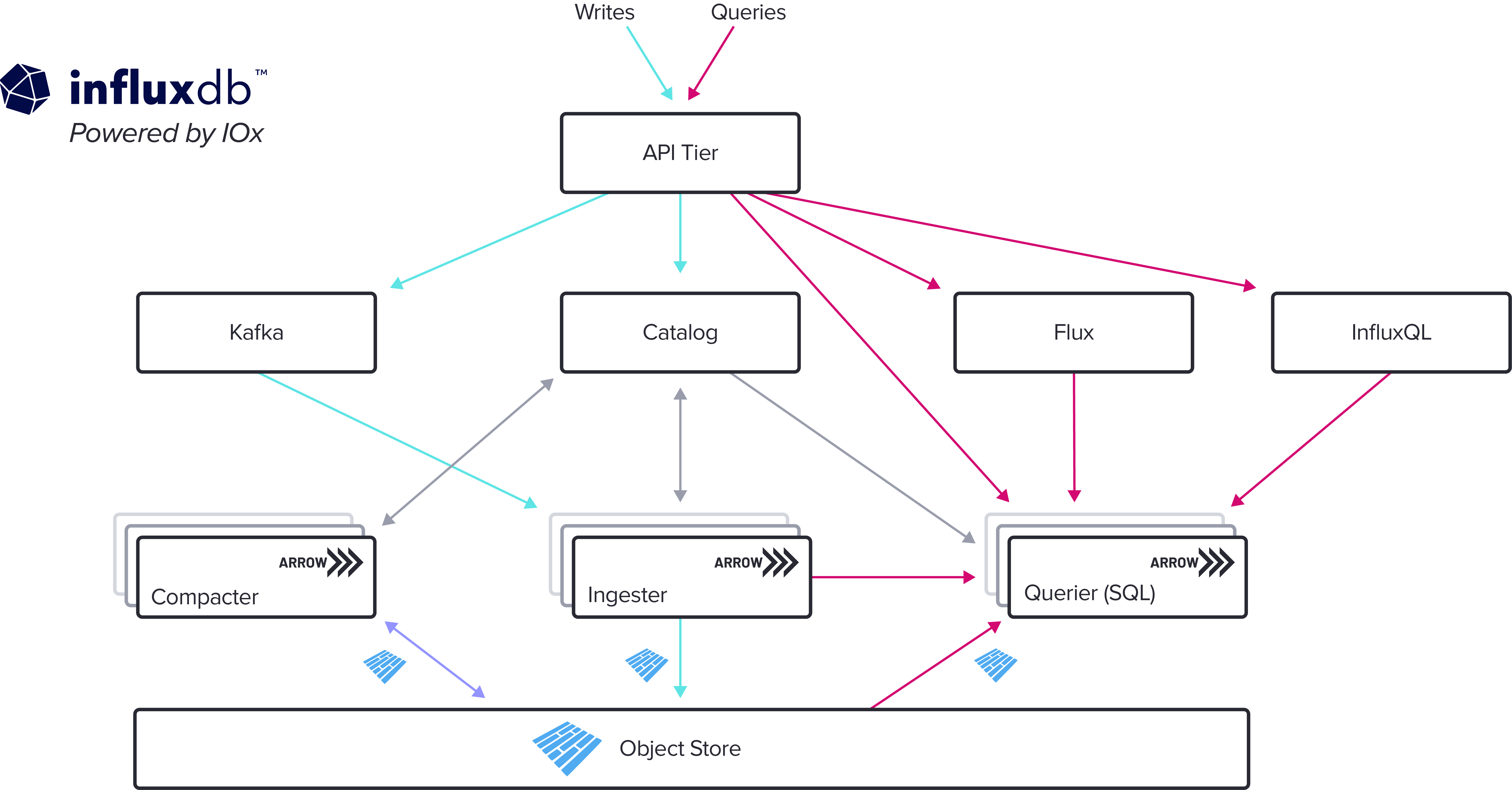
The best way to serve the enterprise data market is to stay ahead of its needs. InfluxData aims to meet current and anticipated customer challenges with its next generation InfluxDB engine. The new iteration wasn’t created to overcome limitations of the previous engine, but to address customer challenges, such as efficient SQL query and the need to scale long term.
In this session, theCUBE's Dave Vellante speaks with Brian Gilmore, director of IoT and emerging technology at InfluxDB, about evolving data platforms and the innovations coming to market that will speed up their adoption. Topics discussed include what it takes to make the shift from “time series data” to “real-time analytics,” open-source availability, and architectural innovations, including Rust and Parquet, which help InfluxDB deliver on the vision most organizations have for a unified platform across edge, datacenter and cloud deployments.

Doubling Down on Open-Source
Open-source software is inherently collaborative as an individual or company copyright holder freely grants users the rights to its source code for any purpose. But, what exactly is the return on investment of contributing to the open-source community, and why should companies commit to its development?
Anais Dotis-Georgiou, lead developer advocate at InfluxDB, talks with theCUBE's Dave Vellante about the company’s recent decision to double down on its commitment to open source and explore why other ecosystem actors would benefit from a similar approach. Topics discussed include IOx — the next-generation open-source core for InfluxDB — and its primary value points, including no limits on cardinality, why column-oriented storage is more efficient than row-oriented storage, benefits of Parquet column-oriented durable file format, and the company’s contributions to the Apache ecosystem, including DataFusion and memory optimization.

Overhauling an Engine While the SaaS Plane Is Flying
It seems logical that the closer companies remain to the open-source community the more quickly they adapt to new technology trends. InfluxData thrives at the intersection of commercial services and open-source software, often iterating to stay current with market needs. The latest solution, a next-generation InfluxDB engine, reflects how the company essentially “overhauled an engine while the SaaS plane is flying” to deliver innovation in time-series data management.
Tim Yocum, director of engineering at InfluxData, joins theCUBE's Dave Vellante to discuss the benefits and challenges to being so involved in the open-source community, how InfluxData is harnessing Kubernetes technology, when to “build versus buy” services, and the importance of customers getting actionable insights from data instead of running infrastructure.

More than shifting or pivoting, savvy companies are evolving their data platforms into a new era with open-source infrastructure. The open-source model allows for scalability, reliability and innovation that builds on – rather than replaces – previous data tools and processes. These “smart data platforms” are expanding to support new workloads and demanding data analytics use cases.
In this special presentation, theCUBE talks with InfluxData about how its community evolved the data engine while driving it, and which decisions went into the future innovations coming to market. The panelists discuss what it takes to make the transition from “time series data” to “real-time analytics,” highlighting defining steps along the journey and new possibilities for the path ahead.