theCUBE Research coverage of World Quantum Day presents interviews with leaders from Oak Ridge, Argonne, Leibniz, CSC, Pawsey and Lawrence Livermore. The conversations examine how quantum processing units, QPUs, complement high-performance computing, HPC and artificial intelligence, AI, explore multiple quantum architectures and discuss efforts to build programming abstraction layers, democratize access and integrate quantum into scientific and industrial workflows.
Paul Gillin of SiliconANGLE Media and Dave Vellante of SiliconANGLE Media host the coverage. Gillin observes that quantum software and programming tools remain in early stages and that a "Python for quantum" or comparable abstraction is necessary to scale adoption. Vellante and interviewed analysts emphasize hybrid workflows, persistent error correction challenges, regional efforts toward quantum sovereignty and the importance of preparing for post-quantum cryptography.
This coverage highlights practical approaches to hybrid computing, research directions in quantum-classical integration and considerations for organizations planning to incorporate quantum capabilities into existing HPC and AI pipelines.
Forgot Password
Almost there!
We just sent you a verification email. Please verify your account to gain access to
HPE World Quantum Day. If you don’t think you received an email check your
spam folder.
In order to sign in, enter the email address you used to registered for the event. Once completed, you will receive an email with a verification link. Open the link to automatically sign into the site.
Register for HPE World Quantum Day
Please fill out the information below. You will receive an email with a verification link confirming your registration. Click the link to automatically sign into the site.
You’re almost there!
We just sent you a verification email. Please click the verification button in the email. Once your email address is verified, you will have full access to all event content for HPE World Quantum Day.
I want my badge and interests to be visible to all attendees.
Checking this box will display your presense on the attendees list, view your profile and allow other attendees to contact you via 1-1 chat. Read the Privacy Policy. At any time, you can choose to disable this preference.
Select your Interests!
add
Upload your photo
Uploading..
OR
Connect via Twitter
Connect via Linkedin
EDIT PASSWORD
Share
Forgot Password
Almost there!
We just sent you a verification email. Please verify your account to gain access to
HPE World Quantum Day. If you don’t think you received an email check your
spam folder.
In order to sign in, enter the email address you used to registered for the event. Once completed, you will receive an email with a verification link. Open the link to automatically sign into the site.
Sign in to gain access to HPE World Quantum Day
Please sign in with LinkedIn to continue to HPE World Quantum Day. Signing in with LinkedIn ensures a professional environment.
Are you sure you want to remove access rights for this user?
Details
Manage Access
email address
Community Invitation
AnalystANGLE
theCUBE Research coverage of World Quantum Day presents interviews with leaders from Oak Ridge, Argonne, Leibniz, CSC, Pawsey and Lawrence Livermore. The conversations examine how quantum processing units, QPUs, complement high-performance computing, HPC and artificial intelligence, AI, explore multiple quantum architectures and discuss efforts to build programming abstraction layers, democratize access and integrate quantum into scientific and industrial workflows.
Paul Gillin of SiliconANGLE Media and Dave Vellante of SiliconANGLE Media host the coverage. Gillin observes that quantum software and programming tools remain in early stages and that a "Python for quantum" or comparable abstraction is necessary to scale adoption. Vellante and interviewed analysts emphasize hybrid workflows, persistent error correction challenges, regional efforts toward quantum sovereignty and the importance of preparing for post-quantum cryptography.
This coverage highlights practical approaches to hybrid computing, research directions in quantum-classical integration and considerations for organizations planning to incorporate quantum capabilities into existing HPC and AI pipelines.
In this analyst roundup from HPE World Quantum Day 2026, theCUBE's Dave Vellante and Paul Gillin, enterprise editor at SiliconANGLE, examine what quantum computing's shift from research curiosity to enterprise complement means for organizations navigating the next era of HPC, AI and hybrid computing. Drawing on theCUBE's global series of conversations with institutions including Oak Ridge National Lab, Argonne, Lawrence Livermore, Leibniz in Germany, CSC in Finland and Pawsey in Australia, the pair establish a clear through-line: quantum is not replacing clas...Read more
exploreKeep Exploring
What were the main takeaways from the World Quantum Day coverage/series?add
What were some key takeaways from the conversations about combining HPC, AI, and quantum computing?add
How serious is the error-correction problem for quantum computers, and can GPUs or AI-based classical techniques help make them reliable?add
What is the current landscape of quantum computing architectures, and what practical challenges (such as cooling, energy/infrastructure requirements, and the prospects for room-temperature quantum computers) must be overcome?add
>> Welcome to the Cube Researcher's coverage of World Quantum Day, made possible by Hewlett-Packard Enterprise. This is a global celebration of quantum science and technology, but more importantly, it's about what's actually becoming real and how quantum computing complements today's HPC and AI systems. And we've had the opportunity to talk with leading institutions around the world, from Oak Ridge National Labs here in the US to Leibniz in Germany, CSC in Finland, Pawsey in Australia, and Argonne in Livermore, each pushing the boundaries of what's possible with high performance computing, AI, and quantum. I'm here with my colleague, Paul Gillin, who is the enterprise editor at siliconangle.com. Paul, let's break down what the audience is going to hear from this series. And my first comment is, and you tell me if you agree or disagree. This doesn't seem like a zero-sum game. We talk about HPC and traditional HPC and AI, and we oftentimes think that one is going to replace the other, but it's really about bringing together these three powerful technologies, CPUs, GPUs, and now quantum processors or QPUs, to solve problems that couldn't be tackled before. What were some of your takeaways from the conversations that you had?
Paul Gillin
>> Well, that was the big one, Dave. We've been talking about quantum for years, and I actually wrote an article in August of 2017 saying that quantum computers were tantalizingly close to mainstream reality almost nine years ago, and we still have a ways to go. I think what's important is that we're no longer looking at quantum as being a replacement for conventional traditional computer architectures, but really a complement to them. And researchers increasingly are aware of the limitations of quantum technology, and so they're looking instead to bring them into the labs in a way that complements supercomputers and GPUs rather than replaces them.
Dave Vellante
>> Yeah, so this is a theme that we heard throughout the interviews. We're going to get into that, but let's review each of the labs that we're going to hear from today for our audience. Oak Ridge National Lab, the focus there is that it's national science. It's the world's leading open science lab, and they have the fastest computer in the world for open science. And we talked a lot about combining HPC and AI and quantum. Frontier is the name of that computer. It's quite astounding. They have 770 petabytes of scratch storage...
Paul Gillin
>> Unbelievable.
Dave Vellante
>> ... on Frontier, which is insane. So they're really mission-driven, some really amazing work that they're doing. What really stood out is this idea of hybrid computing, combining HPC, AI, and quantum and real workflows. And so did you hear that theme and see that from other labs?
Paul Gillin
>> Absolutely. Every lab was talking about quantum as a complement to conventional supercomputing, and most of them have projects underway to make their... They have existing supercomputers they've had for years. They're just getting quantum into the game, and they're making accommodations for researchers to be able to connect remotely to these systems. But the focus really is on figuring out where quantum belongs in the equation, which is interesting because I think we thought for a long time that quantum would be a replacement, and instead it's looking like it has to find its niche. And I think they're still struggling to find a niche for quantum solve some of the nagging technical issues, and there's some very big technical issues thar are still holding quantum back, as well as to develop a consistent set of tools for programming quantum computers. That process is still in the very primitive stages, again, to where mainframe computers were in the 1950s. That's where quantum programming is today.
Dave Vellante
>> Well, and if you think about the tools and the libraries that are built up around traditional high performance computing and things like the Lustre file system, and these are established, they're proven, they're reliable, organizations aren't just going to throw those away. And then, of course, AI, you hear a lot about how GPUs are going to be used in error correction to help quantum computers become more reliable. So it's really kind of, as the Brits say, horses for courses, isn't it?
Paul Gillin
>> It's one of the big problems, one of the biggest problems quantum faces still is error correction. Qubits are fragile, and as a result, they're prone to errors. Error correction is well understood in the traditional computing world. There's algorithms that have been used for decades that do that effectively. There's nothing in the quantum world that is really effective and consistently used for error correction. If you have an error, considering the volume of the calculations, the complexity of the calculations quantum computers perform, a small error can translate into a really big screw up out the other end. So they have to fix that problem.
Dave Vellante
>> Well, and all the more reason that these aren't just going to be replacement technologies, they're going to be complementary. So let's talk about some of the conversations that we've had, and we'll start with Argonne National Lab. Paul, you did that interview. The themes there were quantum integration into scientific workflows and heterogeneous computing and algorithms and really deep focus on the hybrid systems and simulations. What struck me about your conversation with Argonne is how pragmatic they are, looking at quantum as just another tool in the toolbox, obviously a very powerful one. So what were your takeaways from that conversation?
Paul Gillin
>> Well, Laura Schultz, whom we interviewed at Argonne, was different from some of the other people we talked to because she does not have an exceedingly technical background. She's very technical, but she's not a quantum physicist. She is really working on how quantum computers fit into the scheme of overall computing fabrics. And she was very focused on building software abstraction layers on the fact that quantum researchers still have to program literally at the qubit level. It's like programming in ones and zeros, the equivalent of what they're doing right now. And quantum is going to be held back as long as those skills are necessary and that level of complexity is necessary. So they're focusing at Argonne on building these abstraction layers, these high level programming languages, if you will, the COBOL for quantum that will make this technology accessible to non-physicists. When that happens, you'll see much broader use of the technology, and more applications will emerge simply because you'll have more people able to access the underlying technology.
Dave Vellante
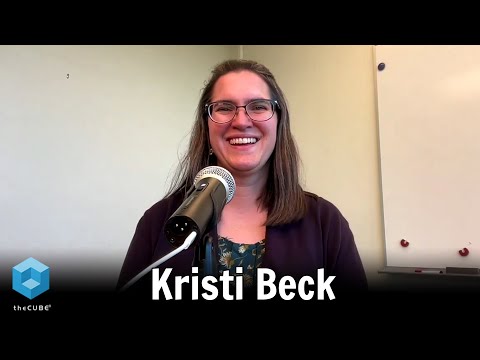
>> And one of the first interviews that you're going to hear today is the other end of the spectrum. Tom Beck was exceedingly technical. We covered the gamut, and of course we talked about energy, which is a big issue, and he's a big proponent of nuclear generally and nuclear fission in particular. And of course, we know that quantum uses a lot less energy than these AI factories, and so could be a nice complement there. All right, let's talk about Lawrence Livermore National Lab, kind of a household name. Think of quantum as a coprocessor, what we were talking about before with Paul about using GPUs for error correction. And again, just heavy scientific computing, HPC sitting side by side with AI and quantum, and a big emphasis on error correction. Paul, in your interview, they seem to reinforce the idea of what we saw at Oak Ridge, that quantum is not replacing HPC, it's augmenting it. Every expert I talk to basically reinforced that. Your thoughts.
Paul Gillin
>> Well, this is something that came through in all of my interviews was that I asked several of the people we spoke to, "Is there going to be a ChatGPT moment? Will there be a time when quantum will suddenly go mainstream? The lights will go on, and people will realize, 'Ah, that's what this is all about'?" No one thinks that's going to happen. They're seeing, in fact, quantum mechanics are already in use in computers in the real world, in magnetic resonance imaging. There's quantum technology behind the computing that does that task, but the nature of the beast is that it applies itself to very specific problems, such as molecular modeling, such as complex drug interactions, advanced logistics. These are areas where quantum is beginning to have a measurable impact, but it's not the type of thing where everyone is suddenly going to wake up and say, "This is going to change my life," the way they did with generative AI.
Dave Vellante
>> The other big theme is this is a global phenomenon. These supercomputing centers are all over the world. You spoke to Pawsey Supercomputing Center in Australia, and sovereign is one of the themes that we've been hearing for quite some time, but we're talking about regional innovation here, quantum experimentation, bringing quantum to a national research infrastructure in Australia, and then, of course, practical use cases and practical experimentation. So what's interesting is how supercomputing has become a sovereign theme and almost like a mainspring, or at least an initial entry point into sovereign computing. Every region seems to be investing.
Paul Gillin
>> Yeah. Well, we see supercomputers, of course, there are rankings of which computers are the most powerful in the world and how many does China have, how many does the US have. And there is somewhat of the same phenomenon going on in quantum. I'd say it's more friendly, though. All of the people we spoke to are working on initiatives to make their technology at their lab available to the broader world, to democratize access to quantum, if you will. They're conscious of the importance of their regions having a leadership role. That came through very clearly in discussions with Finland, with what they're doing in Finland, where they have a consortium of nine countries that are working together on quantum architectures that they believe can be world leading. In Australia, they're doing the same thing. They're very focused on South Asia, making quantum available to other countries in South Asia. At the same time, there is a friendly competition, I should say. They're all cooperating with each other because they're all targeting the same set of knotty problems, but it's good to see some sovereign bias here, some friendly competition, and may the best group win. I don't think we're going to see one country that's going to emerge out of all this as the leader in quantum.
Dave Vellante
>> Collaboration is definitely a theme, but like you said, there is healthy competition. Obviously they want to be the best because they are the best and the brightest in the world, but highly collaborative environment. I spoke to Leibniz Supercomputing Centre, Dieter Franz Mula, LRZ in Germany, and the issue of European sovereignty did come up, but not in a negative way, in a balance across the globe. And again, same theme. We're hearing traditional HBC married with AI workflows and into quantum. Definitely part of Germany's supercomputing initiatives. They have an initiative called EurA-QXA, which is their quantum system. Their focus, again, as you say, is a technical independence within their community, within their region. So he made a very strong point that it isn't just about performance, it is about control, controlling the future, sovereignty over critical technologies. And again, you heard that throughout.
Paul Gillin
>> And it's worth noting that there is no one quantum architecture out there. There are at least half a dozen distinct approaches to quantum computing, as well as some that are at the periphery, and there's no one architecture that is emerging. And nobody I spoke to thought that one is going to emerge as dominant. That's a problem in a way, because when you have... I drew the analogy to the 1970s minicomputer world, where every company had its own architecture, its own software stack, its own ecosystem. And that really held back innovation. It wasn't until Unix came along and TCP/IP and such that the industry was able to move ahead to a higher level. Right now, we have still different quantum architectures that are viable, that are in use. Pawsey was very interesting. They're working with a company in Australia that's built a quantum computer that uses synthetic diamonds to fix the problem of qubits requiring near absolute zero temperatures. They have room temperature quantum computers, which is a big deal if they can really make that work. Now, it's still in the experimental stage. It's going to be years, I'm sure, until that's proven, but you still have researchers who are wrestling with some of the very basic elements of how to make these machines work right now, showing really how far they have to go. These are the issues that the mainstream computer industry was wrestling with 60 years ago.
Dave Vellante
>> Interesting. As we pointed out earlier power and energy is not the big problem as it is within the AI. Of course, cooling is quite sophisticated. You see these beautiful quantum chandeliers, which is essentially many of the cooling systems here, and so quite sophisticated. Actually, there's been conversations about, "Hey, maybe we should put these in space." It's actually not cold enough. So to your point, if they can do these things at ambient temperature, that's a big break.
Paul Gillin
>> And you can imagine the amount of power and the amount of infrastructure that's required. Most of the infrastructure for a quantum computer is the cooling. It's not the computer itself.
Dave Vellante
>> Right, right. Okay. Let's talk about CSC LUMI, which out of Finland. You did this interview. The discussion was around hybrid computing infrastructure and European AI blending with quantum integration, combining the LUMI supercomputer with quantum systems and focusing on experimentation, user access. It's all about what the users can have access to, how much of the system's processing power they can access, and letting researchers unleash the dogs on experimentation. Thinking about your interview there, very clearly all of these interviews suggest that we are still in very much the experimentation, or even the pre-experimentation, phase.
Paul Gillin
>> I think Mikael Johansson at CSC was probably the most practically oriented of the four people I interviewed. CSC is looking at applications to material science, to energy, pharmaceuticals, telecommunications, solving big complex logistics problems. And I think that's their edge they see in Europe, that they want quantum, they want to find the practical applications of quantum while the others are still focusing on what's going on in the lab. And they have their LUMI-Q project is the one that makes their technology available across Europe to different researchers. They have a solid plan, I think, to democratize quantum access and to find ways to combine quantum and supercomputers to attack real world problems. Probably the most practical of the applications I talked to. Not that the others were impractical, but they're all at different points along the scientific scale. And I think LUMI is more maybe commercially oriented than the others I spoke to.
Dave Vellante
>> Oh, interesting. All right, let's wrap. So when you step back, what we're seeing is we're entering this new era of computing. Obviously, we're here with AI and AI factories, but now this quantum era, defined by multiple architectures, not one to rule them all. Not only within quantum, there are many architectures, but quantum living with AI, living with traditional HPC, and orchestrating that across many systems. Your final thoughts.
Paul Gillin
>> I think we need a Python for quantum. We need something that makes it possible for developers to easily create a subroutine that goes to a quantum computer and does something very complex, brings the result back, and integrates it into the overall whole. What really I took away from these interviews is that we are still almost in the Stone Age when it comes to developing software for quantum computers. And until that can be made more broadly available, until more people have access to quantum technology, it's going to continue to be kind of a lab project.
Dave Vellante
>> True. Although I would say that post-quantum cryptography is definitely on people's minds. And so hackers and adversaries are exfiltrating encrypted data today in the hopes that they can crack it once quantum becomes available and Shor's algorithm, we've read a lot about that. So that seems to be a starting point. So quantum is definitely something you should be thinking about.
Paul Gillin
>> Not surprising that the criminals are the ones who are putting this technology to work first to crack cryptographic algorithms.
Dave Vellante
>> It's always the way.
Paul Gillin
>> And the industry is racing to come up with post-quantum cryptography to stop them.
Dave Vellante
>> Yeah, the adversaries continue to be highly capable. Paul, thanks so much for spending some time here.
Paul Gillin
>> Thanks, Dave.
Dave Vellante
>> All right, you're watching The Cube's coverage of World Quantum Day made possible by Hewlett-Packard Enterprise. Stay with us for more deep dives into the future of computing.