Quantum computing is stepping out of the lab and into enterprise reality — and theCUBE’s exclusive coverage of HPE World Quantum Day captures what that shift actually looks like. Join theCUBE as we unpack how HPE and its partner ecosystem are aggressively fusing quantum tech with classical HPC and AI. We're talking hybrid models, quantum-ready architectures and the massive early breakthroughs disrupting materials science, complex optimization and post-quantum security. Join theCUBE for our analyst insights as quantum computing meets real-world enterprise.

Share

Forgot Password

Almost there!

We just sent you a verification email. Please verify your account to gain access to HPE World Quantum Day. If you don’t think you received an email check your spam folder.


Didn't get an email? Click here
Sign in to HPE World Quantum Day.

In order to sign in, enter the email address you used to registered for the event. Once completed, you will receive an email with a verification link. Open the link to automatically sign into the site.


Not registered? Join Now

Not registered? Join Now

Register for HPE World Quantum Day

Please fill out the information below. You will receive an email with a verification link confirming your registration. Click the link to automatically sign into the site.

First Name *
*
Last Name *
*
Email *
*
Company Name *
*
Job Title *
*
* Indicates a required field
Already Registered? Sign in and verify to access the event

You’re almost there!

We just sent you a verification email. Please click the verification button in the email. Once your email address is verified, you will have full access to all event content for HPE World Quantum Day.

Tuesday Apr 14, 2026 | 5:00 PM UTC
Don’t miss out! Add the event to your calendar:
Google Calendar
Microsoft Outlook
Office 365
Download ICS
Didn't get an email? Click here

All set!

Thanks for confirming your account. Now you can access HPE World Quantum Day with this email address.
Tuesday Apr 14, 2026 | 5:00 PM UTC
Don’t miss out! Add the event to your calendar:
Google Calendar
Microsoft Outlook
Office 365
Download ICS
Profile
person_add
CONFERENCE PASS
  • General
Delete my registration
Delete my CUBE365 account
I want my badge and interests to be visible to all attendees.
Checking this box will display your presense on the attendees list, view your profile and allow other attendees to contact you via 1-1 chat. Read the Privacy Policy. At any time, you can choose to disable this preference.
Select your Interests!
add
Upload your photo
 Uploading..
OR
Connect via Twitter
Connect via Linkedin
EDIT PASSWORD

Cancel

Incorrect password


theCUBE.net
home HPE World Quantum Day Agenda
  • more_horiz
    • info Help
    Tuesday, April 14 (UTC) April 14
    • ON DEMAND

      AnalystANGLE

      In this analyst roundup from HPE World Quantum Day 2026, theCUBE's Dave Vellante and Paul Gillin, enterprise editor at SiliconANGLE, examine what quantum computing's shift from research curiosity to enterprise complement means for organizations navigating the next era of HPC, AI and hybrid computing. Drawing on theCUBE's global series of conversations with institutions including Oak Ridge National Lab, Argonne, Lawrence Livermore, Leibniz in Germany, CSC in Finland and Pawsey in Australia, the pair establish a clear through-line: quantum is not replacing classical HPC or AI, but augmenting both. Gillin highlights that error correction remains one of quantum's most persistent technical hurdles — fragile qubits are prone to cascading failures that classical computing resolved decades ago — while the field continues to fragment across at least half a dozen distinct hardware architectures with no dominant approach in sight.

      The conversation also explores the global and sovereign dimensions of quantum investment, where regional research agendas are driving both competition and collaboration across Europe, Australia and the US. Finland's CSC is advancing the LUMI-Q project to democratize quantum access across nine European countries, while Pawsey in Australia is experimenting with room-temperature quantum systems built around synthetic diamonds — a potential breakthrough that could eliminate the extraordinary cooling infrastructure most quantum computers require today. Gillin underscores that the field's most urgent bottleneck may be software rather than hardware: quantum programming still requires working at the qubit level, and until a high-level abstraction — a "Python for quantum" — makes the technology accessible to non-physicists, broad adoption will remain out of reach. From the immediate threat of adversaries harvesting encrypted data today in anticipation of cracking it with future quantum systems, to emerging breakthroughs in molecular modeling, drug discovery and logistics optimization, Vellante and Gillin provide a clear-eyed view of where quantum stands — and why enterprises should begin preparing now.
      • Google Calendar
      • Microsoft Outlook
      • Office 365
      • Download ICS
      Dave Vellante
      Co-Founder & Co-CEO SiliconANGLE Media, Inc.
      Paul Gillin
      Enterprise Editor & Host SiliconANGLE Media, Inc.
    • ON DEMAND

      Tom Beck, Oak Ridge National Lab

      In this interview from HPE World Quantum Day 2026, Tom Beck, section head for science engagement and acting group leader for quantum-HPC at Oak Ridge National Labs, joins theCUBE's Dave Vellante to discuss the path toward practical quantum computing and how hybrid models integrating quantum, HPC and AI are being put to work on some of science's hardest problems. Beck, speaking in front of Frontier — the world's fastest supercomputer for open science — frames quantum not as a replacement for classical HPC but as a specialized accelerator. He explains how Oak Ridge is working to link quantum devices to systems like Frontier, offloading computationally hard quantum tasks while handling classical processing on the HPC side, and details the stubborn error correction challenge, where current estimates put the ratio of physical to logical qubits at hundreds to one.

      The conversation also explores Oak Ridge's fusion energy project, a concrete testbed where AI, quantum and HPC are being combined to design molten salt materials capable of extracting tritium from a fusion reactor — a critical unsolved problem for making commercial fusion viable. Beck draws a sharp analogy for the I/O bottleneck constraining quantum systems today — a "Ferrari in a traffic jam" — noting that raw computational potential means little without the bandwidth to feed it. From quantum networking as a pathway to secure national security communications to his end-of-decade vision of networked smaller quantum units scaling much like GPUs did, he provides a grounded and increasingly optimistic roadmap for where quantum goes from here.
      • Google Calendar
      • Microsoft Outlook
      • Office 365
      • Download ICS
      Tom Beck
      Section Head for Science Engagement and Acting Group Leader for Quantum-HPC Oak Ridge National Laboratory
      Dave Vellante
      Co-Founder & Co-CEO SiliconANGLE Media, Inc.
    • ON DEMAND

      Laura Schulz, Argonne National Lab

      In this interview from HPE World Quantum Day 2026, Laura Schulz, project lead for quantum innovation at the Leadership Computing Facility at Argonne National Laboratory, joins theCUBE's Paul Gillin to discuss how quantum computing is transitioning from a physics experiment into a practical accelerator within the broader HPC and AI ecosystem. Schulz draws on her unconventional path — from population genetics to leading quantum systems at Argonne — to explain why hardware diversity among qubit types is both an opportunity and a persistent challenge. She breaks down the barriers between today's systems and mainstream readiness, from qubit stability and error correction to the absence of the software abstraction layers that HPC took decades to build.

      The conversation also explores how AI and quantum are deeply intertwined at the research level. Schulz outlines how Argonne is applying AI to discover new quantum algorithms, optimize error correction and orchestrate workflows across HPC, quantum and AI systems in parallel — treating each as a complementary compute method rather than a rival. She highlights the hybrid model at the center of Argonne's approach, where quantum systems handle quantum-mechanical workloads — materials science, quantum chemistry and certain optimization problems — while classical HPC manages the broader simulation. Schulz also describes the push for a "Linux moment" in quantum: a common, open-source software framework that would let different hardware architectures interoperate and allow scientists to work across quantum systems without mastering the low-level physics of each one. From contributing to the open QSE project to envisioning unified programming models spanning HPC, AI and quantum, Schulz provides a clear-eyed roadmap for how the field can accelerate practical quantum innovation over the next decade.
      • Google Calendar
      • Microsoft Outlook
      • Office 365
      • Download ICS
      Laura Schulz
      Project Lead for Innovation, Argonne Leadership Computing Facility Argonne National Laboratory
      Paul Gillin
      Enterprise Editor & Host SiliconANGLE Media, Inc.
    • ON DEMAND

      Kristi Beck, Lawrence Livermore National Lab
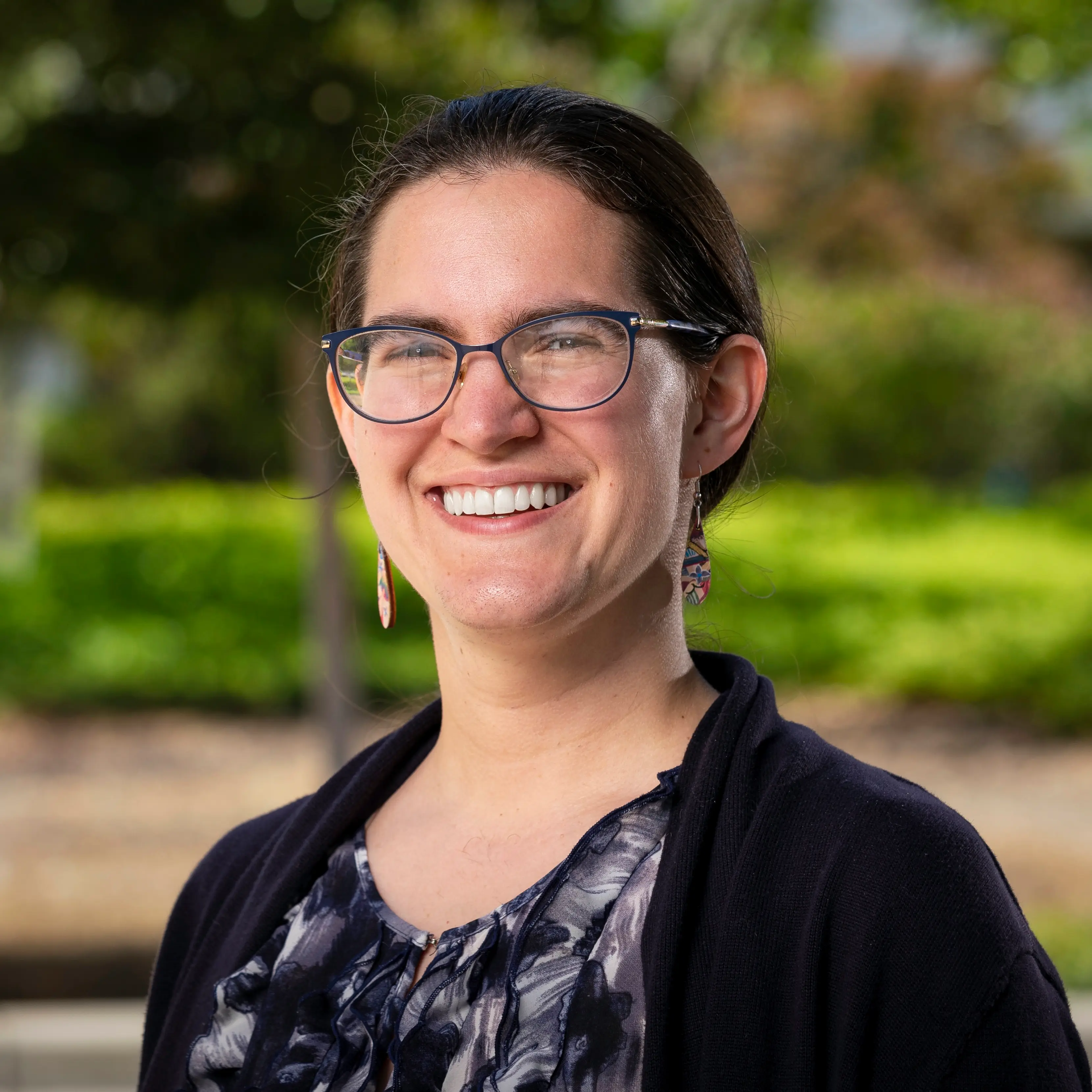
      In this interview from HPE World Quantum Day 2026, Kristin Beck, staff scientist in the Quantum Coherent Device Physics Group at Lawrence Livermore National Laboratory and director of the Livermore Center for Quantum Science, joins theCUBE's Paul Gillin to discuss the state of quantum computing and its emerging role alongside classical high-performance computing. Beck frames quantum not as a replacement for conventional systems but as a co-processor — a specialized accelerator suited to problems where superposition and entanglement provide computational advantages that classical hardware cannot match. She explains why tasks that don't exploit these quantum mechanical properties are better left to classical systems, noting that current quantum hardware remains noisier and more expensive, making it a poor fit for general-purpose computation.

      The conversation also explores the considerable engineering challenges still facing the field, including error correction — an area where quantum's complexity far exceeds classical equivalents, with error types varying across superconducting, ion-based and atom-based hardware platforms. Beck highlights an emerging "quantum heuristics" era, where improved error correction is finally bridging the gap between theoretical algorithms and real hardware, opening the field to a much broader community of programmers and researchers. She details the diverse skills required to build quantum software stacks — from FPGA-level controls to physics-trained algorithm designers — and notes that AI will play a growing role in translating code seamlessly across hardware platforms. From optimization problems accessible today to complex chemistry simulations in pharmacology on the horizon, Beck provides a grounded roadmap for how quantum computing is poised to tackle problems that would demand more classical computing resources than atoms exist in the universe.
      • Google Calendar
      • Microsoft Outlook
      • Office 365
      • Download ICS
      Kristin Beck
      Research Scientist Lawrence Livermore National Laboratory
      Paul Gillin
      Enterprise Editor & Host SiliconANGLE Media, Inc.
    • ON DEMAND

      Dr. Pascal Elahi, Pawsey Supercomputing Centre
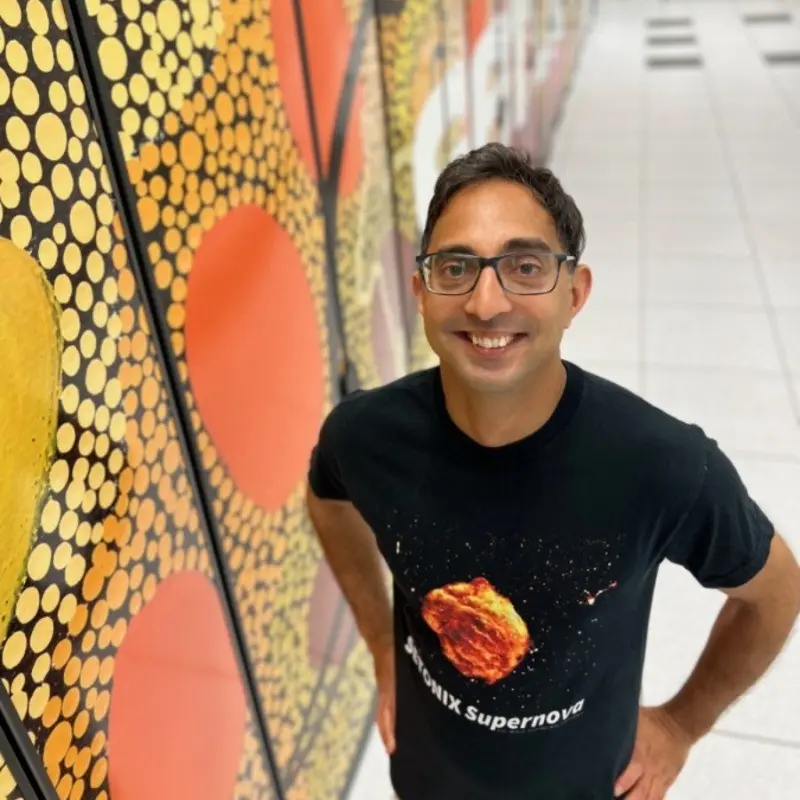
      In this interview from HPE World Quantum Day 2026, Pascal Elahi, quantum supercomputing research lead at the Pawsey Supercomputing Centre, joins theCUBE's Paul Gillin to discuss how quantum computing is integrating with classical supercomputing to tackle problems beyond the reach of either technology alone. Elahi introduces Setonix-Q, the quantum extension of Pawsey's HPE Cray supercomputer Setonix, designed to give researchers across disciplines guided access to both classical HPC and emerging quantum hardware. He explains how qubits, superposition and entanglement allow quantum systems to explore solution spaces that remain intractable for classical machines, and makes clear that quantum and classical computing are complementary — each suited to a distinct class of problems.

      The conversation also explores Pawsey's early partnership with Quantum Brilliance, whose synthetic diamond-based hardware operates at room temperature without cryogenic cooling and achieved a world first as the first quantum system deployed inside a production data center. Elahi outlines why multiple quantum hardware architectures — superconducting, ion trap and neutral atom systems among them — will likely coexist rather than converge on a single standard, with each offering distinct trade-offs in speed, connectivity and scalability. He also details quantum's emerging role in AI, highlighting its potential to improve learning from small and complex datasets, resist adversarial attacks and reduce the energy cost of model training. From expanding Setonix-Q access beyond quantum specialists to bringing industry partners into co-design, Elahi maps out how centers like Pawsey can generate the critical mass of experimentation needed to move quantum computing from promise to practice.
      • Google Calendar
      • Microsoft Outlook
      • Office 365
      • Download ICS
      Pascal Elahi
      Quantum Lead, Setonix Q Pawsey Supercomputing Research Centre
      Paul Gillin
      Enterprise Editor & Host SiliconANGLE Media, Inc.
    • ON DEMAND

      Dieter Kranzlmüller, Leibniz Supercomputing Centre

      In this interview from HPE World Quantum Day 2026, Dieter Kranzlmüller, chairman of the board of the Leibniz Supercomputing Centre and professor of computer science at LMU Munich, joins theCUBE Research's Dave Vellante to discuss how quantum computing is maturing from theoretical promise into a practical accelerator within high-performance computing infrastructure. Kranzlmüller traces LRZ's evolution from running Germany's earliest large-scale computers in 1962 into a full IT service provider for scientific research. He explains why Euro-Q-Exa — LRZ's fourth quantum system and one of six being established across Europe — reflects a broader push for technical independence in a field still nascent enough to shape on its own terms. Rather than treating quantum as a standalone technology, Kranzlmüller details LRZ's hybrid model, where classical supercomputers route workloads and delegate quantum-suited tasks — from optimization problems to quantum mechanics simulations — to achieve the best performance of both architectures.

      The conversation also explores CLARA, LRZ's center for AI and quantum computing in brain research, which Kranzlmüller describes as an interdisciplinary ecosystem pairing computational infrastructure with domain experts to tackle complex brain conditions. He highlights the potential of digital twin models of individual patients, enabling personalized medicine rather than statistically derived treatments. On global collaboration, Kranzlmüller underscores that working alongside institutions like Oak Ridge and Livermore is not optional but essential — the expertise needed to solve grand scientific challenges is distributed worldwide, and shared technology provides a common language across disciplines. For commercial organizations currently consumed by AI adoption, he delivers a clear message: quantum engagement should begin now. With Euro-Q-Exa scaling from 54 qubits today to 150 later this year and thousands projected in the near term, the early-mover window is narrowing. From the urgency of post-quantum cryptography — where adversaries are already harvesting encrypted data in anticipation of future decryption capabilities — to photonic chips already running in LRZ's data center, Kranzlmüller maps a near-term future where quantum moves from research infrastructure to everyday computing.
      • Google Calendar
      • Microsoft Outlook
      • Office 365
      • Download ICS
      Dieter Kranzlmueller
      Chair of the Board of Directors Leibniz Supercomputing Centre
      Dave Vellante
      Co-Founder & Co-CEO SiliconANGLE Media, Inc.
    • ON DEMAND

      Dr. Mikael Johansson, CSC

      In this interview from HPE World Quantum Day 2026, Mikael Johansson, manager of quantum technologies at CSC – IT Center for Science, joins theCUBE's Paul Gillin to discuss how hybrid quantum-classical computing is accelerating the transition from research curiosity to early practical breakthrough. Johansson introduces the LUMI-Q Consortium, a EuroHPC initiative that pairs classical supercomputing power with quantum hardware to give European researchers hands-on access to hybrid workflows. He explains why quantum computers are uniquely suited to inherently quantum mechanical problems — modeling electron interactions, for example — and how that capability points toward near-term breakthroughs in materials science and the green transition, from designing better catalysts to developing next-generation batteries.

      The conversation also explores the commercial landscape, where Johansson sees meaningful impact ahead in pharmaceuticals — specifically modeling drug-molecule interactions with proteins — and in financial portfolio optimization. He addresses the global race for quantum advantage directly, describing the field as standing at the doorstep of real-world demonstrations after decades of theoretical promise. On hardware, he argues against crowning any single qubit architecture a winner, anticipating a future where different quantum approaches excel at different problem classes. Rather than a sudden ChatGPT-style inflection point, Johansson expects a steady climb in quantum capacity — with a potential wake-up call when the first true quantum advantage is publicly demonstrated. Looking ahead, CSC is developing the LUMI AI Factory alongside an integrated quantum platform called LUMI-IQ, designed from the ground up to let researchers explore the convergence of classical AI and quantum computing in a tightly coupled environment.
      • Google Calendar
      • Microsoft Outlook
      • Office 365
      • Download ICS
      Dr. Mikael Johansson
      Manager, Quantum Technologies CSC - IT Center for Science
      Paul Gillin
      Enterprise Editor & Host SiliconANGLE Media, Inc.
    • ON DEMAND

      Amir Shehata, Oak Ridge National Lab

      In this interview from HPE World Quantum Day 2026, Amir Shehata, HPC systems engineer in the Quantum-HPC Group at Oak Ridge National Laboratory, joins theCUBE's Dave Vellante to discuss the software infrastructure challenges at the heart of integrating quantum computing with classical HPC systems. Shehata, whose background spans networking, open source software and kernel development, explains why quantum integration is fundamentally a middleware challenge — requiring deep understanding of both application requirements and hardware constraints across the full stack. He details how different quantum modalities impose distinct timing demands, from superconducting qubits that degrade quickly to slower neutral atom systems, and why QPU scarcity introduces scheduling and utilization challenges with no direct classical precedent.

      The conversation also explores how Oak Ridge is actively building the workflow infrastructure to bridge classical HPC and quantum systems — separating applications into pre-processing, quantum circuit execution and post-processing stages to avoid leaving HPC resources idle during long circuit runs. Shehata discusses the surprising durability of established technologies like the Lustre file system, which he sees as a natural fit for storing qubit syndrome data used to train AI-driven error correction models. He outlines the OpenQSE (Open Quantum HPC Software Ecosystem) initiative — launched at Oak Ridge — which unites labs, companies and universities around interoperable software specifications designed to prevent vendor lock-in across the emerging quantum stack. From data center design considerations for superconducting systems that require near-absolute-zero cooling to the longer-term vision of error-corrected quantum machines tackling real scientific workloads, Shehata provides a grounded roadmap for how the quantum and HPC communities can advance in parallel rather than in sequence.
      • Google Calendar
      • Microsoft Outlook
      • Office 365
      • Download ICS
      Amir Shehata
      HPC Systems Engineer, Quantum-HPC Group Oak Ridge National Laboratory
      Dave Vellante
      Co-Founder & Co-CEO SiliconANGLE Media, Inc.

    Welcome to Cube365 Events Platform Digital Community

    You are now part of the interactive digital experience for all SiliconANGLE conferences and an exclusive member of the social community. Enjoy live and on-demand broadcasts, theCUBE interviews, CrowdChats, and access to premium content and presentations. Engage and interact in real time with influencers and peers in a social space designed for collaboration and networking. Discover all that Cube365 Events Platform has to offer before, during and after the event.

    CONTACT US

    Privacy Statement

    • Privacy
    • Terms
    Social Link
    Social Link
    Social Link
    Social Link
    © CUBE365
    © theCUBE
    © 2026 theCUBE