Dr. Kristi Beck of Lawrence Livermore National Laboratory joins Paul Gillin of theCUBE Research to discuss quantum co-processing, error correction and workforce development in quantum computing. Beck presents the quantum computing stack, including device hardware, gate design and test-bed architecture, and explains the role of quantum systems as co-processors for high-performance computing; they discuss control, materials and software challenges across superconducting, ion and atom-based platforms.
Beck emphasizes that quantum systems are most valuable as specialized co-processors for select workloads and that error correction remains a central platform-dependent challenge. They highlight Lawrence Livermore National Laboratory's quantum design and integration test bed for workforce training, the promise of quantum heuristics to bridge theory and hardware and cross-platform lessons that accelerate practical algorithm development. The conversation addresses implications for classical HPC and artificial intelligence and outlines strategies for workforce development, technology integration and industry collaboration.
Forgot Password
Almost there!
We just sent you a verification email. Please verify your account to gain access to
HPE World Quantum Day. If you don’t think you received an email check your
spam folder.
In order to sign in, enter the email address you used to registered for the event. Once completed, you will receive an email with a verification link. Open the link to automatically sign into the site.
Register for HPE World Quantum Day
Please fill out the information below. You will receive an email with a verification link confirming your registration. Click the link to automatically sign into the site.
You’re almost there!
We just sent you a verification email. Please click the verification button in the email. Once your email address is verified, you will have full access to all event content for HPE World Quantum Day.
I want my badge and interests to be visible to all attendees.
Checking this box will display your presense on the attendees list, view your profile and allow other attendees to contact you via 1-1 chat. Read the Privacy Policy. At any time, you can choose to disable this preference.
Select your Interests!
add
Upload your photo
Uploading..
OR
Connect via Twitter
Connect via Linkedin
EDIT PASSWORD
Share
Forgot Password
Almost there!
We just sent you a verification email. Please verify your account to gain access to
HPE World Quantum Day. If you don’t think you received an email check your
spam folder.
In order to sign in, enter the email address you used to registered for the event. Once completed, you will receive an email with a verification link. Open the link to automatically sign into the site.
Sign in to gain access to HPE World Quantum Day
Please sign in with LinkedIn to continue to HPE World Quantum Day. Signing in with LinkedIn ensures a professional environment.
Are you sure you want to remove access rights for this user?
Details
Manage Access
email address
Community Invitation
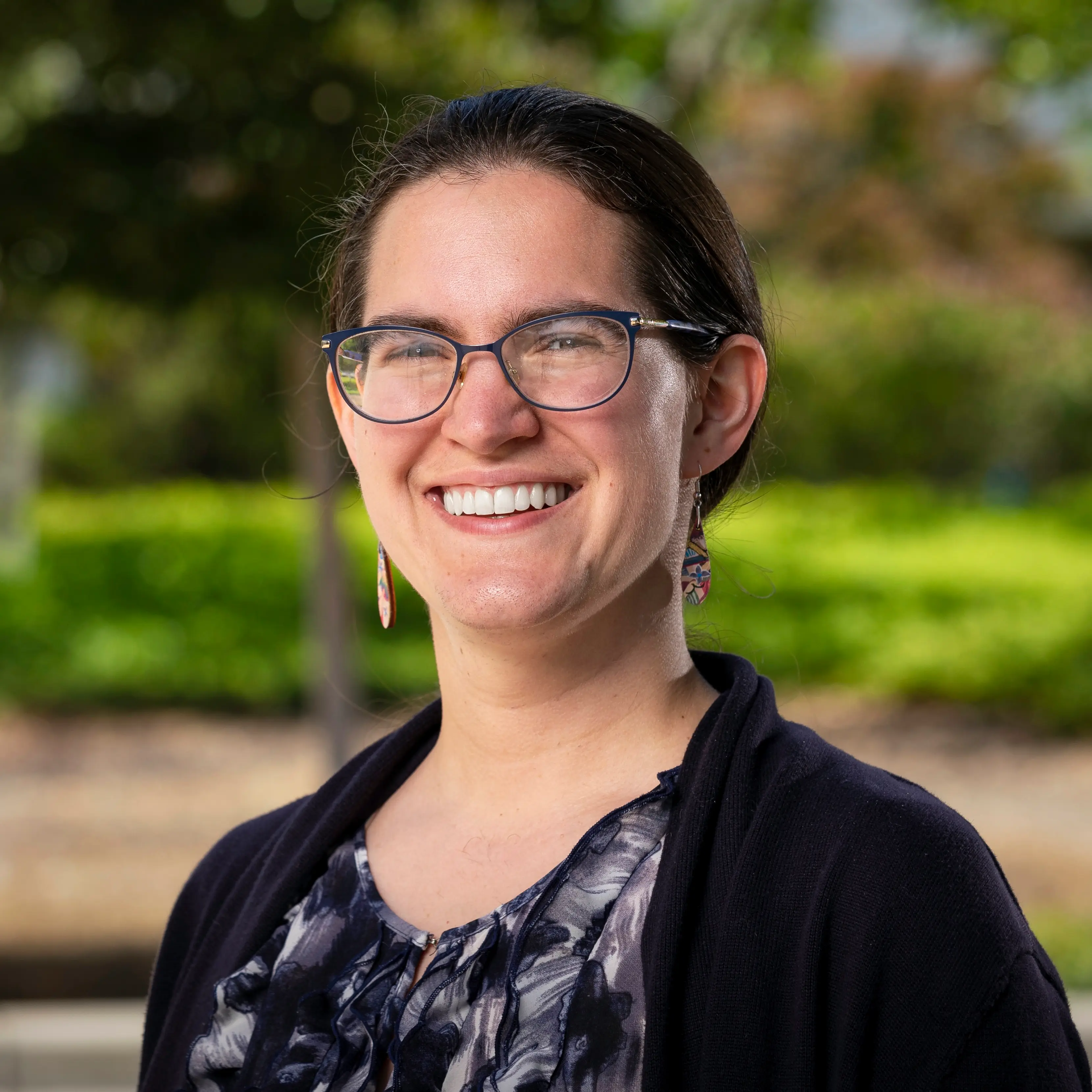
Kristi Beck, Lawrence Livermore National Lab
Dr. Kristi Beck of Lawrence Livermore National Laboratory joins Paul Gillin of theCUBE Research to discuss quantum co-processing, error correction and workforce development in quantum computing. Beck presents the quantum computing stack, including device hardware, gate design and test-bed architecture, and explains the role of quantum systems as co-processors for high-performance computing; they discuss control, materials and software challenges across superconducting, ion and atom-based platforms.
Beck emphasizes that quantum systems are most valuable as specialized co-processors for select workloads and that error correction remains a central platform-dependent challenge. They highlight Lawrence Livermore National Laboratory's quantum design and integration test bed for workforce training, the promise of quantum heuristics to bridge theory and hardware and cross-platform lessons that accelerate practical algorithm development. The conversation addresses implications for classical HPC and artificial intelligence and outlines strategies for workforce development, technology integration and industry collaboration.
Research ScientistLawrence Livermore National Laboratory
Paul Gillin
Enterprise Editor & HostSiliconANGLE Media, Inc.
In this interview from HPE World Quantum Day 2026, Kristin Beck, staff scientist in the Quantum Coherent Device Physics Group at Lawrence Livermore National Laboratory and director of the Livermore Center for Quantum Science, joins theCUBE's Paul Gillin to discuss the state of quantum computing and its emerging role alongside classical high-performance computing. Beck frames quantum not as a replacement for conventional systems but as a co-processor — a specialized accelerator suited to problems where superposition and entanglement provide computational advan...Read more
exploreKeep Exploring
What role is quantum computing playing at Livermore's high-performance computing centers, and how would a quantum co-processor work together with classical hardware?add
When is it appropriate to use quantum hardware instead of classical hardware?add
Is any single quantum processor architecture likely to emerge as the dominant one?add
>> This is theCUBE. I'm Paul Gillin and it's World Quantum Day. We're celebrating the public awareness and understanding of quantum science and technology from around the world. Find out more at WorldQuantumDay.org. And we're grateful to Hewlett-Packard Enterprise for making these interviews with some amazing quantum scientists possible. My guest right now is Dr. Kristi Beck, staff scientist at the Lawrence Livermore National Lab Quantum Coherent Device Physics Group, and director of the Livermore Center for Quantum Science. Dr. Beck has extensive research interests in quantum stack from device hardware and gate design to test bed architecture. She is a MIT PhD with a postdoctoral fellow in the Joint Quantum Institute at the University of Maryland. So certainly well qualified to discuss this topic. Kristi Beck, thanks for joining us.
Kristin Beck
>> Thanks for having me.
Paul Gillin
>> So we know of Livermore as this fantastic supercomputer center, what role is quantum now playing in its mission?
Kristin Beck
>> So we see quantum as one of the technologies of the future for computing. And we are thinking about ways in which our future high performance computing centers may incorporate quantum computing as an element of the way that they approach problems, a co-processor that may accelerate key workloads, for example.
Paul Gillin
>> Talk about this co-processing concept. As I understand it, quantum is not likely to replace conventional computers, but serves as sort of a companion. How does that work?
Kristin Beck
>> So one way that I envision this working is say we have a problem that there's a piece of it that is not at its heart quantum mechanical, but there's another piece that is. Like you could have the evolution of a quantum system and there's a piece of it that's happening in space and there may be another piece of it that is working with, say, a spin degree of freedom. Those two different pieces may be useful to track on different hardware. You could have the spatial extent of the problem taken into account by classical hardware, whereas the spin degree of freedom may be much more easily and efficiently simulated with quantum.
Paul Gillin
>> What is the nature of quantum, of how quantum computers, work that makes them not optimal for some tasks that are better performed with conventional computers?
Kristin Beck
>> When we're using quantum hardware, we are using hardware that is fundamentally more sensitive than the hardware that we have developed over decades as our classical computing backbone. That classical hardware has really been optimized to operate in a really low loss environment. And it has done this by in part trying to make the quantum effects that quantum computing hardware, quantum processing units, are trying to emphasize, something that is negligible and not part of the actual computation. If there is a problem that is not taking advantage of the extra pieces of computational power that you get from the quantum computing or quantum mechanics that are brought to the fore in quantum processing -- normally we call it superposition and entanglement here -- as key features, then there's no reason to use that quantum hardware because you're not going to see an acceleration from it. And because that hardware is, at least for the time being, noisier and more expensive, we're actually not going to get any better results with it. We actually would expect to get worse results from running it on quantum hardware.
Paul Gillin
>> I remember about eight years ago writing a feature article that said quantum computing is just around the corner based on what the experts were saying at the time. Clearly, we're not quite there yet. What is holding quantum back from mainstream acceptance at this point?
Kristin Beck
>> Well, quantum hardware, it's turned out all the details matter a lot. And the details of making quantum hardware work are not always evident. When we are working with a small scale device going to the next size of device, it's not always obvious what the next challenges are going to be. Right now, the field has been entering an era where we can start doing error correction on quantum processing units on groups of quantum bits together. And there's been a lot of challenges that the field as a whole has seen, alongside a lot of progress. There's been steady progress in the way that the base hardware is working in our ability to control these systems, as well as in some of these constructs that allow us to think about how to do, in this case, error correction on them.
Paul Gillin
>> Now error correction is well understood in conventional computing, what factors make it different in the quantum world?
Kristin Beck
>> So exactly the errors that we are trying to correct that are present in these processes is something that is in some cases still an open question. So that's one piece that makes it different. Another piece is that we are trying to maintain not only the state of a bit of a two level system, but as the state of a quantum bit where you care not only about, say, the state being in the zero or one state, if we're talking about a single bit in computing, but also the superposition state that may be present in that single qubit or among a set of quantum bits. There are many different hardware platforms that are still seen as viable platforms for the quantum processing units of the future and the types of errors that are present on each of them, as well as how strong each of those different error types is, really varies from platform to platform. So developing the different error correction techniques may not translate from, say, a super conducting processor to an atom or ion based one.
Paul Gillin
>> Now, there are many different types of quantum processors, do you see one architecture as emerging as the dominant one?
Kristin Beck
>> Well, you can look at this in many different ways. One thing that gives me a lot of hope in the field is that there's a lot that we can learn from one processing hardware platform that can translate directly onto other ones. We've seen this most recently in the really rapid explosion of growth in atom-based quantum processors, but more generally, I think there's a lot that every one of these hardware platforms can learn from each other because there's the challenges that are present for, say, a super conducting processor, which are really still materials challenges at the end of the day. Those will become the forefront challenges for other platforms down the line. Whereas a system like an ion based system may be seeing main challenges in an area like controls, where those are not the forefront problem for the superconducting system map.
Paul Gillin
>> We've been talking to scientists today from as far away as Australia and Helsinki, each committed to developing the quantum industry in their markets. How much cooperation is there? How much do you talk to the quantum researchers in other parts of the world?
Kristin Beck
>> I think the strongest communities that we are working with are ones that are geographically close to us. One of the big reasons that we collaborate with especially academic groups is because it gives us a way to do the development that is needed for the next generation of our workforce and ensure that we have a steady pipeline of people who we know, who we're helping to train, who bring the skills that we need to advance the research programs that we're developing here.
Paul Gillin
>> Speaking of skills, what kinds of special skills are needed to develop software for these computers?
Kristin Beck
>> So the software stack for a quantum processing unit or a quantum computer, as the software stack for any large scale experiment, is a really diverse set of skills that you need to contribute to that. The low level code interface often is done with specialized control hardware, such as a field programmable gate array, or FPGA, often coupled with standard CPUs. And we are seeing GPU acceleration starting to enter into the stack, especially as you get to larger scale devices. When you think about how to run these systems, though, running and operating them, thinking about the constructs to actually take advantage of the using quantum bits as opposed to qubits, that is something that is a skillset that we most often find in people who are coming from physics degree programs still, because they are ones who are the most familiar with and comfortable with thinking about new ways of manipulating information. In this case, one that's very inspired by quantum mechanics.
Paul Gillin
>> You mentioned GPUs, and there is a lot of concern right now over the cost of GPUs, the power consumption and just the amount of computing resources that AI requires. Does quantum have the potential to make a dent in that problem?
Kristin Beck
>> I think that's a philosophical question. I think that as humans, when we make something easy and cheap to do, we tend to do more of it. But where it comes to the potential power of quantum computing in that equation, one thing I like to point to is if you have something like 300 perfect qubits, to do simulations that you could do with a quantum computer of that size, you need more atoms than we have in the universe. And so that's just a mindbogglingly large classical computer. Now, that is not useful for everything that you might hope to approach with a classical computer, but it does say that with this quantum computer, we can at least approach problems that are of a size scale that we never would be able to touch with classical computing alone. And you can flip that on its head and you can say then that's an energy savings. Because if I know I'm going to be trying to tackle those problems anyway, the way that I was going to do it is so, so much less efficient that there's a win. I don't know if at the end of the day, we'll end up saving power just because of the way that we tend to approach the science and the other uses that we have for computing, but certainly there is the opportunity and the potential for that to be the case.
Paul Gillin
>> Can you give an example of a problem that is appropriate for quantum that is beyond the pale of conventional supercomputers?
Kristin Beck
>> One of the problems that some of my colleagues here have been very interested in is understanding how neutrinos interact in stars. I think that this is a really, really great problem because understanding why it is hard and why it works well for a potential quantum computer comes down to understanding the way that neutrinos interact and the way that we describe them, which is quantum mechanically. If we need to track the quantum mechanical state of a set of many neutrinos that are working together, we need to track all the entangled states of that group, and that grows exponentially in time and it grows with the size of the system. And the number of neutrinos that are present in some of these stars is very ... You need to count many. I wish I knew the number offhand.
Paul Gillin
>> It's a big one. How about commercial applications? Do you see quantum making its way into commercial usage in areas like pharma, weather forecasting, logistics?
Kristin Beck
>> So logistics is one of the early ones where I've seen demonstrations in ... Usually these are press releases and some public literature looking at optimization. Optimization has been an early use case for quantum computing and quantum annealing, which is a specific instance of quantum computers. The applications in pharmacology come from the anticipated benefit that we have for many of the chemistry problems that ultimately are what underpin how we understand drug interactions. But I'd say those are further off due to the complexity of those problems, although they are ones where we would expect to see a better win than we do in the logistical ones, in the at least mathematically complete sense.
Paul Gillin
>> Do you see quantum ever entering the, I guess, commercial realm? Is this the type of thing that companies will be able to buy off the shelf someday or will remain the domain of research and academic labs?
Kristin Beck
>> I certainly deeply believe that quantum hardware is something that we'll be able to buy. And I can tell you that you've probably actually dealt with a quantum device. The way that we think about sensors, for example, a quantum sensor is any device that has quantum mechanics in the core of the way that it operates. So nuclear magnetic resonance imaging, which is a way that is commonly used of doing things like brain scans, is a common device that you can find in most hospitals. And that is not something that we blink an eye at using in a medical setting, and yet to understand how that device works, you need to understand quantum mechanics. Similarly, lasers are at their heart quantum mechanical devices. So I have full confidence that we'll see other quantum sensors moving out of the laboratory and into the commercial domain, and certainly the burgeoning startup industry in quantum computing is making a bet that the same is going to be true for the computing technology.
Paul Gillin
>> What kind of resources does the lab have in this area? Do you have one or more quantum computers on site?
Kristin Beck
>> One of the key things that we have here is something we call our quantum design and integration test bed. This is a low level hardware testing platform that we are mostly using internally and with key collaborators in order to help us understand some of the roadblocks that exist for certain technology, as well as the workforce development platform. We run annual workshops with an academic consortium that give access to that test bed to understand how we do the calibration of quantum hardware to advance undergraduate and early graduate students.
Paul Gillin
>> So what's ahead? I mean, looking out over the next couple of years of what you'll be doing at the lab, what's on the agenda?
Kristin Beck
>> One thing that I'm particularly excited about is moving in the field in general towards an era of what I would call quantum heuristics. We have long been in a place where the quantum computing field has been dominated by kind of two parts. There's the part of developing applications that we would like to run on a future very large system, and then there's the part that has been trying to build the system, and there's been a gap between those two. With the ability to error correct many quantum systems now, we're starting to build a bridge in between that gap, and in many cases are starting to see where algorithms can be run with a small enough size system that kind of meets in the middle with the existing quantum hardware. This to me is a really exciting inflection point. As somebody who is an experimental physicist by training, I never call myself somebody who codes. I have always just muddled my way through, and I know that my code works because after having error messages for the first 15 times I run it, it finally executes a single block in my Jupyter notebook. And we're at a point now where at least if not this year, then in a few years, we'll be able to be doing the same thing for many of the algorithms we're trying to develop. And I think this is going to open up quantum hardware and ideas and the ways in which we try to work with this hardware to a much, much larger group of programmers and to a much, much larger group of users. That means that the acceleration of ideas in this field are going to be coming from a much broader group of people. And I really see that as super, super exciting.
Paul Gillin
>> Well, certainly generative AI and copilots are already having a big impact on the software development world. Do you think they'll be useful in the quantum space as well?
Kristin Beck
>> Certainly. A lot of the code development frameworks that we have for quantum, I would call them things that are maybe more akin to coding on bare metal in terms of saying ... How to control individual transistors would be the analogy that you would make to the classical computing hardware. The ability to translate code between different hardware platforms, such as trapped ion, super conducting systems, the atomic systems, spin-based systems, is one thing that I think AI will do for us in a much more seamless way than we as individuals are able to, opening up a wider array of hardware platforms. And if we take a slightly bigger perspective than that, there's a layer between developing a good quantum algorithm and running it as part of a larger calculation that has a piece of a quantum algorithm that can accelerate, say, the spin component, which is the example that I gave earlier. And being able to map a larger problem onto different types of hardware is something that I think AI will be able to help us with in the future.
Paul Gillin
>> Dr. Kristi Beck, director of the Livermore Center for Quantum Science, your at a very exciting nexus of technology developments and must be thrilling to do what you do. Thanks so much for sharing it with us today.
Kristin Beck
>> Thank you for giving me the opportunity to talk.
Paul Gillin
>> World Quantum Day, annual celebration promoting public awareness and understanding of quantum science and technology around the world. WorldQuantumDay.org if you want to learn more. Thanks to Hewlett-Packard Enterprise for making these interviews possible. And we'll be back. I'm Paul Gillin. This is theCUBE.