This segment from Refresh 2026 at Hudson Yards examines how artificial intelligence, abbreviated AI, and agentic systems transform service management, employee experience and operational productivity. Kady Srinivasan of Freshworks and Julie Mohr of Forrester join Bob Laliberte of theCUBE Research to discuss experience level agreements, abbreviated XLAs, context graphs, knowledge management and strategies for moving AI initiatives from nonproduction pilots into production at scale. Srinivasan and Mohr draw on marketing and analyst experience to highlight practical approaches for deployment, governance and measurable outcomes.
Key takeaways include prioritizing outcome based metrics such as XLAs rather than service level agreements, moving AI initiatives into production and building unified context graphs and organizational memory to support agentic AI. Mohr recommends starting with specific measurable use cases to avoid stalled nonproduction pilots; they emphasize clear metrics and executable roadmaps. Srinivasan stresses governance, orchestration and integrating human and AI agents to drive measurable employee productivity and improved experiences; they underscore the importance of robust knowledge management and change management for scalable AI adoption.
Forgot Password
Almost there!
We just sent you a verification email. Please verify your account to gain access to
Freshworks Refresh 2026. If you don’t think you received an email check your
spam folder.
In order to sign in, enter the email address you used to registered for the event. Once completed, you will receive an email with a verification link. Open the link to automatically sign into the site.
Register for Freshworks Refresh 2026
Please fill out the information below. You will receive an email with a verification link confirming your registration. Click the link to automatically sign into the site.
You’re almost there!
We just sent you a verification email. Please click the verification button in the email. Once your email address is verified, you will have full access to all event content for Freshworks Refresh 2026.
I want my badge and interests to be visible to all attendees.
Checking this box will display your presense on the attendees list, view your profile and allow other attendees to contact you via 1-1 chat. Read the Privacy Policy. At any time, you can choose to disable this preference.
Select your Interests!
add
Upload your photo
Uploading..
OR
Connect via Twitter
Connect via Linkedin
EDIT PASSWORD
Share
Forgot Password
Almost there!
We just sent you a verification email. Please verify your account to gain access to
Freshworks Refresh 2026. If you don’t think you received an email check your
spam folder.
In order to sign in, enter the email address you used to registered for the event. Once completed, you will receive an email with a verification link. Open the link to automatically sign into the site.
Sign in to gain access to Freshworks Refresh 2026
Please sign in with LinkedIn to continue to Freshworks Refresh 2026. Signing in with LinkedIn ensures a professional environment.
This segment from Refresh 2026 at Hudson Yards examines how artificial intelligence, abbreviated AI, and agentic systems transform service management, employee experience and operational productivity. Kady Srinivasan of Freshworks and Julie Mohr of Forrester join Bob Laliberte of theCUBE Research to discuss experience level agreements, abbreviated XLAs, context graphs, knowledge management and strategies for moving AI initiatives from nonproduction pilots into production at scale. Srinivasan and Mohr draw on marketing and analyst experience to highlight practical approaches for deployment, governance and measurable outcomes.
Key takeaways include prioritizing outcome based metrics such as XLAs rather than service level agreements, moving AI initiatives into production and building unified context graphs and organizational memory to support agentic AI. Mohr recommends starting with specific measurable use cases to avoid stalled nonproduction pilots; they emphasize clear metrics and executable roadmaps. Srinivasan stresses governance, orchestration and integrating human and AI agents to drive measurable employee productivity and improved experiences; they underscore the importance of robust knowledge management and change management for scalable AI adoption.
In this interview from Freshworks Refresh 2026, Kady Srinivasan, chief marketing officer of Freshworks, joins Julie Mohr, principal analyst at Forrester Research, to talk with theCUBE Research's Bob Laliberte about moving enterprises from AI experimentation to operational impact across service management and employee experience. Srinivasan outlines a fundamental shift in how CIOs see their mandate — not as IT operators but as engines of business productivity. She details why traditional service level agreements fall short and why Freshworks is advancing exper...Read more
exploreKeep Exploring
What are customers saying (or what trends are they reporting) as they transform their service management and employee experience?add
Are customers' priorities shifting away from simply automating processes toward achieving measurable business outcomes?add
How should organizations begin adopting AI, what common mistakes do they make early on, and how can they overcome them?add
How should enterprises rethink their success metrics to prioritize employee experience rather than just uptime, and how do concepts like XLAs, deflection rate, and employee sentiment fit into a new measurement framework?add
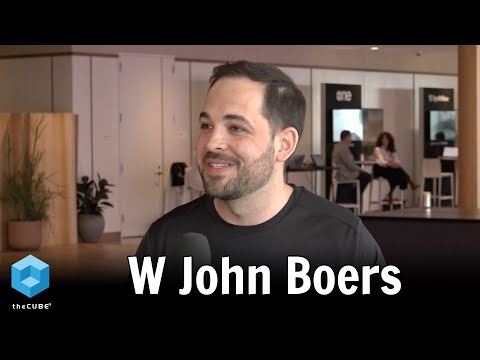
>> AI is reshaping how enterprises think about service management, employee experience, and operational efficiency. But success increasingly depends on balancing automation with trust, governance, and measurable business outcomes. Welcome to Refresh 2026. We're here at Hudson Yards in New York City. I'm Bob Laliberte, principal analyst for theCUBE Research. And today I am joined by Kady Srinivasan, the chief marketing officer at Freshworks, and Julie Mohr, the principal analyst at Forrester.
Julie Mohr
>> Hello. Thanks for having me.
Bob Laliberte
>> Oh, it's great to have both of you here.
Kady Srinivasan
>> It's awesome to be here.
Bob Laliberte
>> Thank you so much. Obviously a great day, a lot going on. So I thought we'd start with maybe talking about customer momentum. And Kady, starting with you, what are you hearing from customers as they transform their service management and employee experiences?
Kady Srinivasan
>> Yeah, I think the common trends that we are seeing across the board are, one, it's a lot about service transformation, meaning it's not just about changing or deleting some workflows, it's really imagining what those workflows can do. We are hearing a lot about connection, connecting data systems so that the experience becomes much stronger. And then the third is they're really talking about how to improve the employee experience overall and not hold into a certain old school way of thinking about things, but really how do employees kind of get to the next level in terms of their productivity by using the services that a company has to offer?
Bob Laliberte
>> Got it. And I wanted to actually ask about that. Are you starting to see customers' priorities starting to shift? And so away from just we need to automate this to we need to achieve this measurable outcome.
Kady Srinivasan
>> Yeah, that's right. A lot of the CIOs that I talk to, they have this lens of I'm not here to run IT software, I'm here to help become the engine of the company's growth. So they really think of themselves as the backbone of how they can get their customers, their employees back to doing the work that they're supposed to be doing faster. So that means that they're thinking of themselves as the enabler of a business productivity solution rather than just supporting an IT solution. So that's a fundamental shift that we are seeing.
Bob Laliberte
>> Got it. Got it. Julie, I want to turn to you. I know in some of your conversations and so forth, you've talked about the art of the switch into AI centric operations. I'm wondering if you could help organizations focus on where they should start, where they should focus first when they're making that switch to AI-centric operations.
Julie Mohr
>> The best approach is really to identify specific use cases that are pain points within the organization and start there. The danger is that you just start implementing AI across the organization without intent. You want to have a purposeful way to replace the repetitive work that's happening within organizations in a way that provides value but also manages the cost associated with these technologies.
Bob Laliberte
>> Yeah, no, that makes a lot of sense. And I'm wondering if you could highlight maybe where do you see organizations making mistakes as they get started and they're early in their journeys and what should they do to overcome those?
Julie Mohr
>> I see a lot of adoption that gets stalled in the non-production environment. And when we talk to clients, they're essentially saying, "Look, we want to roll it into production, but we're asked to show what the value is going to be." And unfortunately they're not measuring those value or outcome-based metrics and so they can't prove to leadership the value and therefore it stays in a non-prod environment.
Bob Laliberte
>> Got it. Got it. That makes sense. Julie, I want to stay with you and think about how is agentic AI starting to change the role of knowledge management and even self-service?
Julie Mohr
>> So knowledge management is an interesting use case for agentic AI. There's a lot of repetitive work that humans really don't like to do and have avoided doing for a long time. So we have a chance to close the gap and really start building repositories that have value to the organization. At the same time, the AI itself requires that knowledge in order to perform with a higher degree of accuracy. So it's a really important use case and it's also something that can help the agentic AI itself get better.
Bob Laliberte
>> Yeah. No, I think that makes sense. And that's where that unified platform starts playing the role, having all that data, having all that context available to it so it can drive forward, right?
Julie Mohr
>> Absolutely.
Bob Laliberte
>> Yeah. Yeah, absolutely. Kady, I wanted to come back to you. Organizations are increasingly measured on employee experience, not just uptime. So how should enterprises really rethink about their success metrics as they move towards employee experience?
Kady Srinivasan
>> I think SLAs have played their part so far in getting us to where we are right now. But the problem with SLAs is they don't go far enough to helping really think about the employee productivity or experience. So imagine you close a ticket super quickly, that's measured by your SLA. So you give yourself a gold star, but the actual employee problem is not solved. So where does that leave the company? It really leaves them with still a bunch of other work that they have to do. So that's why we are moving towards this idea of XLAs. It's this idea that we are thinking about experience level commitments. How do you make sure that you're thinking about a deflection rate as well as an employee sentiment that goes along with it? And the combination of that is what is going to be powerful in helping our CIOs, our leaders determine whether they're truly transforming experience. Julie has talked about how the measurement system for a service transformation needs to be a very different framework, a different paradigm than what's existing. That's the future that we see and that we are moving towards with XLAs.
Bob Laliberte
>> Julie, I know you've done research on XLAs. Why do you think they're becoming important? What does the research say why they're becoming important?
Julie Mohr
>> So we haven't really done a great job as a technology specialist of delivering technology that's easy to use. And honestly, the technology wasn't there yet. It's been hard to use. I mean, if you go from prompt to command line to GUI interfaces, it's been a tough journey. And so a lot of times in operations when we push technologies out to customers, they still don't deliver great service. Who likes pushing buttons on an IVR? No one ever, right?
Bob Laliberte
>> Exactly.
Julie Mohr
>> So we have an opportunity now to put in front of our customers software technology that works for them in a way that's easy for them to understand. This is a completely new experience and it's working without humans in the loop. So the traditional ways in which we would measure success are all based on those old ways of working, which was put somebody in a queue and as soon as we get to them, we'll get to them. So we had to measure our efficiency on how quickly we process that queue. These technologies run in milliseconds, very fast. So time is no longer an element. What are we going to measure? Let's go back to that experience. Are we creating something that's joyful, easy to use, personalized? How hard was it for you to submit your time off request? These are things that matter. And because it's being done by technology, we can tweak that technology to improve and to make a difference. So if we're not measuring experience, then it's very hard to make a difference in a world that's going to be largely run by agents.
Bob Laliberte
>> Yeah. And what I liked about your explanation was that this is not a technology that requires maybe a big process or cultural shift. It's happening behind the scenes to enable organizations to become more productive, more, I guess, greater experiences, better experiences and so forth, but it's nothing that the end user actually has to change or adapt to. It's the technology that's adapting to it. So that's going to be a big help in helping to accelerate the adoption of this.
Julie Mohr
>> Experience matters.
Bob Laliberte
>> Yeah, certainly does. Certainly does. So Julie, I wanted to come back to you as well. I've heard you talk about three big bets that you're saying for where AI agents go next. I'm wondering if you'd want to share what those bets are.
Julie Mohr
>> Yeah. So there's a couple capabilities that we've seen over the last few months and just within the last week being released as it relates to agents. Memory is very a critical component of that. If I can remember from one conversation to another what an individual and how they interact, I'm storing information about that individual. I can make my experience ... The technology can make that experience even more personalized. It gets better and better over time. So that memory capability is an enhancement that changes how these agents function. You add to that skills. So now I have a particular skill that I want to create. I can apply that to different agents so I can get consistency. So for example, if I had a skill that took everything that we produce and puts it into Forrester brand, that skillset could be applied to many different agents. I get consistency. If I want to update that skill, I update it. It can apply all over. The most recent one that's been introduced, which I think is extraordinary, is the idea of dreaming. So now when an agent is not actively working, it can then look at what it's done in the past, evaluate that performance and make improvements. So now we have learning that's happening with the human not in the loop. So we have a lot of capabilities that are moving organizations from capturing and using explicit knowledge, stuff we've already documented, to more implicit knowledge, things that are still easy to document but we haven't really done, but we're gently moving towards tacit, which is just in our brains. The more that the technology is in the loop and in our decision making processes, the more likely we are to get to a world where it can capture tacit knowledge and that frees up and brings a lot of value to an organization, so.
Bob Laliberte
>> Yeah.
Julie Mohr
>> Exciting times.
Bob Laliberte
>> It certainly is. It certainly is. Kady, I'll turn to you on that and say, how does the Freshworks architecture support this evolution?
Kady Srinivasan
>> Yeah. I think there's a couple of different things. One is we are actively building a context graph. So to go back to what Julie was talking about, the memory part of it as well as I'd say the meta rules that govern the memory or the way that things should be done, all of that stuff needs to come together in one place if the models are going to have to be trained on it and be effective at production scale in an environment. So we are building that context graph and that's kind of a core tenet of what we are doing. Dennis talked about this idea of one canonical source of truth. Not only the data itself, but the context surrounding the data is this person opened a ticket about this asset at this point of time and then creating the rules around it. So that's all coming together in one place, which makes it more powerful. I think the other thing I'll say is similar to what Julie is talking about, the idea of a memory in our minds is it's not just the memory of a single agent, it's a memory of the organization that lives in a mix of human and AI agents. And that's the future that we are trying to go towards. How do you orchestrate that? How do you govern that? So like you said, you start getting into some of these ethical problems, but even before you do that, you have to put some guardrails on it so that you know to some extent there is some predictability to what you are getting out of that whole system. So those are all the many things that we are working on.
Bob Laliberte
>> Yeah, no, it sounds great. And I think another big part of that, I think what I saw today was the MCP announcement and that openness. So it's not just the agents that you've built and controlled, but also other additional agents that you can bring in from different systems and bring all that data in as well.
Kady Srinivasan
>> Great. We give access through the MCP to people. So that's part of our choice. Customers can do what they want with that platform, with the context that they have.
Bob Laliberte
>> Got it. Yeah, that makes a lot of sense. We're getting towards the end here. So to wrap it up, I'd like to ask both of you, what's the single biggest advice that you'd give organizations who are preparing for this next phase of AI-driven operations?
Julie Mohr
>> I'll go first. I think we're done preparing. I think we really need to start putting this into operations. We're going to make mistakes along the way for sure. Humans make mistakes. It's not like we still don't bring the business down, but what we have to learn and we need to develop the skills and the people to understand these technologies so that we can make the right decisions. And as long as we're adopting within the operational environment and we're not impacting external customers, we can begin that process. I think there's a lot of companies that have tested and tried things and they have it still in non-prod environments and what's holding you back? A lot of companies aren't and they are moving so quick and forward so quick that hesitation might mean your company's not there in a couple years because it's that fast.
Bob Laliberte
>> Yeah. It's that classic you're not going to lose your job to AI, you're going to lose the person using AI. Your company's not going to win unless it's using it. So get out there and get using it. Sounds good. Thank you, Julie.
Kady Srinivasan
>> My advice is somewhat piggybacking off of what you're saying, Julie, is you've got to be able to operate at two different speeds. One is for the processes that you really need to reimagine and rethink the way you do things, it does take a little bit of time. So don't rush into it. You don't try to fix your entire marketing department in one day type of a thing, right? So there's a little bit of a more deliberate speed that you have to take, but at the same time, I think there needs to be a fast agile speedboat type of a speed where you're learning quickly, you're trying things because the only way sometimes you can do things or learn things is actually by practicing it in the wild. So my advice is to really think very deliberately and intentionally about what goes into the fast boat or what stays on the cruise ship and how you can move that forward.
Julie Mohr
>> Well said.
Bob Laliberte
>> Excellent. Yeah, very well said. Thank you. Excellent discussion all around. Thank you very much. Realities of AI adoption. I think the evolving importance of employee experience as well and those XLAs. So a lot of great things to think about and dwell on. Again, thank you so much for joining us. Really appreciate it. And I want to thank all of you for watching. Stay tuned for more great content from Refresh 2026.





 Bob Laliberte