Enterprise AI infrastructure is moving from concept to production floor — and Dell Technologies is staking its position at the center of that shift. At Dell Technologies World in Las Vegas, theCUBE examines how Dell is evolving into a full-stack AI platform player, from rack-scale AI factories and high-performance storage to hybrid architectures built for real-world enterprise workloads. Don’t miss theCUBE’s live coverage.

Share

Forgot Password

Almost there!

We just sent you a verification email. Please verify your account to gain access to Dell Technologies World 2026. If you don’t think you received an email check your spam folder.


Didn't get an email? Click here
Sign in to Dell Technologies World 2026.

In order to sign in, enter the email address you used to registered for the event. Once completed, you will receive an email with a verification link. Open the link to automatically sign into the site.


Not registered? Join Now

Not registered? Join Now

Register for Dell Technologies World 2026

Please fill out the information below. You will receive an email with a verification link confirming your registration. Click the link to automatically sign into the site.

First Name *
*
Last Name *
*
Email *
*
Company Name *
*
Job Title *
*
* Indicates a required field
Already Registered? Sign in and verify to access the event

You’re almost there!

We just sent you a verification email. Please click the verification button in the email. Once your email address is verified, you will have full access to all event content for Dell Technologies World 2026.

Tuesday, May 19, 2026 | 1:00 AM UTC
Don’t miss out! Add the event to your calendar:
Google Calendar
Microsoft Outlook
Office 365
Download ICS
Didn't get an email? Click here

All set!

Thanks for confirming your account. Now you can access Dell Technologies World 2026 with this email address.
Tuesday, May 19, 2026 | 1:00 AM UTC
Don’t miss out! Add the event to your calendar:
Google Calendar
Microsoft Outlook
Office 365
Download ICS
Profile
person_add
CONFERENCE PASS
  • General
Delete my registration
Delete my CUBE365 account
I want my badge and interests to be visible to all attendees.
Checking this box will display your presense on the attendees list, view your profile and allow other attendees to contact you via 1-1 chat. Read the Privacy Policy. At any time, you can choose to disable this preference.
Select your Interests!
add
Upload your photo
 Uploading..
OR
Connect via Twitter
Connect via Linkedin
EDIT PASSWORD

Cancel

Incorrect password


theCUBE.net
home Dell Technologies World 2026 Agenda
  • more_horiz
    • info Help
    Tuesday, May 19 (UTC) May 19
    Wednesday, May 20 (UTC) May 20
    • ON DEMAND

      Sri Ambati, H2O.ai & Satish Iyer, Dell

      In this interview from Dell Technologies World 2026 in Las Vegas, Sri Ambati, founder and chief executive officer of H2O.ai, joins Satish Iyer, head chief technology officer of ecosystems and startups at Dell Technologies, to talk with theCUBE + NYSE Wired's Gemma Allen about how the Dell and H2O.ai partnership is accelerating the enterprise shift from AI experimentation to full-scale production. Iyer outlines Dell's deliberate strategy of integrating innovative AI startups into its AI factory, underscoring that enterprise challenges can only be solved through ecosystem collaboration. Ambati dives into the emerging tokenomics problem — where top developers are burning upward of $1,000 per day on tokens — and explains how H2O.ai is building orchestration layers that route workloads to the right model at the right size, shifting cost-intensive customers onto on-prem Dell AI factories running small language models, including the newly released TABH2O Tableau foundation model trained on more than six million synthetic datasets.

      The conversation also explores the growing pull toward edge AI and sovereign deployments, with Iyer detailing how Dell is bringing AI to where customer data is generated — from industrial mining sites and healthcare facilities to laptops and mobile devices. Ambati highlights the geopolitical urgency behind on-prem adoption, noting that customers ranging from AT&T and Goldman Sachs to Commonwealth Bank of Australia are building AI-native assets to achieve predictable spend and data sovereignty. He also unpacks the vertical AI opportunity, where purpose-built agents for fraud prevention, predictive hedging and supply chain forecasting are proving far more powerful than generic platform models. From a hurricane prediction model that anticipated infrastructure damage from the Palisades fire to a Space Force deployment predicting launch readiness, Ambati outlines a vision for AI that serves humanity — and positions the Dell-H2O.ai partnership as the trusted infrastructure underpinning that ambition.
      • Google Calendar
      • Microsoft Outlook
      • Office 365
      • Download ICS
      Sri Ambati
      Founder & CEO H2O.ai
      Satish Iyer
      Vice President, Emerging Services Dell Technologies
    • ON DEMAND

      Mike Darby, AMD

      In this interview from Dell Technologies World, Mike Darby of AMD joins theCUBE + NYSE Wired's Gemma Allen to discuss AMD's expanding enterprise AI hardware portfolio and its deepening partnership with Dell to bring accessible, high-performance GPU solutions into mainstream data centers. Darby walks through the Instinct MI350X Series on the booth floor, spotlighting the 355X — an eight-way configuration with 2.3 terabytes of HBM available in both air-cooled and liquid-cooled Dell PowerEdge configurations. He points to Dell's Customer Solution Center as a live remote POC environment that removes the need to purchase hardware before proving it works, and references a six-hour rack deployment benchmark cited by Dell's Jeff Clarke earlier in the day.

      The conversation also explores the MI350P, a PCIe GPU built for mainstream enterprise servers — delivering 144 gigabytes of HBM3E memory at 450 watts in a standard 2U platform and supporting FP4, MP6 and native FP64 workloads. Darby explains how ROCm 7 and AMD Inference Microservices deliver out-of-box performance on leading open-weight AI models, lowering the barrier to enterprise adoption without requiring deep software expertise. He makes the case that the enterprise AI opportunity is comparable in scale to the early cloud market, and that AMD's integration into Dell's modular AI Factory — combined with flexible hybrid and on-prem deployment options — opens the aperture to a far broader base of customers. From inference latency and tokenomics to data sovereignty and hybrid flexibility, Darby outlines why the AMD-Dell partnership is built to meet enterprises at every stage of the AI buildout.
      • Google Calendar
      • Microsoft Outlook
      • Office 365
      • Download ICS
      Mike Darby
      Senior Manager, Business Development AMD
    • ON DEMAND

      Mary Ann Anderson, Microsoft

      In this interview from Dell Technologies World, Mary Ann Anderson, global marketing leader and head of the Dell partnership at Microsoft, joins theCUBE + NYSE Wired's Gemma Allen to discuss the deepening Dell-Microsoft alliance and how the two companies are helping enterprises move from AI experimentation to confident, production-scale deployment. Anderson, attending her first Dell Technologies World after 25 years at Microsoft, describes the partnership as stronger than ever in the agentic AI era. She explains how Windows and Copilot+ PCs built by Dell have become central to Microsoft's commercial strategy and stresses that organizations of all sizes need to start their AI journey now to avoid falling behind. Anderson frames AI adoption as a cultural shift as much as a technology investment — one that demands secure tooling and governance from the outset.

      The conversation also explores how Microsoft and Dell are equipping mid-market organizations with the tools to adopt AI responsibly. Anderson highlights security as a critical barrier, noting that many enterprises fear AI will expose sensitive data and systems without proper governance in place. She explains how the joint platform addresses that concern through built-in oversight and compliance capabilities. Anderson also touches on the economics of on-device inference, noting that Copilot+ PCs can reduce token costs by processing AI locally rather than routing workloads to the cloud. From upcoming announcements at Microsoft Build to the growing role of the AI PC as a primary enterprise endpoint, she outlines how the Dell-Microsoft partnership is positioned to accelerate customer outcomes well into 2027.
      • Google Calendar
      • Microsoft Outlook
      • Office 365
      • Download ICS
      Mary Ann Anderson
      WW Marketing Director, Dell Partnership at Microsoft Microsoft
    • ON DEMAND

      Kevin Johnson & Rob Rollinger, Bud Ecosystem Inc.

      In this interview from Dell Technologies World 2026, Kevin Johnson, co-founder and chief operating officer of Bud Ecosystem, and Rob Rollinger, head of marketing at Bud Ecosystem, join theCUBE's John Furrier and Dave Vellante to discuss how enterprises are moving beyond fragmented AI tools toward unified, full-stack platforms built for production agentic workloads. Rollinger describes Bud Ecosystem's complete stack — spanning silicon through training, inference and governance to agent orchestration — deployable on Dell AI Foundry on-prem or in the cloud. Johnson explains that the highest-value AI outcomes come not from bolt-on tools but from re-architecting enterprise workflows entirely, with a platform capable of reducing AI infrastructure costs by up to 80%. Both guests frame the enterprise challenge as one of simplification: too many stove-piped tools, too little centralized control.

      The conversation also explores how legacy systems — HCM, ERP and CRM — were built for querying, not real-time machine intelligence, and how the agentic era is forcing a fundamental rethink of enterprise architecture. Rollinger outlines how leading deployments assign distinct roles across agent layers — orchestrators, quality control agents and gatekeepers — to balance autonomy with accountability. Johnson points to the Bud Ecosystem Enterprise AI Management Platform as a unified control and data plane capable of governing thousands of agents across environments, from large-scale AI factories down to individual Dell Pro Max endpoints, without sacrificing security or compliance. From navigating the economics of distributed hybrid architectures to protecting data as the irreplaceable core of enterprise intelligence, the discussion offers a practical roadmap for organizations ready to move from experimentation to full-scale AI production.
      • Google Calendar
      • Microsoft Outlook
      • Office 365
      • Download ICS
      Kevin Johnson
      COO Bud Ecosystem Inc.
      Rob Rollinger
      Head of Global Marketing Bud Ecosystem
    • ON DEMAND

      David Kennedy, Dell Technologies

      In this interview from Dell Technologies World, David Kennedy, chief financial officer of Dell Technologies, joins theCUBE's John Furrier and Dave Vellante to discuss how Dell is translating record AI demand into durable, long-term growth across its full-stack infrastructure portfolio. Kennedy highlights Dell's FY26 performance — $113 billion in revenue and more than 5,000 AI factories now deployed across neoclouds, sovereign entities and enterprises — as a signal that AI infrastructure investment is accelerating, not leveling off. He details $64 billion in AI demand booked last year, with $34 billion concentrated in Q4 alone, and explains how Dell's financial services arm and treasury relationships are helping customers secure the capital needed to fund the build-out, positioning Dell as a strategic enabler as much as a hardware provider.

      The conversation also explores the financial levers behind Dell's valuation expansion, including its commitment to doubling EPS again under a long-term framework running to FY30 and returning 80% of free cash flow to shareholders. Kennedy touches on the looming PC refresh cycle, noting that hundreds of millions of machines still running Windows 10 on aging hardware represent a significant untapped opportunity for Dell's AI PC portfolio. He also underscores the competitive depth of Dell's supply chain — spanning consumer devices to the world's largest data centers — as a core moat in an era of constrained components like DRAM and NAND. From urging CFO peers to start with clean, trusted data before layering on agentic use cases, to balancing fiduciary discipline with explosive infrastructure demand, Kennedy outlines why Dell is well-positioned to capture the full economic upside of the AI era.
      • Google Calendar
      • Microsoft Outlook
      • Office 365
      • Download ICS
      David Kennedy
      EVP, Chief Financial Officer Dell Technologies
    • ON DEMAND

      John Roese, Dell Technologies

      In this interview from Dell Technologies World, John Roese, global chief technology officer and chief AI officer of Dell Technologies, joins theCUBE's John Furrier and Dave Vellante to discuss how the AI factory has become the new anchor of enterprise operations — and why building AI in from the ground up is the only path to true transformation. Roese marks the shift from last year's conversation: agentic AI has moved from concept to reality, bringing with it the discipline of "tokenomics" — managing the highly variable costs of running AI workloads across distributed infrastructure. He draws a sharp line between bolting AI onto legacy systems and actually building an AI environment, arguing that legacy applications don't need to be replaced but must be repositioned as tool APIs and data sources feeding a new agentic core.

      The conversation also explores how Dell is operationalizing this philosophy internally. Roese introduces the company's AI-Centric Engineering (ACE) organization — a team rooted in cloud native development, restructured around "AI pods" that pair technical program managers, programmers, data scientists and AI engineers. He explains that agentic projects demand less coding and more configuration and data plumbing, making data science the heaviest lift in every advanced agent Dell has built to date. Roese illustrates the principle of "minimum sufficient reasoning" through a real quoting system project, where routing deterministic configuration tasks back to an existing tool — rather than embedding them in an LLM — proved cheaper, faster and more predictable. He underscores that Dell's long-standing commitment to hybrid infrastructure is not a pivot but a vindication, as enterprises now need workloads to move fluidly across AI PCs, edge nodes, co-location facilities and cloud environments. From converting institutional knowledge into enterprise knowledge graphs to governing agentic workflows through digitized processes, Roese provides a practical blueprint for how organizations can advance from AI experimentation into disciplined, production-scale deployment.
      • Google Calendar
      • Microsoft Outlook
      • Office 365
      • Download ICS
      John Roese
      Global Chief Technology Officer & Chief AI Officer Dell Technologies
    • ON DEMAND

      Jon Siegal, Dell Technologies & Mary Ann Anderson, Microsoft
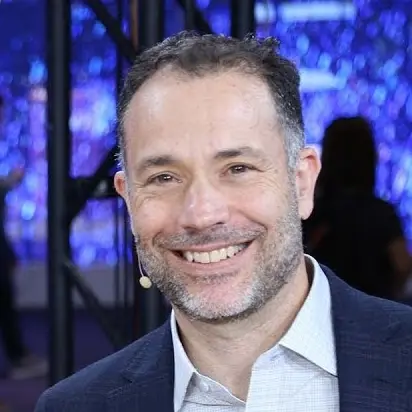
      In this interview from Dell Technologies World, Jon Siegal, senior vice president of product marketing at Dell Technologies, joins Mary Ann Anderson, global marketing leader for the Dell partnership at Microsoft, to talk with theCUBE's Dave Vellante and theCUBE + NYSE Wired's Gemma Allen about how the AI PC is emerging as the central hub for agentic AI experimentation in the enterprise. Siegal unveils Dell's new deskside agentic AI offering — enabling enterprise workstations to run large open-weight models with payback versus cloud in as few as three months. He frames the modern AI PC as a "free token generator," a compelling proposition as token consumption costs remain high across enterprise deployments. Anderson builds on that, describing Microsoft's vision of Windows as a "canvas for AI," anchored by the Windows AI Foundry and a governance control plane to help organizations securely deploy and manage their own agents.

      The conversation also explores the urgency behind enterprise PC refresh cycles, with Siegal arguing that hardware adequate a year ago can no longer support the agentic workflows arriving at pace. Smaller, high-performance models — in the 13-billion-parameter range — are approaching fast, requiring devices with MPUs capable of handling inference without sacrificing battery life. Anderson underscores the governance imperative: employees are already finding ways to use AI regardless of corporate policy, and tools like Microsoft Intune and Entra are becoming essential for assigning agent identities and securing data access. For CIOs navigating the complexity, both guests offer a practical framework — identify use cases, map workloads to the right environment and start experimenting without delay. From a productivity revolution Siegal predicts will far exceed the gains of the original PC era to the deepening Dell-Microsoft partnership ahead of Microsoft Build, the conversation delivers a clear message: the AI PC has moved from the edge of enterprise strategy to its center.
      • Google Calendar
      • Microsoft Outlook
      • Office 365
      • Download ICS
      Jon Siegal
      SVP, Product Marketing Dell Technologies
      Mary Ann Anderson
      WW Marketing Director, Dell Partnership at Microsoft Microsoft
    • ON DEMAND

      Kenny Lowe, Dell Technologies & Raghu Venkataraman, Microsoft

      In this interview from Dell Technologies World, Kenny Lowe, solutions platform product manager at Dell Technologies, joins Raghu Venkataraman, principal product manager at Microsoft, to talk with theCUBE's Dave Vellante and theCUBE + NYSE Wired's Gemma Allen about how the Dell-Microsoft partnership is driving the shift from hyperconverged to disaggregated on-premises infrastructure to meet digital sovereignty requirements and enterprise AI demands. Venkataraman frames digital sovereignty as a compliance mandate — not an option — for government, healthcare and other regulated industries requiring full control over where data lives, who can access it and under what jurisdiction it operates. Lowe details how rising memory and storage costs are pushing enterprises away from hyperconverged infrastructure (HCI) and how Dell Private Cloud combines the manageability of HCI with the economics of disaggregated compute and storage, delivering roughly 64% cost savings for equivalent workloads.

      The conversation also explores how Azure Local brings the full Azure portal experience on-premises — in connected or fully air-gapped deployments — allowing enterprises to run workloads in their own data centers while retaining familiar Azure management tooling. Venkataraman highlights the extension of Foundry Local to Azure Local, enabling fully local AI inference that keeps prompts and data entirely on-premises without relying on a cloud service. Lowe underscores agent memory as a fast-growing driver of storage demand, arguing that data gravity will increasingly anchor workloads on-premises where predictable, owned infrastructure — including PowerStore, backed by a new 6:1 data reduction guarantee — offers a fundamentally different cost model than paying per IO or per gigabyte. From streamlined lifecycle management through joint Dell-Microsoft lab validation to a unified roadmap spanning Foundry Local and M365 Local, the discussion makes clear that the next phase of enterprise AI will be built on a robust, sovereign on-premises foundation.
      • Google Calendar
      • Microsoft Outlook
      • Office 365
      • Download ICS
      Kenny Lowe
      Technical Staff, Cloud Platforms Evangelism & Enablement Lead Dell Technologies
      Raghu Venkataraman
      Principal Product Manager Microsoft
    • ON DEMAND

      Caitlin Gordon & Travis Vigil, Dell Technologies

      In this interview from Dell Technologies World 2026, Travis Vigil, senior vice president of product management at Dell Technologies, joins Caitlin Gordon, vice president of product management at Dell Technologies, to talk with theCUBE's John Furrier and Dave Vellante about how Dell is evolving into a full-stack AI platform at the center of the enterprise infrastructure buildout. Vigil notes that while the conversation has shifted rapidly from generative to agentic AI, the real challenge enterprises face is operational and data complexity — not hardware alone. He points to PowerStore Elite, the platform's largest refresh since launch, delivering 3X performance, 3X density and a new six-to-one data reduction guarantee, alongside PowerScale's ability to deliver 40 gigabytes per second to keep GPUs fed and productive.

      The conversation also explores Dell's expanding private cloud ecosystem, where Gordon details new support for Microsoft Azure Local, Nutanix and VCF 9.1 — all with PowerStore at the core — enabling up to 65% acquisition cost savings versus traditional HCI deployments. She explains how the Dell automation platform and a new AI ISV ecosystem program are accelerating time to value by delivering automated blueprints and validated reference architectures across use cases. Vigil also walks through the newly unveiled AI data platform, which introduces a data orchestration engine capable of cleansing, annotating and pipelining data for AI workloads, alongside Exascale — a four-in-one storage solution supporting file, object, parallel file and block personalities on a single underlying system. From breaking the constraints of HCI to bringing agentic models to where enterprise data actually lives, both executives provide a practical roadmap for organizations moving from experimentation into full-scale AI production.
      • Google Calendar
      • Microsoft Outlook
      • Office 365
      • Download ICS
      Caitlin Gordon
      VP, Product Management Dell Technologies
      Travis Vigil
      SVP, ISG Product Management Dell Technologies
    • ON DEMAND

      Sam Grocott, Dell Technologies & Dave Morin, Offline Ventures

      In this interview from Dell Technologies World, Dave Morin, co-founder and board member of OpenClaw Foundation, joins Sam Grocott, senior vice president of product marketing at Dell Technologies, to talk with theCUBE's John Furrier and Dave Vellante about how OpenClaw is redefining who can build software — and what that means for Dell's expanding AI infrastructure strategy. Morin draws a direct line between OpenClaw and generational technology milestones — the personal computer, the internet, the smartphone — noting that 80% of attendees at global ClawCon events are first-time builders tackling use cases no one anticipated. He outlines a practical enterprise entry point: start with read-only agent access, sandbox the workflow and build data adapters to supply context — an approach that mirrors how organizations onboard new employees rather than granting immediate full system access.

      The conversation also explores how Dell is extending its AI factory strategy from rack-scale data center deployments all the way to the desktop, spanning the GB10 to the GB300. Grocott highlights a decisive shift: AI PCs have moved from passive windows into cloud-hosted models to active, tier-one compute platforms capable of running workloads locally. Cost control over tokens — what Grocott likens to swapping an arcade's quarter rolls for an all-you-can-play home console — is now the primary driver of on-prem and edge AI demand. Morin adds that OpenClaw reached close to 10 million users within its first month, with the 5.12 release delivering the stability and enterprise tooling organizations need to move beyond sandboxes. From scaling agentic workflows across project and program management to deploying the full Dell portfolio in support of enterprise transformation, both guests make the case that 2025 is the year organizations stop experimenting and start rewiring how work gets done.
      • Google Calendar
      • Microsoft Outlook
      • Office 365
      • Download ICS
      Sam Grocott
      SVP, Product Marketing Dell Technologies
      Dave Morin
      Co-Founder & Managing Partner Offline Ventures
    • ON DEMAND

      Suresh Andani, AMD & Melissa Crichton, Dell Technologies

      In this interview from Dell Technologies World 2026 in Las Vegas, Melissa Crichton, vice president of server and AI solutions at Dell Technologies, joins Suresh Andani, vice president of business development for enterprise AI at AMD, to talk with theCUBE's John Furrier and Dave Vellante about the shift from AI experimentation to agentic production and the hybrid infrastructure architectures enterprises need to get there. Crichton explains how Dell's AI factory strategy is built to let organizations start with one or two servers and scale incrementally — whether at the edge, on-prem or in the cloud. Andani notes that approximately 70% of enterprise data centers operate at 30 kilowatts or lower, making the jointly announced AMD MI350P a practical on-ramp for running large inference models without liquid cooling or rack-scale buildouts.

      The conversation also explores how the rise of agentic AI is fundamentally reshaping the CPU-to-GPU ratio in enterprise systems — a figure that has moved from 8:1 to roughly 1:1, driven by the serial orchestration, planning and tool-calling demands of multi-agent workflows. Andani breaks down why GPU-heavy architectures leave expensive accelerators idle when high-thread-count CPUs aren't present to manage the agentic runtime. Crichton details Dell's validation approach: deep joint engineering with AMD and integrations across Red Hat OpenShift AI, Nutanix and VMware that ensure customers reach time-to-first-token on day zero rather than becoming field testers. From a newly launched ISV self-certification program to a multi-year joint product roadmap, both guests outline why a validated, modular partner ecosystem is becoming the defining differentiator in enterprise AI deployment.
      • Google Calendar
      • Microsoft Outlook
      • Office 365
      • Download ICS
      Suresh Andani
      CVP, Compute & Enterprise AI AMD
      Melissa Crichton
      VP, Server & AI Solutions Dell Technologies
    • ON DEMAND

      Michael Dell, Dell Technologies

      In this interview from Dell Technologies World 2026, Michael Dell, founder, chairman and chief executive officer of Dell Technologies, joins theCUBE's John Furrier and Dave Vellante to discuss how the AI factory revolution is moving enterprises from experimentation into full-scale production. Dell reflects on the scope of the current AI era, arguing it rivals electricity and the worldwide web in its transformative significance. With more than 5,000 enterprise customers now running the Dell AI Factory, he underscores that AI is no longer a proof of concept — it is inflecting at scale. Dell also details the deep, round-the-clock collaboration with NVIDIA across supply chain, sovereign AI and enterprise deployments, describing the partnership as central to delivering rack-scale AI infrastructure to customers worldwide.

      The conversation also explores what separates leaders who talk about AI transformation from those who execute it. Dell draws on Stripe's data showing companies born in 2025 grew four times faster than those founded in 2018 — a stark reminder of the cost of inaction. He urges executives to pursue the largest, most data-intensive workflows rather than incremental pilots and to surface internal champions already immersed in the technology. The discussion covers OpenClaw, Dell's AI PC platform, which he connects to the broader tradition of individual empowerment that defined the original PC era. Dell and his wife Susan have also committed to seeding investment accounts for 25 million American children, a long-term bet on human capital as foundational infrastructure. From reimagining enterprise workflows with agentic AI to unlocking economic opportunity for the next generation, Dell makes the case that the boldest investments in people and infrastructure are inseparable from leading the AI era.
      • Google Calendar
      • Microsoft Outlook
      • Office 365
      • Download ICS
      Michael Dell
      Founder, Chairman & CEO Dell Technologies
    • ON DEMAND

      Arthur Lewis, Dell Technologies

      In this interview from Dell Technologies World 2026, Arthur Lewis, president of the infrastructure solutions group of Dell Technologies, joins theCUBE's John Furrier and Dave Vellante to discuss how enterprises are shifting from AI experimentation to full-scale production — and how Dell is positioning itself as the infrastructure backbone of the agentic era. Lewis draws a sharp distinction between "AI-first" and "AI-native" enterprises — the former layer AI onto existing workflows for modest productivity gains of 10% to 20%, while the latter remap entire processes around agentic systems to achieve 10X to 30X improvements. He points to spec-driven software development as a prime example and explains how Dell has spent three years consolidating data across sales, customer service and product development to drive that transformation. Lewis underscores that every byte of organizational data is fuel for AI, making a unified ingest, transformation and query engine — built into the Dell AI Data Platform — the critical foundation any enterprise must establish before its AI strategy can succeed.

      The conversation also explores the Dell AI Factory, which has grown to 5,000 customers — a sharp jump from 4,000 at the close of Q3 — driven by the agentic inflection point. Lewis argues that token economics are becoming a P&L line item, and that Dell's full-stack approach achieves 100% GPU utilization by eliminating bottlenecks across compute, networking and storage. He details a sweeping portfolio refresh spanning the 18th-generation PowerEdge platform, PowerStore Elite, PowerProtect One and the Exascale architecture, which supports file, block, object and disaggregated inference storage under a single flexible framework. The Lightning file system, he notes, extends context windows for disaggregated inference by splitting pre-fill and decode operations to make token generation significantly more efficient. From the "rack as product" philosophy — shipping fully optimized, customer-configured racks in hours — to future investments in SONiC networking and the Dell private cloud, Lewis provides a roadmap for how enterprises can turn AI infrastructure into a durable competitive advantage.
      • Google Calendar
      • Microsoft Outlook
      • Office 365
      • Download ICS
      Arthur Lewis
      President, Infrastructure Solutions Group Dell Technologies
    • ON DEMAND

      Varun Chhabra & Rajesh Rajamaran, Dell Technologies

      In this interview from Dell Technologies World 2026, Varun Chhabra, senior vice president of product marketing at Dell Technologies, and Rajesh Rajamaran, chief technology officer of Dell Storage at Dell Technologies, join theCUBE's John Furrier and Dave Vellante to discuss how data has emerged as the hidden bottleneck standing between enterprise AI experimentation and full-scale production deployment. Chhabra frames data as the most overlooked constraint in AI adoption, noting that across Dell's 5,000-customer AI Factory program with NVIDIA, the gap between a successful proof of concept and a production-grade rollout consistently comes down to data accessibility and quality. Rajamaran builds on this, describing a pipeline that runs from discovery and provenance through transformation and orchestration — arguing that agents don't distinguish between structured and unstructured data, and that the real engineering challenge is funneling both into a unified knowledge layer.

      The conversation also explores Dell's deliberate decision to build a federated, purpose-built data platform rather than a monolithic "God box" — a philosophy that lets organizations connect and transform data in place without forced migration. Rajamaran details how Dell's co-engineering partnership with NVIDIA spans acceleration tools such as QVS, QDF and Lightning for knowledge curation alongside frameworks that operationalize intelligence through coding assistance and agentic workflows. Chhabra emphasizes that the broader goal is simplicity — stitching compute, storage and partner ecosystems into a turnkey experience that meets enterprises wherever they are in their AI journey. From navigating pipeline gravity to enabling every tier of the NVIDIA Pareto architecture with Vera Rubin, both executives outline why Dell's portfolio breadth is a structural advantage in a market where no single product can address the full data lifecycle.
      • Google Calendar
      • Microsoft Outlook
      • Office 365
      • Download ICS
      Varun Chhabra
      SVP, Product Marketing Dell Technologies
      Rajesh Rajamaran
      VP CTO Dell Storage, Data platform & Data Protection Dell Technologies
    • ON DEMAND

      Jeff Clarke, Dell Technologies

      In this interview from Dell Technologies World 2026, Jeff Clarke, chief operating officer and vice chairman of Dell Technologies, joins theCUBE's John Furrier and Dave Vellante to discuss how agentic AI is redefining the enterprise operating model and why organizations that master it now will hold a decisive competitive edge. Clarke marks the current moment as a genuine inflection point, noting that frontier models have advanced from answering questions to executing meaningful work — with larger context windows, embedded agents and the ability to reason and act autonomously. He details a striking internal example: two AI engineers replicated in roughly a week what originally took 50 engineers a year to build, attributing the result to rebuilt workflows rather than layering AI onto existing processes.

      The conversation also explores the economics driving this transformation. Token costs have fallen 80% in a year while consumption has grown 320x year over year — and Clarke argues that tokens will soon become a direct line item on the P&L as enterprises shift spending from headcount to computational capacity. He introduces the concept of super users, noting that 5-10% of employees are currently driving 90-95% of AI value, and frames the gap between those power users and the average employee as the true measure of a company's competitive trajectory. Clarke also outlines Dell's own three-year internal journey — simplifying, standardizing and automating before building a connected data foundation and agentic framework — as a practical model for what it means to become a genuinely AI-native organization. From routing tokens intelligently across edge, data center and cloud to what Clarke calls the great sorting of companies into winners and laggards, the discussion offers a clear blueprint for enterprises ready to move from pilots to production.
      • Google Calendar
      • Microsoft Outlook
      • Office 365
      • Download ICS
      Jeff Clarke
      Chief Operating Officer & Vice Chairman Dell Technologies
    • ON DEMAND

      Bob Ward, Microsoft & Robert Sonders, Dell Technologies

      In this interview from Dell Technologies World 2026, Bob Ward, principal architect at Microsoft, joins Robert Sonders, technical staff global engineering technologist, platform automation and multicloud software, at Dell Technologies, to talk with theCUBE's John Furrier and theCUBE + NYSE Wired's Gemma Allen about how enterprises are moving AI from experimentation into full-scale production through hybrid infrastructure and a unified data platform. Ward highlights the general availability of SQL Server 2025, now featuring native AI capabilities — including vector search and chat completion for agentic workloads — running entirely within the database engine. He explains how healthcare, finance and manufacturing customers are deploying secure, on-premises AI without relocating data out of familiar systems. Sonders details the newly announced Dell Automation Studio, which automates deployments across Azure Local, Dell Private Cloud and Kubernetes into a unified, streamlined platform for enterprise AI delivery.

      The conversation also explores the hybrid control plane architecture underpinning these deployments, where Azure Arc bridges public and private environments to deliver consistent management across SQL Server, Azure Local and Dell Private Cloud. Ward and Sonders address the data gravity challenge directly — SQL Server 2025's built-in AI eliminates the need to shuttle data between systems for processing, keeping compute and data co-located in secure private environments. The pair also look ahead to agentic infrastructure management, where AI agents handle database tuning, storage optimization and lifecycle operations with minimal human intervention. From clinic-edge deployments running AI-assisted diagnostics on Dell hardware to hospital systems operating fully private AI factories with NVIDIA, Ward and Sonders outline a practical roadmap for how the Dell and Microsoft partnership is enabling enterprises to run AI workloads on their own terms — wherever the data lives.
      • Google Calendar
      • Microsoft Outlook
      • Office 365
      • Download ICS
      Bob Ward
      Principal Architect Microsoft
      Rob Sonders
      Technical Staff Engineering Technologist Dell Technologies
    • ON DEMAND

      Geraldine Tunnell, Dell Technologies

      In this interview from Dell Technologies World 2026 in Las Vegas, Geraldine Tunnell, chief marketing officer of Dell Technologies, theCUBE's John Furrier and theCUBE + NYSE Wired's Gemma Allen to discuss Dell's evolution as an AI-native company and the balance of human expertise with technology driving enterprise transformation. Tunnell reflects on the standout moments of the event — from Michael Dell and NVIDIA's Jensen Huang sharing the stage to customer sessions featuring Eli Lilly, Ascension and Samsung — underscoring how organizations are thinking bigger about the problems AI can solve. She notes that becoming AI-native is no longer optional and highlights how customer buying journeys are shifting as AI tools reshape research and shortlisting processes, pushing marketers to think beyond campaigns toward machine-readable content strategies.

      The conversation also explores the human side of AI adoption, where Tunnell draws on a conversation with Zak Brown, chief executive officer of McLaren Racing. Brown credited technology with helping lift the team from the bottom of the standings to back-to-back Constructors' Championships and a Drivers' Championship — while emphasizing that great drivers and strategists remain indispensable. Tunnell frames this as a direct parallel for enterprise AI: infrastructure provides the foundation, but humans must still make the strategic calls. She shares Dell's internal marketing philosophy of prioritizing progress over perfection while striving for excellence as the mindset enabling its own AI-native transition. From taking Dell Technologies World to 40-plus cities globally through Dell Technologies Forums to staying relentlessly close to customer needs, Tunnell outlines how Dell intends to keep pace with a market moving faster than anyone can predict.
      • Google Calendar
      • Microsoft Outlook
      • Office 365
      • Download ICS
      Geraldine Tunnell
      CMO Dell Technologies
    • ON DEMAND

      Rob Bruckner, Dell Technologies

      In this interview from Dell Technologies World, Rob Bruckner, president of commercial client solutions at Dell Technologies, joins theCUBE's John Furrier and theCUBE + NYSE Wired's Gemma Allen to discuss the reimagining of the PC as the ultimate AI endpoint in the era of agentic computing. Bruckner explains how the first wave of NPU-based AI PCs set the stage but fell short of the heavier workloads needed to deliver real value — and how Dell is now redefining the category around machines built for agentic workflows, requiring 32 to 64 gigabytes of memory, high memory bandwidth and integrated AI compute. He introduces OpenClaw, NVIDIA's composable agentic framework, as a pivotal shift in personal computing, noting that Dell is wrapping it with enterprise security and manageability to make it viable for commercial deployment at scale.

      The conversation also explores the economics of running AI locally, with Bruckner underscoring how on-device inference gives developers a token budget playground — the freedom to experiment without the risk of runaway cloud costs. The discussion references a scenario where a single developer burned through $3,400 in token costs in one day, illustrating why local AI is not just a performance decision but a financial one. He outlines Dell's Precision lineup as the hardware answer: a tiered range from mobile RTX-equipped machines to fixed workstations housing the GB10 and GB300, purpose-matched to the complexity of any agentic workflow. From deploying forward-deployed engineers who bridge client and data center needs to retooling Dell's own internal workforce with agentic processes, Bruckner provides a roadmap for how organizations that master this hybrid operating model first will hold a durable competitive advantage.
      • Google Calendar
      • Microsoft Outlook
      • Office 365
      • Download ICS
      Rob Bruckner
      President, CSG Commercial Dell Technologies
    • ON DEMAND

      Charlie Walker & Marc Hammons, Dell Technologies

      In this interview from Dell Technologies World, Marc Hammons, senior distinguished engineer of AI commercial clients at Dell, joins Charlie Walker, senior director of Dell Pro Precision Rugged Product Management at Dell, to talk with theCUBE's John Furrier about how agentic AI is bringing supercomputer-scale compute to the desk side and reshaping enterprise token economics. Hammons walks through Dell's portfolio of AI workstations – from the Dell Pro Max with GB10 to the GB300 – explaining how each supports local agent execution for tasks like code analysis, research summarization and privacy-sensitive personal assistants. Walker makes the TCO case concisely: enterprises spending hundreds of dollars per cloud run on recursive research workloads can recoup a high-end desk-side system in as little as three to six months by shifting token-intensive jobs on-premises.

      The conversation also explores the concept of tokenizing an entire enterprise – converting human-to-human workflows into agent-to-agent processes and building an on-premises AI factory with cost certainty and full data sovereignty. Hammons outlines how a unified software stack spanning the GB10 through the GB300 lets teams experiment freely without cloud budget constraints, accelerating the iteration cycles that produce real business outcomes. Walker underscores that shadow AI is less a governance problem than a signal of demand, with early experimenters gaining a meaningful head start. From the economics of on-device inference to the vision of every organization becoming a token factory, the discussion offers a practical roadmap for enterprises ready to move beyond pilots and extract measurable value from agentic AI at scale.
      • Google Calendar
      • Microsoft Outlook
      • Office 365
      • Download ICS
      Charlie Walker
      Head of Product for Dell Pro Max Workstations & Rugged Dell Technologies
      Marc Hammons
      Sr. Distinguished Engineer Dell Technologies

    Welcome to Cube365 Events Platform Digital Community

    You are now part of the interactive digital experience for all SiliconANGLE conferences and an exclusive member of the social community. Enjoy live and on-demand broadcasts, theCUBE interviews, CrowdChats, and access to premium content and presentations. Engage and interact in real time with influencers and peers in a social space designed for collaboration and networking. Discover all that Cube365 Events Platform has to offer before, during and after the event.

    CONTACT US

    Privacy Statement

    • Privacy
    • Terms
    Social Link
    Social Link
    Social Link
    Social Link
    © CUBE365
    © theCUBE
    © 2026 theCUBE