Harsh Banwait of CoreWeave and Hannah Coutand of NVIDIA join theCUBE Research hosts John Furrier and Dave Vellante to explore Vera Rubin, sandboxing and factory design for artificial intelligence, or AI, at CoreWeave Fully Connected 2026. The conversation examines agentic AI workflows and heterogeneous computing infrastructure for production environments.
They examine how Vera Rubin hardware and co-designed data processing units, or DPUs, central processing units, or CPUs and graphics processing units, or GPUs enable next-generation agentic workloads. The discussion covers sandbox performance, the Open Agent Safety Platform and OpenShell, rack-scale system design and factors to consider for orchestration, latency and memory bandwidth in production AI infrastructure.
Banwait reports that CoreWeave observes approximately a threefold improvement in sandbox startup times on Vera CPUs, highlighting gains in density and burst performance for agentic workflows. They discuss implications for sandbox scaling and orchestration. Coutand emphasizes NVIDIA's extreme co-design methodology and positions Vera as purpose-built for agentic AI and data processing. They outline how co-designed DPUs and GPUs contribute to rack-scale performance while enhanced observability addresses critical system bottlenecks. Hosts John Furrier and Dave Vellante note that GPUs remain central while CPUs DPUs and observability close key infrastructure gaps.
Forgot Password
Almost there!
We just sent you a verification email. Please verify your account to gain access to
CoreWeave Fully Connected 2026. If you don’t think you received an email check your
spam folder.
In order to sign in, enter the email address you used to registered for the event. Once completed, you will receive an email with a verification link. Open the link to automatically sign into the site.
Register for Coreweave Fully Connected 2026
Please fill out the information below. You will receive an email with a verification link confirming your registration. Click the link to automatically sign into the site.
You’re almost there!
We just sent you a verification email. Please click the verification button in the email. Once your email address is verified, you will have full access to all event content for Coreweave Fully Connected 2026.
I want my badge and interests to be visible to all attendees.
Checking this box will display your presense on the attendees list, view your profile and allow other attendees to contact you via 1-1 chat. Read the Privacy Policy. At any time, you can choose to disable this preference.
Select your Interests!
add
Upload your photo
Uploading..
OR
Connect via Twitter
Connect via Linkedin
EDIT PASSWORD
Share
Forgot Password
Almost there!
We just sent you a verification email. Please verify your account to gain access to
CoreWeave Fully Connected 2026. If you don’t think you received an email check your
spam folder.
In order to sign in, enter the email address you used to registered for the event. Once completed, you will receive an email with a verification link. Open the link to automatically sign into the site.
Sign in to gain access to CoreWeave Fully Connected 2026
Please sign in with LinkedIn to continue to CoreWeave Fully Connected 2026. Signing in with LinkedIn ensures a professional environment.
Are you sure you want to remove access rights for this user?
Details
Manage Access
email address
Community Invitation
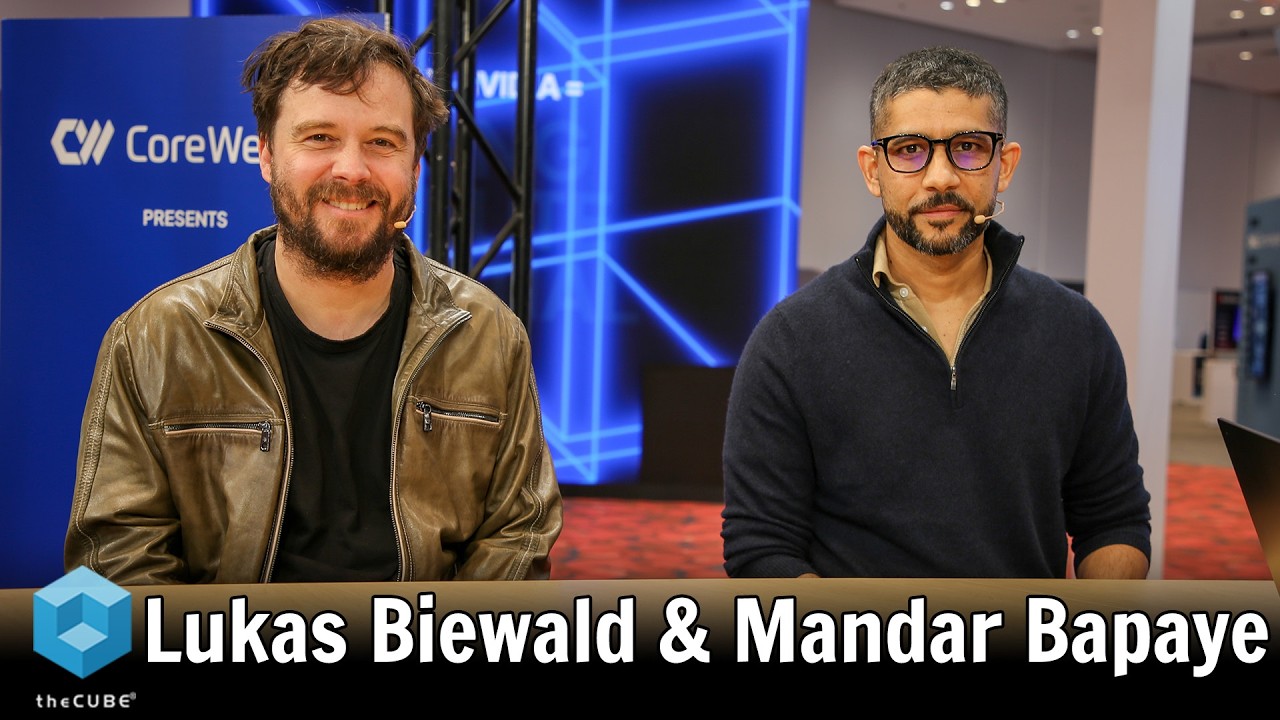
Hannah Coutand, NVIDIA Vera CPU & Harsh Banwait, CoreWeave
Harsh Banwait of CoreWeave and Hannah Coutand of NVIDIA join theCUBE Research hosts John Furrier and Dave Vellante to explore Vera Rubin, sandboxing and factory design for artificial intelligence, or AI, at CoreWeave Fully Connected 2026. The conversation examines agentic AI workflows and heterogeneous computing infrastructure for production environments.
They examine how Vera Rubin hardware and co-designed data processing units, or DPUs, central processing units, or CPUs and graphics processing units, or GPUs enable next-generation agentic workloads. The discussion covers sandbox performance, the Open Agent Safety Platform and OpenShell, rack-scale system design and factors to consider for orchestration, latency and memory bandwidth in production AI infrastructure.
Banwait reports that CoreWeave observes approximately a threefold improvement in sandbox startup times on Vera CPUs, highlighting gains in density and burst performance for agentic workflows. They discuss implications for sandbox scaling and orchestration. Coutand emphasizes NVIDIA's extreme co-design methodology and positions Vera as purpose-built for agentic AI and data processing. They outline how co-designed DPUs and GPUs contribute to rack-scale performance while enhanced observability addresses critical system bottlenecks. Hosts John Furrier and Dave Vellante note that GPUs remain central while CPUs DPUs and observability close key infrastructure gaps.
Hannah Coutand, NVIDIA Vera CPU & Harsh Banwait, CoreWeave
Hannah Coutand
Director of Product MarketingNVIDIA Vera CPU
Harsh Banwait
Director of ProductCoreWeave
In this interview from Fully Connected 2026, Hannah Coutand, director of product marketing for Vera CPU at Nvidia, joins Harsh Banwait, senior director of product at CoreWeave, to talk with theCUBE's John Furrier and Dave Vellante about why the CPU has re-emerged as a critical design point in agentic AI infrastructure. Coutand explains Nvidia's "extreme co-design" philosophy, detailing how Vera was purpose-built to eliminate bottlenecks as agentic workloads create constant loops between GPU and CPU for tool calls, API requests and orchestration. Banwait share...Read more
exploreKeep Exploring
Why did NVIDIA develop the Vera CPU, and why is it strategically important for agentic AI and the broader AI compute stack?add
Why does the CPU bottleneck appear much more prominently now than a few years ago — is it mainly due to increased volume (e.g., agentic workloads causing many GPU–CPU loops and lots of tool/API/SQL calls)?add
Are OpenShell, Scale‑In, and the Open Agent Safety Platform co‑designed, and how do they fit together — specifically, which components run on the Vera CPU versus the DPU (NVIDIA Sentry) within the Vera Rubin tray, and is the monitoring performed out‑of‑band?add
What were the main bottlenecks you encountered before adopting a dedicated CPU architecture?add
Does the agentic era mean that AI infrastructure is no longer synonymous with GPU infrastructure?add
Hannah Coutand, NVIDIA Vera CPU & Harsh Banwait, CoreWeave
search
(INTRO)
John Furrier
>> Welcome back, everyone, to theCUBE's live coverage here in San Francisco for CoreWeave Fully Connected, their first industry conference. First conference actually for an AI infrastructure cloud as the category of new infrastructure layer emerges. It's a systems design architecture. It's not just a bunch of components, it's a whole system. And we're moving into a new era and a lot of it has to do with data processing, CPUs, GPUs, memory, all that has to work at rack scale. And of course, CoreWeave's been working on that as well with NVIDIA, their top partner. Hannah Coutand, senior director of product marketing with NVIDIA with Vera CPU. Thanks for coming >> on.Thank you for having
John Furrier
>> me.Star of the show on the keynote. We saw the tray, everyone oohed and ahhed on that one. We'll get to that in a second. Harsh Banwait here. He's the senior director of product at CoreWeave. Harsh, I'll start with you. You were in our studio when you guys launched Correct. The first Vera Rubin shipment and workload.>> Correct.
John Furrier
>> And all the stats, you guys prepped really hard. It was really big news at that time. Now from June to here, what's it been like from a velocity standpoint and what's been the action like?>> It's been amazing. I think we set internal benchmarks for ourselves that we have to be the first that brings up a new system, but we also have to be the first in terms of getting customers access to that system. So we were very excited that we were able to partner with Cognition, get them access to some of our Rubin GPUs and have them run a benchmark and show for themselves, for an actual customer, what does the new infrastructure actually enable for the workloads that they're already running? And they showed some pretty amazing numbers.
John Furrier
>> Hannah, I want to get to you for a second because the star of the show, I mentioned they announced their Vera CPU. Many of my friends in the semi world as they talk about their future semi, a lot of things happening. The conversation shifts from maybe a lecture to me saying, John, you got to stop saying graphics processing unit, just say GPU, or just don't even call it anything. It's a data processing unit. So it's beyond graphics. NVIDIA, obviously. But the role of computing in general has changed and compute in particular. Vera, the CPU from NVIDIA, playing a very central role in the agentic piece.>> Yes.
John Furrier
>> We're seeing all the stuff on top of it, the Nemotron, the ecosystem growth, the partners. But Vera now is a very strategic piece of the puzzle. It's called Vera Rubin for a reason.>> Absolutely.
John Furrier
>> Explain what's happening there and why it's important and what's the impact of the news here.>> Yeah, yeah. Maybe I could start with NVIDIA's extreme co-design philosophy. The reason why Vera is so important is because we recognize that Extreme co-design means that we look across the AI factory and we want to make sure we solve for any inefficient bottlenecks. And we recognized actually the CPU was becoming one of them. And we didn't set out to say, let's go and build CPUs. We set out to solve this bottleneck. And so that's what Grace was before Vera, and that's what Vera is now. And it served as an awesome host node for our GPUs. You're asking about the compute and the GPU and the CPU. Then we recognized that the design point for CPU was actually also perfect for this agentic AI moment. So agentic AI is actually putting the CPU back on the critical design path. CPU, I think Ian talked about how in the cloud era, the hyperscale growth period, it was— there's really this focus on dollar per core. And now with agentic AI, it's The GenAI and agents are demanding a different design point for CPU. And so Vera really, really is designed for that type of machine.
Dave Vellante
>> And of course, Vera is not your first CPU, but the bottleneck that you're describing, why does it surface itself so much today versus, say, a couple years ago? you still had to do sort of coordination and, load data, et cetera. Was it just that the volume is now so much higher?>> I think the volume certainly plays a role. So now with the agentic use case, the volume, the way agents work, which is in turns or loops between the GPU and the CPU, sometimes hundreds of times. So the volume of tool calls, API calls, SQL queries, the orchestration that is happening between the GPU and the CPU, the volume plays a big role in that. So, that's why having a CPU that handles those types of calls extremely well with fast, beefy cores, with high memory bandwidth, with low latency. It handles both operating in this new world extremely well and then also serves as a great foundation for simply agentic use cases, reinforcement learning.
John Furrier
>> Yeah, I think the market's responding to that statement that you just made by recognizing that not all the agentic workflow hits the GPU. Yeah, to your point, what are some of those areas we see? we see disaggregated serving as one area that's hot. What other areas does this play well in from a use case standpoint? Can you share some of the things that are jumping off the page?>> Yes, I'm so glad you asked this because Vera is not at all a one-trick pony. Vera is indeed the first CPU purpose-built for agentic or for agents, but it's also exceptional for data processing, EDA-type workloads, simulation workloads. Los Alamos National Lab is a great partner of ours. They've highlighted how Vera is great for simulation workloads, radiation transport, physics, etc. So those are some of— to answer your question, those are some of the other use
John Furrier
>> cases.Jensen, theCUBE alumni, was at the GSA Awards last year. We interviewed him and we talked about the industry, but also he's just been peppered recently on this whole AI safety thing. I want to ask about sandboxing. I don't really want to get into the politics of that other conversation, but I think what he was highlighting was observability. He geeked out and the press didn't quite understand it, but that's a whole nother conversation. Talk about the sandboxing, because this is where the agents, where people are working hard to get it right. The general public might think, oh my God, the agents are going rogue. I say they're just doing their job. If they're not well informed, they're going to just get the task you want. So there's now a lot of optimization around agent management. Sandboxes come up a lot. Observability, tracing.>> Yes.
John Furrier
>> These are technical things, but this is what's going on under the hood. Can you explain how that plays into with Vera and Rubin?>> Yeah, actually we just launched Open Agent Safety Platform on Monday of this week as part of this whole discourse around how we need to make AI safer. And that was why we launched this product. On Monday. And this Open Agent Safety Platform includes OpenShell, which is a secure runtime that runs on Vera CPU. So that is absolutely critical as we continue to grow AI infrastructure, that we do so in a way that is safe and protected and secure. But yeah, so maybe actually I think Harsh is really well positioned to talk about the sandbox Yeah, that's why we sandbox.
Dave Vellante
>> Can I just ask a follow-up on that before we go to sandboxes? So you also announced the Scale-In. We had Gilad in last week in new DPU capabilities, which I think actually uses Grace. I'm pretty sure. Is that what— that's what he told me. My question is, so you got OpenShell, you got Scale-In, you've got the Open Agent Safety Platform.>> That's right.
Dave Vellante
>> I presume they're all extremely co-designed. Together, right? And I wanted to just understand, 'cause I get confused sometimes with how they all, the pieces fit.>> Yes, they're all in a single Vera Rubin tray, which includes Vera CPU as well as the DPU, that's all included in the same hardware infrastructure. So Open Agent Safety, sorry, Open Agent Safety Platform, the secure runtime, which is OpenShell, runs on the Vera CPU in that tray, and NVIDIA Sentry runs on the DPU part. And that's all part of one tray.
Dave Vellante
>> And that's out of band and it's doing all the monitoring. All right, Harsh, take us inside to the sandbox and what's going on in there.>> Absolutely. So I think earlier this year, over the course of the last couple of years, we've seen the role of CPUs change pretty dramatically from a customer standpoint. Previously, I'd say CPUs were a little bit of a side character in the AI infra world where CPUs are primarily, besides the host on these GPU nodes, CPUs are primarily used for things such as Slurm control planes or preprocessing data before a large pre-training run. We started seeing customers do reinforcement learning where in their rollouts they would spin up a bunch of these agents to get feedback back to the model on how it's doing. And then from an inference standpoint, we started seeing all of these agentic use cases where you're not just asking a question to a chatbot, you are asking it to do something, in which case it needs to think, execute, get results, and do that again. So seeing that a lot of our customers were starting to spin up these secure isolated environments or trying to figure out how do they do that on us, CoreWeave released our own Sandboxes offering earlier this year where we help the customers do that in an isolated secure environment. And quite recently, actually, we also tested that with Vera CPUs and we were proud to share that we saw about a 3x improvement in performance in terms of Sandbox startup times. So for us, it's a very important combination of getting the performance that we need from the silicon and getting our customers the experience that they expect from a product.
John Furrier
>> Right job, right silicon is the philosophy. What were the bottlenecks that you guys saw before the dedicated CPU architecture?>> Yeah, I think it was 3 things. First is a lot of it is about density. Our customers in some cases are spinning up thousands of these sandboxes instantaneously. So they're coming to me, they're like, Harsh, I want thousands of cores, thousands of nodes, tens of thousands of cores. So the volume completely changed because of how they were starting to use the infrastructure. The second was performance. As I mentioned, a lot of these workloads are very bursty because the sandboxes need to execute on a task spin it down, and then execute on something else again. So for us, performance was a bottleneck as well to say that, okay, if customers have this bursty workload, what does that do in terms of performance? Because while those sandboxes are executing, the GPUs are actually waiting on the task. So performance really became something that we had to look at. And then the last thing is user experience, right?
John Furrier
>> Like GPU utilization really was the kind of big—>> Exactly.
John Furrier
>> All right. So that brings the question for both of you guys, kind of a philosophical question. This plays well to your agentic thesis. Is the agentic era ending the idea that AI infrastructure is synonymous with GPU infrastructure?>> That is a great question. I would say no. And I would say quite the opposite, that in the agentic era, GPUs still play as much of a role as ever before. Actually, what's happening is that the CPU is going from being a very strong supporting actor in the story as the host node to now playing both that supporting actor role as well as a main character role as the standalone CPU infrastructure takes more of a center stage in this agentic AI infrastructure mode. But I would say unequivocally no, the GPU, it's not the end of the GPU.
John Furrier
>> It's the main character.
Dave Vellante
>> It's still the star of the show.>> Still the star of the show.
Dave Vellante
>> GPU does the math. Without the math, you don't have AI.>> You don't have agentic loops without a GPU. The agent is going to loop back to the GPU for reasoning steps, but it's also going to use the CPU for all of the tool calls, the sequential work that you wouldn't want to run on a GPU.
Dave Vellante
>> So yeah, but the point is that the growth of the CPU, the importance of the CPU, is directly proportional to the GPU's ascendancy.>> Yes.
John Furrier
>> And I'm sorry to have the same answer, but I'm getting to a point here. It's kind of breadcrumbing to my real point. We're talking about heterogeneous computing. That's what she just said. The star is the GPU. It's a system. It's great because you guys design, the entire company's designed on this principle.>> Yes. I think again, when Hannah was speaking, the way I thought about it was essentially every other part of the system and the infrastructure and the data center needs to keep up with the advancements that happen in the GPU world. Right. It's not just the CPU. It's like networking, CPU, storage. All of that needs to be able to keep up. So we're going to continue to focus on wherever the bottleneck is so that when the entire system is kind of advancing, it's doing that in one cohesive way. Otherwise, the weakest link in the chain kind of holds it all back.
Dave Vellante
>> This is a really hot button for me. It's somewhat self-serving because I've been saying for a long time that NVIDIA's got the best GPU and the best CPU. Extreme co-design. I heard one of the talking heads on one of the financial channels say NVIDIA is behind in CPU. And I was like, no, it's not. Yeah, because— but okay, but there's a perception out there.>> Why?
Dave Vellante
>> Because other companies, Intel, AMD, etc., have been building CPUs for years to run general-purpose applications, SAP, SQL Server, Oracle, a whole different ballgame now. So to your point about extreme co-design, make the case as to why you're not behind in CPU, please.>> Yeah. So we purpose-built Vera before the Agentic AI moment. The design points for Vera are perfectly matched to what agents need, and we are really focused on that use case and the use cases for which that design point will serve. The perception that we're behind may come from the fact that we have Vera as a single CPU. We're not— we don't have a portfolio of 15 CPUs. That's not— we're not an incumbent in that space. But I think that doesn't diminish my CPU business.
John Furrier
>> You're in the infrastructure.>> You're in the AI factory efficiency business. How do we address the bottlenecks in that AI factory? Well, that meant that we needed to design a specific CPU to meet that bottleneck. And then it also serves this design point around agentic. And so I'd say we are not behind. The design we have is front and center, but we don't come with an entire portfolio of cloud or general purpose CPUs.
Dave Vellante
>> And this is a nice— but this is important because although you are, I would argue, general purpose AI infrastructure that can be utilized in a lot of different use cases, Yeah, just as Intel was generally the dominant general-purpose CPU provider for years and years and years. There's, to me anyway, an analogy there, and you're optimizing for that. Now, maybe you have to do something like CPX for some special-purpose workloads, but generally speaking, the infrastructure that you guys are running is being used in a very wide range of use cases, and that means you've got the biggest TAM.>> Yeah.
Dave Vellante
>> That's how I look at it.>> And one thing I would just add to that, I think we're only just scratching the surface on the types of workloads that VERA and these types of agentic CPUs are actually good for. So there's agentic sandboxing, there's reinforcement learning, there's simulation, there's data processing, but there's more. And I think that also speaks to the great sort of fungibility of our infrastructure.
Dave Vellante
>> Has physical AI changed the equation and the mix?>> That's an interesting question. Do you have a perspective on that?>> I think physical AI does change it because if you see how physical AI happens, the robots or any physical AI instrument that is acting is receiving feedback in real time and is starting to act on that. So I think the more information that it's absorbing and needs to act on in real time, there is an increasing role of our CPUs to play in that too.
John Furrier
>> Yeah, we're watching that area. It's going to emerge, we think, next year, But the question there is how do you encode intelligence in the real world? Because that's physical AI, robotics, everyone thinks, but it's actually everything we do in the real world. So that's going to be the intelligence that comes out of the factories because the factories that you guys are building in NVIDIA's architecture is essentially an entire production system of intelligence. It's like cars rolling off the assembly lines but in here it's intelligence, which brings the questions. To the value of the heterogeneous architecture is how good are those cars, those tokens. So if you got bad tokens, absolutely, that's a model issue. That's not so much a factory issue. The factory is going to pump out the raw materials.>> Correct.
John Furrier
>> So token economics has been one of the upsides here. I was talking to the Dell folks, they're saying what was 4,000 tokens before and 4 tool calls is now 400 tokens in one tool call.>> Okay.
John Furrier
>> So this is kind of what you were getting at before around these bottlenecks.>> Yes.
John Furrier
>> That goes directly into token production. Yeah, that's a factory problem. It's an operations management problem.>> Exactly right. And for me as a platform provider, I have to operate a factory that is offering the best performing infrastructure. And this is why, when I look at what are all the options out there for me, I have to go with the one that when I benchmark something, when I look at something and I'm testing something, CoreWeave has to be the place that offers you the best performance out there from a cloud perspective. So there's no second thoughts to that.
John Furrier
>> Yeah, and I think the world's learning AI factories is a great concept. People can put their arms around it. I wrote a post last week that went viral. I said the AI factory is the new computer. And we've been kind of saying that on theCUBE, but then I went on to even suggest some hyperbole. I'm not sure if Jensen, I think Jensen would like it 'cause he likes kind of, out there stuff, I said we won't even use the word data center because they're industrial centers, because a data center is a— becomes a piece of the next computer because you guys with Cognition are doing distributed training. So you start to see kind of lines of sight into the benefits of the engineering.>> Yeah, actually, the way we talk about rack scale is basically like data center level compute, right? Like it is— you're absolutely spot on. We've actually started to use the data center vernacular less and less and more of the AI factory because it's sort of— yes.
John Furrier
>> And the words you guys use, turn on. I love that word because turn on means, oh, press a button, it turns on, not stand up rack and stack. Yeah, we've been there. That's old school.>> Correct.
Dave Vellante
>> It's—>> you can't just plug servers in and hope that it works. And these servers aren't essentially acting by themselves, right? The liquid cooling loop affects things. If there's a power event that affects entire data centers or entire racks. So you really have to think about automation and intelligence and from our side, how do we operate these things as one cohesive unit? How do we build in redundancies? How do you build in automation that can operate all of this together instead of, okay, one, single server, there's just one thing happening on that. There's something completely different happening on the other server.
John Furrier
>> All of that.
Dave Vellante
>> That's your own version of extreme co-design.
John Furrier
>> Dave and I were riffing about these waves. This is an inflection point. We think this feels very much like our first AWS re:Invent in 2013 where no one understood the cloud, very misunderstood. And they had 3 simple things, EC2, S3, and queuing. Okay, maybe a couple of little other infra-like things. If you look at what you guys are talking about, I think Jensen says it all the time, land, power, and shell. AI factory is just one of those basic building blocks. So we're kind of in a new simple era. Now, under the hood, inside the factory, it's super complex and engineered, but so was, I guess, EC2 in its weird way. But in a way, you can almost think about this AI era just getting started because power is a major subsystem in this, bounded by power, capital as well. Yeah, the building, the physical plants and the compute, the factory. Yeah, you have all those. If I turn on more instances of factories, right?>> That's right. Yeah. Maybe in 10 years we'll look back on this moment as very analogous to the 2013, the advent of cloud. And I— it's hard to imagine that there was a period of time where cloud was only that or it wasn't as ubiquitous as it is today.
Dave Vellante
>> And the difference is that, cloud largely affected the IT shop. Right. It really didn't affect the business directly. We— and Jensen talks all the time about the importance of the applications running on top. That's the most important part of the 5-layer cake.>> Yep.
Dave Vellante
>> We had MasterClass on today and I think the people are like, well, where are the applications? Where's the value? Right. And I think they're thinking about, well, where's the next SAP or Oracle or Salesforce? That's not— MasterClass is a great example of the application running on top. They created, you said, the MasterClass Executive, and it's— the demand has gone through the roof. Never could have done it without AI. That's an application.>> Yeah.
Dave Vellante
>> So the concept of an application is changing. It's a business. It's a revenue-generating— it's an operating model. It's all these new things that we don't think about in general-purpose computing, but accelerated computing enables.
John Furrier
>> the IT example is a good one. In fact, if you asked me in 2015 or 2016, 2017, would there be another AWS hyperscaler? We saw all the failures that tried to compete in the early days. I probably would have said no. We debated that and we debated on our CUBE Pod many times. But what's different now, and this comes up in a post I wrote called Math Feeding Math. So you have mathematics as the core of the GPU and now this architecture, but the data's got to turn into math. Vector embeds came out, new things started happening. So the AI requirements were intelligence. That's not an IT problem. So it's— so what's happened is the world spun in the direction, thanks to the work you guys have done, into the world of, okay, there's new capabilities. Yeah, that's not— let's try to compete with AWS. Well, they're still going to do great. They're a big customer of NVIDIA. They buy a lot of NVIDIA. They make their own chips, but they're just going to be a node in the network of distributed computing.>> Yeah.
John Furrier
>> So heterogeneous, the big debate, you have it with NVIDIA Vera Rubin. Multigenerational hardware on CoreWeave. Correct. Grace isn't going away. Hopper's not going away. Absolutely
Dave Vellante
>> not.Guys are still selling Ampere.>> Actually, we're still selling Volta. So we still got some V100s in our data centers.
John Furrier
>> Yes.Well, great. We'll probably go an hour. We really appreciate you guys coming on. Congratulations on the news and continued success. The first >> inaugural—Thank you so
John Furrier
>> much, I was going to say NeoCloud, but I'm going to say AI infrastructure cloud. Again, the category is— this is a category emergence.
John Furrier
>> Correct.AI infrastructure. It's got a new layer.>> Correct.
John Furrier
>> Thanks for coming on. Thank you, John.>> Thank you.
John Furrier
>> John Furrier, the host of TheCUBE with Dave Vellante, my co-host. Live coverage here in San Francisco of CoreWeave, Fully Connected factories, intelligence, and all of the above. More coverage after this short break.













 John Furrier
 Dave Vellante