We just sent you a verification email. Please verify your account to gain access to
Celosphere 2024. If you don’t think you received an email check your
spam folder.
In order to sign in, enter the email address you used to registered for the event. Once completed, you will receive an email with a verification link. Open this link to automatically sign into the site.
Register For Celosphere 2024
Please fill out the information below. You will recieve an email with a verification link confirming your registration. Click the link to automatically sign into the site.
You’re almost there!
We just sent you a verification email. Please click the verification button in the email. Once your email address is verified, you will have full access to all event content for Celosphere 2024.
I want my badge and interests to be visible to all attendees.
Checking this box will display your presense on the attendees list, view your profile and allow other attendees to contact you via 1-1 chat. Read the Privacy Policy. At any time, you can choose to disable this preference.
Select your Interests!
add
Upload your photo
Uploading..
OR
Connect via Twitter
Connect via Linkedin
EDIT PASSWORD
Share
Forgot Password
Almost there!
We just sent you a verification email. Please verify your account to gain access to
Celosphere 2024. If you don’t think you received an email check your
spam folder.
In order to sign in, enter the email address you used to registered for the event. Once completed, you will receive an email with a verification link. Open this link to automatically sign into the site.
Sign in to gain access to Celosphere 2024
Please sign in with LinkedIn to continue to Celosphere 2024. Signing in with LinkedIn ensures a professional environment.
At Celonis Celosphere, Rob Strechay announced AgentC, a platform for building agents with Celonis data. Customers can use pre-built agents from partners like IBM, Center, EY. The process intelligence graph allows real-time intelligence sharing to improve processes. Knowing the process is key for effective agent building and optimizing investments in automation. Use cases include order block removal, task automation, and creating copilots for various business units. Celonis integrates AI and automation to address value-driven use cases across industries.
exploreKeep Exploring
What were the big ecosystem announcements for Celonis today?add
What is the announcement around AgentC and how is it enabling customers to build agents in various development platforms with data and context coming from Celonis?add
What are some of the challenges that companies are facing in regards to finding the right use cases for AI, and how does Celonis approach addressing this issue?add
>> Good morning, Process Optimizers, and welcome back to Munich, Germany. We are here at Celonis Celosphere. My name is Savannah Peterson, delighted to be joined by Rob Strechay. I feel smarter already. We've only had one interview.
Rob Strechay
>> I love this. Having actually lived on an oil refinery, I understand when Exxon was on stage talking about the complexities of SAP and all the data and things like that. So, this, to me, is near and dear to my heart. So, a lot of fun.
Savannah Peterson
>> We're going to have to unpack a little more of that story some other time.
Rob Strechay
>> We will. We will. We will.
Savannah Peterson
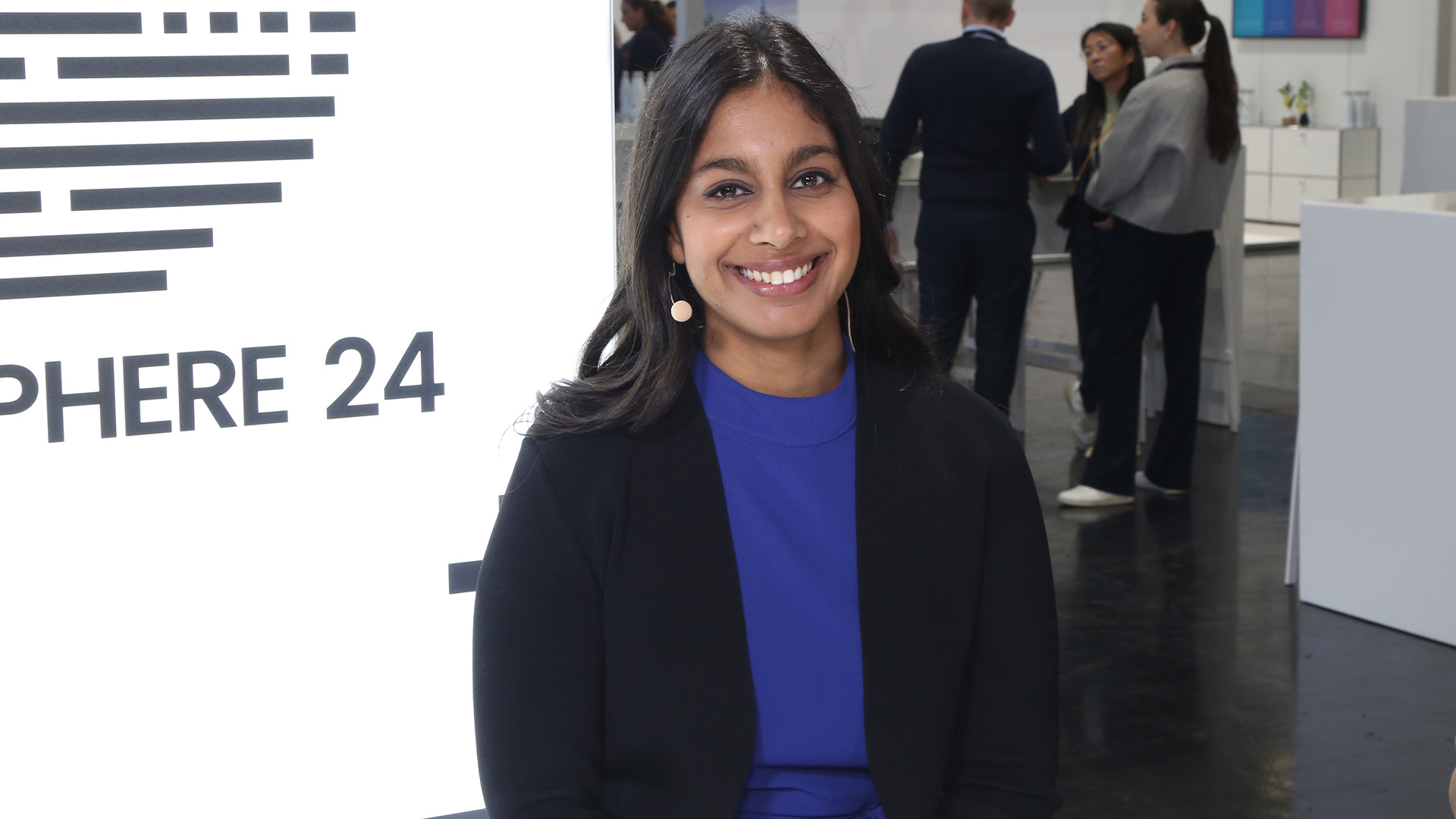
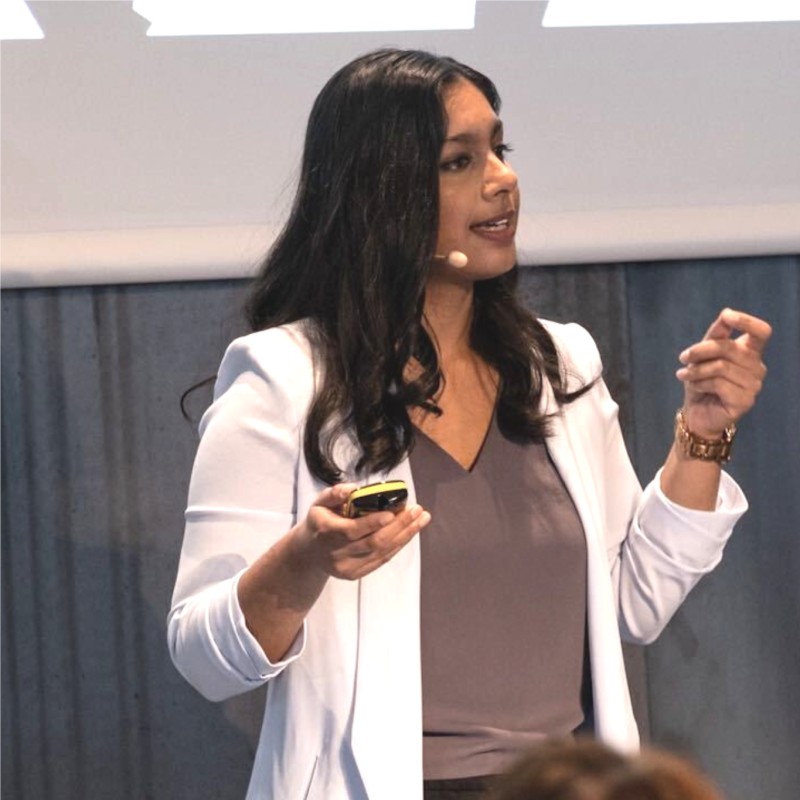
>> But I love that. Let's welcome Divya to the stage.
Divya Krishnan
>> Thank you.
Savannah Peterson
>> Thank you so much for taking the time. Such a busy week for you.
Divya Krishnan
>> Thank you.
Savannah Peterson
>> Very exciting. This is fabulous. One thing I want to bring up, since you just mentioned the keynote, from the slides on the stage there with Exxon was that it doesn't just take a village anymore, it takes an ecosystem.
Divya Krishnan
>> Yes.
Savannah Peterson
>> And you so kindly briefed us on that. Can you explain the big ecosystem announcements for Celonis today?
Divya Krishnan
>> Yes. So, I think there were a couple of different announcements that anchor on the ecosystem. The reason why that's so important is that when you think about the extent of what customers want to do, it's every process and it's in every industry. And that's not feasible for a team of 3,000, no matter how ambitious, how hardworking, to be able to go after. So, our strategy is really to build a platform to give the tools to not only our customers, but also our partners, to enable them to actually create the solutions and go after all these different areas of opportunity. So, there were two announcements that you heard. One is around new partner applications. I think both Alex and I both talked about this, where partners are creating solutions in industries like banking, and oil and gas, and chemicals, for use cases like cross-border payments or tax compliance. And those are solutions that are leveraging our best practices on how to actually build solutions that can get to value really fast. But they're coming from our partners. Honestly, that's the tip of the spear. We have more coming for patient journey and a lot of use cases after that. But I think where a lot of the real excitement is on the floor that I've been hearing so far is around our announcement around AgentC. And so, we call it AgentC. AgentC, it's a pun.
Rob Strechay
>> Yes.
Divya Krishnan
>> With our nameless people.
Savannah Peterson
>> Love it.
Rob Strechay
>> Yes.
Divya Krishnan
>> I like that I have to explain that it's a pun. But it enables people to be able to build agents in really the development platform of their choice, with the data and the context that's coming from Celonis. So, of course, that today means Amazon Bedrock, that means watsonx Orchestrate, and of course, the Microsoft Copilot Studio. But I think that's incredibly exciting for our customers because they're going to be able to then build. And the platforms, that they're increasingly going to start to invest in, they can leverage pre-built agents that are coming from other partners. We've talked about Rolio on stage, but they're, again, one of many. And then, I think a lot of customers don't yet have the skillset and the resources fully in-house, so they're going to be able to lean on these dedicated delivery partners, like IBM, Center, EY, to be able to really help them get off the ground with their agent-building portfolio.
Rob Strechay
>> Yeah. I think to your question and to the whole... You talked about it being a network when you were talking about the example of a distributor, how they were getting that. And I think it's not just a portal, it's a network and bringing these all together. Expand on that. Because I think, to me, that was really key to where things like the process intelligence graph and other things come into this entire story as well.
Divya Krishnan
>> Yeah. I'm going to steal, "It's not just a portal, it's a network," if you don't mind.
Rob Strechay
>> Go right ahead.
Savannah Peterson
>> Yes, Rob. Yes.
Divya Krishnan
>> Because I think that really goes right to the heart. It goes right to the heart of it, because it's not about just a one-time or a ad hoc status check or communication. That's how most of us communicate now. It's like a one-way email. Somebody else in different department or a different company, and it's like, "Hey, here's my update." But this is about, how can you do intelligence sharing, not just data sharing, in real time? How can I make sure that I am doing that in a way that conveys the process insights that I have on my side with my customers or with my suppliers? And of course, vice versa. And I think what enables that foundation is this process intelligence graph. The way that many of our customers describe it is that it gives them this common language for how things are really running and where things can be improved across their different systems and across their different departments. And the announcement that we made around networks is really about, how do I take that common language and extend it even further across the different stakeholders that I work with? And what that means is that you then don't have this finger-pointing over like, "Oh, it's you, it's you."
It really is like, well, what is the dataset? And then, you don't have this back and forth. And you can really then start to proactively avoid some of the delays or the challenges, or the obstacles that otherwise you run into.
Rob Strechay
>> Yeah. I think, to me, that tied with building agents where you want to build them, either in this Celonis platform itself, or all the way to one of your partners. I think that, to me, was really a key. Where do you see organizations, like the use cases where, "Hey..." I know there was the hackathon yesterday that we heard about.
Divya Krishnan
>> Yes, very exciting.
Rob Strechay
>> Very exciting.
Savannah Peterson
>> So much exciting stuff going on.
Divya Krishnan
>> Really exciting.
Rob Strechay
>> How do you see people leaning in? Because to me and to... We do a lot, theCUBE and theCUBEResearch, we do a lot of discussion around how you really can't build agents if you don't know the process you're trying to modernize with that and optimize.
Divya Krishnan
>> And I think I would add to that, it's not just about building the agents. It's also about, where do you put the agents in your process? How do you orchestrate them to make sure that they don't just get plopped in to the existing automation stack and the investments you've already been making? People have been putting a lot of good time, energy, effort, money into RPA, into backend automation, into complex workflows. Nobody should be suggesting that all of that just gets tossed out the window. The question is, how do you optimize that? And then, how do you bring agents to play, to really dramatically increase the ROI that you can get from all the investments that you're putting in?
So, I think that's the one extension that I would add. But I think we're seeing a huge amount of enthusiasm around not just agents, but also copilots that you can spin up for your teams. Because sometimes you want automation, sometimes you just need the information in the hands of the people that need it. And so, we're seeing that customers are building a lot of copilots for their organizations. They're saying one for the finance team, one for the supply chain team. Sometimes they even have multiple within one given business unit. But the use cases right now are, of course, starting with our core, which is, what are really process-specific use cases around order blocks? How can we remove them? We heard that in the keynote.
A different one that I know that a customer's pursuing is, they have a team of about six or seven people that are responsible for looking at order confirmations that are coming in via email. So, it's free text. They have to manually enter it into an ERP system, which is like seven people who are entering email confirmations into an ERP. And that's the kind of work that seven people are wanting to build this agent for. Because then, they can spend their time doing a lot of other stuff, and that's a process that can get moved along that much more quickly. And that, for them, is really important because the time that it takes to get the order confirmations in is what's delaying sometimes getting the goods followed up on, or getting deliveries in. And that's, of course, really, really critical.
Savannah Peterson
>> We're really able to solve process-optimization challenges we weren't able to solve before in this process intelligence graph. And I'm curious if you think this. Since this is such an exciting announcement with all the different components of the ecosystem, do you think that what you're working on right now is actually going to help the enterprise make AI real and deliver that true impact in ROI that these companies are craving?
Divya Krishnan
>> I think the only answer to that for me could be yes, but I'll tell you why I think it's a yes. So, I think one, one of the challenges that you're really seeing with a lot of companies right now is that they're struggling still to find the right use cases when it comes to AI. The nature of how Celonis works is that it looks like a process, or the processes, plural, and says, "Where is the opportunity for value?" And then, anything, AI, automation, DAPs, dashboards, it's all part of the how for like, how do you address it? Which means that it's fundamentally a use-case-first and a value-first approach. So, you look at the order block use cases that we covered in the keynote. Looking at the use casing, we know that credit blocks are getting in the way of the outcome we want to have. How can we improve? And then, you build an assistant using AI, that can actually help you to get there. And I think that is one of the most important reasons for why it's so, so critical to look at where you're going to actually be building to actually get that impact.
Rob Strechay
>> Yeah.
Savannah Peterson
>> I love hear it.
Rob Strechay
>> Yeah. And I think building off of that, I think one of the things that I found interesting because I'm a data geek, and like yourself, I'm a product person and I look at it, one of the things that we've been seeing is that AI has been introducing silos of automation. And I think one of the CeloCoE announcements was also with the APIs and the movement of data was really exciting. Help people understand that. Because you're taking data not just out of SAP and CRM systems and ERP, but out of things like Databricks and Snowflake. And CeloCoE, the enhancements that you have there, it would seem like a breakthrough for your customers.
Divya Krishnan
>> I think so. So, we were in a lucky position, thank you to our engineering team, that we were already the most scalable and the fastest on the market. But when you have customers that are really pushing you because they have a vision of, "I want to be able to bring in this many records, and I need to go at this kind of latency," that made us really take a closer look at how we can up-level the stack even further. And so now, as you say, not only can you bring in data from all of these different systems to really unify, but we're also able to do it at a much more significant scale. Now, why is that relevant? It's really relevant around use cases where you're looking at things like seasonality, or you're in an industry that just has a very high-volume data record, which is actually quite a few of our customers.
Savannah Peterson
>> I was going to say mostly-
Divya Krishnan
>> Retail, manufacturing.
Rob Strechay
>> Retail, yeah.
Divya Krishnan
>> Exactly. But the other scenario is when you need really low latency, when you need a really real-time use case, you want to use it operationally. Customers are now using Celonis not just in an accounts payable or in order management, but increasingly for shop-floor manufacturing. They're increasingly using it for customer service. They're increasingly using it for how they actually do picking and packing. So, it becomes closer and closer to the heart of their business model. That means it has to be like, as soon as the update happens in the transaction system, it's coming in.
Savannah Peterson
>> And it has bigger and bigger impact as a result. Plus, people get excited about the technology because it's making their jobs easier and more efficient. All right, I got one last question for you because time is flying by. One of your slides talked about this time last year.
Divya Krishnan
>> Yes.
Savannah Peterson
>> Now, I want to challenge you to look a bit in the future. And when we sit down with you at the next Celosphere, what do you hope to be able to say that you can't yet say today this time next year?
Divya Krishnan
>> That's a great question. My hope for a year from now is that we see the footprint of the processes that you see in every company around the globe being much further in terms of those processes that are being analyzed, they're being improved. I think AI will be a big part of that equation. And so, what I look forward to is seeing more confidence and more trust in the AI copilots and the agents that are put forward. Because people feel like, "Yes, I understand why we're doing them," they're grounded with the right context and the right data that's coming from sources that I've already validated, sources that I already trust. I'm able to monitor these agents to really make sure that they're operating the way that we want, they're giving us the returns, but also that they're being deployed where they're going to have the most impact. That all of us have learned from the experiences that we all had with automation deployments in years past. And that all of that good learning can be put to really good use in the way in which we treat AI going forward.
Rob Strechay
>> Yeah. I love that because I think one of the things that you'd said in the keynote as well, is it's where the model meets the mapping. And I add, meets reality. So, I'd love to see that by next year. That would be great.
Savannah Peterson
>> And we can't wait to break all of that down 12 months from now.
Divya Krishnan
>> Looking forward. Thank you.
Savannah Peterson
>> Divya, thanks so much for taking the time today.
Divya Krishnan
>> Appreciate it.
Savannah Peterson
>> Such a busy and exciting day for you. Rob, always a pleasure. And thank all of you for tuning in-
Divya Krishnan
>> Thank you....
Savannah Peterson
>> to our coverage here at Celonis Celosphere in Munich, Germany. My name's Savannah Peterson. You're watching theCUBE, the leading source for enterprise tech news.