We just sent you a verification email. Please verify your account to gain access to
Celosphere 2024. If you don’t think you received an email check your
spam folder.
In order to sign in, enter the email address you used to registered for the event. Once completed, you will receive an email with a verification link. Open this link to automatically sign into the site.
Register For Celosphere 2024
Please fill out the information below. You will recieve an email with a verification link confirming your registration. Click the link to automatically sign into the site.
You’re almost there!
We just sent you a verification email. Please click the verification button in the email. Once your email address is verified, you will have full access to all event content for Celosphere 2024.
I want my badge and interests to be visible to all attendees.
Checking this box will display your presense on the attendees list, view your profile and allow other attendees to contact you via 1-1 chat. Read the Privacy Policy. At any time, you can choose to disable this preference.
Select your Interests!
add
Upload your photo
Uploading..
OR
Connect via Twitter
Connect via Linkedin
EDIT PASSWORD
Share
Forgot Password
Almost there!
We just sent you a verification email. Please verify your account to gain access to
Celosphere 2024. If you don’t think you received an email check your
spam folder.
In order to sign in, enter the email address you used to registered for the event. Once completed, you will receive an email with a verification link. Open this link to automatically sign into the site.
Sign in to gain access to Celosphere 2024
Please sign in with LinkedIn to continue to Celosphere 2024. Signing in with LinkedIn ensures a professional environment.
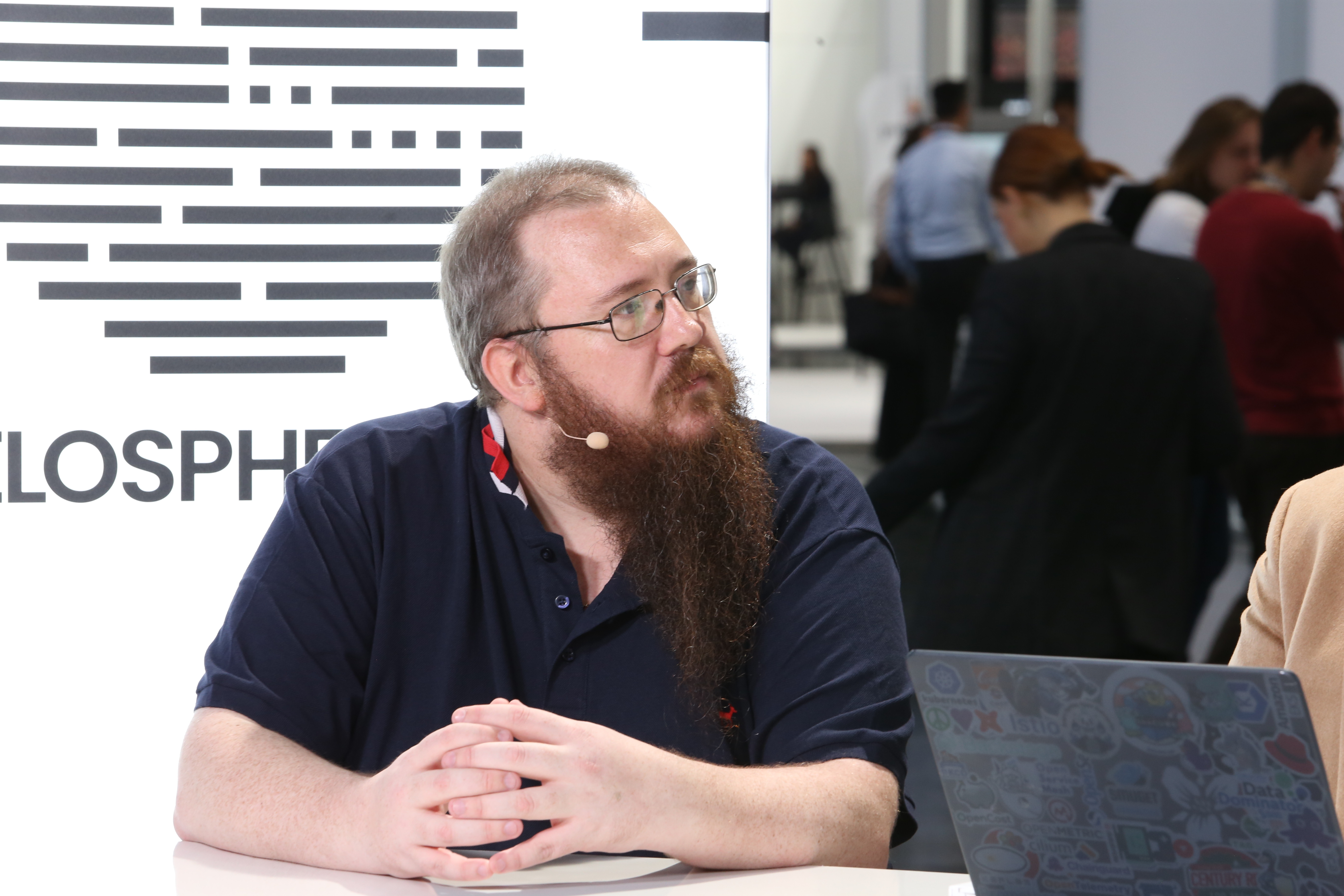
Process & Data Insights Development ManagerINGKA Group
In Munich, Germany, at Celosphere, Tim, the largest Ikea franchisee, discusses using Celonis for over three years to optimize sales orders post-COVID for transparency and efficiency. Tim's role involves analyzing data to improve processes, breaking down data silos with Celonis to identify bottlenecks and areas for enhancement. The focus on the "perfect order" at Ikea includes preventing shipping delays and order changes for customer satisfaction and operational efficiency. Advanced analytics tools like Insights Explorer help pinpoint key issues for quick anal...Read more
exploreKeep Exploring
What was the initial question that led to the decision to engage with Celonis?add
What processes were you hoping to optimize and improve with the new strategy in place?add
What co-innovations are currently being worked on with Celonis?add
>> Good morning, Celonis community, and welcome back to Munich, Germany. We are here on day two of Celosphere and have an action packed day of interviews. My name's Savannah Peterson, very excited to be joined for all of these segments with Rob Streche. Rob we're digging Germany.>> I love this, and the conversations have been fantastic. And Celonis has really brought a lot of interesting people who are at the apex of where the data is meeting the process, being integrated and bringing it all together, so it's a lot of fun.
Savannah Peterson
>> Yeah, and we're getting to hear stories of real results and real impact, which gets me excited, from real-grams that everybody knows, which gets me very excited to introduce Tim this morning. Thank you so much for coming to hang out with us.
Tim Hills
>> Thank you for having me, lovely to meet you.
Savannah Peterson
>> So, you are the largest franchisee of one of the most well-known companies in the world, Ikea. You've got hundreds of retail stores across 30 different countries, over 450, I believe. And I can't wait to hear what you're about to tell us. As we dig in, I can think of so many different use cases for what you're doing and Celonis. How long have you been using the tool?
Tim Hills
>> We started our engagement with Celonis just over three years ago, so doing a proof of concept and see, right, is there something? Can we get something we need which we cannot get in another way? That was the first question. And the answer to that was undeniable yes. The transparency, the exposure of what's really happening, and to then make sure that we can come to conclusions on that, it was a real game changer for us at that moment in time.
Savannah Peterson
>> And what were the initial processes that you were hoping to optimize and improve?
Tim Hills
>> We were really looking at the end to end of our sales order flow. As a company, our business statement is creating a better everyday life for the many people. And especially in a post-COVID world, the number of customer interactions coming through our order flow really expanded, really grew very quickly. But it's not the core of what we've been for the last 80 years. We've been a very cash and carry retailer. You come to us. You pick it up, take it home with you. So this order flow, we wanted to explore it, explain it, understand it, make it better for ourselves and for our customers.>> So, when you look at it, at your company and how you look at data and process, because there's a lot of different things that that can mean. Your title is process and data insights. When I look at that, it can mean so many different things about how you get at those processes, how you get at that data.
Tim Hills
>> Well, because it was an interesting job title. I've never been a fan of a job title that contains the word, "And." One thing isn't enough, so let's give you two. But in this case, it was more a way of exploring, because in 2024 what most processors process is data. Now there are physical components as well, but it's the data representing piece that so important. And so what we really wanted to then do is look at data in context of the process. So are we then getting the right data to understand and interrogate and interpret what's going in our reality? Do we have the transparency, consistency, completeness? But then also, do we really understand what it is that's happening, what's going right, what we want to make better? And then how do we make those things better?>> Yeah, I think just to follow up on that, when you started down this path with Celonis, as you were talking to Savannah about, did you have to find that there was different data silos? And was that one of the reasons why you looked to Celonis and to the platform?
Tim Hills
>> Especially when we're looking at such a big, involved, end to end process with multiple functions involved, multiple solutions involved, multiple contexts that we wanted to harmonize and bring together, there was a journey there to actually understand where should the data come from, what does the data mean, how to connect in a good way. Because often we're very controlled and very secure within each of those areas, but then it's the leakage when you've got the connections between, and that's something which Celonis and process mining has been game changing and really differentiating in our ability to be able to interrogate and explore.
Savannah Peterson
>> When I think about Ikea and optimized experiences, I think about walking through a store. And it's such a journey, right? It's actually quite representative of the customer journey. I loved when I was looking at our notes in preparation for you, you talk about the perfect order. And I think Ikea's really optimized the perfect walk through the retail experience, but I'm so curious to hear from your perspective as you're thinking about this process, what is the perfect order? What does that look like?
Tim Hills
>> And it's a wonderful parallel, because actually when I was presenting here yesterday, which if anyone would like to, you can watch the video. I actually used the map of the store as an allegory for the story I was telling for exactly that reason, yes. Because that traditional, here's how the store is laid out. Here's how basically you interact. You're right. We've had that concept for a long time. We're very familiar with it. That's evolved over time. Now, how do we find that parallel when we're not physically meeting the customer? We're in a customer not present scenario and doing exactly that. So we started with a definition from APQC, which is a think tank we use for a lot of our definitions and so on. They got the perfect order. That's what we started with.
So yes, taking the order perfectly, delivering the goods on time with a correct packed invoice, all of those components. Just those bits there, those are four or five different departments you need to bring together to harmonize to explore and understand. So what we're looking at with a perfect order is, here are are the things that we want to happen. We get what the customer wants. There is the payment that we deliver successfully or hand over successfully. But then the other side of it is because you can't really make an order more perfect, but you can prevent it from becoming imperfect. So the thing that we're mostly focusing on right now is, what are the undesirable events? What are the imperfect events, and how do we prevent those from happening? Because eventually, we want to then get to a phrase that I've been using a little bit, is doing the right things whilst doing things right. At the moment, we're more focused on the first half, so stopping the bad things. Then as we get to a level of maturity there, the things that are left over, we then look to make those efficient, effective, and to improve the experience of those things to be more in line with our store experience.
Savannah Peterson
>> Yeah, absolutely. So what are some of the ... I can imagine shipping delays and mis-packed orders, some of the more obvious things. What are some of the other bad events with negative impact?
Tim Hills
>> We're being quite binary in our definition at the moment. So for example, if a customer then changes their mind on when they would like the delivery to occur, at the moment because we can't always differentiate whether that's because maybe we've made a mistake and we're reacting to something, or maybe the customer has just had a change of circumstance. Originally I wanted my delivery on Friday, but actually now I need to go and pick the kids up from football practice or something. So now I'd like it on Monday. So at the moment, it's a case of how are we making sure we're giving the customers the right options and the right opportunities at the right moment in time so that they can get what they want the first time that we actually meet the promise that we then make them. So yes, when we have changes in items, adding and removing items, could we tell properly in the first place? Changing the services, these kinds of things, because it is really about ... We form an agreement. We make sure that everyone's happy with it. We deliver on that. The more we can do that, the more efficient and effective we can be, the more consistent we can be. It's all different things.>> I think just playing off of that a little bit and when you start to look across all the processes that you have, and you have a lot of also third parties that you work with, things of that nature, how far does your process intelligence go? Is it within the franchisee aspect? Does it go up to corporate and things like that? How far?
Tim Hills
>> At the moment, we haven't gone into the connection with the franchisor. So it is looking at the retailer. Now working with, say for example, transport service providers, installers, assemblers, the points at which we inform them as to what needs to happen and the point at which we get the response, that request, response, we then have so that we can then ... Because when we're doing that root cause analysis of something that went wrong, maybe the customer wasn't home when we were expecting them to be. Now, was that because we hadn't communicated effectively, the transport service provider? So it fits as much as possible in root cause analyzing what went wrong in the first place. What do we then need to fix systematically to make sure it doesn't happen again?>> Yeah, that makes sense. So obviously data is kind of the underpinning of process and process intelligence. It's also the underpinning for gen AI and for everything AI for that matter. What do you see as initiatives and places you want to go with process and with things like gen AI?
Tim Hills
>> Yes. At the moment, we're at the stage before gen AI and looking at more of the machine learning. In the keynote speech yesterday when Divya was presenting the product launch, one of the ones there was called Insights Explorer. We've been co-innovating on that with Celonis for the last year or so. Because when you're talking to something as complex as the whole end to end of a sales order, you've got how we meet the customer, what they're purchasing, what services. Where are we bringing the goods from? How are we getting the goods to them? If you look at all of those different dimensions are not just the dimensions individually, but the combinations and permutations. If someone were to then ask, what are the big three things we should go after, there are so many possibilities, I have no idea how to brute force analyze each one or just take a long, long time. So by leveraging some of the more advanced analytical techniques, so Insights Explorer, what used to take us an hour to do one analysis, we can now do hundreds of thousands with a click of a mouse. And it now tells us, of all of the things that are then causing problems with something you're looking to optimize, here are your most important ones. Here's how we really accelerate the time to insight to then fuel time to action and time to value.
And then the next stage, going more to the gen AI, to then be able to layer over the top of that a large language model and all of these things that our people who run the business then say, "I don't think I'm doing a good enough job in this area. What could I potentially improve?" Here's a list. Here's the rationale. Here's what I'm going to go after, and to then democratize the discovery, democratize the analysis closer to the people who can then make a difference utilizing what is there.
Savannah Peterson
>> You just talked about something that I think a lot of teams can struggle with. Marketing and engineering can have tension here, the C suite with the rest of the staff. Data driven prioritization, it can be incredibly hard to figure out what you need to solve first and then figure out what happens next. It sounds like you're really able to do that as a result of this, to end up with this perfect order.
Tim Hills
>> That's what we're certainly moving towards, and it's not only data driven, but data story driven, because data driven is wonderful when everyone is in a rational frame of mind. But when we also then need to deal with the emotion and we need to deal with the ... to be able to then form those into narrative, because you're able to then say, so then we can connect you to a customer journey. We can then say, "Imagine this customer purchasing this project. We decide to do it in this way. Here are the problems it causes. Here are the pain points that if we impact these, this is what we can do better about." These kind of ways in which we're using the data to then give that narrative storytelling layer to then be able to use people and tug at those emotional heartstrings as well to then really get that change agency and to really get that movement happening. That's something that we're really looking to accelerate with this new capability, absolutely.
Savannah Peterson
>> Yeah, I'm curious to hear more about one of the things that's been very inspiring, frankly, about the week, is how much Celonis collaborates and works with the many different types of companies across different verticals. What does that collaboration look like? How frequently are you interfacing?
Tim Hills
>> There are three co-innovations that we're working on with Celonis at the moment.
Savannah Peterson
>> Nice.
Tim Hills
>> One is when we meet weekly. The other two is biweekly, so it is a case of, and ultimately it comes down to we see the need for something within our business. It's something that we then really form that relationship to say, "Right, how can we produce something that helps you that we can generalize that helps everybody?" Given that as I said earlier, the vision statement of our business is create a better every day life for the many. Okay, it's a win-win because we get that connection happening. Then yeah, it depends on the people that we need to get involved, how technical we're being, bringing those right people together with that right cadence to make sure that we're still building momentum. That's something that's also really, really important for us to make it happen.>> How do you see this process optimization and process intelligence really helping drive toward corporate goals like sustainability? How is that really factoring in? That's been one of the most fun topics that we've been talking about. We all have to be focused on it still, but how is that helping?
Tim Hills
>> With all of our use cases that we come up with, with all the explorations that we do, we look to understand them with the triple line perspective, top line, bottom line, green line. Especially when we're talking about there's the impact on the climate of most of our products are made of wood. products. There's CO2 emissions involved in transportation, these kinds of things. So being able to then, once again, actually it comes back to that whole thing of data driven storytelling. If we've then got those different perspectives who also said, "These are the amounts of CO2 emissions in this when this thing goes wrong. Not only is it costing us this much more or having this impact on customer satisfaction, but also it's having this environmental impact." It just gives that more rounded picture, that more complete picture to then make sure that we're really understanding all of the impact of what it is that we're talking about. So yes, sustainability, in fact that's not weekly or biweekly. That's a monthly session that we have with our sustainability team with input in together with returns, for example. We don't like returning, having returns come back. Customers don't like having to return things. The planet doesn't like us having to go and pick things up and bring them back to our stores and so on. Finding those synergies, because it's not a net-zero sum game, right? It's a one plus one equals three. When we are able to find these synergies, everyone benefits by them.
Savannah Peterson
>> And benefits in a lot of different ways too, not just in the frustration. All right, I've got to ask. So are you an absolute pro at building Ikea furniture?
Tim Hills
>> I'm an enthusiastic amateur. I think professional one of my brothers used to be in the stores where you've got the checkouts. You've got bargain corner or our circular hub as it's now called. One of my brothers used to be the manager of that area. So when he's putting together some furniture and stuff, he was an absolute wizard at it. But yes, I can do it. I tend to love it, but there are better, yes.
Savannah Peterson
>> Call your brother.
Tim Hills
>> Yeah, which was a bit of a challenge after I moved country, but I still try that. But fortunately even to the relatively uninitiated, it's easy enough to work with.
Savannah Peterson
>> So Tim, you've got so many different initiatives going on. It's really cool to hear about all the different innovation projects. You've been working with Celonis for three years, as you mentioned. When we have you on the show at next year's Celosphere, what do you hope to be able to say then that you can't yet say today?
Tim Hills
>> I think that the one thing that I would really love for us to be able to have, because right now we have perfect order performance, as you've called out there, I would love there to be a quite of perfect performance scores, not just related to orders, but then related to invoices, related to month end closing, related to customer service, related to ... Because the thing that's been so fantastic about the perfect order performance insight, it's been this rallying call to lots of different functions to come together with a unified goal. That in itself was just having a common language and a way to interact with each other has been so beneficial. So to be able to actually deliver that or leverage that in other areas, that's the one thing I would love to see, is that I actually then have my perfect performance dashboard with all the perfect performance scores. That's what I would love to be able to deliver over the course of this next year. And we're really looking in at accounts payable and sorts to pay around the invoicing, month end closing. That's going to be a big area. So yeah, we're at one at the moment, get to three or five by this time next year. Then it's the start of a beautiful thing.
Savannah Peterson
>> Well, this has been a perfect discussion. We look forward to talking about more perfection across the business with you next time. Tim, thank you so much for taking the time.
Tim Hills
>> Thank you. You're more than welcome.
Savannah Peterson
>> And thank you, Rob, for hanging out.>> Oh, yeah.
Savannah Peterson
>> I feel like we're going to go to Ikea after this. I don't know about you, but->> I love walking in.
Savannah Peterson
>> All I can think of is walking through the store right now.>> And I buy the meatballs every time we're there.
Savannah Peterson
>> If you didn't bring up the meatballs, I was going to bring up the meatballs.>> My wife's Swedish.
Tim Hills
>> Currently, I'm sort of turning into one.
Savannah Peterson
>> I don't know about that. On that note, thank you both and thank all of you for tuning in to this fabulous segment here in Munich, Germany. We're at Celonis Celosphere. My name's Savannah Peterson. You're watching TheCUBE, the leading source for enterprise tech news.