We just sent you a verification email. Please verify your account to gain access to
Celosphere 2024. If you don’t think you received an email check your
spam folder.
In order to sign in, enter the email address you used to registered for the event. Once completed, you will receive an email with a verification link. Open this link to automatically sign into the site.
Register For Celosphere 2024
Please fill out the information below. You will recieve an email with a verification link confirming your registration. Click the link to automatically sign into the site.
You’re almost there!
We just sent you a verification email. Please click the verification button in the email. Once your email address is verified, you will have full access to all event content for Celosphere 2024.
I want my badge and interests to be visible to all attendees.
Checking this box will display your presense on the attendees list, view your profile and allow other attendees to contact you via 1-1 chat. Read the Privacy Policy. At any time, you can choose to disable this preference.
Select your Interests!
add
Upload your photo
Uploading..
OR
Connect via Twitter
Connect via Linkedin
EDIT PASSWORD
Share
Forgot Password
Almost there!
We just sent you a verification email. Please verify your account to gain access to
Celosphere 2024. If you don’t think you received an email check your
spam folder.
In order to sign in, enter the email address you used to registered for the event. Once completed, you will receive an email with a verification link. Open this link to automatically sign into the site.
Sign in to gain access to Celosphere 2024
Please sign in with LinkedIn to continue to Celosphere 2024. Signing in with LinkedIn ensures a professional environment.
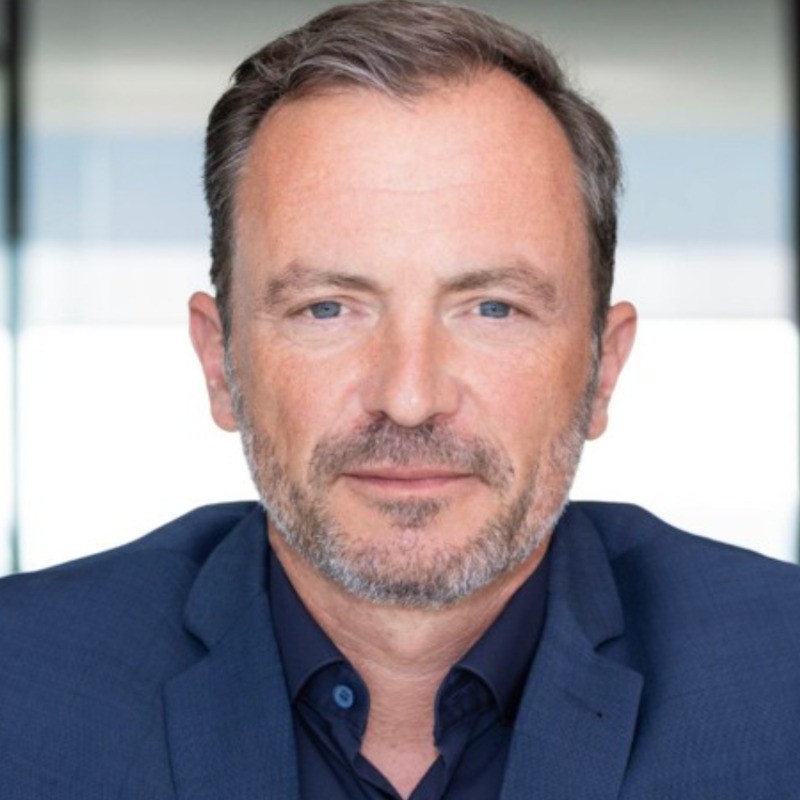
Director Process Mining & Execution ManagementMann + Hummel
Celonis Celosphere in Munich, Germany, features Jean-Marc from MANN+HUMMEL, a company that specializes in filtration systems for the automotive industry. Jean-Marc discusses the challenges faced in logistics and the decision to implement Celonis to drive efficiency. Starting with SAP data mining, they pivoted to core processes like accounts payable and accounts receivables, leading to significant cost savings. Through quick wins and value categories, they have seen upper single million savings and engaged the organization through building a center of excellen...Read more
exploreKeep Exploring
What was the starting point for implementing Celonis in every business unit and function in 2022?add
What was the initial focus when implementing SAP in terms of product lifecycle management and development?add
What are we starting to investigate in terms of using AI support for inventory management, specifically in collaboration with Celonis?add
What do you hope to be able to say at Celosphere next year that you can't yet say today?add
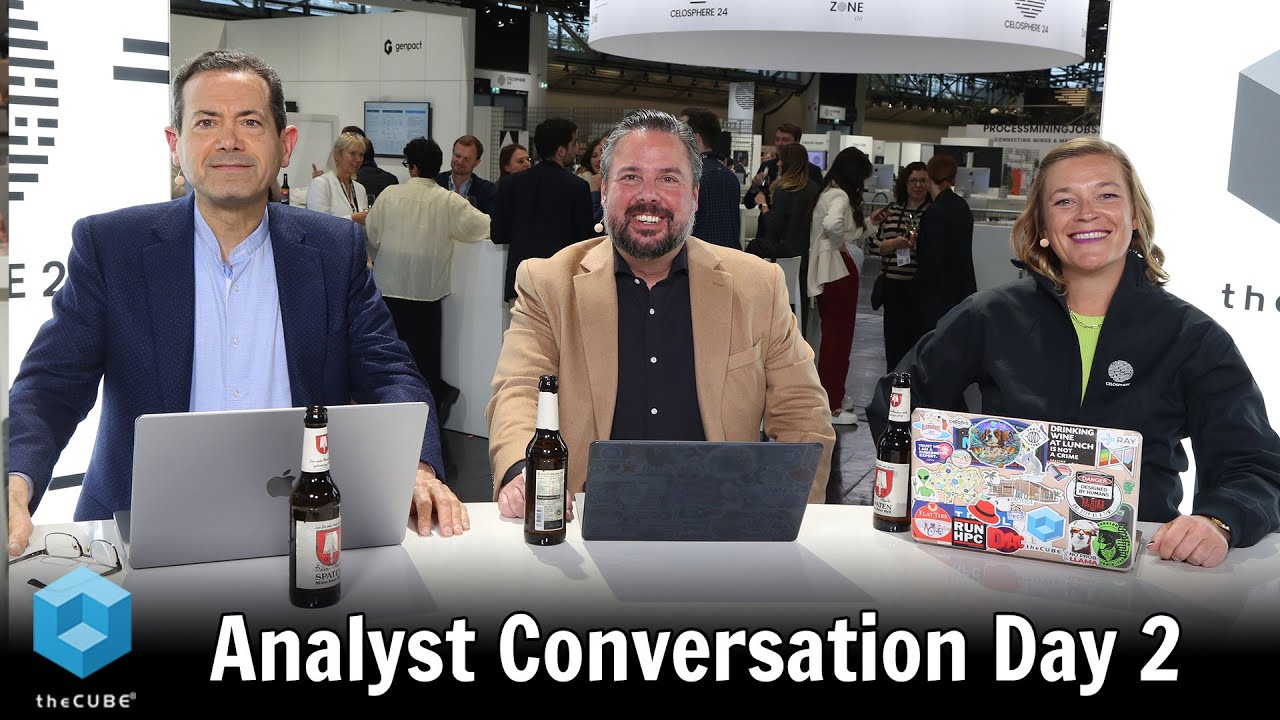
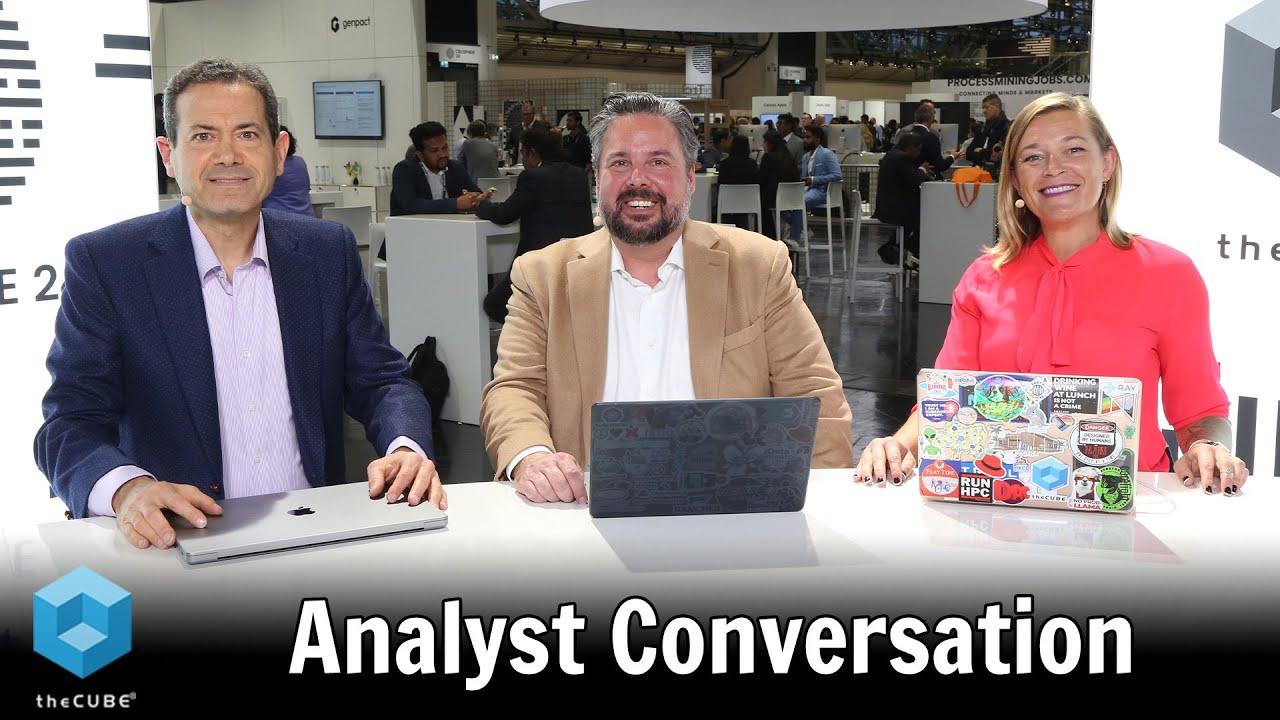
>> Good afternoon, Celonauts, and welcome back to Munich, Germany. We are here on day two of Celonis Celosphere. My name is Savannah Peterson, riding this fantastic wave with Rob Streche all week. We're getting smarter. We're getting more efficient. We're getting optimized.>> I feel just the power of optimization running through me. I now want-
Savannah Peterson
>> You don't feel beer running through you?>> I have to optimize my sock collection or something after a couple of the conversations we've had too.
Savannah Peterson
>> Well, speaking of optimization, we've had a lot of great customer conversations here at Celonis, and I'm super excited to welcome our next guest. Jean-Marc, thank you so much for taking the time today. It must be a busy week for you.
Jean-Marc Erieau
>> Happy to be here, yeah.
Savannah Peterson
>> So you've been a part of the Celonis ecosystem for a little bit. Tell us a little bit about your role, about MANN+HUMMEL, and what brought you here to this wonderful studio with us right now.
Jean-Marc Erieau
>> Okay, so thanks for having me, of course. I'm working for MANN+HUMMEL. We are producing filtration systems, so we are well known in the automotive industry for oil filter, air filter, so on. My role is I'm a director for process mining and execution management. So I gave the title myself, because saying it's not only about process mining and going into discovery and finding inefficiencies and whatever. It's all about executing in the organization to make things and change happen. Because without changing, you will not see any value coming out of your initiative.
Savannah Peterson
>> And you won't get any adoption. No one's going to want a tool that doesn't add value. Talk to me about the situation you were in, the challenges you were trying to overcome when you came upon Celonis.
Jean-Marc Erieau
>> We started basically 2020 with a POC, so we started in logistics. Why? Because I'm doing logistics since 25 years in operations, manufacturing. It was a pretty bad decision to start there. Why? Because I learned of course that we are heavily under-standardized in logistics area. And of course bringing down our business, we are making roughly five billion in revenue. Bringing down five billion to 80 locations means of course it's getting heavily complicated to talk in your organization to do the training and so on. So that's why it was the very worst place to start with. Later on, I learned that of course if you want to scale fast, go into the core four processes, meaning accounts payable, accounts receivables, and that was the starting point, 2022 when we decided in the group to roll out Celonis in every business unit and function and so on. We started, as I said, in 2022. The idea was to support S/4HANA transformation, but of course on the way on running the transformation, finding already now inefficiencies and get the savings done. That was the starting point.
Savannah Peterson
>> So go ahead.>> Help us understand. Like you said, you started one place and pivoted to another to really see the success. Where have you gone from there? Where was the next step after seeing that success on top of SAP where you're data mining SAP?
Jean-Marc Erieau
>> The challenge was of course that we started with the project sector of MANN+HUMMEL in 2026, saying where would we like to be? So the challenge was we said we wake up in year 2027. We look back and then we say, what have we achieved? One part part was saying that we are running process mining globally. We are having 2,000 users. We have done savings in double digits of millions. This was now then break down to the different process areas. Then we started for example in order management and with something which is maybe not so much standardized. Why? Because we said in order management, we can generate savings quite quickly. But with other areas, we know maybe we struggle. That's why I always combine something which should deliver quick value and on the other side, something where I know I need to invest, and it will be difficult to get something out.
Savannah Peterson
>> Can you share some of the methods around those quick wins versus those longer wins? You mentioned saving money. How much money are we talking about?
Jean-Marc Erieau
>> It's in the upper single million already when it comes to ... The thing is at the beginning of the project, we said we want to focus on value categories. So the value categories are cost saving, revenue increase, and labor efficiency increase. So whenever we start something, it needs to pay into a big one of these categories. If we cannot specify the value, and value means there needs to be an action you take in your organization. Because without an action, there's no value. If you cannot find this action, it means no value. Then we will just even scrap to develop something. So these are the prerequisite to make sure that whenever we spend money, we are talking about licenses, the implementation effort, it must be clear that we want to get something out. I'm always saying we are a company. So whenever we spend money, we want to get something back.>> So help us understand, because I think a lot of that was you also had to bring people along with you as part of that and bring the organization. Who is using the product today? And how did you get them there so that they were comfortable with doing that? Because again, your company has been around for a bit, and it's not like this is ... Like you said, you're going to find stuff that people may not find attractive and maybe they may embrace it, but they had to be convinced to embrace it.
Jean-Marc Erieau
>> Yeah, and therefore we started of course first of all to build up our own center of excellence. That was one step. We started with an external consulting company to basically start fast with use cases and implementations, while at the same time building up our own resources in Chechnya and in India and then of course starting to train people, starting to convince people, starting to show use cases and the improvements we achieved. Now, two and a half years later, we are even now working on ... We call it ambassadors, people who would like to join us as an initiative promoting process mining, promoting new technology, and then of course being motivated to find new cases and then to bring something in which we can develop. So it's a journey. It's not something you start. You need to bring it up year by year. Now after two and a half years of course, we have 11 people in the core team, plus many, many people out there on all the continents around the global supporting process mining.
Savannah Peterson
>> Have you noticed? I'm curious because you are so distributed. You've got so many different facilities. Have you noticed any process trends that were regionally based for example? Or has it been across the board?
Jean-Marc Erieau
>> No, of course it's like having multiple companies within the group. It's painful for maturity, maybe. You have areas or functions, for example as a service center is always driven by efficiency. So they are pulling of course automatically to have new use cases to add maybe automation, to add artificial intelligence to their process. But we have also areas of course where we still are pulling. So it takes time, and then of course we as a process mining team, we always need to adapt somehow to our community or to the function. There is automatically something pulling. There, we need to be support. We need to try to convince and talk to them. So it's being flexible and to see, what is the starting point of the discussion?>> Has all of the data you've been using been out of SAP? Or have you moved to bring in data from other systems as well? Because that seems to be part of the value prop, is that, hey, I can bring all of this data together to get a better data up, data driven approach.
Jean-Marc Erieau
>> Yeah, we started of course with SAP because there, you have your standard connections. I had some customer sessions here and they wanted to start with product lifecycle management and development. I would never start there because it's highly customized. Then it takes time to put value, yeah? That's why I'm happy now, looking back, that we started with standard process first, because if you use standard processes, standard connectors, standard data models, standard dashboards, you're very fast to go into and prove that you can deliver value. Now, after having proved of course that we can be successful, that we have value delivered, now of course I can invest into areas where I know it will take time. There is no standard connector. There is no standard data model. Then of course you have to first of all make your groundwork and then build on top. This takes of course more time, but now I can of course do the investment, because everyone is convinced that it will, later or earlier, deliver value.
Savannah Peterson
>> I'm curious, and I love how much you've emphasized the quick wins both for internal buy in, but also for value realization. Has anything that you've been working with Celonis for quite a while now, has anything really surprised you? Or have there been some unexpected discoveries? Or was it about fine-tuning things you already sensed could be more efficient?
Jean-Marc Erieau
>> Yeah, maybe two sorts. One is of course last week I was in Denmark. There was the ICPM, the International Conference on Process Mining. There was also a session about mishaps, things which did not went well. For example, not asking for an action in the business will lead to that you will miss to show value. Because if you don't know what is the action later on after having the insight, you will never generate any value. That's one thing of course that's still learning. Don't miss to ask of the action, the specific action in the process. And maybe the second one, sometimes we even tend to think that we have huge problems and issues in a process. Some, we have also to learn we are not bad. So that was also a finding. For example in EDI connection, we thought we are very bad. Everyone was saying, "Oh, we are far off our target and so on." But we never really measured it. Now having Celonis, we are able to measure of course the EDI ratio and so on. Then we are seeing very surprised, oh, we are very good.
Savannah Peterson
>> I think that you just brought up a really good point though, because when we talk about transparency and trust and the power of the data or the facts that you learn through using Celonis, it's not always moments of improvement that you uncover. It's also realizing, hey, actually we've optimized this.
Jean-Marc Erieau
>> Exactly, exactly. And we have of course a lot of areas where we found nice solutions. We learned also a lot about ourself, because we realized that sometimes we miss maybe master data in a proper way, that quality is not good enough. It's not maybe that the customer saying that. It's maybe that we are not maintaining our master data. And I can say this openly because I know this is the case for many other companies. It's not something which is MANN+HUMMEL specific. It's with all the companies that they have the same issues.>> So you mentioned EDI. I find that very interesting. That makes total sense with the industry that you're in. By the way, I use your filters in my cars though.
Jean-Marc Erieau
>> Very good.
Savannah Peterson
>> Nice.>> I know your company from that.
Savannah Peterson
>> Casual product pause here.>> Absolutely, it's very good. But when I look at EDI and I look at the announcements they have with network and what they're doing there, do you see that as potentially helping you where you have cost systems and EDI shoring together so that you can see what happens on both sides of the EDI?
Jean-Marc Erieau
>> We are doing this not externally outside the group, but we are starting now. We call it iced tea value screen that we use OCPM to bring together the whole material flow running through our organization. So it means from the incoming through the assembly to the outbound and then maybe to the master warehouse or the regional warehouse and so on. So this is where we are now starting to connect all these dots to get the full written or sometimes twin of your supply chain.>> A digital twin of your supply chain, yeah.
Jean-Marc Erieau
>> Data-wise, it's huge. Of course there are many, many use cases now, but first of all you have to have your foundation to make something like this happen.
Savannah Peterson
>> That's absolutely imperative. If you have bad things going in, there are going to bad things going out, whether that's data, systems, processes, whatever that might be. I'm curious. I've asked this question to some of our more interesting guests, and I'm going to throw it to you. It's a little more on the personal front here. You're obviously obsessed with optimization. Are there parts of your life outside of work that you have optimized?
Jean-Marc Erieau
>> That's a good question. I'm focusing a lot on process mining, because it's really my passion. I'm part of the industry chair of ICPM, of the International Conference of Process Mining, even looking now into different solutions of process mining and bringing academics together with research, with vendors, and practitioners. So that's maybe outside my business with MANN+HUMMEL and my job. This is something I'm really pushing, and I love to do this job and connecting people like here on the Celosphere.
Savannah Peterson
>> I love that. You're optimizing the synergy and serendipity of bringing the right people together.
Jean-Marc Erieau
>> Yeah, exactly.
Savannah Peterson
>> And there is a lot of process to events.>> Absolutely.
Savannah Peterson
>> That's a vibe.>> And you also talked about AI. You brought it up, so I'm going to bring it up again. Where are you in your AI journey? Because from our perspective, you need to have process intelligence. I know it's a big thing, but we actually believe that in the research that we do. If you don't understand what the agent is supposed to do in the process, you can't really build the agent. Where are you in your journey?
Jean-Marc Erieau
>> Actually, we are starting now to have initiative together with Celonis to try to understand, how can AI support us in terms of inventory management? So we are doing a lot of course in the core processes. We are now starting also with inventory management. We did a lot in the past with other solutions already, but now the question is, how can we use the execution power of Celonis, combined with AI to maybe give more smarter insights to the planners on the shop floor to let them maybe work quicker and smarter on master data, on production orders, on scheduling, on managing the inventory, on components level, and so on? So this is something where we are now starting to investigate to understand what is really now the power. Is it already now a good time to start with? Is it still too early? Or is it the right time now to start to investigate and invest and look into what can be maybe the news of that technology to even speed up now the rolling initiative we have at MANN+HUMMEL?
Savannah Peterson
>> It's all about that faster decision making and surfacing things real time, which is so imperative. All right, Jean-Marc, last question for you. When we have you on the show next year at Celosphere, what do you hope to be able to say then that you can't yet say today?
Jean-Marc Erieau
>> To be 100% convinced that AI can really support us in the processes, not adding more complexity, but making it simpler for the users, not every user. Last week at the ICPM, Matthew Blank the DPO of Celonis was saying not everyone is a process mining researcher, so not everyone can really deep dive into processes, into the analytics. Sometimes you have to have smart proposals from the users. If I can say next year that we understand now how AI can support inventory management and process intelligence and we are convinced that this is the right way, that would be for me a great outcome of the next couple of months.
Savannah Peterson
>> Fantastic. Well, we look forward to hearing the story and the outcome of that. Jean-Marc, thank you for taking the time in such a busy week. And Rob, thank you as always for this enjoyable conversation. And most importantly, thank all of you for tuning in to our two days of coverage here at Celonis Celosphere in Munich, Germany. My name's Savannah Peterson. You're watching TheCUBE, the leading source for enterprise tech news.