We just sent you a verification email. Please verify your account to gain access to
Celosphere 2024. If you don’t think you received an email check your
spam folder.
In order to sign in, enter the email address you used to registered for the event. Once completed, you will receive an email with a verification link. Open this link to automatically sign into the site.
Register For Celosphere 2024
Please fill out the information below. You will recieve an email with a verification link confirming your registration. Click the link to automatically sign into the site.
You’re almost there!
We just sent you a verification email. Please click the verification button in the email. Once your email address is verified, you will have full access to all event content for Celosphere 2024.
I want my badge and interests to be visible to all attendees.
Checking this box will display your presense on the attendees list, view your profile and allow other attendees to contact you via 1-1 chat. Read the Privacy Policy. At any time, you can choose to disable this preference.
Select your Interests!
add
Upload your photo
Uploading..
OR
Connect via Twitter
Connect via Linkedin
EDIT PASSWORD
Share
Forgot Password
Almost there!
We just sent you a verification email. Please verify your account to gain access to
Celosphere 2024. If you don’t think you received an email check your
spam folder.
In order to sign in, enter the email address you used to registered for the event. Once completed, you will receive an email with a verification link. Open this link to automatically sign into the site.
Sign in to gain access to Celosphere 2024
Please sign in with LinkedIn to continue to Celosphere 2024. Signing in with LinkedIn ensures a professional environment.
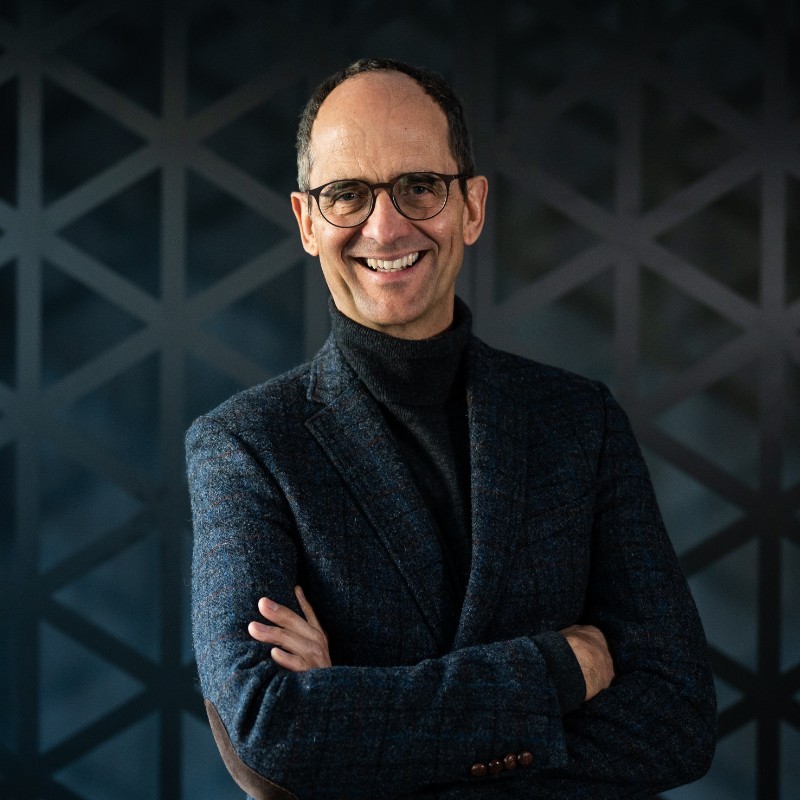
In Munich, Germany, Lars, a former customer turned evangelist and author, shared his journey with Celonis. He emphasized the importance of focusing on business impact and value to drive transformation, showcasing the power of process intelligence in his book inspired by experiences with companies like PepsiCo and BMW. Lars noted the evolution of process mining towards intelligence and AI enabling automation and acceleration, signaling a significant moment of transformation and efficiency in the enterprise. He looks forward to further advancements in AI-driven...Read more
exploreKeep Exploring
What led you to join the team working with process mining and how did you become involved in the recruitment process?add
What key lesson was learned from the early days of starting Siemens and using a tech-driven approach?add
What is the current evolution of process mining and its integration with artificial intelligence?add
>> Good afternoon, efficiency fans, and welcome back to Munich, Germany. We are here coming to the conclusion of our two days of power packed coverage at Celonis Celosphere. My name is Savannah Peterson, been riding this wonderful ride with Rob Streche the entire time. We have such cool guests.>> We have, and I think we still have a few that I'm really excited to see, especially this next one, because when you write the book on it, it's kind of one of those things that you must know what you're talking about.
Savannah Peterson
>> Or at least you think you do. Without further ado, Lars, thank you so much for joining us today on the show. You're an evangelist. You're an author. You're a Celonis fan, and you're also a Celonis former customer.
Lars Reinkemeyer
>> Absolutely, yeah, yeah, yeah, done it all, started with Celonis 10 years ago, 2014. That's when I worked with Siemens.
Savannah Peterson
>> Olden days.
Lars Reinkemeyer
>> Early days, I felt like these guys, wow, they've got a different pitch which they can do there. We started not doing KPIs, but processes. I loved that part to start with Siemens, and since then I've been addicted to process mining.
Savannah Peterson
>> That addiction is something that I think everyone in this room shares. It's not just, oh, yeah, I like my job, or this is an interesting new innovation. There is truly a fervor around process mining here, and it's refreshing because it unlocks so much potential impact. Actually, I'm curious because I've been really impressed by the recruitment of the Lars Reinkemeyer team from recruiting Wil to a bunch of different folks on their squad. How did you come to the team? Did you opt in yourself because you thought it was really cool and innovative?
Lars Reinkemeyer
>> I've been working with Siemens for 25 years, and if you're with Siemens, a Siemens executive, you feel like, wow, this is interesting stuff, but really do you make the move? Really, do you change here? It took me some time, to be honest, but at a certain point in time, I recognized that this is working differently than Siemens does. This provides a different opportunity in influencing, in scaling, and exciting people there and exciting motion and transformation. That's why in 2021 when they came again to me and saying, "Hey, why don't you want to join? Why don't you come to our side?" What's the coin here? I felt like, yeah, why not? Let's be part of that amazing story of Celonis.>> As starting out as a customer, I think one of the things we've been asking to customers all along is, where do you get started? Because I think when people think about process, especially in the olden days, I was doing process re-engineering. It was such a heavy lift for organizations. Where do you see and what do you recommend for customers or even prospects where they should really hone in on that first use case?
Lars Reinkemeyer
>> Right. The learning which I had in the beginning is when we started Siemens, we started in very small niche places and we started very much tech driven. We said, "Hey, we got a capability. We can show you an X-ray here. We can show you your exit processes." Everybody said, "Oh, that's interesting, but I've got 1,000 other priorities. I've got 1,000 other things to do." So a key learning has been that coming from a technology capability, from KPIs and it's not really exciting. So that's why I think this journey with Celonis is made to come from a business impact, from a business value, how you can drive transformation, engage a sponsor to drive a sale. That is still a whole different game in there.
So at Siemens, my journey has been that initially, we're looking to get payment. We're looking through payment term deviations. We're looking through manual touches, so minor things, and they're in silos. Then we started scaling in 2017 when we connected to a sponsor. CFO said, "I want to transform my order to cash process big time." We said, "Okay, we can help you. With this big old target, we can help you. We can transform you. We can make it measurable. We can make it tangible." So we built up a currency which allowed him to eliminate 10 million manual touches in one year at scale. That's the fun part. When almost done, you feel like it's not only cool technology, but it's also something which is bringing value to the organization, acknowledgement to the sponsors, and making me good since I'm doing something exciting for the company.
Savannah Peterson
>> It's bringing value at scale to enterprise across verticals too. It's not just to one niche of our world, but actually to the whole planet, which makes it very exciting. Rob mentioned you're an author. You wrote a book on it. It sounds like there's a really cool process behind your book, a little birdie told me right before we went live. Tell us about what you've written and put into the world and how that came to be.
Lars Reinkemeyer
>> Yeah, the book, the idea of the book came, but after so many exciting experiences. So many companies were doing great things now with process intelligence. I've been speaking to many, many companies across those 10 years, and if I ask them, "Hey, why don't we write a joint book where you share your use case, where you share your challenge, where you share your pitfalls and experiences?" I was blessed. I was blessed to get PepsiCo, to get Kimberly-Clark, to get BMW, Siemens to share their experiences in 10 to 15 pages. So I felt like, okay, I'm starting to write a book. But also on the personal side, I thought, how do I make this a funny, happy path for myself? So I had my preparations start. Then I told my wife, "Look, I'm writing a book." Writing a book is quite where you need to have your own time off, where you need to have your time where you can focus, concentrate. I said, "I need to have four weeks off." What I did, I got her approval and I went to Jamaica. So I went to Jamaica.
Savannah Peterson
>> Great choice.>> Yeah, I was going to say-
Savannah Peterson
>> Perfect writing retreat.>> That sounds like a good place to go to write stuff.
Lars Reinkemeyer
>> I got an Airbnb, picked a nice location there in Jamaica, and it turned out that this location is just 50 miles away from a spot where Ian Fleming wrote all his James Bond books, which inspired me. So I felt like, okay, this is something which probably I have to redo again every year. It was good fun.
Savannah Peterson
>> Did you know that when you booked it?
Lars Reinkemeyer
>> No, no, no.
Savannah Peterson
>> Just a total coincidence?
Lars Reinkemeyer
>> I went there, and then I cruised around and I saw all the James Bonds are coming from that area. Yeah, yeah.
Savannah Peterson
>> So great minds obviously think alike.
Lars Reinkemeyer
>> Yeah. The one thing is that if you read my book much more valuable than reading a James Bond. Let me tell you why.
Savannah Peterson
>> I'm intrigued. You have my attention, Lars.
Lars Reinkemeyer
>> What is the key learning which you take from a James Bond book or a James Bond novel? You learn to take your martini stirred, not shaken.
Savannah Peterson
>> I was going to say martinis, romance, and evasion of authorities.
Lars Reinkemeyer
>> Exactly, maybe, maybe. If you read my book, you know how to process information, scale big, and make a career. How much better is that? So second point, if you try to make any of those tricks which James Bond is doing in his book, this is scary. You're doing those stunts. If you do any of the tricks which is probably in my book, you look great.
Savannah Peterson
>> Do you think there are processes that James Bond should have optimized in each one of his challenges?
Lars Reinkemeyer
>> Maybe, maybe, yeah.>> Especially with Moneypenny and Q and all that.
Savannah Peterson
>> Some complexity.>> Yeah, some complexity, but I look at the book and because we were talking off set here a little bit, and I said having been on the IT side myself and been in data centers and run data centers and been involved in multiple different business units and discussions around processes, it's getting buy in. It's one question we've been asking of people, and it seems like the book is a good way. I'm wondering, because I haven't read it yet, but I will, I'm very interested in-
Savannah Peterson
>> Yeah, we're going to get a signed copy over here.>> Yeah, how do people really get into convincing their organization to go down this path? Because it's not just the technology.
Lars Reinkemeyer
>> It's not.>> It's the people.
Lars Reinkemeyer
>> It's not. It's the people. It's multiple things. First of all, you have to gain the trust. You have to have your first use case for people to recognize, oh, wow, that's amazing. I've had to make it famous, which I didn't know. Oh, somebody showed me. I said, "Put money there," or Cardinal Health shipped my bill 35 million. Wow so you have a foundation. You have a foundation which you can build on. Then it's about exciting a sponsor, saying, "Dear sponsor, I've shown it here. I tell you if you scale across the organization, there's always 35 million, but there's whatever hundreds of millions. But I need you as a sponsor to drive that." One chapter in the book is written by a guy from who is writing about executive sponsorship who is writing about his CFO is sponsoring him, saying, "I need to transform big time as a CFO, and I trust you to make it happen, because you've shown you've done it and I know you can do it." It's not only change makers driving it. A change maker needs a push up a hill. That's a sponsor who got to generate this pull by telling the people in charge, this is for Celonis, you have to move. You have to improve, and is your facilitator. So that's the mechanism which we've seen working very, very powerful.
Savannah Peterson
>> It is powerful. Honestly, we could talk about book analogies. I'm writing a book right now too, and you talk about how hard it is and the need to take time and set it aside. You could not be more write. Shout out to Jen, my writing partner. I'm actually going to see my writing partner in Berlin tomorrow after this, so we're right on the pulse there. Shifting gears just a little bit, we were talking a lot about the energy. We're all vibing. Like you said, our minds are really excited. Our bodies are starting to feel that we're at the end of a very fun and enthralling week that's not always rich with sleep. We've been talking about this on the desk. It feels like process mining is having a moment. There's a real acceleration and adoption across industry, across the enterprise. You've got 400 partners now building and working with you on the platform. Do you agree? Does this feel like a magic moment?
Lars Reinkemeyer
>> It's an evolution. It's an evolution which is accelerating. Since I've been seeing the motion for 10 years, I've seen the process mining which we did a couple of years ago, which was more than mining and visualizing. Now it's in the intelligence, saying based on that insight which we have, what intelligence can we bring in there by choices alerting, by dg exit flows, by doing automation? And now what now the agents see, the AI, which will give it a whole different booster. But if you think about if you have a platform which understands your processes, understands the inefficiencies in your processes, and then with AI enabled can accelerate that, it's a whole different game. The other thing which I'm seeing here which I'm really enjoying is the caliber of discussions. Three years ago, four years ago at Celospheres, there were many people who you had to tell, okay, what is process mining? What are you doing? Now everybody knows about it. Everybody knows. Everybody has put a finger in the honeypot. Everybody now says, "I've got it. Tell me how to accelerate." And we get very serious people here who are coming from a transformation perspective, not coming from a single use case. They say, "I want to transform my supply chain across organizations." It's a whole different game which is happening. So that's the other thing which I'm seeing accelerating.
Savannah Peterson
>> Yeah, and not even just the supply chain. They want to transform every process, every single action that happens across the enterprise, which is really exciting. All right, last question for you, since we're obviously going to be bringing your enthusiastic self back on when we're here again this time next year, what do you hope to be able to say then that you can't yet say now?
Lars Reinkemeyer
>> Well, firstly, hopefully I've written a book on process intelligence, about agency in action, again these four weeks in Jamaica, but not sure when exactly.
Savannah Peterson
>> Love this. You heard it here first, folks.
Lars Reinkemeyer
>> But what I think what we're going to bring here is much more how AI has enabled champions to detect cross-inefficiencies and eliminate these, how AI has enabled companies to move toward autonomous enterprise, and now become much more efficient. So that's the big thing which we wish to see.
Savannah Peterson
>> Well, we can't wait to talk about it with you, Lars. Thank you so much for sneaking us in today during your very busy week. Rob, always a treat, yet another fantastic guest. You weren't kidding. I didn't know we were going 007, but here we are.>> Here we go.
Savannah Peterson
>> Folks, I'm into it. Now I just need a martini. Hopefully that's coming up next. Thank all you of you for tuning in with whatever beverage you may have in your hands. I promise it's just water in this cup. We're in Munich, Germany at Celonis Celosphere. My name's Savannah Peterson. You're watching TheCUBE, the leading source for enterprise tech news.