We just sent you a verification email. Please verify your account to gain access to
Celosphere 2024. If you don’t think you received an email check your
spam folder.
In order to sign in, enter the email address you used to registered for the event. Once completed, you will receive an email with a verification link. Open this link to automatically sign into the site.
Register For Celosphere 2024
Please fill out the information below. You will recieve an email with a verification link confirming your registration. Click the link to automatically sign into the site.
You’re almost there!
We just sent you a verification email. Please click the verification button in the email. Once your email address is verified, you will have full access to all event content for Celosphere 2024.
I want my badge and interests to be visible to all attendees.
Checking this box will display your presense on the attendees list, view your profile and allow other attendees to contact you via 1-1 chat. Read the Privacy Policy. At any time, you can choose to disable this preference.
Select your Interests!
add
Upload your photo
Uploading..
OR
Connect via Twitter
Connect via Linkedin
EDIT PASSWORD
Share
Forgot Password
Almost there!
We just sent you a verification email. Please verify your account to gain access to
Celosphere 2024. If you don’t think you received an email check your
spam folder.

In order to sign in, enter the email address you used to registered for the event. Once completed, you will receive an email with a verification link. Open this link to automatically sign into the site.
Sign in to gain access to Celosphere 2024
Please sign in with LinkedIn to continue to Celosphere 2024. Signing in with LinkedIn ensures a professional environment.
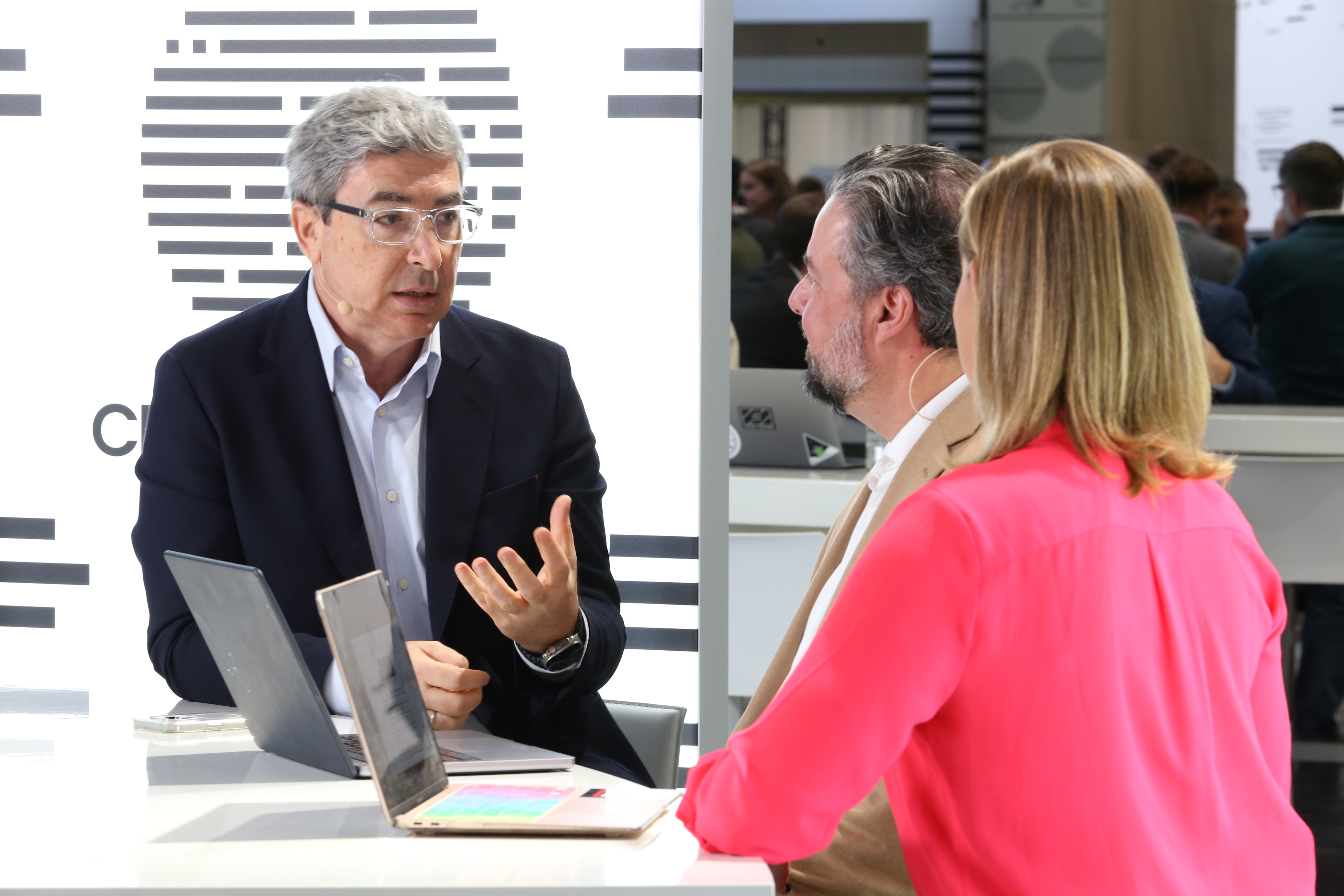
In Munich, Savannah Peterson and Rob Strechay interview Rafa from Cosentino, a family-owned company based in Spain that specializes in sustainable artificial stone for construction materials. They discuss how Cosentino uses Celonis to optimize their logistics, production, and sales processes. Rafa explains how they quickly implemented AI agents to automate credit management, resulting in a fivefold processing speed increase. This has significantly improved customer service and internal efficiency. Cosentino plans to expand the use of Celonis to enhance other ...Read more
exploreKeep Exploring
What company is Cosetino and what is their focus in the construction materials industry?add
What has been the company's experience with using Celonis and what prompted the decision to invest in such technology?add
What are the reasons for implementing Celonis in our company's processes?add
What impact will increasing efficiency and sustainability have on the cost for the end consumer, while also improving ROI and margins for the business?add
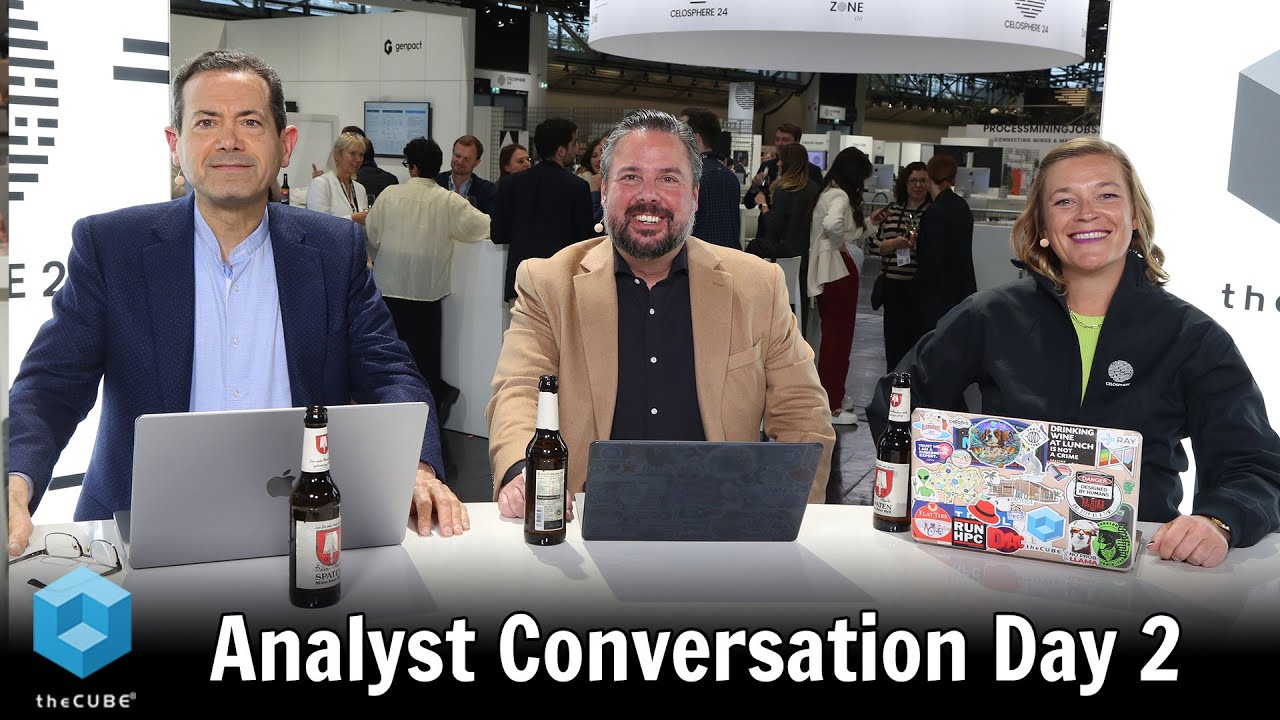
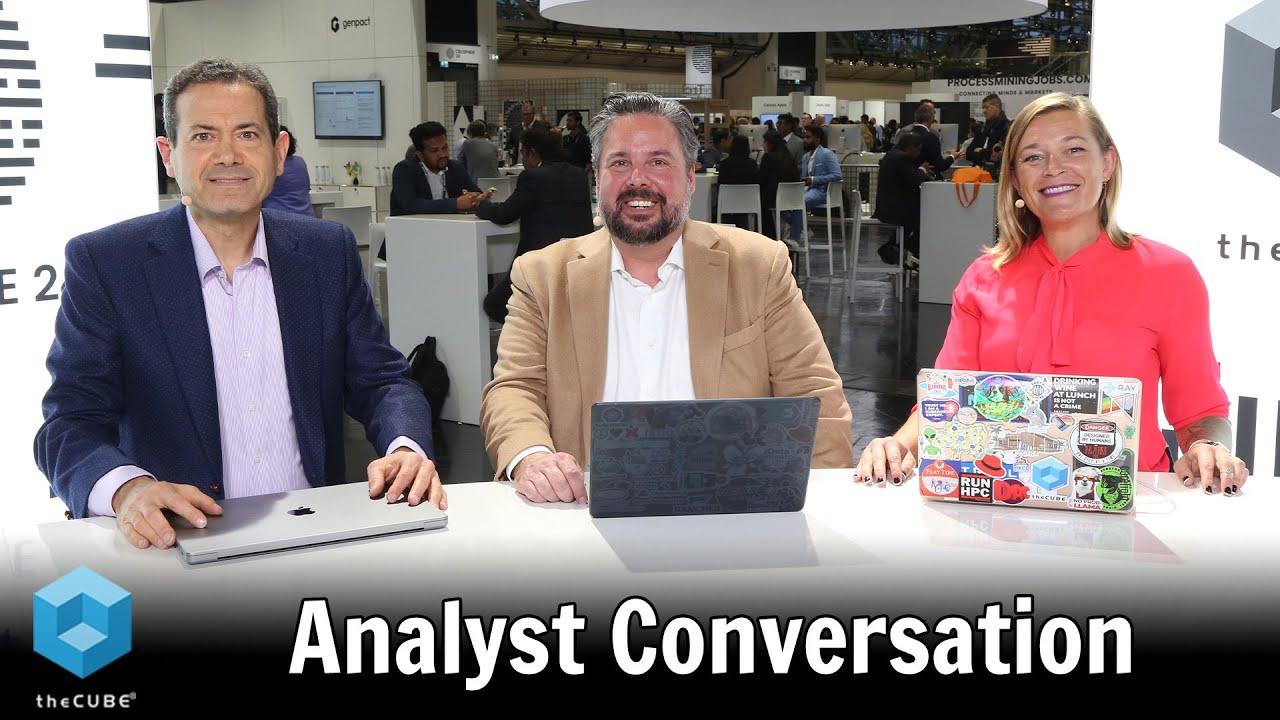
>> Good morning efficiency fans and welcome back to Munich, Germany. My name is Savannah Peterson, joined by my co-host Rob Strechay for what is turning out to be an incredibly efficient series of interviews.
Rob Strechay
>> Yes, very. The process is well-oiled here.
Savannah Peterson
>> It's almost like they're really good at optimizing processes.
Rob Strechay
>> Yes, it is.
Savannah Peterson
>> This is probably our most efficient morning ever on TheCUBE. Here to talk more about that is our new friend, Rafa. Rafa, thank you so much for taking the time today.>> Most welcome. Thank you for inviting me here. It is a pleasure to be with you.
Savannah Peterson
>> Yes, it's a joy. It was also a pleasure to look at your website. It is covered in gorgeous products and things. Just in case the audience isn't familiar with Cosetino, tell us what you do.>> Okay. Cosetino is family-owned international company. We build very sustainable fashion-oriented artificial stone. We have real stone, but we provide construction materials, but based on design. We want to do something special for everyone alive. So we address construction materials, surfaces that are used to make your kitchen, your bathrooms, your house, your flooring beautiful and perfect.
Rob Strechay
>> And you're all over the world and you are based out of Spain, but you have a lot that comes out of the US. So you have a lot of logistics and other things that has to really be optimized for. Give us an idea, because again, as the person who people probably come to and say, "Hey, we want to automate this. How do we do that?" That has to be a big job.>> Yeah. Fabrication is massive in the South of Spain, in Almeria in Cantoria, but whatever we fabricate, we send it all over the world. We are in more than 80 countries, and although US is massive for us, it's very important we send it to the rest of the world. So logistics is really, really important for us and it's really complicated. So sales, logistics, productions are really, really very difficult and complicated. So that's why we need assistance to support our operations and the people managing these businesses.
Savannah Peterson
>> How long have you been using Celonis and when did you know it was time to invest in a technology like this?>> Well, we started with Celonis. We did a pilot probably two years ago. We've been one full year using it, and during this time we realized that it is key for us. So it's a key component on our strategy to understand our processes, managing the processes, and we are using it in a special way because what we think is key to understand how things are going on. And once we have that, we said, "Okay, we can go farther and farther." So that's why we are trying to use it also to improve the processes through, not only through agents, but AI agents are important on that part.
Rob Strechay
>> Yeah, I think that to me was one of the big pieces was the fact that you had moved so quickly and embraced AI agents. Help us understand what was the use case that you went down the AI agent route?>> Well, that was a discussion with Carsten Thoma, the president of Celonis, from the very beginning and with the CEOs in terms of explaining them that my vision was to use the process language to automate. I mean, automation is possible, AI agents are possible, but they need to have the right information. I firmly believe that how LLMs are evolving are capable to do anything, but you need to give them the context. You need to explain what to do. It is like a human. We're treating AI agents like humans, and you need to tell them what are the processes they need to do and what is the environment. That comes only from Celonis. We didn't have anyone that could provide us what these agents require.
And then it was a question of building them. So we choose one that was important, but it's just the tip of the iceberg. And we said, "Okay, in our processes, one, that it makes sense and works, it can help us a lot." So that's why we decided for this initial autonomous AI engine for credit, because that is a key part of our processes. And it was a test. We were fully sure they would work, and it worked better than we thought. And we can discuss more about that, but that was the idea. This is like the tip of the iceberg to build something way bigger.
Savannah Peterson
>> And you were able to get to this proof-of-concept MVP agent in just seven weeks?>> Yeah, yeah. We're not thinking on saving time or making things easier. Our goal was to make an agent that could take care of a process on behalf, as good, or even better than humans. But when we went to our internal users and told them, "Hey, we need you to explain us what you do." We went to the operations guys because this bot is taking care of two things, the operations role and the creative finance role. So we went to them and said, "Hey, we need you to tell us what you do." They said, "Oh, no, no, we don't have time. We are so busy because usually it takes from then two weeks or three weeks to give us the information." I said, "No, no, no, no. This is going to be just one meeting."
So they gave us the information. We started building the thing, and it was so fast that everyone was surprised and the CFO came to us and said, "Wow. My team is surprised that it took them so little to give you the information you need to build this." So it's not only the seven weeks, but we require from the internal users, the people that understand the business, was so little, and then when they saw it the first time working, they were so surprised. They said, "Wow. This is way better than we expected." So it's not only the time, it's how much time we require from the rest of the organization, which is also amazing.
Savannah Peterson
>> And you're able to process this credit and figure this out five times faster, is what my notes say?>> Yeah. Yeah. It is really more than that. That is very conservative because it's not only, as I said, getting the requirements to build something. The functional requirements of any application would have taken way, way longer. Building it in a normal traditional way, it would be way longer and it wouldn't have worked that good because this is really helping do things that even humans couldn't do it for.,
Rob Strechay
>> And I think one of the things being that it's around credit blocks and things of that which is critical to your customers and your partners. Why was this the place that you started and how has it been received?>> Yeah, I mean, we are really concerned about service level. Taking care of your customers is really, really important. It has also an impact on your revenue because the thing is, in our model, our customer ask us for the material. They're building a beautiful building or their own house or whatever, and they require from us that we meet the deadlines because there's a lot of dependencies there. So if there's something happening that delays that or can impact that is it has a big, big impact on their business, on our business too. So one of the things that can get blocked is because of the credit. If someone is asking for more material that they request or they have the credit agreed, this can delay or stop the whole process. And the way we were doing it, there was someone, an operator looking at a dashboard. When something goes red, they go and check and then go to finance and, "Hey, finance, help me with this, solve it, address it, et cetera." The whole thing was delayed around one month, the time. It would represent around between 22 to 30 days delay on what the customer was expecting to have. So it was not only important in terms of the revenue for us, but also the customer experience and the service level. And this is now getting everything solved immediately. You don't reach that situation now. It's amazing.
Savannah Peterson
>> It's incredibly impressive and it's inspiring to hear. We've talked a bit about how this has impacted your customers and the teams you work with on the credit side. What about internally? How much training was required for your team and what did that process look like?>> Well, that was, as I said before, that was really one of the most amazing things because initially to train something like this... I mean, this is performing as an employee that has a lot of experience, years of experience. And we could take that experience literally in a couple of sessions of one hour. So in a couple of hours we were capable to get that information.
Savannah Peterson
>> Years in an hour?>> Yeah. And then of course that is that I don't want to seem oversimplified, but it's really amazing. Then the owners of the process were taking care that the training is done right and they were supervising everything. So it's not only fast, it's also very safe because you can control. You have the owner saying, "Okay, this is doing the right thing," and he's taking the right decisions and he's doing what we expected. So it was really impressive. It's really amazing, yeah.
Rob Strechay
>> Where do you see this going beyond the credit management aspect of it? Where into the future do you see this potentially applying?>> That's why we said this is the tip of the iceberg. I mean, we want to apply this to all our processes as much as we can. In our processes, we have a very complex process. We've been a company that has been working in the market for more than 30 years. And as you can imagine, when you have so big and so complicated organization in our process, there are many manual tasks. There are things that are done manually or require a human to check, and we are humans and we make mistakes and we are not 24 by seven available. And there's things that are impossible for human to take care of. So with Celonis, we identifying all those opportunities and our goal is to look for those opportunities and start building a digital workforce to fill those gaps that humans cannot fill. And the other problem is, as a company, we are growing really, really fasts. We are having a lot of success and growing. It's difficult for us to find the right resources to do this. We cannot find enough resources. So resources became a bottleneck. We expect a massive growth. We are not going to be able to grow that fast with humans on the whole thing. So we need these agents to help us supporting the business, and that's why we have Celonis giving us the right environment, giving us the information, giving the training and the platform so we can build them and start playing the role that we need in the organization.
Savannah Peterson
>> What an exciting place to be in. You're scaling that fast. How big is your team right now?>> We are around 250 resources.
Savannah Peterson
>> Nice. Let's say a couple of years from now, how big do you hope to be and how many agents do you think you'll need to support that?>> Well, the thing is the organization is around 6,000 employees and-
Savannah Peterson
>> Oh wow. That's big.... >> we expect expect not to grow too much on humans so we can grow at a different pace on the revenue side, on the business side, in terms of the number of resources we need for that. That is going to help us on our profit. And in terms of team, I mean, this is helping us also internally. The idea is not only for operational areas, also for IT, we are trying to use these to be more efficient. I mean, I'm not meaning reduce the need of resources, but being able to do more with the same resources you have. So that is really the target.
Rob Strechay
>> It seems like it's very important, and I think this is fantastic because I think that human in the loop, human part of it and making people more efficient, was that really a theme that was pushed in by the company and "Hey, we have to meet this growth targets, but we have these people, we want to make them more efficient"?>> Absolutely. Yeah. Because now you have very, very valuable resources that are doing really mundane and repetitive tasks and they're wasting most of their time doing things where they don't bring that much value and the business require them to take other decisions and to do things at a different level. So it's like bringing new guys in the organization to take care of certain things that the older guys cannot take care or shouldn't be taking care of. So that is the whole idea behind this, and we are completely sure it will help us to grow and to grow faster, provide better services to our customers, and do things in a better way.
Savannah Peterson
>> So it's going to increase your retention because your employees are happy 'cause they're using their brains on purposeful work and nothing repetitive, it's going to make your customers happy because you're able to get them answers and products faster, more efficiently, it's going to increase your profits because you're doing both of these things, which is very exciting as a business owner. Now, I'm curious, as someone now obsessed with getting your surfaces in my home, is this going to drive down the cost a little bit for that end consumer while still increasing the impact on your ROI and your margin?>> Absolutely. It will help us to be competitive and to provide better services to you. I mean, we are using this to improve the way we design our solutions and the way we take it to make it more efficient. As I said, the company is really sustainable. We are really, really taking care of sustainability. So making these things efficient, it will also help us to meet those things. You don't waste. I mean, you do things right at the first time. We'll take you to your home, our products, in a better, faster way. So it will impact definitely your cost, our profit, and the service we're providing to you. Absolutely.
Savannah Peterson
>> I love that. So everybody wins.>> Yeah, it's a win, win, win.
Savannah Peterson
>> So you've seen an incredible amount of success and impact very quickly in just last two years, but like you said, specifically this last year of implementation. When we have your wonderful personality and design eye on the show this time next year, what do you hope to be able to say then that you can't yet say today?>> That's what we're discussing with Celonis at the top. We have their top commitment. They have been working with us and we're working with an amazing team. They have an amazing team. We have a very, very good team, and we're working together to impress you next year with something new. So we want to take this further, will talk next year. We hope so. And it will be way way better.
Savannah Peterson
>> I love to hear that. Well, I'm already impressed this year, so I can only imagine how impressed we'll be next year. Rafa, thank you so much for taking the time to hang out with us. This has been fun.>> It's been a pleasure. Thank you so much.
Rob Strechay
>> It's been a lot of fun.>> It's been really cool and nice.
Savannah Peterson
>> I'm going to be thinking about interior design and my surfaces, even the surface of our news desk here now.>> Yeah. This should be Silestone or Dekton, for sure.
Rob Strechay
>> I agree.>> Yeah.
Savannah Peterson
>> Y'all heard it first here.
Rob Strechay
>> Next year.
Savannah Peterson
>> For the next set, we're going to be showing you off and I love to hear that. Rob, thank you so much for all your insightful questions as always, and thank all of you for tuning in to our fantastic two days of coverage from Celonis Celosphere, here in Bavaria. My name's Savannah Peterson. You're watching theCUBE, the leading source for enterprise tech news.