We just sent you a verification email. Please verify your account to gain access to
Celosphere 2024. If you don’t think you received an email check your
spam folder.
In order to sign in, enter the email address you used to registered for the event. Once completed, you will receive an email with a verification link. Open this link to automatically sign into the site.
Register For Celosphere 2024
Please fill out the information below. You will recieve an email with a verification link confirming your registration. Click the link to automatically sign into the site.
You’re almost there!
We just sent you a verification email. Please click the verification button in the email. Once your email address is verified, you will have full access to all event content for Celosphere 2024.
I want my badge and interests to be visible to all attendees.
Checking this box will display your presense on the attendees list, view your profile and allow other attendees to contact you via 1-1 chat. Read the Privacy Policy. At any time, you can choose to disable this preference.
Select your Interests!
add
Upload your photo
Uploading..
OR
Connect via Twitter
Connect via Linkedin
EDIT PASSWORD
Share
Forgot Password
Almost there!
We just sent you a verification email. Please verify your account to gain access to
Celosphere 2024. If you don’t think you received an email check your
spam folder.
In order to sign in, enter the email address you used to registered for the event. Once completed, you will receive an email with a verification link. Open this link to automatically sign into the site.
Sign in to gain access to Celosphere 2024
Please sign in with LinkedIn to continue to Celosphere 2024. Signing in with LinkedIn ensures a professional environment.
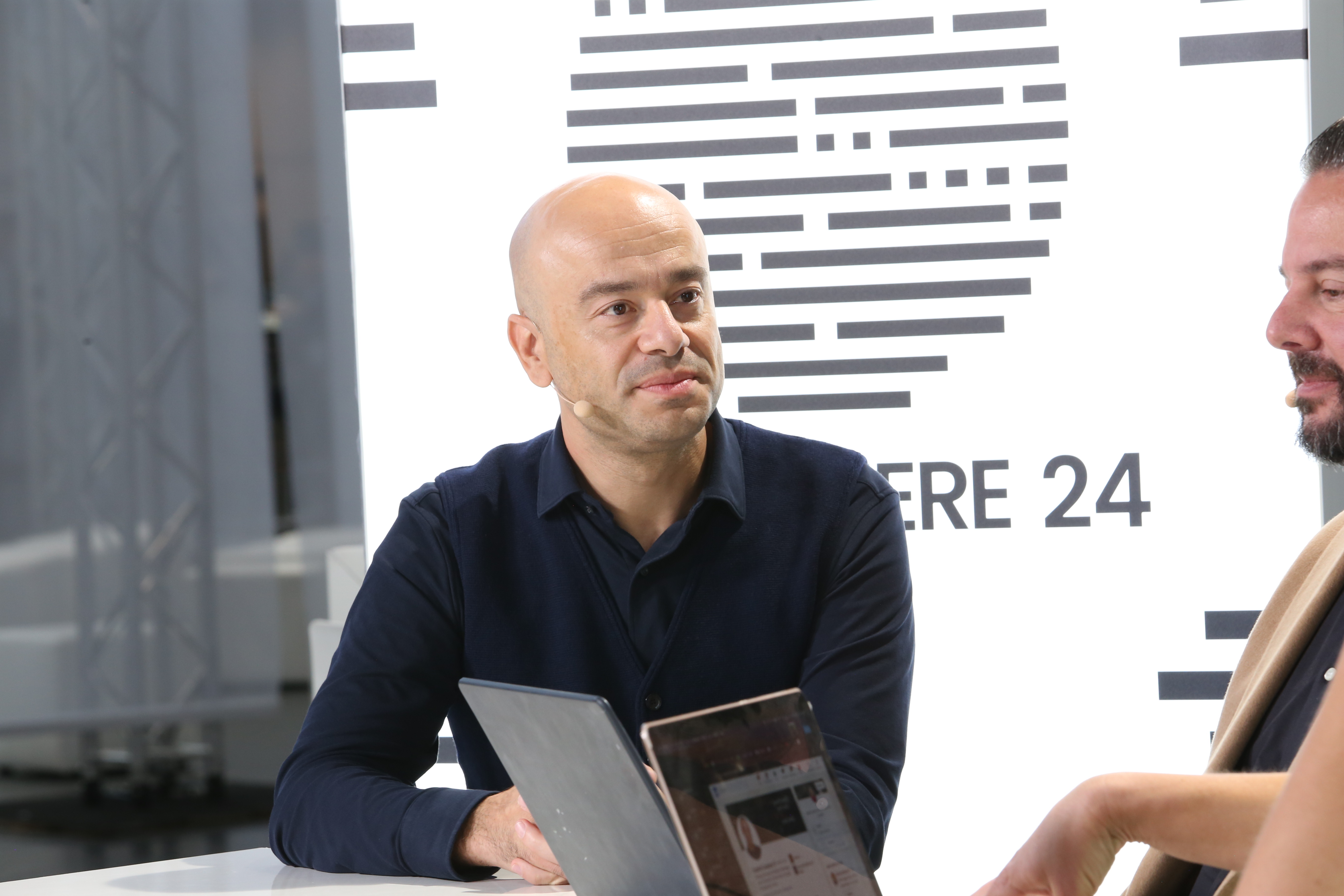
On day two of Celonis Celosphere in Munich, Germany, Eugenio discusses insights from a panel with process mining experts and an innovative CIO, focusing on current use cases and future trends like object-centric data and self-healing enterprises. He also highlights a project involving Rollio for process exceptions in a natural language format. The team works on 70 projects simultaneously with a focus on big breakthroughs like Network, which harmonizes data across companies. The process of moving projects from labs to production involves validation with custom...Read more
exploreKeep Exploring
What were the highlights and overview of the discussion on process mining with the godfather of process mining, the founder of Gartner, and an innovative CIO in Europe?add
What is the explanation behind the joint venture with Rollio and how it can help in subscribing to process exceptions in the community?add
What was the focus and approach taken in harmonizing data catalog or platform within a network, and what are the benefits seen so far during the beta phase?add
What is the process for "freaky Fridays" and how do they benefit the team and the company?add
>> Good morning, innovative minds, and welcome back to Munich, Germany. We are here just kicking off day two of Celonis Celosphere. My name is Savannah Peterson with the fabulous Rob Streche by my side, guiding us through our Munich journey, taking us to the fun restaurants. Thank you for that, Rob.>> That was fun last night.
Savannah Peterson
>> That was.>> I had again. It was a very interesting soccer match going on or football.
Savannah Peterson
>> Don't tell the Germans. They don't like the result.>> Well, Barcelona played out of their minds last night, and there was a lot of interesting cards and stuff going on. So but we won't go there. There was a lot of upset people in the pub.
Savannah Peterson
>> Well, thankfully there's no upset people on this desk. Eugenio, thank you so much for joining us this morning.
Eugenio Cassiano
>> Thanks. It's a pleasure to be here. Talking about football, my boss is a fan, so it was intense yesterday.
Savannah Peterson
>> Oh my gosh, yeah, and probably maybe not feeling so good this morning, depending.
Eugenio Cassiano
>> I don't know where. I didn't see him, so yeah. No, but it's a pleasure to have you here again for the second year. That's the main thing, and yeah, all yours.
Savannah Peterson
>> Well, we love it. We've had so many fascinating conversations with your customers. It's actually been really inspiring to hear how they're realizing value. You lead the strategy and innovation team, so you're on the side of helping the new magic happen. I know you were on a panel yesterday. We were here chatting with some of your fabulous customers during that. Could you give us the highlights and a bit of an overview of what you talked about?
Eugenio Cassiano
>> Well, yesterday kind of was quite interesting, because we had the godfather of process mining. We had founder of Gartner, the definition of process mining quadrant, Marc Kerremans, and Wil van der Aalst, and then we had one of the most innovative CIO in Europe, Filippo Catalano, currently the CIO of Reckitt. The theme was, let's go in a time machine. So it was basically, let's talk about use cases that are adopted mainly today and then a question about the future. I made a joke. I said, "But future, let's not talk about gen AI." Wil basically-
Savannah Peterson
>> There's a conversation about the future that doesn't involve gen AI?
Eugenio Cassiano
>> Yeah, I think there are things that are under-valuated at this point in time that can be done. Going quickly around the three of them, Wil was talking about lots of things that are not really yet adopted en masse, the adoption of object-centric and what really process intelligence is as a huge potential. When you think about, we're becoming de facto, a new class of data that we generate. With that, you can do many more things. You can now do also predictive process mining, generating data, and then do some probably better simulation.
Marc was telling about this new notion of if you have now a great process intelligence, how the future business of decision is going to look like. Then, Filippo talked about the notion, it's very trendy in the CIO community, this notion of self-healing enterprise. It's the automation of the automation. So how can you send there you the process mining, the signals? You don't only fix, but you keep monitoring, and it fix them. It's very, very interesting. Then for sure, we love we have great ideas. So we really want to combine the three, those three trends, and see how this can be more model and make for it in a new business model.>> Yeah, and I think when we were talking earlier, one of the customers had come in. They were using the credit block application to go in, do that credit monitoring, and in fact when things go through and it's unblocked, using, I think, one of the network, or not network, but one of the integrations with the themes that you've done with one of your partners. That kind of innovation where they would go unblock in teams, it actually goes through and they let it go through. Help us understand how things like that get started, and that one in particular.
Eugenio Cassiano
>> Yeah, so that's one thing we do, I'm so proud, because the keynote, I was so proud. Because most of the announcing were lab's babies and essentially the joint venture we are doing with Rollio is quite exciting. Because if you think about the notion of what we do in this community and COE expertise, now Rollio, what can it do? It can basically subscribe to process exceptions and then make sure that he brings people who usually might not log in in Celonis. My team will not log in in normal system, because it might be on the screen. Usually serve people they don't like to hear it. They just want to use a collaboration channel, WhatsApp, call their boss, close deals. In that case, it's really interesting, because what we do there is Rollio is subscribing to process exception. Then it creates a hybrid administration between human. But human is in control. You can imagine a reverse compiler. It gets exception. Then they are very expert in natural language, and they create from Celonis signal, they create in a natural language way, hey, this has happened, imagine a new channel, a new chat. They know who to invite. Maybe a credit block is basically you need a credit manager. You need the sell side. You need someone in finance. And usually they use three different systems. They might have three different opinions, but because of the original parity of process intelligence, we can provide a context of things. And they can just focus on agreeing or not what to do next. Now, the beauty is this is all auditable, and it learns from solving this problem and it becomes a new observation in process intelligence. The heavy customer we are doing this with is now ready, validating, and see that people really love it, because they don't feel they are logging in to a system. It's in a natural conversation.
Savannah Peterson
>> It's meeting them where they already are.
Eugenio Cassiano
>> Exactly.
Savannah Peterson
>> Rather than taking them somewhere else, which I think makes it such an intuitive user experience and probably makes tool adoption easier, I would assume. What a cool job you have. Between the labs and the joint ventures, there's a lot going on. If you can share, how many projects are you working on at the same time?
Eugenio Cassiano
>> So we actually have 70 doing different model. 70, we always focus on a big rock. So we want to get something like this year, network was one and Rollio, also the partnership we did with Ardoq, which is amazing. So we are really creating this end to end process and end of transmission agreement. Then we have the 20, which basically our team have freedom. Really, every day we might come with an idea, but we kill a lot. What we do, I tell you, it's quite funny. We have a Celograve. We have a graveyard. Every time we kill a project, we celebrate it, because a failure must be celebrated to learn and to go fast to the next thing.
Savannah Peterson
>> That's a very Silicon Valley attitude.
Eugenio Cassiano
>> Yeah, yeah.
Savannah Peterson
>> Yeah, I love that. I come from Palo Alto, and I think that matters. I wanted to tell you something I'm really impressed with this week, is how quickly new projects and initiatives get out and how quickly your customers really feel that impact value and achieve that ROI from that. How quickly are projects cycled? How do they graduate from labs? What does that look like?
Eugenio Cassiano
>> Yeah, we have an intake with our product engineer organization. Usually we are also responsible for incubation. Now, if I were working a consumer company like Mada, whatever, it's easy. You just roll it out, and then whoever use it. We are in a tough market. It's enterprise, so you have to work with customers. So it takes time. Usually you need to talk with hundreds, and then out of hundreds, maybe you get five that will be the first adopter. Then from the five, you get 15. Then that's where 15 becomes paying customers. From there, we scale. If you think about Orchestration Engine, it was another joint venture we did. We launched it actually beginning 2023. Beginning 2024, we had already almost peaked in customer, and then we graduated. Now it's actually everywhere, so we have many, many customers. It went smooth. Because the more you validate in the beginning, the better it is.
Savannah Peterson
>> Do you throw a graduation party then, the same way you celebrate?
Eugenio Cassiano
>> Yeah, you feel like your baby is going now to university. You miss them. Yeah.>> So let's talk about network, because network to me was one of those really interesting ones. We talked about it a little bit yesterday. To me, I liked how Alex went through all of the different music and tying it to ERP and CRM. To me, network kind of is the graduation of EDI, because it's not just exchange of data and information. It's the actual involvement of the process across companies and things of that nature. Talk to how that came about as well.
Eugenio Cassiano
>> Yeah, our focus was we want, if you are in your own enterprises, you obsess process. You focus on process and performance and value. If you want to be across companies, you need to focus on shared outcomes. What we did with network was actually to make sure that all the network participants agree to join into a shared taxonomy. If you're in a network, everybody needs to know that an order is the same order for me, for you, and for others. That makes things super faster, super simple. >> So that's the harmonization of the data catalog or platform.
Eugenio Cassiano
>> Yeah, you have really simple, and it's not like something new. It's existed already, but before all of this communication went either EDI, email, people were calling each other. There is a delay. Now with the first craft, we saw already the next morning, in the observation aspect of it, manual rework went down. Optimization, the new time, all of these things, because now company had observability not only on their own process, but how their process are impacted by others, especially the green processes. And that's super exciting, so again, at the moment we are in beta, and we are in the phase of aiming over and watching together with our product organization to scale. That's why it's beta. We will soon go in limited availability.>> What's your gate to go to limited availability? Is it number of customers adopting? Is it how you see the maturity of it? Or how do you think about that?
Eugenio Cassiano
>> We have some internal methodology, so what is beta, what is LA, what is GA. So between beta and LA, there are some internal things like now you will be able to have productive software. When you are in beta, there are things that customer are willing to co-innovate. And we are also willing to say from one day to another to people, it's more like a pre-environment. While then it graduates, it becomes, okay, now it has to be more like product in use cases.
Savannah Peterson
>> Something that struck me as well as this is how many different verticals Celonis works with. It's not just that you're great for say healthcare or great for tech companies. You're great for a variety of different businesses. When you're rolling out these betas, how do you choose who gets invited? Are you selecting that based on how you think it'll be a fit, or is that because you've heard from customers that they may need the types of solutions you're developing? What does that process look like?
Eugenio Cassiano
>> Good question. I feel we are more like venture capitalists, because we provide a nice platform which we believe has a strong competitive advantage, a USP which is the data and the process data and business context. However, we cannot know any domain. Yesterday, as an example, I was talking with a biotech company. They came with a beautiful idea. Cannot talk too much, but it's my next Celosphere topic. But really, we want to have other embracing the platform, embracing the power, what this can do. Because company became big because they were able to scale. Scale is not scaling with your own people. It's either you automate or either you invite knowledge from other. That's what we want to do. That's why this strong commitment to our partner ecosystem is super important. We started to see many, many things. One thing I want to mention is that Bloomfilter, the Bloomfilter, they do actually process mining for software life cycle. They came to us. Guys, we are experts in software life cycle, but we don't want to build a full stack. We want to own our team there. We said, "Yeah, we are good in platform. Go ahead." Now it looks very promising. Their booth is full since yesterday.
Savannah Peterson
>> Wow, so it kind of varies case by case, essentially, is what I got from that. I'm really curious where you get to see everything first. Actually, no, I have two more questions for you. So what is the ideation process like within the group? How do you have weekly meetings where everyone throws in ideas? Is it a constant iteration? What does that process look like?
Eugenio Cassiano
>> You want the official one or the behind the scenes? So we are in Germany.
Savannah Peterson
>> Obviously the behind the scenes. Hello?
Eugenio Cassiano
>> So we had something we called freaky Fridays. Everyone has the right to nothing on Friday and just we meet and we just ideate. This is important. Sometimes we invite customers out of the blue. Maybe they are even competitors, and they love it. Then we figure it out, that they share the same problems. Sometimes we invite analysts. Sometimes we invite partners. We need to have internal input and external input. We don't look at technology. We really try to always look at the boring things. What are the most boring things you want to fix? And I can promise, starting with things that are boring, the best idea comes out of it.
Savannah Peterson
>> Well, nobody wants to be bored.
Eugenio Cassiano
>> Exactly. People want to be efficient.
Savannah Peterson
>> Yeah, they want to be efficient. They want to do purposeful work. They want to be excited to show up in the morning. I think that's actually great. When I think about-
Eugenio Cassiano
>> And a lot of pretzel.
Savannah Peterson
>> Yeah.>> And the pretzel, yes. Pretzels are great.
Savannah Peterson
>> I could go for a pretzel right now, actually, now that we're talking about it. I could have a pretzel at any time, but I think that's really interesting. I was describing to a friend who's not in our industry at all what this show was about and what Celonis does. It's about optimizing and abstracting the boring things away from our work day so we can focus on the cool stuff like fun ideas or hanging out. So I love that you said that. All right, my final question for you, Eugenio, since this has been really insightful and I'm very curious to hear what you have to say since you get to see all the new stuff, when we have you on the show this time next year at the next Celosphere, what do you hope to be able to say then that you can't yet say today?
Eugenio Cassiano
>> So I think there will be some ... The platform adoption, I expect a lot of new domain use cases. I might expect some new business model that maybe today someone would say, "Could you do it?" I might expect also something like going in a domain that maybe today you will not think about it. So that will be some initial things. Also, why not? Can you create new monetizations, maybe new products that will disrupt the way I will do today? We started to see this in the market. The market is changing from user based into outcome based. What drives this behind the scenes? So maybe.
Savannah Peterson
>> Fantastic, Eugenio, well, we look forward to talking about that, to hearing more stories about freaky Fridays, and hopefully sharing a pretzel in that fantastic-
Eugenio Cassiano
>> Sure, we had pretzel there.
Savannah Peterson
>> Oh, really? Well, I'll have to go check that out. Thank you for taking the time-
Eugenio Cassiano
>> Thank you.
Savannah Peterson
>> To hang out with us today, and thank you, Rob, great questions as always. And thank all of you for tuning in to our two days of power packed coverage here at Celonis Celosphere in Munich, Germany. My name's Savannah Peterson. You're watching TheCUBE, the leading source for enterprise tech news.