We just sent you a verification email. Please verify your account to gain access to
Celosphere 2024. If you don’t think you received an email check your
spam folder.
In order to sign in, enter the email address you used to registered for the event. Once completed, you will receive an email with a verification link. Open this link to automatically sign into the site.
Register For Celosphere 2024
Please fill out the information below. You will recieve an email with a verification link confirming your registration. Click the link to automatically sign into the site.
You’re almost there!
We just sent you a verification email. Please click the verification button in the email. Once your email address is verified, you will have full access to all event content for Celosphere 2024.
I want my badge and interests to be visible to all attendees.
Checking this box will display your presense on the attendees list, view your profile and allow other attendees to contact you via 1-1 chat. Read the Privacy Policy. At any time, you can choose to disable this preference.
Select your Interests!
add
Upload your photo
Uploading..
OR
Connect via Twitter
Connect via Linkedin
EDIT PASSWORD
Share
Forgot Password
Almost there!
We just sent you a verification email. Please verify your account to gain access to
Celosphere 2024. If you don’t think you received an email check your
spam folder.
In order to sign in, enter the email address you used to registered for the event. Once completed, you will receive an email with a verification link. Open this link to automatically sign into the site.
Sign in to gain access to Celosphere 2024
Please sign in with LinkedIn to continue to Celosphere 2024. Signing in with LinkedIn ensures a professional environment.
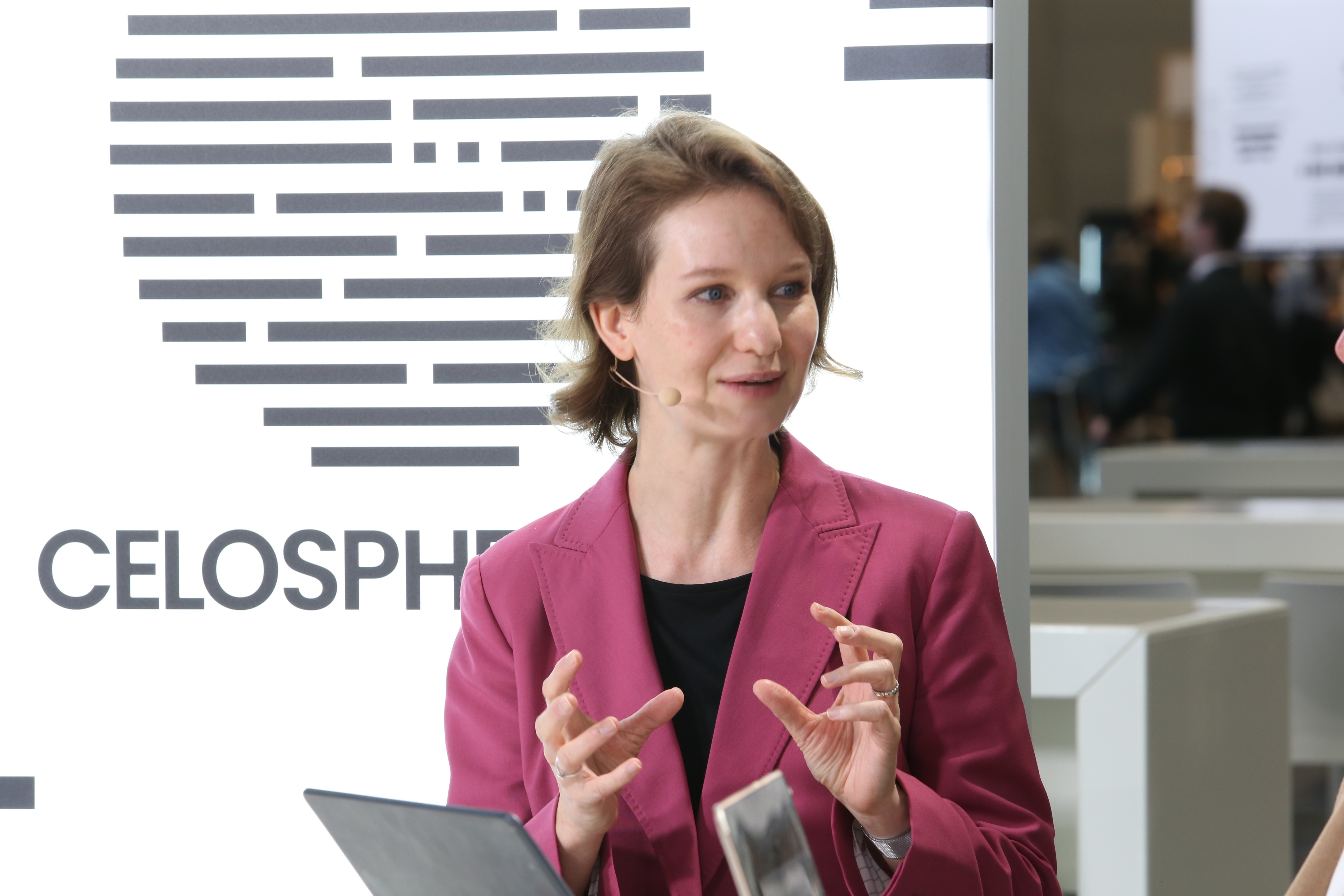
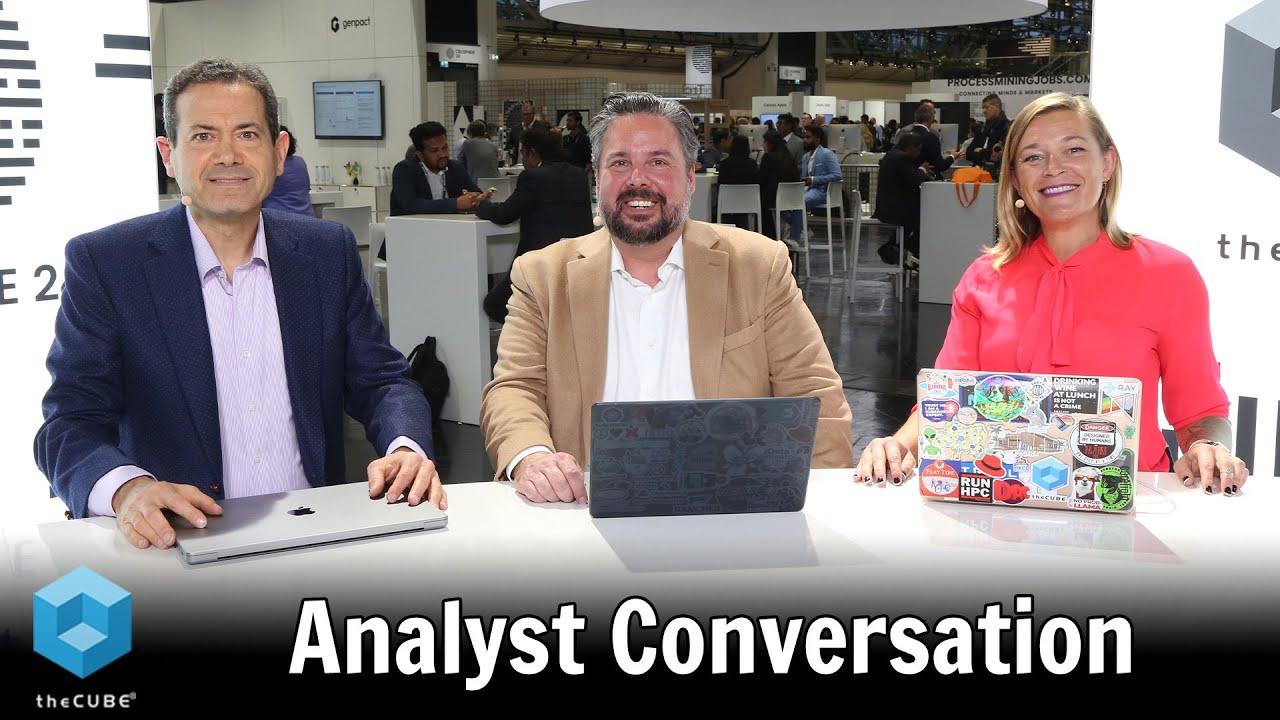
Savannah Peterson and Rob Streche are hosting coverage at Celonis's Celosphere event in Munich, Germany. Janina from Celonis discusses the importance of sustainability and how the company is working to be more environmentally friendly. She explains how process intelligence can help companies be more sustainable by unifying data, setting goals, and taking action. Janina talks about the challenges of Scope 3 emissions and how Celonis is assisting its customers in calculating and reducing their carbon footprint. She also emphasizes the need for companies to prio...Read more
exploreKeep Exploring
What responsibilities does the speaker have as the leader of Celonis' sustainability team?add
What are the challenges associated with calculating and managing Scope 3 emissions for companies and how does Celonis approach this issue?add
What core value does Celonis consider to be a priority and how does it impact their decision-making process?add
>> Good afternoon, sustainability fans, and welcome back to Munich, Germany. We are here almost to the conclusion of day one of our two days of coverage at Celonis's Celosphere event. My name's Savannah Peterson with my cohost Rob Streche. This has been so cool, so excited about our next segment. We just talked supply chain, now we're talking sustainability. You've got some background in this.>> Yeah, I think again, knowing from family members who work in this domain, sustainability is about where do things come from, the processes, and a number of different things that really go into this to help people understand to be more efficient and make those trade-offs that can help the planet.
Savannah Peterson
>> Yeah, absolutely, Which is definitely a big theme here. Janina, thank you so much for taking the time. >> Of course.
Savannah Peterson
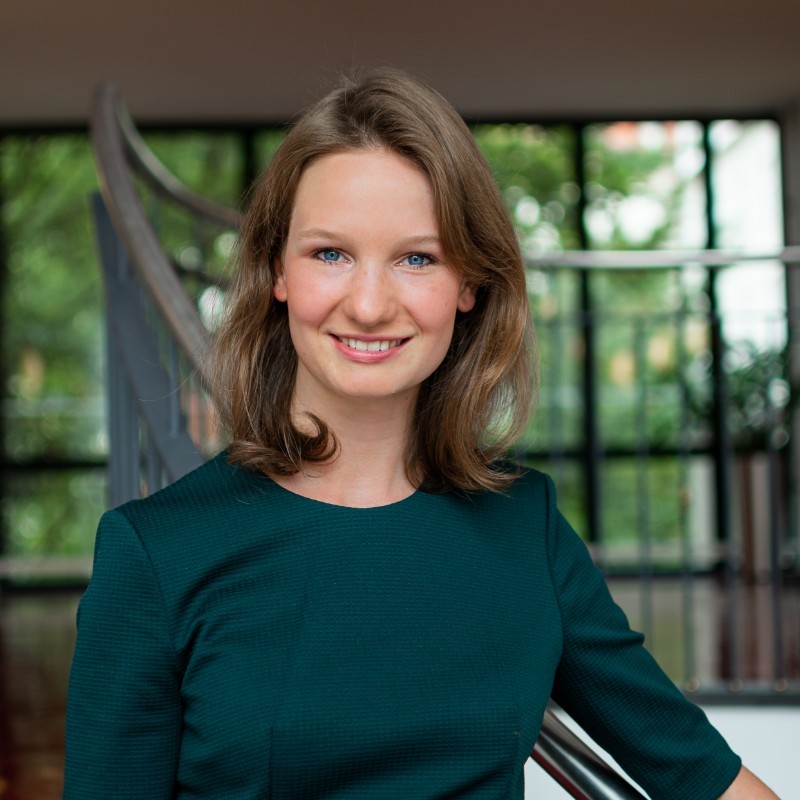
>> Very busy week for you. You got hackathons. You got stage time. We're doing to dive into all of it. But real quick, because I think you have one of the cooler jobs, coolest jobs I should say, they're all pretty cool, but coolest jobs at Celonis. Tell us about what it means to be leading the sustainability charge?>> Happy to. So I joined Celonis about seven years ago, so I'm one of the, I would say, older Celonodes, if you want to take that. And I'm leading our sustainability team, and that means I both suffer and solve. So because on one hand I'm responsible for making Celonis a sustainable company and making sure we're a trusted supplier, so I also take care of our sustainability reporting, our carbon footprint, supplier engagement, impact days, you name it. There's a ton of things ongoing, but I'm lucky because we only have 3,000 people. We don't have a physical supply chain. So yes, there is challenges, but we also know that we can spend a bit of more time on creating a bigger impact. And that's what we solve and where we build solutions together with our customers and partners to make supply chains more sustainable and to help them use process intelligence to decarbonize faster and with more fun.
Savannah Peterson
>> Let's dig in there a little bit. How can we use process intelligence specifically to be more sustainable and impact those numbers?>> Yes, happy that you asked. So let me break it down, because I think in sustainability sometimes, a little bit of education can be needed, or people have no idea-
Savannah Peterson
>> Yes, please.>> Of what this whole concept is all about. So I would say in this time that we call the regulatory maze, no way out, all abbreviated, intertwined, companies need to do three fundamental things to be successful and sustainable. So first is they need to comply and report. So they need to unify data across their business. Now the beauty is sustainability metics have always cross-functional, cross-processes, cross-departments. Then the second piece is, once they have the data, they need to set realistic goals. So they need to understand both how they're doing when it comes to sustainability, but also in business. Otherwise, what's the point? So understanding those gaps, and then the last part is taking action, obviously, orchestrating that across teams and departments, making decisions that are both good for the business and the planet.
And now because of that cross-functional nature, I would say, of sustainability metrics, process intelligence and the Celonis platform can uniquely help with that. Because we can basically unify the sustainability data across the business, and then we can link that data to the people in the business and the various departments, and we can provide that single source of truth for both business performance and sustainability performance at the same time. And because we embed basically sustainability metrics like emission factors, supplier ratings, you name it, into the day to day operations, we make sure that everyone in the organization, be it someone with sustainability in the title or not, take action and make decisions that prioritize de-carbonization and business performance. >> I think we were talking with Peter about supply chain just before this, and I think one of the things that I dove in a little bit with him was the fact that the big topics that people get wrapped around in the US, and again, we don't do it quite as effectively as the EU, so hopefully that will change. We're trying, but the more we talk about it ... But things like Scope 3 and being able to understand those intangibles within Scope 3. Do you see people, not only yourself within Celonis, because that happens to probably be a lot of your carbon footprint is through Scope 3, how do you see Celonis helping other organizations? Because you're the first in on those processes with those Celonis. >> Yes, exactly, and you already named the point of what is important about Scope 3. We call it the holy grail in sustainability, because it's the hardest to solve. For Celonis, 90% of our carbon footprint, so I get the challenge.
Savannah Peterson
>> Oh wow.>> And for most of the companies, it depends a bit on the industry, I would say. But for most of them, it's also between 70 and 90% of the carbon footprint, so quite material. The problem with Scope 3 is for much of it to be calculated in the right way, you need what we call primary data. So you need to ask your suppliers and you need to ask your customers potentially and you need to ask others. It's hard. It's data you don't own. So there is a multitude of ways of how we go about that, also with several of our customers in different industries. Let me take an example. If you're a customer manufacturing in Germany, quite strong, they have a big chunk of the carbon footprint in Scope 3. They do know they have to understand it, and so they work with us in procurement specifically. Now, what you have to understand in Scope 3, procurement is actually oftentimes the victim or the hero. Pick whatever you want.
And they have to go in and basically first do an assumption. So they can do scan based data. We call it secondary. We want to talk for real here. That can be done by using the existing data that they have collected here with Celonis already in the procurement process. They can add emission factors and understand that. For that, we can use AI. We can use data matching. We build up that data model. We enrich that process digital twin, as we call it. So that is where it starts. Then we could obviously say we put in some supplier ratings as well. Celonis partners with EcoVadis or IntegrityNext on those. So that is also covered. Now comes the challenging part. Ask your suppliers directly. Here, Celonis and process intelligence can help them send requests to suppliers in an automatized fashion, can be a survey, can reach out to them directly. We've heard about networks this morning in the keynote. That will also play a big part in that. Then we unify all of the data in the procurement process. Going back to they have this situation. So they use IntegrityNext to bring in the supplier ratings and some emission assumptions. Then they use Climatiq for the emission factors. Then when it all wasn't precise enough, they were able to dig down, because with Celonis, they could see both the procurement data and that sustainability performance and understand how to fill those data gaps. And what they do next, and think that's really interesting, they combine that with other procurement performance metrics for a total cost of ownership approach, as they call it. But the idea here is really to understand a supplier could be very sustainable, but it should also be on time. It should also be the best price. We know that, so how can we combine that all in one single source of truth and make us take everything into account.
Savannah Peterson
>> Each of those components you just mentioned there, affordability, efficiency, and sustainability are incredibly important as we build the companies of the future. And you get to see a lot of that action. I'm very curious what it looks like for you when you first start working with a company and embarking on that sustainability journey. Because I can imagine there's a lot that gets uncovered. What's your advice for companies who are say just now setting their ESG goals or thinking about how AI might play into that? How do you get them warmed up and on the right path?>> Yeah, yeah. So I think a big challenge we have now with sustainability, and that has changed, by the way. If you had asked me two years ago, I would have said every company wants to be very sustainable. Everyone has those ESG goals. They've all set up departments for it. Now we have AI, different business priorities. We are living in a time of crisis, to be honest, especially in Europe. It is a bit of a challenging environment, and so now companies face the fact that they have to solve all those other things first before they can think about something more long term like sustainability. The goal is not until 2030. That gives me plenty of years to go. So what I'm seeing with companies is they have to make sure they first follow that pathway of really understanding the requirements and making sure that have the good data inventory correct. Unify that, and not just simply go for a different tool, buy it, and hope it will solve itself, but rather use what they have. Use the data they have already in their process. Use the people they already have, to that extent, train them, help them, and then give them that single source of truth to start working on it. Then the other advice I have is quality can be the enemy of everything in sustainability. I'm saying this with care, because obviously for regulatory compliance, we have to be precise enough and we have to be able to provide auditable data. But I also see companies struggle with being stuck in that granularity approach and not getting to action. Now, the tricky thing is if you want to have to buy in, if you want to have people enjoying working with you, if you want to have collaboration, you need to be able to show them the value. So define what value looks like for your organization. Is that more time, more speed, emissions saved, reaching the goal? Suppliers try to define that. Go from there.>> There's a big sign up there that says, "How many think AI is going to save the world, versus kill the world?" Thinking about the whole power, Virginia in the United States has no more power for data centers. You can't build a data center now in the State of Virginia. One of the things that's happening now is a lot more nuclear starting to come back online in the United States, which I think is good because I think again, it's part of the solution. I don't think it's the whole solution, but I think you need to have those diverse other aspects. Where do you see, do you customers come to Celonis and say, "You guys are doing AI. Help us understand how to do it more sustainably," because they're looking at it. Their GPUs are burning up all of this if they can get them. That's a supply chain issue for them in a lot of cases and their suppliers. How do they approach you from that perspective?>> So I would say it depends a bit on who asks you. What I'm seeing now, we have recently partnered up with an organization that's called SustainableIT.org, and they're bringing the CIOs to the sustainability table, as I call. There, we have a lot of discussions around doing AI in an environmentally friendly way, doing it ethically, doing it responsibly. For me, it all comes down to doing it consciously. I think if we only put it in the hand of the IT people, and they might not be fully aware on what it does to the environment, and we just try and test for whatever reason, that is where it stops. But I see many companies being really focused on what is the value that AI brings. Does it really add something to my business? And it's the same approach that we've used for cost before. You wouldn't just spend whatever you have. I feel like maybe that's an approach we also need for the planet, to be like, "Why would we spend everything we have just like that?" Then training people more on that awareness around, what does it cost us at a data center? AI has a real cost too, but also don't be afraid, because that would also stop innovation. And we do see AI use cases in sustainability too, and those we have to lean into.
Savannah Peterson
>> One of the things that really struck me when we showed up at your partner day yesterday and got to get a feel for the experience and the branding and some of the signage was there is an incredible emphasis on sustainability at this event in particular. There's, "The Earth is our future," all over the place. There's, "Who wants to be a billionaire?" And billionaire is crossed out. It says, "Breathe clean air." I imagine a lot of this is coming from your team. Honestly, it made me feel good both as a technologist, but also as a member of this planet and a citizen of the Earth. I don't think we see enough of this emphasis at scale within a company or within tech events in general, particularly with companies like yours helping enterprises achieve goals in those categories. Why is it so important to Celonis? And why is it such a focus this year in particular?>> Thank you so much for sharing that, because yes, indeed, that was a lot of work we've put in. This is a great venue to work with, by the way, because also actually the has sustainability goals. So we helped them achieve those too. I'm lucky, I would say, because at Celonis, we started out with sustainability in the right way, meaning we've put it as part of our core value framework. So there's value around we live for customer value, obvious. The best team wins. Team spirit, get it. We own it. We're just quite typical for a company like ours. Then Earth is our future. That came from the idea, who are our stakeholders as a company? Customers, for sure, our employees, for sure, our shareholders, yes, but where is the planet? That's why we made this decision. While Earth is our future, in the beginning, it was maybe a bit more aspirational compared to the others, it is driving decisions, and you can bring it up and you can say, "Is the planet basically sitting at this table? Do we make it a part of it?" Then you have to take steps towards it. Trust me, it is hard. There is a lot of change. Events like this are, per definition, probably not the most sustainable thing to do. But within them, you can find good ways going into it.
Then I just love to see what our customer community is doing with us. You mentioned the billionaire. We're running hackathon here, process where a trend is something near and dear to my heart. We had 12 customers yesterday being in little cubicles with greenery around them, and they worked five hours, fully focused on challenges they have in the sustainability area, where they see that process intelligence can help them. And they were all able, after the five hours, to present a live demo of what they have been up to and define next steps of what they're going to do, all supply chain use cases, many in procurement. The three top teams will present at the finale of Celosphere, and then everyone can vote on them. I think events like that that make it very tangible, and everyone can participate. That in itself is also sustainable.
Savannah Peterson
>> Tangible, and it's feasible. You just mentioned that they were hacking for five hours, not 48 hours or five months or five years, and were able to achieve palpable impact in ROI, very excited to see who those final three contestants are, actually to learn about all of them. But I think that's really incredible, and it speaks to your technology and how quickly it is to see change. Gosh, I think it's super exciting. Do you have a favorite?>> That's a tough one. I know that one team does a very engaging presentation, and I'm not naming them right now, because I don't want to be in there. But one team, I think, has understood how important it is to have various stakeholders within the company at the table when it comes to sustainability. And it's never just the people that have sustainability in their title. There is the CIO. There is the CEO who provides the budget. There might be the center of excellence we have and then the procurement person. How can they collaborate and speak the same language? How can they look at the same data? That is super crucial, and there's one team that does that quite well in their final presentation.
Savannah Peterson
>> I can't wait to see that. You said something that's sticking with me now, and you said we have to think or not even pretend, it is real, that Earth is sitting here at the table with us. I'm envisioning literally a sphere of the Earth right there sitting next to you, and really I'm going to bring that with me moving forward. I really think that's important, since it's generally a voiceless entity, although the Earth shows us a lot all the time, but in the NLP sense of the term. Since we'll definitely have you on next year to continue chatting about this and see particularly how AI has advanced ESG goals, but maybe even some of the hack winners have applied this in their businesses and other companies have been inspired by that. What do you hope to be able to say this time next year to Rob and I and the Earth sitting here at the table with you today?>> So I hope that next year, sustainability is not necessarily a second seat anymore, but on the same page as AI, and they actually work hand in hand together. That's why one of the hopes is becoming a bit more front and center. But I also hope that we've seen way more companies making processes work for the planet with real and tangible results that they're very excited to share. We have this growing community. A lot is possible, and we hope we make it very specific so companies are inspired to follow that. So I'm going to share more stories with you next year.>> Awesome.
Savannah Peterson
>> Janina, we can't wait to hear all of them. Thank you so much for joining us->> Thank you.
Savannah Peterson
>> This afternoon, and thank you, Rob, and thank all of you for tuning in to our two days of fantastic coverage here at Celonis Celosphere in Munich, Germany. My name's Savannah Peterson. You're watching TheCUBE, the leading source for enterprise tech news.