We just sent you a verification email. Please verify your account to gain access to
Celosphere 2024. If you don’t think you received an email check your
spam folder.
In order to sign in, enter the email address you used to registered for the event. Once completed, you will receive an email with a verification link. Open this link to automatically sign into the site.
Register For Celosphere 2024
Please fill out the information below. You will recieve an email with a verification link confirming your registration. Click the link to automatically sign into the site.
You’re almost there!
We just sent you a verification email. Please click the verification button in the email. Once your email address is verified, you will have full access to all event content for Celosphere 2024.
I want my badge and interests to be visible to all attendees.
Checking this box will display your presense on the attendees list, view your profile and allow other attendees to contact you via 1-1 chat. Read the Privacy Policy. At any time, you can choose to disable this preference.
Select your Interests!
add
Upload your photo
Uploading..
OR
Connect via Twitter
Connect via Linkedin
EDIT PASSWORD
Share
Forgot Password
Almost there!
We just sent you a verification email. Please verify your account to gain access to
Celosphere 2024. If you don’t think you received an email check your
spam folder.
In order to sign in, enter the email address you used to registered for the event. Once completed, you will receive an email with a verification link. Open this link to automatically sign into the site.
Sign in to gain access to Celosphere 2024
Please sign in with LinkedIn to continue to Celosphere 2024. Signing in with LinkedIn ensures a professional environment.
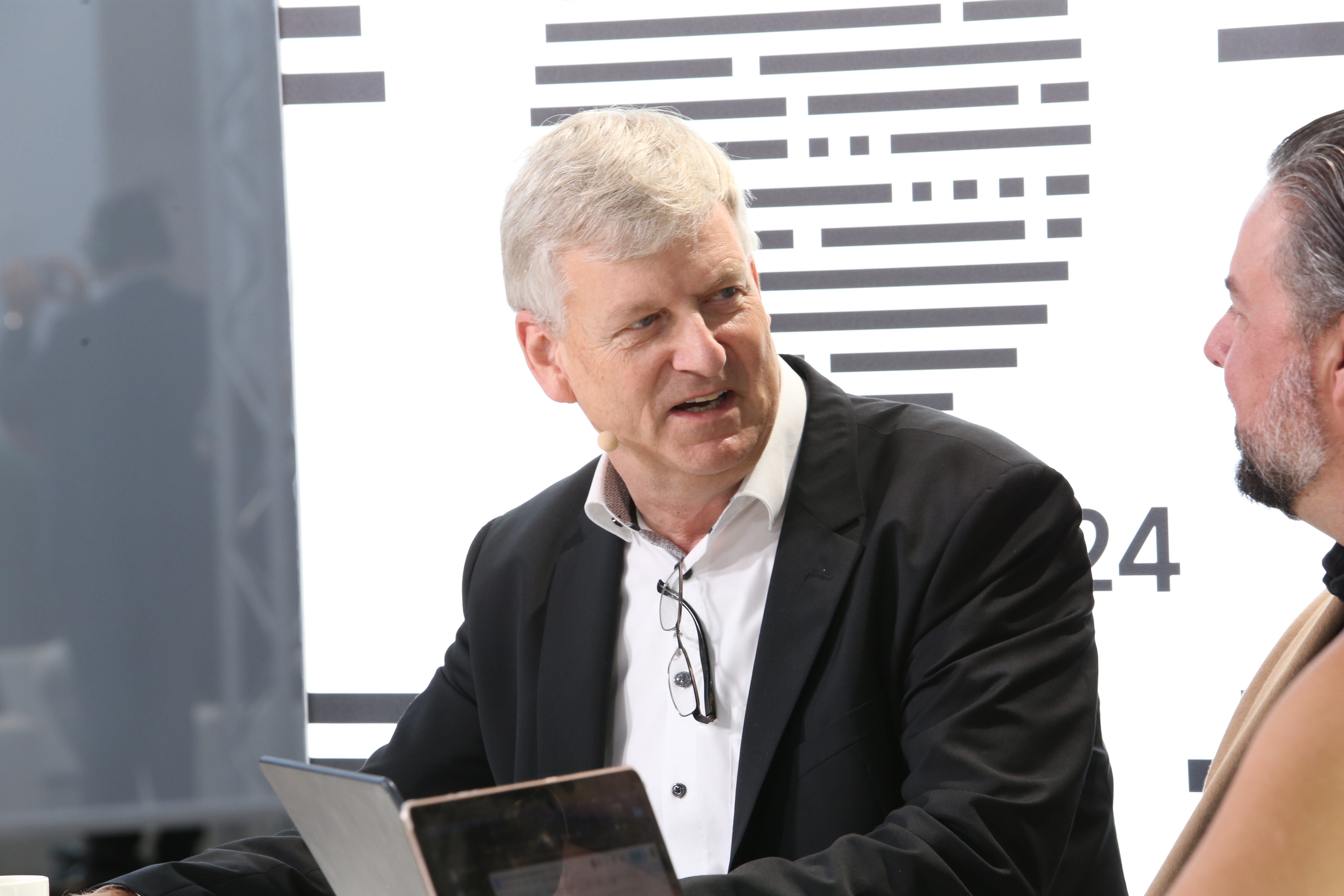
Savannah Peterson and Rob Streche talk with Wil van der Aalst, chief scientist at Celonis, about the evolution and impact of process mining. Van der Aalst discusses the origins of process mining in addressing complex processes that traditional modeling couldn't handle. He emphasizes the importance of data-driven insights in solving process-related issues. Process mining has advanced to focus on AI and machine learning applications in various industries, such as analyzing traffic violations and production processes at BMW. Van der Aalst sees potential for grow...Read more
exploreKeep Exploring
What is an important approach to implementing process mining successfully, according to the text?add
What are some examples of applications or use cases for process mining that have stood out to the speaker over the last 25 years?add
What is the general trajectory of future technological development and innovation in the field of process mining and AI?add
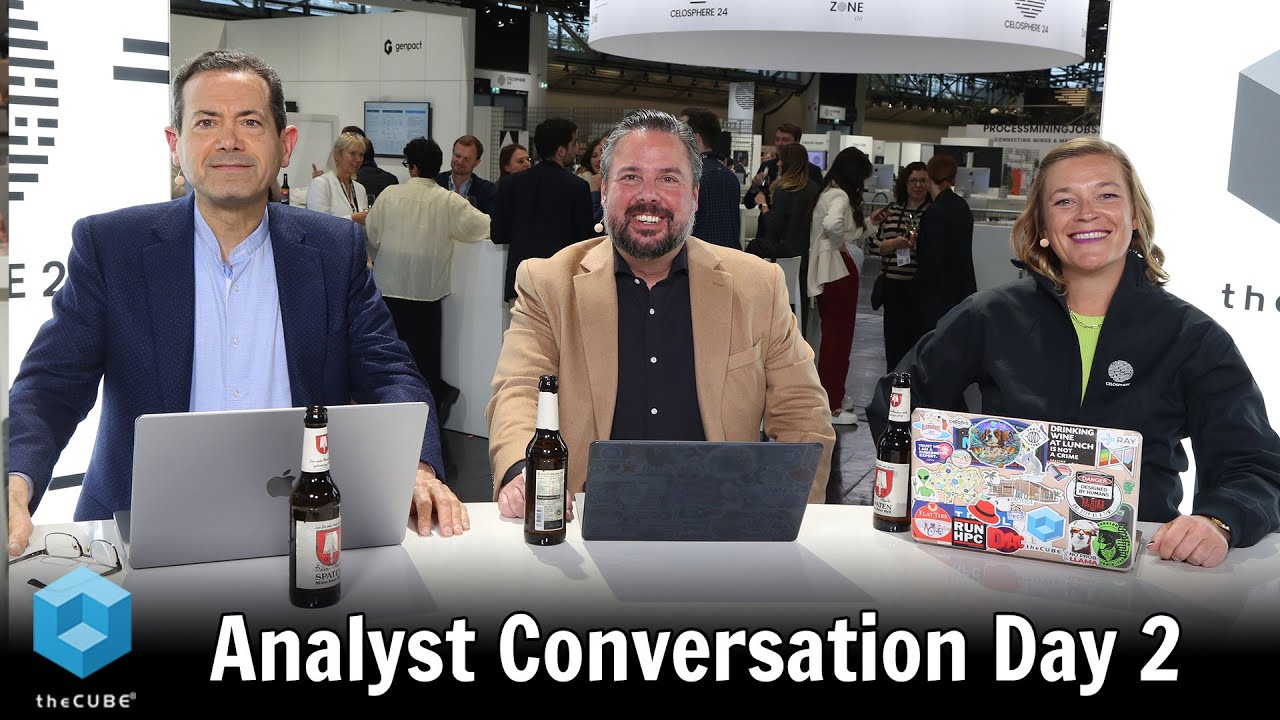
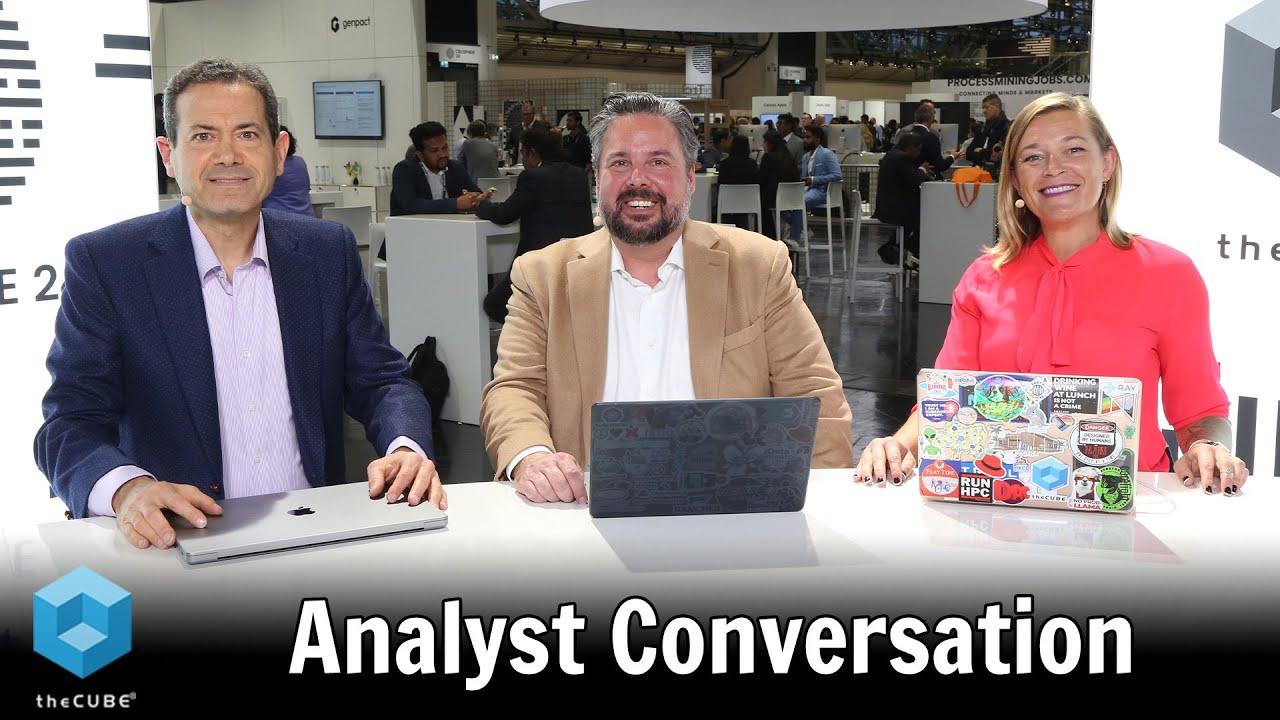
>> Good morning, process optimizers, and welcome back to Munich, Germany. We're here on day two of Celonis Celosphere. My name's Savannah Peterson, joined by my fabulous copilot for this journey, Rob Streche. Rob, we're powering not just an airplane right now, but we're about to take off on a rocket ship. Are you ready for our next guest?>> I am ready. I am ready to be blown away in the next segment that we have going on here. This is very exciting, who we have.
Savannah Peterson
>> Yeah, I'm not even going to stretch out our intro for this one. Wil, thank you so much for taking the time. I can imagine this is such a busy week for you. You're the chief scientist at Celonis, but you're also the godfather of the theory that brought every one of these 3,000 people to this room and is responsible for Celonis existing. How're you doing this morning?
Prof. Wil van der Aalst
>> Very good. It's great of course to speak to many people here, gathering together. It was very funny, because last week, I was at another process mining conference. The Scientific Process Mining Conference took place in Copenhagen. There were also many people here. It's super nice to see that my ideas are picked up and there is so much support and for it. Yeah.
Savannah Peterson
>> When you had the idea and did your research and published your paper on process mining originally years ago, did you have any idea that it would lead to this level of business adoption?
Prof. Wil van der Aalst
>> So to be very honest, I'm disappointed that not more people know about it today, because it was for me immediately clear. So the background was a bit that I was very much a work for management guy. So we were automating processes based on what people were modeling. What I found out is that most of the organizations that would buy work for management technology would not use it at all. So they would buy it and not use it because the real processes were more complicated than when people start to model. That gave me the idea to start working on process mining where you start from the very tiny. You try to found out what's really happening. Because when people say what they are doing, they are very unreliable. You need to actually look at the data to see what it is. It was immediately clear that this is super important. Any organization has processes. Any organization has data. Data is only growing. A lot of organizations have process related problems. So it's like one plus one is two, right? It's as simple as that. But still, I'm amazed that not any organization is doing it. So it's clearly picking up, but to be very honest, to answer your question, I'm disappointed that not more people are here.
Savannah Peterson
>> I love the energy.>> I think again when you look at it, it's been not even 10 years, right?
Prof. Wil van der Aalst
>> I started on this in the late '90s.>> The late '90s, okay.
Prof. Wil van der Aalst
>> It was also the late '90s. I'd say the '90s, I was focusing very much on automation and workflow management systems. Then I saw this wouldn't work. From a research point of view, I said, "Okay, let's do it differently." Then there was this period of let's say 10 years where more or less only existed research. There were a few small startups also from my experience, but only in the last couple of years it has been taking off.>> Why do you think it has taken off in the last few years?
Prof. Wil van der Aalst
>> Because it is inevitable, right? As I said, I think many more companies should know about it and apply it, but it's completely logical. But if no organization that doesn't have process related problems, and it's often very unclear why these problems are there. At the same time, there is the people do not know how to use it. I think with the uptake of AI, organizations become interested in, okay, we should do something with our data. But I think to be very honest, I think organizations are still pretty naïve, that they think they can ask ChatGPT what their problem is. You really need to do the work, and process mining is like the enabler of being able to apply these types of things.>> I think we've been talking about it for quite a while, even not while we're here, before we got here, that really if you don't understand, you can't harmonize the data. You can't then look across the data and understand the processes. Building an agent to go do something for somebody doesn't make a lot of sense.
Prof. Wil van der Aalst
>> Right. Also, if you look at a system like SAP, a typical SAP installation has hundreds of thousands of tables, filtered information. So how can you get past it? If you do process mining, you first discover the processes. You can see where your problems are. Then for every individual problem, you can kind of analyze it further and generate this AI and the data mining problems without being able to see, I have a bottleneck here. People are deviating in this part of the process. If you don't know that, you cannot apply agents over there in any meaningful way, right?
Savannah Peterson
>> Absolutely, and so since the late '90s compared to now, obviously there was data then, but we have exponentially more data in every part of an organization and our lives. By frankly at this stage, is the science similar now as to what you originally started working on? Or what's the evolution been there?
Prof. Wil van der Aalst
>> I think where my thinking changed, when we started doing this, we were thinking of process mining as a tool for an expert. A data scientist would go into a company, would analyze the problems, and generate the report. I think what has changed, and I think Celonis played a very important role in that since their existence, is that it is not a tool for a data scientist. If you look at the successful applications of Celonis, this is in organizations where thousands of people are using it not to generate the report, but to look at it every day. It's like the copy that the filer has. He doesn't need the report. He needs to see in real time what is going on. And everybody needs to see that, and I think that that's an important change.>> So we actually heard that from BMW who went from two to 1,600 licenses and seats, I think which is exactly how they're using it. With the science of working from the data up, there's also the human aspect of that as well. How did your research influence that? You have to bring people along and they have to want that visibility.
Prof. Wil van der Aalst
>> Yeah. So I think if you look at adoption and the success of process mining, I think the technology works. Of course, the technology is improving every year. I think the technology is not a bottleneck. I think there are two bottlenecks. One bottleneck is the fact that in many organizations that talk about these things, they do not have their data under control. Still many things are on paper or they cannot find it. And it's the organizational aspect, right? So these are the things that are very important. You need to address these problems, and I think you need to educate people to be able to do that. No organization should think we buy software, and now everything is solved, right?>> Oh, I thought that's how it worked.
Savannah Peterson
>> Purchase it, and voila. Yeah.
Prof. Wil van der Aalst
>> It doesn't work like that. You really need to do the work. So I think process mining is a very complete technology that allows you to do that. Another thing that I observed is that if you do process mining bottom up, I know an individual is super excited about process mining, that typically doesn't work because the person is excited, finds all kinds of problems, but maybe his boss doesn't like that these problems are exposed. That's how many people do not like transparency. So I think the approach of Celonis is to really get buy in from higher management, because you really need that to address the problems that are there.
Savannah Peterson
>> And to benefit the holistic of the organization. One of the things that really struck me about being in this room and talking to so many different customers is the breadth of impact that Celonis has and that process mining has. What are some of the applications or use cases or stories for you over the last 25 years that have really stuck out and felt good to you as a person, not just as a scientist?
Prof. Wil van der Aalst
>> So process mining is a very generic technology you can apply to anything. Sometimes I say, so everybody knows Excel, how a spreadsheet works. You should think of process mining as a spreadsheet not for numbers, but for events. You can apply it to any domain. If you, for example, look at my first real life application that we applied probably 24 years ago was in the Dutch agency that was handing out traffic violations where we were analyzing if people were speeding or parking wrong, et cetera, et cetera. Do they actually pay? Are they raising objections, et cetera, et cetera? For example, there we could, for example, clearly see differences between the country of the driver. So Italians go through the process differently than Germans or something like that. That was perhaps a use case that you don't think of. I think most of the companies start with a blank process mining and find that it's financial domain, procurement, sales, and these types of things. That has the advantage that in these areas, there's lots of experience that you can quickly get started. To me, the most exciting things are where you actually go to the core processes. You mentioned BMW I love it when it is applied to production because BMW is not a company that ... They build cars. That's a core process. To mention one more example that I find very interesting is how Lufthansa is using process mining. So they are using it for a variety of processes, and the most interesting one is that they are analyzing delays at airports.
Savannah Peterson
>> Everyone's favorite thing.
Prof. Wil van der Aalst
>> And you can see it's a real problem that you need to address. So you have to realize that on European flights, in many cases the plane lands and needs to take off again in one hour. In this hour, an amazing number of things need to happen. Perhaps the plane needs to be refueled. People need to get on board, need the baggage, et cetera. Also, there is staff that is perched at the check-in desk that is then later at the gate. So it is one hour, lots of things are happening. I think that's a super interesting use case for process mining. So understand, okay, what is now the cause of delays? But you also have to realize that if a plane gets delayed in Frankfurt by half an hour, it's creating a mess in Madrid or London or wherever it is going to.
Savannah Peterson
>> The domino effect there is huge.>> There's even a regulatory aspect to it too, because EU has significant fines for if you're delayed over a certain number of hours. Do you see that things like regulation, because it on the corporate side or the sustainability side really helping to drive people's interest in process mining?
Prof. Wil van der Aalst
>> So I think on the sustainability side, we see it a it. That's not yet there. I think in other domains, it should be done much more. For example, if you look at the job of an auditor, you need to check whether a company is reporting certain numbers, whether these numbers are accurate. It feels so weird that there is all of this information available, and an auditor is not using it. So I think that's an area where regulations could help to do that much better. Another typical example would be healthcare. I think process mining in healthcare, specifically in Europe, is very complicated because many of the doctors and departments are very autonomous, data quality problems, et cetera, et cetera. In these areas, I'm convinced that if there would be government regulations, the adoption of process mining would skyrocket in these areas.
Savannah Peterson
>> I think it's an interesting filter. I'm just thinking about flight delays and everything else. As consumers on the outside of this world, you can see which companies aren't investing in process mining by their inefficiencies or by the delays or by a lot of the different things that can happen there, which I think is actually quite fascinating. How do you see process mining evolving in the future? What's going to happen next?
Prof. Wil van der Aalst
>> So first of all, what you just mentioned, we typically do not realize that there is a process until it goes wrong, right?
Savannah Peterson
>> Right, yeah.
Prof. Wil van der Aalst
>> We do not see processes until you cannot get a credit card or there is some issue. Process mining, we take that for granted. As a process, we take that for granted until they don't work. I think if you look at the future, I think it's like a gradual development. I don't see that it'll be a spectacular sudden change. I think it's a no-brainer that it will, let's say grow over time. That's for sure. If you look on the research side, you can see that most of the innovations are now in the area of object-centric process mining and enabling AI and machine learning. So I think that's the move that we are going through now. But it is not on the one hand, it's very exciting that all of these things are happening. But it's not a fundamentally different question, right? Because in the end, when you talk about processes, there are just two things important. That is performance and compliance, right? These problems exist today. They existed 20 years ago. They will exist 20 years in the future. So it will evolve, but it will not be dramatically different.
Savannah Peterson
>> At its core, it's going to be the same. All right, I've got to ask you a question that asked Rudy and Alex yesterday. It's a little bit outside of work, but I'm curious. Obviously efficiency and optimization are very core to your being. You're one of the cited people in the world in this space. What processes in your personal life have you optimized and made more efficient?
Prof. Wil van der Aalst
>> I think people are very bad at applying their own principles to their own things. We typically complain. I'm not using process mining for my own processes, but if you look at the circle around it, it's of course you are encouraging people to use these types of things. So for example, inside Celonis, we are applying lots of process mining techniques to the processes within Celonis itself, right? At my university, I'm trying to push the university to use more process mining, because there's lots of opportunity to do it. But there's also lots of resistance against it.
Savannah Peterson
>> Oh, I can imagine. This is how things have always been done. This is how we do it here. That's probably that resistance and tension across the board, whether it be at the university or whatever arena you're in.
Prof. Wil van der Aalst
>> But it's more what you said before. There's so much potential that we are not using. It's so obvious. Two weeks ago when I was giving a lecture in Arken, I was asking the students, how many people do you think work in the administration of the City of Arken. The City of Arken is two and a half, 250,000 inhabitants, small city. So I asked the students, how many people do you think work in the city in administration? One student raised his hand, and he said, "I think only three, because I always have to wait and I don't get the responses every Sunday." So he said three, and I said, "There are 6,000 people working in the administration of a relatively small city.
Savannah Peterson
>> That's a lot, actually.
Prof. Wil van der Aalst
>> That shows the potential that is out there where, I don't know, there are lots of, let's say paper processes that are super inefficient. My hope is that when we talk in 20 years again, that we remove some of these inefficiencies. Because also within Asian society, I'd rather have that people, I don't know, work in hospital or build cars, rather than that they push paper around.
Savannah Peterson
>> I think we can all agree, no more paperwork. If this eliminates that, that would be absolutely fantastic on every level.
Prof. Wil van der Aalst
>> And you are living in the US, right?
Savannah Peterson
>> Yeah.
Prof. Wil van der Aalst
>> Come to Germany.
Savannah Peterson
>> Well stated, yeah. I'm not even going to go down that rabbit hole right now. I have one final question for you, Wil, and I'm going to give you some answers you can't give me to this, because I know I'm going to ask, what do you hope when we interview you at next year's Celosphere, you're able to say that you can't yet say today? But the one answer I'm not going to let you give us is that there's been greater adoption. Because I know you're impatient about that and you're excited about that. So what else do you want to be able to say beyond that?
Prof. Wil van der Aalst
>> The thing that I would like to say is that we have now many, let's say nonstandard use cases that are repeatable. As I said, now we are very repeatable and very reliable when it comes to purchase and pay, order to cash. But I think there are many processes that have a lower frequency in specific domains where we can provide much more standard support, right? Because I think one of the things that we would like to see is that if we improve something in one organization, we can bring these experiences to the next organization, et cetera, et cetera. And we are doing that now in the standard processes. But I would be happy if you would be able to say, "Okay, we are also doing that in healthcare. We are also doing that in production," or something like that. Then that would be my hope.
Savannah Peterson
>> I love that, bringing the optimization to the nuance, to the detail, and to every sector around the globe. Wil, this has been an absolutely fantastic time. Thank you.
Prof. Wil van der Aalst
>> It's been a joy to be here. Thank you.
Savannah Peterson
>> Love to hear that. Rob, always a pleasure. >> Yes.
Savannah Peterson
>> And I hope you feel smarter like I do after this particularly scintillating segment. We're here in Munich, Germany, day two of Celonis Celosphere. My name's Savannah Peterson. You're watching TheCUBE, the leading source for enterprise tech news.