We just sent you a verification email. Please verify your account to gain access to
Celosphere 2024. If you don’t think you received an email check your
spam folder.
In order to sign in, enter the email address you used to registered for the event. Once completed, you will receive an email with a verification link. Open this link to automatically sign into the site.
Register For Celosphere 2024
Please fill out the information below. You will recieve an email with a verification link confirming your registration. Click the link to automatically sign into the site.
You’re almost there!
We just sent you a verification email. Please click the verification button in the email. Once your email address is verified, you will have full access to all event content for Celosphere 2024.
I want my badge and interests to be visible to all attendees.
Checking this box will display your presense on the attendees list, view your profile and allow other attendees to contact you via 1-1 chat. Read the Privacy Policy. At any time, you can choose to disable this preference.
Select your Interests!
add
Upload your photo
Uploading..
OR
Connect via Twitter
Connect via Linkedin
EDIT PASSWORD
Share
Forgot Password
Almost there!
We just sent you a verification email. Please verify your account to gain access to
Celosphere 2024. If you don’t think you received an email check your
spam folder.

In order to sign in, enter the email address you used to registered for the event. Once completed, you will receive an email with a verification link. Open this link to automatically sign into the site.
Sign in to gain access to Celosphere 2024
Please sign in with LinkedIn to continue to Celosphere 2024. Signing in with LinkedIn ensures a professional environment.
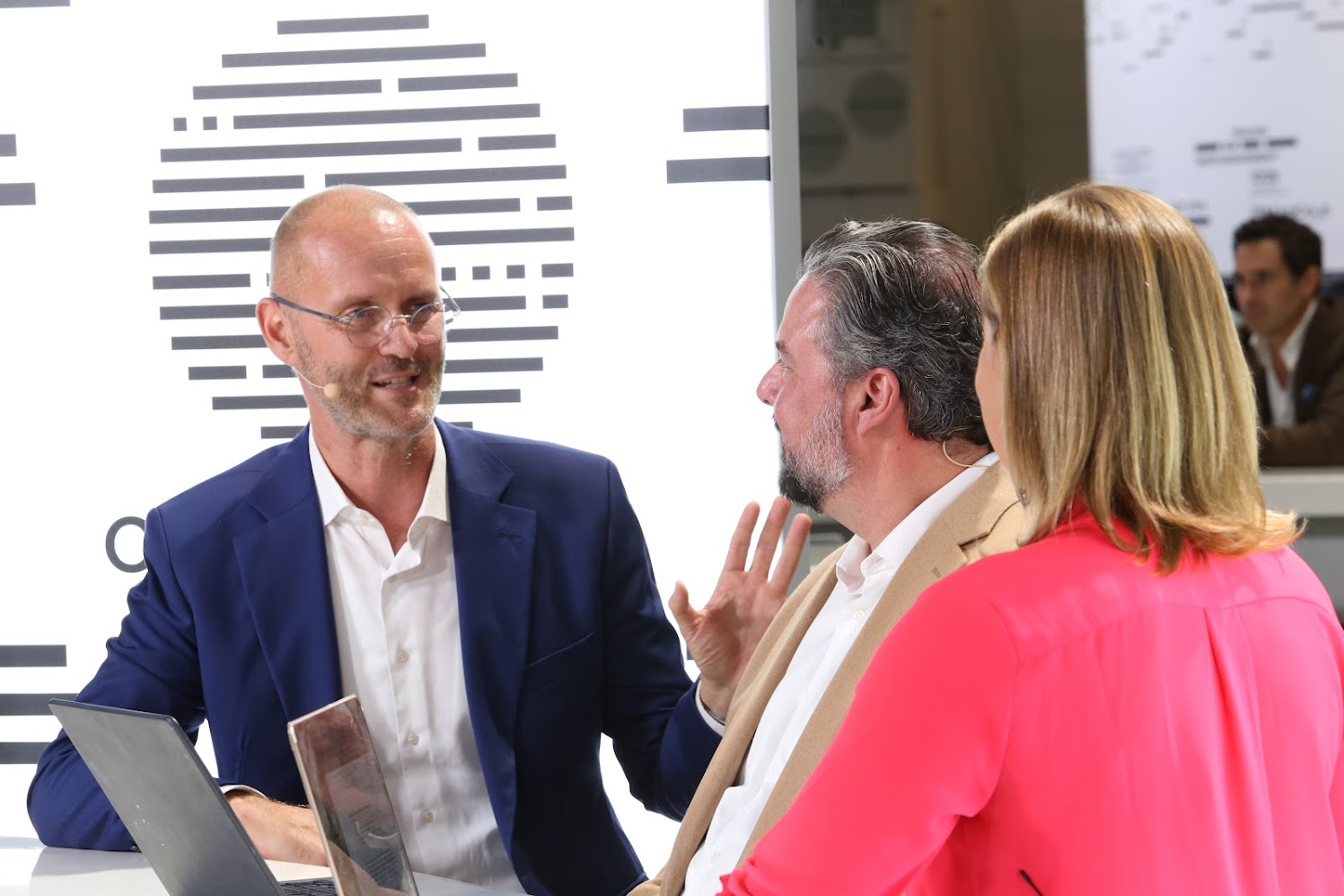
The Lead Transformation Evangelist discussed the concept of autonomous value creation and how Celonis fits into that. Businesses can use AI and automation to become more autonomous and proactive in decision-making. Insights from process mining can help create value and improve efficiency. An example was given of an insurance company using AI for faster claims processing. Having an end-to-end view of processes is crucial for businesses, and Celonis can provide visibility by extracting data from various systems. AI plays a role in helping humans make better dec...Read more
exploreKeep Exploring
What does the job title "Lead Transformation Evangelist" mean in the context of the speaker's career in process mining?add
What is the role of Celonis in autonomous value creation within enterprises?add
What is process mining typically considered to be for most and how can it be used to create value when combined with actions?add
What technology does the speaker want every customer to implement, and what benefits does this technology offer in terms of process automation and understanding?add
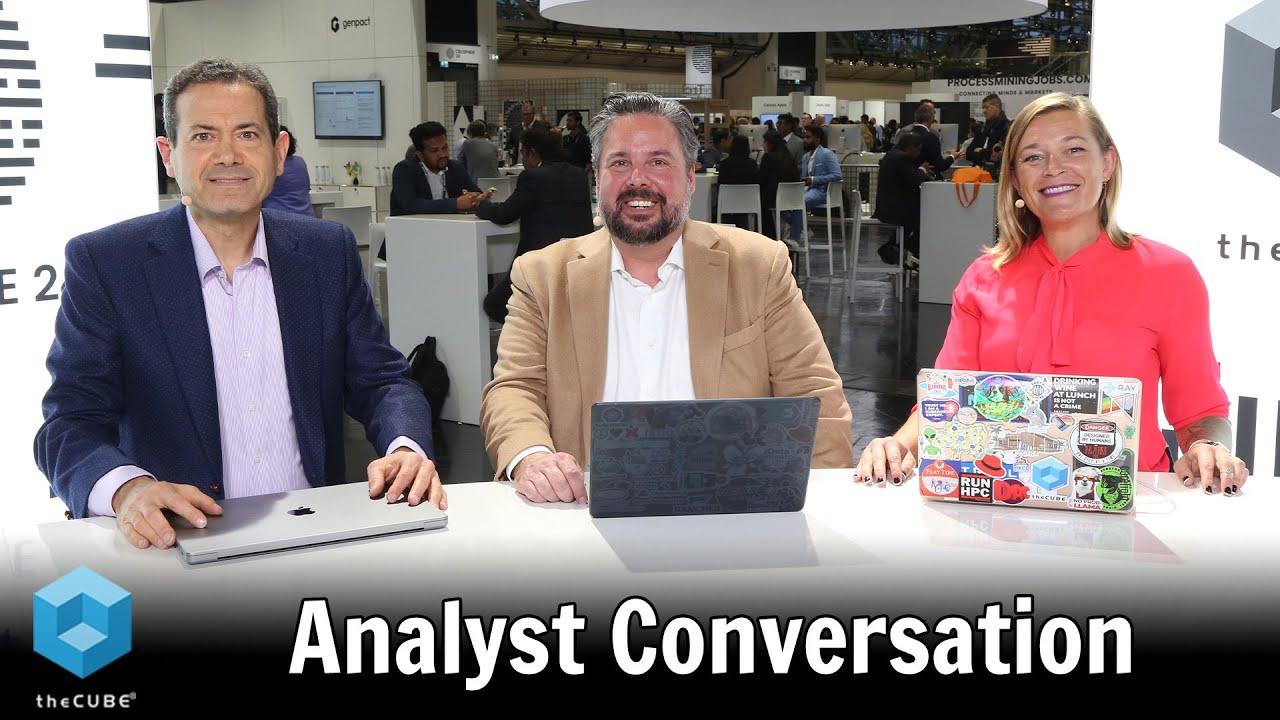
>> Good evening, Celonis community, and welcome back to Munich, Germany. We are coming to the end of what has been an incredibly inspiring day one at Celosphere. My name is Savannah Peterson, joined all day here in the cockpit with Rob Strechay. What a ride we have been on today!
Rob Strechay
>> I think it's been fantastic. The amount of customers that they've brought to bear that have been able to share use cases and stories about their transformation has been just fantastic.
Savannah Peterson
>> I know. I feel smarter. I feel more efficient. I dare say I feel optimized. Here to join us in continuing that journey is Rudy. Rudy, welcome to the show. Thanks for hanging out.
Rudy Kuhn
>> Thank you.
Savannah Peterson
>> It is a busy week for you, I know.
Rudy Kuhn
>> It is.
Savannah Peterson
>> And before we get into some of the nitty-gritty, I just have to ask, because you have a unique job title, you are the Lead Transformation Evangelist, what does that mean?
Rudy Kuhn
>> What does it mean? Probably we picked this job description or title because it sounds better than the proc. mining dinosaur, right? No, seriously, it's a-
Savannah Peterson
>> Both are nice visuals.
Rudy Kuhn
>> Yeah, right. Because I'm in the proc. mining business now for longer than Celonis exists, for 15 years, I-
Savannah Peterson
>> You're kind of an OG in process mining.
Rudy Kuhn
>> Yeah, right.
Savannah Peterson
>> I love that.
Rudy Kuhn
>> I met the godfather of proc. mining back in 2009 and realized that this technology has the power to change the way we are in business processes. Long story short, we became a partner, we a competitor, my company was acquired by a big RTA vendor. Then I left and then Alex gave me a call and said, "Okay, enough competing with you. Join me, and let's fight together." So, my job is really now I still have this passion for proc. mining after years. I think it's great and I've seen all the development over time, the evolution and now really using proc. Mining not only to discover the business, but really to transform business. And because of the passion and this transformation . Sorry for all that.
Rob Strechay
>> . You're not a figure.
Savannah Peterson
>> Alex is on next, so be careful.
Rudy Kuhn
>> Yeah, we just discussed .
Rob Strechay
>> I think one of the things we were talking when you first came up here, you just got off stage where you were talking about autonomous value creation. Where does Celonis fit in that? Because to me that's really a very fascinating thing. And we've been talking about the value creating equation and how the processes really get there, especially with AI.
Rudy Kuhn
>> I could easily talk for hours about it, but I'll try to keep it short. When we talk about autonomous systems, probably the way people learn about autonomous is autonomous driving. We are all familiar autonomous cars, in San Francisco especially or the Robert presentation from recently. And if you think about autonomous cars you need situational awareness, or the car needs to know what's going on. You need a system of values, you need a roadmap. You need artificial intelligence to look at the data, the situation to be and the situation as it is to make the right decision. You need a system drive by wire to operate the engine, the brakes and the steering wheel. And if you transfer this to an enterprise, we have situational awareness in process mining. We know what the process should look like because we defined the process management. Now we add AI to the picture, so AI can make the decisions. We access them wire. We have automation, we have Orchestration Engine really to operate the systems and the organization. So, if you really take it to the next level and think about it, an autonomous enterprise is nothing like colonizing Mars, probably sometime in the future, maybe not, I don't know. But you start at the bottom. You start with automating cars and you infuse AI to is, and this way you make the task autonomous. If you have enough of these autonomous paths, maybe your process will become autonomous. Your business operations like accounting will become autonomous where humans are only managing the extractions and provide the guardrails. And then maybe one day the autonomous enterprise will be a reality or maybe not. I don't think so. And I that we will earlier see autonomous driving then we will see any enterprises around.
Savannah Peterson
>> What sort of value added benefit does that provide to the multitude of customers you have across verticals?
Rudy Kuhn
>> Process mining typically is for most considered to be the experiences of business processes, right? If it hurts, you take the screen or you take the snapshot and you understand where the pain from comes from, and then you head it over to someone else to fix the problem. You would never send the customer home with a broken arm and the best wishes for the future and the best x-ray protection in the world. And the way we think about, we need to ask actually and some activities to this formula to create value. And value is all... This is all about. So, if you take the insights from process mining, combine it with actions, then you really create value, and the shorter the distance between insights and action really is. So, if you take... for example, you discover there is some sort of deviation, maybe a process or an invoice was checking approved by his in-person, of course you can inform someone, but you can also trigger an automation, and barred from any upgrade, that really doesn't matter what it is. Just do something about the problem. And this part can automatically block this invoice from being paid. You can not defy someone to re-check or reapprove his invoice. So, it's about dealing with issues, before they become a real problem. And it's more predictive because if we use AI, we see the patterns from the past, so we can very, very early detect or read some deviations and potential problems and deal with it before it against the customer. So, there's a lot of value to it.
Savannah Peterson
>> An incredible amount of value if nobody has to deal with a poor experience.
Rob Strechay
>> And what you're talking about is even more than just the automation aspect of it for the value creation, it's really about how you have that end-to-end process view. Because if we look at it and go, "AI is really good at things, like doing something, one activity or one feature, kind of a function." Processes can go beyond that, so how do you see when you're talking to organizations about them racking their heads? Because they have very complex processes that they and really managed inside of Celonis.
Rudy Kuhn
>> First of all, we have the capability to extract data from various systems. So, basically there's almost no limitation to the extraction. So, we can really utilize, analyze processes end-to-end, no matter how many systems it crosses, no matter how many systems are involved. And this gets you a visibility into the real situation as it is, like not other technology in the world. That's what I realized back in 2009 when I sort of was like, "Wow, this is just amazing." And if you know what's going on, of course you can react. And you can also become proactive, because if you have seen the panels in the past, as I said, where you can train your AI to recognize these patterns and provide you with solutions, maybe even before you even notice there's a problem. And just one interesting fact. Do you know how many facts humans are able to process when make a decision?
Savannah Peterson
>> I'm very curious.
Rudy Kuhn
>> It's seven plus/minus two.
Savannah Peterson
>> I was going to guess three, so yeah.
Rudy Kuhn
>> Maybe .
Rob Strechay
>> Definitely.
Rudy Kuhn
>> But if you are under stress, then maybe it comes down to five , so it can deal with more facts. Because, again, they have the experience to recognize errors earlier, to distinguish the relevant facts from the irrelevant facts, but not more . But with AI, AI can unlimited facts. It can help you to make the right decision, either assisted, automated, or autonomous, where you're only , but AI will really enable us humans to make better decisions and to create more value in the process for organizations.
Savannah Peterson
>> What are some of the, and they could MVP, SOCs, or full-scale deployments, examples of AI that you've seen in your customers that really got you excited or made you feel like you're starting to realize this?
Rudy Kuhn
>> Recently I'm meeting with Chief Digital Officer from a large insurance company, and he told me that they are processing claims automatically with AI. And if the AI decides to pay, they pay, no questions asked. Nobody will look into it. They simply pay. And even though sometimes we are wrong, but it doesn't matter because we save so much money that we can afford it, to pay 1% of claims we should not pay. But if the AI decides not to pay, then this is an exception for them, it will be... they will have some humans look into it, talk to the customer, reinvestigate, and really try to understand if this claim is legitimate or not. Because he said, "The biggest threat for us is not to pay if it's a real claim, because this would drive the customer crazy. They won't like us anymore. They will tell all their friends about how bad our service is. We cannot afford this. But if AI says pay, we do."
Savannah Peterson
>> Wow. That seems like a shift. If you want to whisper to us later who this is, so we can potentially adjust our insurance accordingly, I think that would be very, very valuable. But that is a really sensitive thing, and I think there's a lot implications and ramifications there, but on the good side is .
Rob Strechay
>> Yeah, in fact, I think playing off of what you're both talking about, I think when you start to look at human in the loop, and business models and business model transformation, how much of your job is getting into looking at companies that may be looking to change their business a little bit? Because, again, that's definitely a radical way. Like you said, hey, we throw it out as an exception, there's a human in the loop, they take a look at it, so we cut down the amount of time. We pay better. All the tables are updating the fact that... How much of your job and what you see Celonis playing in is helping change their business models?
Rudy Kuhn
>> I would say 100%. Probably not completely. In the long run, definitely yes. So, this technology has the power to transform the way people run business in a very sustainable way. But not everybody is there yet. So, it's a progress. It's a journey. And of course, it starts with the first task, so you first need to understand what your processes are. The reactions are always the same. People are shocked by the what we call the Spaghetti Monster, the 5,000 variations in one picture. But then you start to make sense out of it, and you look into it . You try to understand where your exceptions are. But let me give you another example, one of our applications we are currently using. So, it's about credit logs. Not the most exciting topic, of course, but customers. They really want to get their orders, but maybe they have not paid all their invoices yet. So, the AI will analyze it, and it will not only give you a recommendation, but it will also give you a reasoning. Why should you... You need the trade blocked, or why shouldn't you? And you can follow the recommendation. Of course, we are tracking how often people follow the recommendation. And if we hit a certain threshold, like 99%, we're going to flip the switch and from that moment it will go automatically. As long as we say delete the credit block and deliver the goods. Again, if the recommendation is not to delete the credit block, this is considered to be exception, it goes to human, call sales, call the customer, tries to sort out the situation and make the customer experience happy.
Savannah Peterson
>> We had a great conversation with Rafa about that earlier today, and the incredible reduction in time that they've seen in that processing ability to increase their throughput and deliver faster and with a higher margin. It was actually a really fascinating discussion. So, I have two final questions for you. I saw that you took a unique break in between your last two gigs. And I'm curious how you optimized your time on the slopes during that time.
Rudy Kuhn
>> What did I do? Well, I live in Austria in the mountains, so for me the snow is only 20 or 30 minutes away. So, what I did, after I took my kids to school, I had the skis in the bag, and 20 minutes later I was already on the mountain.
Rob Strechay
>> That's a process optimization right there.
Savannah Peterson
>> That's what I was saying. You've been in this world for so long, I figured there had to be some efficiency that you took in that.
Rudy Kuhn
>> No, but seriously, once you are on this journey, and you keep thinking about efficiency and risk all the time, it somehow starts to affect your daily life.
Savannah Peterson
>> Absolutely.
Rudy Kuhn
>> And sometimes you will have some weird discussions in your family because not everybody's on the same side of course. A lot of people are like, "How do you sort the dishes in the dishwasher?" , let's put all these foods together, so you can simply take them out as one and put them in the drawer and not to distribute them all over the place, but self-serve.
Savannah Peterson
>> So, I relate to that a lot. I've always ran my company all remote. When I'm not on-site, I have to work at home because I'm obsessed with efficiency, which is why we're a great fit to be here. But it physically hurts me when people are inefficient. I can't handle it. It's like a to my brain. It probably blends into my neuro-spiciness, but I have to be a part of efficient systems or I feel like I'm wasting my life and melting completely. So, I'm not surprised that your dishwasher came up in this case, and that you were able get to us less than 20 minutes given that .
Rudy Kuhn
>> I have the same brand of socks in the same size in the same color, so I don't have to sort them.
Savannah Peterson
>> So you don't have to match.
Rudy Kuhn
>> Yeah, I don't have to match them. Just pick through and it always fits.
Savannah Peterson
>> I love that. My friend , Scott, this is a shoutout to you, boo. He is the exact same way. He was the one who taught me about sock efficiency to promote OCD efficient borderline monsters or unicorns or magical creatures or however you want to look at it. But I appreciate that you said that. I'm on the other hand, because I'm just a colorful person. I've just accepted that they won't match, and I don't care as long as they're the same style of sock, so I'm not uncomfortable in my boots. Rob, do you have any efficiency OCD conversation?
Rob Strechay
>> I don't. I'm very inefficient when it comes to clothing. That is for sure. I'm an inefficient clother.
Savannah Peterson
>> Well, we'll have to apply Celonis to your closet-
Rob Strechay
>> Probably....
Savannah Peterson
>> and figure out the most streamlined-
Rob Strechay
>> Oh, yeah.
Rudy Kuhn
>> .
Rob Strechay
>> I'm very efficient packing. I'm just very inefficient at clothing-wise .
Savannah Peterson
>> Yes. All right, last question for you, Rudy. Since you are one of the OGs, a part of the process mining royalty, if you will, and sort of the founding fathers-
Rudy Kuhn
>> ....
Savannah Peterson
>> I'm sure we'll have you back on the show at Celosphere. What do you hope to be able to say then that you can't say now?
Rudy Kuhn
>> Well, I want every customer to see implementing process mining. And by the way, I really don't like the term because its very academic, it's very technical. I refer to it as business mining, because the process and business is a combination of all your processes. This technology has so much transformation power really to help people understand process end-to-end. And I want to see every customer implementing our latest product, the Orchestration Engine, because with the Orchestration Engine, we can really deliver on the promise of end-to-end automation that RPA gave, but never actually could deliver. Because we provide around scenarios, and we have some great, great examples. And will be more than happy next year to get used to some of the implementations and the value it creates for our customers.
Savannah Peterson
>> Well, we can't wait to hear all of those, Rudy, and hear more about your personal efficiencies and examples from home on next year's show. Rob, thank you for sharing, and always having great insights.
Rob Strechay
>> Yup.
Savannah Peterson
>> And thank all of you for tuning in to our 11th out of 12 segments here at Celonis Celosphere. My name's Savannah Peterson here in Munich, Germany. Be sure to drop your personal OCD efficiencies in the comments. You're watching theCUBE, the leading source for enterprise tech news.