We just sent you a verification email. Please verify your account to gain access to
Celosphere 2024. If you don’t think you received an email check your
spam folder.
In order to sign in, enter the email address you used to registered for the event. Once completed, you will receive an email with a verification link. Open this link to automatically sign into the site.
Register For Celosphere 2024
Please fill out the information below. You will recieve an email with a verification link confirming your registration. Click the link to automatically sign into the site.
You’re almost there!
We just sent you a verification email. Please click the verification button in the email. Once your email address is verified, you will have full access to all event content for Celosphere 2024.
I want my badge and interests to be visible to all attendees.
Checking this box will display your presense on the attendees list, view your profile and allow other attendees to contact you via 1-1 chat. Read the Privacy Policy. At any time, you can choose to disable this preference.
Select your Interests!
add
Upload your photo
Uploading..
OR
Connect via Twitter
Connect via Linkedin
EDIT PASSWORD
Share
Forgot Password
Almost there!
We just sent you a verification email. Please verify your account to gain access to
Celosphere 2024. If you don’t think you received an email check your
spam folder.

In order to sign in, enter the email address you used to registered for the event. Once completed, you will receive an email with a verification link. Open this link to automatically sign into the site.
Sign in to gain access to Celosphere 2024
Please sign in with LinkedIn to continue to Celosphere 2024. Signing in with LinkedIn ensures a professional environment.
Northwestern Memorial HealthCareVP, NM Ventures and Innovation
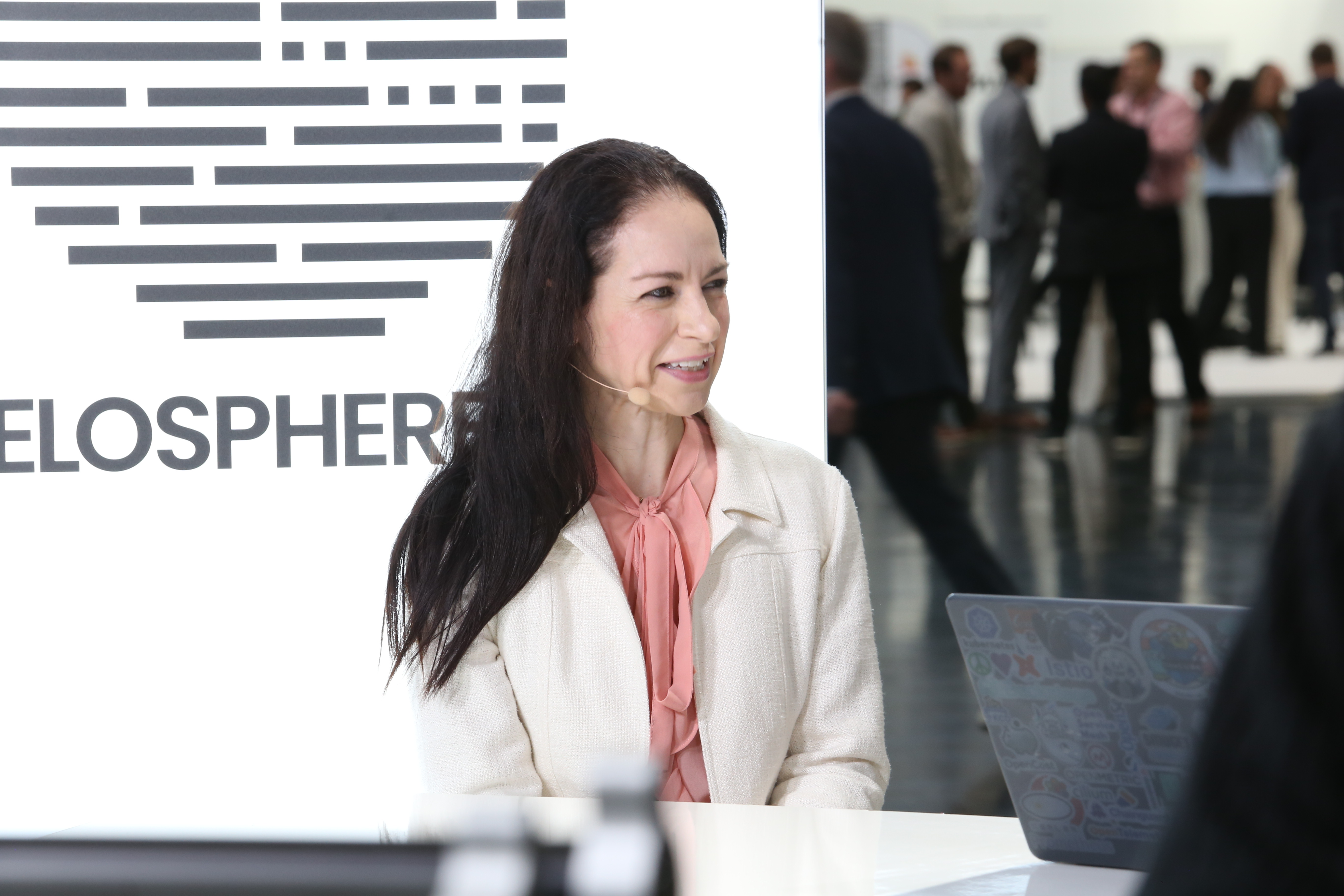
At the Celosphere event in Munich, Germany, Hannah Koczka, Vice President for Northwestern Medicine Ventures and Innovation, discussed their use of Celonis technology to improve patient throughput and access in healthcare. By piloting the technology in areas like breast imaging, they aim to enhance efficiency and speed in patient care. Utilizing Celonis for nursing workflow and lab services also helps create more capacity for diagnostic tests and improve patient care quality. The culture shift internally towards embracing process intelligence has resulted in ...Read more
exploreKeep Exploring
What has Celonis helped improve in terms of patient throughput and access in the healthcare system?add
What area are we currently piloting the use of Celonis for and how do we hope it will impact patient throughput and treatment times?add
What approach did the speaker take to involve team members in utilizing analytics tools and improving supply chain processes?add
What is the primary focus of bringing new technologies into the organization and how can they be scaled across different areas?add
>> Good afternoon, process optimizers, and welcome back to Munich, Germany. We're here barreling through Celosphere, Celonis's marquee event. My name's Savannah Peterson, always thrilled to be joined by Rob Streche. Holy moly, is this event cool?>> I love this, and I think what's been the best thing is they're bringing just fantastic customers to come and talk to us all day long and really talk about where the rubber is meeting the road or whatever their product is that they're actually shipping and how this is really helping them and their organizations get better.
Savannah Peterson
>> Yes, and the impact they're having so quickly. Super excited to welcome our next guest who is Hannah. Thank you so much for coming all the way from Chicago to join us here today. How're you doing?
Hannah Koczka
>> I'm good. Thank you for having me.
Savannah Peterson
>> It must be very exciting for you to be around a community of people who are also sharing the same toolkit that you are. Northwestern mentioned on the main stage today in the keynote. Tell us a little bit about your role there, venture and innovation, not always terms associated with healthcare in the traditional sense. So break it down for us, tell us.
Hannah Koczka
>> So Hannah Koczka. I'm Vice President for Northwestern Medicine Ventures and Innovation, and we're focused on bringing innovative technologies to healthcare, whether that be for our administrative or clinical functions. We also oversee commercialization of technologies that we've created at Northwestern with a goal to accelerate discovery and find new treatments in both medical device and drug discovery as well. >> Because you're a research university tied to the Northwestern University, to me this is where it's really interesting, having been at venture funding companies and things like this, this whole innovation and venture, that joining together. I know a lot of the other universities and how they work, but how has this ... And Celonis really played a role in that, because to me, it's not necessarily a natural fit. I'm trying to wrap my head around that a little bit.
Hannah Koczka
>> Yeah, so we started working with Celonis in 2022. I was actually leading our procurement services division within supply chain at the time, and we were looking for efficiencies and new ways of working for the team. So we started in that space. Since I've moved in to lead our ventures and innovation platform, I've now taken a broader lens on how I think we can apply the technology. So for us, we're looking to utilize it in a lot of our clinical areas to really try to improve patient throughput and patient access, which is still one of our biggest challenges within US healthcare. How do we get more patients in and see them quicker and faster when they want to be seen?
Savannah Peterson
>> And also get them out, because nobody wants to be in the hospital longer than they need to be. Can you describe specifically how Celonis as a tool has helped you realize that goal?
Hannah Koczka
>> Yes, so right now in October, we're actually piloting utilizing Celonis for our mammography space around breast imaging. So it's one of our highest volume areas, and we're performing across our health system hundreds of breast imaging procedures daily. And we know that patients would like to get in quicker and faster. It's a routine service for many women, but unfortunately also leads to many diagnoses that need extended treatment. So if we can improve and tighten up patient throughput in that area, we'll be able to get more patients in and then also get those patients that need treatment quicker and faster. We believe, we have a hunch that if we can really prove it out in that area, it will be very powerful across other imaging areas as well and then ultimately potentially now in patient areas to try to reduce length of stay and readmissions as well.
Savannah Peterson
>> I'm glad you brought up breast cancer. It's the most common type of cancer globally, 2.3 million cases annually. If you can improve that process, that has absolutely massive impact. I'm also glad we're talking about it, Breast Cancer Awareness Month here in October. We've essentially both got our pink ribbons on, which is really important and something very near and dear to both out hearts. I'm sure I know Rob also cares about the community, but there's an incredible opportunity not just to help with detection there, but to save a lot of lives through doing that. What other sort of visualization and tools in that same category or other preventative care or cancer diagnoses will we be able to do in the same way that you've done with mammograms?
Hannah Koczka
>> So we're looking at utilizing the technology even from nursing workflow. So we think about all of the tasks that nurses have to do, right? A lot of their time is spent in an administrative setting, and we want to give them more time to be at the bedside with the patient. So we're looking at how we might be able to utilize the technology to find out, where are some of their pain points? Where are they spending on what we might deem to be potentially a lower value task or an out-sized amount of time? So we think that can be very powerful as well. We also have our reference labs that provides lab services to clinicians and facilities outside of our system. For us, that's a growth area. So if we can find ways that create more capacity also in our labs to run more diagnostic tests, that can also be really powerful. I think what we're seeing is the number of use cases is almost limitless. You need to sort of identify where you think you can be most impactful in the short run and then start working through them.>> I think that to me was one of the exciting things, because again, anybody who's ever had a family member or been in the hospital themselves, to your point, the nurses have to do a lot of the record keeping, the administrative stuff. Is this something that you're excited to see where Celonis is going with their AI and how they're really partnering? It's not just about them, because a lot of what you deal with is PII as well, not just in those processes.
Hannah Koczka
>> Yeah, so I am. I think what was quite different when we started working with Celonis was getting engaged with their value engineering team. So they stayed with us and actually not only just trained us on how to utilize the technology at least initially in supply chain. They want to constantly make sure that we're seeing the value in the product. So I think a big part of that has allowed us to then work with them to help sort of calibrate how this can be utilized within a healthcare provider. I think we're newer to process intelligence and process observation. But I think there's likely an immense amount of opportunity for us, which ultimately will have that downstream benefit for our patients.
Savannah Peterson
>> What's the culture internally been like as you've introduced this technology? I'm sure, and maybe I'm making a bold assumption, but when I think of healthcare, I don't think of folks being as familiar with process mining and process intelligence as a term, let alone as a technology. What's the reception been like?
Hannah Koczka
>> So initially in supply chain, I think that that was a team that didn't have a lot of analytics and tools at their disposal. They were actually really excited that they were being part of the process and they were being able, sort of empowered to start seeing what they were doing in a different way. So we actually created what we call a Celonis taskforce. So we kind of took a subset of a group of ... Maybe it was 10 people out of 40, and we sort of said, "You're utilizing the tool day to day, and you're going to bring the insights back to your team and your colleagues on things that you're seeing and how we can actually improve our processes based on those insights." So I think that was really powerful, making them more part of the process as opposed to, hey, we saw this in the technology. You need to change this in the way that you're working now.>> So having been on the procurement side, a lot of times you have to sit there and you're getting into things. You're saying, "Here's why we're going down the road with Celonis." And maybe you have an estimate of when you're going to see return on that investment. How was that? And how have you found that that return on investment has come back to the medical system?
Hannah Koczka
>> Yeah, so probably within a couple of weeks, we started to see quick wins within the system. Then I would say it was probably within six months that we're really able to change the way that an entire team was working. So moving people into higher value roles, truly understanding probably performance among different individuals that we didn't see before, because the tool is very transparent when you have a transactional area, right? So it allowed us to go really deep. And I think that what I'm really hopeful now as we move across clinical use cases, I think that the opportunity is even greater, just because there's more spend, more resources, all of those different things. And as I said before, patient throughput and readmissions, if we can truly impact those areas, it can have a much broader impact on healthcare, even outside our own organization.
Savannah Peterson
>> And it's going to be able to help you surface different types of data, not just from how the team works, but you might be able to connect different dots that you wouldn't have been able to see because there are so many dots when it comes to health care, and particularly in a clinical trial.
Hannah Koczka
>> Absolutely, yeah.
Savannah Peterson
>> That's really exciting. Do you think that that will help solutions and therapies and drugs get through these trials quicker?
Hannah Koczka
>> Yeah, so we've talked a little bit about ... We work with a lot of life science companies who obviously also utilize the technology. So I think one of the areas for us is thinking about, how can we all link up? What are we seeing through process intelligence? What are they seeing? And how does it actually connect from manufacturer all the way through to patient? And what does that look like? Because that patient journey, we're one part of it. And there's a piece that happens before the patient comes to us, and there's the piece that happens once the patient is discharged as well. So I think that there is a bigger and broader story there. So we're only on the tip of the iceberg, I think.>> I think you brought up something really interesting, which was you mentioned readmissions versus admissions. That goes back to the quality of care. Is that a big focus when you look at these processes about how you can improve the quality of care for the patient and the patient outcome?
Hannah Koczka
>> Yeah, I think what we do, we've always got an initiative around improving patient throughput, and as I said, reducing length of stay. People don't want to be in a healthcare facility, right? They want to go home. They want to be with their families. But I think what process intelligence can help you do is gain visibility across teams. We're very much focused, I think in all industries. You look at, this is what my team's doing. This is how I can improve. But you're one component, right? So if we can look across that patient journey while they're in our facility and see all of the different pain points and what we might be able to do to accelerate and provide better healthcare, I think that can be very powerful.
Savannah Peterson
>> I think that can be very powerful. If you could wave a magic wand and solve a challenge that you have over at Northwestern, and hopefully Celonis is listening to this, because maybe they can help you wave that magic wand, what would it be?
Hannah Koczka
>> I'd like everybody to see what the value is in process intelligence. I'm probably one of the least technical people within our organization and-
Savannah Peterson
>> You wouldn't know it, talking to you here, just for the record. You're pulling it off.
Hannah Koczka
>> Okay, but I think that it is truly powerful, and I think if we could get more people to just embrace the technology and see that it's not showing you where you're going wrong, it's just an opportunity to improve and do something better. I think we'd get results a lot faster. But like many things, you have a lot of competing priorities. How do we bring those things to the surface so that we can do better for everybody.>> How do you see this tying into and incubating your roadmap for how you're going to go forward with this in these technologies?
Hannah Koczka
>> Yeah, so a big part of what we do on my team is bring new technologies into the organization, and we try to find the right environment to pilot them, test them, prove out the ROI. And if they don't work, we don't proceed. If they do work, it's then, how can we help support scaling them across the organization? I think Celonis came in a little bit differently, because I was in that procurement role. So I'm now trying to stay in procurement, but really drive it out of the innovation and technology transformation. I think we have a tremendous opportunity. We talked a lot about the clinical areas, but even across our corporate services and functions, how we can be better partners for our clinical areas as well. So I think identifying many of those different opportunities will be really transformative. Then a little bit in my role now leading ventures and innovation, it's really focused around partnership. So we want to partner with industry to, as I said, get new treatments to the bedside faster. So we're bringing expertise in terms of our assets, our data, our scientists, and trying to match those up with industry for the ultimate benefit for the patient. So I think there's an opportunity for process observation in that as well.
Savannah Peterson
>> I think that's a really good point you just brought up. I also want to just acknowledge your journey. I come from a manufacturing and supply chain background myself, and I love that you started there at Northwestern and now are in the innovation side. There is a lot of innovation in this space, and so it makes sense. So you've gotten to see a lot of transformation, to your point. I'm curious, because this has been insightful, Northwestern obviously a big partner of Celonis's and one of the stars of the show here this week. What do you hope to be able to say when we have you back on the show next year that you can't yet say today?
Hannah Koczka
>> That it's truly transformed clinical care for our patients, and I think we'll be able to state that what we were able to do, we can talk about it in procurement that we've improved a lot of our automation rates and reduced manual touches and those things, so move teams to higher value work. I think we'll be able to say we've seen this many more patients or we've got this many more folks got access that wouldn't have. So I think that could be really, really meaningful. So that's where I we are in a year.
Savannah Peterson
>> I love it. Well, we cannot wait to have you back on the show to talk about that, Hannah. Thank you so much for taking the time.
Hannah Koczka
>> Thank you. Thanks for having me.
Savannah Peterson
>> And thank you, Rob, for always being here. Thank all of you for tuning in to our fantastic morning here at Celonis Celosphere and also for looking after yourself on Breast Cancer Awareness Month. My name's Savannah Peterson here in Munich, Germany. You're watching TheCUBE, the leading source for enterprise tech news.