We just sent you a verification email. Please verify your account to gain access to
Celosphere 2024. If you don’t think you received an email check your
spam folder.
In order to sign in, enter the email address you used to registered for the event. Once completed, you will receive an email with a verification link. Open this link to automatically sign into the site.
Register For Celosphere 2024
Please fill out the information below. You will recieve an email with a verification link confirming your registration. Click the link to automatically sign into the site.
You’re almost there!
We just sent you a verification email. Please click the verification button in the email. Once your email address is verified, you will have full access to all event content for Celosphere 2024.
I want my badge and interests to be visible to all attendees.
Checking this box will display your presense on the attendees list, view your profile and allow other attendees to contact you via 1-1 chat. Read the Privacy Policy. At any time, you can choose to disable this preference.
Select your Interests!
add
Upload your photo
Uploading..
OR
Connect via Twitter
Connect via Linkedin
EDIT PASSWORD
Share
Forgot Password
Almost there!
We just sent you a verification email. Please verify your account to gain access to
Celosphere 2024. If you don’t think you received an email check your
spam folder.

In order to sign in, enter the email address you used to registered for the event. Once completed, you will receive an email with a verification link. Open this link to automatically sign into the site.
Sign in to gain access to Celosphere 2024
Please sign in with LinkedIn to continue to Celosphere 2024. Signing in with LinkedIn ensures a professional environment.
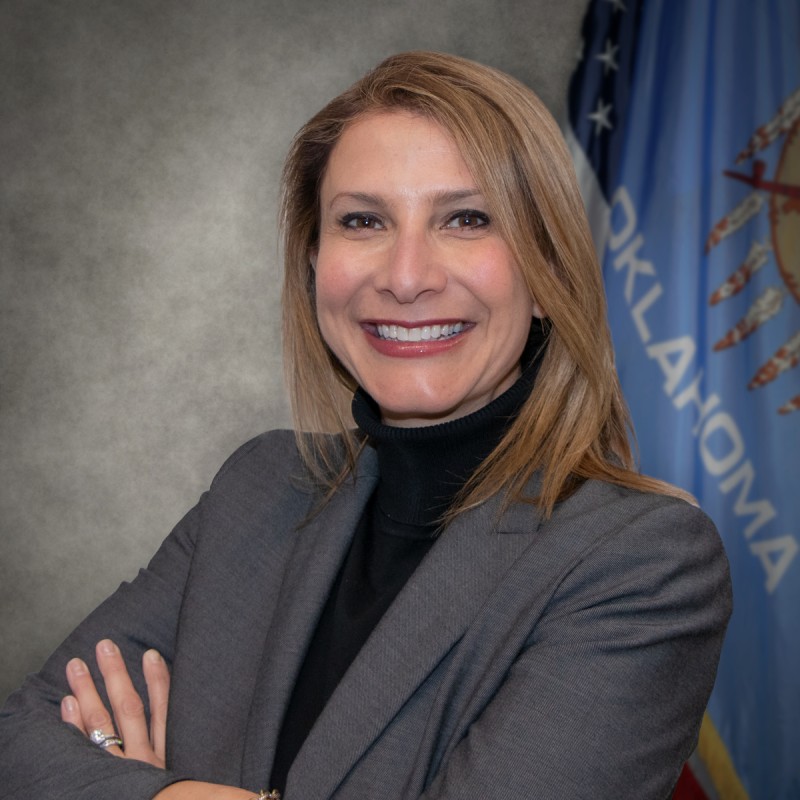
Director, Risk, Assessment and Compliance Division, Office of Management and Enterprise ServicesState of Oklahoma
At a business event, a representative from the State of Oklahoma discussed how Celonis improved procurement processes within the government, increasing efficiency, transparency, and cost savings. The tool identified potential misuse of taxpayer funds, streamlined procurement, and improved collaboration. It provided insights into spending, vendor relationships, and compliance, aiding leadership decisions. Implementation led to faster audits, real-time process monitoring, and leveraging buying power. Even non-technical staff embraced the technology. Future plan...Read more
exploreKeep Exploring
What improvements have been made in government procurement processes thanks to the implementation of Celonis?add
What benefits has the implementation of Celonis brought to the organization in terms of audits, data integration, and access to data across platforms?add
What is the impact of utilizing technology in government and the benefits it brings to job efficiency and learning?add
What are some benefits of making technology easier to understand and use for non-tech state employees?add
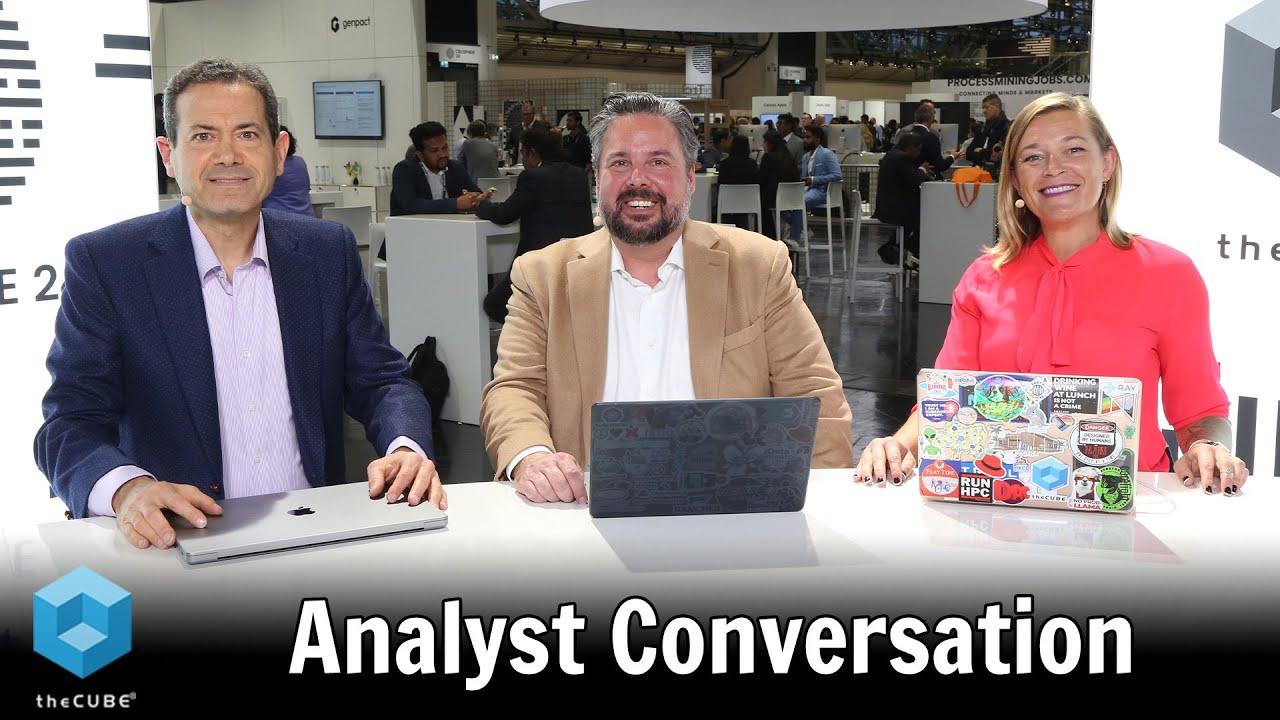
>> Good afternoon, Celonis community, and welcome back to Celosphere. We are enjoying our time here in Munich, Germany very much. My name's Savannah Peterson, joined with Rob Streche. We both had a pretzel today.
Rob Strechay
>> We've had pretzels stuffed with butter, which-
Savannah Peterson
>> Was amazing.
Rob Strechay
>> Was amazing. It was like a newfound thing. I thought it was going to be cheese, but then it was butter, and the food here has been excellent. The people and the conversations have been excellent.
Savannah Peterson
>> I know. It's inspiring all around.
Rob Strechay
>> It's like peanut butter and jelly.
Savannah Peterson
>> It is, except peanut butter and butter or-
Rob Strechay
>> Butter and-
Savannah Peterson
>> Pretzels and butter.
Rob Strechay
>> Pretzels.
Savannah Peterson
>> Jeepers, that's a tongue twister after lunch. More importantly, speaking of twisters, we've got Janet here from Oklahoma. We've covered that one.
Janet Morrow
>> Very nice.
Savannah Peterson
>> Thank you so much-
Janet Morrow
>> Thank you.
Savannah Peterson
>> For being here with us.
Janet Morrow
>> Yes.
Savannah Peterson
>> How is the week going so far? Energy is really high.
Janet Morrow
>> It's incredible, everyone collectively and all the great innovation and the great ideas that are flying across the room all day.
Savannah Peterson
>> I know, it's super cool, very excited for this conversation in particular. You're here. You work for the State of Oklahoma, four million people under your watch, so to speak. I'm very curious how you came to find Celonis and start rolling out different solutions within the state.
Janet Morrow
>> So out of happenstance and a great story, but we actually had Celonis come in, provide us a proof of concept on procurement for us for CIO approval. And they took 90 days, came back, showed us exactly what was occurring outside of his authority and approval, and then we took that tool and launched it through all of procurement for the state.
Savannah Peterson
>> That's awesome. So that allows every team within the state to get things approved faster and more efficiently.
Janet Morrow
>> And also, part of it was within the bounds of the law. So we were looking at, are we following the statutes and being appropriate with taxpayer dollars? So we were able to identify about three and a half billion of spend that possibly was not within the bounds of statute.
Rob Strechay
>> Wow, that's impressive and especially with the fact that government is not just one entity. It's a number of different departments. How did you really work across the different government entities to really bring them on board with this?
Janet Morrow
>> Sure, so one of the things that we've talked about quite a bit here is all about that side of bringing everyone to the table, having them voice their opinions, voice their concerns, but being a partner with us in the change of this. So we introduced it to all the buyers throughout the state with all 160 plus entities.
Savannah Peterson
>> Oh my goodness.
Janet Morrow
>> And then we asked them for feedback and then worked through that process with them. So we wanted to make that change as a team.
Savannah Peterson
>> How long did it take you to ramp up that process from that proof of concept and introduction to now implementation at scale?
Janet Morrow
>> So we in my division were created around July of 2023 with the idea that we had 60 days to get through a year's worth of procurement so that we could report back to the governor what the procurement was, how are we utilizing statutes appropriately or possibly inappropriately. So we did that in 60 days.
Savannah Peterson
>> That is super fast, and I say this with love. How does that compare to traditional government processes and practices?
Janet Morrow
>> So prior to us implementing Celonis and utilizing this tool, we got about eight audits done a year with a team of six, and it would be two to three years post-purchase before those audits were complete. So now we're doing it live every day, and it's automated. We only see the things that cause concern, and then we reach out to those agencies and those buyers to talk through it.
Rob Strechay
>> How do you look at all ... Because we talk to a lot of different companies and organizations, and they're dealing with data issues and integrations. There has to be just a myriad of systems and integrations and data silos that you've had to overcome as part of that.
Janet Morrow
>> Right, so one of the great parts of this tool for us is again it's agnostic to whatever platforms we utilize. So it pulls it into that data lake and then it puts it in one place for us to see it across the board. We have dashboards where executive leadership can go and quickly see who their buyers are, how they're spending, what the spend is by vendor, and it's right there in one place for them. So again, rather than looking in multiple platforms to see the ultimate spend, they can go to one place to do that.
Savannah Peterson
>> It's getting everything out of silos and giving you the clarity you want, not only internally, but for taxpayers.
Janet Morrow
>> Right, very much. This is all about transparency for the taxpayers of the state.
Savannah Peterson
>> Would you say that it's increased the governor's confidence in his ability to spend their dollars?
Janet Morrow
>> I would tell you it's not only done that, but it's also given the taxpayers, again, transparency in what we do as a state. Then we come together and also leverage that buying power. So now, instead of the silo of various agencies purchasing a product on their own on independent contracts, we can bring them together and steer them towards a statewide contract which leverages that price.
Rob Strechay
>> Because when you look at it and you look at government, everybody is always like, "How do we really get cost savings?" Because again, it becomes tax bills and all of that. It trickles down. How have you seen cost savings and resource improvements or resource utilization change since implementing?
Janet Morrow
>> So we've seen a massive decrease, again, in those independent one-off contracts, but also we're breaking down that silo of reaching out to our partner to say, "You have a contract for this product. Why would I go through the solicitation process when you've already done that for us as the state?"
Savannah Peterson
>> Which benefits that seller as well.
Janet Morrow
>> Absolutely, so again, then we go back to that vendor and we can say, "You initially signed a contract for X dollars, but now we've brought all these other partners to the table. Let's talk about you sharpening your pencil for a better rate."
Rob Strechay
>> Yeah, and that must really excite obviously the vendors, the vendors who've already won, and things like that. But when people are looking at something net new or something like that, how does this help them as well? Is there just bringing it to the table and exposing it to other groups so that they can get in on it?
Janet Morrow
>> Yes, absolutely. So obviously we started just in procurement because of again possible misuse of taxpayer dollars. We wanted to identify that or dispel any ideas of what it means to procure for the state. But now, we've launched it into ServiceNow, Ironclad, Workday. So now we can see, what are the man hours spent? What's that cost again to the taxpayers? And provide again further transparency to them.
Savannah Peterson
>> Do you see or have you spoken with other folks in similar roles to you in other states? Do you see this crossing across the United States in terms of statewide government?
Janet Morrow
>> We've talked to a few states. We've talked to different municipalities. I don't know how they don't utilize a tool like this. Again, it's transparency to our taxpayers, so we are able to show them information and be completely honest. It's again agnostic to whatever platform you utilize your data and brings it all into the same place.
Rob Strechay
>> So are you looking at around the process intelligence graph and how that actually is connecting different things together? Is that really what is at the core of what you're leveraging?
Janet Morrow
>> Yes, because again it's about velocity for us. We want to improve not just again the spend, but how quickly we get to things for our taxpayers. So we can look at the hours spent. Are there too many approvals in place? Are we utilizing time inappropriately because we're clicking a button versus understanding what we're clicking and why?
Savannah Peterson
>> And you're getting to that information orders of magnitude faster than historically, which is a really big deal. So it sounds like you're nailed it from an innovation perspective on the procurement side. What's next? What other problems would you like to solve?
Janet Morrow
>> Oh, I don't know that there is a ceiling to that, right? Again, we're looking at our own dollars, because I'm a taxpayer just like you all are. Wouldn't you want to know exactly how your state can be more efficient? So we're looking in the healthcare authority, again how that taxpayer dollar is spent on medical and reaching out to our other partner agencies, how they can use it in their day to day business process.
Rob Strechay
>> I was going to say, there's been some talk about it with others about how they're also integrating in third parties. You were talking about some of the third party SaaS applications and integrating. But other non-governmental organizations, are you seeing how they may play in this longer term as well?
Janet Morrow
>> Oh, absolutely. Again, even for our vendors, we utilize a tool that shows them opportunities to expand their footprint with us, but they can bring it in for their business. Again, it's supply chain, how they're getting products to us so they can show us how quickly that they do things with us.
Savannah Peterson
>> What is the tool adoption like internally? I know sometimes when you teach a community a new technology, there can be a little brain fatigue that goes along with that, especially considering we often introduce a lot of new tools. It sounds like you're showing results quite quickly, so my assumption is people are pretty excited. But how's it been?
Janet Morrow
>> Well, you know there's always that pause and step back when you say, "We're going to start looking at things and utilize a tool." Government is not typically technology-driven. Let's be honest. And we are kind of forefront in the State of Oklahoma. We have a very forward-thinking governor, and technology is huge part of that with us. So you always have trepidation, but at the same time when they start to see the information, they start to lean in. And again, it makes their jobs easier. We've gotten messages that it's the quickest and the most that they've ever learned how to do their jobs when they've made a mistake, versus this kind of agnostic training where you get a tool that says, "If you were to ever procure in this manner, remember this." Now they're seeing it live as they do it, and they're able to make corrections and they learn something from that. So we get a lot of feedback that way.
Rob Strechay
>> I'm just going to say that plays well to Savannah's earlier question around the people in the loop and really bringing them along where they see the value of the feedback. Have you see that even from the non-technical people, that they're embracing it because people usually don't want to screw up. They don't want to do things wrong. They also don't want to waste time. They want to be efficient. Have you seen them embracing this for that reason?
Janet Morrow
>> Very much, because again, the majority of our state employees, which there are 30,000 plus state employees, are non-tech. They are experts in child welfare. They are experts in corrections and doing things for again our community. So seeing a tool that, A, makes it easy to read and understand, and we put it in common language for them, rather than in the platform language and all the terminology that maybe not is utilized by a director of an agency. They just want to know, how much did I spend with a vendor? And what are my buyers doing? So they are able to see that in their own way.
Savannah Peterson
>> And remove the jargon.
Janet Morrow
>> Yes, very much removal of jargon across the board for them.
Savannah Peterson
>> I think it really matters. If you're going to put the human in tech, especially as local government, there's really nothing more imperative than that. So I come from the lovely State of California, and I'm curious. We are known for our tech and being a bit innovative. Well, depending on who you ask, plenty of opinions out there. But I will say that as a taxpaying Californian. If Governor Stitt was to sit down with Governor Newsom, what do you think his advice would be on adopting Celonis and bringing this to even bigger states?
Janet Morrow
>> Well, first and foremost, that transparency piece, we are able to quickly show what it is the state is doing. Again, it's not just the procurement piece, what our man hours are spent on. What's the ROI to that? Are we spending too much time reviewing something that is costing the taxpayer too much money when it's not a real savings to the state collectively?
Savannah Peterson
>> I know there are a lot of people with our high tax rate that would love to know all about that. You're in a similar situation, Rob, in Massachusetts.
Rob Strechay
>> Yes, but I think one of the things that's really interesting is as you're here and you're hearing about other companies that are not in government, obviously, that are using it, things like AI and where they're going, do you see that as something that you're putting on your roadmap as further enhance and help people in their jobs day to day as well?
Janet Morrow
>> Absolutely. Actually, we're a beta tester for Celonis in their Process Copilot.
Savannah Peterson
>> Cool.
Janet Morrow
>> So we are truly utilizing that AI tool today and getting to utilize that with the governor, the cabinet members, and they can ask questions in common language without again knowing the procurement terminology or any of that piece to ask simple questions and get the information they need immediately, versus needing to again navigate a dashboard that I would look at every day.
Savannah Peterson
>> Sounds like Oklahoma is really leading the charge in quite forward-thinking. I'm very impressed. You weren't kidding when you brought that up when you came and sat down at this desk. What else do you wish folks knew about the wonderful State of Oklahoma.
Janet Morrow
>> Oh, well, I think we probably have the friendliest people in the country within our state. We don't know a stranger, and it's an incredible place to live. It's a safe place to live, but we are always looking for opportunities for technology in our state. That's one of the big drivers of our governor, is we need to reduce our footprint as state employees so that there are opportunities for new companies to come in and hire these great Oklahomans.
Rob Strechay
>> Yeah, I would agree. Having been to Oklahoma City, been to Tulsa, both sides of the state and further, I think it's wonderful and that people who haven't been to Oklahoma City, it is very, very modern. It's not what you would picture in the movies and stuff like that as well.
Janet Morrow
>> Well, my joke is actually we do have running water and electricity. It's a great tool, but yes, we are. We are much more forward-thinking than people would assume based off of our geographical location. Again, it's just a great affordable place to be and very friendly community.
Savannah Peterson
>> Well, you are a great example of that.
Janet Morrow
>> Thank you.
Savannah Peterson
>> And not surprised, and a great example of innovation. I've got one more question for, and I'm curious because you've been a fabulous guest here today. You're obviously in the beta program with Copilot. What do you hope to be able to say when we have you on the show this time next year that you can't quite say yet today?
Janet Morrow
>> I would hope that we're telling you the velocity piece to this, that we have truly shown all the improvements in how quickly we provide services to our taxpayers, again that return on investment, the reduction of our footprint in spend and also the FTE piece. We want Oklahomans going to work for these private companies, versus just being in state government.
Savannah Peterson
>> I love it, Janet. Well, thank you so much for taking the time-
Janet Morrow
>> Thank you.
Savannah Peterson
>> In a very busy week. This has been extremely insightful. Rob, thanks for sharing your insights and your experience with the fine State of Oklahoma.
Rob Strechay
>> Love Oklahoma.
Savannah Peterson
>> I thank all of you fantastic individuals for tuning into our two days of coverage at Celonis Celosphere here in Munich, Germany. My name's Savannah Peterson. You're watching TheCUBE, the leading source for enterprise tech news.