We just sent you a verification email. Please verify your account to gain access to
Celosphere 2024. If you don’t think you received an email check your
spam folder.
In order to sign in, enter the email address you used to registered for the event. Once completed, you will receive an email with a verification link. Open this link to automatically sign into the site.
Register For Celosphere 2024
Please fill out the information below. You will recieve an email with a verification link confirming your registration. Click the link to automatically sign into the site.
You’re almost there!
We just sent you a verification email. Please click the verification button in the email. Once your email address is verified, you will have full access to all event content for Celosphere 2024.
I want my badge and interests to be visible to all attendees.
Checking this box will display your presense on the attendees list, view your profile and allow other attendees to contact you via 1-1 chat. Read the Privacy Policy. At any time, you can choose to disable this preference.
Select your Interests!
add
Upload your photo
Uploading..
OR
Connect via Twitter
Connect via Linkedin
EDIT PASSWORD
Share
Forgot Password
Almost there!
We just sent you a verification email. Please verify your account to gain access to
Celosphere 2024. If you don’t think you received an email check your
spam folder.
In order to sign in, enter the email address you used to registered for the event. Once completed, you will receive an email with a verification link. Open this link to automatically sign into the site.
Sign in to gain access to Celosphere 2024
Please sign in with LinkedIn to continue to Celosphere 2024. Signing in with LinkedIn ensures a professional environment.
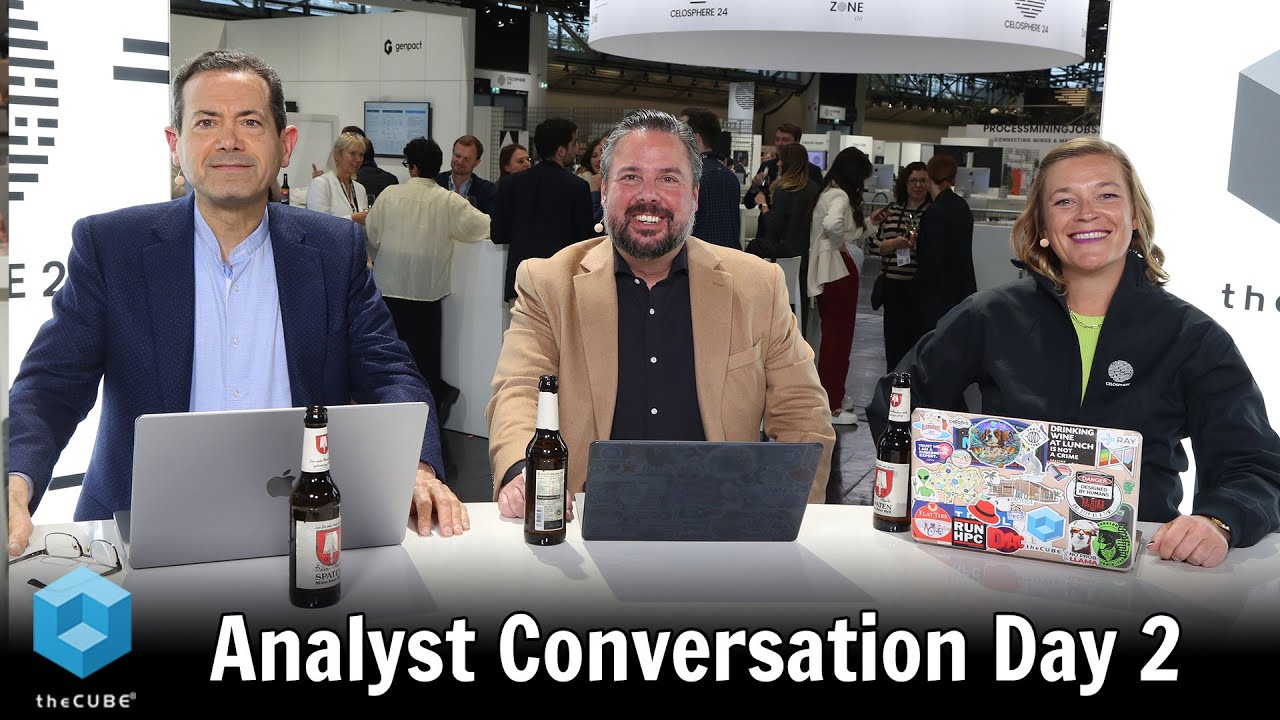
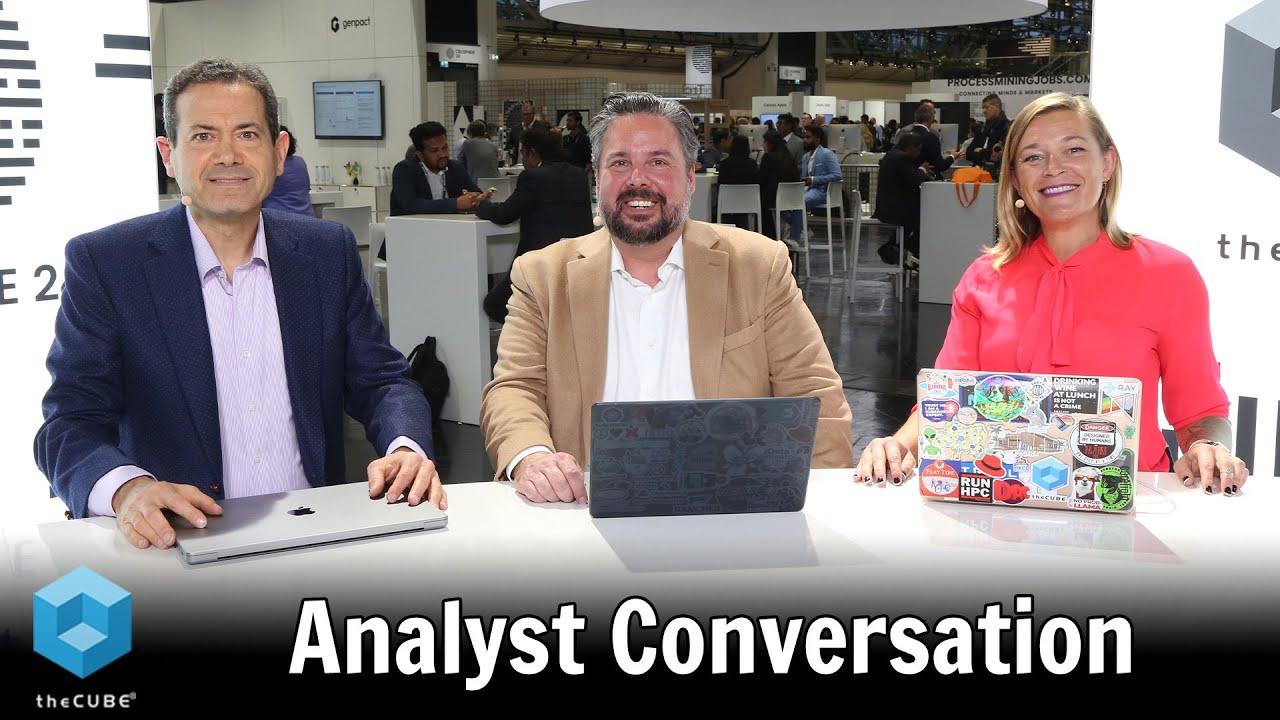
Savannah Peterson and Rob Strechay are attending Celosphere in Munich, Germany. Manu, the Field CTO for Celonis, discusses the evolution of business processes in the past decade, emphasizing the shift towards data-driven optimization and the impact of AI. AI-powered Process Intelligence is improving decision-making through real-time data. Celonis works across various industries, showcasing innovative applications like an AI co-pilot for truck loading. The focus is on integrating physical and digital processes to enhance process optimization. The future of AI ...Read more
exploreKeep Exploring
What event are Savannah Peterson and Rob Strechay attending in Munich, Germany?add
What is the big fundamental difference between doing something data-driven versus modeling and drawing a picture first in process design?add
What are some of the processes that can be optimized with the new advancements in AI and process mining technologies?add
>> Good morning, Process Excellent community, and welcome to Munich, Germany. We are here for two power-packed days at Celosphere. My name is Savannah Peterson, joined by my favorite co-host, Rob Strechay, for all of the action here. Rob, how are you feeling? This is our first time in Germany together.
Rob Strechay
>> This is great. I think it's a wonderful community that has really embraced, I think, some of the keynotes that we'll get into later. We're just energizing in the fact that how people are really getting ready for AI. And I think that, to me, is really exciting in the ways they're doing it here.
Savannah Peterson
>> I know, so many good examples. And we've got a fantastic person to do that, Field CTO for Celonis. Manu, thank you so much for taking the time this morning to hang out with us.
Manuel Haug
>> Yeah. Great. Great to be here. And welcome to Munich. So happy to have you here.
Savannah Peterson
>> Yeah.
Manuel Haug
>> So, I hope you enjoy the days.
Savannah Peterson
>> Absolutely. We appreciate y'all hosting us. You have been at Celonis for almost a decade, the first product manager there. I can only imagine what this journey has been like for you. How does it feel? What does this decade mark mean for you, and to see all these smiling faces inside here at the event?
Manuel Haug
>> It's just heartwarming, is maybe the one thing I would say. And it's super exciting seeing so many people being that hyped and excited about processes. When I started at Celonis, I didn't even know what a business process was. And now, 10 years later, almost here, having 3,000 people all excited about business processes, how to optimize them, and so on, you can imagine we never would have thought that we are here, where we are today.
Rob Strechay
>> Yeah. The challenge of process mapping is not a new one, obviously. Like you said, it's been a journey. But what I've been getting, we got to get here a little early, and we got to talk to some of the partners yesterday. We had a partner day yesterday, and some of the customers this morning, and then hearing from the main stage, from ExxonMobil and others, that seem to be accelerating in their journey for understanding processes and process mapping. How have you seen it evolve over the past five, 10 years there?
Manuel Haug
>> I think the big fundamental difference is doing it data first, or data-driven, versus doing it like modeling and drawing a picture first. Even before Celonis, or 20 years ago, you had process design as a discipline. So, people were designing how the companies should run. They were drawing the pictures. They were designing how companies should actually work. But these were dead documents. They didn't really connect to what's going on in reality. And when you do it the other way around, you start with the data and you try to start with reality, in a sense, what's really going on, you actually all of a sudden have a living thing. The process becomes like almost a living animal, or a living creature that you can work with. And it's telling you what's going on in reality. You can design it. When you change it, you see how it's impacting your day-to-day and so on. And it becomes really like an active work element for our customers, and I think that's the fundamental change. And what we have seen in the last years is that it's just scaled. So, not doing that on a handful of cases that we look at, but really at an entire global company, like Exxon, where you really look at billions of different items that are going through a process.
Rob Strechay
>> Yeah.
Savannah Peterson
>> We're dealing with more data now than ever for you to bring that up, and every part of the organization now generating different types of data. How is, and I know it's the biggest buzzword of the day and the biggest buzzword of the year, how is AI helping your customers solve those challenges, given this exponential increase in data, and the multitude of processes that come along with that?
Manuel Haug
>> I think what we see most is, if you look at LLMs and what they are doing, is they are just fundamentally lowering the barrier. You have the same information as before, but before that, you needed an absolutely super-duper expert to help you solve the problem. Now, you have access to a technology that actually makes it possible for you and me to actually optimize an accounts-payable process. I'm not an expert in accounts payable-
Savannah Peterson
>> I was going to say, are you assuming we're not super-duper experts? No, I'm kidding. I'm not, for the record.
Manuel Haug
>> But we have access to an expert that helps us, like understanding the data, interpreting the data, if you give it access to the data. I think that's what we heard at the keynote. For example, this fundamental idea that we give AI process intelligence as context, so that it actually knows what's going on in your company. That's the enabler, so that actually this technology then also really can help you.
Rob Strechay
>> Yeah. We see that all the time. In fact, data is the root of AI. You can't do AI without data. And it looked like the process intelligence to us, if you're going to go and build agents and agentic technology, you really need to understand, what is the process that that function, that agent is going to do? Are you seeing that people are leaning into PI being the root of AI for this and how they're... I know it's the tagline all over the place here, but to me, that makes total sense, to better understand how you build your agent.
Manuel Haug
>> I think so. So, what I always try to compare it to is, even if you don't use AI, if you want to have a consultant doing the job for you, you want them to do it based on the right information, the right facts, and the right understanding of your company. So, now, swap out the consult with an AI system and an AI agent that does a part of your process, of course, you want that AI system to also understand you.
You want not all of the judgment, all the decisions on generic knowledge. You want it to base the decisions on what's really going on in your company, what's special to you as ExxonMobil, what's special to you as BMW. Building a car engine is fundamentally different than petroleum. So, you most likely won't have these details taken into consideration when you execute or handle a part of the process.
And that's essentially what's powering the AI agent and why we see that many of our customers do that and then use that as a basis.
Rob Strechay
>> Yeah. I think to that point, I think a lot of the grounding and fine-tuning, before you even get there, you have to know what data you need, right?
Manuel Haug
>> Yeah.
Rob Strechay
>> And you're doing a lot with a lot of the ingestion of the data and things of that. You have, again, a lot of new technology that is coming out. Have you seen this as just people are looking at their processes, the amount of data that goes along with the processes is just exploding?
Manuel Haug
>> Yeah. And I think it's also, when you look at where we started with Celonis, we started very classically with these core enterprise systems, like CRMs, ERPs, and so on. But then, in the last years, when we went for, okay, now we really want to have the entire process reflected in Celonis and give AI, for example, access to it, of course, you need also unstructured data, like a document. Maybe an invoice comes in, in the form of a paper invoice to you. So, you need that piece of information as part of your process data. Or everybody of us is using email all the time. Emails contain so much information about how people are actually working, and you want to add that unstructured data to the process as well, and so on. This family of systems, or sources where we get to process the data, is growing and growing.
Savannah Peterson
>> I had dinner with one of your colleagues last night, and he was mentioning something that I found really striking, that no sector across the entire world has more than 10% of Celonis' business. Meaning, that you touch a variety of different industries and verticals. You being the field CTO, you've got to see some of the coolest use cases. You mentioned Exxon when we sat down. We saw that in the keynote as well. What are some of the other really exciting applications that you find in your job?
Manuel Haug
>> Yeah. So, there are a couple, actually. So, one of the most exciting ones that I saw, at least yesterday, yesterday, Alex mentioned it on the keynote, is we had a hackathon with certain customers. And there were some of the most exciting use cases I've seen so far.
One of them, DUXAH, who we also mentioned on the keynote, they actually have built in one day a prototype of an AI co-pilot that helps you actually reallocating the truck loadings. So, the I-assistant is helping the person who needs to decide, can the truck now go out of my location, or do they need to wait for another material to come?
It gives you a recommendation, let the truck go or wait. And it's doing that based on you're like, "It has context on, where are my production facilities and producing the goods that we are waiting for? We are waiting for some suppliers to deliver some of the stuff." So, they can take all of that into consideration and do an optimal truck loading for that. And that's just one example. And the cool thing is that they have been able to build that system in a day.
Savannah Peterson
>> Yeah, one day. And this was your first hackathon, right?
Manuel Haug
>> Yes. Yeah. Yeah.
Rob Strechay
>> Yeah. And I think one of the things that you just hit on it a bit is that Celonis, even though it's software and it's delivered as a platform to end users, it takes input from the physical world. There's processes and there's telemetry and stuff like that. ExxonMobil, they have wells, they have refining processes. You're taking data from, like you said, ERP, CRM, big data warehouses, such as Snowflake and Databricks.
How is it that when you see this, because I think the Exxon process head was talking about this, is that, when you start to see the planning of the trucks, the planning of the ships coming into port, that's really the physical meeting that software, and the cloud meeting the physical? How is it that you see that organizations look to lean into Celonis to really help bring those two together? Because that's almost like bringing AI and people together at that point.
Manuel Haug
>> I think ultimately, it's about what... Think about this process-first mindset. If you are a company, no matter what you're doing, you hopefully sell something to somebody. That's in the end of processes. And then, you have on the one hand side, digital documents that are involved in that. You have physical elements, like people meeting each other. And then, you hopefully produce a good in some way or another. Our good is, we write software. So, some people are doing that, and that's a process in the end that they operate. And our customers, most of the time, are more in the physical world. They produce a car. They maybe build an iPhone. And they produce that good and that's also, again, a physical interaction we see. But it's a process in the end, again. You have the digital side of it, but you also have the physical side of it where things get really done. And that comes together then in what we're doing at Celonis.
Savannah Peterson
>> There's been quite an evolution in the different types of processes that Celonis can optimize, especially since we've seen it all since almost day one, quite frankly. What are some of the processes that you think we're going to be able to optimize in the next couple of years with the new announcements that have just happened that we weren't able to do, or would have been excruciatingly slow or challenging to do previously?
Manuel Haug
>> Yeah. I think the biggest part is, in my opinion, what's happening outside of IT systems today. So, I think a big part of what companies are doing, like finance with ERP, customer relationship with CRM, IT service management in ITSM systems, that's very classical to what process mining and process intelligence is doing. But when you look at AI and how this enables us to actually understand unstructured information, and to understand even visual elements of the world around us, what that allows us to do is to understand and structure all of a sudden how people, for example, interact with each other. And that's not in a system today, right?
Savannah Peterson
>> Yeah.
Manuel Haug
>> Emails is always the easiest example, but a lot of the actual daily work of a process is people meeting each other, people talking to each other, people actually writing each other. And that's part of our process actually lived and executed. And adding that, and enabling to actually also influence that, is actually, I think, one of the biggest things we will see. And then, you could flip it around and also look at the physical world, what we just talked about. Think about a production facility. Reality is that only a fraction of these facilities are really IoT-ready. But what do you have? Actually, very often, you have images. You have images of the production lines. You have video of the production lines. Being able to also influence that and take that as a piece of a business process, I think will also be a big game changer to expand what we're doing.
Savannah Peterson
>> I can't wait to see how that pans out. Manu, this has been absolutely awesome. Thank you so much for taking the time. Rob, always a pleasure sharing this page with you. And thank all of you for tuning in to our 24 different segments here at Celonis Celosphere. My name is Savannah Peterson. You're watching theCUBE, the leading source for enterprise tech news.