We just sent you a verification email. Please verify your account to gain access to
Celosphere 2024. If you don’t think you received an email check your
spam folder.
In order to sign in, enter the email address you used to registered for the event. Once completed, you will receive an email with a verification link. Open this link to automatically sign into the site.
Register For Celosphere 2024
Please fill out the information below. You will recieve an email with a verification link confirming your registration. Click the link to automatically sign into the site.
You’re almost there!
We just sent you a verification email. Please click the verification button in the email. Once your email address is verified, you will have full access to all event content for Celosphere 2024.
I want my badge and interests to be visible to all attendees.
Checking this box will display your presense on the attendees list, view your profile and allow other attendees to contact you via 1-1 chat. Read the Privacy Policy. At any time, you can choose to disable this preference.
Select your Interests!
add
Upload your photo
Uploading..
OR
Connect via Twitter
Connect via Linkedin
EDIT PASSWORD
Share
Forgot Password
Almost there!
We just sent you a verification email. Please verify your account to gain access to
Celosphere 2024. If you don’t think you received an email check your
spam folder.
In order to sign in, enter the email address you used to registered for the event. Once completed, you will receive an email with a verification link. Open this link to automatically sign into the site.
Sign in to gain access to Celosphere 2024
Please sign in with LinkedIn to continue to Celosphere 2024. Signing in with LinkedIn ensures a professional environment.
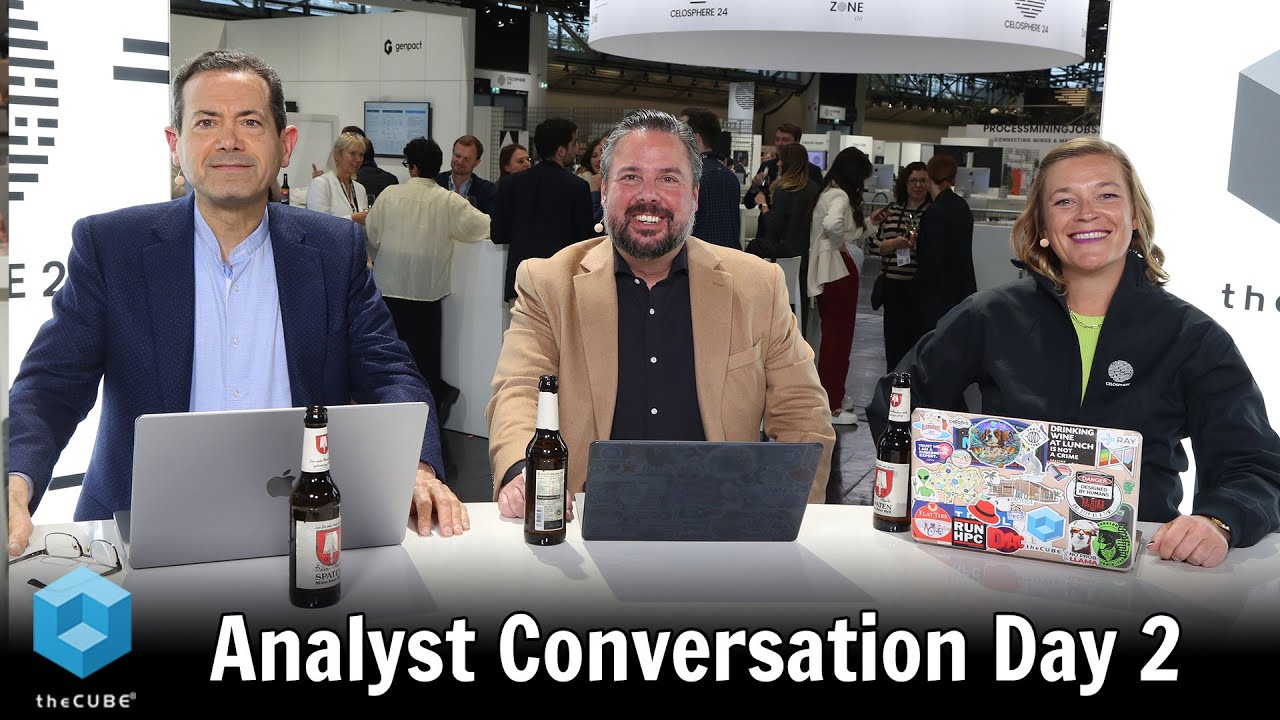
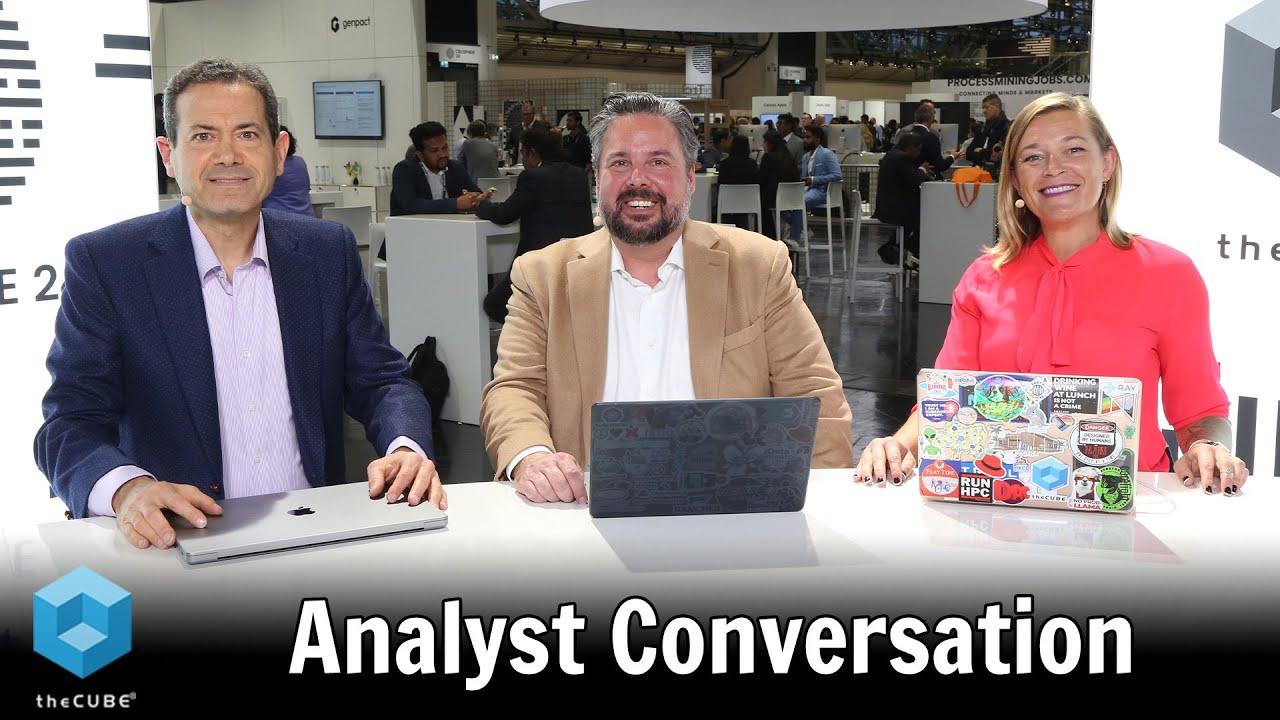
Savannah Peterson and Rob Strechay continue day two of Celonis Celosphere in Munich, Germany with a discussion on process mining and transformation. They delve into the analogy of moving houses to explain system transformation and the importance of making informed decisions. The conversation touches on SAP transitions, the value of Celonis in navigating choices around AI, and the significance of trust and transparency in processes. The System Transformation Readiness App is highlighted as a tool to help organizations prepare for transformations. Carrie provid...Read more
exploreKeep Exploring
What excites the speaker when they look at process mining in particular?add
What is the purpose of the system transformation readiness app in relation to Celonis customers?add
What is an example of a project that was done by students at Georgia College and State University in partnership with other universities and companies, focusing on improving procure to pay and order to cash processes?add
What do you hope to be able to say at the next Celosphere that you can't say yet today?add
>> Good afternoon, process monitors and welcome back to Munich, Germany. My name is Savannah Peterson here, with Rob Strechay. Powering through day two of Celonis Celosphere. Happy to be crewing the boat with you today.
Rob Strechay
>> Very nice. I look at this and I'm just so excited that we get to talk about things that really matter to these organizations as we go down the path in that river towards ultimate process utopia.
Savannah Peterson
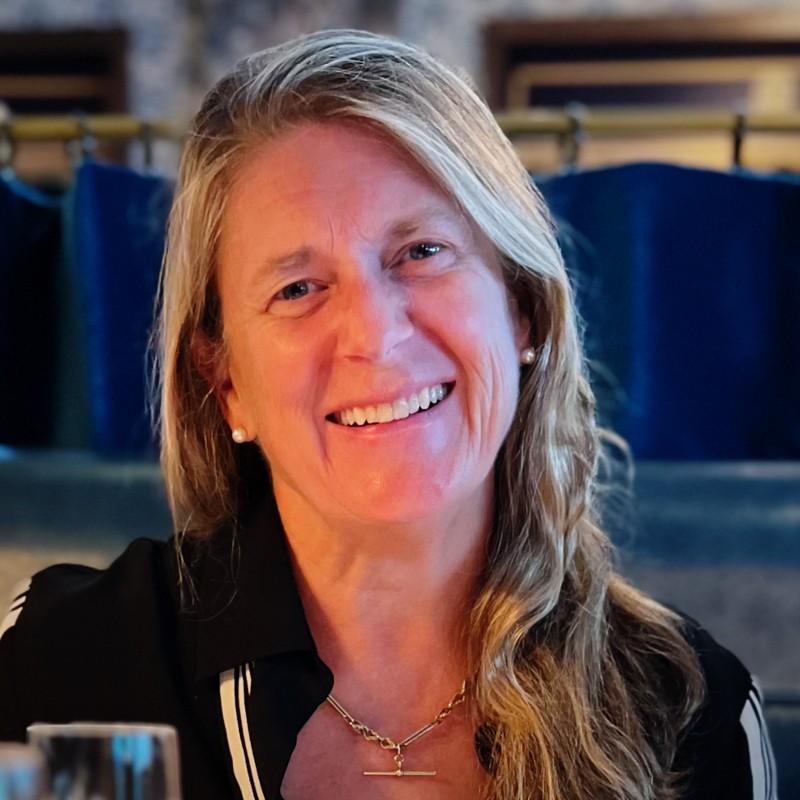
>> That was beautifully, beautifully said and I know someone else who loves to go down the river perfectly. Carrie, welcome to the show. Thank you so much for taking the time today.>> Thank you. It's great to be here. I love how you picked up on the whole rowing thing. We were talking about my weekend last weekend in Boston, where you live.
Rob Strechay
>> Oh, the Charles, yes. >> At the head of the Charles. It was a fantastic weekend. It was very beautiful. Nice to get to Munich as well.
Rob Strechay
>> That's great.
Savannah Peterson
>> I was going to say, can you row anywhere here?>> I'm trying to row after Celonis or after Celosphere is over. Munich is a really fantastic rowing city and I have a facility just 30 minutes south of here. I'm trying to go on Friday morning.
Savannah Peterson
>> Oh, cool!>> Fingers crossed. Anyone know how to get me in there? Let me know.
Savannah Peterson
>> Yeah. Well, you heard it here first. VIP when it comes to rowing here. This is going to be an exciting segment. You're enthusiastic about rowing but you're also enthusiastic about process mining and about Celonis. One of the many evangelists here. Tell us a little bit about why you get so excited about process mining.>> When I look at process mining in particular what excites me is thinking about it in the context of transformation. I use the analogy of moving house a lot when I talk about transformation. If I think about Celonis historically, it's how do you renovate, streamline, and improve the living experience in the house you live in? If I look at system transformation, which is where I spend a lot of time, I'm moving houses. You don't want to take garbage from the basement or the garage to your new house that's in your old house. You want to build a new house that is what you need. You might not have the appetite to renovate the bathroom in your old house if you're leaving. What I get excited about is when you think about the investment that organizations are making in buying a new house and building a new house, using Celonis to take a faster friendly approach to build what you need, be smarter about it, having good clarity on decisions and scopes. You don't redesign the kitchen three or four or five times and have lots of fights between the husband and the wife on what you really need, but really get to where the information you're using can be an accelerant and an aide to make good choices with.
Rob Strechay
>> I love that analogy.
Savannah Peterson
>> I'm digging the analogy. I'm going to actually borrow with credit.>> Steal it! Steal it!
Rob Strechay
>> I love how you bring this down to something that was mentioned in the keynote guest today, which is the transition in SAP flavors again. >> ECC to S4, absolutely, yep.
Rob Strechay
>> It sounds like two different houses. I think you're background in SAP.>> I have.
Rob Strechay
>> I've actually worked on SAP over 20 years ago, when I was working on an oil refinery. I coded and all that stuff. But how do you see that transition? I think, again, what you were getting at seemed like people... You did it one way. Don't reinvent the mistakes you made previously or hundreds of thousands or even millions of dollars in consulting just to try and do it without understanding the process first. That would seem a key where you'd want to start.>> It is, for sure. You're right. It's a big investment and likely the biggest investment most organizations are making right now. SAP has put a deadline of 2027 to move to a new house for everybody. In Y2K, we all moved house. Right now, we're all moving house again. If you're an SAP customer, you're in this, thinking about it, doing it, it's all happening. Imagine your whole neighborhood moving at the same time. Lots of demand for movers. If you do that, you want to be smart about it. To your point, if I think about the strategy organizations take, greenfield is I want a perfect new kit house, I want a perfect new home. I'm not making decisions. You do it all for me. We're all going to move to the same house. Brownfield. I like my house. I'm going to pick up my house. I'm going to move it onto a new piece of property. Bluefield is we're all going to debate what we really want and pick our favorite houses. Regardless of which you're picking, you want to know, when do we move, how do we move, how different is it for each of us? We don't want to debate and argue about things that like... You really think you like that movie room but we used the one at the old house like twice a year. Or you really... All those kinds of things become what's the scope? Scope is what allows your cumulative investment. If you're scoping right, you can be on time and on budget. With really expensive projects, you want to be on time and on budget. Now, you speak about investment and partners. If I'm a partner and I'm your builder, I want you to have your plan right. I don't want you to change your mind midway through. Then magically, it gets more and more expensive and you don't like me anymore as your builder. That's not great for me as a partner. You as the customer, you want to know that I've got good specs so I can give you a good deal. Everyone really wins when you have the right facts going in to know this is what we want, can we meet the timeline, what resources does it take?
What's really interesting if you think about all the customizations you do to your own property, just like your systems, what Celonis can do that is really unique and special is say what revenue does that custom code touch? What customers does that touch? If I need to make a decision on changing, well, should I, shouldn't I? Do I want that new functionality or is it just a gizmo? How do I manage my customers so we don't go live and all my employees who are doing a new job go, "I don't know how to do this," and I've got unhappy customers and more problems.
Savannah Peterson
>> Continuing to slay the analogy game, by the way. I think you brought up a really good point. Lots of shiny objects right now when it comes to AI, generative AI. How is Celonis helping people navigate that water as they think about 2027 as the benchmark?>> I think what's really brilliant is when you look at our partnership with Ardoq, you look at understanding AI, you look at the breadth of the landscape of your choices. Like moving house, what do I want? Well, I want everything. Stove creek or boiling the ocean, all those terms using this space. You want to be as intentional and prioritization becomes key in terms of picking what to do now. Is my program one, three, five, seven, ten years? Am I doing a short lift and shift? Am I doing a full design? What do I want to include now, leave until later? I'm going to move. I've got to leave space for that pool that I'm going to have later on. Whatever the case may be. When I look at those shiny objects, I think the gift that Celonis brings is giving the quantification and the value to make the right choices. Instead of it being what's my wishlist, I like that? Well, here's my wishlist and what's it worth? What's it worth to me now? What's it worth to me later? If my project is six years long, I might want to do some improvements along the way that A, make me better and get me better prepared but also save me money. And hey, who can't save some money? Similarly, if we say, "Okay, I'm going to get some more goodness for when I get to that new system, so these improvements I'm going to do when I get there." It allows you with Celonis to really see what's the right time to pick from those shiny objects where I'm going to get the most bang for my buck?
Rob Strechay
>> We'll stay with the house analogy. You have your main house and then you have your vacation house and then sometimes you have- >> .
Rob Strechay
>> I'm told. >> We can dream.
Rob Strechay
>> We're dreaming about this. We're going down this path where you have the two houses and in your vacation house, you have the kitchen of your dreams. But your bedrooms are maybe not as nice or your master bath is not as nice or something of that nature. But in your main house, you have your suite that you love. Do you see people similarly looking at the systems as they're going through these transformations saying, "Hey, I could actually have that kitchen in my main house. I could sell off my vacation house because I don't use it that often." But let's do this as part of that transformation and bring those two systems together.>> Yeah. A couple of really good points there. One is in our system transformation readiness app, we can get a comparative grasp between your vacation house and your main house and whatever other house you've got. You can say, "What does this look like? What does that look like? What choices do I want? Which variation? Which style is most advantageous so I can take best advantage of that. For one, you can pick the pieces and parts that you want and see the difference. For two, you can prepare for each accordingly. What I'd also say that's interesting is when you think about large organizations, what's right for one geography might not be right for the other. The big fancy kitchen that's really good for your main house or the bedrooms might not be needed. I'll take that to real life. I've got business in four geographies. But certain countries are my major businesses and other countries are my minor businesses. I don't need to over architect for those smaller pieces of business. What we're also seeing organizations do is right size the small, medium, and large T-shirt size of what the solution set is to bring to my major industry and geographies and businesses and might not be in my small. By virtue of seeing what activity I have now, I can design accordingly and bring either what it is I need as well as select the best to apply to my design going forward.
Savannah Peterson
>> Something that I noticed in our notes here, we talk a lot about trust and transparency. We're talking about moving house. But when we're thinking about this, we're also thinking, "Okay. Well, do I trust the information that I've gotten here? Am I sure that this builder has my back and this is the cheapest way to get this material?" Or whatever that might be. We're talking about people, we're talking about processes. Very sensitive, sometimes a very emotional process as well. I love that in here it says, "Facts are friendly." How do you perpetuate that belief across the organizations that you work with? I think that's mission critical, quite honestly.>> I led change management globally for Coca-Cola Enterprises, which is the bottler for Western Europe and North America.
Savannah Peterson
>> mentioned as well. That's his only business. >> I come from a chain background, so all this beautiful technology, my litmus test is also how do people's jobs change? There's a whole industry of building great houses, but living in it is where we really enjoy that house, right? Building a great solution, employing it, seeing it, and serving customers is where it comes to life. Facts are friendly can make stressful, anxious, difficult decisions and situations so much easier to understand. If I understand it, I can trust it. If I trust it, I can act upon it. When you look at scope for these programs, you've got business and IT and competing business demands because I think I'm special and different, you think you're special and different. We've only got so much to choose from and who's going to win? Well, facts are friendly. You say, "You think what you want is important, so do I. Which one of them is going to affect our customers our revenue..." And make those choices, which takes the emotion out of that debate and gives you the opportunity to align and track through governance and pace of the program back to on scope, on time, on budget, and on value. It allows us to get that scope right so we stay on time and on budget. Those debates become less. When I think I have a special new toy that I want to add, we can figure out, does that feature really make sense or not?
Rob Strechay
>> You talk about the transformation optimizer, I think that's what you called it.>> System transformation readiness app. But I like transformation optimizer. They might need to use that. Yeah, T-O.
Rob Strechay
>> T-O. Is this something that potential customers or customers engage with you to use? Is it something they download? Is it something they buy? What is it?>> Sure. If you look at a lot of Celonis customers now, some have an entire footprint of their organization, others have particular areas that they've got magic going on. If you think about a transformation, you need to look at everything. You don't get to just move your bedroom; you have to move the whole house. Back to they're renovating, it's improving the bedroom. If you're moving house, it's everything. The system transformation readiness app allows you to look across your entire landscape for the purpose of that move. You're not looking at necessarily mining and renovating every room of your entire house, nor do you have the appetite or time or budget or resources to do that. But you do need to scan and figure out what to take, what to do to make that move happen. In terms of how you consume that, there is a skew, there is a way to consume that piece of access, if you will, to Celonis, that isn't process-based where every process is something you need to pay for separately, but rather looking at the system transformation as a whole. The Celonis process management, so the modeling side of things, also couples into that so we can automatically model against that. We can also look at things like process navigator where, back to the user, not only can you use standard functionality from Celonis like action flows to say, "Hey, you need training, so we're going to trigger back training for you." Some of these are more like a punch. But hey, you need training. But also, unstructured data like policies and procedures, the things that I need to do my job. Back to my litmus test of how are my people's jobs changed? How do you help me do my job? Which at the end of the day, the value comes from employees doing their job right and helping customers.
Savannah Peterson
>> And feeling great about it.>> And feeling great about it.
Savannah Peterson
>> Feeling great and bringing us back to the boats and back to the water, I know you and I are big water level rises, we all rise together. Tell me a little bit about the work you're doing with Women in Process Mining. >> A couple years ago, Christine Hunter from the organization started Women in Process Mining. If you think about process mining as a whole, Celonis has really introduced that to the world at large, like the market space has grown. It's a new discipline that not everyone understands. Absolutely, , in high tides, all boats rise. If you look at and Celonis and , there's a lot of capability and wisdom that we can all bring to all of the organizations who are trying to get smarter around process mining, task mining, process intelligence. We bring our perspective, others bring their perspective. But together, we can educate and lift students, organizations, et cetera. Some of the work we've done, I'll give an example. Last year, I did some work. I'm on the IT advisory board for the Georgia College and State University. They partner with the University of Munster as well as the University of West Georgia. They do a class every year where the students solve a problem for a company. Southwire, who happens to be a big SAP as well as Celonis customer was looking at how do we take better advantage of all the toys we have? The project we did was how might we, so design thinking, how might we improve the procure to pay and order to cash process? We had 40 students from all of those organizations come together and they learned Celonis and they knew SAP. They studied SAP at school and Celonis at school. They worked with to solve against that. We then took... It happens to be that the woman who runs the program at GCSU is a woman. Happens to be that a lot of her students were women. We also had all of them come and speak to the Women in Process Mining webinar to talk about some students on through. We had the academy in, we had Southwire in, we had the teachers in, had the customers in, all of that. You think about for them, you've now started to lay a foundation at a student level, how does this help? They as a student can go into any organization and say, "I have experience looking at how to be smarter with how to run your company."
That's one example of really how do we start to bring together different generations, different knowledge.
Rob Strechay
>> That's really powerful.>> It is. We had them speak at the Global Women in Technology Summit. Which for them is a huge opportunity to do this kind of work, which is new in your career when you're young or new in your life when you're young. It's really, really exciting and fun.
Savannah Peterson
>> Yeah. It warms my heart to think about the people impacted by that, that then believe they can make change and do things like you've done with your career. But also really, like to your point, we're just at the beginning of adoption of this technology despite Will having worked on it since the late nineties. I think it really is an opportunity and we can feel it in this room. I mean, Rob and I have been talking about it all week. Process mining is having a moment right now. Yes, there's a huge hype curve around AI.>> It's the thing.
Savannah Peterson
>> But it's a thing right now.>> It's a thing.
Savannah Peterson
>> And it's not just in the shadows and it's not just for the data science nerds of the world. It's very much front and center. Frankly, I wish people thought about optimizing their processes in and out of their professions all the time because it really matters to me in my brain. Carrie, this is such a fascinating conversation. All right. I have one final question for you because we're just plowing through time. When we have you on the show at next Celosphere, because obviously this is all going to happen again. You're way too great to not- >> It'll still be a thing.
Savannah Peterson
>> Yeah. It will definitely still be a thing. What do you hope to be able to say then that you can't say yet today?>> I would like to say a year from now that every one of our SAP customers as well as customers in Oracle and otherwise are really looking at how to take the reach of the wisdom you get from process intelligence beyond a use case across their enterprise. That really democratizes to your point, for capability for every individual to look at how to be smarter at what they do in a way that is constructive not only for themselves but for their company and their customer.
Savannah Peterson
>> Beautifully stated. More purposeful work, more excitement about that, and more time to do great things in your personal life.>> Indeed.
Savannah Peterson
>> Carrie, thank you so much for hanging out with us.>> My pleasure. Thank you.
Savannah Peterson
>> This has been one of my favorite segments of the show without question. It's been quite a right down the Charles today.
Rob Strechay
>> Yes.
Savannah Peterson
>> Rob, thank you for hanging out as always and continuing to crush through that. Five interviews in a row.>> A rose between two thorns.
Rob Strechay
>> Yes. >> I love it.
Rob Strechay
>> That's the first time I've been called a rose. More like garlic but anyway.
Savannah Peterson
>> We're going to let that analogy just rest here.
Rob Strechay
>> Let it go.
Savannah Peterson
>> We are getting close to lunch. I know I'm getting a little hungry. Wow. Okay. Carrie, Rob, that was fantastic. Thank all of you for tuning into the five interviews. We've already had five of 13 today folks here at Celonis Celosphere in Munich, Germany. My name is Savannah Peterson. You're watching The Cube, the leading source for enterprise tech news.