We just sent you a verification email. Please verify your account to gain access to
Celosphere 2024. If you don’t think you received an email check your
spam folder.
In order to sign in, enter the email address you used to registered for the event. Once completed, you will receive an email with a verification link. Open this link to automatically sign into the site.
Register For Celosphere 2024
Please fill out the information below. You will recieve an email with a verification link confirming your registration. Click the link to automatically sign into the site.
You’re almost there!
We just sent you a verification email. Please click the verification button in the email. Once your email address is verified, you will have full access to all event content for Celosphere 2024.
I want my badge and interests to be visible to all attendees.
Checking this box will display your presense on the attendees list, view your profile and allow other attendees to contact you via 1-1 chat. Read the Privacy Policy. At any time, you can choose to disable this preference.
Select your Interests!
add
Upload your photo
Uploading..
OR
Connect via Twitter
Connect via Linkedin
EDIT PASSWORD
Share
Forgot Password
Almost there!
We just sent you a verification email. Please verify your account to gain access to
Celosphere 2024. If you don’t think you received an email check your
spam folder.
In order to sign in, enter the email address you used to registered for the event. Once completed, you will receive an email with a verification link. Open this link to automatically sign into the site.
Sign in to gain access to Celosphere 2024
Please sign in with LinkedIn to continue to Celosphere 2024. Signing in with LinkedIn ensures a professional environment.
Executive Director Business Process ManagementKarl Storz
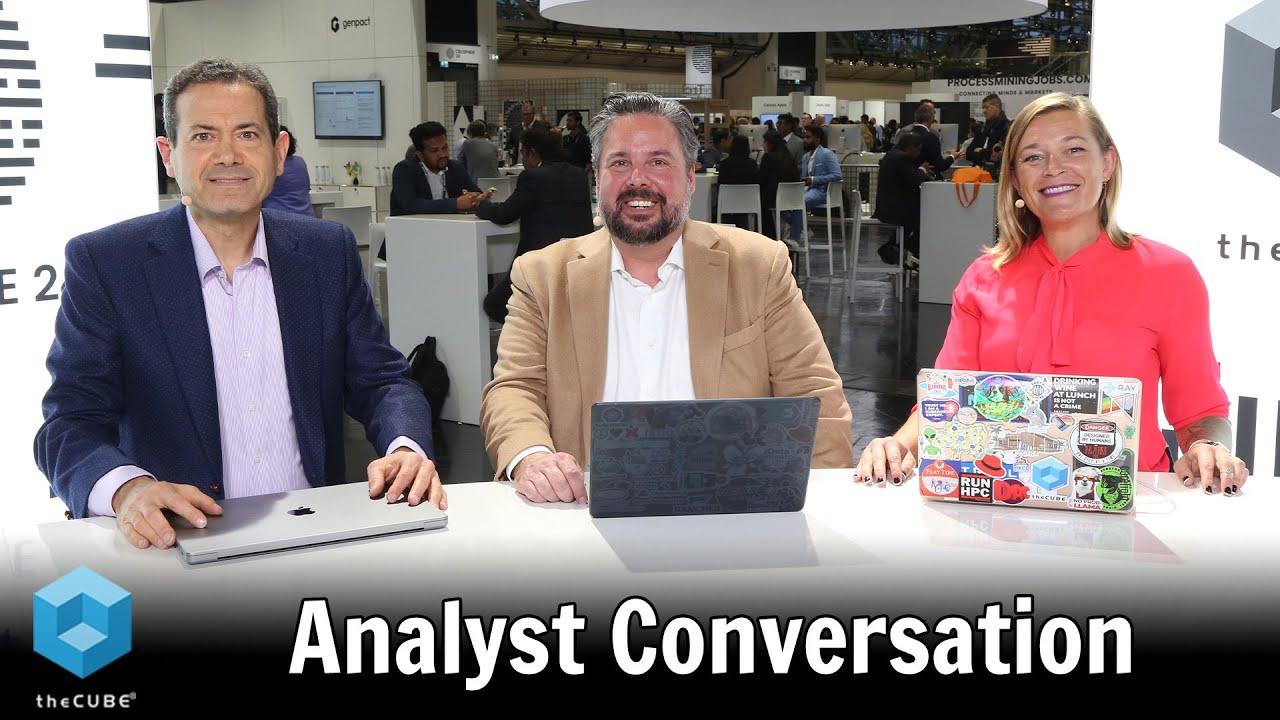
Efficiency fans, in Munich, Germany, Savannah Peterson and Rob Streche discuss process mining with Etienne from Karl Storz, a leader in medical engineering. Karl Storz is known for endoscopy and robotic surgery. Managing processes in a complex environment with efficiency, quality, and compliance is challenging. Celonis was brought in to optimize order to cash processes, revealing variations and inefficiencies. The integration of Celonis process management and process mining is a focus for the future to enhance efficiency and effectiveness. AI is utilized for ...Read more
exploreKeep Exploring
What is the first question that should be asked when implementing process mining in business operations?add
What are the differences between Celonis process mining and Celonis process management, and how do they complement each other to provide a holistic picture of processes?add
What are some key steps involved in using Celonis process management for optimizing order to cash processes within a company?add
What is the use of AI in process distractions and Celonis process management?add
>> Good morning, efficiency fans, and welcome back to Munich, Germany. We're here on day two of Celonis Celosphere. My name is Savannah Peterson, joined by my fabulous cohost, Rob Streche. Rob, how're you feeling today?>> I'm feeling good. I feel the energy of the guest that we have on. They're very excited. I think everybody may have been watching the football match. Some people are annoyed. Some people are not, but it's great to be here and hear the customer stories and about the innovation and where they're taking the product.
Savannah Peterson
>> Yeah, absolutely, and speaking of innovation, we're going to be talking about saving lives and process mining with our next guest. Etienne, thank you so much for taking the time to hang out with us today. How're you doing?
Etienne Kneschke
>> Excellent, and the atmosphere here at Celosphere.
Savannah Peterson
>> Yeah, it must be very cool for you to be hanging out with the community of people who are also doing a lot of really exciting things. So because right away when you sat down you brought it up, I've got to ask, tell us how Karl Storz saves lives and how you decided you needed Celonis to help you continue to do that.
Etienne Kneschke
>> Perfect. Let me introduce myself first. I'm Etienne, and I'm the head of the global business process management at Karl Storz. Karl Storz is a hidden champion in the medical engineering industry. So we are a global leader in the area of endoscopy as well as integrative operating room solutions and in the field of robotic surgery.
Savannah Peterson
>> So I'm curious, because you say you're a hidden champion. Why do you say hidden?
Etienne Kneschke
>> Hidden means for consumers, they don't know us. But if you're in a hospital and if you get an endoscopic laparoscopy for example, then the chance to be operated with our instruments is quite high.
Savannah Peterson
>> I can imagine there is a lot of pressure on the development of said instruments and making sure that you're ensuring quality, reliability, many things, particularly in that environment. I can't think of a more critical environment. What are some of the challenges that you work with your team on to try and ensure never, ever mess up?
Etienne Kneschke
>> In the end, it's about complexity and increasing complexity. We have to take thousands of things into mind when you manage processes and as we provide our products to our customers. We have to think about efficiency, effectiveness, costs, time, need to deliver our products as fast as possible, because it's about expensive products. And of course we have to struggle with regulation, with competition, with digitalization, and with global supply chains. So it's an interesting field of complexity, and the question is, how can you be aware about all the different aspects to manage your processes in a sufficient way?>> When you brought Celonis in, where did you start? What processes did you start with? You probably were doing some process mining before, but bringing in the platform really take it to the next level?
Etienne Kneschke
>> I think when you implement process mining, your first question should be, what are the most important processes where it can leverage the benefit, right? Mostly, these are in the area of operations, order taken, purchase to pay, and make this stop, accounts payable, accounts receivable, et cetera. You approach these and you added value processes. This is also how we started, and then we decided, okay, let's start with our order to cash process, because this was the process with the highest performance.
Savannah Peterson
>> Highest performance, wow, yes. So-
Etienne Kneschke
>> Sorry, highest performance with regards to the rate of execution, not highest performance from quality perspective.>> It was the busiest. It was the most-
Etienne Kneschke
>> The busiest process where you have the biggest leverage with regards to efficiency and effectiveness.
Savannah Peterson
>> I can imagine there's a lot of different things happening in a lot of different places that you need to see real time too, from a supply chain side, from QA, from a lot of different things. Walk us through the process of how you brought in Celonis as a tool and where it's at now, what that evolution has looked like.
Etienne Kneschke
>> Yeah. Here, I need to talk about Celonis process mining on the one hand, but also about Celonis process management on the other hand.
Savannah Peterson
>> I thought you might take us there.
Etienne Kneschke
>> Of course, it's my favorite topic, because I talked about different information we have to have to measure our processes. We need to know, where do we have to adhere to regulations? Where do we have risks and controls? Where do we have requirements from QM, et cetera, on the one hand? This is what we managed with Celonis process management. So we document processes, and here we enhance our process with first operation data. That's regulations, policies, risks, controls, requirements, IT infrastructure, et cetera, et cetera. So here, you get a really holistic picture about your process. Process mining on the other hand, yeah, you can reconstruct your processes based on digital footprints and IT systems. So here, you can gather information about utilization rate, automation rate, performance in general, cycle times, costs, of course, et cetera, et cetera. If you bring both together, then you have a really holistic picture. Then you can make quite good decisions to manage your processes in the right direction.>> How did you see or what were you surprised by? Did you find any bottlenecks or inefficiencies when you started to look at this, maybe in your supply chain?
Etienne Kneschke
>> Of course. I think quite often, we try to look for the big opportunities to optimize the process. As we started and we connected our order to cash process, then we took a look at the growth explorer. As you know then you can push up the sliders to add one variant after the next and one activity after the next. Then we saw a big This was really impressive, because it's not about only one use case or one bottleneck. For me, the philosophy was to understand the whole process end to end first, through the right things right. The big finding was, quote often it's not about the big thing you can optimize. It's about the many, many small things. You have to re-engineer. You have to optimize more or less in a continuous way.>> So this was more, you were able to see because it's more object-oriented, and the processes are interconnected, and you can see all of the different paths because like you said, cash or order to cash, you're following the customer's journey once they ordered it all the way to when they paid. Are there things that you saw that really surprised you with even you're getting the materials? So were there any roadblocks in getting the product out to the customer or things of that nature?
Etienne Kneschke
>> Of course. As I said before, I think the bigger challenges that over the last decades in our digitalization journey, more and more processes disappeared that existed. So we have lost the big picture, right? What happens when I do something here? And what is the correlation from order entry to the chess piece, et cetera. Of course, these are a lot of change activities and rework activities we weren't aware of. Maybe sometimes you design a process on the one hand, and the question is, how can you control that you execute the process as the process is defined, right? This is something you can demonstrate by Celonis process mining. Do you do the steps in the right order? Where do you have bottlenecks, rework activities, change activities, et cetera? Then of course you need to reduce to become more efficient and effective and to streamline your process and to reduce lead times, et cetera.
Savannah Peterson
>> Were there any surprising discoveries that you can share with us when you went through this process?
Etienne Kneschke
>> I think the biggest surprise is quite simple. It was the number of variations. So we had a lot of variations in our process world, depending on what employees do. Because maybe different employees end an order differently, and you are not aware about this, because you cannot shadowing employees the whole day, yeah? So this was quite surprising when it comes to variations.>> When you started to roll this out, how did it go with people who were not in your part of the organization? So you're rolling it out so that they get more visibility. How was the adoption and how did they really take in on, hey, we've now modeled, and we're managing this process? Here's the visibility into some of the bottlenecks that we're seeing for you. How were they taking that? Because it's the cultural, the people aspect where maybe they're experts in their process, but just used to a different level of visibility.
Etienne Kneschke
>> I think process management in the end is 70% people business, right? And people are quite different. So actually over having transparency can create fear and uncertainty, of course. Here, it's quite important how you work with the employees and how you provide this transparency. We are quite open, though we provide transparency to the employees, and of course they shall use it to understand what they do. So in general, there is no black nor white. So it's from employee to employee quite differently. So some were really open and amazed. They wanted to immediately start to optimize the process based on the information, because they see a lot of opportunities. Others maybe are more reluctant because they have the feeling it's about controlling that, but it's just not. That's an idea about process mining, because the people execute the process of course, and maybe they have also lost the big picture over time when you grow and when you have global supply chains. Correct? You have a manufacturing side, a logistics center here, and the administration part somewhere else. So you lose the picture. This is something we need to explain, we need to convince, and of course a lot of people business necessary to bring people on board in order to use it sufficiently.
Savannah Peterson
>> What I'm hearing you talk about is a balance of trust and transparency with really the human psyche, which can be quite an adventure. Humans are usually the biggest variable in a lot of different systems. This might be a silly question, but I'm curious to hear your answer. How do you know which process or order of operations is best when you're looking at all these different ways that people are doing different things? How do you know which one to bring across the rest of the organization?
Etienne Kneschke
>> A quite important topic, especially when we talk about Celonis and process mining. Let's take an example. Let's take an order to cash. My first question is, has the company only one order to cash process? For example, we have variations. We have rental, loaner, with our new thing, new goods. We do services, et cetera. It's all about order to cash flow, this use. Here again, Celonis process management comes into play. The first thing you need to do, you need to architecture your processes. That is something you do in our Celonis process management tool. Then we have set up the same architecture in Celonis process mining. So we avoid confusion, for example, to provide different views, different visualizations, et cetera, different terminology languages. To your point, with section abroad, you can also differentiate processes in a better way. Then you can see, okay, where do I have my best breakfast places? For example, we have more than 14 sales buyers across the world. That means we have an order to cash process in more than 40 sales types. If you have an architecture where you can really concrete visualize the process from site to site and then you set up benchmarks, then you can see, okay, where do I have best practices? And where's worst to exchange ideas to bring this best practice to all the other facilities and to learn from each other?>> I think one of the things that's really interesting is that process mining and process intelligence is really foundational, is data. You have to have the right data to bring that in. One of the other things that goes along with that is AI and being able to. Are you guys exploring AI and using it at all with this process intelligence?
Etienne Kneschke
>> Yes. We use AI for process distractions because when we talk about Celonis process management, one time-consuming topic is to describe process, is to model growth. This is mainly done in a manual way. Of course people are reluctant to do this. You have to model the process and you have to enhance all the operation of data. You have to do descriptions.
Savannah Peterson
>> It takes a lot of time.
Etienne Kneschke
>> It's really time-consuming, and here we use AI, for example. So also, we use AI to make descriptions. In the future we want also to use AI to bring operational data to the processes. So AI can recommend us, okay, maybe this policy applies to this process, but it's not met there. There are some requirements, and this policy, you have to call for the entrance process. I can't meet this requirement in this process. This is a really, really cool thing, because for the time being, this is a really manual thing. The one thing is of course to do it once manually, but you have to keep it up to date.>> It's hard to see.
Etienne Kneschke
>> Day by day, and this is about millions of relationships and mappings you have to do. This is a really, really huge topic. Yeah, AI can help as quality manager, as quality assurance to make sure that these are up to date and adhere to regulations.
Savannah Peterson
>> I think, yeah, that's an outstanding example, and what an efficiency gain. It lets you iterate on that over time quite quickly. Yeah, I can see all the advantages there.
Etienne Kneschke
>> Can I add something here?
Savannah Peterson
>> Yeah.
Etienne Kneschke
>> Because as process management department, we ask our business to make their processes efficient. But as process management from our own processes, and this process is really, really important to have efficient and effective business process management processes, because the main thing you provide is the value for our business to optimize their processes. That's why it's extremely important to have this data and also supported by AI so that we are able to provide this data day by day to our operations and business to streamline their processes in an efficient way.
Savannah Peterson
>> That's almost a meta-statement, right? You're using the process to make yourself more efficient, make the company more efficient. It's just a wonderful efficiency cake all around. Etienne, this has been a fantastic conversation. I have one more question for you. When we interview you this time next year at next Celosphere, what do you hope to be able to say then that you can't say yet today?
Etienne Kneschke
>> I would like to talk more about integration of Celonis process management and Celonis process mining. So we have started this with Celonis and we generated a lot of great ideas, especially to increase the efficiency and effectiveness of the process management itself. So I would like to talk more about this integration and how to exchange performance data from Celonis process mining with operational data we enhance on our processes and our Celonis process management tool. If we can bring both together, that's my dream for the next two years.
Savannah Peterson
>> Well, I look forward to hearing about how you've achieved that dream and sharing that story next year. Etienne, thank you so much for taking the time. This has been lovely. Rob, as always, fantastic questions, and thank all of you for tuning in wherever you might on this beautiful rock. We're in Munich, Germany, day two of Celonis Celosphere. My name's Savannah Peterson. You're watching TheCUBE, the leading source for enterprise tech news.