We just sent you a verification email. Please verify your account to gain access to
Celosphere 2024. If you don’t think you received an email check your
spam folder.
In order to sign in, enter the email address you used to registered for the event. Once completed, you will receive an email with a verification link. Open this link to automatically sign into the site.
Register For Celosphere 2024
Please fill out the information below. You will recieve an email with a verification link confirming your registration. Click the link to automatically sign into the site.
You’re almost there!
We just sent you a verification email. Please click the verification button in the email. Once your email address is verified, you will have full access to all event content for Celosphere 2024.
I want my badge and interests to be visible to all attendees.
Checking this box will display your presense on the attendees list, view your profile and allow other attendees to contact you via 1-1 chat. Read the Privacy Policy. At any time, you can choose to disable this preference.
Select your Interests!
add
Upload your photo
Uploading..
OR
Connect via Twitter
Connect via Linkedin
EDIT PASSWORD
Share
Forgot Password
Almost there!
We just sent you a verification email. Please verify your account to gain access to
Celosphere 2024. If you don’t think you received an email check your
spam folder.
In order to sign in, enter the email address you used to registered for the event. Once completed, you will receive an email with a verification link. Open this link to automatically sign into the site.
Sign in to gain access to Celosphere 2024
Please sign in with LinkedIn to continue to Celosphere 2024. Signing in with LinkedIn ensures a professional environment.
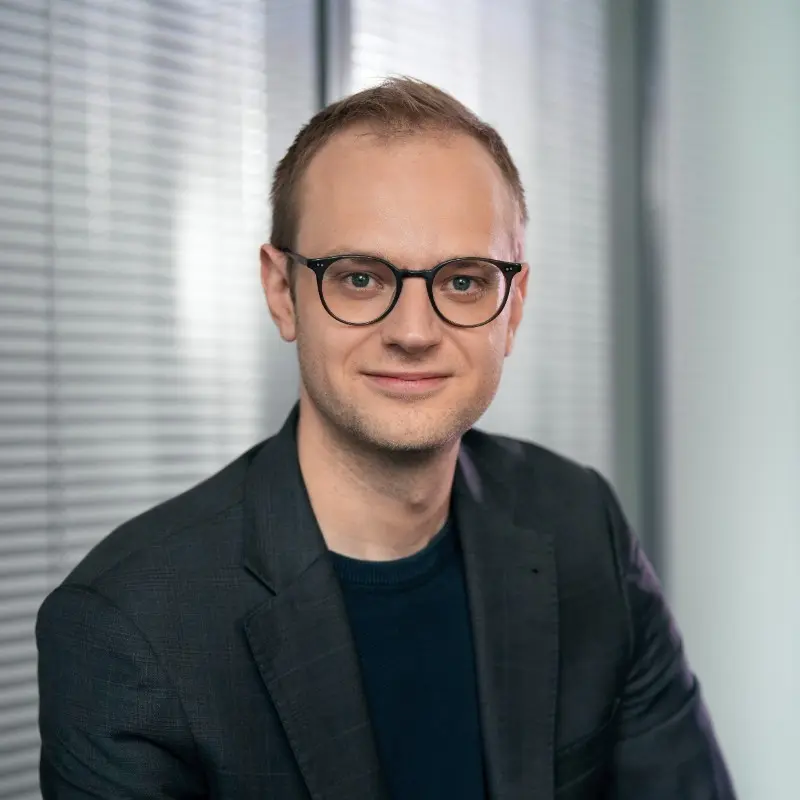
Attendees at Celosphere in Munich, Germany heard from Alex on the success of AI in enterprise and the importance of process intelligence in making AI effective. Customer success stories from companies like Pfizer and Northwestern Healthcare were highlighted. The conversation also covered Celonis' platform versatility, partner collaborations for industry-specific solutions, and sustainability efforts like ThyssenKrupp Rasselstein's carbon emissions reduction. The concept of a process network to enhance supply chain visibility and efficiency was discussed. Alex...Read more
exploreKeep Exploring
What is the difference between AI and enterprise AI?add
What does being a platform mean and how can it be used in different processes?add
What are some examples of companies using process visibility to drive change and motivate action in terms of efficiency and reducing carbon emissions in their supply chain and distribution network?add
What led to the creation of a network between companies like Conrad Electronic and Schukat Electronic, focused on discovering friction points in processes that go cross-company?add
What will be the focus of the discussion on the ecosystem today and what are some examples of the bleeding edge technology that is growing very fast?add
>> Good evening, Celonis fans, and welcome back to Celosphere. We're here in wonderful Munich, Germany. My name is Savannah Peterson, joined with my fabulous co-host, Rob Strechay, for our finals and perhaps most fascinating segment of the day. Before we introduce our guest, who needs no introduction, Rob, what's the coolest thing you learned today?
Rob Strechay
>> I think it's how the process intelligence graph and how it brings together a lot of different pieces from the models to the actual how the process is actually being implemented in all of the different deviations from it. But going from strings to things is really the key out of that.
Savannah Peterson
>> Yeah, I think it's just been absolutely fascinating. Here to conclude our fantastic day of programming is the man who kicked it all off this morning. Alex, what a keynote today. That was fantastic. I loved the music from the different eras. It was a really nice-
Rob Strechay
>> I could relate.
Savannah Peterson
>> Yeah.>> They charm and track your dance on stage. It's dangerous. You know about that?
Savannah Peterson
>> The fact that you went for it, though->> A German mathematician. It's not my sweet spot, but it was fun.
Rob Strechay
>> Yeah.
Savannah Peterson
>> I thought it was great. I thought you brought a lot of authenticity to the stage, and a lot of great stories to the stage, a lot of great examples. How did it feel for you to be up there, looking at 3,000 of your favorite community members, and the energy in that room?>> Well, I always think that's a huge reward. Hugely rewarding, super exciting, because those are our customers, our partners. A lot of our seller notes are there. And it's like one of the best days for me of the whole year. It's like Christmas and birthday combined. And seeing the energy, seeing the enthusiasm, seeing the customer stories, yeah, it was amazing.
Rob Strechay
>> I think what was fun is we actually got together a little bit of the Partner Day, and you were up on stage. You were talking about how you're 400 worldwide partners now. And I have a funny feeling that's going to grow. >> Oh, yeah.
Rob Strechay
>> Because we look at this, and feel free to expound on this, is that without process intelligence, really, it's near impossible to do AI.>> 100%.
Rob Strechay
>> And to do AI agents right.>> 100%. Well, we always say, no AI without PI, especially not on the enterprise side. But what's the difference between AI and enterprise AI? Well, enterprise AI needs to understand something about the enterprise. And each enterprise is different. You have proprietary processes, customer relationships, vendor relationships. And all that's scattered in a lot of different systems that were implemented over the years. Different data models, they don't speak the same language. And process intelligence allows you to stitch together a consistent process layer, a semantic layer, really, or if you want to say, a common language. And that's what our process intelligence graph does. It's not just the data, it's also the context, all the KPIs, metrics. What's late? What's on time? What are our designs? What are our models? What are the responsibilities and the roles in the company? And that is really, really important and foundational to make agents work. Because if the agents don't know all your business flows, they can't automate for you, they can't execute for you, they can't help you. And that's what we see with real customers every day. So, we think that's very exciting.
Savannah Peterson
>> Speaking of those customers that are benefiting from your wonderful ecosystem that we got to hear about on stage, lots of value realized. Just in case folks weren't in the room at the keynote, could you give us some highlights from that? >> Well, I think one highlight was Pfizer, because they shared that they started at 100 million three years ago. That's where they got to by two years ago. Last year, they were at 205 million. Today, over 320 million in value realized. That's pretty big numbers, even for a big organization. There was Exxon. When they think about value, they said that they think in very big ways about value. It's a huge organization. So, there was lots of those examples.
But it's not just the monetary value. Northwestern, big provider of healthcare in the US, they talk about how they reduce how long patients have to be in the hospital. And that, it touches a much broader opportunity. Of course, that's going to take cost out of delivering healthcare, but it's also going to improve people's lives. So, I think there's so much value. We talk about the fact that processes, people don't know this, but obviously, people at Celosphere do, but maybe people behind the screen still need to learn about this, are the greatest level for value and the fastest level for change in an organization. It's something you control, you can change, you can do something about. And that's what we're here to help with.
Rob Strechay
>> Again, you're out there as co-CEO, having conversations all the time, probably with your peers at these companies. They must be asking you, saying, "Hey, you're building AI. You have your own. You're allowing us to use platforms from the cloud providers and others. You're not forcing us out of things, or lock in." They must be also looking at that and saying, "Hey, how do we really achieve AI faster? What do we need to do to do that?" What are some of the hints that you give them.>> Right. I think really, it's about creating that foundational layer, because the models are going to get better. And they have room to go, right?
Rob Strechay
>> Yeah.>> They can do some things already, but they get better every year. They going to get better. But do you have the foundations in place? Do you have a common language to store your process knowledge? Because if you don't, how is the AI model going to understand you? Do you have a common Process Intelligence Graph across the different systems to capture the data? So that when you, for example, want to understand, show me all the processes that are running for a customer, you can pull that with one API code, in one common language. Those are the things that you need to do now. By the way, they pay for themselves because they can drive huge value in itself, getting that visibility. There's AI you can implement today. We have a lot of customers we talked about, we can get into that, and you talked to, that are driving AI agents on top of Celonis. And they also prepare for the future. Because the better the models get, the easier it's going to get, the more use cases you're going to have. So, that's really important. Don't miss that. Because if you miss that, it's going to be piecemeal. It's not going to be strategic, it's going to be very expensive, it's going to be brittle.
Rob Strechay
>> Right.
Savannah Peterson
>> One of the things that I was really struck by, I had the pleasure of having dinner with one of your data scientists last night. Yeah, which was actually a complete and total coincidence, and wonderfully insightful. Something he said that struck me was that, and your business really stretches across different verticals and business models, no sector having more than 10% saturation in terms of your market share and value. How do you make sure that you are designing a product that can fit everything from healthcare, to financial, to manufacturing out in the field, all around the world, in many different languages, in different countries? >> An excellent question, Savannah. And well, that's really what being a platform means, that it can be used for many different things. And the platform can be used in any process, but there's a similarity. It's always about process. And in technical terms, the process is objects like invoices and orders and customers. Or it could be patients and extra machines. And then, there are events, all the events that move through the process. And we define a generic model, so then you can capture any process in Celonis.
But we want to make it easier for any industry and any process to get exposed to Celonis and get value out of the box. So, we have apps that we built for specific use cases, like accounts payable, receivables, like supply chain, that are quite horizontal. But we are enabling our partners to build apps on top of our platforms. They are bringing their industry-specific knowledge and experience to the platform, and they build apps. There were some amazing apps there for launch here on Celosphere. We're going to launch apps every quarter that are doing things like cross-border payments, VAT tax compliance, business challenges that Celonis doesn't even know about, but our partners do. And their product has in this, on top of the process intelligence graph, so that customers can benefit from a whole ecosystem of solutions ready to drive value quickly.
Savannah Peterson
>> I love that you brought up the partners. I think sometimes it can be vague how partners power a platform. For example, you have over 400 partners, if I heard you correctly in the keynote, and that really is a competitive advantage, but a real, true customer-satisfaction driver when you have these experts in each one of these verticals.>> 100%. 100%. 100%.
Savannah Peterson
>> So, that's how you're able to catch up. One of the other things that I couldn't help but notice everywhere, that both touched my heart as a technologist, but also as a citizen of this planet, is the emphasis on sustainability: the constant messaging that the Earth is our future. I love the "Mars sucks" T-shirts that I've seen around. Very well done, your design team and your marketing team. But I'm really excited to ask you here at the helm, why is sustainability so core to everything you're doing at Celonis?>> Well, I think it's a real challenge, obviously, but it's also an opportunity to drive change and motivate change and motivate action. And process visibility, we always say, it can help you on the top line, it can help you on the bottom line, and it can help you on the green line. And for example, we have a great customer. They do package steel. Packaging steel, basically. ThyssenKrupp Rasselstein, and a big company. And they looked at all of their supply chain and distribution network. Because as you can imagine, that's heavy stuff that they have to ship. It's a heavy logistics footprint. And they looked at it, of course, from an efficiency perspective, but they also looked at every step and how much carbon emissions they've created. So, they could take actual steps to reduce their carbon footprint. There's lots of stories like that, a lot more coming, and that's inspiring our customers, our people, and everybody to drive positive change across all those dimensions. And there's going to be more of that. Yeah.
Rob Strechay
>> I think also tying back to your comment on your actual partners, and one of the things that I loved out of the keynote this morning was the discussion of network and how connecting... It's a network, it's not a portal. To me, that rang so true. I remember the days of EDI, and then, "Okay, we'll package some RPA on top of it." It's very static and fragile and it could break.>> It doesn't work. It doesn't work.
Rob Strechay
>> Yeah. And so, help people understand what you meant by the process network.>> We had this idea a couple of years ago, and I've been working on this with some early customers. And now, it's the moment to communicate it more broadly. And the idea is the following. So, Celonis, initially, was one process at a time. Case-centric process management. Then, we moved to object-centric, which allows you to build, go one process at a time, but cross processes as well. So, you have this graph that connects all your processes together. When you do that, you notice a new supply chain. Your processes don't stop within your company. They extend into your distribution network, they extend into your supply network. So, when you, for example, have lead times, and you have the wrong lead times, it leads to friction on the customer side because they might get your order too late. Sorry, on the supply side. It leads to friction on the customer side because you can't ship the product on time. Worst case, it leads to down times, et cetera.
So, we started working with customers that had Celonis already deployed, and we knew we were working together. Like Conrad Electronic, Schukat Electronic. There's a whole cluster now. And we said, "Hey, why don't we connect Celonis to Celonis, because you have this common language?" Doesn't matter whether you use Oracle or SAP. Whatever you use for your systems, you have a common language. We can connect it together, and we can actually discover the friction points in your processes that go cross-company. And that's led to this whole network that we've built, that we launched in beta. And according to the booth, they got a lot of sign-ups and a lot of interest, because there's tons of friction and processes between companies. And we think we can really provide some real value there.
Rob Strechay
>> Yeah. I think to me, the big word about a year-and-a-half ago was data-clean rooms and things like this. To me, this is a better approach to what people were trying to achieve. Not exactly the same thing.>> No, no.
Rob Strechay
>> But again, it solves for, "Hey, I want actions and I need to understand and have that visibility across the entire supply chain.">> Oh, 100%. 100%. It provides visibility across systems and allows for the networking. And it makes, ultimately, the processes in those systems better. It just enhances things. It didn't replace anything that you are doing today, It just makes it better. And the point that you made on data-clean rooms, I think if you have a specific use case where you need to share one dataset, that's a great approach. But if it's about process network and cross-company processes, I think then we have the right approach. So, we think that's very complementary.
Rob Strechay
>> Yeah. And, to your point, I think they're complementary, in fact.>> Yeah, 100%.
Rob Strechay
>> Because you may have a process that needs a set of data in a clean room or something like that.>> 100%, yeah.
Rob Strechay
>> So, yeah.
Savannah Peterson
>> I think that's a great point. I know you had a chat with John on the New York Stock Exchange floor just last week, actually. It's my understanding that you're also Germany's number one unicorn. $13 billion valuation, probably more than that now at this stage since the last time you raised. Curious. Since you have a moment, I'm sure there's a lot of German entrepreneurs very inspired by you. What's your advice to someone just starting out right now? Lots of hype around AI, lots of excitement around business optimization. But even more than that, what would you tell every German entrepreneur who wants to be you today?>> Yeah. Look, I think that first of all, we had a lot of luck as well. Having that serendipity of the right team with the right idea, turned out to be a great idea at a good point in time. So, really, I think if you want to start a company, you need to feel very good about your team. You need to feel very good about your ability to work together for a long period of time, because it takes a long time.
Savannah Peterson
>> Incredible point that people often forget. It's at least a decade.>> It's yeah, yeah, at least. Especially an enterprise.
Savannah Peterson
>> Exactly.>> It took us like six years to get to I think... I think after six years, we were still under 100 employees. Now, just think about that. It's not you push three buttons and suddenly you're viral.
Savannah Peterson
>> Right. Yeah.>> It's hard work.
Savannah Peterson
>> No, people like to think it is.>> Yeah. By the way, that's also not easy. A lot of people tried it, so I'm not saying it's easy to start a consumer company. But just in B2B, it's going to take you a long time. And then, having something that you're really passionate about. We have really been passionate about this technology, about the impact, et cetera. And then, you can do it from anywhere. Yeah. There's companies, great companies. Entrepreneurs come from different parts of the world now. Companies start in different parts of the world.
And then, something that's very obvious, but that helped us a lot. The early days, we were bootstrapped. Doesn't mean you have to do that, but what it helped us to do is, we focused on our customers intensely all the time. So, I see, especially with this AI hype, there's some risk there as well, that you might get so excited with the technology that you're building technology for technology purposes. But you forget the most important piece, that's the customer. The customer, ultimately, doesn't care how the value gets delivered. They want to see real, tangible impact. So, those would be a couple of thoughts.
Rob Strechay
>> Yeah. I think just playing off of that, I think focus. I've been at a few startups myself and had some different exits. And some were successful, but some were less. But one of the things is focus. And I think what also struck me out of the keynote earlier today was CeloCoE, and really how you've really focused on improving and improving. To me, it had more than just how fast when Divya was going through how much improvement was happening for customers, which is fantastic. But it also has this sustainability aspect, where it's more efficient in how it's using things. That must be a push from your customers as well, if you're working backwards and focusing.>> Right. Whenever we come up with a new data infrastructure to be more scalable, or we make it better, customer's pressured. Because they want to have more data and closer to real time, and this is really embracing. And we also worked on this for a couple of years under the hood, a very modern data stack that's very interoperable with any of your data lakes. You can move data into it very fast, it can operate on your data. And it's extremely fast and scalable. Because we had customers like a big pharmacy group in the US that came to us and said, "We want to basically take every product we sell and every movement from one shelf, every reservation, et cetera, and look at those processes in real time." You're talking tens of billions-
Savannah Peterson
>> This is a daunting statement. Yeah.>> It's like, "All right, let's do it." And so, you always have these customers that really push you. And we're pretty excited about it because it allows us to go into modern mains. For example, in the front office, you often have very different data volumes, and we can do that now.
Rob Strechay
>> Yeah.
Savannah Peterson
>> I love it. All right, I've got two more questions for you this evening. We got into a very interesting discussion with Rudy before you got up here. And I'm curious, you're a golfer, you're a Star Wars fan, you're a cat dad. Like your entire team, I am personally obsessed with efficiency to the point where it physically hurts my mind if I see systems that are inefficient. And I have to often excuse myself from situations. Also, it could be because I'm neuro-spicy. What in your life is a process that you have hyper-optimized in your personal life, outside of the platform?>> Well, I would say, I got pretty good at traveling.
Savannah Peterson
>> I was thinking that. That was going to be one of my guesses.>> Packing, going to the airport. Not spending too much time at the airport, but also not missing your flight. So, I would say, I got pretty good at that. I got pretty good at knowing exactly in order to play nine hours of golf. For example, how much time I need and going very fast if I have to. Because that's just a good way for me to switch off. And yeah, so that would be two. I think managing the cats. We have two. That's really something I'm still evolving.
Savannah Peterson
>> Well, they're cats.>> They do what they want.
Savannah Peterson
>> I was going to say, cats are a wildcard. Talk about a process that is always changing. That's a great example.
Rob Strechay
>> Yeah. Dogs are far easier.>> She's right.
Rob Strechay
>> It's like you can optimize for the dog.>> I love dogs. In high school, I used to be a dog instructor. I worked in a dog school.
Rob Strechay
>> Oh.
Savannah Peterson
>> Oh, cool.>> And so, at some point, I got back to the-
Rob Strechay
>> So, you know?>> Yeah, exactly.
Rob Strechay
>> You know it's easier to train them.
Savannah Peterson
>> The cats are just there to constantly keep you thinking of ways to optimize Celonis.>> Exactly, yeah. Exactly, yes.
Savannah Peterson
>> And to always keep you on your toes. You never know. You never know what's going to happen next. All right, last and final question for your brilliance. At next Celosphere, what do you hope to be able to say that you can't yet say today?>> Oh, that's very interesting. Well, I'd love to talk about the ecosystem. We can talk about it today. But a lot more of those great examples, I think that's really something that is growing very fast. Having more proof points around some of the very, very bleeding edge stuff that we are doing. We talked about process intelligence graph has landed. So, we saw lots of improvements. That was last year, it was new. So, the things that are new this year, I want to have proven out last year. And then, there's a few surprises that I won't spoil right now, to make sure everybody comes back, and you guys come back next year.
Rob Strechay
>> Well, we're excited already.>> Some things we have under the hood. Some things are cooking.
Rob Strechay
>> Yeah, I'm sure. I love that.
Savannah Peterson
>> We love to hear it. Honestly, and I don't say this lightly, this has been one of the coolest conferences I've ever been to.
Rob Strechay
>> I agree.
Savannah Peterson
>> We've learned so much. Your team has done an absolutely outstanding job. >> Thank you.
Savannah Peterson
>> The brand is 10 out of 10. And quite frankly, I think everyone here can sense what a rocket ship you are and what a moment you're having. So, we can't wait to come back and tell those stories.>> Yes, and I'm a big fan of theCUBE. I love the work that you guys are doing.
Rob Strechay
>> Oh, thank you.>> And look forward to being back then. Thank you.
Rob Strechay
>> Absolutely. Thank you.>> Appreciate it.
Savannah Peterson
>> Yeah. We cherish you for saying that, Alex.>> Thank you. Yes.
Savannah Peterson
>> Thanks so much for taking the time on your busiest day of the year.>> Thank you.
Savannah Peterson
>> Always a treat to sit here.
Rob Strechay
>> Yes.
Savannah Peterson
>> And thank all of you for tuning in to our 14 fantastic segments here in Munich, Germany, Celonis Celosphere. My name's Savannah Peterson. You're watching theCUBE, the leading source for enterprise tech news.