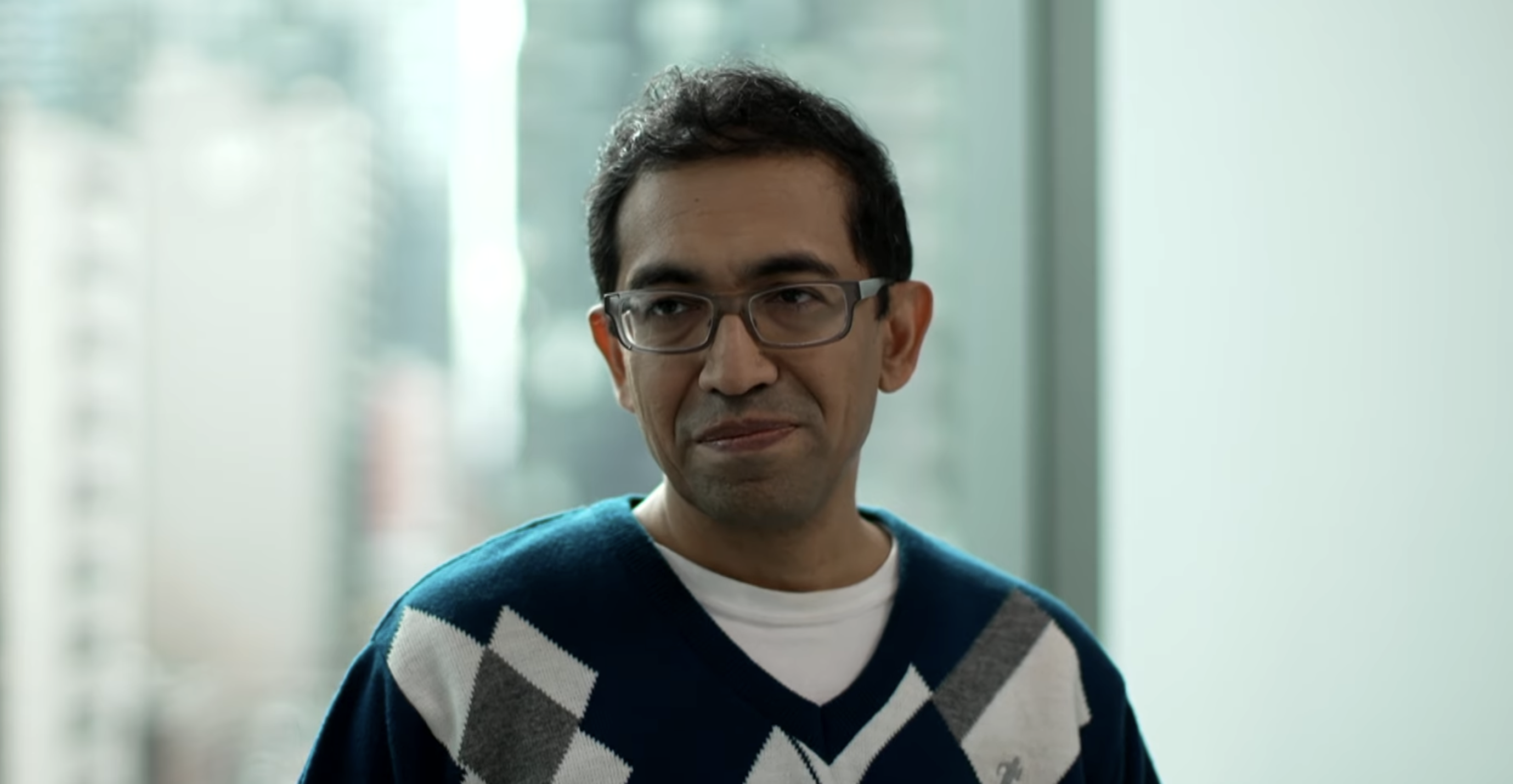
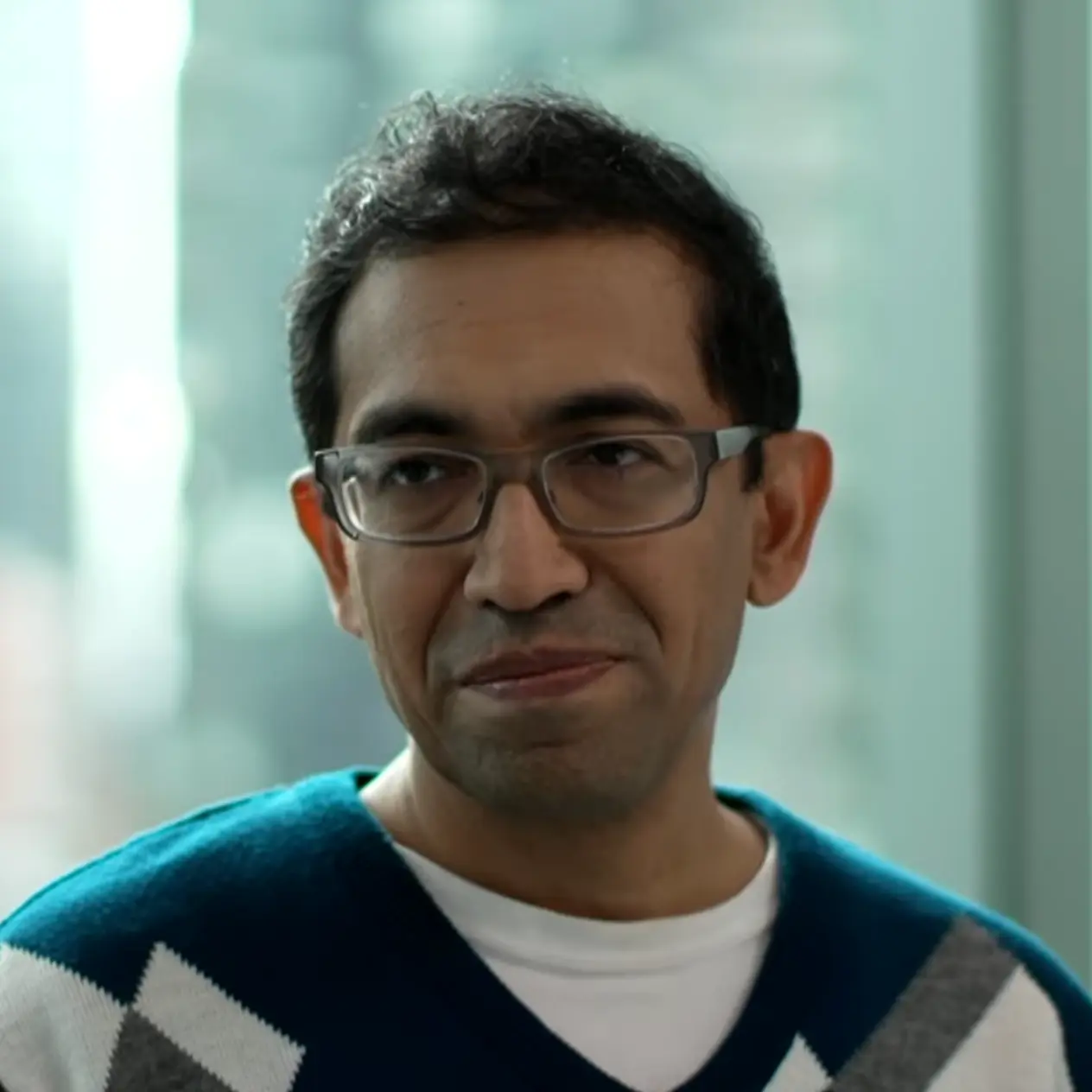
In this interview during theCUBE's coverage of AWS re:Invent, Sriram Devanathan, director of transformation and modernization at AWS, joins theCUBE’s John Furrier to discuss how agentic AI is fundamentally reshaping the cloud migration landscape. Devanathan explains that the traditional, multi-year approach of "lift and shift" followed by modernization is obsolete; instead, enterprises are now leveraging intelligent agents to assess, decompose and refactor legacy systems simultaneously. He highlights how AWS Transform uses these advanced AI capabilities to handle complex dependency analyses and validation, allowing customers to modernize mission-critical workloads – from Mainframes to Windows and VMware environments – in a fraction of the time previously required.
The conversation underscores the quantifiable impact of this AI-driven acceleration, with Devanathan revealing that AWS has analyzed nearly one billion lines of COBOL and migrated 40 million lines of .NET code from Windows to Linux. He notes that these automated workflows are not only 80% automated and four times faster than manual methods but also deliver significant efficiencies, such as moving network configurations 80 times faster and reducing licensing costs by 40%. Furrier and Devanathan conclude by exploring how multi-agent collaboration is unlocking new revenue potential, enabling businesses to turn "modern legacy" maintenance into a driver for rapid innovation.
Forgot Password
Almost there!
We just sent you a verification email. Please verify your account to gain access to
AWS re:Invent 2025. If you don’t think you received an email check your
spam folder.
In order to sign in, enter the email address you used to registered for the event. Once completed, you will receive an email with a verification link. Open the link to automatically sign into the site.
Register for AWS re:Invent 2025
Please fill out the information below. You will receive an email with a verification link confirming your registration. Click the link to automatically sign into the site.
You’re almost there!
We just sent you a verification email. Please click the verification button in the email. Once your email address is verified, you will have full access to all event content for AWS re:Invent 2025.
I want my badge and interests to be visible to all attendees.
Checking this box will display your presense on the attendees list, view your profile and allow other attendees to contact you via 1-1 chat. Read the Privacy Policy. At any time, you can choose to disable this preference.
Select your Interests!
add
Upload your photo
Uploading..
OR
Connect via Twitter
Connect via Linkedin
EDIT PASSWORD
Share
Forgot Password
Almost there!
We just sent you a verification email. Please verify your account to gain access to
AWS re:Invent 2025. If you don’t think you received an email check your
spam folder.
In order to sign in, enter the email address you used to registered for the event. Once completed, you will receive an email with a verification link. Open the link to automatically sign into the site.
Sign in to gain access to AWS re:Invent 2025
Please sign in with LinkedIn to continue to AWS re:Invent 2025. Signing in with LinkedIn ensures a professional environment.
Are you sure you want to remove access rights for this user?
Details
Manage Access
email address
Community Invitation
Sriram Devanathan, AWS Transform
In this keynote analysis from AWS re:Invent 2025, theCUBE’s John Furrier joins analysts Paul Nashawaty, Zeus Kerravala and Sarbjeet Johal to unpack how Amazon is redefining cloud infrastructure through the lens of agentic AI. The panel breaks down Matt Garman’s declaration that "agents are the new cloud," exploring key announcements surrounding the Nova model family, AgentCore and Amazon Bedrock. The discussion highlights AWS’ strategic pivot from merely abstracting infrastructure complexity to abstracting work itself, effectively bridging the gap between professional coders and "citizen developers" while unifying the experience for builders at every level.
The conversation digs deeper into the practical realities of enterprise AI adoption, emphasizing the critical role of security, governance and compliance in moving from proof-of-concept to production. Kerravala, Johal and Nashawaty analyze AWS’ vertically integrated approach – spanning from custom silicon like Trainium and Inferentia to the application layer – and how this full-stack strategy allows customers to train models on proprietary data with improved price-performance. The group also debates the evolving competitive landscape, noting how AWS is equipping organizations to build autonomous, long-running agents that function as teammates rather than just tools.
In this interview during theCUBE's coverage of AWS re:Invent, Sriram Devanathan, director of transformation and modernization at AWS, joins theCUBE’s John Furrier to discuss how agentic AI is fundamentally reshaping the cloud migration landscape. Devanathan explains that the traditional, multi-year approach of "lift and shift" followed by modernization is obsolete; instead, enterprises are now leveraging intelligent agents to assess, decompose and refactor legacy systems simultaneously. He highlights how AWS Transform uses these advanced AI capabilities to ha...Read more
exploreKeep Exploring
What are the current trends driving the need for modernization in systems, particularly in relation to agentic AI?add
What are the benefits of encoding information into agents and providing them with the right tools in the context of advancements in AI and agent intelligence?add
>> Hello, I'm John Furrier with theCube. We are here in Seattle at the AWS re:Invent Building. This is the headquarters for AWS, of course, re:Invent is coming up and the theme there will be all about agents and AI infrastructure enabling and rapid acceleration of change and transformation and modernization. Striram's here, he is the director of transformation and modernization at AWS. Striram, thanks for coming on theCUBE here in your building.
Sriram Devanathan
>> Thank you.
John Furrier
>> Kind of an away game for theCUBE, home game for you can, just pop into the studio. Thanks for coming on.
Sriram Devanathan
>> Thanks. Thanks for having me/
John Furrier
>> The enterprise apps and agents, you're sitting at the crossroads of those two areas. We've covered, I think on theCUBE and certainly I'm still going to angle, Windows migrating to the cloud. It's been going on for decades, over decades.
Sriram Devanathan
>> It's been going on for decades. You're right.
John Furrier
>> Now, the game is still the same. It's expanded the scope of apps, and the AI enablement is creating an acceleration in not only migrations, but how they're done, the speed, but also in parallel, modernization.
Sriram Devanathan
>> Yes, absolutely. And that's what we're saying. The need to move, the impetus to move, is much higher than before. People are seeing the benefits of agentic AI kick in, and so their customers are demanding it. And so they're looking at how do I modernize my systems, not just lift and shift, but how do I truly make them ready for this new age, and so that's the impetus side. And then on the other side, agentic AI is actually making it possible to make these moves now much faster and in many cases you can modernize along the way as well, so that's-
John Furrier
>> Talk about the current situation, but first explain where we were pre-AI mode we're in now, which has got a lot of benefits, which I want to get into, but what has been the traditional challenges? Because in my mind, I've talked to a lot of customers, migrations, I mean, your head explodes, okay, months.
Sriram Devanathan
>> Months, years.
John Furrier
>> Project management, it's a grind. What was the current challenges that you guys were looking at and what has been the answer?
Sriram Devanathan
>> Yeah, so I think if you look at what it was pre-AI, it was usually big projects. You need expertise. You're thinking about years, you're thinking about finding the right people, and you may not always have the right people if you have systems that were built 30, 40 years ago, how many people are there who know COBOL or that variant of COBOL in depth? And so you had both a time and an expertise issue. And then there were some maybe rule-based systems. But again, rule-based systems, they only handled it narrow set of things that they're coded for. And agentic AI especially makes it possible to do a much broader set of use cases. And we can encode our unique... We have a lot of expertise over 19 years helping customers move. We can encode all of that into these agents, provide the right tools for them, and that just makes the whole thing go so much faster.
John Furrier
>> Talk about that domain expert. I think that's going to be key as the agent news we're expecting to hear from AWS starts to get smarter and more intelligent. You started seeing the scaling loss on the AI and agentic side have more frontier-like capabilities. You're starting to see more reasoning, multistep reason, mixture of experts. These are the scalable side of AI. You guys have been doing this, I've been getting SAP, Windows. There's a lot of other workloads that you guys had customers bring over.
Sriram Devanathan
>> Yeah, absolutely.
John Furrier
>> What's the learnings there and how does that connect the dots for this next level?
Sriram Devanathan
>> Yeah, I mean, in AWS Transform, we've got Windows modernization, we've got VMware modernization, we've got Mainframe modernization. And the broad learnings are you have an assessment agent that is allowed that's able to understand all your systems, drop relationships between the existing components. And then after doing the dependency analysis, you can get to the next level, which is decomposition, what's the right structure for moving it into the cloud? And then obviously validation at the end. So, you of have purpose-built tools and agentic capabilities that allow you to do the end-to-end workflow compliance.
John Furrier
>> And what was interesting, I was talking about Deepak Singh. He's got the bunch of announcements, but he shared with me this morning specification-based coding with Kiro. I mean this also, he also pointed out that same thing where the old way was you code what you wanted to do and that was it. It's almost static, but agentic, you have now agents and knowledge that can-
Sriram Devanathan
>> Yeah, knowledge, working ops....
John Furrier
>> stitch up, build it, working off, ship it, manage it.
Sriram Devanathan
>> Yeah, yeah, absolutely. Working off of specs, so for example, mainframe modernization, we extract our documentations and what we call business rules. And then you work off of those business rules to either to modernize, to analyze it properly and then decide what piece you want to modernize in which way. And so that's very much in that same vein and use those same rules and to define your validation and tests.
John Furrier
>> Okay. You guys launched Transform last year. Give some stats of some of the momentum because I think migrations is going to happen like lightning fast.
Sriram Devanathan
>> Absolutely.
John Furrier
>> Okay, but then not the next question is what NAP is next? One, do you want to keep it build on it? Well, you can just extract away what was once the operating model and then add new things to it. That's where new coding comes in. That's where agents can come in. Take us through that vision and that momentum, first give the stats and then talk about where it goes.
Sriram Devanathan
>> So, we've had amazing stats on Mainframe. We've had nearly a billion lines of COBOL code that's been analyzed in the process of moving to the cloud. And the reason people are able to do that really fast now and then they're starting to think about not just moving directly to the cloud but also reimagining those systems. We've had 40 million lines of .NET code that's been moved from Windows to Linux and saving customers licensing costs, so 40% savings on licensing costs. All of these by the way, happening 80% automated, 4x faster. So just think about the savings there. And then on VMware we've had, I don't have the exact stats on servers migrated, but some of the stats are just amazing. Network configurations can now be moved 80 times faster. Just think about that. It's just amazing speed.
John Furrier
>> Yeah, I mean that changes the industry landscape because competitive strategy would say, oh yeah, it's the switching costs become one of those factors, do the tax and then it becomes infrastructure, and then the cost to move it, disruptive operations, these are huge things. And never mind the partners that might want to do it. Hey, I'll help you move. Then the professional services have the role in, and I just think of room full of people coding or managing, the project management, the coding, the time and the switching costs.
Sriram Devanathan
>> All of that, in many cases it takes it down. We had one customer, Signature IT, I think who was able to make a move of a .NET application in days versus their plan of months. So, it's just amazing speed. And then once you do that, you can also think about modernizing these systems.
John Furrier
>> So, getting into some of the weeds, before I get into some of the futures that you're seeing, I had some themes here that agents are doing very well and obviously coding. Piero mentioned that. Multi-agent collaboration and governance and security become a big part of the modernization piece of it as well as the migration.
Sriram Devanathan
>> Absolutely, yeah.
John Furrier
>> How is that playing into, we're starting to see multiple agents.
Sriram Devanathan
>> We're starting to see multiple agents, and I mean, we look at Transform itself. There are many pieces there and these agents all collaborate with each other. For example, a capability might produce a documentation, another one might produce business rules from those documentation. And then the testing capability pull builds off of that and they're all sharing information with each other. And once you've done validation and say, "Hey, I validated these business rules, but maybe not that one. So, let's go through another cycle with that." So, that's collaboration in real time with the data with the human as well involved in the loop.
John Furrier
>> And also workflow integrations come in there too. You mentioned the mainframe COBOL. I actually took a one-credit lab in college.
Sriram Devanathan
>> Oh, wow.
John Furrier
>> COBOL, actually hated it, but it was grind. It was as hard as my four credit classes. But COBOL, everyone knows is an old language in the mainframe. You can't find engineers. There's old joke that Andy Jassy used to say, "The person that had the password is no longer alive."
A little bit over the top, but the point is they're still running systems. So those use cases and Windows and .NET, little bit legacy. I can see that use case. It's very clear that most migrations. AI helps in the cloud, get them over. It's the new, I call it modern legacy migration. That's still mission critical, but there's more of them. There's less obviously mainframes still around, but not as many as say some of the mini computers out there and some of these old software stacks. What is the critical success as you move from the low-hanging fruit? Obvious examples, what's involved in a modernization and migration platform? Because I'm imagining it's a lot of those things we just talked about, governance, and then how does that fit into the AI architecture? Because now what we're hearing is agents going to be adopted. You've got AI native coding that's involving models, a lot more model integrations. There's different tools for the job, but it's becoming work. So, the work product is migrate, run it, modernize it, add stuff to it, make it part of the system.
Sriram Devanathan
>> Yes, exactly.
John Furrier
>> What's involved in some of these next set of migrations and what's used? You guys cloning the architecture, you guys setting up the environment faster? What does AI do? What's the key?
Sriram Devanathan
>> I think AI is doing... If you provide it with the right knowledge and tools, AI can do many of these pieces. If you're setting up a new network topology, if you give it the mapping, it can help you set that up. If you are modernizing a system, say a monolith to microservices, you tell it which pieces you want to decompose, you can, one, suggest those, and two, can set up the system for you. It can create CDK templates for you. So, you can do a whole bunch of things. And it's all about the knowledge, best practices and the capabilities that you encode into those.
John Furrier
>> Sure. Talk about where the apps sit. Sometimes we see multiple environments, so sometimes they're not even in the cloud yet. They could be in the cloud, they could be on-prem, they could be in another cloud or another provider. So, it's not a one-to-one situation always. It might be AWS to the customer, maybe a service provider, it could be a GSI.
Sriram Devanathan
>> Absolutely.
John Furrier
>> So, there's a multi-party-
Sriram Devanathan
>> Absolutely....
John Furrier
>> piece. Does that make it harder or take us through how that works?
Sriram Devanathan
>> So, I think we've always had partners working with us, and they bring their expertise. We bring our expertise, over 19 years helping people move to the cloud. And so a partner may have specific expertise in an industry, like financial industries, for example. And so-
John Furrier
>> Like and Deloittes of the world.
Sriram Devanathan
>> Absolutely, and so that's a very much a collaborative process. They're also looking at AI tooling. Their customers are asking for the same speed that they're all hearing about. So, it's a very much a collaborative enterprise. And again, some of the mechanisms and described, encoding your knowledge as a knowledge base, encoding it as tools. This agentic world that we are in, I think, makes it very easy for multiple players to collaborate as well. And so, you can think about an agent that now knows about two knowledge bases, one from the code base, one from best practices, say from a GSI, and uses both of those to derive the next stage of the transformation.
John Furrier
>> I've been talking to a bunch of customers around, especially VMware and some other, not so much mainframe, but mostly in the virtualization area like VMware and others. They all say, "Oh, well, we're working with this boutique four person company or dozen people and they're great and they're smart, they're on Amazon cloud, they're using all your tools, they're probably customers or engineers," and they can do that work superfast. So, you also have this other channel and emerging. Is that good for you guys? Do you see that as a benefit? Because do you care where the migrations come from, or do you care about where... Are you selling that directly or how does the engagement work?
Sriram Devanathan
>> I think fundamentally we expect that some migrations will be done by customers themselves. Some will be with boutique partners, some will be with more established partners. And for us, it doesn't really matter. I think what really matters is helping customers migrate to the cloud, build up more secure technical stacks, more scalable and be prepped for the AI offerings that they need to build.
John Furrier
>> What are some of the things that customers are telling you on these migration monitors? "I can kill two birds with one stone," or is it more of just pain points?
Sriram Devanathan
>> We're very much seeing that shift. For a while, people viewed this as complex, and so let me migrate first, then modernize. I think people are seeing the speed kick in, and so we're very much hearing people tell us, "Well, I actually don't want to do that. I don't want to do this two-step thing. I want to do it in one step. Help us do that." And they're starting to see our tools
John Furrier
>> And what's the playbook for that? I would agree with you on that. That's a good call.
Sriram Devanathan
>> Yeah. The playbook for that is, again, the same ingredients that we talked about. I think you mix them up a little differently.
John Furrier
>> Depending on the environment.
Sriram Devanathan
>> Yes, this is I think the flexibility of agents. You can say, "Well, here's all the same inputs. First, prioritize a migration, then do the modernization." Now you can say, "Well, no, I don't want to do that. Same input, same capabilities. Prioritize the modernization."
John Furrier
>> In covering some of the migrations, I want to ask you the impact to AWS and others. One trend that I'm seeing is, and correct me if I'm getting it wrong, but let's get it out. They migrate with AWS and then what ends up happening next is, oh, there's ecosystem partners that they can work with. So, they come on AWS and then they're wrapping other relationships around it in the ecosystem. Are you seeing that? Is that something that's playing out, or is that more of just maybe my getting bad data or one-offs?
Sriram Devanathan
>> I'm not sure about exactly what you mean there, but what we are seeing is that people, when they come into AWS cloud, they're able to innovate faster, and so they're able to do more with the assets that they had before. So, it goes beyond modernization to new business opportunities. And maybe that's what you're referring to.
John Furrier
>> Maybe it's a different view, but if you come off, say, VMware and AWS, now you can work with four other people that maybe you could not... You know what I'm saying? It-
Sriram Devanathan
>> It brings you a lot more. The possibilities open up.
John Furrier
>> Okay, so the hot areas are, what, mainframe, what are the hot areas right now?
Sriram Devanathan
>> I think the product right now for Transform supports Mainframe, VMware and .NET. You'll see us doubling down on that a lot more, broader set of capabilities even within those verticals. And then I think you'll see us just open up the aperture in terms of what else we can do. And that's coming at,
John Furrier
>> All right, so give me a teaser for re:Invent. What we can see, and I'm connecting the dots here, because I know what's happening, but obviously agents are going to-
Sriram Devanathan
>> I think more depth. You're going to see capability-wise, you're going to see more depth. You're going to see more breadth. You're going to see a ton more customer stories. Like I said, a billion lines of code for mainframe analyzed and so forth. There's just ton of customer stories that are going to, I think, really excite people, and all of these, I think, the agentic experience that we're building, I think you'll love it. I hope the early customers have seen it. They just absolutely love it. So, I think you'll see much more us pushing the envelope.
John Furrier
>> In terms of your group for next G or 2026 post-re:Invent, the focus, what do you see beyond re:Invent, just in terms of industry as AI continues to go, the infrastructure, we're seeing it being built out? I mean, just more layers of abstraction, making it easier. The agents are going to come in full throttle. We're starting to see edge, physical AI come in. A lot more traditional apps have to flex to the new stacks that are coming in.
Sriram Devanathan
>> And so there are people asking must, we talked about modernization for AI, but then there are people asking us, how do I just reimagine the entire thing? How do I rethink it as an agentic system even? So, two steps of modernization all at once. So, that is just exciting and scary as well.
John Furrier
>> It's interesting. It's been the joke, "AI for this and this for AI." So, it's interesting. This is a wave now where we're seeing AWS bringing AI in. We saw Nvidia's doing this aggressively right now. You guys are doing it. You're bringing AI to things, the physical world, you're starting to see a lot more impact.
Sriram Devanathan
>> Absolutely.
John Furrier
>> New stakeholders are emerging.
Sriram Devanathan
>> Absolutely. I mean, the speed is just accelerating, every... You look back one year and it was like, my gosh, that was ancient.
John Furrier
>> So, the first time we came in midpoint through a halftime re:Invent check in because so much has happened on the first half of the year.
Sriram Devanathan
>> Exactly.
John Furrier
>> And now that re:Invents here, it's a whole nother half a year turned into a year. It's as if it's going to be like two re:Invents going on.
Sriram Devanathan
>> I think the big story that I've seen is that customers are seeing this themselves. They're starting to come and tell us, "Hey, I think I need to do this. I'm hearing everywhere I can do it in a much shorter time. Help us get there."
John Furrier
>> And that just reinforces this whole bubble narrative, which is I think is BS.
Sriram Devanathan
>> Absolutely, yeah.
John Furrier
>> Because the results are quantifiable, and-
Sriram Devanathan
>> The results are quantifiable....
John Furrier
>> and there's demand.
Sriram Devanathan
>> People see it.
John Furrier
>> And there's demand, and also it's moving the top line. So not only there are cost efficiencies-
Sriram Devanathan
>> Absolutely.
John Furrier
>> There's top line revenue coming in.
Sriram Devanathan
>> Absolutely.
John Furrier
>> That's where I think the modernization can be done in the one shot for two things.
Sriram Devanathan
>> Yes.
John Furrier
>> Because you get the cost reductions or-
Sriram Devanathan
>> You get the cost reductions. You're able to offer your customers a better service with your agentic approaches, and that just... Absolutely.
John Furrier
>> Thank you so much for coming in-
Sriram Devanathan
>> Thank you....
John Furrier
>> and transforming this conversation, and we're going to migrate to the next video. This is theCUBE here in Seattle. Migrations may not be on the bingo card, but is the fastest we've ever seen it. We're hearing that migrations and modernization are happening in one step. We're seeing a lot more of that. As people re-platforming and rethinking with AI how they do business with all the benefits coming, so it is going to be a big story at re:Invent and beyond. I'm John Furrier with theCUBE. Thanks for watching.