Join Paul Nashawaty of theCUBE Research, Zeus Kerravala of ZK Research, and John Furrier of SiliconANGLE Media, Inc. as they provide an in-depth analysis of the AWS Re:Invent 2025 keynote from Las Vegas. The event features groundbreaking announcements and significant shifts in cloud computing and artificial intelligence.
In this comprehensive discussion, the experts explore Amazon's strategic emphasis on AI, which is the central theme of this year's event. With initiatives such as Nova, AgentCore, and AI Factory, AWS positions itself to expand AI applications across its vast customer base. Nashawaty and Kerravala, along with theCUBE Research, discuss how Amazon is adopting AI to streamline developer and builder tasks, reflecting the future-focused themes presented at this year’s conference.
Key insights from the conversation underscore AWS's critical role in the future of AI deployment, highlighting assertions by the guests that 2026 will mark the year of AI deployment. The analysts observe that AWS is effectively integrating complex AI solutions, like AI Factory, aligning its infrastructure to meet rising demands. This session emphasizes AWS's commitment to facilitating enterprises' transition into AI and cloud-native deployments, offering new tools and enhanced governance frameworks.
-R1
Forgot Password
Almost there!
We just sent you a verification email. Please verify your account to gain access to
AWS re:Invent 2025. If you don’t think you received an email check your
spam folder.
In order to sign in, enter the email address you used to registered for the event. Once completed, you will receive an email with a verification link. Open the link to automatically sign into the site.
Register for AWS re:Invent 2025
Please fill out the information below. You will receive an email with a verification link confirming your registration. Click the link to automatically sign into the site.
You’re almost there!
We just sent you a verification email. Please click the verification button in the email. Once your email address is verified, you will have full access to all event content for AWS re:Invent 2025.
I want my badge and interests to be visible to all attendees.
Checking this box will display your presense on the attendees list, view your profile and allow other attendees to contact you via 1-1 chat. Read the Privacy Policy. At any time, you can choose to disable this preference.
Select your Interests!
add
Upload your photo
Uploading..
OR
Connect via Twitter
Connect via Linkedin
EDIT PASSWORD
Share
Forgot Password
Almost there!
We just sent you a verification email. Please verify your account to gain access to
AWS re:Invent 2025. If you don’t think you received an email check your
spam folder.
In order to sign in, enter the email address you used to registered for the event. Once completed, you will receive an email with a verification link. Open the link to automatically sign into the site.
Sign in to gain access to AWS re:Invent 2025
Please sign in with LinkedIn to continue to AWS re:Invent 2025. Signing in with LinkedIn ensures a professional environment.
Are you sure you want to remove access rights for this user?
Details
Manage Access
email address
Community Invitation
Keynote Analysis
Join Paul Nashawaty of theCUBE Research, Zeus Kerravala of ZK Research, and John Furrier of SiliconANGLE Media, Inc. as they provide an in-depth analysis of the AWS Re:Invent 2025 keynote from Las Vegas. The event features groundbreaking announcements and significant shifts in cloud computing and artificial intelligence.
In this comprehensive discussion, the experts explore Amazon's strategic emphasis on AI, which is the central theme of this year's event. With initiatives such as Nova, AgentCore, and AI Factory, AWS positions itself to expand AI applications across its vast customer base. Nashawaty and Kerravala, along with theCUBE Research, discuss how Amazon is adopting AI to streamline developer and builder tasks, reflecting the future-focused themes presented at this year’s conference.
Key insights from the conversation underscore AWS's critical role in the future of AI deployment, highlighting assertions by the guests that 2026 will mark the year of AI deployment. The analysts observe that AWS is effectively integrating complex AI solutions, like AI Factory, aligning its infrastructure to meet rising demands. This session emphasizes AWS's commitment to facilitating enterprises' transition into AI and cloud-native deployments, offering new tools and enhanced governance frameworks.
-R1
Practice Lead and Principal AnalysttheCUBE Research
In this keynote analysis from AWS re:Invent 2025, theCUBE’s John Furrier joins analysts Paul Nashawaty, Zeus Kerravala and Sarbjeet Johal to unpack how Amazon is redefining cloud infrastructure through the lens of agentic AI. The panel breaks down Matt Garman’s declaration that "agents are the new cloud," exploring key announcements surrounding the Nova model family, AgentCore and Amazon Bedrock. The discussion highlights AWS’ strategic pivot from merely abstracting infrastructure complexity to abstracting work itself, effectively bridging the gap between pro...Read more
exploreKeep Exploring
What role is AWS expected to play in the development and deployment of AI technologies in the coming years?add
What are the key points regarding the importance of economics in cloud services, particularly in relation to Amazon and AI model training?add
What are the implications of Amazon's new agents and tools in response to competition from OpenAI and others?add
What are the current trends and challenges enterprises face in adopting cloud solutions?add
What is the relationship between being a cloud provider and being an AI provider?add
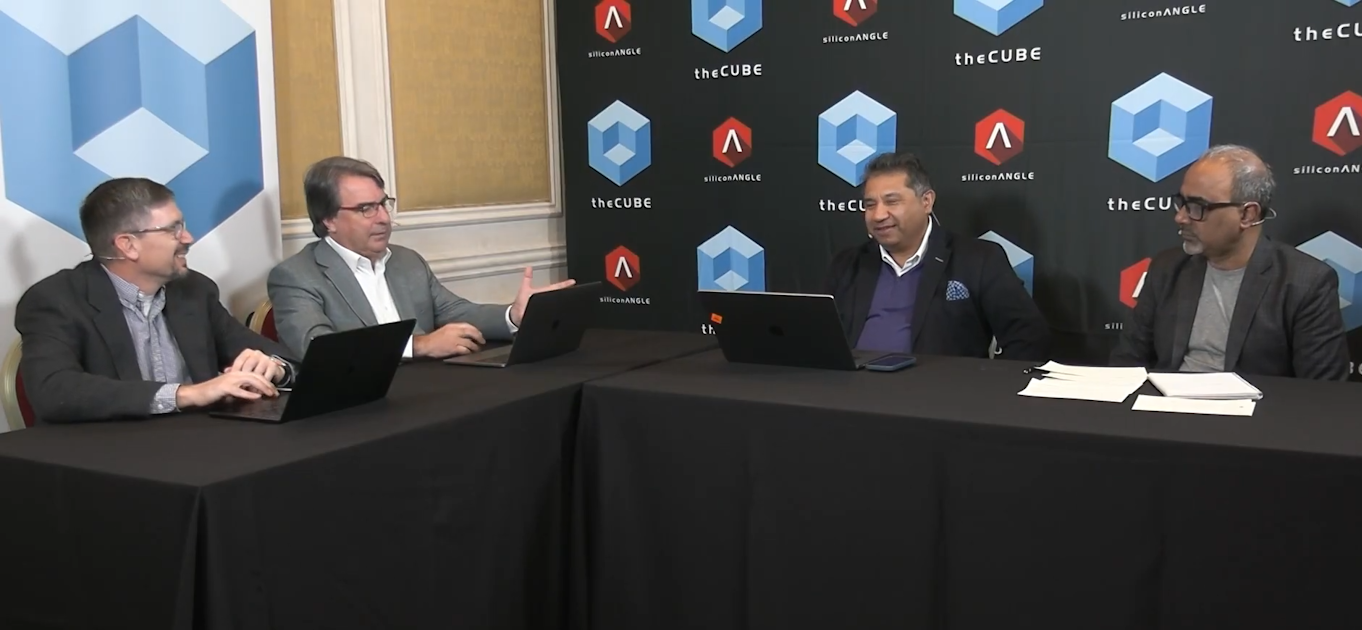
>> Hello, John Furrier with theCUBE. We are here live in Las Vegas AWS re:Invent 2025. This is the keynote analysis. I'm here with distinguished analyst Paul Nashawaty with theCUBE Research, Zeus Kerravala, Kerravala Research, and Sarbjeet Johal. Influencers and experts. Guys, great to see you here in re:Invent. This is like our 13th year covering with theCUBE. In all my years, I've never seen ... There's been a few moments where you see the ground shaking and moving. This is clearly Amazon's putting the stake in the ground. Paul, you were, and Zeus, and Sarbjeet were in all the analyst sessions yesterday. I had the press briefings and the Garmin exclusive. What's your take?
Paul Nashawaty
>> I'll tell you, the re:Invent Show never ceases to amaze me. I mean, there's a lot of traction, a lot of people. It's 60,000 of our closest friends here, so there's a lot going on. But from a developer perspective, with all the announcements we covered, there was the Nova family stuff, the agentic AI ecosystem, the enterprise security governance pieces, and the AI at scale really kind of drove in the Bedrock and AgentCore pieces. So lots happening, lots to unpack here.
John Furrier
>> Zeus, you look at a lot of the macro and micro trends. All the headlines go right to Nvidia this, and ... The headlines are chasing the whole Nvidia, the whole GPU thing, but there's a lot going on here at the macro level for AWS.
Zeus Kerravala
>> Yeah. I think first of all, AI gave AWS, in some ways, a unifying theme for the show. When we've come in the past, it's a lot of random product announcements that it was tough to find a thread that you could weave through all of them. AI is obviously that thread. And I was talking to one of the reporters this morning about it with the release of AI Factory, and where they're going with Trainium and things. And I don't know if we'll ever expect AWS to be on the leading, bleeding edge of things, but they tend to roll out products when the market's ready to scale. And in fact, I think the fact that they released AI Factory, or announced it, is a good indication to the market that they're getting enough demand from their massive customer base that they are ready to scale. And so if we thought of 2025 as the year of kicking the AI tires, I think 2026 will be the year of AI deployments. And I think AWS is going to play a big role in that, because they're one of the few companies that can actually put it all together.
John Furrier
>> Sarbjeet, we always joke, Dave and I, and when we talk on X and social in person, supercloud, we've been talking about AI factories now for over a year, large scale systems before that. Broadcom and Nvidia, covering all the news. It's kind of happening. You saw the Google announcement with AWS a couple days ago. And you see Matt Garman, I had the headline on Silicon Angle, declares the new era. "Agents are the new cloud," was the over-the-top statement. But in a way, agents are an extension of the cloud. So you have a lot of cloud infrastructure, I won't say replatforming, but it kind of feels like the same game. And also the EKS containers native strategy. I posted on that too. You're starting to see the blending of the cloud native and AI native world kind of coming together. It's multi-cloud. It looks like private cloud for on-prem. The Nova models, Nova Forge, half-baked models with weights, you can just make that your own. And then frontier agents. I mean, they're putting out a lot of cloud-like stuff for agents.
Sarbjeet Johal
>> Yeah. I think that there are two, at high level, there are two vertically integrated AI companies. There's Google and there's Amazon. They have from chips, to models, to everything in between, which is platform, AgentCore, Bedrock here. So I think that's huge. At the end of the day, when the dust settles, economics matters the most. So the price to performance matters the most. If you are doing things at scale, milliseconds matter, the pennies matter. So Amazon is gearing towards that. Amazon is builder's cloud. We know that all along. And they are the builder's cloud, which build at scale. So ISVs, that means ISVs and bigger enterprises. They also serve the lower end, but we know it's mainly geared towards big guys. So that's one thing. The second is that I think the biggest announcement from the AI side of things is that you can now train your own models with your own data. That was a big, big one.
John Furrier
>> Open training, they're calling it.
Sarbjeet Johal
>> Yes.
John Furrier
>> Yeah.
Zeus Kerravala
>> Well, that was part of the new Nova announcements, right? So you can take your own data, couple it with Amazon-curated data.
Sarbjeet Johal
>> Yeah. And a few other things. The edge, high-performance computing, I'm going to actually do a podcast with Deborah on Thursday. They spent $50 billion on the government-related infrastructure and high-performance computing. So they started putting weight behind HPC about three years ago, and they got the budget, and now they're kind of rolling that out. So that's huge as well. So actually, Amazon and AWS is moving on all fronts, I think. Developer is still key, and there was a developer slides during the keynote. I was there in person. And -
John Furrier
>> Well, notice Matt Garman's terminology. He said developers, and then he kind of had to catch himself and say builders. Because they want to say builders and developers, because it's not just the hardcore developers. Guys, I want to talk about this, because I think this is kind of the key to this next generation Amazon Web Services. The first wave, and Matt Garman tried to do this, but in my interview I thought he did a better job on stage, he didn't really hit the point home. But the early days of Amazon, they abstracted away the complexities of infrastructure. Now they're abstracting away work. So agents are a work outcome, jobs get done. So it's not just developers, it's builders.
Zeus Kerravala
>> That's the key point. They're extracting development and shifting to builder, so you can build without -
John Furrier
>> Yeah, let's talk about that.
Paul Nashawaty
>> But it's pretty clear, Zeus and John, that you're hitting on really some key points here, right? Because one of the things that we're seeing in the developer world is the professional developer and the citizen developer is really bifurcated in the development community. AI is allowing for lines of businesses to create their own applications. Amazon is definitely enabling those lines of businesses to do that, not allowing or not having to have a professional developer have the burden, the load of doing everything. We saw this with the frontier agents. We saw this with the three different pieces that they added to AgentCore, right? We saw that the ecosystem is growing around with these announcements. So there's a lot going on on the developer front. Mainly from the perspective, and John, you just kind of hit on this, which is they're abstracting away the complexity of being a professional developer, allowing for the citizen developer to do the job. That's what I saw was a big difference from last year, and from previous years to now. Last year and previous years, it was a bag of bits. Now it's like, "Here's a solution to allow you to deliver."
Zeus Kerravala
>> That's also had a big impact on the go-to-market, too. Day one news revolved a lot around the partner stuff that they're doing. They've never been overly partner-centric. I think only about 30% of their revenue comes from partners. And particularly, Matt mentioned startups, right? Startups is something they've kind of ignored over the years, and they are all in on startups now.
John Furrier
>> He committed from day one, "We're going to not lose our roots." I asked him that question when he took the job. And again, think about the startups and the ecosystem we're going to have Dynatrace on, LogicMonitor, Zendesk. I mean, Zendesk's been around for a while. These are observability startups. These are cloud native startups. And that kind of brings up this whole citizen developer meets kind of real developer, whether they call it citizen or not, means just basically the business user. Look at Quick. QuickSight was the analytics platform. Now they called it Quick Suite. Now they're just calling it Quick. That's essentially becoming the new console. So you see AgentCore as this new IM layer. So it's like, that's my console. And it's interesting. Julia White told me, she said, "Nova Forge is the substrate and AgentCore is the runtime." And so that's kind of like their tagline. So that basically means that like that old developer console, where you'd spin up EC2, is going to move to agents. But
Paul Nashawaty
>> Let's not forget though, Kiro is kind of announced, and a lot of enhancements around Kiro came out. So the IDE for the professional developer, they're still doubling down on the professional developer. So where there's a need to have that professional development, Amazon's providing that, right? The Kiro experience, the enhancements that are happening there, it's definitely a big focus as well. So I wouldn't necessarily say it's a complete pivot to the citizen developer. But it's also-
Zeus Kerravala
>> No, it augments it, right? And clearly through all these trends, Paul, we've never seen anything ever go away.
John Furrier
>> Correct.
Zeus Kerravala
>> It adds to it. And I think what's exciting about this era of agents is I do believe we are going to see orders of magnitude improved productivity, which means we're going to need more citizen developers. We're going to need more traditional developers. And it's just going to create this massive riding tide that's going to fuel both. And so both can be true, right? You can have some tasks that were developer moved to citizen developer, but you can also grow developers.
Sarbjeet Johal
>> Yeah. I think the bitter truth is that Amazon is pro developer company, right? Their core focus is pro developer. And they have to do the low-code, no-code kind of solutions, but who gravitates towards Amazon? It's pro devs. If you want to do low-code, no-code, actually, which is internal development within enterprises, it's not ISV development, right? That's when people go to Azure and Google to some extent.
John Furrier
>> I think Amazon has a big challenge. I want to get your guys' thoughts on this next kind of track, because I think it's, I might be overthinking this, but I want to put it out there. Amazon never really had a threat in its glory days from a competitor. Amazon had Azure coming out of the woodwork, but Microsoft kept their installed base, because they didn't want to switch, because we'll stay with what we know. The devil you know, as they say. And so now Amazon has a real threat with OpenAI and others. And so you see what they're doing with the agents, productivity, ROI, transformational tools, the three agents, they announced Kiro, autonomous agent, Security Agent, DevOp Agents. They're essentially targeting their customer base and the developers, but their customer base, saying, "Hey, stay with us. We're going to give you what we know. " And all the stuff that they've announced on the agents, Paul and Zeus and Sarbjeet, is stuff that they know. So they're essentially automating themselves, and they're essentially giving you essentially agents that ... It's like having a engineer on Amazon on your team.
Paul Nashawaty
>> Absolutely.
John Furrier
>> And the quote from Garman was, "Agents stop being toys. They become teammates." So this is kind of the thread. They're kind of being Microsoft-like in that install base. If they just get them enough value with agents now, they don't switch.
Paul Nashawaty
>> Yeah. I think that you kind of hit on something really key here. One of the key announcements that was talked about specifically to what you were just saying, John, which is that Nova plus agents plus Bedrock really creates that end-to-end automation. But I believe that, and based on our research, we see this, that the devils are in the details, and automation is really the maturity of the organization. The other big factor that we drilled down on in some of the keynote pieces and some of the pre-announcements was the guide rails for security compliance and governance. If you're going to open up development to the lines of business users, you have to have those guide rails in place.
John Furrier
>> All right. So what do you think about the enterprise, guys? Because I mean, this speaks to what you're saying, is that the governance and the compliance security have to be embedded in. If you're going to have an agent that's going to be a long-thinking collaborator, teammate, this might open up the enterprise because the enterprise is kind of installed. We've been covering this like a blanket this year, like, "Hey, when's the AI factories going to come in? What do you run on it? " And the POCs are backing up. We've been hearing that. Does this open up the floodgates?
Zeus Kerravala
>> Sure, sure. What enterprise want is more turnkey, right? The initial wave of cloud was, you had VCE and things like that, more turnkey solutions. And I think, to your point, there's very few companies that can put all the building blocks together. They can do that. They can simplify it. They can help secure it and they can help scale it. And with the utilization model, it's not at a price point that's going to kill them. You grow into it. In fact, when you talk to AI practitioners about how you get started, they always say, "Just get started." But that's hard to do if you got a big nut upfront that you got to spend. And the great thing about Amazon, you can do it at whatever pace you want.
John Furrier
>> But the enterprise knows how to use the cloud. They've been doing lift and shift for a while, sarbjeet. Now it's like, okay, crunch time, what's going into production? And there'll be agents. I mean, the success on AI has basically been . You've seen G`leans of the world, now you see writers kind of getting more models. You're starting to see people have their own custom models. And I think Nova might be a lift for that.
Sarbjeet Johal
>> Yeah. Actually, on the productization of AI within enterprises, they have policy now as part of AgentCore and we will see more and more of that. Every hyperscaler, anybody who's doing AI have to have the policies. And we need some standards around policies as well. And they talk about the multi-cloud, we'll touch upon in a minute or so, like how they want other clouds to adhere to ... They want to set a standard for multi-cloud. We heard that term first time here at re:Invent.
John Furrier
>> It's hearsay almost, at Amazon, to talk multi-cloud.
Paul Nashawaty
>> They've talked a lot about it, though.
Zeus Kerravala
>> They -
John Furrier
>> No, they embrace -...
Zeus Kerravala
>> reality, so-
Sarbjeet Johal
>> Yeah. We will get more details on that as a couple of days progress here. And the Security Agent, one of the core agents they're launching is the Security Agent, which will be watching your agents all the time. And then there's a key role, long-running agent where you can unleash your developers to spec-driven development, where jobs can run for days or maybe weeks, and it will cook up stuff from behind the scenes for you on the development side. So there's dev covered, there's ops covered, there's security covered, governance is covered, and the chips are on the left-most side. They're covered as well.
Paul Nashawaty
>> Well, speaking of the details, though, you mentioned AgentCore, you mentioned the policy agent that's being rolled into the API gateway, which is absolutely one of the key announcements. The other key factor there was the evaluations, the evaluations piece. But what I liked that they really kind of drilled home is as we start kind of going to these different areas of development, you end up having security by default for developers. That's a big factor as well. And I think that's achievable now, because you have the guardrails in place that I was saying earlier.
John Furrier
>> I mean, this is a lot to unpack. I mean, we need another hour, I think, to do this, but I think I want to get into what you guys are working on and your research areas. How does re:Ivent this year change your scope, your orientation? Obviously some pretty notable things I think that are game-changing. I think the Nova Forge was great. Frontier agents, the idea of having a frontier model, which everyone knows from the LLMs gives more reasoning. It's more in -depth versus just a generic chatbot. But those are changing, and there's a lot of in the weeds details around Kiro, containers. So they're kind of doing the work and they're up and down the stack from the silicon up. They're really cranking. So I guess, is there a takeaway or a change to your focus on research?
Paul Nashawaty
>> Yeah. Well, I mean, I'll tell you in my practice area where I covered day zero, day one, day two, and DevSecOps. Build, release, and operations, anything in the CI/CD pipeline that touches the SDLC. This is the playground for me. All the announcements that came out in this announcement, between this and KubeCon, it's like this is where it lives. So my 2026 research is really starting to focus in on that past, present, and future, bridging the gap between the old and new, but also understanding what the future state means. I think the big key that I've been hearing about is when we have a conversation, it's a transactional conversation. I say something, you process it, it comes back. When agents have a conversation, it's instant. And that means that the guardrails and everything that needs to be in place increases the exponential errors that could occur. So that has to be kind of taken into consideration.
John Furrier
>> Does the cloud native world and the AI world, does one push the other? Is it a give get? What's the cultural intersection? Because I'm feeling a lot of the cloud native folks have been eating glass, building real large scale systems. And now you get this AI world's kind of fuzzy, agents, okay, how's it work? Are agents just another app on the cloud native stack?
Paul Nashawaty
>> 51% of our production applications, according to our research, showed that they're running AI in production applications as of August of 2025. So right now, I would guess that that's probably much higher, in the 70s percent. And as we get into '26, it's going to be even higher.
John Furrier
>> So cloud native is a lift-
Paul Nashawaty
>> Yes....
John Furrier
>> for AI?
Zeus Kerravala
>> Don't you think eventually that we stop talking, like these AI officers and stuff go away? We used to have chief internet officers and things like that.
Paul Nashawaty
>> We're seeing that with CISOs. CISOs are moving to more practical.
John Furrier
>> Yeah. In fact, I was talking with John Roese at Dell, he says, "I'm doing this chief AI job," but he also is the CTO, so he's got two jobs. He wants it to go away.
Zeus Kerravala
>> I think your point on research, John, that's interesting from an analyst perspective. Because you know I'm an infrastructure guy, and I've been a big proponent for a while that you can't decouple infrastructure and look at it from an analyst perspective in silos. And when you look at all these MQs and waves and things like that that are out there, they do that. They try and take a particular product category and boil it down to that thing without looking at all the other components that make it up. And there's never been a technology shift like AI, that's so codependent on everything that runs underneath it. And like you look at, we didn't touch on Connect, but they finally got moved into the leader squad. And I was talking to, in CCaaS, I was talking to PQ about that, the GM of Connect. And there's so many interdependencies for that, right? To be able to have an analyst take and look at that in isolation just does the market an injustice. And I think there's a, frankly, I think there's big comeuppance coming in the research industry. You can't, to look at things in such narrow silos is doing your customers a big disservice.
John Furrier
>> It's interesting, Garman talked about the bubble, and he said, "When capital chases narratives, that's when you see the bubble." And he says when it's not a bubble, "Capital's chasing systems." To your point about infrastructure, it's now a system, not just a category of a server, or storage, or networking. It's now kind of a complete thing. If you look at Nvidia and all the large scale systems, like ultra service, it's all integrated. They're all integrated.
Sarbjeet Johal
>> Yeah. The bubbles are actually, by design, bubbles. Without bubbles, we won't have progress. We can't innovate without bubbles, right? So people need to chase money, and to chase money, they are -
John Furrier
>> Well, they chase the hype versus the real deal.
Sarbjeet Johal
>> Yeah. You have to waste some.
John Furrier
>> I don't think we're in a bubble. I mean, over-valuation, maybe. But maybe-
Sarbjeet Johal
>> How big is bubble? Are we close to bursting it, or ... That matters, right? But having said that, I think this, in last couple of months and then going into 2026, hyperscalers have openly talked about it. They have started to talk about their own chips. They have, "Nvidia, you're there, it's fine, but our chips are better." Google, TPU, here, Inferentia and Trainium. So they, from the main stage, today said that Trainium and Inferentia is running Anthropics 100%, trained on it and served on that. And there was a very telling sign during the Nvidia's earning call. First, their CFO, she said that, "Oh, it's first time Anthropic is going to use Nvidia chips." They didn't need to say first time, I think they messed up. And then after that, Jensen said that too. "It's very first time Anthropic will use our chips." And Anthropic is, as we know, a leader, number one, I think, in enterprise AI, from the model's perspective. So I mean, that's a telltale sign that there's a competition from the chip side, there's competition from the developer productivity and platform enhancement side.
Zeus Kerravala
>> Real quick, though. The reason I don't think we're in a bubble is because we don't know the full economic impact of AI yet. Were we in a bubble in the early internet days? Kind of, but the economic value of what the internet created was far greater than whatever valuation we put on companies back then. So people say, "Is any company really worth five trillion?" like Nvidia is now. Maybe we don't know the full economic impact of AI yet, and it's going to have a huge impact on global GDP.
John Furrier
>> Yeah. I mean, I think I'm looking at the frontier capabilities of agents. Getting frontier capability without the frontier cost is a huge deal. If that works, the enterprise will see lift, that'll be economic feasibility.
Zeus Kerravala
>> And a whole bunch of new jobs are going to get created.
John Furrier
>> I mean, they used Reddit as an example, in my interview with Garman. He said Reddit didn't need a bigger model. They needed one that understood their community with Forge. They didn't have to fine-tune anything. They infused domain data during pre-training.
Zeus Kerravala
>> Think how much time that takes?
John Furrier
>> It worked so much for them. Because their domains, like content moderation, you name what they have to get through. I mean, Facebook's the same way with all that data. So all right, final quite lightning round. What's your most important thing you saw today, Paul, Zeus, and Sarbjeet?
Paul Nashawaty
>> From a developer perspective, I mentioned bridging the gap between the heritage and new. I think that's really operational efficiencies, and using AI to increase productivity. That's really, I think, where the developer experience is going to come into play, and using AI across the ecosystem is really going to be a big push.
John Furrier
>> To me, frontier agents was the most exciting thing, given all the stuff under the covers.
Zeus Kerravala
>> Yeah, I think Amazon, and we've talked about this in previous re:Invents, has done a better and better job at tying all the Amazon components together and delivering value across all their products. Historically, they've been a collection of cloud things, and then it was up to really the builder to try and put it together. But under the AI umbrella, if they want to help their customers accelerate AI adoption, they've got to continue to do a good job of putting all the pieces together. And I think we saw that during Matt's keynote.
John Furrier
>> Sarbjeet, close us out.
Sarbjeet Johal
>> Yeah. I have said this many times in the past, that without being a good infrastructure provider, you can't be a platform provider, right? Platform as a service provider, right? And now it changes to if you're not a good cloud provider, you can't be a great AI provider. So I think Amazon is there. And of course we, market sort of had a sentiment that they're a little behind in AI, but they have caught up, they're catching up fast, and they are enabling multimodal ... Now there are Google models available at AWS, and including OpenAI's open-weight models as well. So they are trying to gather their community of developers, and startups, and enterprises, and I think they are succeeding in that.
John Furrier
>> All right, guys, thanks so much for the analysis. The agent era is upon us, theCUBE keynote analysis, of course, one of the biggest shows of the year at re:Invent. Kind of at the end of the year, kind of brings everything together and we'll set the agenda for 2026, more coverage here at theCUBE in Las Vegas after this short break.












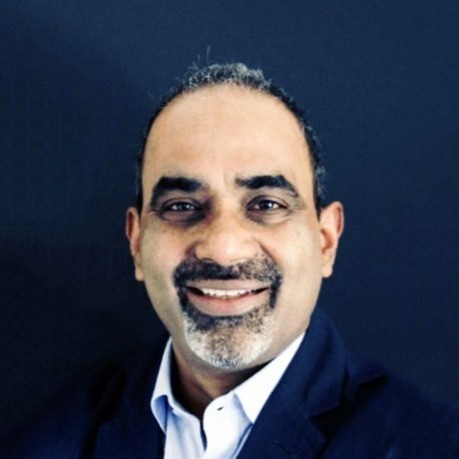 Sarbjeet Johal