We just sent you a verification email. Please verify your account to gain access to
AWS re:Invent 2025. If you don’t think you received an email check your
spam folder.
In order to sign in, enter the email address you used to registered for the event. Once completed, you will receive an email with a verification link. Open the link to automatically sign into the site.
Register for AWS re:Invent 2025
Please fill out the information below. You will receive an email with a verification link confirming your registration. Click the link to automatically sign into the site.
You’re almost there!
We just sent you a verification email. Please click the verification button in the email. Once your email address is verified, you will have full access to all event content for AWS re:Invent 2025.
I want my badge and interests to be visible to all attendees.
Checking this box will display your presense on the attendees list, view your profile and allow other attendees to contact you via 1-1 chat. Read the Privacy Policy. At any time, you can choose to disable this preference.
Select your Interests!
add
Upload your photo
Uploading..
OR
Connect via Twitter
Connect via Linkedin
EDIT PASSWORD
Share
Forgot Password
Almost there!
We just sent you a verification email. Please verify your account to gain access to
AWS re:Invent 2025. If you don’t think you received an email check your
spam folder.
In order to sign in, enter the email address you used to registered for the event. Once completed, you will receive an email with a verification link. Open the link to automatically sign into the site.
Sign in to gain access to AWS re:Invent 2025
Please sign in with LinkedIn to continue to AWS re:Invent 2025. Signing in with LinkedIn ensures a professional environment.
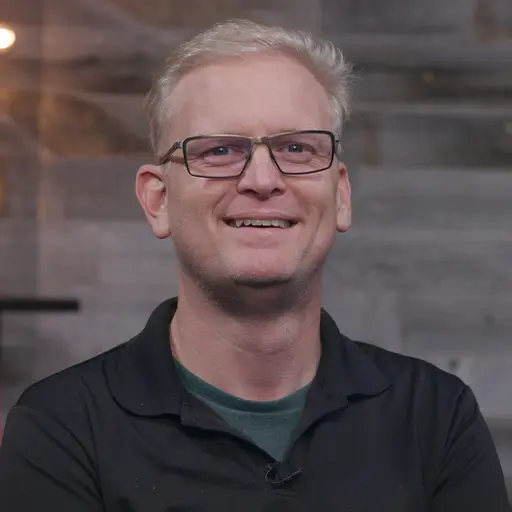
In this broadcast from AWS re:Invent 2025, Nathan Thomas, vice president of product management at Oracle, joins theCUBE’s Dave Vellante to discuss the rapidly evolving multi-cloud landscape and the strategic partnership between Oracle and AWS. The conversation highlights how Oracle is effectively meeting customers where they are by deploying Exadata hardware directly inside AWS data centers, enabling seamless integration for mission-critical workloads. Thomas unpacks the significance of the "same, same" mentality, ensuring that customers receive the identical...Read more
exploreKeep Exploring
What are the current developments and customer reactions regarding Oracle's AI database and its multi-cloud collaboration?add
What are the benefits of using Oracle database services in conjunction with AWS for customers?add
What advantages do customers gain from using Oracle products in the cloud, and how does Oracle simplify the transition for organizations?add
What is the relationship between the Zero Data Loss Recovery Appliance (ZDLRA) and the Oracle Database Zero Data Loss Autonomous Recovery Service announced for AWS, and how does it benefit customers using Oracle and AWS AI database services?add
>> We're back at AWS re:Invent 2025. You're watching theCUBE's continuous live coverage day four. I'm Dave Vellante, picking up for John Furrier who did Monday, Tuesday, Wednesday. He's at the GSA conference in San Jose today. Semiconductor conference, hottest topic in the industry. But cloud's pretty hot, multi-cloud's pretty hot. Nathan Thomas is here. He's the vice president of product management at Oracle. Nathan, good to see you. Thanks for coming in.>> Thanks for having me. It's great to be here.
Dave Vellante
>> Ironically, Oracle has, I've said this many times, written about it many times, the number one multi-cloud strategy on the planet. And it's ironic because I think everybody kind of misunderstood when Larry did his rant on, "Well, cloud, it's databases and software and storage," and et cetera, et cetera. And people interpreted that to mean he didn't think cloud was a thing. Took you guys a while to get it right, but boy, have you got it right. And now you're just killing it in cloud. It's amazing.>> Very excited. Just a couple years ago, we had Matt Garman and Larry on stage and announced that we were doing this partnership together. And then July of this year, we GA'd Oracle Database at AWS. And so we've got exit data hardware and racks sitting inside of AWS data centers. Customers are onboarding today and they're using that so that they can power AI pipelines, running all the new technologies from Bedrock and SageMaker and Nova, and all the agentic components that they're announcing this week at re:Invent. Pretty exciting.
Dave Vellante
>> It's funny. I used to say, "Well, why can't you just put real application clusters inside of the clouds? That'll never happen." I'm like, "Yeah, you're probably right." And then the fact is that the customers get value out of the Oracle databases. Why would you mess with that? And so finally ... Yeah, but you got to give folks like Amazon credit. They say they're customer obsessed and then when you see them say, "Okay, we're listening to the customers. Let's partner.">> Yeah.
Dave Vellante
>> "Let's win-win." And that's clearly what's happening. So there's been a lot of good buzz around Oracle, around Oracle's AI database, the whole multi-cloud collaboration. How's the show going so far?>> It's been phenomenal. There's a lot of energy, a lot of excitement. We've been talking to customers all day, walking up on the show floor into the Oracle booth and asking about, what regions is it launched in? How do I get on board? What versions are supported? And to give you an idea, there's two live regions today. We've announced that there'll be 20 more coming soon. We're out with 19c and then of course just updated to 26ai. And so customers are just consistently saying that they're excited about taking that mission critical data set they've had in the Oracle databases and starting to leverage it for AI data pipelines and being able to use it with all of the apps. They've got low latency connectivity inside of the AWS environments from those data sources.
Dave Vellante
>> I've been following the cloud market now, tracking it, quantifying it for about 10 years now since AWS started to report. And I always resisted putting Oracle in my numbers because I never considered them a hyperscaler. I've capitulated, kind of the same way AWS capitulated, I guess. But when I was doing the analysis the other day, I did a little infographic and the numbers are actually astounding based on the guidance that you guys have given. I know you can't talk about financials, but the whole market is changing. I've tracked the top three hyperscalers plus Alibaba. Oracle, according to its own internal projections, are going to surpass what my estimates are for Alibaba Cloud next year. It's just exploding, leaning into that whole new world. But multi-cloud is a key component of that. And then Oracle AI database is everywhere. So where does the AWS partnership fit in, number one? And number two is, Oracle is unique with same, same.>> Yeah.
Dave Vellante
>> You were the first to use that terminology.>> Uh-huh.
Dave Vellante
>> And that's got to be helping as a tailwind. But where does AWS fit and how does that play out in terms of the whole multi-cloud strategy?>> Yeah, we're trying to really meet our customers where they are. So AWS has a huge set of overlapping customers with Oracle who are using databases and using the AWS services. It's an obvious kind of chocolate and peanut butter moment of let's pull those things together. And so that kind of same, same mentality of saying, yeah, you can get Exadata, you can get autonomous database, you get all of our ARS systems for recovery, you get all of the same migration capabilities, zero downtime migration capabilities. And now things like Autonomous AI Lakehouse, it's all the same set of tech. You can run it in OCI, you can run it in all of the cloud vendors. Pricing is the same across all of those environments. It's something where the customers really get the advantage of what they're used to with all of the Oracle product sets, but they get it inside of the cloud where all of their applications are. Makes perfect sense.
Dave Vellante
>> So you talked about expanding regions and services.>> Yeah.
Dave Vellante
>> What more can you tell us about that?>> Yeah.
Dave Vellante
>> And to your earlier point, you just described, why has it been so hard for organizations that sell cloud to do what you've done with same, same?>> Yeah.
Dave Vellante
>> Was it just putting the resources in? Is it other technical magic sauce? Is it somehow simplifying the stack, the homogeneity of the stack?>> Yeah. Look, I think this has been a commitment that Larry's had for a long time, which is that we want to really simplify the cognitive load for the customers and say, "Look, this is going to be easy for you on a commercials basis to make the choice." I think we have an advantage over every other database vendor in the cloud today and that we do offer on prem solutions. We have ways that we do that. And if you want to have cloud technology leveraged on prem with that, you can use our Cloud@Customer or you can use our DRCC, Distributed Region Cloud@Customer. So we've got the continuum and that puts us at a point where we even have that conversation to be having. Okay, how do we talk about customers doing on prem and in the cloud and make sure that that's a seamless and simple experience? And so you see us expanding it now in the cloud with things like our Multicloud Universal Credits, which means you can do a single commitment that encompasses both OCI spend and all of these CSPs that we work with for the database app products. And so we're really continuing that same mentality moving forward to make it simple for customers to use the database wherever they need to.
Dave Vellante
>> So I was joking earlier, we could have called re:Invent 2025 Agentic Event 2025. It's really the focus has been around AI, which is all tech vendors, every company has to think about, okay, how do we integrate AI into our business? But how does Oracle database at AWS play into this?>> Yeah. So when we launched 26ai recently, there were a lot of features that went in there that are really focused on this topic of how you do integration between your data and your database and your AI pipelines. And so in particular things like hybrid vector search are now native parts of that solution. And that means that if you want to use Bedrock or SageMaker or Nova, or some of the new agentic framework pieces and the Nova agents that have been built by AWS, those are all easy to integrate. And so that's great from our perspective. We want our customers leveraging their data for brand new AI workloads and all kinds of business value they can build on top of that data set. So very excited in that sense. I think you'll see us continue to make a lot of investments there. And one of those is of course our AI Autonomous Lakehouse, which includes support for things like the Iceberg table formats. And that means that you're able to ingest data and think about an AI data catalog where you've got that data catalog with governance and with availability information about a wide range of data sets even outside of the Oracle database so you can have effective governance to plug it into your AI to data pipelines. Again, things like Nova.
Dave Vellante
>> So you compliment these AWS services. Describe how so.>> Well, it is that mentality of saying we want the customers to be able to do that integration easily. Things like Zero-ETL, which are enabled fully inside of AWS, so customers have easier ways to do data migration and transition so they can get things ready for their pipelines for AI workloads. And that is going to be, I think, something you continue to see a whole range of as you see these new services coming out. Customers doing the integration and then us doing the integration behind the scene with AWS.
Dave Vellante
>> What can you tell us about Oracle Autonomous Ai Database specifically in AWS? Is it getting adoption? How are customers using it?>> Yeah, we're seeing lots of adoption. So we see customers across financial institutions, government institutions, lots of different mission critical data sets. And these are the typical customers for Oracle where they've had their most important data sitting inside of their Oracle databases. They don't want to see that sitting out the AI revolution on the sidelines. They need to have that coming into the cloud. They need to do it in a way that it is easy for them to make the transition. And so the fact that we have Exadata hardware running inside that data center, we've got the zero downtime migration tools, it's simple for them to say, "Okay, this is going to be just like what I had on prem. It's going to be running inside of AWS. And now I can plug it into all of my other apps, low latency connectivity directly into my AWS environments."
Dave Vellante
>> I remember when you guys announced ZDLRA, the Zero Data Loss Recovery Appliance. What about that? That's a funny name. And it said what it did. And now you've announced the database, the Oracle database, zero data loss autonomous recovery service inside of AWS.>> Yeah.
Dave Vellante
>> So what is this? How does it help Oracle and AWS AI database customers?>> Yeah.
Dave Vellante
>> How does it relate to ZDLRA?>> Yeah. So this is our mechanism for doing continuous backups and for doing no data loss, sub-second migration of data during could be outages, could be failures, could be ransomware attacks. It means your data's protected and you've got availability of it across the regions or the failure domains that you've defined inside of AWS. Just an important part of our overall MAA Gold mentality that's been implemented for AWS as well, so having that high availability infrastructure. Customers are running their biggest data sets and their most important data on top of Oracle database. We have to have that full solution for availability.
Dave Vellante
>> I take it you were pretty effectively involved in the whole Oracle multi-cloud strategy.>> Yes.
Dave Vellante
>> How did that come about? You've spent a lot of effort and time integrating Oracle database and AI database into AWS. What were the milestones? What were the things that you had to break through? Was it cultural? There was obviously technical things. Take us through that journey.>> Well, the story with Amazon goes back a long way. I mean, 30 years or more of total kind of partnership, inclusive of the database usage that existed. Then of course as they became a cloud vendor, and I was there at the time and part of those stories. But then even in the cloud space, if you look at RDS, for example, has been running Oracle database for many years. Has a lot of customers and a big business that's associated with that. And so it's a natural extension for us to say, "Yeah, we should go the next step." And we've got a set of customers who still want to be using AWS, but don't yet have that hardware environment they can run it in that they feel 100% aligns with exactly what they had on prem. And so, as you said, AWS is customer obsessed. I think there was an openness and a willing to the conversation. Even though it's unusual to say we're going to put hardware inside the data centers, it was something where there was a kind of a hunger to go satisfy that customer need.
Dave Vellante
>> Well, it was kind of antithetical to the original cloud days. It's like, it's got to take off the shelf components and put them in. And, of course, that only got you so far and we've seen it come full circle. Well, let's talk about the commercial side of things between ... This is the beauty of this is, look, our industry, think about when Larry started Oracle. It really became this sort of zero sum game. Intel dominated microprocessors, Seagate and disk drives, EMC, Oracle won the database wars, SAP with the ERP, et cetera, et cetera, et cetera. But it's not a zero sum game anymore because the market is so large. It's a few winners take most of it, but I think people have realized, you see this with companies like IBM as well, their whole posture has changed around partnering. So one plus one, both companies can benefit, but the most important thing is customers benefit. So when you think about that commercial integration, you think about Oracle, you think about AWS, you think about customers, how are customers taking advantage of that sort of integration? What does it mean for AWS and Oracle?>> Yeah. I think this has been, as you say, a huge revolution in the industry for cloud over the last few years. I think we've all seen this transition where marketplaces from the different CSPs have become a commercial vehicle that customers use for fulfillment. And so that's how we're doing the fulfillment for most of the Oracle database at AWS product is customers are transacting private offers through marketplace. That means that other benefits they may get out of the marketplace, whether that might be commitments that they've made or EDP arrangements, all those apply. It makes it simpler for them. And so there's this really nice alignment there. It also means we've been able to extend that, and we announced this in October. So partners can participate in that. So our GSI and SI partners who are so critical to helping customers succeed on migrations and on launch and standup and execution can be part of those deals as well. So simplifying it for those kind of partners. And then as I said, with Multicloud Universal Credits, it's now making it simpler to do a single commitment through Oracle, which then is applicable across all of those different marketplaces and all of our different CSP partners. So customers are looking for simplicity in that space.
Dave Vellante
>> So I would do that transaction through Oracle if I wanted to, or I could do that transaction through a CSP as well.>> Yeah. Both of those are options. That's right. Yeah.
Dave Vellante
>> Well, I have you. I know you got a plane to catch, but what are you seeing in terms of enterprise AI adoption generally? We've talked to some customers, say, "Well, I'm going to do some stuff on prem, do some things in the cloud. I'm trying to control cost. I don't want to necessarily move my claim system into the cloud," as an example. You've got the advantage of you're in both. You don't really care. Whatever the customer wants, you can do same, same. Are you seeing any patterns in terms of AI adoption at the enterprise?>> Yeah. So there are absolutely customer data sets that they don't want to move outside of their data centers. And that could be because of low latency needs for other connectivity to other applications. It could be sovereign requirements or other kind of security concerns. And in that set, we see them looking for sovereign AI solutions effectively inside of their data center. So that's why we built things like Dedicated Region Cloud@Customer. We've got customers like Nomura Research Institute, NRI, who's building solutions where they've got those deployed mini clusters of GPUs on prem running AI workloads directly against that data set that's in their environment. That's a story, I think, we're starting to see really play out. And customers are realizing that's an option. That is something they can actually do without having to transition all of that workload to the cloud. Obviously, though, there's a huge amount going on in the cloud space. And so we do see a lot of customers saying, "Look, let me get my data and the databases into the cloud and then plug into," whether that's obviously SageMaker and Bedrock, but also Copilot and also Vertex and Gemini. We see it across the board. It's one of the big motivators for why people are doing multi-cloud. They're pulling that data into where their data pipelines are.
Dave Vellante
>> You guys, obviously you're model agnostic. You want the best models available for your customers. You want to give them options. You're spending CapEx elsewhere. So that's cool. Amazon announced Nova Forge this week and making a big deal out of open weight models, obviously making the training data available. How important is that for customers, do you think? Our premise is that they need that to be able to customize those models. At the same time, it's a lot of complexity that many organizations aren't set up to deal with. How do you see that playing that?>> Yeah, I think it's going to be interesting across all the different cloud vendors as you see these different model focuses and different frameworks begin to sort of stand up and differentiate. And whether customers get kind of invested in, I'm going to go and build a solution for that specific set. I think that when you look at the very deep agentic work that Nova's doing now and doing very focused use case agents, I think that's going to be really compelling for a set of customers. For Oracle, at OCI, we've taken more of a broad approach of saying we're going to have best of breed. And so you look at OCI Gen AI Service, and so we're doing integration with Gemini. We've got the Llama models in there. We've got Cohere models so customers can pick what they think is best for them. But I think we're going to see this play out over the next couple of years, how that differentiation works out.
Dave Vellante
>> Yeah. The model, that world changes so fast. You got to keep your options open for customers. What are you hoping going forward with the AWS relationship?>> Yeah, I think we want to see an increased set of regions that we're going to be launching, so we can meet customers where they are and they need that low latency database there where you're going to continue to see us expand the technology and capabilities. We want to see customers succeed. We're seeing the growth that we expected and we're very excited about where the partnership is today.
Dave Vellante
>> Nice. Well, Nathan, I know you got a plane to catch, so appreciate you taking some time and stopping by theCUBE.>> Yeah. Thank you so much, Dave.
Dave Vellante
>> You bet. All right. Thank you for watching. This is Dave Vellante for theCUBE team here at Las Vegas in The Venetian. theCUBE's continuous coverage of AWS re:Invent 2025. We'll be right back right after this short break.