We just sent you a verification email. Please verify your account to gain access to
AWS re:Invent 2025. If you don’t think you received an email check your
spam folder.
In order to sign in, enter the email address you used to registered for the event. Once completed, you will receive an email with a verification link. Open the link to automatically sign into the site.
Register for AWS re:Invent 2025
Please fill out the information below. You will receive an email with a verification link confirming your registration. Click the link to automatically sign into the site.
You’re almost there!
We just sent you a verification email. Please click the verification button in the email. Once your email address is verified, you will have full access to all event content for AWS re:Invent 2025.
I want my badge and interests to be visible to all attendees.
Checking this box will display your presense on the attendees list, view your profile and allow other attendees to contact you via 1-1 chat. Read the Privacy Policy. At any time, you can choose to disable this preference.
Select your Interests!
add
Upload your photo
Uploading..
OR
Connect via Twitter
Connect via Linkedin
EDIT PASSWORD
Share
Forgot Password
Almost there!
We just sent you a verification email. Please verify your account to gain access to
AWS re:Invent 2025. If you don’t think you received an email check your
spam folder.
In order to sign in, enter the email address you used to registered for the event. Once completed, you will receive an email with a verification link. Open the link to automatically sign into the site.
Sign in to gain access to AWS re:Invent 2025
Please sign in with LinkedIn to continue to AWS re:Invent 2025. Signing in with LinkedIn ensures a professional environment.
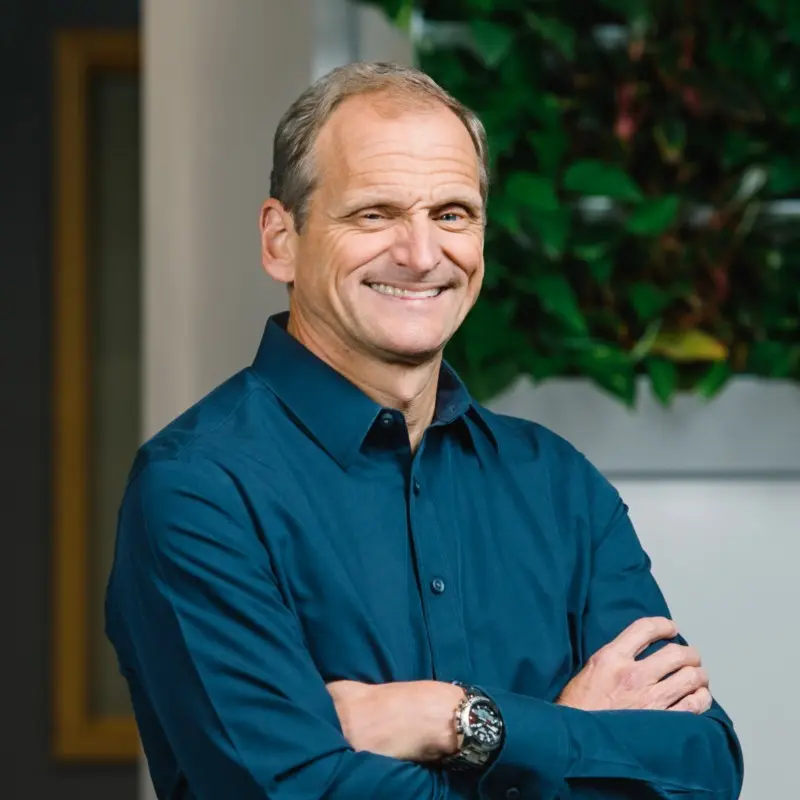
In this interview from AWS re:Invent 2025, Rick McConnell, chief executive officer of Dynatrace, joins theCUBE’s Dave Vellante to discuss the company’s recent financial momentum and the accelerating trend of tool consolidation. McConnell breaks down the drivers behind Dynatrace’s increased ARR guidance, specifically highlighting the explosive growth of their logs business, which surged to nearly $100 million in consumption in just one year. The discussion focuses on the critical shift toward end-to-end observability, where large enterprises are abandoning sil...Read more
exploreKeep Exploring
What factors are contributing to the increase in seven figure ACV deals in the observability industry?add
What are the key strengths of Dynatrace in relation to end-to-end observability?add
What is the target market for Dynatrace and the reasons behind it?add
What are the key factors driving go-to-market alignment for this business?add
>> Hi everybody. Welcome back to the Venetian in Las Vegas. My name is Dave Vellante and you're watching theCUBE's live wall-to-wall coverage of AWS re:Invent 2025. This is our day four coverage. I'm taken over for John Furrier, who's at the GSA, the Global Semiconductor Association Conference down in San Jose. Semiconductor is like the hottest topic, but we're here talking about AWS and Cloud and agentic and Rick McConnell is here as the CEO of Dynatrace. Rick, good to see you. Thanks for coming in.
Rick McConnell
>> Good to see you, Dave. Thanks so much for having me. Delighted to be here.
Dave Vellante
>> Yeah, you bet.
Rick McConnell
>> I'm glad to be with you.
Dave Vellante
>> We were talking about our annual trek. You go to the UBS conference in Arizona. Of course, we're here at re:Invent and you make your way here. It's become kind of an annual end of year tradition. There is no end. It's like just rolls into January. I'm sure you're doing sales kickoffs and going, but so how are you doing? What's happening at the show? Tell us about your week. You were at the UBS conference, you were presenting there, talking to investors. How'd that go? And let's get into AWS re:Invent.
Rick McConnell
>> This is the time of year that I sort of do this annual pilgrimage every year, Sunday. It is Sunday after Thanksgiving. It is off to the UBS conference for a couple of days to meet with investors. Very productive. We had a strong earnings report. We surpassed the high end of our guidance and our earnings report from our fiscal Q2. We raised guidance looking forward. We de-risked the second half of our fiscal year, so we felt good about that. It's always good to have that kind of momentum in speaking with investors. So the UBS conference is very productive. And we had a huge number of announcements here at AWS re:Invent. It was great to be referenced in the keynote that Matt Garman gave through it. So we were excited that Dynatrace got some airtime with that for all the work that we're doing. And we really do value our AWS partnership and we're delighted to be here.
Dave Vellante
>> So before we get into what's happening here at AWS and observability and AI, I wanted to ask you about some of your numbers just in researching. So you raised ARR guidance. What gave you the conviction to do that at this point in the cycle?
Rick McConnell
>> Well, there are a number of reasons. First, very strong first half. So that was great, great news, great start to the year. And in starting the year with good momentum, you feel more confident about your conviction in the second half of the year. So that was a good start. The other element is there are a number of growth drivers to our business that we look at as leading indicators of future growth potential. One of them is our logs business. Logs business is still relatively new. We're about a year into log management and selling. And that business over the past year has really gone from zero to almost $100 million of consumption in a one year period, growing at more than 100% year-over-year. So that is 100% business growing or a 100% growth on a $20 million number is not as big as 100% growth on $100 million number. So the extent that that continues and the growth continues, we get very excited about that. And that's really driven by trend event and observability that perhaps we'll talk more about. The consumption of our platform continues to grow quite nicely. The consumption of the platform is growing north of 20%, which is greater than our AR growth, which is in the mid-teens. That tends to be a leading indicator to ARR and revenue growth. So that gives you some conviction as to the opportunity to come, pipelines up, and that's also very productive. And then finally, the number of customers we have on our platform subscription continues to grow. And that's a good sense of the adoption and consumption of the platform broadly because those customers on our platform subscription actually consume the platform at double the rate of other customers. So there are lots of elements of the growth drivers that we really like.
Dave Vellante
>> And large deals, I think you said, I think I got it right, 53% year-over-year increase in seven figure ACV deals. What's driving the shift toward larger platform level commitments?
Rick McConnell
>> It is a great question, and it really is driven not even so much by Dynatrace as it is by sort of the industry trend around end-to-end observability really being the primary driving factor. And what do we mean by end-to-end observability? What we really mean is the consolidation of tools, the elimination of tool sprawl, if you will. And observability has sort of grown up through silos. Over the prior years, you had one vendor for application performance management. You had another vendor who was working on infrastructure management or infrastructure and metrics. You had another one that was working on real user monitoring. You had another one that was working on application security and then another one for log management. And major enterprises, large strategic companies, the biggest in the planet, then at some point look at their overall portfolio of observability solutions and they realize that they're being inefficient in two ways. One is costing them a whole lot more than it would if you consolidated down to a single vendor. And the second thing is they're not getting great outcomes. And the reason is because they're having to cross correlate data types, cross correlate all of these solutions manually. And in a world of AWS and others in this industry and the cloud where also with AI generally, you see an explosion of data and massive increase in data complexity. And you can't manage that manually. You must have a sophisticated AI powered observability tool to be able to do that. And if you have multiple siloed independent tools, it just doesn't deliver that. So what you want is you want to consolidate that drive toward end to end observability, consolidate those tools down to an end to end observability solution and that gets you where you want.
Dave Vellante
>> So you're talking about the clear trend toward industry consolidation, monitoring, logging, security, AI ops now part of that. Obviously Cisco Splunk is the obvious example. So talk more about how you see that playing into Dynatrace's strengths.
Rick McConnell
>> Dynatrace has been investing now for years in this end-to-end observability consolidation play. We look at end-to-end observability really at three levels, three important levels. One is at the data level. You want all data types of observability to reside in a single integrated data lakehouse. And we've done that with our Grail data lakehouse. This is logs, traces, metrics, real user data, behavioral analytics and other elements all in a single data lakehouse that you can then observe. We then observe that through a common, fully integrated AI engine that is then providing the analytics against that data store that enable you to then deliver answers. And those answers then lead to actions. And that's really key element. So data level is one, domain level is another, applications, infrastructure, log management, real users all observed in an end-to-end way. And third and finally is you want to integrate across personas. You want the IT ops team, executives, you want SREs, so site reliability engineers, platform engineering, developers all to have access to the same data. So data level, domain level, persona level, all integrated in an end to end flow, all overseen by an AI engine that gives you answers, not guesses.
Dave Vellante
>> So let's talk about AI observability, the term that is out there now. I'm interested in what that is. Are you seeing AI workloads sort of distinctly showing up in the pipeline? Is it more just sort of blended in? Is there a separate budget for AI workloads? Can you sort of elucidate there?
Rick McConnell
>> Sure. It's confusing is what I would say. So your question is aptly put, because people will say observability and they mean any number of multiple different things. Maybe to oversimplify, I would think about it in two different camps. One is observing AI workloads. And we're doing this already for hundreds of our existing customers who are taking their existing cloud-based workloads or on prem workloads. They're adding AI workloads to it and they're observing them with Dynatrace. And that is happening in spades today. In that category, one important element is that it isn't just about deploying or applying today's observability tools to those because there's an added flavor. And the added flavored AI workloads is related to ensuring conviction in the answers. And observability is traditionally then about is my software available? Is it working? If it breaks, how do I fix it quickly? What went wrong, et cetera? MTTR is mean time to resolve, these are the kinds of metrics of observability in history. But now it's, "Wait, was the content that my AI workload provided as the answer, is that correct? Or is it hallucinating? Do I need guardrails?" So I would say it is AI workloads require observability oversight that is observability plus plus. And that is what customers are looking to us to do is validate the content of those workloads as well that they're producing. The second piece, which I'll cover more rapidly is I would say an amazing evolution and observability that I get very passionately jazzed up about, which is this evolution over the course of time and observability through multiple stages. We started a couple of decades ago at reactive. It was like something breaks and then you go figure out what was wrong. Next step was proactive. Well, now it broke, but I'm doing root cause analysis, so then I'll figure out what's wrong and then I'll fix it quickly. The next step was predictive, which is you want to use predictive AI to anticipate an issue based on anomalous detection of issues. But the next step is autonomous operations. And this is why AWS re:Invent this year is so exciting for Dynatrace. It is because the longer term objective of observability is to make sure it never broke in the first place. How do you do that? You do that through a series of agents, not just Dynatrace, but an ecosystem of agents that can take input from Dynatrace based on the billions of interconnected data points that we see, evaluate what's happening, anticipate issues, and then auction out to a series of other agents, could be an AWS agent, could be a ServiceNow agent, could be an Atlassian agent, a GitHub, whatever needs to be done in order to rectify the environment so you resolve it. And so the objective is to deliver software that works perfectly. And you can do that much more precisely through an autonomous agentic AI ecosystem. And that's really where is it exciting. So those are the sort of the two pieces of AI observability that are exciting.
Dave Vellante
>> Yeah, nice. Thank you for that. I mean, AWS re:Invent 2025, it could be called Agentic Invent. I mean, it's just-
Rick McConnell
>> Yeah, you're absolutely right.
Dave Vellante
>> This is unbelievable.
Rick McConnell
>> You're absolutely right.
Dave Vellante
>> As enterprises shift to this sort of agentic AI autonomous operations world, it sounds like observability has to do things that it wasn't able to do before.
Rick McConnell
>> Oh, you're right. You're exactly right.
Dave Vellante
>> I wonder if you could just double click on that.
Rick McConnell
>> Sure. It was much easier in some ways to deliver observability when all you had to do was wait for something to go wrong and then you started looking for what was wrong to go fix it. Even in sort of that phase two, the proactive way doing root cause analysis once something breaks, great. There's one major, major flaw in that analysis, which is that end users, we have all completely lost patience.
Dave Vellante
>> Yeah.
Rick McConnell
>> I mean, when's the last time you opened a mobile app to try to buy something of Cyber Monday a couple of days ago and decide, "Well, I can't get into this commerce app or it's not working or I can't use my credit card. And so I'm just going to wait or I'm going to come back three days later to try to buy-"
Dave Vellante
>> There's a skip button on the chatbots that says, "Don't reason. Just give me the answer."
Rick McConnell
>> Exactly. "This is it."
Dave Vellante
>> We don't care if it's right. Just give me something quickly.
Rick McConnell
>> Totally lost patience. And it's got to work and it's got to work then. And if it doesn't work, whether it is that, whether it's a travel app, whether it is a financial services app of transferring money around, we have no patience. It's got to work perfectly. And so we need to be anticipating issues through observability analytics to be able to assist our customers in delivering software that works perfectly where issues are captured before an end user were ever to see it so that it can be resolved in advance of any impact to the business. And to your question, that's exactly what makes observability in some sense so exciting, but also much harder, because now you're trying to figure out how to fix things before they become end user impacting.
Dave Vellante
>> So your go to market seems to be working. What's driving that and what's the role of AWS in that go to-market?
Rick McConnell
>> Well, the go to-market for us, we have tended to focus on the largest global enterprises. We have in the range of 4,000 customers, not 400,000 customers paying us by credit card. These are the largest of the largest organizations around the planet. And the reason is because Dynatrace's superpower has been to deliver answers, not guesses. And what I mean by that is we can tell you precisely what is happening, what's gone wrong, and how to get it fixed in very, very highly complicated and complex environments. And frankly, if you're a startup that has one app that's sitting on AWS, you probably don't need Dynatrace because there are many solutions, open source and others that you can use to monitor a single app workload. It is when you have hundreds of apps through whether AWS or hybrid cloud or multi-cloud environments with a substantial amount of infrastructure and users around the planet, these are the kinds of things that essentially disallow it working with individual workloads. And so what you want to see is you want to see not a manual engagement in that, but an automated engagement in that process. And that's what we can do through Dynatrace. That is our superpower is getting answers in highly complex environments. And so our focus around go to-market has been the largest enterprises around the globe, consolidating through end-to-end observability, delivering both cost savings as well as enormous value by delivering better outcomes.
Dave Vellante
>> Okay, last question. So as you look ahead, the next 12 months, what's the big catalyst we should be looking for? Is it AI? Is it logs? Is it security? Go to market alignment?
Rick McConnell
>> Logs is a big one for sure. I talked at the outset about we're near $100 million of consumption, grown at 100% over the last year. That's a big one. But as I've been fortunate enough to talk to a myriad of customers around the globe, I would say three quick categories that I would leave you with. One, end-to-end observability, that's a huge driver. We've talked about it. That's a giant catalyst to our business because that is definitely beneficial for Dynatrace and Dynatrace's business because we do all of it. And by doing all of it, we are not a point product solution and we can enable that. Second, you mentioned, Dave, which is AI observability. AI workloads are expanding at this speed of light, so it seems, and we see this in our existing customer base, we see this with AI native companies and LLMs. They are going to be, they collectively, enterprises around the globe, are expanding AI workloads. They're going to have to observe those because there's no way to keep up with it manually. And third and finally, we haven't talked about it, but is business observability. And what we mean by that is more and more organizations are looking to also aggregate business events into their observability framework. So they can produce dashboards and capabilities that tell them how the business is running, not just how their software is running. And this is really key. Think of an airline, for example, that is trying to assess, "Well, how long does it take a bag to get from the front desk to the airplane?" And at O'Hare, it usually takes whatever, maybe it takes three minutes. What if it now takes six minutes? That is statistically significant. There may be an issue. They can then do drill-downs into the technical elements to figure out what went wrong. They can use Dynatrace to do that. And so these are good examples where businesses are starting to throw observability on its head.
Dave Vellante
>> That's interesting because this is, somebody said it years ago, every company's a software company. It actually wasn't true. Every company didn't really... Software's hard, but now increasingly service as software seems to be the new trend where we're going to be delivering high value AI based services, driving productivity, which happens to be through software. So observing my business as a digital enterprise is going to be a big trend. And Dynatrace, you're not in semiconductors, which is where all the hype is. But you're at the heart of this change in AI. So hopefully investors are starting to realize the value that you guys bring, the performance. So congratulations on that and look forward to having you back and talk about the future.
Rick McConnell
>> Thank you very much. I really appreciate you having me and thrilling to be here and a super exciting time for Dynatrace. Super exciting time for observability.
Dave Vellante
>> Excellent. You're very welcome. All right. And thank you for watching. This Dave Vellante for theCUBE team here in Las Vegas, re:Invent 2025. We'll be right back right after this short break.