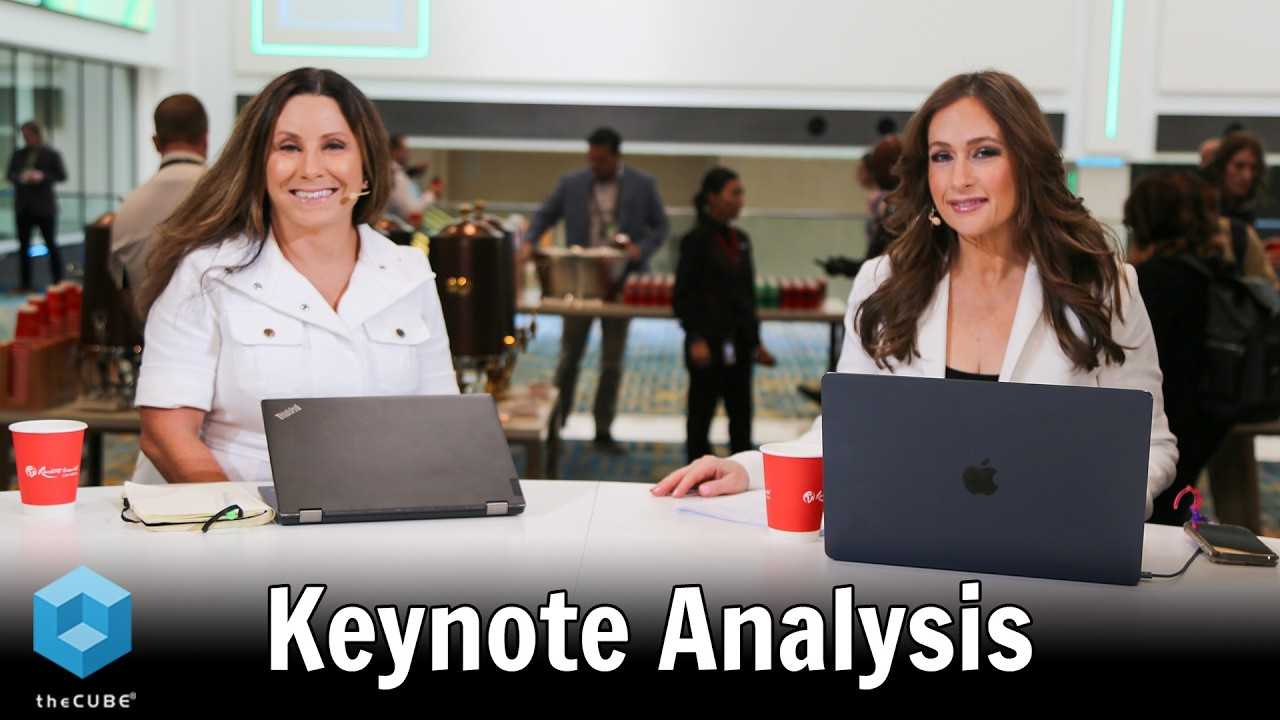
In this analyst segment from Amplify 2026, theCUBE's Krista Case joins Alison Kosik to break down the key themes from Workiva Amplify 2026, reflecting on how AI is moving beyond assistance into consequential finance, audit, risk and sustainability workflows. Case notes that practitioners across these roles are now evaluating where AI can actually perform work rather than simply support it, a shift that raises the bar for auditability, controls and accountability. She underscores that trust remains central, with organizations needing to trace where insights originate, who approved an action and whether an AI agent's behavior can be substantiated rather than merely appear plausible.
The conversation also explores the tangible outcomes organizations are seeing from AI adoption, including speed, scale and fewer errors in processes like SEC reporting and audit reconciliation. Case highlights how data readiness underpins all of this progress, explaining that fragmented data stores and inconsistent ownership are longstanding problems now amplified by AI's speed and scale. She touches on the evolving balance between AI autonomy and human review, noting that monitoring, exception handling and continuous assurance will grow more critical as those boundaries shift. Case also points to the expanding role of the CFO, who increasingly leads cross-functional conversations about what data means for the business. From Workiva's strengths in reporting and compliance to its expanding footprint in GRC and sustainability, Case outlines why trusted, connected data will define the next phase of enterprise AI adoption.
Forgot Password
Almost there!
We just sent you a verification email. Please verify your account to gain access to
Workiva Amplify 2026. If you don’t think you received an email check your
spam folder.
In order to sign in, enter the email address you used to registered for the event. Once completed, you will receive an email with a verification link. Open the link to automatically sign into the site.
Register for Workiva Amplify 2026
Please fill out the information below. You will receive an email with a verification link confirming your registration. Click the link to automatically sign into the site.
You’re almost there!
We just sent you a verification email. Please click the verification button in the email. Once your email address is verified, you will have full access to all event content for Workiva Amplify 2026.
I want my badge and interests to be visible to all attendees.
Checking this box will display your presense on the attendees list, view your profile and allow other attendees to contact you via 1-1 chat. Read the Privacy Policy. At any time, you can choose to disable this preference.
Select your Interests!
add
Upload your photo
Uploading..
OR
Connect via Twitter
Connect via Linkedin
EDIT PASSWORD
Share
Forgot Password
Almost there!
We just sent you a verification email. Please verify your account to gain access to
Workiva Amplify 2026. If you don’t think you received an email check your
spam folder.
In order to sign in, enter the email address you used to registered for the event. Once completed, you will receive an email with a verification link. Open the link to automatically sign into the site.
Sign in to gain access to Workiva Amplify 2026
Please sign in with LinkedIn to continue to Workiva Amplify 2026. Signing in with LinkedIn ensures a professional environment.
Are you sure you want to remove access rights for this user?
Details
Manage Access
email address
Community Invitation
theCUBE Insights
In this analyst segment from Amplify 2026, theCUBE's Krista Case joins Alison Kosik to break down the key themes from Workiva Amplify 2026, reflecting on how AI is moving beyond assistance into consequential finance, audit, risk and sustainability workflows. Case notes that practitioners across these roles are now evaluating where AI can actually perform work rather than simply support it, a shift that raises the bar for auditability, controls and accountability. She underscores that trust remains central, with organizations needing to trace where insights originate, who approved an action and whether an AI agent's behavior can be substantiated rather than merely appear plausible.
The conversation also explores the tangible outcomes organizations are seeing from AI adoption, including speed, scale and fewer errors in processes like SEC reporting and audit reconciliation. Case highlights how data readiness underpins all of this progress, explaining that fragmented data stores and inconsistent ownership are longstanding problems now amplified by AI's speed and scale. She touches on the evolving balance between AI autonomy and human review, noting that monitoring, exception handling and continuous assurance will grow more critical as those boundaries shift. Case also points to the expanding role of the CFO, who increasingly leads cross-functional conversations about what data means for the business. From Workiva's strengths in reporting and compliance to its expanding footprint in GRC and sustainability, Case outlines why trusted, connected data will define the next phase of enterprise AI adoption.
Principal Analyst and Practice Lead for Cyber Resilience and SecuritytheCUBE Research
HOST
Alison Kosik
HosttheCUBE
HOST
In this analyst segment from Amplify 2026, theCUBE's Krista Case joins Alison Kosik to break down the key themes from Workiva Amplify 2026, reflecting on how AI is moving beyond assistance into consequential finance, audit, risk and sustainability workflows. Case notes that practitioners across these roles are now evaluating where AI can actually perform work rather than simply support it, a shift that raises the bar for auditability, controls and accountability. She underscores that trust remains central, with organizations needing to trace where insights or...Read more
exploreKeep Exploring
What themes emerged from the interviews and discussions today?add
How should organizations balance AI autonomy and human oversight in workflows—deciding when AI can act on its own, when it needs human approval, and what controls, monitoring, and auditing mechanisms are required?add
>> Hello and welcome back to Workiva Amplify 2026. We're coming to you live from Las Vegas. I'm Alison Kosik alongside Krista Case. She changed chairs because she is going to put on her analyst hat and we get to reflect on the conversations and interviews that we had today and really talk about some of the themes we heard throughout the day. One thing I heard was how we're seeing AI move into these consequential workflows. We're actually seeing AI perform actual work. What did you hear throughout the day?
Krista Case
>> Yeah, I heard that as well, Alison. We had the benefit of hearing from a number of customers in addition to Workiva executives. And so certainly across a number of roles, right? I heard across finance, audit, risk, sustainability, I heard that these practitioners are really considering where they can lean on AI to start actually doing work versus just assisting them. And then I think especially grounding this in the context of Workiva, that certainly raises the bar when we think about auditability, controls, evidence, accountability. And so I think some of those questions are still a little bit TBD in terms of how they're being solved, but certainly, I think they're all kind of top of mind. And along that vein, another related theme that I heard was this concept of trust. AI is only as good insofar as we can trust it. So we need to understand things like where did this information and where did these insights come from, who approved a particular action, and can you maybe tracewhat happened if an AI agent is taking an action on your behalf. And so especially when you think about finance and these other regulated processes, it's not really good enough for the action or the response to just look plausible. We have to really make sure that it can be substantiated.
Alison Kosik
>> What are some of the positive outcomes that you heard throughout the day about AI performing actual work?
Krista Case
>> Yeah, so again, I think in terms of kind of the ROI, right, that's something that we did talk about with a few guests, right? So we heard a lot about speed and scale. It can allow us to move much faster, right? And certainly we hear that in other industries as well. But when I think about this market in particular, you know, we can extrapolate that to think about, okay, maybe it means that our auditors are actually making fewer errors, or that when we're compiling a 10-K or an SEC document, or when we're rationalizing something to an auditor, that we're making fewer errors. Right. So there's fewer errors happening in our processes, or maybe we're able to kind of take this information in context and make better decisions and make them faster. Yeah. So that latter one goes back to speed, but I was really glad to see the conversation went beyond just, we can move faster.
Alison Kosik
>> Right, right. And there was a lot of importance placed on data readiness, right?
Krista Case
>> Yes, yes, exactly. And so this is— so I'm kind of a data security person at heart, so that piece of the conversation was near and dear to my heart. But I think it's commonly understood that our AI is only as good as the data that it's built on. And what we talked about more specifically here at Workiva Amplify was the fact that if we have fragmented data stores, if we have inconsistent definitions and inconsistent ownership over data, these are not necessarily new problems that were created as a result of the enterprise adopting AI. They're problems that existed before. But because we're leaning on this information to make decisions in a new way, and because the AI can move faster and at a greater scale like we were just talking about, there are in fact even more significant, potentially negative implications. So one of the very important first steps is really to kind of getting that data house in order.
Alison Kosik
>> Yeah, there was also this theme of the push and pull of letting AI function in the workflow and then the human review aspect of it. It seems like that is something that is really just revving up, isn't it?
Krista Case
>> It really is, Alison. And what's interesting is that going back to the conversation around speed, if a human has to review and approve every action, then really the whole point or much of the value is moot, right? So we need to kind of make decisions around when is AI assisting a human, when can it execute on its own, when does it need approval? And I do think that some of these boundaries are still being defined, and I think they're going to evolve and change over time, especially as the business use cases evolve. But thinking about the control environments that we're talking about those will also have to evolve with them as well. So I do think that when it comes to things like monitoring, exception handling, enforcing policies, and having more continuous assurance, those are going to become more important. I think they're going to play an important role as these boundaries start to evolve.
Alison Kosik
>> Yeah, there was also a lot of conversation today about embedding auditing in the process of adopting AI. That's really a big conversation at Workiva.
Krista Case
>> I thought that was really interesting, Alison, because when we think about auditing, we typically think about it sort of as maybe after the fact or kind of its own maybe siloed process. But when we think about the enterprise moving to adopt AI, auditing can actually allow the enterprise to move faster. yes, there's some work that needs to be done upfront and that's going to take some time and require some resources. But once proper auditing and proper governance is in place, we have better insights into kind of the activity that these AI agents are taking. And so from there, we can build greater trust and then move and adopt at a bigger scale.
Alison Kosik
>> One of the things that struck me, it's interesting how CFOs now are not just wearing the CFO hat, they're wearing all different hats now. They're really part— they're front and center of the conversations when it comes to AI adoption, right?
Krista Case
>> And I think especially when we think about, you know, like we said, kind of these control environments. But yes, they definitely have a very important seat at the table, you know, the CFO does. And they're moving beyond just kind of someone who's overseeing numbers. They're bringing teams to the table and they're having conversations around what these numbers mean to the business. Right. And so I would definitely agree with you, you know, from that standpoint. And obviously that's an important component of AI adoption.
Alison Kosik
>> Yeah. So I'm curious where— what you think, your thoughts about, you know, where Workiva sits as we move forward with AI adoption.
Krista Case
>> Yeah, Alison. So, you know, I think it's pretty clear that Workiva has, you know, some great strengths to lean on, you know, things like reporting, auditing, and compliance. The evidence and lineage that came across in perhaps all of our conversations today. And I think that's very important as we start to let these AI agents take action on our behalf. And we do have some customer research from our new partner Qualitate that really reinforces that. And when we think about allowing AI to start entering these controlled environments and business processes, I think those capabilities are going to become even more relevant. One thing for me that I'm looking at is I know Workiva has talked about expanding its share of wallet. We talked about that a little bit earlier this morning, but I'm going to be really interested to track how it continues to expand in areas like GRC, and sustainability as well. We saw some really interesting— we had some interesting conversations around sustainability today. So those are a couple of areas that I'm watching for from Workiva.
Alison Kosik
>> Well, thanks so much for breaking all that down and thanks for your expertise.
Krista Case
>> Thank you so much, Alison. It was really a great day and really appreciate being on the desk with you today.
Alison Kosik
>> It was fabulous. And you've been watching theCUBE, the leader in live tech coverage and in-depth Expert Analysis. Thanks for watching. We'll see you again next time.