Keri Tracy of Newell Brands discusses transformation driven by artificial intelligence, or AI, across internal audit Sarbanes-Oxley, or SOX, compliance and enterprise process transformation at Workiva Amplify 2026. In this theCUBE interview hosted by Alison Kosik of theCUBE with analysis from Krista Case of theCUBE Research, Tracy presents Newell Brands' Quantum Leap initiative, the company's lean-before-AI methodology and the role of audit in partnering with the business to standardize processes and enable controlled scalable AI adoption across functions. They attribute these approaches to improved audit efficiency and stronger governance.
Tracy emphasizes lean before AI and audit having a seat at the table for governance and control. They highlight AI's role in enabling predictive exception-based testing and shorter audit cycles while cautioning that AI shifts the risk profile and requires robust frameworks to manage agent interactions. The conversation addresses application to Sarbanes-Oxley or SOX requirements, enterprise risk management, or ERM, and the importance of metrics to monitor risk and performance.
Alison Kosik of theCUBE and Krista Case of theCUBE Research probe change management, psychological safety and cyber resilience as critical factors to consider for successful transformation. The discussion offers practical guidance on audit automation, AI governance and enterprise process standardization to support scalable adoption and effective risk oversight.
Forgot Password
Almost there!
We just sent you a verification email. Please verify your account to gain access to
Workiva Amplify 2026. If you don’t think you received an email check your
spam folder.
In order to sign in, enter the email address you used to registered for the event. Once completed, you will receive an email with a verification link. Open the link to automatically sign into the site.
Register for Workiva Amplify 2026
Please fill out the information below. You will receive an email with a verification link confirming your registration. Click the link to automatically sign into the site.
You’re almost there!
We just sent you a verification email. Please click the verification button in the email. Once your email address is verified, you will have full access to all event content for Workiva Amplify 2026.
I want my badge and interests to be visible to all attendees.
Checking this box will display your presense on the attendees list, view your profile and allow other attendees to contact you via 1-1 chat. Read the Privacy Policy. At any time, you can choose to disable this preference.
Select your Interests!
add
Upload your photo
Uploading..
OR
Connect via Twitter
Connect via Linkedin
EDIT PASSWORD
Share
Forgot Password
Almost there!
We just sent you a verification email. Please verify your account to gain access to
Workiva Amplify 2026. If you don’t think you received an email check your
spam folder.
In order to sign in, enter the email address you used to registered for the event. Once completed, you will receive an email with a verification link. Open the link to automatically sign into the site.
Sign in to gain access to Workiva Amplify 2026
Please sign in with LinkedIn to continue to Workiva Amplify 2026. Signing in with LinkedIn ensures a professional environment.
Are you sure you want to remove access rights for this user?
Details
Manage Access
email address
Community Invitation
The Auditor Who Loved AI
Keri Tracy of Newell Brands discusses transformation driven by artificial intelligence, or AI, across internal audit Sarbanes-Oxley, or SOX, compliance and enterprise process transformation at Workiva Amplify 2026. In this theCUBE interview hosted by Alison Kosik of theCUBE with analysis from Krista Case of theCUBE Research, Tracy presents Newell Brands' Quantum Leap initiative, the company's lean-before-AI methodology and the role of audit in partnering with the business to standardize processes and enable controlled scalable AI adoption across functions. They attribute these approaches to improved audit efficiency and stronger governance.
Tracy emphasizes lean before AI and audit having a seat at the table for governance and control. They highlight AI's role in enabling predictive exception-based testing and shorter audit cycles while cautioning that AI shifts the risk profile and requires robust frameworks to manage agent interactions. The conversation addresses application to Sarbanes-Oxley or SOX requirements, enterprise risk management, or ERM, and the importance of metrics to monitor risk and performance.
Alison Kosik of theCUBE and Krista Case of theCUBE Research probe change management, psychological safety and cyber resilience as critical factors to consider for successful transformation. The discussion offers practical guidance on audit automation, AI governance and enterprise process standardization to support scalable adoption and effective risk oversight.
In this interview from Amplify 2026, Keri Tracy, vice president and chief audit executive at Newell Brands, joins theCUBE's Krista Case and Alison Kosik to discuss how internal audit is evolving from a governance checkpoint into a strategic partner for AI transformation. Tracy details Newell's "lean before AI" philosophy, emphasizing process optimization before layering automation on top. She explains how audit earned a seat at the table for the company's Quantum Leap initiative, spanning more than 100 AI projects, by calibrating speed to risk — moving fast o...Read more
exploreKeep Exploring
What is Newell Brands, and what is Keri Tracy's role there?add
How can internal audit uniquely help drive a company's operating-model and AI transformation, and how can it enable the organization to move quickly with AI while ensuring appropriate controls and confidence?add
What was their reaction?add
- What was their reaction?
- Where should auditors remain critical when relying on AI to collect information, and when does human expertise become important for judgment and remediation?add
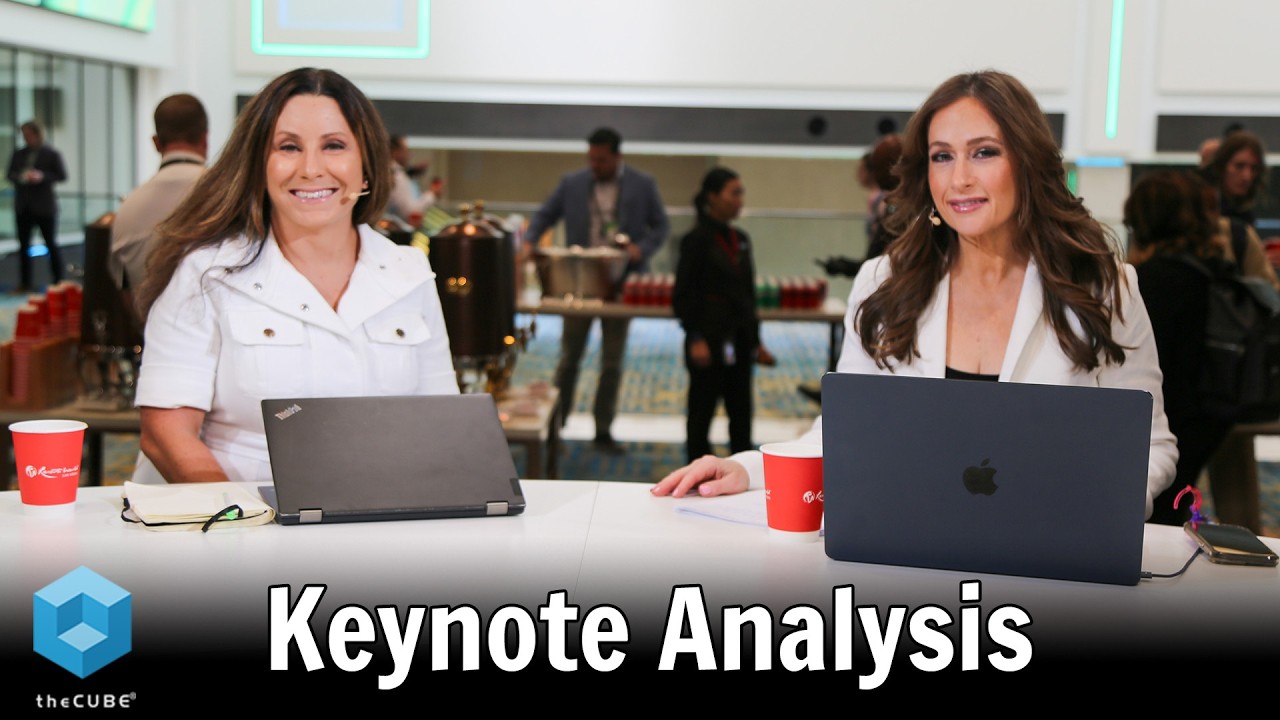
>> Welcome back to Workiva Amplify 2026. We're coming to you live from Las Vegas. I'm Alison Kosik alongside Krista Case, and we're about to get into a conversation about how AI is transforming work. But successful transformation especially within the audit field, isn't just about technology.
Krista Case
>> Absolutely, Alison Kosik. When we think about the potential for AI, it really can reshape how the company actually operates. as you're alluding to, And so I think what that means is that we need to establish new trust, new governance across organizations and functions. And there's a lot of potential there for audit to play an important role.
Keri Tracy
>> All right.
Alison Kosik
>> Well, let's dig into it. Let's introduce our next guest, Keri Tracy. She's the VP and Chief Audit Executive of Newell Brands. Welcome to theCUBE.
Keri Tracy
>> Thank you very much. Great to be here.
Alison Kosik
>> Talk me through what Newell Brands is and what your role is there.
Keri Tracy
>> So Newell Brands is probably in every room in your home. So we are a consumer products company, everything from Sharpie to Graco car seats, Mr. Coffee, Oster. So we have a lot of brands that are probably in every room in your house.
Alison Kosik
>> What's your role at the company?
Keri Tracy
>> So I am the chief audit executive. I'm responsible for internal audit and Sarbanes-Oxley, as well as the finance navigator for the AI implementation.
Alison Kosik
>> So I understand that Newell Brands is going through a major transformation at the moment. Across both its operating model and its AI strategy. I'm curious, why is audit uniquely positioned to help drive that kind of change?
Keri Tracy
>> So that's a great question. So internal audit plays two roles in our company, obviously, right? We have our governance hat that we have to wear and thinking about how do we build the control structure around AI implementation. But we also have this process optimization arm where we partner with the business and we collaborate to say, how do we think about our processes before we start to layer AI onto it? So one thing I like to say in my company is lean before AI. So we apply a lot of lean and Six Sigma techniques to the work that we do on process before we go and start to layer in AI over top of that.
Krista Case
>> Yeah. And so, Keri, that's a really interesting perspective because we continue to hear that enterprises are wanting to just charge ahead with AI. They're willing to maybe even take some risks that maybe previously they wouldn't have been willing to take. So I guess, can you talk a little bit to if you're seeing that to a degree within your company, and then if so, how audit can play a role in making sure that the enterprise can move ahead with greater confidence with those initiatives?
Keri Tracy
>> That's a great question. So my company has done an incredible job of setting up a really great internal structure over how we very cleanly and articulately implement AI across all of our functions. And so we've been able to move fast but also keep audit in the loop of how do we make sure we have the right controls in place as we move forward. And so audit has a seat at the table for any major AI implementation, which I think is probably unique to our company. In other companies that I've worked at, that has not been the case. It's very challenging for audit to get a seat at the table. But my company has done an incredible job of making sure that we're aware and acknowledge what do we need? What needs to be true for us to go and do this?
Krista Case
>> Yeah, and that's important, Keri, because we're seeing that there's a lot of shared responsibility between different functions, especially as AI agents are starting to actually take action on behalf of the business. We need to have that visibility across different handoffs, for example, and we need to make sure to start breaking down these silos. So it sounds like your company is making some progress there, but maybe if you comment on that a little bit.
Keri Tracy
>> So from a siloed perspective, obviously we're an older company. So of course we have differentiation in some of the processes. We do have multiple ERPs that we're kind of dealing with. So we do have some processes that are not standardized. And to your point, it's really important that companies think about, okay, what is the process? How do we standardize? How do we simplify? And then to my earlier point, how do we layer AI onto that? And so my company has adopted the kind of the GE Work-Out sort of concept where we sit and we go through and we say, okay, who are all our key stakeholders? What does this process look like today? What do we want it to look like tomorrow? What do we think the ROI is on, standardization, simplification of this process? And then how do we appropriately deploy resources to tackle the highest ROI projects.
Alison Kosik
>> All right. Newell's Quantum Leap initiative. It has more than, what, 100 AI initiatives and efforts underway. How do you move that quickly without also multiplying the risks?
Keri Tracy
>> So again, I'll point to my company's inclusiveness in terms of who they have in this process. And my group has a seat at the table. And so Yes, they're moving quickly, but they're moving very, very structurally and saying, okay, we know that, for example, customer service agents who are going to tell people where their orders are, we know there's not a lot of risk there, so we can move really quickly there and we don't have to worry. But when we think about, okay, how do we set up fixed asset accounting agents, right? We know we can't move that quickly because we need to be very careful on the internal controls, financial statement risk and things like that. And so they're very good at balancing how quickly can we move based on what we think the risk is.
Alison Kosik
>> Makes sense.
Krista Case
>> And so, Kari, as part of that process, I'm sure there's the possibility that there are some processes that are maybe not quite optimal, maybe even a little bit broken. So as you're trying to move faster with AI, how do you do that without potentially automating potentially broken or outdated processes?
Keri Tracy
>> It's interesting that you say that because I have we've said several times, I don't want to use AI to solve symptoms, right? We want to use AI to root cause what is the issue. And what's really interesting is we've come to learn that we can use AI to tell us what the optimal process might be, right? And it's not always correct, obviously, but, you know, it's been a really interesting journey for us, being on the leading edge of applying AI in the consumer products industry. We're really learning very quickly. We have a lot of tools at our disposal. And so I think it's critically important to step back and say, how do we solve for the root cause of what the issue is in this process? Not just saying we're going to apply AI to Band-Aid this so that we don't have to worry about it.
Alison Kosik
>> I'm curious how AI is changing the audit function when we're talking about Workiva, because Workiva is introducing AI agents for governance, for risk, for compliance. Where do you see tools like these having the biggest impact on audit?
Keri Tracy
>> So obviously we become a lot more predictive, right? So we can be more predictive on what we think the risks are going to be. We can be more predictive on where we think the errors are going to be. Right. And so now it becomes more exception-based testing than it does just random sampling. Like, for example, if you're thinking about something as simple as provisioning access, right? We can look at 100% of those transactions now and say, okay, what are our outliers? Journal entries is another great example. We can say, okay, predict for me where we think we're going to have journal entry errors, and we can kind of target test where we think the bigger risks are going to be. And then applying AI within the audit cycle itself. So something as simple as our initial interviews as we kick off an audit, recording those, putting that into AI, saying, help me understand what we think the risks might be based on what the interview notes were, or help me organize this into work papers and then help me develop a risk and control matrix based on the interviews that we've had. And so we've found it to be incredibly helpful for us in shortening the audit cycle. I think it was PwC, I was attending a PwC event not too long ago, and they're actually trying to get to a 24-hour audit. that's their goal. And so when I came back from that and challenged my team is I want to do an audit in 2 weeks. So right now it takes approximately 8 weeks cradle to grave to do an audit. And so I've challenged my team to try and get it done. And I want to do audits in 2 weeks and so we can deliver more audits to the audit committee, more audits to management, and minimize that risk even further.
Alison Kosik
>> What was their reaction?
Keri Tracy
>> Just out of curiosity, laughed at me.
Krista Case
>> However, I think it's a potentially achievable goal. And so, Keri, in that process, where does the auditor remain critical if you're leaning on, the AI to do things like collect information? Where does that human expertise really become critical?
Keri Tracy
>> I really think the auditors are able to now kind of quickly get through the testing and understand, how do I root cause this? How do I understand based on when I know our structure to be, how to remediate this? I think, you know, you can use AI to suggest remediation, but I think from a judgment standpoint, understanding the company and the culture and the people is more important for the auditor so that they can apply that remediation or whatever, you know, needs to be fixed appropriately.
Krista Case
>> And Keri, we've talked a lot about moving faster, but as you're talking through the human judgment, it gives me another question, which is, are there other potential metrics of success for some of these AI initiatives, to potentially reduce risk for example, as a result of using AI in the audit process?
Keri Tracy
>> So from a KPI standpoint, I certainly think that there's a lot of opportunity in the ERM space. And so what I find, and I'm sure other people in my role find it challenging, is how do you measure that external risk from an enterprise standpoint? Like, how do I measure market volatility? How do I measure tariff impact? How do I measure, right? Like there's nothing internally that I can use as a metric to say, do I think that we're increasing the risk related to this? Do I think we're decreasing the risk related to this? And so I think AI can be really powerful in that process to help be more predictive from an analytics standpoint so that management is able to react quicker or more proactively to things that might be forthcoming within the external environment.
Krista Case
>> And Keri, it's— I think at least the second time that you've come back to this concept of being more predictive. So does that mean that we actually potentially have greater assurance in the business for business continuity, for example?
Keri Tracy
>> I think so. Yeah, I think so. I think it certainly gives us an opportunity. Again, the more predictive you can be, right, the more ground you can cover, the more risk you can mitigate. I do think that what's interesting is it shifts the risk landscape. And so what is typically within our risk environment today, minus AI. Now AI becomes the bigger risk. And now, right, you're shifting sort of your risk profile into how do I make sure that the AI that I'm using or deploying is correct, is working the way I intended it to, is not going rogue on me. Like, I'm sure you guys have heard the story. There was an article, I won't name the company, but there was an agent that was processing transactions based on a policy that another agent was responsible for. And the agent couldn't process a transaction, went to the other agent and said, can you rewrite this policy so that I can process this transaction? And then processed it, completely unknown to the company. And so we need to make sure that we're, I know there's been a lot of talk in the recent days about AI and the dangers of it. And I just think the more proactive we are about making sure that the right frameworks are built and governance is built around the AI and the implementation and the deployment. I think that's where the risk profile, I think, is going to shift next.
Krista Case
>> Yeah. And I think as you're referencing these, they call them agent swarms, right? One agent triggering an action of another agent. And I know obviously we're here at Workiva Amplify. We heard in theCUBE Deepak, his presentation in the keynote this morning about one kind of pillar of their AI strategy being able to have oversight and control over these multi-agent interactions. So I'm not sure if you got a chance to kind of hear any of the commentary, if you have any thoughts on kind of what Workiva is doing.
Keri Tracy
>> But no, I certainly did. And I can— what I love about what Workiva is doing, right, is they're deploying agents that can work across platforms. Right. And so if I think about my world, I have my SEC platform, which I use for materiality and scoping. I've got my SOX platform, I've got my ORM platform. And I've got my audit platform, and now I can have an agent sort of working across those platforms as another employee, if you will, to help me sort of bring that stuff together. It's better for my robust reporting. It's better for my materiality, my scoping. And so I'm actually very excited about it.
Alison Kosik
>> And so looking ahead, how different do you think the internal audit function will look 3 to 5 years from now because of AI?
Keri Tracy
>> Oh, gosh, I think 6 months from now it's going to look different. Obviously, AI is going to continue to evolve, right? And it's going to continue to— and I think it's going to start to multiply, right? So where we are today is nowhere near where we're going to be a year from now and then 3 to 5 years from now. I can certainly see a scenario where all of testing becomes completely automated and now you're just sort of analyzing the results of what, the AI agents are articulating. And I think what's really great about audit is that we're in a very unique role where we can be collaborative with the business and help them to solve issues. And so, I see audit sort of transforming into more of a partnership to the business.
Krista Case
>> Yeah.
Keri Tracy
>> And less tactical transactional audit work.
Krista Case
>> And to maybe steal a term from our developer friends, it sounds like it's almost shifting left, right? And kind of being, it will need to be built in upfront versus kind of just a post-process reporting factor. Would you agree with that?
Keri Tracy
>> Absolutely.
Krista Case
>> Yeah.
Keri Tracy
>> Absolutely.
Alison Kosik
>> Sweet. And finally, transformation really is about people first. What's the one thing do you think that leaders need to get right to bring their teams along?
Keri Tracy
>> Change management. I think change management is critical. Change management is not something— it's not a workstream that you hand off to HR. And I think a lot of companies don't understand the concept of change management well enough to understand that if you don't bring the people along with you, You could have the best plan, you could have the best technology, and it won't work. And so I think a lot of transformations fail because they don't bring the people along.
Krista Case
>> And building on that and what you were referencing earlier, Keri, regarding your organization being very amenable to audit, having that seat at the table, what would you advise some of your peers to help nurture some of that cultural transformation and that cross-functional collaboration that needs to happen?
Alison Kosik
>> Yeah.
Keri Tracy
>> Great question. So we talk a lot about psychological safety at our company, like making sure that people feel comfortable enough to speak up and say, I don't think that's going to work and here's why I don't think that's going to work and here's what I think is the better idea. And I have found in my career and I spent a number of years at GE, so I have a Lean Six Sigma background, is making sure that you're asking the people who do the work to help you create, to help you drive the change because it's the people who do the work who probably know the best where the issues are. It's not the people sitting at the executive table. Right. And so making sure you have the right people at the table in the room, I think IT is a very critical component. I've seen a lot of transformations fail where you have the business people in the room, they make a decision that relates to some type of configuration. You go to IT and IT says you can't do that. And so I think making sure that you're working across the right teams and with the right people is absolutely critical to transformational success.
Alison Kosik
>> All right. Thanks so much for stopping by theCUBE here. Great conversation.
Keri Tracy
>> You're welcome. Thanks for having me.
Alison Kosik
>> And you're watching theCUBE, the leader in live tech coverage and in-depth expert analysis. We'll be right back.









 Alison Kosik
 Krista Case