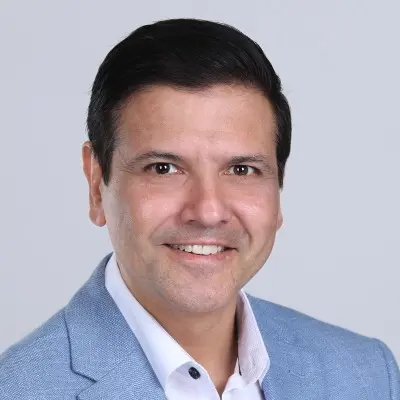
This conversation at Workiva Amplify 2026 focuses on building trusted artificial intelligence, AI, agents for financial reporting, audit, governance, risk and compliance. Deepak Bharadwaj of Workiva, executive vice president and chief product officer, explains how product and domain expertise shape agent design for regulated workflows. Bharadwaj emphasizes trusted data, verifiable AI outputs and robust audit trails where people sign off on filings. They highlight permission-enforced actions, human supervision at critical decision points and Agent Studio to enable business users to build governed agents.
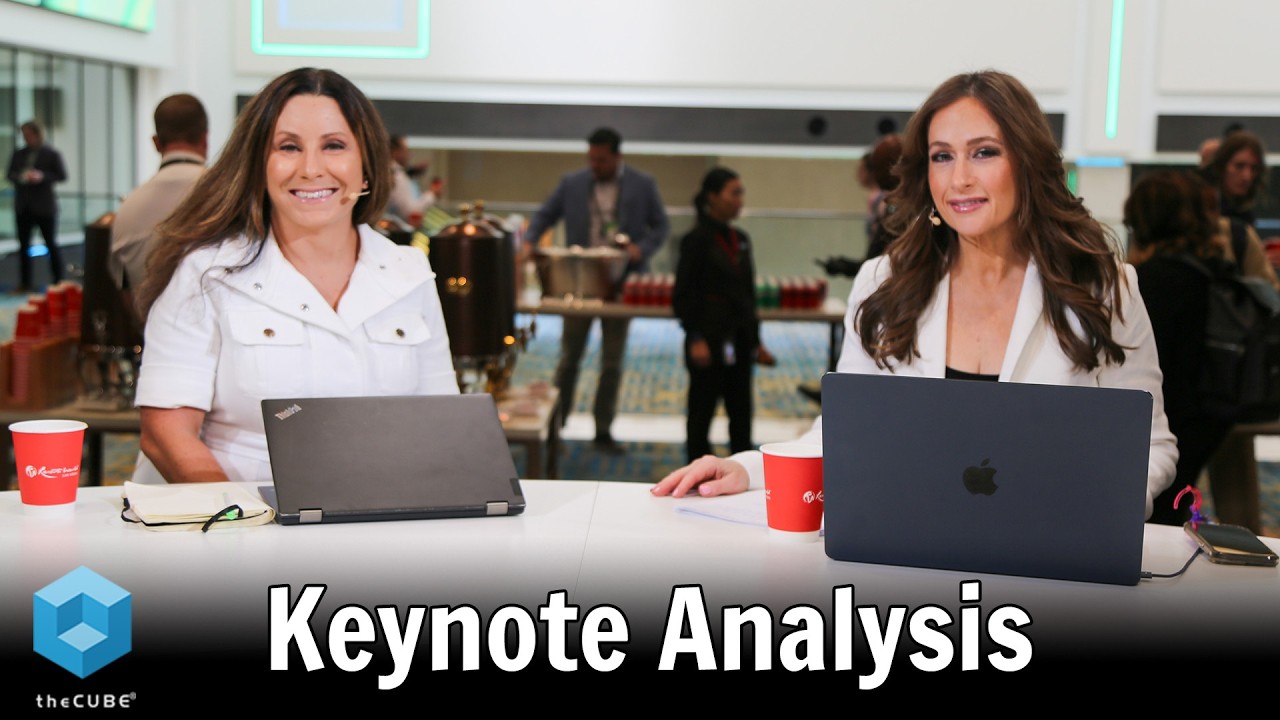
Alison Kosik hosts the segment with Krista Case of theCUBE Research, principal analyst and practice lead for cyber resilience and security. Case provides live analysis and follow-up questions and highlights provability and data lineage. Recommended actions include prioritizing governance, human-in-the-loop checkpoints and careful model selection to support compliant financial reporting and audit processes.
Topics include trusted AI agents, data governance, audit trail and multi-agent orchestration, with practical guidance for implementing governed agents in regulated environments.
Forgot Password
Almost there!
We just sent you a verification email. Please verify your account to gain access to
Workiva Amplify 2026. If you don’t think you received an email check your
spam folder.
In order to sign in, enter the email address you used to registered for the event. Once completed, you will receive an email with a verification link. Open the link to automatically sign into the site.
Register for Workiva Amplify 2026
Please fill out the information below. You will receive an email with a verification link confirming your registration. Click the link to automatically sign into the site.
You’re almost there!
We just sent you a verification email. Please click the verification button in the email. Once your email address is verified, you will have full access to all event content for Workiva Amplify 2026.
I want my badge and interests to be visible to all attendees.
Checking this box will display your presense on the attendees list, view your profile and allow other attendees to contact you via 1-1 chat. Read the Privacy Policy. At any time, you can choose to disable this preference.
Select your Interests!
add
Upload your photo
Uploading..
OR
Connect via Twitter
Connect via Linkedin
EDIT PASSWORD
Share
Forgot Password
Almost there!
We just sent you a verification email. Please verify your account to gain access to
Workiva Amplify 2026. If you don’t think you received an email check your
spam folder.
In order to sign in, enter the email address you used to registered for the event. Once completed, you will receive an email with a verification link. Open the link to automatically sign into the site.
Sign in to gain access to Workiva Amplify 2026
Please sign in with LinkedIn to continue to Workiva Amplify 2026. Signing in with LinkedIn ensures a professional environment.
Are you sure you want to remove access rights for this user?
Details
Manage Access
email address
Community Invitation
AI Has Something to Prove
This conversation at Workiva Amplify 2026 focuses on building trusted artificial intelligence, AI, agents for financial reporting, audit, governance, risk and compliance. Deepak Bharadwaj of Workiva, executive vice president and chief product officer, explains how product and domain expertise shape agent design for regulated workflows. Bharadwaj emphasizes trusted data, verifiable AI outputs and robust audit trails where people sign off on filings. They highlight permission-enforced actions, human supervision at critical decision points and Agent Studio to enable business users to build governed agents.
Alison Kosik hosts the segment with Krista Case of theCUBE Research, principal analyst and practice lead for cyber resilience and security. Case provides live analysis and follow-up questions and highlights provability and data lineage. Recommended actions include prioritizing governance, human-in-the-loop checkpoints and careful model selection to support compliant financial reporting and audit processes.
Topics include trusted AI agents, data governance, audit trail and multi-agent orchestration, with practical guidance for implementing governed agents in regulated environments.
In this interview from Amplify 2026, Deepak Bharadwaj, executive vice president and chief product officer at Workiva, joins theCUBE's Krista Case and Alison Kosik to discuss why trust, not just speed, is the defining requirement for AI agents in financial reporting, audit and compliance. Bharadwaj explains that agents must operate on certified, governed data while producing traceable, audit-ready output. He details how Workiva Knowledge grounds agents in company-specific context and policies, while guardrails and human checkpoints determine where judgment-bas...Read more
exploreKeep Exploring
How should a platform ensure that AI agents operating on certified (trusted, governed) data produce defensible, traceable, and audit‑ready outputs for regulated domains such as financial reporting, GRC, and sustainability?add
In what situations, if any, should an AI agent be allowed to act autonomously, and when should it be required to obtain human approval?add
Which tasks are appropriate to automate with an AI agent, and which tasks (for example in preparing 10-K/10-Q filings) require human business judgment and approval?add
How is Workiva addressing multi‑agent orchestration for enterprises—specifically governance/guardrails, human oversight, and agent capabilities—and what can customers expect over the next 12–18 months?add
>> Welcome back to Workiva Amplify 2026. We're coming to you live from Las Vegas. I'm Alison Kosik alongside Krista Case, and we're going to delve into the fact that AI agents seem to be everywhere right now. But in all of these other important areas, being fast and capable isn't necessarily enough. It needs to be right. It needs to be correct and trustworthy.
Krista Case
>> Absolutely, Alison. We need that trust for sure.
Alison Kosik
>> Yeah. Let's dig into it with our next guest, Deepak Bharadwaj. He's the EVP and Chief Product Officer here at Workiva. It's a mouthful. Welcome to theCUBE.
Deepak Bharadwaj
>> Thank you, Alison. Hello, Krista. Good to meet you all.
Alison Kosik
>> Great to have you on theCUBE. So Deepak, it seems like every enterprise software company is announcing AI agents right now. What's different about building AI for financial reporting, audit, and compliance?
Deepak Bharadwaj
>> Great question, Alison. This is something that I get asked every day, and it's really about the risk profile of our buyers and users. And because of who we serve in financial reporting and GRC and sustainability, what they want is the work that they do can be trusted because ultimately in many of these cases somebody is signing their name to it. And so really the opportunity for us and the work that we are doing in our products and solutions is making sure that not only are agents operating on what we call trusted data, because once the data comes into our platform, it is certified, it is trusted, it is governed, and so on and so forth. But the AI that is working on the trusted data is also producing output that can be trusted. So can you trace the output of AI? Is the output of AI or the work of AI defensible in terms of who did what and when. And then do you have audit trails? Because we want everything that happens within our platform to be audit-ready as well. So that's really the difference in terms of how we are looking at AI agents, agentic applications, and that's where, our customers expect us to go as well.
Krista Case
>> Yeah, thank you for that context, Deepak. And I had the opportunity to listen to your keynote this morning alongside your CEO. And really that was one of my big takeaways was really looking at Workiva Knowledge in particular and the ability of Workiva to potentially provide that grounding, that data lineage, those controls and auditability, and also the human escalation to make sure that there are those guardrails for, human execution, almost this cognitive surface to be able to provide that kind of control layer. So I guess when you think about your product development, does that ring true for you in terms of where you think Workiva is heading?
Deepak Bharadwaj
>> Yeah, absolutely. And there's a few different pieces to that, right? One is you mentioned guardrails, right? So that's absolutely a big piece of what our customers want and expect. So how can we make sure that the AI or the agents don't go off and do things that they're not supposed to do? Then there's this notion of context. Knowledge is one of those ways in which you can create context and think of knowledge as kind of a set of instructions that you can provide to the agents so that as they're doing their work, not only are they respecting the guardrails, but they're also following some of these instructions so that the work or output of AI is according to the company's policies or standards and things like that. And then you have all of the data, that exists within our platform, which is trusted data. And so when AI operates on that trusted data with the context that is provided by knowledge, with the guardrails that we then impose, and then we have all these tools that we allow humans to get in and supervise and verify the output of AI whenever and wherever they want to, right? So you take all of these mechanisms and that's what really puts together a platform for trusted data and trusted AI.
Alison Kosik
>> Well, I'm curious, where should an AI agent, if at all, ever be allowed to act on its own? And it probably can't. And where should it stop and ask for human approval based on what you're saying?
Deepak Bharadwaj
>> I think a good way to think about it is something that is fairly repeatable and it's known in terms of how a task needs to be completed. Is a good place for an agent to do its own thing. And usually these tasks are what I call rules-based, right? And so there are instructions that you and I can describe in plain language. An agent is great for that, and it can follow instructions and execute. But if you have tasks that require business judgment, or someone needs to look at it and approve and sign off, that's where humans have to come in and make sure that what the AI is producing is correct, right? So for example, in our case, if I'm rolling forward, which means I'm taking previous year's filings like a 10-K or a 10-Q and then using that as a starting point for my next quarter's filings, that feels automated and you can just let an agent rip and complete that. But if it's producing a disclosure, right? So you've got these sections within the 10-K that someone has to actually think about whether that is an accurate representation of what you're trying to disclose or convey. You don't want an agent to produce that and it show up in a 10-K, and that's where the business judgment is required. And oftentimes that's where multiple people will argue about one word in that disclosure.
Krista Case
>> And that's just something that at this stage, to your point, Deepak, we just can't trust AI with for those actions that we are trusting AI with, I have been really glad to hear today the themes around kind of the provability of the AI agent or the explainability. So from your perspective, how do we more tactically go about proving why an AI agent took an action?
Deepak Bharadwaj
>> You mean proving the output of AI agents? Yes. Yeah, that's where things like verification start to come in, right? So you can, as a human, go in and you can verify the output of AI. It takes you back to where the answer actually came from. It shows its work. And so you can then as a human validate that it did the right thing. Now, what is likely to happen is as we get more and more comfortable with what the AI is doing, that level of control will change. It will— it may reduce. In some cases, you might decide that you need an extra pair of eyes for certain things that are higher stakes. But really from a platform standpoint, what we want to do is provide the toolkit that anyone can use to either run our agents that we ship out of the box or build their own agents with Agent Studio, which is also something that we announced today.
Alison Kosik
>> Yeah. And on that point about launching Agent Studio here at Amplify that you announced, why is it important, do you think, to let users build their own AI agents? Rather than relying only on agents created by software companies?
Deepak Bharadwaj
>> That's the best part about AI, right? If you think about the way we have solved use cases that our customers have had, we've made platforms extensible traditionally, but in order to do anything useful, you needed technical skills. So we have platforms with APIs and the ability to do some scripting in Python and whatnot, right? Highly technical. Our business users, they really understand their business. And with AI now, they can just describe what their business process is and then let our Agent Studio, which in itself is an AI application, create AI agents that will do the work for them. And so then what you get to is our customers can run their business the way they want to run it, their processes the way they want to run it. It's going to be impossible for us to create software for every user, at every customer, in every industry vertical, in every part of the world. And what this lets our users do is not be restricted or confined by what our software can provide, but really leverage our extensibility toolkits, whether it is Agent Studio or MCP, and then do what they want to do on top of our platform. So they get trust and they get extensibility.
Krista Case
>> Yeah, and Workiva is almost balancing between providing that governance layer and also facilitating that intelligence because as you mentioned, through those MCP extensions.
Deepak Bharadwaj
>> Yeah, and we always make sure that actions that are happening within the platform are permission enforced. So AI is never doing things on its own. It's doing things on behalf of whoever is supervising it. And, ultimately someone is going to be accountable. And I like to say, you cannot send an agent to prison.
Krista Case
>> It's true. There has to be that human accountable at the end of the day. And along that vein, Deepak, you were kind of talking this morning in the keynote around the multi-agent orchestration, and I'd love to double-click on that with you because I think that's going to be a big problem for enterprises to solve moving forward because we have these potential agent swarms or these chain of agents that are either collaborating together or triggering action from other agents. So can you talk to, I guess, from your perspective, where Workiva stands now in terms of really solving that for customers and what we might think about looking out for over the next 12 to 18 months.
Deepak Bharadwaj
>> Go ahead. You kind of answered part of that question yourself, right? So guardrails is a very important piece to that. And so we have the guardrails. So even though you have multiple agents doing whatever they're trying to get done, those guardrails come into play. We've got the ability for humans to engage at the critical decision point. So this is not just giving them a goal and letting them rip end to end. Humans can come in and they can supervise and make sure that these agents are doing things under their control. But it's really about ultimately what are we letting agents do within the platform, right? So they don't really have this unfettered access to go off and do anything. So there's a specific set of what we call capabilities that I demoed within Agent Studio And that's the list of things that they are actually able to do within our platforms. And so that's the way we manage what these agents are able to do. So yeah, we want swarms of these agents and them orchestrating, but they really have this umbrella of governance that is going to control what the output is or what the work is.
Krista Case
>> Absolutely. And as you were mentioning earlier, that's what differentiates an agent from answering a question or taking a single action to being able to complete a process like filing a 10-Q or a 10-K. Yeah, totally.
Deepak Bharadwaj
>> And an end-to-end workflow is what we ultimately want to make sure we can orchestrate. And whether that is by automating pieces of it or by making sure that humans can come in and do their work, collaborate with their teams, and get assistance from the agents.
Alison Kosik
>> Do you think AI could eventually allow audit teams to get greater risk coverage without simply adding more people?
Deepak Bharadwaj
>> Yeah, that is the ultimate goal, right? And so when we start to automate things like I spoke about, we spoke about automated testing as an example. One of the pieces that we want to automate is to take what is called evidence, right? So think about purchase orders, invoices, these come in as PDFs and spreadsheets, and it's all unstructured. And so if you're doing this manually, what typically happens is you cannot look at every transaction. You pick like 10, 15, 100 transactions, then you look at them manually and you see if the purchase order number in the invoice actually matched the purchase order number that was approved for that invoice. And you're doing this manually. But if you start to take that unstructured content and structure it Then now you can run this testing over a larger sample because now you're not doing this manually. So now you have really automated coverage for your testing by training AI to take unstructured content and then structuring it. So that's how you get broader coverage. And then the folks that are doing the testing, the auditors, they can actually focus on how to go off and remediate things that are not working. and that's where their judgment comes in. So less manual work, more on judgment, more on decision support.
Krista Case
>> It's an important point, Deepak, because when we think about AI, I think a lot of times we think about speed, which certainly AI allows us to move faster. And I know you kind of again illustrated that in some of your demos this morning, but what I'm hearing from you is that it also potentially helps us to reduce our risk, improve our compliance, because we are able to offload some of those tasks to AI, move faster and then also, like you say, really leverage that human judgment more?
Deepak Bharadwaj
>> 100%. And yeah, I like to think of it as layers of Swiss cheese, right? So no layer is 100% perfect. If you think about human review, it's not 100% perfect. AI, it has its own gaps, but you start to layer in enough human and AI and multiple checkpoints, you get enough coverage and that's how you improve trust within the system.
Alison Kosik
>> What do you think will separate the companies that truly get value from AI from the ones that simply, just have a lot of AI tools?
Deepak Bharadwaj
>> Ultimately, it's about the customer, right? And the user. And so the companies that can figure out what are the problems the users are trying to solve, how can AI, which is a means to an end, it's not the end, how can AI enable users to become more productive, more efficient, produce higher quality work, those are the companies that will succeed. Versus if you start to think about AI for AI's sake, then you end up with product bloat. That's what you get. So that's what we are focused on. We're making sure that our early adopters take everything that we've announced today, and we have a number of programs that will put them through the paces. We want to help them on their transformation journey, but when they start to adopt, they'll provide feedback, we'll make it better and awesome. And that's how we get to a point where users get what they expect from Workiva.
Krista Case
>> Absolutely, Deepak. And is there anything in addition to that customer feedback, is there anything else that your team is leveraging when your team thinks about, the product portfolio and how like to select the areas that you do want to integrate AI?
Deepak Bharadwaj
>> Yeah. So customer feedback is a big piece. Clearly the technology landscape is changing rapidly. So we're always looking at how do we leverage the latest and greatest in technology and solve problems that we previously just couldn't solve or didn't even think about solving? And LLMs themselves are a representation of that. But each LLM model is different. It's getting better. It's trying to do more things. It's trying to do things differently. And so a big part of our work is really mapping what problems we are trying to solve with the right model that will actually solve these problems. And it's not a one-size-fits-all, and that's why this is something that we pay attention to and make sure that users get the value that they're trying to unlock.
Alison Kosik
>> In the Workiva product lineup, that you're unveiling, and I know we all love our children equally. What are you most excited about?
Deepak Bharadwaj
>> Oh my gosh.
Alison Kosik
>> I stumped you.
Deepak Bharadwaj
>> I would say I'm most excited about Agent Studio and for the reasons I mentioned earlier, right? That is, it's literally a manifestation of some of the tools that we use internally as we build our agents. We are now exposing that so that our customers and our partners can go off and build their agents. So while we'll still continue to build these fit-for-purpose agents, those agents will be where our deep subject matter expertise matters, where it's doing something very specific and difficult within the platform. But the way we'll get scale and the value unlock within our customer community is by letting them do things their own way. So I'm very excited about Agent Studio and the possibilities that it brings to us.
Alison Kosik
>> Absolutely.
Krista Case
>> And Deepak, do you see potentially opportunities to see what customers or partners are doing with Agent Studio and then perhaps even productize some of that, use that as another lever for feedback in terms of some of the agents common across your customer base that would be helpful?
Deepak Bharadwaj
>> Absolutely, yeah. we always work closely with partners and customers, so that's one way we get feedback. We have some instrumentation within our platforms. We get feedback. The one thing we don't wanna do is see in terms of, customer data or something that is, that would cross the line on privacy. So we take care to not get into areas where we are able to see customer activity specifically. But yeah, we have these signals that will tell us what's working, what's not working, how can we make life better for our customers and for our partners.
Alison Kosik
>> All right, Deepak, thank you so much. I know you have to get out of here. I think you have some meetings happening. Thank you so much for stopping by theCUBE.
Deepak Bharadwaj
>> Thank you, Alison.
Alison Kosik
>> Really appreciate it.
Deepak Bharadwaj
>> Thank you, Krista.
Alison Kosik
>> And you're watching theCUBE, the leader in live tech coverage and in-depth expert analysis. We'll be right back.








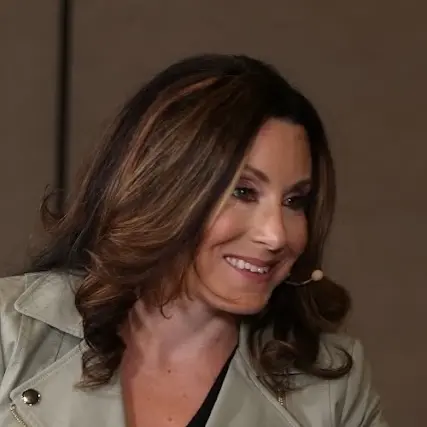
 Alison Kosik
 Krista Case