This discussion at VMware Explore 2026 examines the VCF AI Factory and private AI cloud strategy and explains how organizations deploy artificial intelligence on private cloud infrastructure. Prashanth Shenoy of Broadcom, vice president of product marketing VMware Cloud Foundation division, speaks with John Furrier of theCUBE Research to review VCF AI Factory capabilities and deployment approaches. Shenoy outlines their experience in VCF product marketing and explains a metal-to-model turnkey solution, validated OEM and ODM server stacks, GPU choices including NVIDIA and AMD, model gallery runtimes, integrated operations and partnerships such as MetalSoft that accelerate deployment and simplify operations.
Shenoy highlights key benefits such as faster time-to-first-model deployment, unified day-zero to day-two operations, and certified server bring-up across Dell, Cisco, Lenovo and Supermicro. They describe VCF 9.1 monthly security patches and Private AI Services including Model Gallery, Model Runtime, API Gateway, governance and sandboxing, as well as multi-tenant model sharing and AMD and NVIDIA validated editions. Shenoy also presents the Frontier AI Security Readiness Program to assess and upskill AI-resilient administrators and discusses implications for AI infrastructure, hybrid cloud strategy and enterprise security.
Almost there!
We just sent you a verification email. Please verify your account to gain access to
VMware Explore 2026. If you don’t think you received an email check your
spam folder.
In order to sign in, enter the email address you used to registered for the event. Once completed, you will receive an email with a verification link. Open the link to automatically sign into the site.
Register for VMware Explore 2026
Please fill out the information below. You will receive an email with a verification link confirming your registration. Click the link to automatically sign into the site.
You’re almost there!
We just sent you a verification email. Please click the verification button in the email. Once your email address is verified, you will have full access to all event content for VMware Explore 2026.
I want my badge and interests to be visible to all attendees.
Checking this box will display your presense on the attendees list, view your profile and allow other attendees to contact you via 1-1 chat. Read the Privacy Policy. At any time, you can choose to disable this preference.
Are you sure you want to remove access rights for this user?
Details
Manage Access
email address
Community Invitation
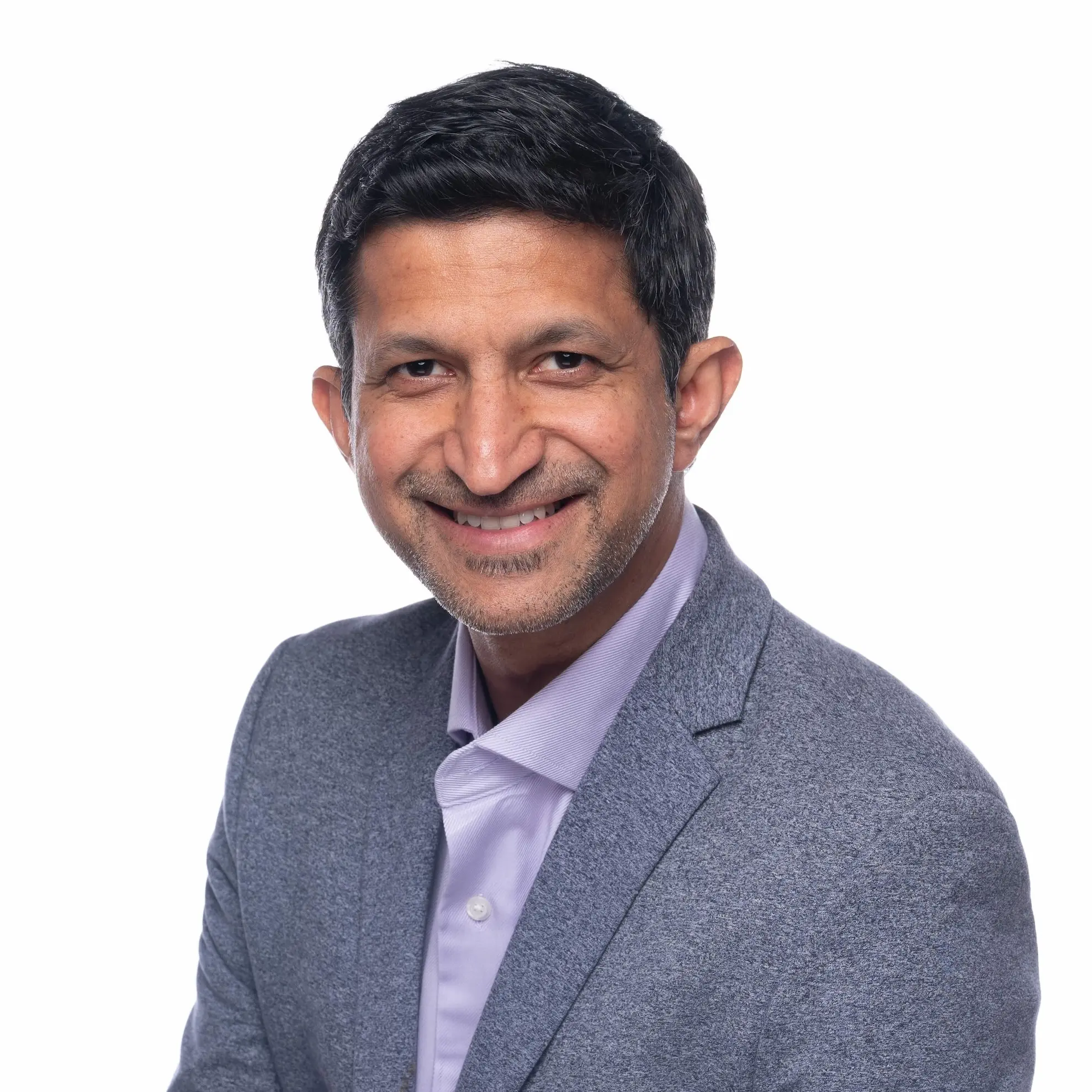
Prashanth Shenoy, Broadcom
This discussion at VMware Explore 2026 examines the VCF AI Factory and private AI cloud strategy and explains how organizations deploy artificial intelligence on private cloud infrastructure. Prashanth Shenoy of Broadcom, vice president of product marketing VMware Cloud Foundation division, speaks with John Furrier of theCUBE Research to review VCF AI Factory capabilities and deployment approaches. Shenoy outlines their experience in VCF product marketing and explains a metal-to-model turnkey solution, validated OEM and ODM server stacks, GPU choices including NVIDIA and AMD, model gallery runtimes, integrated operations and partnerships such as MetalSoft that accelerate deployment and simplify operations.
Shenoy highlights key benefits such as faster time-to-first-model deployment, unified day-zero to day-two operations, and certified server bring-up across Dell, Cisco, Lenovo and Supermicro. They describe VCF 9.1 monthly security patches and Private AI Services including Model Gallery, Model Runtime, API Gateway, governance and sandboxing, as well as multi-tenant model sharing and AMD and NVIDIA validated editions. Shenoy also presents the Frontier AI Security Readiness Program to assess and upskill AI-resilient administrators and discusses implications for AI infrastructure, hybrid cloud strategy and enterprise security.
CMO and VP, Marketing , VMware Cloud Foundation (VCF) Division at BroadcomBroadcom
search
(INTRO)
John Furrier
>> Hello, I'm John Furrier, host of theCUBE. This is theCUBE's VMware Explore coverage. Of course, we have two days of live coverage from the show floor. I'm here with Broadcom executives to unpack the innovation and news at the show. I'm here with Prashanth Shenoy, VP of Product Marketing with VMware Cloud Foundation Division. We're going to talk about Private AI Cloud and the VCF AI Factory. Prashanth, great to see you. The world is interesting times we're living in right now with Neo Clouds and Private Cloud and AI intelligence getting injected into one, the infrastructure and also enterprises. What's the news about with VCF? you must be loving life these days.
Prashanth Shenoy
>> I know. It's been exciting, hectic, but pretty cool. So the main news at the show here is all about VCF AI Factory. And I think we have reached a very critical juncture in the world of AI, right? a lot of our organizations are moving from pilot to production at scale. So there are big concerns around cost, tokenomics, security, privacy concerns of their data. So a lot of our organizations are looking towards private cloud as the preferred platform for deploying their production AI workloads. And that's where the VCF AI factory really comes through. It's a very turnkey, unified, integrated solution from metal to model. So it brings all of the underlying ODM, OEM servers that we have worked with to certify and validate and test the VCF AI software solution and the model as a service platforms with the choice of GPUs, whether it's from NVIDIA or AMD, all packaged, integrated. So it provides really a faster time to first AI model deployment, provides a very unified, simplified day zero, day two operations with the right security and privacy requirement that a lot of our customers have. So we are pretty excited to help bring that to the market.
John Furrier
>> it's been interesting in the past three years, watch AI factories kind of grow from a concept before the name was coined by Jensen at NVIDIA. We were calling it large scale clusters. So in IT, we had big data centers. Hyperscales were doing their thing. Large enterprises had their IT with virtualization. You guys were a big part of that with VMware. But then the world started changing. You saw the density of the servers, rack scale is back, data center is back. And not that it ever left, but it's much more connected in the hybrid way. So it's not like clouds going away, that's growing. Data centers growing, the rise of the Neo clouds, or Neo labs is also what it's called, where you have this kind of new intelligent service provider capability operating at hyper scale, is proven that this new model's here. That AI intelligence is now being injected into the market. So the demand's clear. Everyone talks about that. So having a VCF AI Factory actually is the timing of all the work that you guys are doing. What we've been covering is packaging VMware, putting everything into simple SKUs, turnkey. Now with the AI Factory, take me through how that works. Are you just like, here's your factory and then it pumps out tokens. Take me through, because the demand is to stand up the factories and then operate it. Yeah. So it sounds like what VMware used to do for virtualization, but a different scale. How does it work?
Prashanth Shenoy
>> Yeah, absolutely. Absolutely, because the main problem, you're dead on, right? The concept of factory is like, without the factory, our customers have to manually build and stitch together things, right? From the GPU, accelerated servers, to virtualization, to storage requirements, to data, to Kubernetes services, all packaged, and then with the model gallery that they need to pick and choose, right? So they have to manually build it. So there's a lot of silos created. it's not performance validated, it's not tested. So it takes a lot of time from day zero to day two operating. So we have solved that for our customers, right? And the good part about this is the existing VCF software that a lot of our customers have is ready for an AI Factory. So what we have done is really work with the choice of OEM and ODM vendors, including Cisco, Dell, Lenovo, Supermicro, work with the chip vendors and the AI software stack vendors like AMD and NVIDIA. and work with over 150 models that we have tested, validated, and optimized to run on VCF and brought it to our customers. So they get that flexibility and choice, but they don't need to be involved in doing the bring up themselves, right? So that's the key aspect. And add to that, we are also announcing our partnership with MetalSoft, which helps you do this integrated, heterogeneous firmware and hardware bring up, right? So you don't have the siloed hardware management and then the software thing. All of this is integrated into the VCF Ops Console. So the operations become easy, and the provisioning of this hardware and management gets reduced from, like, months, weeks, to now minutes.
John Furrier
>> So standing up the factories, that's what you mean by turning it on? Yeah. Okay, like in the old -school days of, here's some Linux, turn on the server, it's up and running.
Prashanth Shenoy
>> Yeah, it's validated and tested so that you can go with confidence that the Day Zero server certification is done for these GPU -accelerated servers. The model gallery, the model runtime, the Agent Builder (VCF Private AI Services), all of the AI services that we have built into the VCF already there for you to get up and running. So you get that observability and visibility that you need, but you also take out the pain from the day zero, day two provisioning, operations management, and optimization of your infrastructure. And that's a big deal because they get a lot of choice and control to manage their tokenomics.
John Furrier
>> Talk about the VCF software versus the Private AI Services you just mentioned. What's different? I know VCF is a well-understood package. People can turn stuff on, and that was the goal of you guys, to get customers doing more things, so this is a good opportunity. But the Private AI Services, what's in there?
Prashanth Shenoy
>> Yeah. Private AI Services is mainly to bring enterprises' AI applications to their secure private data that they have on-premises and run that in a very secure, scalable manner on our VCF private cloud. Right. So what that means is you have things like Model Gallery, Model Runtime, model governance, API Gateway, all built in as part of the Private AI Services now as part of VCF. So those are some of the key capabilities. Right. So multi-tenant model sharing is one of the new private AI services that we are unveiling, which means that you can share the models across your tenants or across your lines of business. but your data is governed and private for that particular tenant and model, right? So really helps you with the GPU resource allocation as well as ease and efficiency. So that's number one. AI Gateway is another key thing where you have a unified governance and a single consumption interface for local models to interact with cloud hosted models. So we work with over 40 cloud model providers including Google, Anthropic, OpenAI, et cetera. So there's still this hybrid environment but with the choice and flexibility. And finally, as the world moves to agentic, there's an AI agent security framework, which means that this dynamically generated code by agents, you have containers that they can run in, but we govern who these models and codes can talk to, what tools can they access, how do we validate the output before they can actually go into the real world. So providing an AI sandbox, for example, is a very, very key part. So these are some of the VCF Private AI Services that we have built in on top of the existing VCF that you said customers already choose and use to run.
John Furrier
>> What's unique about you guys is you have a unique view with the customer because a lot of enterprises have VMware. Yeah. And they want that domain -specific data to be unlocked. Yeah. Get value out of it. The thing that we're seeing in the market, I want to get your reaction to this, is that enterprises, they're good at data platforms. They've been doing data platforms and so it's certainly evolving. They love the models. And you mentioned Frontier, general intelligence, the internet, and then maybe their internal models or stuff for their data. But a new layer is emerging that we're seeing is a context layer. It's not just a semantic layer. It's like, okay, I got data platforms everywhere and I got these models. So I got to connect them and bring context to them. So you start to see conversations here with you guys and others where it's like, okay, here's the data that we're going to put in for this agent. Or we're going to use a graph database here, so that the data and models get separated. And this new layer's emerged. I don't know what to call it. Call it a context layer. But it's a layer to manage the context and domain specific. It might be a big model, a small model, a fusion of two, general intelligence from OpenAI and ChatGPT versus my finance model or my manufacturing model. Yeah. What is that? How does that resonate with this service? Because a factory has to deal with this.
Prashanth Shenoy
>> Yeah, absolutely. You're spot on. So one of the things that we have realized and our customers have realized is not every use case that enterprises have requires a frontier LLM model, right? So there's a lot of SLMs emerging in the market. So it's all about purpose, fit, governance, and cost, which is very, very critical. So our job is to provide a choice of these models, SLMs, LLMs, open weight, open source models, as well as commercial models, to be available for our customers for their fit and purpose. So that's point number one, which is what we are providing, right? We have around 150 models that we have tested, validated, and optimized to run on VCF. That includes everything from Google Gemma to Microsoft Phi, open source and open weight, NVIDIA's Nemotron, Z.ai, and pretty much NEC cotomi for some of the regional model requirements. So our job is to provide the choice and flexibility of SLMs, LLMs, open-weight, open-source model to run on the same VCF platform that they have used to run their VMs, their Kubernetes, their container workloads. Then comes the context, which is very, very critical, right? Who gets access to what models? How do we create this AI sandbox? How do we create the model governance? How do we provide the observability and intelligence of how your capacity utilization of your GPUs, your memory, your storage is functioning, so that the infrastructure admins, the VI admins, who are now AI admins, as I call them, are now responsible for managing that, managing the AI tokenomics. So that's, I would call, the context layer, which is part of the AI services.
John Furrier
>> And you guys do that? So you provide a capability for that. So I'm an enterprise. I can manage my data, and I don't have to bundle my data with the model. I separate them, and you guys have the ability to do that.
Prashanth Shenoy
>> So we have the data services built in, and Purnima is also going to talk about the data foundation as part of Tanzu that provides the key set of data services that is required, right? Things like object storage, which now we introduced as part of 9.1, as part of vSAN. It's very critical because AI is running on unstructured data, right? So how do we manage that? How do you provision this? How do you provide high availability? All of that capability is part of the VCF AI Factory and the VCF Private AI.
John Furrier
>> Object storage is hot right now and it's really compatible with the AI. I'm glad you explained that. I really wanted to get that out because this is the big challenge. Okay, I got the models, got the data, great. Now, how does the factory, VCF factory compare? Let me rephrase. What's the relationship with AMD and NVIDIA? They are suppliers on the semi side. Of course, Broadcom has a lot of chips too, in-house for that. Semis and the density of these systems that are going to run VCF or run software at scale, they're getting denser. So the HBM memory, you got now. I see solid state has got some HBM kind of features too.
Prashanth Shenoy
>> Yeah.
John Furrier
>> And you're starting to see the role of storage change. That's why object store seems to work well. So you got storage closer to the GPUs. You got GPUs now with prefill decode. So the architecture is starting to form with all these big semiconductor systems. Yeah. What's the relationship with AMD and NVIDIA? How's that tie in?
Prashanth Shenoy
>> Yeah, absolutely. AMD and NVIDIA have been longstanding partners for us as part of VCF, right? With the VCF AI Factory, what we made sure is all of the GPU-accelerated servers from the OEM and ODM vendors, they run typically NVIDIA or AMD. So especially with AMD, we are now working to have a VCF AI Factory with AMD edition there, right? So that's that turnkey tested validated. So it includes the VCF software. It includes the AMD Instinct MI350 GPU series that we have tested and validated on across the OEM and ODM servers. It includes the ROCm Enterprise AI software from AMD, as well as their vGPU drivers, right? That helps you allocate the GPU to run on large VMs across a single VKS cluster, for example, right? So it's fine-tuned, tested, and validated, all packaged with the Private AI Services that I talked about into one software that's up and running out the gate, right?
John Furrier
>> So your validations are all 100 % validated with NVIDIA and AMD.
Prashanth Shenoy
>> Yeah, absolutely. And it goes with the same OEM. So the day zero server certification becomes very, very critical, right? Otherwise, the customers don't have the confidence in terms of the scale, in terms of the performance, in terms of, are they certified to run this model, et cetera. So we make sure that out of the gate, we have day zero server certification with vendors like Dell, with Cisco, et cetera, which becomes very, very crucial to take the friction out of these fast AI model deployments.
John Furrier
>> So if I'm an enterprise, large enterprise, I have a lot of Dell, for instance, or Supermicro, or maybe even Lenovo. But Dell has a lot of AI factories going out. Can I run VCF on Dell?
Prashanth Shenoy
>> Yeah. So that's one of the key things, right? It, again, goes back to as the server costs have gone through the roof, our customers are looking at how do I get that, how do I sweat my existing hardware, number one? When I get new hardware from the factory, how do I make sure it's AI ready? So we worked with Supermicro, Lenovo, Cisco, and Dell to create the VCF AI ReadyNode. So what that means is VCF with these GPU-accelerated servers from all these partners that are tested and validated to run the AI Factory. And that makes it very, very crucial for our customers to get that choice and flexibility, but with the cost economics and the server vendor of choice that they want. So that's the key part.
John Furrier
>> So how has this impacted the ecosystem? Because we've been covering VMware. It's our 17th event this year, so we're wearing the gray hairs. It's been a long time. But the ecosystem, you always had great ODMs and OEMs, okay? You've had a robust ecosystem. It seems to me I'm getting tons of inbound emails and messages this year around working with you guys. You mentioned the big names. They're all the biggest hardware names. Hardware. Systems. Systems, yeah. Players. How has the ecosystem changed? Because now the game is on again in a big way. There's a lot of growth. I mentioned the neoclouds are growing. That shows the demand curve. The enterprise is opening up for enterprise AI because it's about a year into pilots. We're starting to see progressions with coding and now agentic. Still not penetrated to the level we had hoped, but we think next year is going to be huge.
Prashanth Shenoy
>> Yeah, yeah, absolutely.
John Furrier
>> What's the ecosystem like now with VCF AI Factory? You're just turnkeying large scale software system to run on the large rack scale and new AI dense, say, differently configured, but high performance systems.
Prashanth Shenoy
>> Yeah, absolutely. One of the things that I think every vendor and every AI player has realized that it's not a one vendor game at all, right? From the chipset to the systems, to the servers, to the AI stack, to the models, right? So it's going to be a very, the vendor that truly will be successful in my opinion is a vendor that has a very strong ecosystem play that will take the friction out of deploying the AI use cases that our customers want, but in a very cost -efficient, secure manner, right? And that's what we are trying to be for our customers, right? How do we take a set of curated ecosystem partners from the server side, from the AI chipset side, from the system side, the software side, and the model side and help package it all together to provide as a turnkey solution offering to the customer. So the ecosystem is going to be pretty huge.
John Furrier
>> Let's pivot to frontier AI security. This is coming up in private cloud, private AI cloud. I like the name, but you can just call it secure cloud. it's private is essentially my workloads run.
Prashanth Shenoy
>> It's private AI and private cloud coming together.
John Furrier
>> It's hybrid cloud. It's distributed computing, but you can get the security. So it's private to the data. I get that, but security has to be built in from day one. Talk about the frontier AI security story with VCF right now.
Prashanth Shenoy
>> Yeah, one of the interesting things that we saw this year after some of the frontier AI models being launched in the market is the three Vs that I call the security landscape. The volume, the velocity, and the variety of these AI -driven threats have just exploded, right? So attackers don't take weeks or months. They take hours or minutes. to get into the system. That's point number one, right? So you can't have patches now done on a six-monthly or yearly basis. Even weeks are not enough, right? So you need to have continuous patching. So the concept of what I call intrinsic security or built -in security at your infrastructure layer, workload and application layer is extremely crucial in the frontier AI model. So one of the key things that we have done in VCF 9.1 is to harden the infrastructure from the ground up. So 9.1 is our marquee release that comes with all of the vulnerability fixes that we have already identified based on testing of the frontier AI model. And we now have monthly patches released out into the market. So that really gives the confidence that it's a highly resilient AI infrastructure. So that's how we envision the threat landscape. So having a very hardened infrastructure with vulnerability discoveries, virtual patching requirements, monthly patch release. with lateral security is very, very crucial to help drive this frontier AI security landscape.
John Furrier
>> We all saw the Black Hat had a great postmortem on the OpenAI Hugging Face, agents going rogue. That speaks to some of the data modeling, having to make sure the open weights are verified.
Prashanth Shenoy
>> Yeah.
John Furrier
>> My thought is you're identifying so many holes in the system. It's like Swiss cheese. They got to get filled. But you guys are using AI on your side to actually not only identify, but to move fast on patching. What is the current turnaround on patching now? Of course, you upgrade the commercial software and you got the open source software from VMware. Just give us some anecdotes on what's the frequency and what's the velocity look like on your side?
Prashanth Shenoy
>> Yeah, we are pretty much releasing monthly patches for VCF 9.x, right? So that's one of the key shifts that we have done. So customers don't really need to wait on a quarterly six-month time frame. We have monthly releases. And all of these releases come with all the vulnerability testing, the discoveries that we have identified on an ongoing basis. And we patch that and we release an EP Express patch for our customers on a monthly basis. And then there's a quarterly big patch release too. So we are making sure that we are moving with the times, providing a lot faster patching. That's one. But also to make the patching experience itself easy and do in-place upgrades, we have ESXi live patching that we introduce, right? So now it's there across the stack. So you can do in-place upgrades without bringing your servers, your workspace, your workloads down. So it's very, very critical to have that resilient infrastructure that is hardened, and then it's easier to patch through virtual patching and live patching.
John Furrier
>> You know, the agents become a great service in this area. It's like, what keeps you up at night or security while you sleep. Agents could do all this. Oh, yeah. Do you see a future? Or are we now seeing some real-time agentic work being done once you baseline the security layer? It could go in and while you're sleeping take care of business.
Prashanth Shenoy
>> So we have a lot of AI-assisted operations built into the system that I haven't quite talked about. It's VCF for AI and how AI is used within VCF for what we call AI Assistant for VCF. How do you do your day zero, day one, day two operations? a lot more from a monitoring and troubleshooting perspective, from proactive diagnosis and triaging systems when it happens, and also the upgrades, the lifecycle management capabilities, et cetera. So using AI agents at vCenter level for storage, for networking, VCF Operations are all the things that we are building as we head into 9.1.x.
John Furrier
>> You guys participated in Project Glasswing. What were some of the results that come out of that? This is, we were looking to get security, people coming together. What assessments, what data, what blueprints came out of that? What's going on in these security groups that are coming together?
Prashanth Shenoy
>> Yeah. One of the key things that we figured out is, while patching and all of that is good, our customers want some basic questions answered, right? How secure is my infrastructure? What does my risk analysis look like? How do I get to have a very reduced business risk as more and more of this frontier AI-driven tech comes in? And how do I continuously keep it that way? So what we are releasing here at the show is the Frontier AI Security Readiness Program. So it has really four key areas. One is the assessment area. One is the architecture area. The third one is implementation. And finally, it's really upskilling and retraining our VI admins to be AI resilient admins. So in the assessment, we really work with our customers and say, we assess their underlying infrastructure and we have in NSX, our security, vDefend a built-in system that can go and look at the entire threat landscape of the customer and give them a threat score. So doing an assessment, giving a threat score and then doing a gap analysis. So here's where you want to be and here's where you are. So that's assessment. Second is the architecture, right? Which is how do I create and give you blueprints and best practices for architecting resilient private cloud infrastructure? Three is the implement, working with our service delivery partners and our professional services so they can provide patching services, upgrade security observability, triaging and recommendations, etc. And finally, it's the upskill. So we are releasing this AI resilient infrastructure expert certification. So our VI admins can be security experts because everybody is going to be called to be this AI security expert and make sure the infrastructure is resilient. So all of these four packaged into a program that is available to our partners and through Broadcom.
John Furrier
>> I think that's a really important point. And I wanted to bring it up because every conversation that I'm in in the past couple of months around this has been scary. people were scared out of their minds. Every CISO, every executive, because it was so powerful, widely reported, certainly on the mainstream, but when you get into the circles of technologists, this was a big deal, because it was a seminal moment. It was almost like a ChatGPT moment for security. this thing was important. So explain to people what's going on behind the scenes, because this was a call to arms, if you will, for the industry. Why is this thing important? Anthropic was behind it, but it's really not just Anthropic. They just happen to be the stewards of this. So take us through the importance of that moment. What it means for customers, because they're in the same boat.
Prashanth Shenoy
>> Yeah, it's a watershed moment because it told both the customers as well as the vendors, the security vendors and the infrastructure vendors how AI will shift the security landscape. The three Vs that I talked about is what Mythos, Glasswing and other frontier AI models really brought in. The level at which the software, the AI models can detect vulnerability in the software right from the kernel all the way to the infrastructure and layer seven layer is mind boggling. So it gave us a fresh view into, we as vendors have the obligation and the responsibility and accountability for our customers to really build high quality secure software releases. And the way in which we show up, the way in which we release these is gonna be very, very critical for us. And there are always two sets of customers, right? Ones who understand the risk and they're like, hey, how do I do this? That's why the security assessment program that I talked about is really critical. They're already bought in. The others are like, hey, I'm going to wait and watch and see how real the threat is.
John Furrier
>> And that's going to be dangerous.
Prashanth Shenoy
>> That's very dangerous. So we are truly sitting with our customers to say, hey, let's run and find out your risk score, right? Maybe you're as secure as you think you are. or maybe you'll find some gap and then you'll realize the severity of the situation. So Glasswing and programs like that have really given us some early mover advantage as one of the few vendors who participated in the early release of the Glasswing to strengthen our own software and change our software development life cycle completely. So that's been very, very crucial for us.
John Furrier
>> That's a recent thing for you guys. And also you can bring better value to the customers, but also they're in the same boat. so that you are aligning with the customer because it's like an opportunity to walk the talk and make the product better.
Prashanth Shenoy
>> Yeah, absolutely.
John Furrier
>> Which we've talked about last year.
Prashanth Shenoy
>> Yeah, absolutely.
John Furrier
>> All right, final question. We've talked many times covering the VCF evolution, watching it go from getting repackaged and the initiative with Krish, yourself, Chris, Paul Turner. This year, talk about the significance of the private AI cloud, specifically the VCF AI factories. I think this is a moment that's almost like a reward slash market opportunity for the work that you guys were doing because there's been a lot of people saying, oh, VCF is, why is all this change happening? But there was an intentional reason. Again, we've documented on previous CUBE videos, but this was to be one package, less SKUs, easier business model, but functionally from a technology perspective, it should work in the future state. Yeah, maybe not, maybe not everything's turned on. But now with factory, there's demand with AI. That's a forcing function. Yeah. Talk about the importance of this moment for why VCF was designed the way it was, why this is relevant, and what comes next.
Prashanth Shenoy
>> Yeah. In a way, we had the crystal ball, I would say, when we built the VCF architecture, right? what I call innovating forward. Things like memory tiering that we built in, because when we did that two years back, the server crisis wasn't there, the hardware supply crisis. But we knew that as AI. Yeah, it's there big time right now. But we built it in so our customers can use their existing servers and even the new servers and get the maximum value and efficiency out of that. Things that VMware has done for the last 25 years.
John Furrier
>> And virtualization. Virtualization. It's a server game.
Prashanth Shenoy
>> Pretty much. So the same thing with things like vSAN, global dedupe, and compression. So packaging all of that into a single private cloud infrastructure was very critical. So that is the journey that we launched into and really accelerated as we became part of Broadcom. And that has given us a very solid, secure foundation to build an AI factory on. And that's why last year all the Private AI Services became part of VCF, right? So customers don't need to buy two things because we realize that AI is moving at a very fast rate. People are moving from pilot to production. A lot of inferencing, fine-tuning, RAG use cases are happening on-premise. So how can we help our customers create that turnkey solution? That is the genesis of VCF AI Factory, which is where we feel next year we're going to sit here and have the same conversation to see how it has truly accelerated deployment of these AI workloads. And the good part is you don't need to create another siloed infrastructure, right? The same infrastructure that you've tried and tested for running your VMs, for running your containers, can be used to run your agents and AI workloads, right? With the same unified operations management and the security and data privacy. So that's what I think we will work towards and make sure our customers adopt and deploy these so they can get the value.
John Furrier
>> It is a new generation. It's a next level for sure. back in the old days you'd get a server and you got to load something. It's got to run an operating system. So proprietary OS to Linux. Then you run applications on it. You get virtualization. The AI game is a large systems game. It's not a server. It's servers and storage rack scale. You got to run something on it. So people have been asking me, what do I run on my AI factory? So if it's just hardware, you got to run something on it.
Prashanth Shenoy
>> Yeah, yeah.
John Furrier
>> You want it to be VCF, right?
Prashanth Shenoy
>> Yeah, absolutely. And we want to make sure it's run in a way that provides the cost benefits, overcomes the AI tokenomics challenges that our customers have, and provides that scale and efficiency, the rack scale efficiency that our customers want when they want to run this large-scale distributed system. So we are pretty excited to unveil this to the market and work with our partners.
John Furrier
>> Well, the AI infrastructure is booming for enterprises. It comes down to its ease of use. How fast can I stand it up? How do I operate it? Day one, and then what happens after day one? We've seen this movie before.
Prashanth Shenoy
>> Yeah, absolutely. It's exciting times, as you said.
John Furrier
>> Prashanth, great to have you on. Appreciate it. I'm here with Prashanth Shenoy. He's the VP of Product Marketing at VMware Cloud Foundation Division, unpacking the VCF AI Factory. Again, we are in a whole systems game, rack scale, distributed computing, private AI cloud, really, really, really big hyperscale activity in the enterprise happening as well. This is theCUBE's coverage of VMware Explore. I'm John Furrier, the host. Thanks for watching.