We just sent you a verification email. Please verify your account to gain access to
VMware Explore 2024. If you don’t think you received an email check your
spam folder.
In order to sign in, enter the email address you used to registered for the event. Once completed, you will receive an email with a verification link. Open this link to automatically sign into the site.
Register For VMware Explore 2024
Please fill out the information below. You will recieve an email with a verification link confirming your registration. Click the link to automatically sign into the site.
You’re almost there!
We just sent you a verification email. Please click the verification button in the email. Once your email address is verified, you will have full access to all event content for VMware Explore 2024.
I want my badge and interests to be visible to all attendees.
Checking this box will display your presense on the attendees list, view your profile and allow other attendees to contact you via 1-1 chat. Read the Privacy Policy. At any time, you can choose to disable this preference.
Select your Interests!
add
Upload your photo
Uploading..
OR
Connect via Twitter
Connect via Linkedin
EDIT PASSWORD
Share
Forgot Password
Almost there!
We just sent you a verification email. Please verify your account to gain access to
VMware Explore 2024. If you don’t think you received an email check your
spam folder.
In order to sign in, enter the email address you used to registered for the event. Once completed, you will receive an email with a verification link. Open this link to automatically sign into the site.
Sign in to gain access to VMware Explore 2024
Please sign in with LinkedIn to continue to VMware Explore 2024. Signing in with LinkedIn ensures a professional environment.
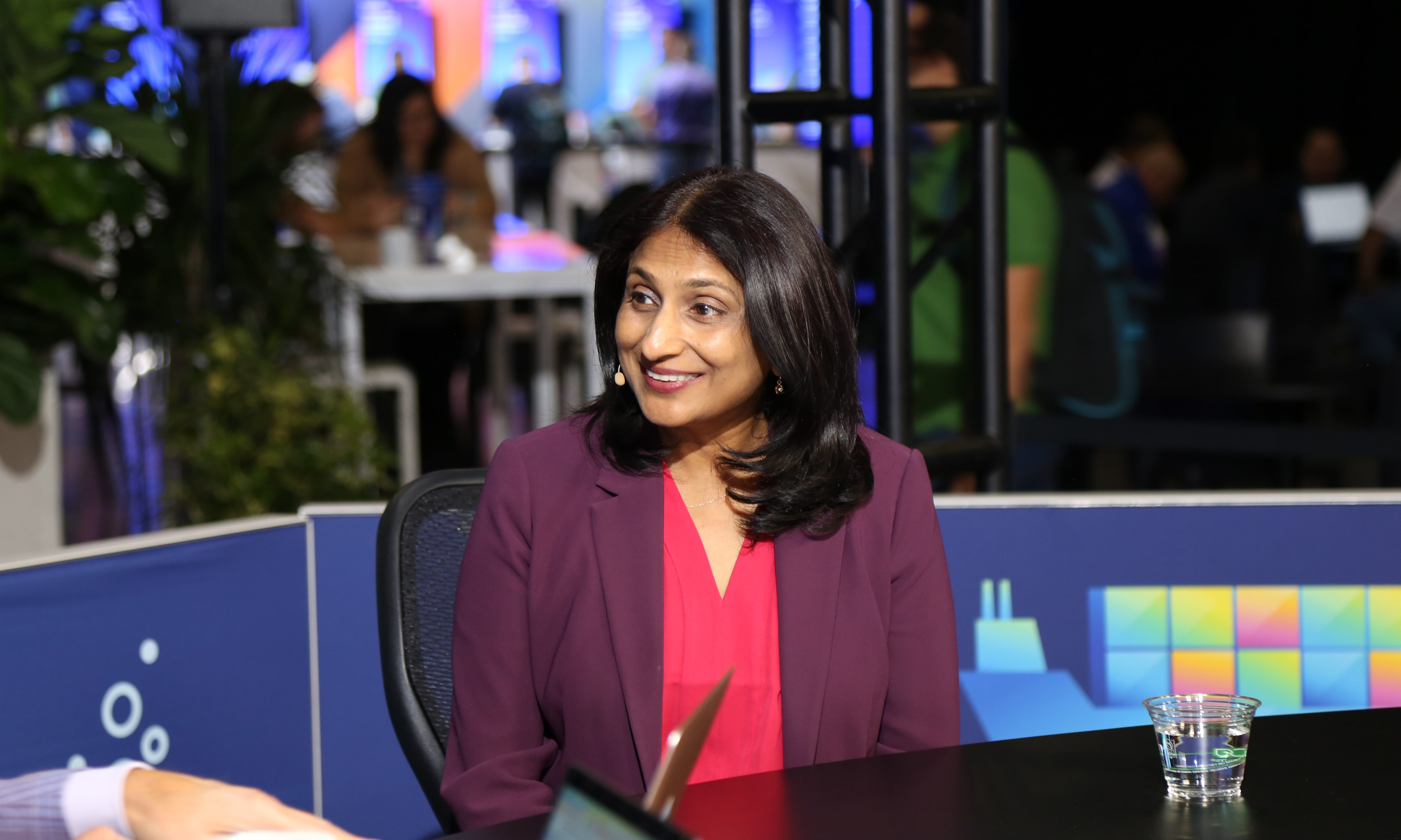
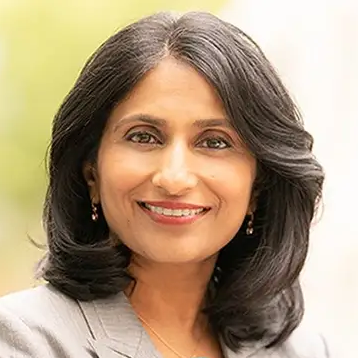
The CUBE coverage in Las Vegas for VMware Explorer 2024 is unfolding. Purnima Padmanabhan, VP of Tanzu Division, discusses Tanzu platform 10. It integrates Cloud Foundry and Kubernetes runtimes into a unified platform, tightly coupled with VCF. This allows developers to focus solely on coding, streamlining app deployment and management. The roadmap resonates with customers, emphasizing simplicity and faster time-to-value. Tanzu AI capabilities are included, facilitating model serving and integration. The focus is on providing complete solutions, reducing comp...Read more
exploreKeep Exploring
What does Tanzu 10 bring to the platform in terms of application runtimes and management capabilities?add
What platforms can Tanzu be deployed on in addition to VCF?add
What capabilities does the Tanzu platform offer for supporting private AI, specifically in terms of model serving and GPU efficiency?add
What are the three main messages being reinforced regarding the development and deployment process within the Cloud Foundry and Pivotal platforms?add
>> Welcome back, everyone. Live here for the CUBE coverage here in Las Vegas for VMware Explorer 2024. I'm John Furrier, host of theCUBE with Dave Vellante, my co-host, our 15th year covering the event. We've seeing all the stories. Now the new chapter is executing and unfolding. Purnima Padmanabhan is here, vice president of general manager Tanzu division. Purnima, great to see you.
Purnima Padmanabhan
>> Great to see you both.
Dave Vellante
>> Thanks >> Last time, we saw you in theCUBE studio with James Waters breaking down Tanzu, but you got news.
Purnima Padmanabhan
>> Yes.>> You've been holding out on us. Tanzu 10-
Purnima Padmanabhan
>> Yes.... >> strategic alignment with VCF, Tanzu 10. Give us the update.
Purnima Padmanabhan
>> Yeah, so we announced Tanzu platform 10. And as you said, it is very tightly aligned with VCF. So let me get to that part right away. So the first part of Tanzu 10 is we are bringing the reinvestment and the power of Cloud Foundry back to the Tanzu platform. And Tanzu 10 brings, in a single umbrella, the choice of application runtimes. So you can build your application once and deploy it either to a Cloud Foundry-based application infrastructure or application platform, or a Kubernetes, either one, all within single platform. With Tanzu platform 10, we also have a unified single console to manage your applications, look at your CVEs, security governance, compliance. You can curate a set of simple developer experiences for your developers that work across Cloud Foundry and Kubernetes. So Tanzu platform 10 really brings the platform together. And the second part is it truly tightly couples with VCF. So you might have already heard, I think. You were trying to bring... When we were chatting earlier, you had brought that up, which is the core Kubernetes runtime is now baked into VCF, which is called the Tanzu Kubernetes Grid. It is made available with VCF just like public clouds have their runtimes, EKS, EKS, GKE, Tanzu platform layers on top of that TKG runtime and gives you the application platform, the ability to build your application fast, the ability to deploy it with a single command, the ability to scale it, the ability to secure it.>> What's becoming very clear now to us on theCUBE and others is Chris was on earlier talking about VCF, the transformation within VMware, his simplification of his organization. Also, VCF simplification and transformation, customer transformation. They're making the infrastructure and modernized, but you attach to that. If I'm a customer, I'm going to get good ROI on the cost. But the subscription, it might be confusing now or inconvenient-
Purnima Padmanabhan
>> Yes.... >> budget wise, but at the end of the day, it's going to get more product roadmap updates from him. You're coming right along for the cloud native developer piece because you sit with VCF from a customer standpoint. Explain that power dynamic because that's huge, and that's not obvious to everybody out there.
Purnima Padmanabhan
>> No. Thanks for asking that question because that's very critical. So what did... VCF, we brought together vSphere, NSX, vSAN truly with management, creating the common solution, and now you can put the VCF and you get a cloud dial tone with both for containers and for VMs. With Tanzu, we have done something similar. If you remember, we had so many different products on Tanzu, right? We have brought together all of those products under one umbrella called the Tanzu platform. It allows you to... It gives you the flexibility to develop, operate and optimize your applications at scale, and deploy them onto VCF, but also other clouds. But the VCF pairing is very tight. So now if I already have VCF, if I layer on Tanzu platform, suddenly I have unlocked all my developers because now a developer simply has to write code. That's it. That's their job. From there, taking the code, building it into a secure container, binding it to all the external database services, AI/ML models, deploying it at scale with high availability across the VCF environment, and scaling it out is all taken care of by the Tanzu platform. So it's a very beautiful combination.
Dave Vellante
>> So the artist formerly known as Aria, is now part of that, the multi-cloud capability, which we haven't heard much about. We've heard a lot about private cloud.
Purnima Padmanabhan
>> Yes.
Dave Vellante
>> Tanzu incorporated a lot of cross-cloud, multi-cloud compelling value props. Is that still in place?
Purnima Padmanabhan
>> So let us separate the multi-cloud pieces, right? So our is formerly called Cloud Aria, or we realize it's all part of VCF.
Dave Vellante
>> Yeah. Okay. Okay, that's a VCF.
Purnima Padmanabhan
>> It's VCF. Yes, it's used within VCF for orchestration. So for Tanzu, we tie very tightly to VCF. And now on top of VCF, you can seamlessly deploy Cloud Foundry-based workloads on VMs, or you can do Kubernetes-based workload on the Kubernetes clusters, right? So that is one part. In addition, Tanzu, can... Many of our customers take our Tanzu Today platform and deploy it on public clouds, like AWS, or GCP, or Azure, and many times they have on-prem installations, as well as a public cloud installation. So the product is the same product. I think that is the important thing, which is just like VCF, is one VCF product, it can be deployed on-prem, it can be deployed on Azure, Google, or-
Dave Vellante
>> Customer can use it wherever they want.
Purnima Padmanabhan
>> Wherever they want. Same thing with Tanzu platform. It runs against the TKG within VCF, but it can also run against AKS, EKS, or GKE, and against the VMs.
Dave Vellante
>> Great, thank you.>> VCF doesn't have really a developer angle. What's interesting about Tanzu is you're now tightly coupled with VCF or not, but if you are, you're better together.
Purnima Padmanabhan
>> Yes.>> And the developers just code and it runs across the VMware VCF product, and that's significant. And because this has been a conversation, I want to get your thoughts. Because some people are like, "Well, why do we even need VMware. I'll just run in a container and I'll run bare metal." You're pointing out that there's advantages if you already have VMware-
Purnima Padmanabhan
>> Yes.... >> with Tanzu. Explain that because it's very nuanced, but this is a conversation that's out there.
Purnima Padmanabhan
>> I think this is an important one that we have to keep reiterating, right? When you get VMware, you get a... When you got vSphere, you got the ability to vend containers. It didn't mean you got a cloud, right? So VCF now gives you a cloud surface. Similarly, now in vSphere itself, you have the ability to vend containers, Kubernetes clusters, and that is all part of the private cloud. Now, Tanzu is an application platform, and it is an application platform that runs on containers, either on Cloud Foundry or Kubernetes. If you have VCF with Kubernetes, it is magic, because now with a single click, Tanzu installs on top of VCF, it consumes the Kubernetes environment on VCF, and curates an app platform. Now, you don't want application developers to be writing Kubernetes YAML files and configurations. You just want them to write code. They throw it at the Tanzu platform. Tanzu platform then orchestrates it on top of VCF.>> So the answer then, you would say to the folks who are considering it, what information would you say to them? Why Tanzu? Because is a more complex, too many moving parts, they're wasting their time? What would be the story there, a core value problem?
Purnima Padmanabhan
>> First of all, with VCF, you've already got the Kubernetes runtime, so you don't need to go to anybody else, right? That is first part. Second part is now with Tanzu, you seamlessly can get your entire application platform on top of VCF with a single click. You are not managing five different piece parts and trying to get all that complexity and stitching it together yourself. We take care of all of it. And the advantage is your code to app goes down from months or weeks to a day.>> So I got to ask on... I saw a lab over there, which I thought was cool, a ChatGPT kind of integration. It brings up the question, how does Tanzu AI or AI solutions on Tanzu or whatever... I don't think that's the product, I just made that up, but if I want to run generative AI workloads or capabilities with Tanzu. How does that integrate?
Purnima Padmanabhan
>> Great question. So first of all, it's not a separate product. The AI capabilities, Tanzu AI, Spring AI, are all included as part of Tanzu platform. And one of the powerful features is, look, most enterprise apps, as we talked about are written in Java. Now, as an enterprise app developer, if I want to incorporate GenAI capabilities, I have to switch languages. It's too hard. So what Spring AI does is it stubs out all the pieces that you need to connect to a model to do the evaluation, to do the embeddings, and you simply write your code, and then you can easily connect to model of your choice, which can be served up on top of VCF or any public cloud.>> Just hit the API and I'm in, pretty much.
Purnima Padmanabhan
>> Hit the API and you are in. And more importantly, you can swap out your models, but you don't change your code, right? Because it's all cleanly interfaced through the APIs.>> All right, what about support for private cloud environments?
Purnima Padmanabhan
>> The support for private cloud,->> How do you support-...
Purnima Padmanabhan
>> especially private AI is baked into the Tanzu platform. So what the private AI does very well is model serving, right? So you can easily now create models, but you can also lifecycle manage them, and you can run them efficiently on top of your GPUs. What Tanzu does is when these models are created on VCF, they automatically get registered to Tanzu. So then app developer suddenly gets a catalog of models that they can use and directly plug it into their Java apps, or into any code that they may be writing.>> It's interesting, we're seeing more and more action on the developer side. Here at Explorer 2024, I have to ask you, since you're here, what's resonating? As the fog lifts around what Tanzu and VCF is, people are starting to see visibility into the value proposition. You guys are getting the story cleaned up a bit. As they see that, what's resonating? You've had many conversations. We've talked off camera about how it's all evolving and the greatness of this, that, and the other thing. What's resonating with customers?
Purnima Padmanabhan
>> I think one of the things is, and Hock sometimes alluded to it, what we did with Cloud Foundry and Pivotal was pioneering, and it truly solved some very critical problems for enterprises, problems of how do I go from an idea to production very fast by building a code and letting a platform take care of everything in a very systematic way. And so to some extent, what we are doing is reinforcing back on those messages. And there are three main messages. Keep it very simple for the developer, never expose YAML files, configuration files, kubectl and lower level configs, Bosch, none of that. Just give them simple interfaces, say build my container, and deploy. That's it. Number two, make sure that the deployment is dynamic and it automatically adjusts to the app needs. You just say, "I want HA." You don't have to tell me which cluster, how to connect the network, how to tie it all together. We will take care of it. And then the third one is you want to do continuous update, repair, and continuous security. All these are actually pages from the Cloud Foundry world that now we are bringing to Tanzu platform as a universal tenet that applies across everything, whether you deploy in Cloud Foundry or on Kubernetes.
Dave Vellante
>> And this is in Tanzu 10?
Purnima Padmanabhan
>> Tanzu platform 10, yes.
Dave Vellante
>> Okay. And then how is the roadmap resonating with customers when you talk to them?
Purnima Padmanabhan
>> Customers just love the, going back to developer simplicity. The customers just say that, "Look, I don't want Kubernetes for Kubernetes sake. That's just a technology." I think we have to transform the conversation in the industry from Kubernetes as a technology to Kubernetes as a means to an end, to have an app platform that can truly accelerate development. And that is what customers... Especially customers who have known us from the past decade of pioneering in the Cloud Foundry space, they just love it. Even Kubernetes customers who have been doing DIY, they are saying, "I've been doing DIY for three years, two years, and I haven't gotten anywhere. I was just talking to a large bank a few minutes ago, and they were saying same thing. It still doesn't work. So now having something that is fully a complete solution, it's just like VCF, right? Tanzu platform is a complete solution.
Dave Vellante
>> It's like that meme on Twitter with Ned Stark. You don't just deploy Kubernetes.>> Yeah. The thing about Kubernetes is that it reminds me of, in the OS world-
Dave Vellante
>> We do know.>> In the OS world, Linux was when it got to a point where it was hard no one talks about it other than it runs on Linux.
Purnima Padmanabhan
>> Exactly.>> So Kubernetes is kind of having that moment.
Purnima Padmanabhan
>> Yes.>> You see something similar in VCF with the runtime.
Purnima Padmanabhan
>> Yes.>> Dial away.
Purnima Padmanabhan
>> It is just there. It is just there. That is exactly right. So you dial away. Kubernetes as a runtime and as a VM dispensing, is just there. And then it becomes how do you configure the Kubernetes and how do you make the app run on it.>> Yeah. I love the Cloud Foundry throwback, and I think that's cool for developers. The other thing that comes up, and I'll get your reaction to this is that complexity and making things simple and easy to use is another big focus. How is that factoring into the future of Tanzu? Because it's not just cloud foundries. Other elements now, integration, APIs, data mashups are back with small language models. We heard from Krish on that small, and the Edge from Sanjay at the Edge group. Small language models are going to be really important at the edge. Developers want to tap that too. So we have a whole data engineering thing. It's still complex.
Purnima Padmanabhan
>> Yes. So look, the theme of this conference is simplicity and at multiple levels. The first one is I would start with the Tanzu platform gives you SKU simplicity. It's a single SKU, and with the skew, you get the ability for run times, full spring support, complete integration into all your standard data services like Postgres, MySQL, RabbitMQ, complete ability to do API gateways and cloud gateways, and full ability for configuration management all baked into and integrated into a platform. And the nice thing about this is that we take care of the integration rather than customers taking care of the integration and which means now you can take this form factor and make it available anywhere.>> Well, that's awesome stuff. We're going to have Krishnan with NVIDIA next. We're going to unpack more about how VCS working. Final personal question, in your journey through the process, now we're here, Explorer. Looking forward out in the 20 mile Stair, what's next and how do you feel? Share us. What's on your mind?
Purnima Padmanabhan
>> Well, look, I think we are coming back to the market with a very evolved perspective that has kind of gone through this crucible in the last year. And the perspective is really don't focus purely on cool technologies, but focus on how can you stitch the cool technologies into complete solutions that drive value for the customer. And I think that's kind of the gist of sometimes what you hear Hock say, which is in the past, maybe we were caught too much by terminologies and cool technologies. Rather than saying, how do I stitch together a complete integration? How do I solve the boring parts for you? Right? How do I solve? How does it install seamlessly? How do I upgrade? How do I patch? Boring parts. We are now taking care of all of that with Tanzu platform so that you just have to write code.>> And if allows and funds the developers more time to build cool applications-
Purnima Padmanabhan
>> Exactly.... >> that actually run with intelligence with GenAI.
Purnima Padmanabhan
>> Absolutely. And more importantly, it also means that once the code is written, the business is not waiting for six months to get the business value out of it. You get it out in a day or two.
Dave Vellante
>> They've compressed that.>> Purnima, great to see you. And again, stories coming together. Congratulations. More work doing, want to see more attached rates to VCF.
Purnima Padmanabhan
>> That is exactly what we want, yes.>> Can't wait to see that.
Purnima Padmanabhan
>> Yes. Great.>> Great. Good to see you. Thanks for coming on. Okay, I'm John Furrier with Dave Vellante. We're here live in Las Vegas for VMware Explorer. We'll be right back with more CUBE coverage, sharing the data here at the edge of the network for you.