We just sent you a verification email. Please verify your account to gain access to
VMware Explore 2024. If you don’t think you received an email check your
spam folder.
In order to sign in, enter the email address you used to registered for the event. Once completed, you will receive an email with a verification link. Open this link to automatically sign into the site.
Register For VMware Explore 2024
Please fill out the information below. You will recieve an email with a verification link confirming your registration. Click the link to automatically sign into the site.
You’re almost there!
We just sent you a verification email. Please click the verification button in the email. Once your email address is verified, you will have full access to all event content for VMware Explore 2024.
I want my badge and interests to be visible to all attendees.
Checking this box will display your presense on the attendees list, view your profile and allow other attendees to contact you via 1-1 chat. Read the Privacy Policy. At any time, you can choose to disable this preference.
Select your Interests!
add
Upload your photo
Uploading..
OR
Connect via Twitter
Connect via Linkedin
EDIT PASSWORD
Share
Forgot Password
Almost there!
We just sent you a verification email. Please verify your account to gain access to
VMware Explore 2024. If you don’t think you received an email check your
spam folder.
In order to sign in, enter the email address you used to registered for the event. Once completed, you will receive an email with a verification link. Open this link to automatically sign into the site.
Sign in to gain access to VMware Explore 2024
Please sign in with LinkedIn to continue to VMware Explore 2024. Signing in with LinkedIn ensures a professional environment.
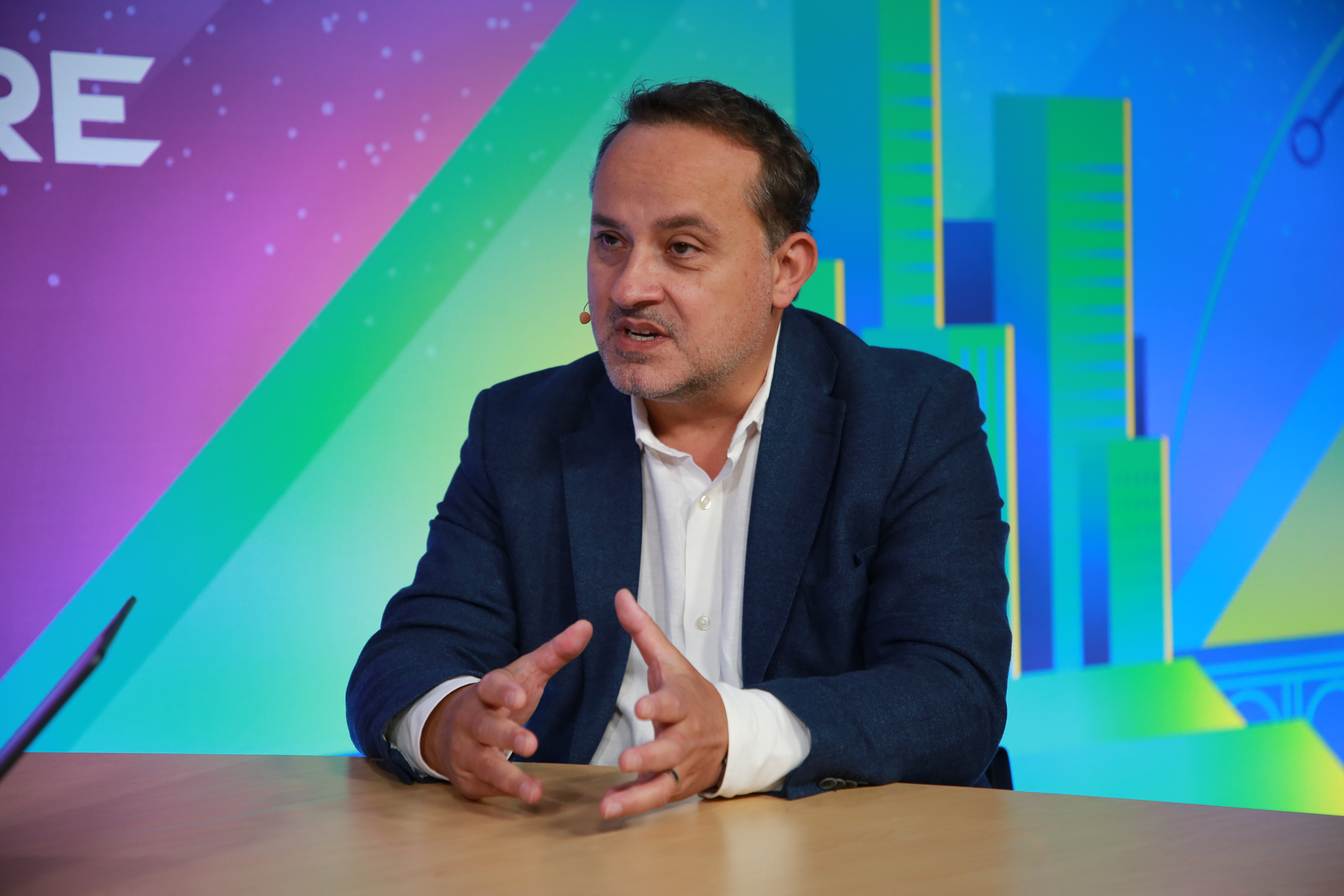
Vice President and General Manager, Agile Operations DivisionBroadcom
Broadcom has introduced Rally, its enterprise agile management solution, on-premise for the first time to address the need for data privacy. The Agile Operations Division focuses on digital transformation in enterprise organizations, offering products like Atomic for visibility and automation of data pipelines. Network observability solutions DX NetOps and AppNeta provide end-to-end visibility across networks. Broadcom's products cater to different buyers in various industries with value stream management, automation, and NetOps solutions tailored to organiza...Read more
exploreKeep Exploring
What company has recently come together with VMware in 2024?add
What is the announcement regarding Rally, the enterprise agile management solution?add
What are the three main product areas in the agile operation division and what is the focus on digital transformation for large enterprise customers?add
What are the two main areas of focus in infrastructure transformation and what are some examples of solutions that provide end-to-end visibility across modern networks?add
>> Hello and welcome back to VMware Explore 2024 Live from Las Vegas. It's a tongue twister. So many years of calling it other things, but we're here at VMware Explore 2024. I think one of the things that really has transpired over the past, I would say this week has been really the coming together of VMware and Broadcom as one company. This is really the first one and I think there's a lot of different people here. I'm joined by Serge Lucio. Did I get that right?>> Yeah.>> I got it right. He's the vice president and general manager of agile operations division for Broadcom. I think one of the things we were kind of talking beforehand, and having been on the product side a number of times in my career, I actually used the product you have with Rally.>> Thank you.>> You guys had an announcement with it this week as well, which I find very interesting. What was the announcement about?>> Yeah. The announcement is that for the first time we're delivering Rally, which is our enterprise agile management solution at scale on-premise. Historically for pretty much 25 years, Rally has been a multi-tenant SaaS product, and for the first time it's going to be available to be deployed on-premise on VCF infrastructure or over container-based infrastructure. The main driver is really that we've seen is really many of our customers, especially in Europe, really taking a different stance on data privacy. They really want to have this data to be in their data center or collocated with their environment, so we're addressing those needs through Rally anywhere.>> Yeah. Sovereignty is a big thing, especially like you said, in Europe, and we've seen that. Help people understand the agile operations division and how it kind of fits in. I don't usually think Rally and then think VMware. It was interesting. There is Spring and Tanzu and things of that nature and I get that part where kind of aligns with that.>> If you look at the agile operation division today, it really comprises three product areas, and really our focus is really on the digital transformation that many of our large enterprise customers are having. There are two sides we're really tackling. The first one, which is really where Clarity and Rally sit, is really about helping those organizations rethink their operating model. We've been on this agile journey for 20 years. The problem is that the business has to become agile. We need to align business cycles, investment management. We need to move from project to product. We need to break down the silos between the business and IT. That's the first product area. Very related to essentially what we're trying to do with Tanzu in serving the developers, but also aligning with the line of business side. That's the first area. The two other areas in the portfolio really are aimed at the infrastructure transformation. Now, when we think about infrastructure transformation, it's been multidimensional. We really are only focused on two areas. The first one is network. Many of these organizations have been moving to software-defined networks, have been leveraging the internet as core part of our network. The edge is becoming very critical. We need a new way to think about observing that network and dealing and managing with that network. In that area we integrate with VeloCloud, we integrate with NSX. We basically have solutions that provide you with end-to-end visibility across the modern network. Finally, the third area is around automation. When you think about automation and the traditional workload automation, we're well past that where we're looking at many of our customers trying to automate end-to-end processes, trying to do gen AI in the private cloud, trying to build data pipelines. There is this entire transformation around automation that we're tackling.>> Yeah. I think again, to that point when we were talking before, I think the whole value ops aspect of it. I get that and I think that totally makes sense. I think when you started to go down into the pipeline, and instantly thought of private AI. You need to be able to bring together different data from different places. How do those data pipelines and how do you help with that data architecture?>> Yeah. If you look at data pipelines today, many of our organizations have started to use Airflow or instances of Airflow, like Google Cloud Composer and others. One of the key challenges with these technologies is that they're fundamentally very developer-centric, and they don't really take into account any of the enterprise-type features that you would expect, whether it is scheduling, SLA management, observability. Whenever DAGs, which embed DAGs into DAGs into DAGs failed, it becomes really a nightmare to actually understand what is happening. We have the ability not just to orchestrate DAGs, but also to provide end-to-end observability of these DAGs. We can automate traditional data, so we can go and pull data from a CRM ERP system or from traditional relational databases, do ETL-type job processing, which we've been doing for the last 20, 25 years. We can restart jobs. We can provide SLA management. In many ways what we're doing is just bringing what traditionally IT has been doing for 25 years into private AI, into automating these data pipelines, and also providing observability. We don't have to replace Airflow. We can layer our technology on top of Airflow to provide this kind of observability and SLA management.>> What is that called within the portfolio?>> The product I'm talking about is called Atomic. It was actually listed as one of the advanced services this morning during the general session. Atomic is the name of the product. We actually, interestingly enough, released Atomic SaaS for first time about three months ago. Today you can actually use Atomic either as a SaaS solution if you want to do public AI, if you want to automate pipelines in the public cloud, or on-premise deployed on VCF, again, if you want to do private AI on premise.>> Yeah. That to me makes total sense where you were talking about the sovereignty, and what we see is that a lot with AI, we have a kind of power law of gen AI. What happens is you have very large language models that are at the beginning of this, but there's this long tail of small language models, which I believe was talked about at the general session today. It would seem that this is one of those things, because again, if you're going into a CRM system, that's the holy grail data for most organizations. Are you seeing them really embracing that now that you have the private AI on the VMware side with Atomic, and bringing those two together? Has that been?>> I think we're a bit early in that journey, to be honest. I think we're still trying to figure out how do we actually get the developers to partner with the IT guys. If you look at Atomic, traditionally that's been a tool which was predominantly used by IT as a centralized control element to manage security, to manage SLAs, to be able to have a robust backend to manage the enterprise. A lot of these developers have been running wild and doing tons of experiments. We're really at this cusp now where we're engaged with many of these customers to try to figure out what is next and how do we bring those two worlds together. It's a bit early in that journey.>> Yeah. No. I think that makes total sense, but I think we'll kind of switch gears a little bit, because we just had Sanjay from the edge, and from a VeloCloud perspective, which again, the name is back. I'm seeing a lot of names coming back. I need to bring a secret decoder ring with me again.>> Rally was gone under CA Technologies, and we brought it back. It's one of the things we go back to these brands of products that our users love.>> Yeah. I love that. I heard another one that's coming back as well, which I won't go into, but it's very interesting. When you look at network observability and the product set that you have there, it would seem, again, Hock and Chris was talking about this earlier today on the stage, and Sanjay talked about it, about how, again, the connecting across, not just with NSX, but the VeloCloud. How do you see organizations looking at that? Because I think there's a lot of people who are looking at it, and I think Hock even said this in another meeting, that there's all these silos within IT that have to be broken down. Where do you see this living within there in IT? Are there still network operations centers that are really focused on it, or has it really moved into more of a platform engineering type of place from ->> You'd be surprised. I think what we see is more of a convergence between the SOC and the NOC, so the security side or the network side. Reason being that a lot of data at the end of the day is very similar, so there's definitely a bit more of a convergence on that side. The network engineering and the network operations side is still an area where we need to actually work a lot with these customers. They don't speak the same language. We were talking with HCA Healthcare earlier who presented here, and they basically showcased how their network engineering team started to deploy in patient house technology for connectivity back into their data center without alerting their network operations teams that the technology was actually in production. I think we still have a bit of an issue in terms of, again, the builders and the IT guys at the end of the day who are going to have to manage and operate those systems. We, from our point of view, are very focused on the network observability, and really at the end of the day, we're really trying to give visibility into parts of the network which traditionally have not been part of the enterprise. Traditionally, enterprises have been monitoring switches, routers, ports, classic IT gear. Today, their network, in many cases, 80% of their network is actually the internet. It's provided by service providers. They do not control that network, and yet they run critical workloads that span the data center and the cloud across these interlinks or between the data center or the cloud and the hospital or hotel facility or even the house. What we see is that there is an imperative for us to actually provide visibility across the underlay and the overlay so that we have this end-to-end visibility from layer two all the way to layer seven. That's one of the things that truly differentiate us is to be able to provide you visibility from underlay, layer two, layer three, all the way to really the end user experience.>> Well, you'll see that from the layer two, but broken or kinked wires. I remember that my old school networking days. Which product set are we talking about now?>> We're talking about two products, DX NetOps and AppNeta. They form the foundation of this solution. Speaking about the types of issues and talking about private AI, it's quite interesting to see all these modern workloads are going to be very, very sensitive to things like packet loss and jitter and scheduling and micro bursts, which are happening on the network. I've seen instances where just a 5% packet loss at an ingress of a hyperscaler would result in an application to completely fall down, and it's very difficult to troubleshoot these kind of issues if you don't have a right of technology.>> How far into the cloud does this go and help them?>> In some of our cloud partners, we can install a virtual probe. I'm not going to announce it today, because it's not completely done, done, but we currently are working with three of the hyperscalers to have our technology natively baked into their data centers.>> That makes sense. I think again, even with Hock saying everybody is repatriating and the numbers he's putting up there, I think, moving. But I still think that pieces of it, like if you're having a website hosted or something like that, there's still going to be multi-tier applications all the way back to the mainframe. To your point, when you start to look at these, and I was talking to one of the customers earlier today who was talking about latency and being able to make sure. They're a financial services company, and a lot of the different transactions they deal with are actually still done on the mainframe, which surprisingly enough, that's not going away either. I know Broadcom has a big business there as well, so that's a whole different topic. But where do you see customers getting started with your product set? Because it is kind of different in those three different things. It's got to be different places with the different sets.>> Yeah. We would definitely have three different buyers for the three solution sets. I think the only thing that is really in common is that typically we're engaging at a certain level in the organization with specific teams within the infrastructure team, IT teams for network and automation, for value stream management. Typically, what we see, more and more chief transformation officers are being embarked by many large enterprises. We have three different buyers which are very different. Where do we start? Well, if you look at value stream management, the trigger is a lot of organizations trying to rethink their operating model, trying to adopt value stream management as a way to accelerate their time to market. They understand that the build and deliver with the kinds of technologies that VMware is providing or hyperscalers are providing is no longer where the challenges are. The challenges tend to be upstream in the funding, in the approval processes, in the compliance. All that is really where the challenges are. Typically, chief officer. Typically, we start with value stream mapping. We try to understand what is, what is that end-to-end lead time that exists there. You look at the automation, oftentimes the trigger is that these organizations are trying to move workloads around. That forces them to rethink the existing schedules. They're introducing some gen AI capabilities, some data analytics capabilities. Suddenly that triggers them to rethink their existing job and workloads, and as we do that, they're basically looking more strategically at what is the solution for the next five to 10 years. Finally, around NetOps. More often than not, what we see is VCF deployment, software defined network, SDDC, or more commonly customers have deployed SD-WAN in verticals such as healthcare or retail. Suddenly they're two, three years later and they realize that they have some serious issues in terms of observability.>> No. I think that all makes sense. I really appreciate you coming on board and helping break it down, because again, for me, it's a new world I've been coming to hear, so it's really great to have you on board and helping us understand how it all fits together. I think again, it's super interesting now that you're all one company and bringing these solutions to head. Thank you.>> Thank you. Appreciate it.>> Thank you for watching this episode of theCUBE here at VMware Explore 2024. We'll be right back with more, so don't go away.