We just sent you a verification email. Please verify your account to gain access to
VMware Explore 2024. If you don’t think you received an email check your
spam folder.
In order to sign in, enter the email address you used to registered for the event. Once completed, you will receive an email with a verification link. Open this link to automatically sign into the site.
Register For VMware Explore 2024
Please fill out the information below. You will recieve an email with a verification link confirming your registration. Click the link to automatically sign into the site.
You’re almost there!
We just sent you a verification email. Please click the verification button in the email. Once your email address is verified, you will have full access to all event content for VMware Explore 2024.
I want my badge and interests to be visible to all attendees.
Checking this box will display your presense on the attendees list, view your profile and allow other attendees to contact you via 1-1 chat. Read the Privacy Policy. At any time, you can choose to disable this preference.
Select your Interests!
add
Upload your photo
Uploading..
OR
Connect via Twitter
Connect via Linkedin
EDIT PASSWORD
Share
Forgot Password
Almost there!
We just sent you a verification email. Please verify your account to gain access to
VMware Explore 2024. If you don’t think you received an email check your
spam folder.
In order to sign in, enter the email address you used to registered for the event. Once completed, you will receive an email with a verification link. Open this link to automatically sign into the site.
Sign in to gain access to VMware Explore 2024
Please sign in with LinkedIn to continue to VMware Explore 2024. Signing in with LinkedIn ensures a professional environment.
Senior Product Manager for Apex Cloud PlatformsDell Technologies
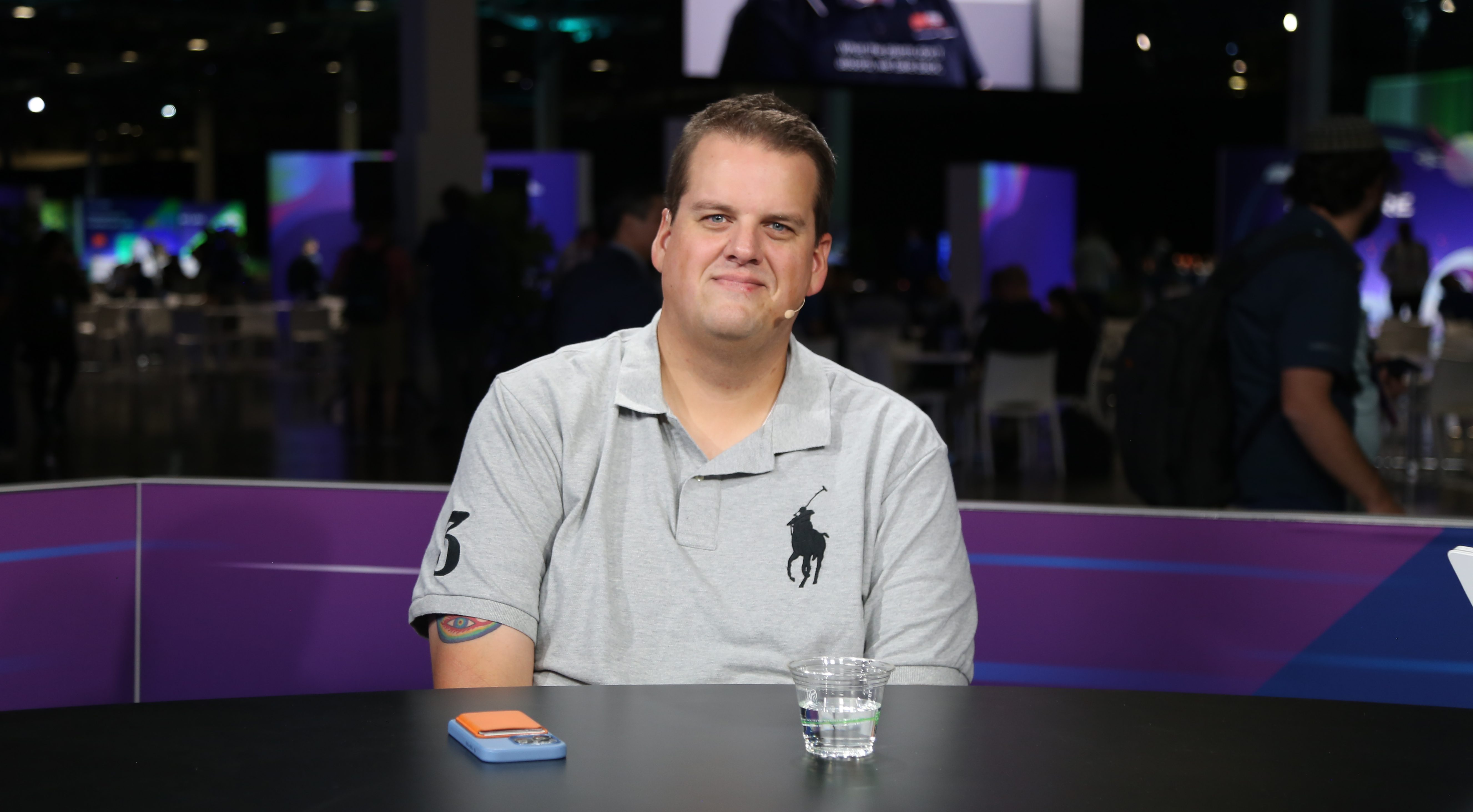
Sam Niemi, senior product manager at Dell Technologies, discusses the evolution of VxRail and the impact of the Broadcom acquisition. He highlights the seamless migration from vSphere to VCF and the subscription model transition. Niemi emphasizes Dell's commitment to customer support and the ease of upgrading to new versions. He also talks about the focus on multi-cloud solutions and the choice offered to customers through partnerships with Nutanix. The discussion delves into VxRail's success in various workloads, from core data centers to edge locations. Loo...Read more
exploreKeep Exploring
What is the status of Dell's relationship with Broadcom and the announcement of VxRail subscriptions being sold directly with VMware subscriptions?add
What is the new offering for customers who purchase VxRail as of July 22nd?add
What is Dell's approach to providing choice and flexibility to customers in terms of cloud providers, as described in a recent announcement about a Nutanix partnership?add
What are the various use cases and workloads that VxRail has evolved to support, from core data centers to cloud environments to edge locations?add
>> Hi, everybody. Welcome back to VMWare Explore 2024. You're watching theCUBE's continuous coverage. My name is Dave Vellante. This is day three. Rob Strechay is on set two going wall to wall coverage, extracting the signal from the noise. John Furrier was here. He's actually now in New York City at the New York Stock Exchange doing some stuff with our studios down there. So we're super excited. A lot of action going on at theCUBE.
This is our 15th year at VMWare Explore/VMworld. Sam Niemi is here. He's a senior product manager for VMware Solutions team lead at Dell Technologies, and we're going to dig into some of the things that are going on in the space and the storage space and the hyperconverged. Great to see you, Sam. Thanks for coming on theCUBE.>> Thanks for having me. It's wonderful to be here.>> Good. So VxRail, it was interesting. We saw the ascendancy of VxRail mid-last decade. It was actually really interesting. Dell decided to get into the market in a big way. You became the top player->> That's right.... >> based on the data that we had. No question about it. And so what's the update? How has the Broadcom acquisition affected your relationship there? Where are we at now, and where are we headed?>> Sure. And I appreciate the question. First off, we're really happy to be here. VxRail, we've been building VxRail now for eight years. We've building solutions on top of VxRail like VCF and VxRail for the last four or five years. And we have had a really tight, very well-maintained relationship with Broadcom for a long time. I was looking actually the other day, the first Dell VCF solution was nine years ago in three days. So we've been doing this for some time. We are the first, and I like to think the best co-engineered system. Now, as far as the question about Broadcom relationship, we are as built into Broadcom as tight with Broadcom as we ever have been. We've been building VxRail solution and have now really happy to announce and provide VxRail subscriptions or VMware subscriptions sold directly with VxRail for the first time, just as of last month. So we're in a really good place now where customers who have come to know, enjoy, adopt VxRail for the single throat to choke can do so continuously, through a VxRail order. So you call Dell for support. You call Dell for hardware maintenance, software support, et cetera. All sold bought on a single piece of paper with VxRail.>> So I talked to some customers who shared with me that they got in under the wire where they could still acquire perpetual licenses from Dell.>> That's right.>> And I think that there was a window after the acquisition, which was November of 2023. I think it went through the spring, maybe around April. They got in underneath. So they were able to get perpetual. But at the come April, that was when you had to transition over to subscription. Two-part question, first of all->> Sure.... >> what happens to those perpetual customers? You service those based on the contract that you signed with them.>> Absolutely. Yup.>> They're good, right?>> Nothing changes. So within VxRail, even when let's say a support ticket comes in, we service 97% of those support tickets ourselves, just Dell. Nothing changes for those customers. You're still calling 1-800 Dell for support. Nothing changes for perpetual customers. Nothing changes for our subscription customers. Still the same VxRail experience from four or six, seven, eight years ago that we're able to offer today. So nothing changes there.>> And then so April comes now, you cut over to the new model, but the cut over to the new model involves a lot of dotting of the Is and crossing of the Ts. So that put a pause on things, but now you're saying as of, what'd you say last month?>> Yeah.>> You were able now to sell subscriptions. So what does that look like?>> Yeah. And that's a great question. Thank you. So as of July... I'm thinking ahead, I always thinking ahead as a product manager. >> Summer's over, Sam.>> Product managers, we're always looking ahead. The pass is behind. But as of July 22nd, we're able to offer VVF and VCF subscriptions for VxRail. So customers who want to have a single entity to deal with, a single place to buy their licensing and their hardware, their support, one stop shop, we're now able to offer that direct with VxRail purchases. And we couldn't be more excited about it.>> Okay. So I can buy VCF and VVF from Dell.>> That's right.>> With VxRail bundled in all integrated. And now, you've developed that engineered system, and you've got a roadmap around that. Is that right?>> Yeah. Absolutely. And one thing that we keep hearing from our customers here is the excitement that's building around 9.-0. We've got 9.0 on our roadmap. We're looking forward even beyond that. We're going to be building VxRail solutions, VxRail systems with even more automation, more flexibility, more enhancements for years to come.>> Let me ask you about 9.0 because I think in 5.2, so tell me if this is right. Prior to, maybe it was during 5.2, but then I think the innovation came with 5.2, if you were a vSphere customer and you wanted to go to VCF, it was pretty painful. It was kind of a rip and replace.>> Sure.>> And my understanding is Broadcom VMware did the engineering to make that a seamless migration, a frictionless migration. So that's huge. First of all. Is that correct?>> Yeah. So when we've looked at generations past, and so myself, I launched VCF on VxRail, I was the lead product manager for that product back in 2020 when we launched that. So I've seen VCF on VxRail go from zero sales to the juggernaut it is today. And we've seen certainly challenges with upgrading because we have, in VCF and VxRail, a huge amount of software suites in there, from NSX to ESX to vSAN. I could go on, that off to be upgraded at the same time or in a sequence. So when we've looked at our two to three VCF migration or three to four VCF migration, four to five is where we really achieved an upgrade and out of migration. And now looking forward with the five to nine jump, we anticipate some of the same, but we want to make sure that we are working very tightly. I had coffee in a meeting about it this morning on how we make sure that that's an awesome solution for our customers to upgrade and not have enhanced pain when VCF 9 comes along.>> Okay. So Dell is, if not the greatest, it's certainly one of the greatest distribution channels in the planet. So now that you've figured out all the subscription details and everything else, you would expect a really strong adoption from customers. What are you hearing at this show from customers with respect to the messages that you're sharing with them?>> Sure. Another great question. So Dell, like you mentioned, where it powerhouse for distribution, powerhouse for what we can deliver to our customers. From a VxRail perspective, we're seeing a lot of interest in VCF where VBF and vSphere was the smaller portion of interest maybe before. Now, with all the enhanced automation of SDDC Manager, some of the things that are coming up in 9, VCF looks to be even bigger than it was before. And we're excited about that. We're excited to grow and enhance the VCF portion of VxRail. Personally, I'm very excited for it because I watch it take its first steps. But I really see VCF being the bundle that customers opt for and move forward with and are excited about.>> Yeah. That's the flagship skew. It's by force in a way. Broadcom's making that happen with its marketing, with its emphasis and, frankly, with the value proposition. And like you said, they're bundling everything in there.>> Yeah. Especially now that is vSAN is a part of the VCF bundle.>> Yeah.>> We're seeing, especially on the TCO and financial side, we're seeing customers really seeing the benefit and the economics make more sense with VCF than they ever have before.>> What about alternatives? We've seen Dell just recently announced a relationship with Nutanix.>> Sure.>> And you guys have kind of ebbed and flowed on that. Prior to the EMC acquisition, there was a very close relationship, obviously, EMC storage company, more of a competitor with Nutanix. And then Dell sort of transformed into this, like you said, just a power house. And so you're giving customers choice. Now, you're giving them more choice.>> Yeah.>> How should customers think about choice? What are you advising customers with respect to, there was an initial shock of, wait a minute, we have to go to a subscription model. There's that sort of knee-jerk reaction.>> Sure.>> And so a lot of people are investigating alternatives. Some of them, many are realizing, "Well, maybe the grass isn't greener.">> Yeah.>> Sometimes, it maybe makes sense. What are you telling customers?>> So from Dell's perspective, we just want to be the best landing place for them. Really, whether it's VMware, obviously, we're here at VMware Explorer, I still want to call it VMworld in my head sometimes. We're here at VMware Explorer looking at all the new innovation that VCF and VMware and all the different VMware suites are bringing to VxRail. I believe VxRail is the best landing place for VMware customers, period. And I think the market has proven that out. But Dell, we sell PowerEdge. We've got PowerFlex in our portfolio, which is our intensely, massively scalable super-performance storage system. We have our storage solutions. We have different, what we call our ACPs or APEX Cloud Platforms for Microsoft or Red Hat solutions. And now with our newly announced Nutanix partnership. What we really want to deliver more than anything is choice to our customers. We've done research and found that I think the average customer has 2.6 cloud providers, whether that's a VMware or a public cloud provider. And those customers want choice. They want the flexibility to put the workloads where it should be and whether if the workload should be on VMware, we want the best offering there. If the workload should be on Nutanix, we're going to have a Nutanix offering for our customers. But at Dell, we're huge believers in multi-cloud. And we really want to provide that flexibility, that choice, and just to be the best landing place for whatever workload the customer has.>> Well, and it seems like Broadcom's strategy, I don't think the word multi-cloud came out yesterday in the keynote. So that's white space for you. It seems like Broadcom is really focusing on the private cloud, and even though you can containerize workloads and run them anywhere with Tanzu. But really, multi-cloud is a fundamental to Dell's strategy, multi-cloud by design. I think that you guys coined that term.>> Yeah.>> So what are you seeing with regard to multi-cloud interest, adoption, pain, solve?>> Sure. Because we have so many different offerings, it can be challenging for a customer to know what to do, especially when it comes to the multi-cloud space. So what we really say again, is look at the workload, and then look at not just the workload, but the offer and the landing place for it. With so many different options for our customers, when customers are looking at, oh, should I re-platform, should I not, should I move, should I not, our incredible sales team and our incredible sales specialists, whether technologists or sales specialists, they can help our customers get to the right place. I think I'm a little biased as our VMware team lead here bring it. I think, like I said, our VxRail solution is the first co-engineered system. It's the longest in the market. I think it's the best place to be for VMware customers. And we're building up our other options, our other platforms, other estates for customers who need additional options as well.>> Why, Sam? Defend that statement that it's the best place to be. Why is it the best place to be? Dig into that.>> Well, sure. And a great stat right now that I just love thinking about is with VCF on Rail and VxRail in total, customers call us for level one, level two support. We have such an incredible staff of support engineers that only 3% of our caseload gets moved up to level three at VMware. That means we solve 97% of problems. That doesn't happen overnight. Even if you were going to stand up a product today, there's no way you could hire the right amount of people with the right skill set to get our customers 97% of in-house resolution. That's just one of the items that I think makes VxRail the best VMware landing spot.>> It's the Dell sort of promise, the trusted brand, the service experience. What about the product? How was that hyper-converged space evolving?>> Sure.>> Take us inside. What's it look like? Hyper-converged HCI. Remember we had the, I guess, it was converged infrastructure, which was kind of like big giant bolts screwing together, compute storage and networking, and then the whole software-defined data center, which at the time we called software-led infrastructure, turned it to SDDC. Anyway, how has that evolved? What's it look like today?>> Oh, yeah. And that's a great question and something I'm also pretty happy about because I started with Dell almost 10 years ago, nine years in change, selling Vblocks. So I've gone from the converged infrastructure space to the software-defined space, to the hyper-converged space. And watching that evolution has been one of the great interests of my career. With VxRail, honestly, when we started, there was this conception about hyper-converged that it was the space for VDI at all. That's just a VDI thing. But then wait a minute. No, it's the space for general workloads. Wait a minute. No, it's the space for high intense performing databases. And now we're seeing adoption at the core data center. We're seeing it as a cloud offering. We're seeing it as edge locations where we're putting one node, a VxRail satellite node or our new VD-4000 two-node system with a built-in witness. Seeing that evolution of VxRail where we've gone from a core data center to cloud to edge, and having a solution for VxRail, really, whatever the use case, whatever the workload has been the most fun I've ever had in my career watching that evolution.>> That's interesting because I remember that. It was always, "Oh, yeah, this is a of VDI and virtual desktop." And I was like, "Oh, that's disappointing.">> Yeah.>> Should be so much more. And I always felt like it could be. So I'm glad to hear it extended into many more workloads, and, of course, now to the edge. Sam, I'll give you the last word. What do you want to be able to say a year from now that you can't say today?>> Oh, that's a tough one. That's a great question. A year from now, I want to say that I can't say today, well, I know a year from now, I want to say that I've seen our VxRail customer base grow even further. We've got over 21,000 customers in the world today. We've got 310,000 deployed nodes. We have more opportunity now with Broadcom and the Broadcom sales motion and the new systems, VMware 9, VCF 9 than we ever have before. What I can't say today, that's challenging, but what I know I want to say is I want to see the VxRail customers that know and love the system have an even better experience with it a year from now. I want to see customers who haven't dabbled in VxRail or haven't really bought into the Broadcom message, buy in, see what VxRail can deliver for you. And I want to see Dell be the best landing place for workloads, period.>> Awesome. Sam, thanks so much for coming to theCUBE.>> Absolutely.>> Appreciate It. Best of luck.>> Thank you so much.>> And keep it right there. This is Dave Vellante. Rob Strechay as well is in the house, VMware Explorer 2024. You're watching theCUBE. We'll be right back right after the short break.