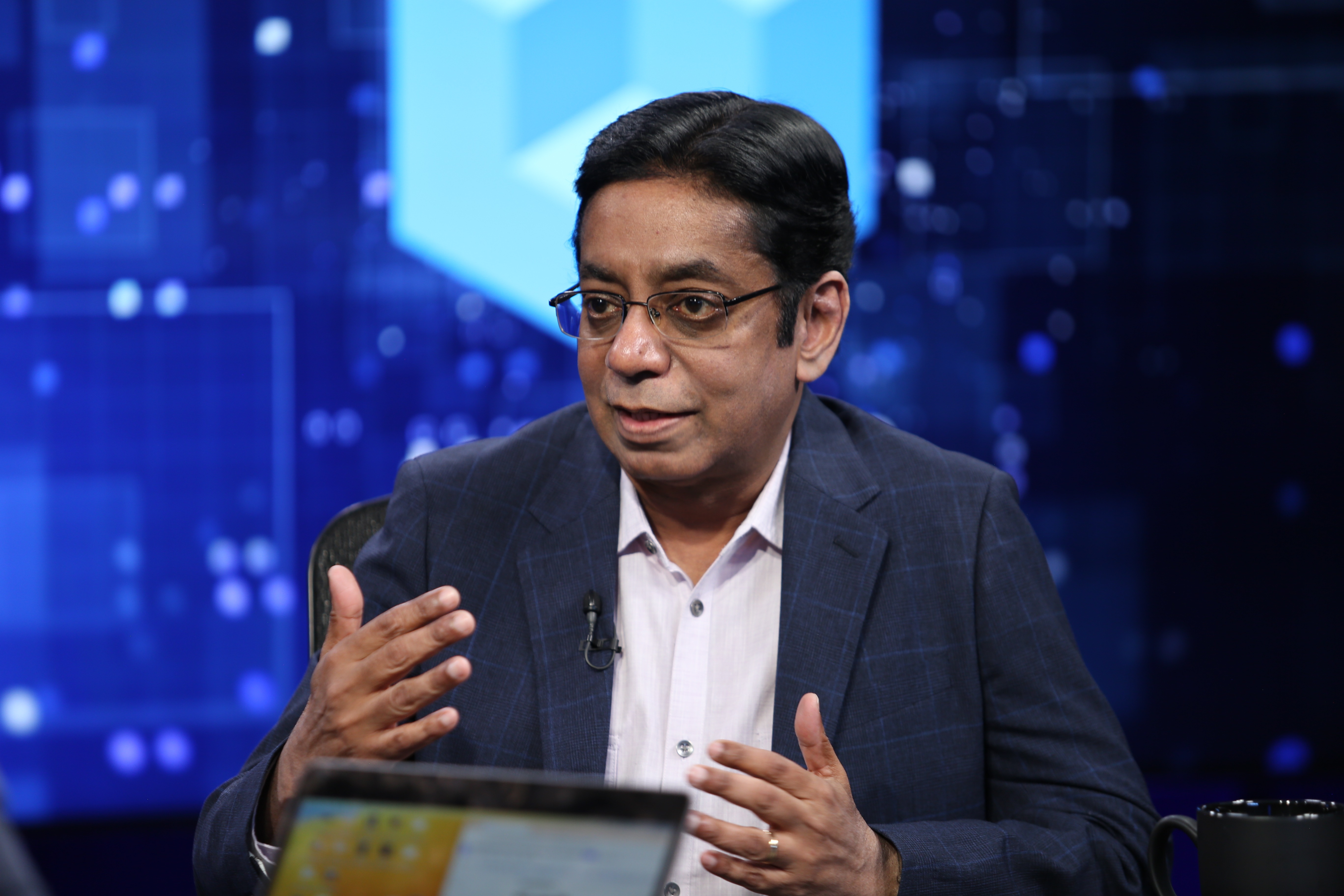
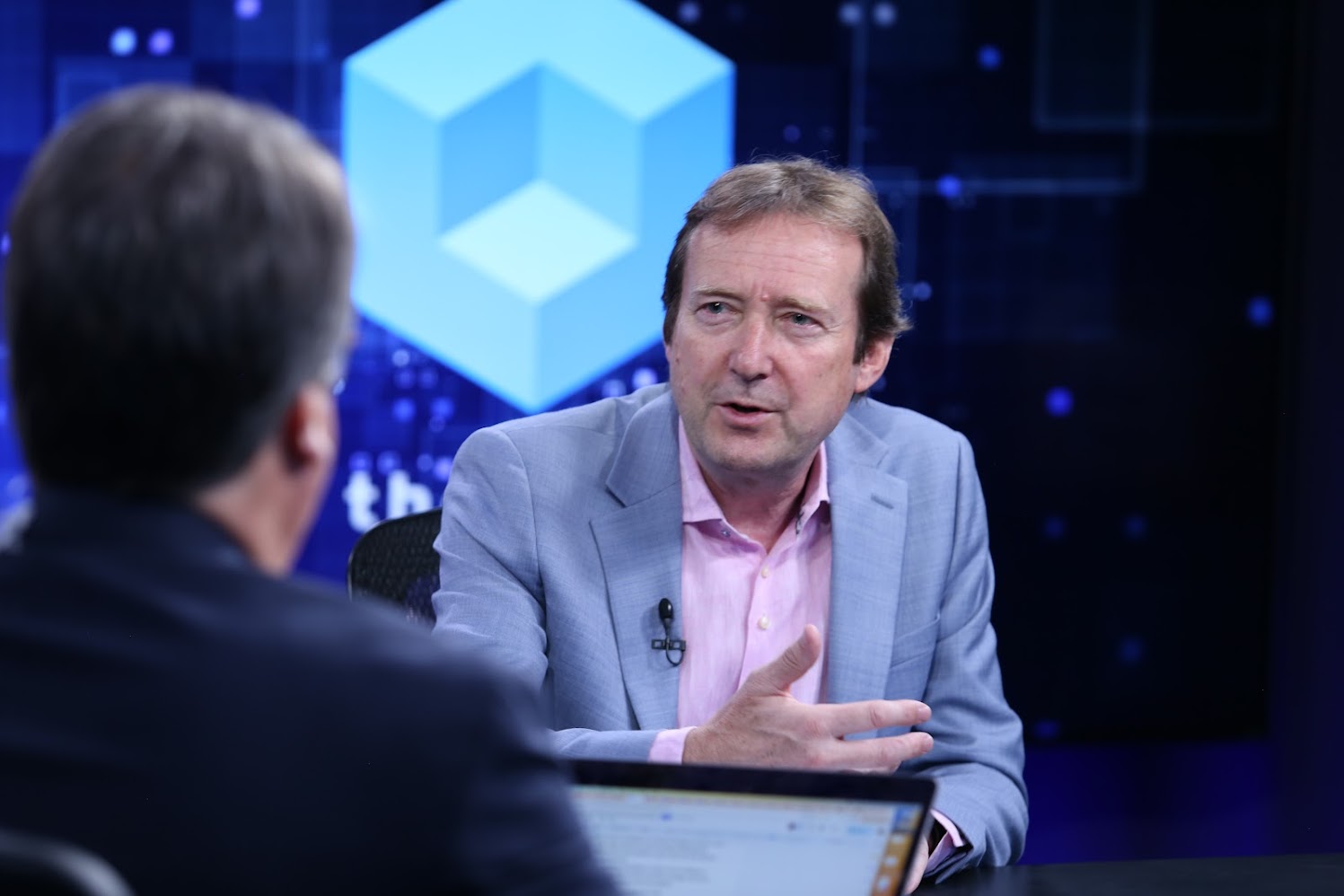
Broadcom's VCF Division, led by Paul Turner, is focused on delivering a comprehensive private cloud experience by integrating vSphere, NSX, and vSAN. Following the Broadcom acquisition, their primary goal is to provide a secure, resilient, and user-friendly private cloud solution. The division now offers an integrated networking, storage, and virtualization experience for customers, with a focus on ease of use and scalability. Their product roadmap emphasizes integration, automation, and interoperability to ensure a dependable infrastructure. VCF 5.2 introduces features such as ESX Live Patch for security updates, fleet management capabilities, and enhanced vSAN functionality, along with improved vSphere Kubernetes integration and NSX VPC capability. The division aims to simplify infrastructure management and scalability for customers, offering agility and simplicity in a secure environment for both large organizations and smaller enterprises.
Forgot Password
Almost there!
We just sent you a verification email. Please verify your account to gain access to
VMware Cloud Foundation Transformed: A New Era of Private Cloud Innovation and Value. If you don’t think you received an email check your
spam folder.
Sign in to VMware Cloud Foundation Transformed: A New Era of Private Cloud Innovation and Value.
In order to sign in, enter the email address you used to registered for the event. Once completed, you will receive an email with a verification link. Open this link to automatically sign into the site.
Register For VMware Cloud Foundation Transformed: A New Era of Private Cloud Innovation and Value
Please fill out the information below. You will recieve an email with a verification link confirming your registration. Click the link to automatically sign into the site.
You’re almost there!
We just sent you a verification email. Please click the verification button in the email. Once your email address is verified, you will have full access to all event content for VMware Cloud Foundation Transformed: A New Era of Private Cloud Innovation and Value.
Thanks for confirming your account. Now you can access VMware Cloud Foundation Transformed: A New Era of Private Cloud Innovation and Value with this email address.
I want my badge and interests to be visible to all attendees.
Checking this box will display your presense on the attendees list, view your profile and allow other attendees to contact you via 1-1 chat. Read the Privacy Policy. At any time, you can choose to disable this preference.
Select your Interests!
add
Upload your photo
Uploading..
OR
Connect via Twitter
Connect via Linkedin
EDIT PASSWORD
Share
Forgot Password
Almost there!
We just sent you a verification email. Please verify your account to gain access to
VMware Cloud Foundation Transformed: A New Era of Private Cloud Innovation and Value. If you don’t think you received an email check your
spam folder.
Sign in to VMware Cloud Foundation Transformed: A New Era of Private Cloud Innovation and Value.
In order to sign in, enter the email address you used to registered for the event. Once completed, you will receive an email with a verification link. Open this link to automatically sign into the site.
Sign in to gain access to VMware Cloud Foundation Transformed: A New Era of Private Cloud Innovation and Value
Please sign in with LinkedIn to continue to VMware Cloud Foundation Transformed: A New Era of Private Cloud Innovation and Value. Signing in with LinkedIn ensures a professional environment.
Are you sure you want to remove access rights for this user?
Details
Manage Access
email address
Community Invitation
VCF Strategy, Portfolio, and News
Paul Turner, VP of product management for vSphere, VMware Cloud Foundation Division, at Broadcom, provides an update on VCF's progress, emphasizing the integration of virtualized infrastructure, networking and storage to deliver a comprehensive private cloud experience. He highlights the transformative impact of Broadcom's acquisition, focusing on enhanced automation, lifecycle management and the agility needed to support modern applications, including Kubernetes-based workloads.
>> Hey, welcome back everyone. I'm John Furrier here in the Palo Alto studio for a special presentation, Broadcom VMware, VMware Cloud Foundation, Explore and Transform. We're here discussing with Paul Turner, Vice President of Product at VCF Division of Broadcom. Paul, great to see you. Thanks for coming on this special presentation.
Paul Turner
>> John, hey, great to be here. And delighted.>> Obviously VMware, now Broadcom, and you run the VCF division, VMware Cloud Foundation. It is the crown jewel of all the core VMware product that's been operating enterprises for decades. Now with this new wave here, a lot's changed. Take us through the update on mid-year review. We got Explore coming up around the corner. Give us a quick update on the division, how things are going, how the product mixes. Give us a quick update.
Paul Turner
>> Well, I think a really exciting thing is we're actually, finally, I think delivering on what we want for customers, which is to deliver a full private cloud experience or cloud experience to those customers. To deliver a cloud, you need to deliver virtualized infrastructure. We're great at that with vSphere. You need to deliver virtualized networking. We're great at that with NSX. You need to deliver virtualized storage, which we are great at with vSAN. We need to integrate those products and make them work, make them easy and lifecycle the products and allow the customers to run them at scale. What we did is we took all of those groups within VMware and we said, "Build it, bring them together, bring the teams together, execute in a plan, and really deliver an integrated private cloud experience."
That's what we've done. It's been a very exciting time. It's amazing to see the change in terms of the product management excitement, the engineering excitement internally as we go and deliver what we want to for customers.>> I love when I talked to a VP of product because you have the keys to the kingdom. With all this effort going on and with the acquisition, everyone wants to know what's changed. What's the biggest change? If you can boil that down, what is the biggest change since the Broadcom acquisition on the product, and VCF as a whole?
Paul Turner
>> I think the biggest change is when you look at running this as a integrated offering, you can actually make the product much more interesting. You can change completely the way we do networking. To actually say, "Networking should just always be there. How can I make it as easy as VPCs up in the cloud," we already showed that. We've gone and built that into our VCF product. You've got the ability to build VPCs directly into the product, to be able to carve up and build tenancy into the product. You've got this amazing ability as you bring products together, and you make the automation and the management of the platform much more easy to integrate, lifecycle manage and update and patch so that your operators who are trying to run your infrastructure can run it at scale. You can start small, you can run up at large scale, but all of that lifecycle management could be built in. What's changed is bringing those teams together means we can actually deliver on a private cloud for customers that's secure, that's resilient, that's operator-friendly, and importantly, can support your applications. We also bring in, of course, Kubernetes-based applications and you can run entire Kubernetes infrastructure at enterprise scale. We are in this release that we've just announced, that's the good news, this release we're bringing out a new Kubernetes offering where we keep updating Kubernetes as fast as you need to. We do that by updating in terms of the cloud offering.>> Paul, I love chatting with you because it just conjures up memories from a decade ago. We've been doing theCUBE for 14 years. I remember when Wikibon, now with theCUBE research, did a study. That was the first research study on the private cloud. That was pre-Amazon scaling up their revenue and pre-public cloud and pre-Kubernetes, by the way. OpenStack was the rage then. That was mainly a data center kind of play. Vmware, again, still dominant at that time and continues to dominate in the large enterprise. So much has changed since then. Now, public cloud grew. Now, we're next gen public cloud, but basically it's distributed computing. Bring the gen AI era now, now you've got to complete now new infrastructure change over at the hardware level. You got clustered systems. Everything now is speaking large scale because the apps are evolving. Kubernetes enabled that orchestration for cloud native, that's causing a lot of growth in open source. Everything's popping on all cylinders. Developers, and now infrastructure needs to ride that with it. The software behind it has to go. Given that backdrop, I can see why you guys did this because you have a lot of large customers. VCF had the networking, it's got the storage, it's got the compute, it's got the application, it's got the hypervisors, it's got the virtualization. What's next? Where does it go from here? What does the portfolio look like? How do you guys create that headroom and future-proof? Because this is the conversation everyone wants to know. Will it be ready for this next gen wave?
Paul Turner
>> It absolutely will be ready. You always think of three things. In terms of product management and planning, it's actually very important that we think like what's the big three areas that we're investing in. Those three areas are around how do I help your operators run at scale? Really important. We've got to be able to run this infrastructure. Infrastructure is code. I've got to be able to run it, scale it, fleet manage it, operate it, do patching, all of that life cycle. I have to do that. I have to deliver also the most secure resilient infrastructure, whether it's running in your data center, whether it's running in one of our hyperscaler partners, whether it's running in our CSP partners. This will be the most resilient, trusted infrastructure that you can operate at scale. All of that is a second key area. The third of course though, and this is the most important one, this is why you need to move from just virtualization to a cloud infrastructure is all about agility. Because as you just mentioned, you're delivering new types of applications, GenAI applications, different database services that you need to deploy. Application owners want to actually deliver DevOps and agile applications. How do they do that properly? They do that by delivering infrastructure as code in an agile infrastructure. To do that, you've got a platform that is not just a virtualization platform, it's all of the Kubernetes platform. It's containers or VMs managed through Kubernetes, as agile as you want, supporting private AI. I think we mentioned that earlier of our GenAI work that we've done and we'll continue to expand out the different service offerings.>> It's interesting, the old school days, to roll out stuff to the enterprise they'd buy it and then deploy it. You run operations, you're investing in the run ops and do new things. Now every enterprise is different. Beauty's in the eye of the beholder in the sense that each enterprise will have a different model stack. They might have a different compute architect, they might rethink how their edge looks. It is kind of the same, but they're all different. Agile and the ability to roll out really strong infrastructure as a critical system has always been the sweet spot for VMware. You've always been mission-critical infrastructure and software. Got it. What does that mean in this next wave? From a product standpoint, what's the guiding principles? What are your first principles as you look at this product? How do you ensure that? Take us through the portfolio.
Paul Turner
>> Some things will stay the same. We are going to have a virtualized platform that will support all of your compute offerings, your different type of storage offerings. What's in your data center will be virtualized supported by us, and we're going to bring a private cloud experience to that customer and to all of our customers out there, more than 300,000 customers. Some things stay the same. The things that become different are how do we actually deliver a full private cloud? If you're going to AWS, what you're getting is you can dynamically get applications deployed in a matter of moments. The reason why you can do that is because you get dynamic virtualized compute, virtualized storage, virtualized networking. The management for you is automatically done. That's what we do for our customers. VCF, our VMware Cloud Foundation is the basis for that. We deliver a private cloud to our customers and to our enterprises. It means we can do really smart things. It means I can now actually, as I provision, I can dynamically provision the right amount of storage for you. All by policy, policy-based provisioning of storage, policy-based provisioning of networking. I do that. Basically, a YAML spec that actually defines what I want. I speed it into our Kubernetes engine, automatically get the application deployed. That's the way cloud infrastructure needs to be. That's what we're doing with VCF, all fully dynamic. It'll be multi-tenanted in the platform as well. Not just VPC-level tenancy where I can do isolated networks, but isolation to a tenant so that each tenant you can do chargeback, you can do cost awareness depending on what your customer wants. All of that tied directly into the product.>> It's nice because you get the cloud operations on-premise in the enterprise, full control. You got the control point there, and the data's key. Can you share some of the customer use cases and the value proposition that you're seeing with them? How are they adopting it? How are they leveraging the agility? Can you take us through some customer-specific situations?
Paul Turner
>> Yeah, sure. Recently, we've actually come out with an edge-based offering as well with VCF Edge because certain customers have different deployment size and deployment types. But Edge is an unusual one. What you'd like to be able to do is define a spec for your applications that I deploy. I've got thousands and thousands of these edges. These edges should be able to wake up, pop back to the Git server, find out what its image is, pull it down, automatically run the latest application. Every time there's a new application, it becomes more self-aware. That is a dynamic change, but we can do it because I've got dynamic storage, I've got dynamic networking, I've got dynamic virtualization and compute, and we can do it all through a managed offering. We built Kubernetes in that gives us this kind of agility. It's changing, and that's just an edge use case. The traditional data center use case, look, our customers, they are looking for how do they operate at scale? They are cost managed, they are running big data centers. Everything is about efficiency. We have people running hundreds of thousands of servers. Those hundreds of thousands of servers they need to run at scale. What's different is we are bringing with VCF full fleet management capability for customers so they can actually manage, patch, update, lifecycle. They can make sure that their infrastructure is secure. They can do configuration management to be compliant to certain requirements, if it's financial requirements or other. All built into the platform. Lots of different use cases.>> I mean it's a new era in private cloud innovation value. Your point about the edge is interesting because some people have a lot of active edge activities. The ones that have this new era in private cloud, a hybrid, and now cloud, will want to expand on the edge as device to core happens. That's coming too. That factors into the product, the extensibility and headroom to manage the edge. What's the story there for customers who are saying, "Hey, I'm shoring up my base here. I got my private cloud. The new era's here. I got cloud operations. I love my Kubernetes, got my cloud native. I've got my developers cranking out apps. Now the next level, I got to get to the edge, that's my next to-do item."? Now they probably have some edge, but it might not be as robust. What's your story there?
Paul Turner
>> Well, actually we're already in the edge.>> Yeah, okay.
Paul Turner
>> I mean, it's not a new space for us. I think a lot of what we have to do for edge is look at the right kind of price models for the edge, but we also, we are already there. If you look at any of the biggest retailers in the US, any of the biggest retailers in Europe, any of the manufacturing plants, all of those run our infrastructure. In their case, it is pretty similar to the data center. A lot of it is this need for the data center and the edge both need to be able to lifecycle manage and fleet operate our infrastructure at scale. Infrastructure needs to be updatable at scale, but they also need to be able to do application deployment and delivery at scale. The data center needs to do that. That's what Kubernetes is about, DevOps and the way that people want to deliver applications. It's funny, there's a lot of affinity to what edge needs and what data center needs. Both of them need a modern, agile way for developers to be able to deliver applications and deliver onto a platform. We do that within inbuilt Kubernetes within the platform. It can allow us to deliver into the data center better. You can define the entire spec of the infrastructure that you need or into the edge. Then you also need to be able to operate at scale and a way to fleet manage better. Then, of course, the third thing I will just say is this has to be secure. At the edge, you're probably even more concerned about it. Well, not even more concerned than the data center. At the data center, we're very worried about it right now.>> It's all concerned. The server share is huge.
Paul Turner
>> Yeah, we can do everything from being able to build a highly trusted, secure platform to, if things go horribly, can I say arse-ways?>> Yeah.
Paul Turner
>> If they really go ugly, then we can ransomware recover for you. We can actually just roll back time and bring it back.>> Security is critical. Just to be clear, you're already at the edge. For customers that need to expand out to the edge, once they get all their data center working, done in the new era of private cloud they're, therefore, with VCF today.
Paul Turner
>> Yep.>> That's something that's clearly on the execution roadmap they can deliver. That's part of the package. Okay, what's the key drivers for you right now as you look at the product roadmap? We've got Explorer coming up, I'm sure you don't want to reveal some of the jewels you're going to talk about at the event. What's the key priorities for you on the roadmap? As you look at the changing marketplace, what are your priorities? What's the focus?
Paul Turner
>> Some of it is kind of boring, honestly.>> We like boring.
Paul Turner
>> I tell my product managers that integration is a feature. That sounds daft, but we have the leading products already. We've got the leading storage products, networking products, virtualization of compute products, the management products, the logging products, the analytics that you need to do across an infrastructure, but we have not done the best job for our customers on integrating those products well together. That's where we're focusing. We're putting an awful lot into how should this operate? Because if you think about it, I deploy a virtualization and I've got templates there. Those templates, I should be able to bring in an automation infrastructure. My automation infrastructure can automatically recognize that, create actually a content library, make it available out to your customers, organize them into tenants so that they can do charge back and it shows up in the operations console. The logging and everything that users are doing is logged so that I get authenticatable logs so that I can even feed off into Splunk and other things. Its integration is a feature and that's the biggest change that you're seeing us do is we have the assets, we have the right features. It's not about net new features. There is cool new things we're building.>> Of course.
Paul Turner
>> But integration I'd say is ->> Well, it's interesting, integration is key for automation. It is funny about boring because we always say that Kubernetes is getting boring. But that's a feature, not a bug because you want it to be boring. Linux is boring, it runs things. Boring means it's operating, it's good. Hey, boring means it's all good. Integration becomes critical because now you're looking at automation and interoperability becomes a factor as you have a large ecosystem developing and changing. You have API economy where everything's going to be ... All traffic's 85% through APIs and growing, so you have a connective tissue, it's changing. You got neural networks now changing some of the data modeling. Infrastructure data apps will all be the same stack. It's still middleware, it's still infrastructure, it's still applications. This is important. Integration is hugely important. Once getting that right, boring means reliable, right?
Paul Turner
>> Boring means reliable. Boring is predictable. It means a descriptive infrastructure too. It's infrastructure that I can actually set a template and say, "This is how I want it to actually deploy. It's how I'm going to deploy my application. It's how infrastructure needs to get ..." The reason why we built Kubernetes in it is for exactly that. By having well-defined cloud infrastructure, have that built in and delivered as part of an agile interface for the developers, it means we can change the way we deliver applications. We can deliver them faster, quicker. We can move at the speed of business. That's a big change.>> As your customers continue to grow and change and evolve and transform, they're going to want to have a partner to grow with. Obviously, VMware's a key partner. What is your vision for VCF Division on the product side for customers? If I asked you, "Paul, tell me the vision. Give me the 25-mile stair, North Star. What's the vision? Where are you going to take your customers," how would you respond to that?
Paul Turner
>> I'm going to use a competitor, which sounds like an odd thing to do, but I'm telling you what we are very focused on is we're going to give you the ability and simplicity and agility that you get from the AWS cloud. We're going to give it to you in your data center or in any of our service provider or hyperscaler data centers that we deploy on. We are going to be the best distributed cloud offering that can run across any infrastructure. You're a private cloud data center, it's a secure private cloud data center or our hyperscaler partners or our cloud service provider partners as we now call our VCPP program. But it's the same infrastructure. It means that you can now trust it and the way that you deliver applications to it, is it open? Kubernetes-based applications or open APIs that we provide. But it's the same. That means that I can actually decide, hey, I'm running in my data center today. No, maybe I won't run in my data center. Maybe I'll use one of our service provider partners. You can see that we are one of the most distributed and available clouds out there. You get the same cloud experience. You get a trusted, secure, resilient. It is a confidential infrastructure that you can run on. You have this agility. I just pick on the Kubernetes one as an example because it just shows that we really are consciously looking at keeping this as an open platform for developers too so they can deliver. We do a couple of things nice with the Kubernetes. Kubernetes is a bit of a, I'll use another pain in the ass to manage, but it is for many customers.>> They make that easier.
Paul Turner
>> Automate the whole thing. You'll have failed nodes. We bring them back up, it's multi-mastered. We do it all for the customer so the customer just needs to decide, "Yep, I actually want that agile interface for my developers.">> I love the AWS Vision because it's speed, it's agility, it's abstract away the heavy lifting. Automation and costs are managed, elastic. All good. Question is, okay, what's the requirements for the customer and what's their benefit? Because obviously public cloud is an option here, it's private. What are the drivers, what are the requirements? What are the benefits?
Paul Turner
>> That's why you see security as a key one for us. Because what we do definitely see is we get the agility and we benchmark ourselves against let's get AWS level of agility for you, but secure, privacy, trusted. We need to be the most secure platform to run on. We bet on that. We bet on that with our customers. Our customers are the biggest banks in the world. They're the biggest armies in the world. Any of the critical infrastructure is running on us, and some of the smaller companies. You can say even smaller ones that are just little insurance companies. They are just as critical. Their infrastructure is as critical to them. What we want to do is deliver the agility that you want with the cloud with the security and trust that you get from VMware. Now VMware by Broadcom, that is staying .>> Paul, that's a great vision. I got to say, one of the things about the enterprise technology estates is that's changing and it's codifying their entire enterprise into digital. That's not just digital transformation from five years ago. It's changed a lot because that confidential, that security, that data, they got to manage that. It's time for them to step up and roll out their own. We're seeing this now at scale. Just scope the order of magnitude of enterprises that are leaning into this level of changeover. You mentioned some big banks, is it just the big guys and the big players, or is it everybody?
Paul Turner
>> Oh, absolutely not. We're seeing this across the board. It's actually a really exciting time because we just did an exec road show, went out and met with 400 top customers. I mean, the enthusiasm from our customers is actually exciting. It's something that you can feed off. But it's not just the top 1000 or 10,000 customers that will take advantage of it, it's many, many beyond that. Even those smaller customers, we're going to deliver that great agile experience for them. We have both VCF Cloud foundation and we have our vSphere foundation. If all you want is virtualized infrastructure, you still get that from us. We deliver that base virtualized infrastructure. You can choose, I want a cloud infrastructure, I want a base virtualized infrastructure, but both are available. We are going to deliver for all of our customers. And->> We see enterprises re-platforming. theCube research team's seeing that clearly. A lot of catalysts on that. Very key. Paul, exciting to have you on. You've been in the industry for a while. You've seen many cycles. You said it's an exciting time. How would you categorize this wave we're on? Because it's like all the theaters are exploding in value change over disruptive innovation, disruptive enablements happening. We're in a platforms, we're in a systems era. You're starting to see people think about systems not just buying stuff. There's a TCO benefit for looking at this. Then, people are confused by that. When you look at this way, talk about from a personal standpoint how you see it. The benefits go beyond just what the costs are. There's a total cost of ownership. What's your thoughts?
Paul Turner
>> I think what's interesting about the IT industry overall is that we learn from each other. We're always out innovating. That's what IT is all about. AWS comes out and shows us a different way of doing a complete, new automated cloud infrastructure. Gosh, we'd virtualize something first. We hadn't done the full virtualized data center, but they went and showed us what's possible. But then we will bring back that and out innovate them in terms of the platform and bring something that the customers want. Give me secure, private, trusted and cost-managed and controlled. Because one of the challenges with an AWS cloud, an Azure cloud, a Google cloud, and they're great partners with us as well, but one of the challenges is cost management of those environments. What we find is we can actually run a better cost infrastructure for our customers in their data center frequently, or with our service provider partners, because we do cool things like over-provisioning on infrastructure and let the IT people really manage and optimize the infrastructure. That level of thing, I think you're seeing a rebalance here. We're out innovating each other. You're seeing a rebalance where you're going to see a true multi-cloud where multi-cloud does not mean that I somehow do applications that span clouds. It just means I'll be doing clouds in balance. I'll have my level of cloud providers that I have. I'll have my private data center environments that I'll have. We think that the right way to manage that then should be that you actually have a common cloud management stack and that is VCF.>> It's interesting. We're driving back to heterogeneous systems. Let the customers choose. Multi-vendor used to call it back in the day.
Paul Turner
>> Absolutely.>> I remember back in the old days, oh, multivendor. Now multi-cloud, super-cloud, heterogeneous, open, let the customers choose.
Paul Turner
>> Right, and make it easy. We built into our VCF stuff, we build in things like dynamic migration tools so that they can actually move applications around. We built our licenses so that our licenses can be deployed anywhere. Give customers that choice. They've got an operating environment that they can run at scale in their data center. They've got the ability to run through any of our service provider partners or hyperscaler partners, give them the ease and ability to move, and we'll continue. Where's the next innovation going? I don't know.>> Paul, that's great stuff. Love this market right now, but you got big news. It's launch week for VCF 5.2. Give us the update. What's happening? What's the hot take? What's the big news?
Paul Turner
>> I think the great thing is we have not stopped. We are out there innovating right now. 5.2 is the first of our big releases, actually, since the Broadcom acquisition. We built something really cool, I love it. It's called ESX Live Patch. The ability for us to, without any maintenance mode, automatically update for any critical security issues. Those kinds of things are a very big difference. We brought fleet management capabilities. If you think like an admin, how do I actually run at scale? How we do that is we take our VCF management, which is something called SDDC Manager, we're able to import in existing environments and actually bring all the value of that fleet management, which does pre-planning of an environment, automating the fleet and lifecycle upgrade of all of the components for the customer. We bring that into the 5.2 release. We've enhanced our vSAN Max capability. We brought in new management capability for vSAN Max. Our ESA, which was our new type of storage architecture that we built using solid state. That new architecture, we can now run across stretch cluster environments, which a lot of our big customers, a lot of European customers, a lot of big enterprises use. We keep innovating in the core. One of the ones, again, I'm most excited about is, on the Kubernetes side, we've actually taken our Kubernetes, our vSphere integrated Kubernetes stack, and we are now able to keep that up-to-date with the Kubernetes runtimes that are out there, so much more agile releases of that. The default choice for customers who are running vSphere should be just use the Kubernetes that's there because it is open source compliant. It is up-to-date, it is secure, it's trusted. It gives you all of the things you want, and you can do VM as a service. It's called the VM Service, so manage VMs through it or containers through it all in an agile way. All of that is bundled into this release. It's also, of course, it enhanced further our VPC capability in for NSX. We launched that about a year ago. We've enhanced that one further so that you actually get the ability to truly slice and operate infrastructure in a better way. Tons of things. I could keep going, but it's ->> The team's been working hard.
Paul Turner
>> ... exciting. Oh, they've been working ->> That's a big refresh.
Paul Turner
>> Yeah, huge.>> Bottom line, what does it all mean? Was there one thing that jumps out at you on this? If you had to put a headline on this release, what would it be?
Paul Turner
>> I think our biggest focus here has been helping customers manage at scale and move to our full stack in an easier, easier fashion. To do that, what we're doing is fleet management and what we call brownfield, which is a terrible term for it. But effectively what it means is how do we bring in existing environments? How do we make it easier for them to adopt VCF? What they get for that is value. They get fleet management, they get scale, and then they can bring on, as they need to, bring on extra capability set in an easier fashion because life cycle's not difficult anymore. Patching's not difficult. It's really about the operator and the admin team and how do we make it simple for them to operate at scale better? That's where our focus is.>> VMware Cloud Foundation continues to be that transformation enabler, accelerating the next level value for private cloud.
Paul Turner
>> Yeah, absolutely.>> Paul, great to have you on. Thanks for clarifying the mid-year review on VCF, VMware Cloud Division that you run. You have the keys to the kingdom on the product side. A lot of change in a positive way. We're going to do a big TCO on this. We're going to help continue with theCUBE Research to look at this because this system architecture is changing everything. The impacts are multifold. But thanks for coming and sharing. Congratulations. Got a platform. A new era in private cloud innovation.
Paul Turner
>> A new era, yes.>> I'm John Furrier with theCUBE. We'll be back with more coverage after this short break.
>> Hey, welcome back everyone. I'm John Furrier here in the Palo Alto studio for a special presentation, Broadcom VMware, VMware Cloud Foundation, Explore and Transform. We're here discussing with Paul Turner, Vice President of Product at VCF Division of Broadcom. Paul, great to see you. Thanks for coming on this special presentation.
Paul Turner
>> John, hey, great to be here. And delighted.>> Obviously VMware, now Broadcom, and you run the VCF division, VMware Cloud Foundation. It is the crown jewel of all the core VMware product that's been operating enterprises for decades. Now with this new wave here, a lot's changed. Take us through the update on mid-year review. We got Explore coming up around the corner. Give us a quick update on the division, how things are going, how the product mixes. Give us a quick update.
Paul Turner
>> Well, I think a really exciting thing is we're actually, finally, I think delivering on what we want for customers, which is to deliver a full private cloud experience or cloud experience to those customers. To deliver a cloud, you need to deliver virtualized infrastructure. We're great at that with vSphere. You need to deliver virtualized networking. We're great at that with NSX. You need to deliver virtualized storage, which we are great at with vSAN. We need to integrate those products and make them work, make them easy and lifecycle the products and allow the customers to run them at scale. What we did is we took all of those groups within VMware and we said, "Build it, bring them together, bring the teams together, execute in a plan, and really deliver an integrated private cloud experience."
That's what we've done. It's been a very exciting time. It's amazing to see the change in terms of the product management excitement, the engineering excitement internally as we go and deliver what we want to for customers.>> I love when I talked to a VP of product because you have the keys to the kingdom. With all this effort going on and with the acquisition, everyone wants to know what's changed. What's the biggest change? If you can boil that down, what is the biggest change since the Broadcom acquisition on the product, and VCF as a whole?
Paul Turner
>> I think the biggest change is when you look at running this as a integrated offering, you can actually make the product much more interesting. You can change completely the way we do networking. To actually say, "Networking should just always be there. How can I make it as easy as VPCs up in the cloud," we already showed that. We've gone and built that into our VCF product. You've got the ability to build VPCs directly into the product, to be able to carve up and build tenancy into the product. You've got this amazing ability as you bring products together, and you make the automation and the management of the platform much more easy to integrate, lifecycle manage and update and patch so that your operators who are trying to run your infrastructure can run it at scale. You can start small, you can run up at large scale, but all of that lifecycle management could be built in. What's changed is bringing those teams together means we can actually deliver on a private cloud for customers that's secure, that's resilient, that's operator-friendly, and importantly, can support your applications. We also bring in, of course, Kubernetes-based applications and you can run entire Kubernetes infrastructure at enterprise scale. We are in this release that we've just announced, that's the good news, this release we're bringing out a new Kubernetes offering where we keep updating Kubernetes as fast as you need to. We do that by updating in terms of the cloud offering.>> Paul, I love chatting with you because it just conjures up memories from a decade ago. We've been doing theCUBE for 14 years. I remember when Wikibon, now with theCUBE research, did a study. That was the first research study on the private cloud. That was pre-Amazon scaling up their revenue and pre-public cloud and pre-Kubernetes, by the way. OpenStack was the rage then. That was mainly a data center kind of play. Vmware, again, still dominant at that time and continues to dominate in the large enterprise. So much has changed since then. Now, public cloud grew. Now, we're next gen public cloud, but basically it's distributed computing. Bring the gen AI era now, now you've got to complete now new infrastructure change over at the hardware level. You got clustered systems. Everything now is speaking large scale because the apps are evolving. Kubernetes enabled that orchestration for cloud native, that's causing a lot of growth in open source. Everything's popping on all cylinders. Developers, and now infrastructure needs to ride that with it. The software behind it has to go. Given that backdrop, I can see why you guys did this because you have a lot of large customers. VCF had the networking, it's got the storage, it's got the compute, it's got the application, it's got the hypervisors, it's got the virtualization. What's next? Where does it go from here? What does the portfolio look like? How do you guys create that headroom and future-proof? Because this is the conversation everyone wants to know. Will it be ready for this next gen wave?
Paul Turner
>> It absolutely will be ready. You always think of three things. In terms of product management and planning, it's actually very important that we think like what's the big three areas that we're investing in. Those three areas are around how do I help your operators run at scale? Really important. We've got to be able to run this infrastructure. Infrastructure is code. I've got to be able to run it, scale it, fleet manage it, operate it, do patching, all of that life cycle. I have to do that. I have to deliver also the most secure resilient infrastructure, whether it's running in your data center, whether it's running in one of our hyperscaler partners, whether it's running in our CSP partners. This will be the most resilient, trusted infrastructure that you can operate at scale. All of that is a second key area. The third of course though, and this is the most important one, this is why you need to move from just virtualization to a cloud infrastructure is all about agility. Because as you just mentioned, you're delivering new types of applications, GenAI applications, different database services that you need to deploy. Application owners want to actually deliver DevOps and agile applications. How do they do that properly? They do that by delivering infrastructure as code in an agile infrastructure. To do that, you've got a platform that is not just a virtualization platform, it's all of the Kubernetes platform. It's containers or VMs managed through Kubernetes, as agile as you want, supporting private AI. I think we mentioned that earlier of our GenAI work that we've done and we'll continue to expand out the different service offerings.>> It's interesting, the old school days, to roll out stuff to the enterprise they'd buy it and then deploy it. You run operations, you're investing in the run ops and do new things. Now every enterprise is different. Beauty's in the eye of the beholder in the sense that each enterprise will have a different model stack. They might have a different compute architect, they might rethink how their edge looks. It is kind of the same, but they're all different. Agile and the ability to roll out really strong infrastructure as a critical system has always been the sweet spot for VMware. You've always been mission-critical infrastructure and software. Got it. What does that mean in this next wave? From a product standpoint, what's the guiding principles? What are your first principles as you look at this product? How do you ensure that? Take us through the portfolio.
Paul Turner
>> Some things will stay the same. We are going to have a virtualized platform that will support all of your compute offerings, your different type of storage offerings. What's in your data center will be virtualized supported by us, and we're going to bring a private cloud experience to that customer and to all of our customers out there, more than 300,000 customers. Some things stay the same. The things that become different are how do we actually deliver a full private cloud? If you're going to AWS, what you're getting is you can dynamically get applications deployed in a matter of moments. The reason why you can do that is because you get dynamic virtualized compute, virtualized storage, virtualized networking. The management for you is automatically done. That's what we do for our customers. VCF, our VMware Cloud Foundation is the basis for that. We deliver a private cloud to our customers and to our enterprises. It means we can do really smart things. It means I can now actually, as I provision, I can dynamically provision the right amount of storage for you. All by policy, policy-based provisioning of storage, policy-based provisioning of networking. I do that. Basically, a YAML spec that actually defines what I want. I speed it into our Kubernetes engine, automatically get the application deployed. That's the way cloud infrastructure needs to be. That's what we're doing with VCF, all fully dynamic. It'll be multi-tenanted in the platform as well. Not just VPC-level tenancy where I can do isolated networks, but isolation to a tenant so that each tenant you can do chargeback, you can do cost awareness depending on what your customer wants. All of that tied directly into the product.>> It's nice because you get the cloud operations on-premise in the enterprise, full control. You got the control point there, and the data's key. Can you share some of the customer use cases and the value proposition that you're seeing with them? How are they adopting it? How are they leveraging the agility? Can you take us through some customer-specific situations?
Paul Turner
>> Yeah, sure. Recently, we've actually come out with an edge-based offering as well with VCF Edge because certain customers have different deployment size and deployment types. But Edge is an unusual one. What you'd like to be able to do is define a spec for your applications that I deploy. I've got thousands and thousands of these edges. These edges should be able to wake up, pop back to the Git server, find out what its image is, pull it down, automatically run the latest application. Every time there's a new application, it becomes more self-aware. That is a dynamic change, but we can do it because I've got dynamic storage, I've got dynamic networking, I've got dynamic virtualization and compute, and we can do it all through a managed offering. We built Kubernetes in that gives us this kind of agility. It's changing, and that's just an edge use case. The traditional data center use case, look, our customers, they are looking for how do they operate at scale? They are cost managed, they are running big data centers. Everything is about efficiency. We have people running hundreds of thousands of servers. Those hundreds of thousands of servers they need to run at scale. What's different is we are bringing with VCF full fleet management capability for customers so they can actually manage, patch, update, lifecycle. They can make sure that their infrastructure is secure. They can do configuration management to be compliant to certain requirements, if it's financial requirements or other. All built into the platform. Lots of different use cases.>> I mean it's a new era in private cloud innovation value. Your point about the edge is interesting because some people have a lot of active edge activities. The ones that have this new era in private cloud, a hybrid, and now cloud, will want to expand on the edge as device to core happens. That's coming too. That factors into the product, the extensibility and headroom to manage the edge. What's the story there for customers who are saying, "Hey, I'm shoring up my base here. I got my private cloud. The new era's here. I got cloud operations. I love my Kubernetes, got my cloud native. I've got my developers cranking out apps. Now the next level, I got to get to the edge, that's my next to-do item."? Now they probably have some edge, but it might not be as robust. What's your story there?
Paul Turner
>> Well, actually we're already in the edge.>> Yeah, okay.
Paul Turner
>> I mean, it's not a new space for us. I think a lot of what we have to do for edge is look at the right kind of price models for the edge, but we also, we are already there. If you look at any of the biggest retailers in the US, any of the biggest retailers in Europe, any of the manufacturing plants, all of those run our infrastructure. In their case, it is pretty similar to the data center. A lot of it is this need for the data center and the edge both need to be able to lifecycle manage and fleet operate our infrastructure at scale. Infrastructure needs to be updatable at scale, but they also need to be able to do application deployment and delivery at scale. The data center needs to do that. That's what Kubernetes is about, DevOps and the way that people want to deliver applications. It's funny, there's a lot of affinity to what edge needs and what data center needs. Both of them need a modern, agile way for developers to be able to deliver applications and deliver onto a platform. We do that within inbuilt Kubernetes within the platform. It can allow us to deliver into the data center better. You can define the entire spec of the infrastructure that you need or into the edge. Then you also need to be able to operate at scale and a way to fleet manage better. Then, of course, the third thing I will just say is this has to be secure. At the edge, you're probably even more concerned about it. Well, not even more concerned than the data center. At the data center, we're very worried about it right now.>> It's all concerned. The server share is huge.
Paul Turner
>> Yeah, we can do everything from being able to build a highly trusted, secure platform to, if things go horribly, can I say arse-ways?>> Yeah.
Paul Turner
>> If they really go ugly, then we can ransomware recover for you. We can actually just roll back time and bring it back.>> Security is critical. Just to be clear, you're already at the edge. For customers that need to expand out to the edge, once they get all their data center working, done in the new era of private cloud they're, therefore, with VCF today.
Paul Turner
>> Yep.>> That's something that's clearly on the execution roadmap they can deliver. That's part of the package. Okay, what's the key drivers for you right now as you look at the product roadmap? We've got Explorer coming up, I'm sure you don't want to reveal some of the jewels you're going to talk about at the event. What's the key priorities for you on the roadmap? As you look at the changing marketplace, what are your priorities? What's the focus?
Paul Turner
>> Some of it is kind of boring, honestly.>> We like boring.
Paul Turner
>> I tell my product managers that integration is a feature. That sounds daft, but we have the leading products already. We've got the leading storage products, networking products, virtualization of compute products, the management products, the logging products, the analytics that you need to do across an infrastructure, but we have not done the best job for our customers on integrating those products well together. That's where we're focusing. We're putting an awful lot into how should this operate? Because if you think about it, I deploy a virtualization and I've got templates there. Those templates, I should be able to bring in an automation infrastructure. My automation infrastructure can automatically recognize that, create actually a content library, make it available out to your customers, organize them into tenants so that they can do charge back and it shows up in the operations console. The logging and everything that users are doing is logged so that I get authenticatable logs so that I can even feed off into Splunk and other things. Its integration is a feature and that's the biggest change that you're seeing us do is we have the assets, we have the right features. It's not about net new features. There is cool new things we're building.>> Of course.
Paul Turner
>> But integration I'd say is ->> Well, it's interesting, integration is key for automation. It is funny about boring because we always say that Kubernetes is getting boring. But that's a feature, not a bug because you want it to be boring. Linux is boring, it runs things. Boring means it's operating, it's good. Hey, boring means it's all good. Integration becomes critical because now you're looking at automation and interoperability becomes a factor as you have a large ecosystem developing and changing. You have API economy where everything's going to be ... All traffic's 85% through APIs and growing, so you have a connective tissue, it's changing. You got neural networks now changing some of the data modeling. Infrastructure data apps will all be the same stack. It's still middleware, it's still infrastructure, it's still applications. This is important. Integration is hugely important. Once getting that right, boring means reliable, right?
Paul Turner
>> Boring means reliable. Boring is predictable. It means a descriptive infrastructure too. It's infrastructure that I can actually set a template and say, "This is how I want it to actually deploy. It's how I'm going to deploy my application. It's how infrastructure needs to get ..." The reason why we built Kubernetes in it is for exactly that. By having well-defined cloud infrastructure, have that built in and delivered as part of an agile interface for the developers, it means we can change the way we deliver applications. We can deliver them faster, quicker. We can move at the speed of business. That's a big change.>> As your customers continue to grow and change and evolve and transform, they're going to want to have a partner to grow with. Obviously, VMware's a key partner. What is your vision for VCF Division on the product side for customers? If I asked you, "Paul, tell me the vision. Give me the 25-mile stair, North Star. What's the vision? Where are you going to take your customers," how would you respond to that?
Paul Turner
>> I'm going to use a competitor, which sounds like an odd thing to do, but I'm telling you what we are very focused on is we're going to give you the ability and simplicity and agility that you get from the AWS cloud. We're going to give it to you in your data center or in any of our service provider or hyperscaler data centers that we deploy on. We are going to be the best distributed cloud offering that can run across any infrastructure. You're a private cloud data center, it's a secure private cloud data center or our hyperscaler partners or our cloud service provider partners as we now call our VCPP program. But it's the same infrastructure. It means that you can now trust it and the way that you deliver applications to it, is it open? Kubernetes-based applications or open APIs that we provide. But it's the same. That means that I can actually decide, hey, I'm running in my data center today. No, maybe I won't run in my data center. Maybe I'll use one of our service provider partners. You can see that we are one of the most distributed and available clouds out there. You get the same cloud experience. You get a trusted, secure, resilient. It is a confidential infrastructure that you can run on. You have this agility. I just pick on the Kubernetes one as an example because it just shows that we really are consciously looking at keeping this as an open platform for developers too so they can deliver. We do a couple of things nice with the Kubernetes. Kubernetes is a bit of a, I'll use another pain in the ass to manage, but it is for many customers.>> They make that easier.
Paul Turner
>> Automate the whole thing. You'll have failed nodes. We bring them back up, it's multi-mastered. We do it all for the customer so the customer just needs to decide, "Yep, I actually want that agile interface for my developers.">> I love the AWS Vision because it's speed, it's agility, it's abstract away the heavy lifting. Automation and costs are managed, elastic. All good. Question is, okay, what's the requirements for the customer and what's their benefit? Because obviously public cloud is an option here, it's private. What are the drivers, what are the requirements? What are the benefits?
Paul Turner
>> That's why you see security as a key one for us. Because what we do definitely see is we get the agility and we benchmark ourselves against let's get AWS level of agility for you, but secure, privacy, trusted. We need to be the most secure platform to run on. We bet on that. We bet on that with our customers. Our customers are the biggest banks in the world. They're the biggest armies in the world. Any of the critical infrastructure is running on us, and some of the smaller companies. You can say even smaller ones that are just little insurance companies. They are just as critical. Their infrastructure is as critical to them. What we want to do is deliver the agility that you want with the cloud with the security and trust that you get from VMware. Now VMware by Broadcom, that is staying .>> Paul, that's a great vision. I got to say, one of the things about the enterprise technology estates is that's changing and it's codifying their entire enterprise into digital. That's not just digital transformation from five years ago. It's changed a lot because that confidential, that security, that data, they got to manage that. It's time for them to step up and roll out their own. We're seeing this now at scale. Just scope the order of magnitude of enterprises that are leaning into this level of changeover. You mentioned some big banks, is it just the big guys and the big players, or is it everybody?
Paul Turner
>> Oh, absolutely not. We're seeing this across the board. It's actually a really exciting time because we just did an exec road show, went out and met with 400 top customers. I mean, the enthusiasm from our customers is actually exciting. It's something that you can feed off. But it's not just the top 1000 or 10,000 customers that will take advantage of it, it's many, many beyond that. Even those smaller customers, we're going to deliver that great agile experience for them. We have both VCF Cloud foundation and we have our vSphere foundation. If all you want is virtualized infrastructure, you still get that from us. We deliver that base virtualized infrastructure. You can choose, I want a cloud infrastructure, I want a base virtualized infrastructure, but both are available. We are going to deliver for all of our customers. And->> We see enterprises re-platforming. theCube research team's seeing that clearly. A lot of catalysts on that. Very key. Paul, exciting to have you on. You've been in the industry for a while. You've seen many cycles. You said it's an exciting time. How would you categorize this wave we're on? Because it's like all the theaters are exploding in value change over disruptive innovation, disruptive enablements happening. We're in a platforms, we're in a systems era. You're starting to see people think about systems not just buying stuff. There's a TCO benefit for looking at this. Then, people are confused by that. When you look at this way, talk about from a personal standpoint how you see it. The benefits go beyond just what the costs are. There's a total cost of ownership. What's your thoughts?
Paul Turner
>> I think what's interesting about the IT industry overall is that we learn from each other. We're always out innovating. That's what IT is all about. AWS comes out and shows us a different way of doing a complete, new automated cloud infrastructure. Gosh, we'd virtualize something first. We hadn't done the full virtualized data center, but they went and showed us what's possible. But then we will bring back that and out innovate them in terms of the platform and bring something that the customers want. Give me secure, private, trusted and cost-managed and controlled. Because one of the challenges with an AWS cloud, an Azure cloud, a Google cloud, and they're great partners with us as well, but one of the challenges is cost management of those environments. What we find is we can actually run a better cost infrastructure for our customers in their data center frequently, or with our service provider partners, because we do cool things like over-provisioning on infrastructure and let the IT people really manage and optimize the infrastructure. That level of thing, I think you're seeing a rebalance here. We're out innovating each other. You're seeing a rebalance where you're going to see a true multi-cloud where multi-cloud does not mean that I somehow do applications that span clouds. It just means I'll be doing clouds in balance. I'll have my level of cloud providers that I have. I'll have my private data center environments that I'll have. We think that the right way to manage that then should be that you actually have a common cloud management stack and that is VCF.>> It's interesting. We're driving back to heterogeneous systems. Let the customers choose. Multi-vendor used to call it back in the day.
Paul Turner
>> Absolutely.>> I remember back in the old days, oh, multivendor. Now multi-cloud, super-cloud, heterogeneous, open, let the customers choose.
Paul Turner
>> Right, and make it easy. We built into our VCF stuff, we build in things like dynamic migration tools so that they can actually move applications around. We built our licenses so that our licenses can be deployed anywhere. Give customers that choice. They've got an operating environment that they can run at scale in their data center. They've got the ability to run through any of our service provider partners or hyperscaler partners, give them the ease and ability to move, and we'll continue. Where's the next innovation going? I don't know.>> Paul, that's great stuff. Love this market right now, but you got big news. It's launch week for VCF 5.2. Give us the update. What's happening? What's the hot take? What's the big news?
Paul Turner
>> I think the great thing is we have not stopped. We are out there innovating right now. 5.2 is the first of our big releases, actually, since the Broadcom acquisition. We built something really cool, I love it. It's called ESX Live Patch. The ability for us to, without any maintenance mode, automatically update for any critical security issues. Those kinds of things are a very big difference. We brought fleet management capabilities. If you think like an admin, how do I actually run at scale? How we do that is we take our VCF management, which is something called SDDC Manager, we're able to import in existing environments and actually bring all the value of that fleet management, which does pre-planning of an environment, automating the fleet and lifecycle upgrade of all of the components for the customer. We bring that into the 5.2 release. We've enhanced our vSAN Max capability. We brought in new management capability for vSAN Max. Our ESA, which was our new type of storage architecture that we built using solid state. That new architecture, we can now run across stretch cluster environments, which a lot of our big customers, a lot of European customers, a lot of big enterprises use. We keep innovating in the core. One of the ones, again, I'm most excited about is, on the Kubernetes side, we've actually taken our Kubernetes, our vSphere integrated Kubernetes stack, and we are now able to keep that up-to-date with the Kubernetes runtimes that are out there, so much more agile releases of that. The default choice for customers who are running vSphere should be just use the Kubernetes that's there because it is open source compliant. It is up-to-date, it is secure, it's trusted. It gives you all of the things you want, and you can do VM as a service. It's called the VM Service, so manage VMs through it or containers through it all in an agile way. All of that is bundled into this release. It's also, of course, it enhanced further our VPC capability in for NSX. We launched that about a year ago. We've enhanced that one further so that you actually get the ability to truly slice and operate infrastructure in a better way. Tons of things. I could keep going, but it's ->> The team's been working hard.
Paul Turner
>> ... exciting. Oh, they've been working ->> That's a big refresh.
Paul Turner
>> Yeah, huge.>> Bottom line, what does it all mean? Was there one thing that jumps out at you on this? If you had to put a headline on this release, what would it be?
Paul Turner
>> I think our biggest focus here has been helping customers manage at scale and move to our full stack in an easier, easier fashion. To do that, what we're doing is fleet management and what we call brownfield, which is a terrible term for it. But effectively what it means is how do we bring in existing environments? How do we make it easier for them to adopt VCF? What they get for that is value. They get fleet management, they get scale, and then they can bring on, as they need to, bring on extra capability set in an easier fashion because life cycle's not difficult anymore. Patching's not difficult. It's really about the operator and the admin team and how do we make it simple for them to operate at scale better? That's where our focus is.>> VMware Cloud Foundation continues to be that transformation enabler, accelerating the next level value for private cloud.
Paul Turner
>> Yeah, absolutely.>> Paul, great to have you on. Thanks for clarifying the mid-year review on VCF, VMware Cloud Division that you run. You have the keys to the kingdom on the product side. A lot of change in a positive way. We're going to do a big TCO on this. We're going to help continue with theCUBE Research to look at this because this system architecture is changing everything. The impacts are multifold. But thanks for coming and sharing. Congratulations. Got a platform. A new era in private cloud innovation.
Paul Turner
>> A new era, yes.>> I'm John Furrier with theCUBE. We'll be back with more coverage after this short break.