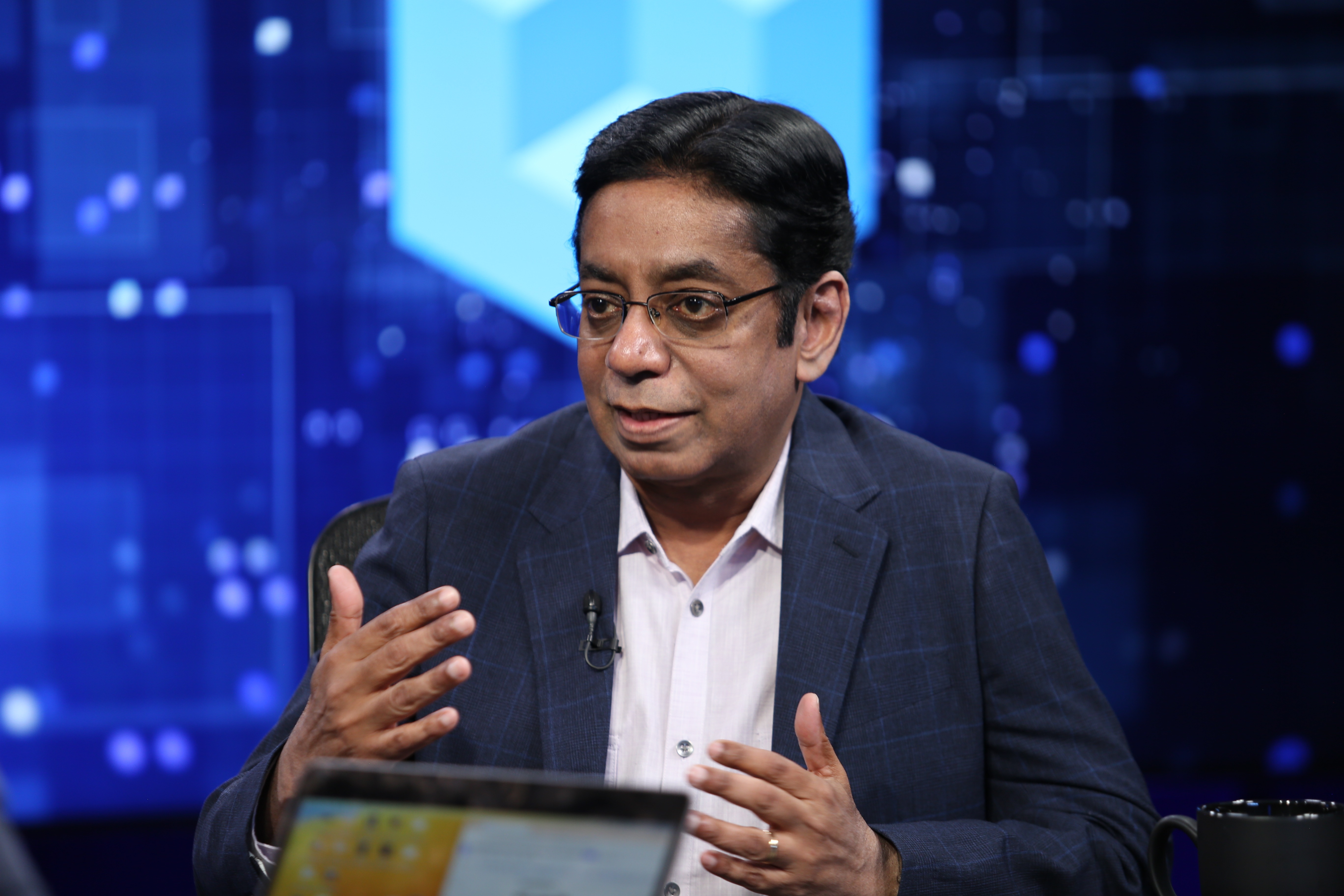
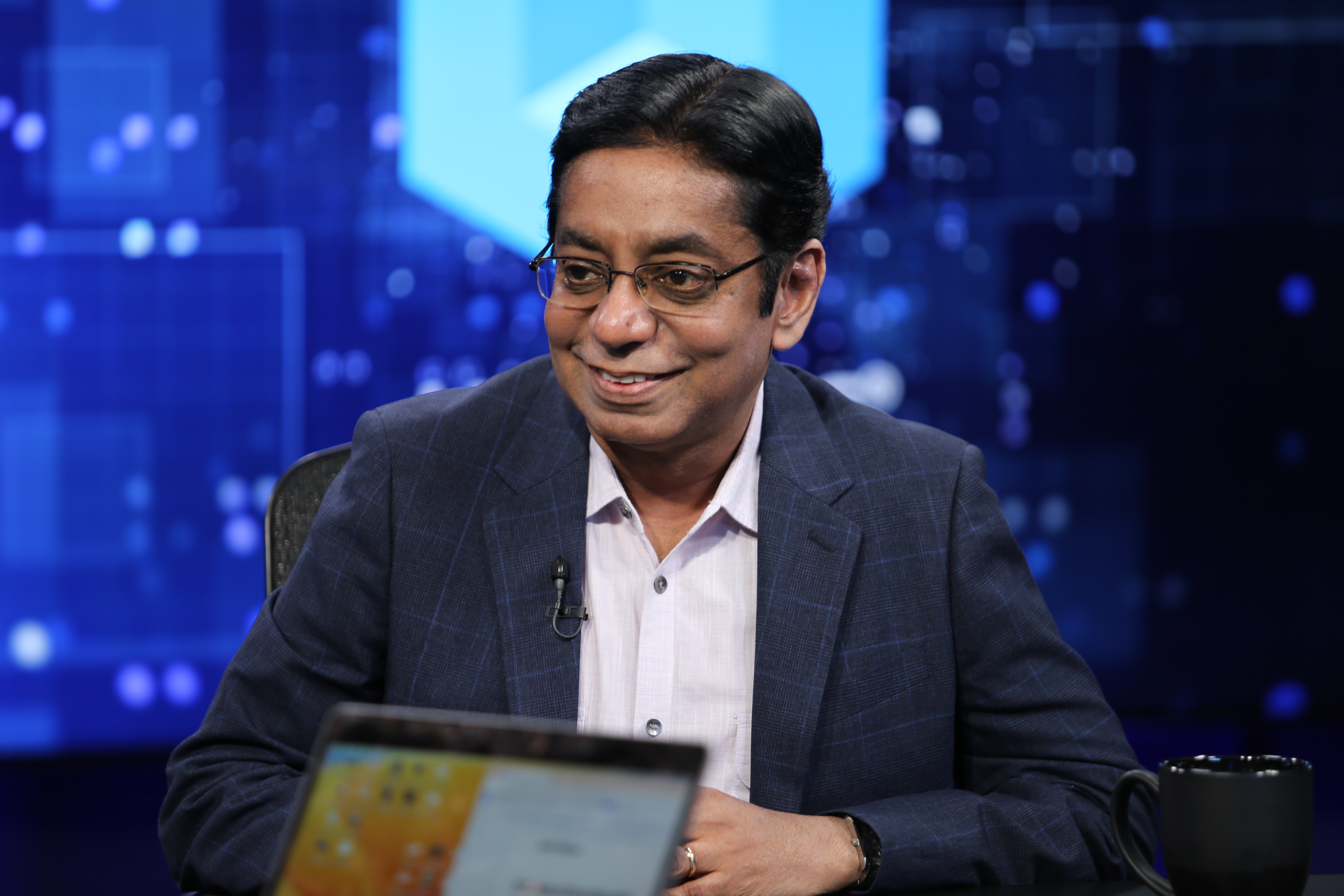
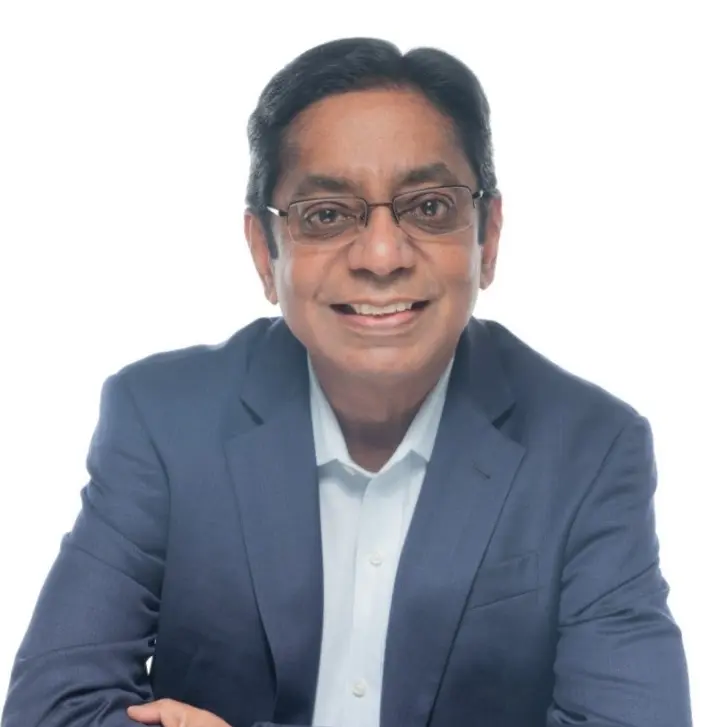
Krish Prasad, Senior Vice President and General Manager of the VCF Division, discusses the changes implemented post VMware and Broadcom merger. The focus is on providing a cloud platform that can be deployed on-premises, with service providers, or hyperscalers to enable a hybrid model for customers. The shift towards subscription-based licenses to support cloud models effectively and ensure portability of licenses is emphasized. The VCF package is described as a well-architected solution for running a cloud, encompassing compute, network, storage, and management components. Prasad aims to provide a turnkey solution for customers, especially the top 10,000 enterprises, enabling them to deploy a hybrid cloud and adapt to emerging technologies like generative AI, with an emphasis on communication during times of change.
Forgot Password
Almost there!
We just sent you a verification email. Please verify your account to gain access to
VMware Cloud Foundation Transformed: A New Era of Private Cloud Innovation and Value. If you don’t think you received an email check your
spam folder.
Sign in to VMware Cloud Foundation Transformed: A New Era of Private Cloud Innovation and Value.
In order to sign in, enter the email address you used to registered for the event. Once completed, you will receive an email with a verification link. Open this link to automatically sign into the site.
Register For VMware Cloud Foundation Transformed: A New Era of Private Cloud Innovation and Value
Please fill out the information below. You will recieve an email with a verification link confirming your registration. Click the link to automatically sign into the site.
You’re almost there!
We just sent you a verification email. Please click the verification button in the email. Once your email address is verified, you will have full access to all event content for VMware Cloud Foundation Transformed: A New Era of Private Cloud Innovation and Value.
Thanks for confirming your account. Now you can access VMware Cloud Foundation Transformed: A New Era of Private Cloud Innovation and Value with this email address.
I want my badge and interests to be visible to all attendees.
Checking this box will display your presense on the attendees list, view your profile and allow other attendees to contact you via 1-1 chat. Read the Privacy Policy. At any time, you can choose to disable this preference.
Select your Interests!
add
Upload your photo
Uploading..
OR
Connect via Twitter
Connect via Linkedin
EDIT PASSWORD
Share
Forgot Password
Almost there!
We just sent you a verification email. Please verify your account to gain access to
VMware Cloud Foundation Transformed: A New Era of Private Cloud Innovation and Value. If you don’t think you received an email check your
spam folder.
Sign in to VMware Cloud Foundation Transformed: A New Era of Private Cloud Innovation and Value.
In order to sign in, enter the email address you used to registered for the event. Once completed, you will receive an email with a verification link. Open this link to automatically sign into the site.
Sign in to gain access to VMware Cloud Foundation Transformed: A New Era of Private Cloud Innovation and Value
Please sign in with LinkedIn to continue to VMware Cloud Foundation Transformed: A New Era of Private Cloud Innovation and Value. Signing in with LinkedIn ensures a professional environment.
Are you sure you want to remove access rights for this user?
Details
Manage Access
email address
Community Invitation
VCF Industry Update - Roadmap and Strategy
Krish Prasad, SVP and GM of the VMware Cloud Foundation Division at Broadcom, discusses the transformative journey of VMware Cloud Foundation following its acquisition by Broadcom. In this session, Prasad talks about the significant changes and rapid developments within the VCF division. With a focus on innovation and market leadership, he outlines the strategic enhancements made to product offerings and go-to-market strategies that align with customer demands for a more balanced and hybrid cloud approach.
SVP and GM, VMware Cloud Foundation DivisionBroadcom
search
>> Welcome back to VMware Cloud Foundation Transformed. I'm Sean for host of the CUBE. We're here with the keynote intro segment. Krish Prasad, Senior Vice President and General Manager of the VCF Division, the man in charge of VCF, the flagship, the crown jewel of the new VMware at Broadcom VMware. Great to see you. Thanks for coming on, kicking off the program.
Krish Prasad
>> Yeah, thank you for having me.>> So right now everyone wants to know how things are going post VMware with Broadcom combination. Obviously, with a lot of fanfare and press and content, a lot of people are saying, okay, what's going on? The dust is settling, the fog is lifting, we're seeing clear visibility. VCF is your area, you're running the show there. What's going on? Give us the update. What's it like with Broadcom? How'd that go?
Krish Prasad
>> Yeah, that's been what, seven, eight months since the acquisition happened. We were discussing the integration and the acquisition at last Explore, John, and it has gone really well. I mean it has been a whirlwind kind of activities, but we have been able to do significant transformation on the product side as well as on the go-to-market side as part of the integration following what the customers have been asking us truthfully for many years at VMware. And we have not been able to execute at the base that we have been able to execute in Broadcom. The main reason for that is at the core value of Broadcom brings to the table is all-around innovation. Hawk has around 26 divisions and each of the division is measured by innovate and be the category leader in their space. It's very simple and that's what he's doing with VMware. So we have been able to focus. He has been giving us a lot of support and as a result, we have been able to make a lot of changes very fast. And then customers and analysts have been very surprised by how fast we have been moving.>> Yeah, we've been very complimentary on some of the progress there with the CUBE research team, but also when the deal happened, we saw it and we kind of predicted it, but also, Hock Tan said what he was going to do and he kind of didn't waver. We knew the changes would be dramatic obviously with the acquisition and the asset there, but the Broadcom business, as you mentioned, have multiple divisions, but the business is good. The 10X stock split on the semiconductor side, on the chip side, they're really primed in with the AI generation. So clearly on Broadcom management-wide, they got the big chops. VMware is the crown jewel on the software that adds to the software portfolio and VCF really is going to be that cloud infrastructure. We're going to hear from your leaders on your team and this program. So I want to get the state of the union from your standpoint, because a lot of things happened. There's some clarity, there's some simplicity, there's been changes. Can you take us through what the state of the union is with the VCF, the VMware Cloud Foundation Group, what's new, what happened, what is now settled?
Krish Prasad
>> Let me just start with what Hock Tan said in the earnings call last week. The integration is going very well and the VMware is starting to kick in as a material part of the Broadcom business. And within that, I want to take you back to what customers have been asking us to do as part of VMware. The number one thing that customers have been telling us is that they are starting to take a much more balanced approach to their cloud journey. Five years ago, there was a big push to hey, public cloud first, everything was moving to the public cloud, and that has now changed significantly. Customers are taking a much more balanced approach, keep some workloads on-prem where it makes sense, take others to the public cloud.
And so really a hybrid model is what customers have been focused on and that's where they want our solutions to enable them to deploy that infrastructure model for their IT. And so our focus has been really to deliver a cloud platform to the customers that you can run on-prem, you can run with service providers or the hyperscalers so that customers can have a managed environment coming from the public clouds and then have their own private cloud that connects to each other with the same foundation underneath it.>> It's interesting. Years ago, hybrid cloud was pretty obvious. VMware was playing in that as was others. Public cloud is getting all the attention. Post-COVID market obviously was seeing some hybrid and you guys had the edge. That was pretty obvious too. We all saw that that should be computing paradigm. But generative AI two and a half years ago really kind of kicked in the new category, which shows that private AI, which we're going to hear from Chris Wolf about which he kind of started that movement three years ago with Raghu on your team actually when it all was incubated, was not even on the radar. And so what happened between then and now is that there's now a new normal if you're either running full cloud operations on-premise and edge in public cloud, that is VCF from what we're hearing. Is that how you guys see it? And then what did you guys do to change that? Because there's going to be two types of companies, companies running full cloud, which generate AI applications in the future and those that aren't and the ones that aren't probably won't be as successful as the ones will be table stakes. What has changed in that hybrid to full gen AI prerequisite infrastructure that people are now building?
Krish Prasad
>> Before I go to the gen AI, which is the latest type of workload that we want to run, one of the feedback elements from our customers was it was very hard to do business with VMware. And the reason was because our go-to-market and our product portfolio was very complex. We had literally 9,000 SKUs in our portfolio. And as part of the Broadcom changes, we have simplified it and again, based on what customers want to do, which is to have an offering, which is a cloud platform that they can deploy on-prem and in the cloud, we have vastly simplified the product portfolio with a private cloud offering, which is VCF, that can also be deployed in the public cloud. And then we have all the way down to hypervisor that customers want to deploy for a server virtualization. So we have a product portfolio now that customers who want to be in the cloud world can deploy VCF and get the consistent experience, whether they're on-premise or in the public cloud, or if they are a small customer who is in the commercial space and they just want vSphere server virtualization software, they can get access to that. And so we vastly simplified the portfolio. That's number one. Number two is that we also announced portability of our license, which means that you can take a license that you're running on-prem and take it to the public cloud or to one of the service providers. And to enable that, we also are now standardized on subscription because as you know, the cloud model is all based on subscription. So the new offerings from Broadcom VMware is all subscription-based and that allows portability for customers who are on VCF to take a workload that is running on-prem, move to the cloud, and take the license with them. So that was the second-biggest change that we made.>> Let's unpack the licenses, but let's first encapsulate the product. VCF essentially all the key products, VSAN, NSX, all the good stuff into one package. You get everything basically.
Krish Prasad
>> Yeah. I mean, the way to think about it is it is a platform that you can run a cloud operating model on, and that includes a compute, network, storage and management, all tied together, fully integrated as a platform. So it is not a commercial bundle, it's really a well-architected solution for running a cloud and something that you can run on-premise and also on the hyperscalers and with all our service providers.>> Yeah, we're going to hear about the whole partner thing. Okay, so basically it's like turnkey, VMware, everything in the box pretty much-
Krish Prasad
>> Correct.>> Without oversimplifying it. Yes. Okay, so let's get to the license. This has been the big conversation, so the confusion of the product gets simplified. The licenses were some perpetual forever, some were freebies out there, they're gone. So okay, you reign that in. Take us through the impact of the subscription to unpack why the subscription, how does it work, and what does the portability mean to the customer to the price increase is only buy what you use. Take us through all that because there's a lot of confusion there.
Krish Prasad
>> So the main change, and look, in VMware, we have been talking about moving our portfolio to subscription for the last couple of years. So we have been telling customers that, hey, for a cloud model to be really effective and for us to be supporting a portability to the cloud, we have to support a subscription model. So that's something that we have talked about for years and now we are actually making it happen with the new portfolio lineup that we have. So all the products now in the new lineup are subscription-only. Obviously, we support customers who are on perpetual who have support contracts with us. We are fully supporting them, but anything new that you buy from us will be subscription-oriented.>> All right, great. Great stuff, great clarity and want to hear a lot more at VMware Explore so stay tuned folks on that. I want to dig into the rationale and some of the decisions you guys made on both the packaging of the product in terms of the VCF as the core and then the licensing and the pricing and the subscription. From a customer standpoint, can you share the conversations, what were the drivers, what was the input into making those calls and what's been the reaction and does it meet that whole broader set, how many customers are you going to hit with the VCF and how's going to be on the VMware foundation, what happens and how does that settle? What's your view on this?
Krish Prasad
>> Yeah, first of all, I mean, there is ... I've heard people talk about, hey, Broadcom is only focused on a narrow subset of customers going forward. That is not the case. Broadcom is supporting the entire base of VMware, the 350,000 customers that we always talk about that is being supported. Now, out of that, customers who want to deploy a hybrid cloud, both on the private data center as well as maybe connect to the public cloud, they choose VCF. Now we have other products in the portfolio. If they are a smaller customer who just wants server virtualization, they have access to that also. But the main trust is to take care of customers who are really focused on the private cloud. I would say the top 10,000 customers.>> So your division is hyper-focused on having that full package for the top 10,000 enterprise and or customer base.
Krish Prasad
>> Yeah, enable them to deploy a hybrid cloud with the private cloud, modernize their data center, deploy the private cloud, and then extend it to the public cloud.>> Krish, we've been on the cube many times over the years and now with the new VMware rolling out, how would you put in perspective this focus because what do these customers look like? Can you share insight into when you go look at these top 10,000 customers, what's the makeup? Are they mostly DevOps? Is it hybrid, full distributed computing? What are some of their goals? What's their current situation? How would you share what the topology look like? What's the architecture? Where are the customers? Where are they right now?
Krish Prasad
>> Well, what do you see is a lot of customers wanting to move to the cloud, but in the past few years, customers have been trying to do best of breed. They take best-of-breed technologies and they were trying to build a cloud platform themselves. And what they have found is that the TCO is not there. The resiliency is not there, the security is not there, and so they're really looking for a well-integrated cloud platform that they can take and deploy and modernize their infrastructure, and that's what we provide with VCF.>> What's your vision as you look to the future? We've got VMware Explore coming up, we're going to hear more there. What's your vision for the division as you look at, you got the Kubernetes cloud-native, architectures growing, being prepared for gen AI. We're going to hear from Chris Wolf at Private AI. You got the partner equation simplified, clear. What's your vision to customers saying VCF is going to be what to them?
Krish Prasad
>> Yeah, look, first of all, I would say that we have been moving very fast since the acquisition, and this week, actually this month, we have had two major releases that went out. First of all, the Private AI foundation that Chris Wolf is going to talk about later. That became generally available a couple of weeks back. And this week, we are announcing the next release of VCF. And so we have not been, in addition to all the changes, we have been innovating, we have had significant releases come out. And at Explore, the whole focus will be on the roadmap for VCF, where are we going next. There are some significant announcements that we'll make. I'm sure you'll be there, and we'll have a lot of opportunity to talk about it then.>> As we get into the program, last couple of questions I want to ask you, if you could clear up anything out there and talk to the folks out there watching about VCF and what's going on, what would you say to them about VCF? If you want to clear the air, set the agenda, what's the direction? What would you say?
Krish Prasad
>> I mean, the number one thing I would say is communication is at the root of getting everybody aligned. And so we have been on the road, I've been personally on the road for meeting with customers, all the different continents and whatnot. And so continuing to communicate, don't read everything in the press and then reach out to us. We are ready to sit down and talk through all the changes. Change is always hard, but again, over-communicating is what is critical during that time to stay alive.>> My final question for you, and I really appreciate you. I know you're super busy to come in and talk with us in this program. My final question is, you've been a technologist, now you're the leading the group here. You and Hock Tan are putting this together. What about this new environment that's exciting with generative AI because this infrastructure, this now VCF infrastructure, you're rolling out essentially private cloud across the enterprise and cloud, this has to be ready for generative AI applications. We'll hear from Chris. Private AI is just an on-ramp in my opinion. That just highlights that data's valuable and people are going to do that on-prem. You guys at VMware have managed workloads for decades. GPUs is just another workload that's going to be factored in, but there's a bigger picture. As a technologist and now business leader, what does this gen AI market mean? As the apps come up, the infrastructure has to be stood up. Once that's done, we're going to see a whole new future. What does that look like? Because in three years, it's going to be a completely different world.
Krish Prasad
>> Yeah. I mean to me, every application is going to have some gen AI component integrated with it, some kind of inferencing that is happening behind the scenes that needs to be tied into the application. And so the infrastructure that they use for running their applications have to keep up with the new technologies that they need to run. And so having the ability to run LLMs, and we did a lot of work by the way over the past two, three years with Nvidia, where we have really integrated the GPUs and virtualized it as part of the VCF Foundation, which enables us to then run all the LLMs as a service that they can integrate into the customer applications. And so that's the work that we have done and that's the main release that came out earlier this month.>> As the next chapter of VMware is written with Broadcom, looks at VCF, it's going to be a big part of it. That's your team. Thank you so much for coming on and kicking off the VMware training.
Krish Prasad
>> Yeah. Thank you, John. Thank you for years of we have been doing this and look forward to seeing you at the Explore.>> We're going to continue to document the story, but here we are going to help with VMware Cloud Foundation transform a new error in private cloud innovation. It's happening here in the CUBE. Be right back after this short break.
>> Welcome back to VMware Cloud Foundation Transformed. I'm Sean for host of the CUBE. We're here with the keynote intro segment. Krish Prasad, Senior Vice President and General Manager of the VCF Division, the man in charge of VCF, the flagship, the crown jewel of the new VMware at Broadcom VMware. Great to see you. Thanks for coming on, kicking off the program.
Krish Prasad
>> Yeah, thank you for having me.>> So right now everyone wants to know how things are going post VMware with Broadcom combination. Obviously, with a lot of fanfare and press and content, a lot of people are saying, okay, what's going on? The dust is settling, the fog is lifting, we're seeing clear visibility. VCF is your area, you're running the show there. What's going on? Give us the update. What's it like with Broadcom? How'd that go?
Krish Prasad
>> Yeah, that's been what, seven, eight months since the acquisition happened. We were discussing the integration and the acquisition at last Explore, John, and it has gone really well. I mean it has been a whirlwind kind of activities, but we have been able to do significant transformation on the product side as well as on the go-to-market side as part of the integration following what the customers have been asking us truthfully for many years at VMware. And we have not been able to execute at the base that we have been able to execute in Broadcom. The main reason for that is at the core value of Broadcom brings to the table is all-around innovation. Hawk has around 26 divisions and each of the division is measured by innovate and be the category leader in their space. It's very simple and that's what he's doing with VMware. So we have been able to focus. He has been giving us a lot of support and as a result, we have been able to make a lot of changes very fast. And then customers and analysts have been very surprised by how fast we have been moving.>> Yeah, we've been very complimentary on some of the progress there with the CUBE research team, but also when the deal happened, we saw it and we kind of predicted it, but also, Hock Tan said what he was going to do and he kind of didn't waver. We knew the changes would be dramatic obviously with the acquisition and the asset there, but the Broadcom business, as you mentioned, have multiple divisions, but the business is good. The 10X stock split on the semiconductor side, on the chip side, they're really primed in with the AI generation. So clearly on Broadcom management-wide, they got the big chops. VMware is the crown jewel on the software that adds to the software portfolio and VCF really is going to be that cloud infrastructure. We're going to hear from your leaders on your team and this program. So I want to get the state of the union from your standpoint, because a lot of things happened. There's some clarity, there's some simplicity, there's been changes. Can you take us through what the state of the union is with the VCF, the VMware Cloud Foundation Group, what's new, what happened, what is now settled?
Krish Prasad
>> Let me just start with what Hock Tan said in the earnings call last week. The integration is going very well and the VMware is starting to kick in as a material part of the Broadcom business. And within that, I want to take you back to what customers have been asking us to do as part of VMware. The number one thing that customers have been telling us is that they are starting to take a much more balanced approach to their cloud journey. Five years ago, there was a big push to hey, public cloud first, everything was moving to the public cloud, and that has now changed significantly. Customers are taking a much more balanced approach, keep some workloads on-prem where it makes sense, take others to the public cloud.
And so really a hybrid model is what customers have been focused on and that's where they want our solutions to enable them to deploy that infrastructure model for their IT. And so our focus has been really to deliver a cloud platform to the customers that you can run on-prem, you can run with service providers or the hyperscalers so that customers can have a managed environment coming from the public clouds and then have their own private cloud that connects to each other with the same foundation underneath it.>> It's interesting. Years ago, hybrid cloud was pretty obvious. VMware was playing in that as was others. Public cloud is getting all the attention. Post-COVID market obviously was seeing some hybrid and you guys had the edge. That was pretty obvious too. We all saw that that should be computing paradigm. But generative AI two and a half years ago really kind of kicked in the new category, which shows that private AI, which we're going to hear from Chris Wolf about which he kind of started that movement three years ago with Raghu on your team actually when it all was incubated, was not even on the radar. And so what happened between then and now is that there's now a new normal if you're either running full cloud operations on-premise and edge in public cloud, that is VCF from what we're hearing. Is that how you guys see it? And then what did you guys do to change that? Because there's going to be two types of companies, companies running full cloud, which generate AI applications in the future and those that aren't and the ones that aren't probably won't be as successful as the ones will be table stakes. What has changed in that hybrid to full gen AI prerequisite infrastructure that people are now building?
Krish Prasad
>> Before I go to the gen AI, which is the latest type of workload that we want to run, one of the feedback elements from our customers was it was very hard to do business with VMware. And the reason was because our go-to-market and our product portfolio was very complex. We had literally 9,000 SKUs in our portfolio. And as part of the Broadcom changes, we have simplified it and again, based on what customers want to do, which is to have an offering, which is a cloud platform that they can deploy on-prem and in the cloud, we have vastly simplified the product portfolio with a private cloud offering, which is VCF, that can also be deployed in the public cloud. And then we have all the way down to hypervisor that customers want to deploy for a server virtualization. So we have a product portfolio now that customers who want to be in the cloud world can deploy VCF and get the consistent experience, whether they're on-premise or in the public cloud, or if they are a small customer who is in the commercial space and they just want vSphere server virtualization software, they can get access to that. And so we vastly simplified the portfolio. That's number one. Number two is that we also announced portability of our license, which means that you can take a license that you're running on-prem and take it to the public cloud or to one of the service providers. And to enable that, we also are now standardized on subscription because as you know, the cloud model is all based on subscription. So the new offerings from Broadcom VMware is all subscription-based and that allows portability for customers who are on VCF to take a workload that is running on-prem, move to the cloud, and take the license with them. So that was the second-biggest change that we made.>> Let's unpack the licenses, but let's first encapsulate the product. VCF essentially all the key products, VSAN, NSX, all the good stuff into one package. You get everything basically.
Krish Prasad
>> Yeah. I mean, the way to think about it is it is a platform that you can run a cloud operating model on, and that includes a compute, network, storage and management, all tied together, fully integrated as a platform. So it is not a commercial bundle, it's really a well-architected solution for running a cloud and something that you can run on-premise and also on the hyperscalers and with all our service providers.>> Yeah, we're going to hear about the whole partner thing. Okay, so basically it's like turnkey, VMware, everything in the box pretty much-
Krish Prasad
>> Correct.>> Without oversimplifying it. Yes. Okay, so let's get to the license. This has been the big conversation, so the confusion of the product gets simplified. The licenses were some perpetual forever, some were freebies out there, they're gone. So okay, you reign that in. Take us through the impact of the subscription to unpack why the subscription, how does it work, and what does the portability mean to the customer to the price increase is only buy what you use. Take us through all that because there's a lot of confusion there.
Krish Prasad
>> So the main change, and look, in VMware, we have been talking about moving our portfolio to subscription for the last couple of years. So we have been telling customers that, hey, for a cloud model to be really effective and for us to be supporting a portability to the cloud, we have to support a subscription model. So that's something that we have talked about for years and now we are actually making it happen with the new portfolio lineup that we have. So all the products now in the new lineup are subscription-only. Obviously, we support customers who are on perpetual who have support contracts with us. We are fully supporting them, but anything new that you buy from us will be subscription-oriented.>> All right, great. Great stuff, great clarity and want to hear a lot more at VMware Explore so stay tuned folks on that. I want to dig into the rationale and some of the decisions you guys made on both the packaging of the product in terms of the VCF as the core and then the licensing and the pricing and the subscription. From a customer standpoint, can you share the conversations, what were the drivers, what was the input into making those calls and what's been the reaction and does it meet that whole broader set, how many customers are you going to hit with the VCF and how's going to be on the VMware foundation, what happens and how does that settle? What's your view on this?
Krish Prasad
>> Yeah, first of all, I mean, there is ... I've heard people talk about, hey, Broadcom is only focused on a narrow subset of customers going forward. That is not the case. Broadcom is supporting the entire base of VMware, the 350,000 customers that we always talk about that is being supported. Now, out of that, customers who want to deploy a hybrid cloud, both on the private data center as well as maybe connect to the public cloud, they choose VCF. Now we have other products in the portfolio. If they are a smaller customer who just wants server virtualization, they have access to that also. But the main trust is to take care of customers who are really focused on the private cloud. I would say the top 10,000 customers.>> So your division is hyper-focused on having that full package for the top 10,000 enterprise and or customer base.
Krish Prasad
>> Yeah, enable them to deploy a hybrid cloud with the private cloud, modernize their data center, deploy the private cloud, and then extend it to the public cloud.>> Krish, we've been on the cube many times over the years and now with the new VMware rolling out, how would you put in perspective this focus because what do these customers look like? Can you share insight into when you go look at these top 10,000 customers, what's the makeup? Are they mostly DevOps? Is it hybrid, full distributed computing? What are some of their goals? What's their current situation? How would you share what the topology look like? What's the architecture? Where are the customers? Where are they right now?
Krish Prasad
>> Well, what do you see is a lot of customers wanting to move to the cloud, but in the past few years, customers have been trying to do best of breed. They take best-of-breed technologies and they were trying to build a cloud platform themselves. And what they have found is that the TCO is not there. The resiliency is not there, the security is not there, and so they're really looking for a well-integrated cloud platform that they can take and deploy and modernize their infrastructure, and that's what we provide with VCF.>> What's your vision as you look to the future? We've got VMware Explore coming up, we're going to hear more there. What's your vision for the division as you look at, you got the Kubernetes cloud-native, architectures growing, being prepared for gen AI. We're going to hear from Chris Wolf at Private AI. You got the partner equation simplified, clear. What's your vision to customers saying VCF is going to be what to them?
Krish Prasad
>> Yeah, look, first of all, I would say that we have been moving very fast since the acquisition, and this week, actually this month, we have had two major releases that went out. First of all, the Private AI foundation that Chris Wolf is going to talk about later. That became generally available a couple of weeks back. And this week, we are announcing the next release of VCF. And so we have not been, in addition to all the changes, we have been innovating, we have had significant releases come out. And at Explore, the whole focus will be on the roadmap for VCF, where are we going next. There are some significant announcements that we'll make. I'm sure you'll be there, and we'll have a lot of opportunity to talk about it then.>> As we get into the program, last couple of questions I want to ask you, if you could clear up anything out there and talk to the folks out there watching about VCF and what's going on, what would you say to them about VCF? If you want to clear the air, set the agenda, what's the direction? What would you say?
Krish Prasad
>> I mean, the number one thing I would say is communication is at the root of getting everybody aligned. And so we have been on the road, I've been personally on the road for meeting with customers, all the different continents and whatnot. And so continuing to communicate, don't read everything in the press and then reach out to us. We are ready to sit down and talk through all the changes. Change is always hard, but again, over-communicating is what is critical during that time to stay alive.>> My final question for you, and I really appreciate you. I know you're super busy to come in and talk with us in this program. My final question is, you've been a technologist, now you're the leading the group here. You and Hock Tan are putting this together. What about this new environment that's exciting with generative AI because this infrastructure, this now VCF infrastructure, you're rolling out essentially private cloud across the enterprise and cloud, this has to be ready for generative AI applications. We'll hear from Chris. Private AI is just an on-ramp in my opinion. That just highlights that data's valuable and people are going to do that on-prem. You guys at VMware have managed workloads for decades. GPUs is just another workload that's going to be factored in, but there's a bigger picture. As a technologist and now business leader, what does this gen AI market mean? As the apps come up, the infrastructure has to be stood up. Once that's done, we're going to see a whole new future. What does that look like? Because in three years, it's going to be a completely different world.
Krish Prasad
>> Yeah. I mean to me, every application is going to have some gen AI component integrated with it, some kind of inferencing that is happening behind the scenes that needs to be tied into the application. And so the infrastructure that they use for running their applications have to keep up with the new technologies that they need to run. And so having the ability to run LLMs, and we did a lot of work by the way over the past two, three years with Nvidia, where we have really integrated the GPUs and virtualized it as part of the VCF Foundation, which enables us to then run all the LLMs as a service that they can integrate into the customer applications. And so that's the work that we have done and that's the main release that came out earlier this month.>> As the next chapter of VMware is written with Broadcom, looks at VCF, it's going to be a big part of it. That's your team. Thank you so much for coming on and kicking off the VMware training.
Krish Prasad
>> Yeah. Thank you, John. Thank you for years of we have been doing this and look forward to seeing you at the Explore.>> We're going to continue to document the story, but here we are going to help with VMware Cloud Foundation transform a new error in private cloud innovation. It's happening here in the CUBE. Be right back after this short break.