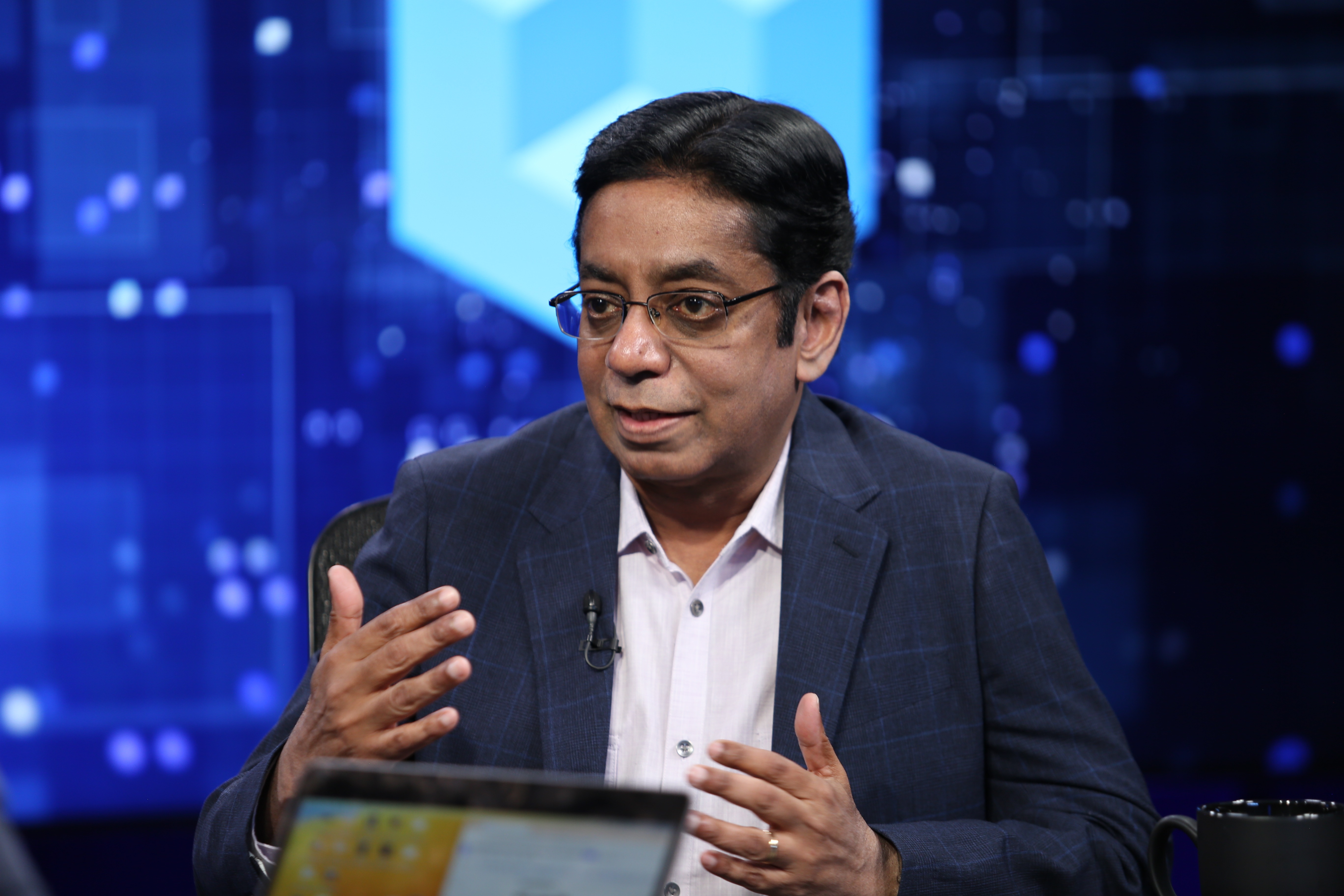
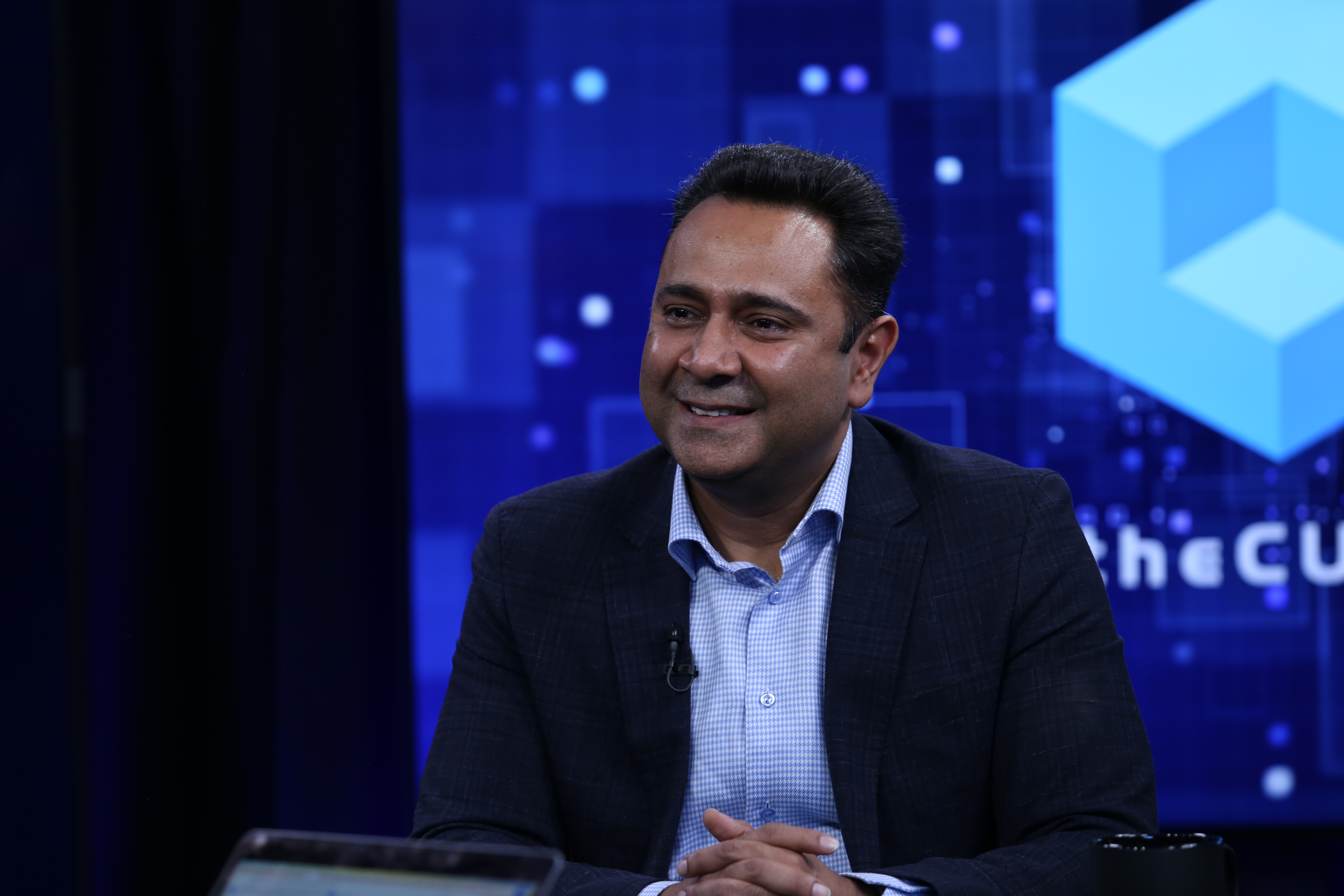
The VMware Cloud Foundation Transform series features Ahmar Mohammad, VP of partner ecosystem for Broadcom BCF division. The ecosystem is evolving with clear swim lanes for partners. OEM relationships focus on jointly engineered systems, while the hyperscalers partnership allows easy workload movement between private and public clouds. A subscription or license portability feature enables this movement. Changes have been made to ensure consistency in licensing measurements for all partners. The Broadcom Advantage program provides upfront margins for predictability in business margins. Partners can decide how to allocate funds for marketing, sales, and discounts. The community feedback is leveraged to improve the partner ecosystem. The goal is to provide a consistent cloud experience through VCF, facilitating end customer choices and portability options. Providing customers with the best of both worlds in a true hybrid, multi-cloud environment is the focus. Profitability for resellers is a priority, along with providing quality service and managing services to increase gross profit.
Forgot Password
Almost there!
We just sent you a verification email. Please verify your account to gain access to
VMware Cloud Foundation Transformed: A New Era of Private Cloud Innovation and Value. If you don’t think you received an email check your
spam folder.
Sign in to VMware Cloud Foundation Transformed: A New Era of Private Cloud Innovation and Value.
In order to sign in, enter the email address you used to registered for the event. Once completed, you will receive an email with a verification link. Open this link to automatically sign into the site.
Register For VMware Cloud Foundation Transformed: A New Era of Private Cloud Innovation and Value
Please fill out the information below. You will recieve an email with a verification link confirming your registration. Click the link to automatically sign into the site.
You’re almost there!
We just sent you a verification email. Please click the verification button in the email. Once your email address is verified, you will have full access to all event content for VMware Cloud Foundation Transformed: A New Era of Private Cloud Innovation and Value.
Thanks for confirming your account. Now you can access VMware Cloud Foundation Transformed: A New Era of Private Cloud Innovation and Value with this email address.
I want my badge and interests to be visible to all attendees.
Checking this box will display your presense on the attendees list, view your profile and allow other attendees to contact you via 1-1 chat. Read the Privacy Policy. At any time, you can choose to disable this preference.
Select your Interests!
add
Upload your photo
Uploading..
OR
Connect via Twitter
Connect via Linkedin
EDIT PASSWORD
Share
Forgot Password
Almost there!
We just sent you a verification email. Please verify your account to gain access to
VMware Cloud Foundation Transformed: A New Era of Private Cloud Innovation and Value. If you don’t think you received an email check your
spam folder.
Sign in to VMware Cloud Foundation Transformed: A New Era of Private Cloud Innovation and Value.
In order to sign in, enter the email address you used to registered for the event. Once completed, you will receive an email with a verification link. Open this link to automatically sign into the site.
Sign in to gain access to VMware Cloud Foundation Transformed: A New Era of Private Cloud Innovation and Value
Please sign in with LinkedIn to continue to VMware Cloud Foundation Transformed: A New Era of Private Cloud Innovation and Value. Signing in with LinkedIn ensures a professional environment.
Are you sure you want to remove access rights for this user?
Details
Manage Access
email address
Community Invitation
VCF Ecosystem and Partner GTM - Updates & Go to Market Strategy
Ahmar Mohammad, VP of partners, managed services and solutions go to market, VMware Cloud Foundation Division, at Broadcom, discusses the pivotal role of VMware Cloud Foundation in private cloud reimagination, emphasizing partner integration and the new Broadcom Advantage Partner Program. Mohammad highlights OEM and hyperscaler partnerships, the benefits of full-stack VCF and commercial portability for enterprises.
>> Welcome back everyone to the VMware Cloud Foundation Transform series. I'm John Furrier, host of theCUBE here. Ahmar Mohammad, VP of partner ecosystem for Broadcom BCF division, thanks for coming on.
Ahmar Mohammad
>> Thank you, John. Thanks for hosting us.>> This is a big part of the change with VCF as now the platform for private cloud reimagine, re-platform, whatever you want to call it. It's got a nice launch week here. Partners are critical. Integration has been a big part of the product roadmap and feature set as the team's been working hard to release all the new goodies like Kubernetes Automation built in, all cool stuff. The partners are critical to success here. How is the ecosystem evolving? Give us an update on the current ecosystem and how it's changing and evolving.
Ahmar Mohammad
>> Absolutely. Absolutely. So as you said, the key to our go-to market is simplification. Since the acquisition completion with Broadcom, we have been on this journey for simplifying things. And when it comes to simplifying things, especially on our partner ecosystem as well, it's establishing clear swim lanes to make sure that we are operating or we are working with each of those partners in those swim lanes. I'll touch on all of them. First of all, starting with OEM. OEM is a big, big group of partners that help bring the software and the hardware magic together. Over the last two and a half decades, we kind of got into a mixture of resell relationship and OEM relationship. We're going back to basics. We're saying our OEM relationship is going to be centered around building together with OEM jointly engineered system where the magic of software and hardware come together and we really solve a customer business problem. That's what we want to be able to do. So good news, all of our top OEM partners are now signed up, signed a new contract, we are now working together with them and you will hear more announcements that explore in terms of what we will be bringing together with those OEMs.>> So OEMs, hardware manufacturers, people pride in the hardware and software mix. Those contracts are in place. These are the partner programs?
Ahmar Mohammad
>> These are the partner. So if you remember back in December, January, we had to bring together multiple partner program that VMware had into the Broadcom Partner Advantage program. So tactically, yes, some of those old contracts had to be revamped to new Broadcom Advantage program. So we have a single program, single Broadcom Advantage program. And we grandfathered all of the tiers of those partners into the new program as well so that nobody loses any of their credentials or any of their certifications.>> So just to be clear, there's a little bit of a pause there because you have to revamp it. So it's all fixed, everything's up and running.
Ahmar Mohammad
>> Everything is up and running. All of the partners are now on board and they are working with us on from an OEM perspective and hyperscalers and CSPs and our reseller partners.>> Awesome. So that's back in business for OEMs?
Ahmar Mohammad
>> Correct.>> Okay. What's the other partner?
Ahmar Mohammad
>> So hyperscalers. Let's start with hyperscalers. Now, contrary to what you may hear on Reddit or some blogs or something like that, VMware, yes, we are a private cloud company, but that private cloud could be on customer data center or provider data center or in a public cloud environment. And we have great partnership with our hyperscalers with AWS, with Azure, with Google allowing customers to take their workloads or enabling them to take their workloads to a public cloud. Now contrary to what you may hear, we are actually making it easier by introducing something called a subscription or license portability where customers can take their existing VCF subscriptions from on-prem and easily move to a public cloud without having to pay twice. And that's a big deal. It's not very common in the industry to do that across all hyperscalers. We are doing it, we are doing it so that customers have the choice, they are in a VCF environment, they can choose to deploy it on-prem in a public cloud or in a managed provider cloud up to them.>> So that makes it easy for the customer.
Ahmar Mohammad
>> Yes.>> So you guys are making it easier once you get VCF in, you then can pick your workload location.
Ahmar Mohammad
>> Exactly.>> So if you want some public cloud, higher level services, data processing, whatever, go do that. Run private and edge, .
Ahmar Mohammad
>> Exactly.>> Same license?
Ahmar Mohammad
>> Same license. Same license, same subscription. So there are two parts to it. One is what you call commercial portability where I can, yes, from commercial point of view, I have my license, I can take it to a public cloud and I don't have to pay twice. Then there is a technical portability. So we are working with all of our cloud providers or hyperscalers to make sure that the stack they deploy for the Azure VMware solution or for the Google cloud VMware engine or for AWS that we run, runs the same stack, same technology, compute management, storage, networking, all together, same VCF stack. So the customer gets the same consistent experience of taking a VM from on-prem and moving it to cloud without having to retweak, without having to really refactor or do anything to that VM, move that workload very seamlessly. And vice versa. So if they have to bring something back on-prem for whatever compliance reasons, privacy reasons, data protection reason, they are able to do that as well.>> We actually talked about this on our Supercloud 6 event we had this year. The hyperscalers win because they can offer choice for the customer too on their higher level services.
Ahmar Mohammad
>> Absolutely.>> Customer wins because they get the license change but also they can start building a distributed computing cloud environment.
Ahmar Mohammad
>> Exactly.>> And so everybody wins.
Ahmar Mohammad
>> Everybody wins. And there are many scenarios. I mean, some customers are in process of retiring a data center and they want to move it over. And they want to move it over very quickly. Our VMware cloud solution, the VCF on a hyperscaler gives them a very quick option to do that as well. So that's a good thing. Or if they want to take advantage of, as you said, the higher value or some functions or serverless services in the public cloud or IOT services, they get to have the data proximity, where the application they're using next to the database that are running in VMware environment in the same cloud.>> Actually, we talked about this earlier in the segment. I think we're going to talk it about as well with the other folks from Broadcom. Actually, the sustainability equation also factors in here. You get the choice between however you want to deploy that workload, cloud, on-prem, wherever, that also comes into effect. You might not have enough power even from the data center, and I don't have power in my data center.
Ahmar Mohammad
>> Exactly. Exactly. And that power has become now the, we call it a bottleneck for how customers are looking to expand their data center or how much power is available. So they get to have what I call the release valve so they can take those growth or additional workload to a public cloud or a managed cloud environment.>> This is the whole purpose of multi-cloud, multienvironment distributed computing. Let it be architected in a way. So you got the OEMs, you got the hardware, you got the clouds, what's your other partner?
Ahmar Mohammad
>> Let's talk about our cloud service provider, our CSP partner. CSP partner have been an awesome over the last decade and a half. They've been an awesome, awesome partner.>> Give some examples of the CSPs.
Ahmar Mohammad
>> CSPs, I mean, if you look at within US, you've got Rackspace and you've got IBM and you've got Lumen and CenturyLink. I mean now Lumen. You have telcos in Europe and you have all of these local regional cloud provider that offer not just a, called a hosted service, infrastructure service to the customer but also provide sovereign cloud experience in some of the regulated industries and some of the sovereign cloud markets. So they become a very, very, very important part of our ecosystem because they are providing that and they provide white glove service to customers in terms of managing their overall IT.>> That's a major growth area by the way. You got edge, big part of the edge is involved with the CSPs. Also specialty services, big part of the CSPs growth.
Ahmar Mohammad
>> Absolutely. Yeah. And we made quite a bit of changes in that program, and that was across the board. We had inconsistency across our ecosystem. We were selling things in a different unit of measurement. So for our service provider, which used to be called our VCPP program, the unit of measurement was gigabyte of memory. When we were selling with OEM, we were selling on a CPU basis. When we were selling with hyperscalers, it was on a node or a server basis. And it just made it extremely hard for customers, end-customer, to look at a quote from three different partners and be able to compare, "Am I getting a good deal?"
So one of the biggest change we made is consistency of our licensing and our unit of measurement. Everything is in a per physical core basis. The advantage of that now is that a customer can get a price point and they can see "What is my total TCO going to be before I actually adopt the service?" So that's a big change we made in our CSP ecosystem that is all going to be per core. And the second big change is requiring that the cloud they will use is full stack VCF. And that's very important. Again, as I talked about->> Explain that real quick because that's important. The nuance here, the full stack VCF, describe that.
Ahmar Mohammad
>> So full stack VCF, when you want to provide a cloud experience to the customer, you have to have this... Earlier you had a conversation with Paul who talked about the compute virtualization, the networking virtualization, the storage virtualization and the management and automation around with. That, to me, is a private cloud experience. We want to make sure that customers have a consistent private cloud experience because that's what they are seeking. That's why sometimes they go to a public cloud for that agility. We want to be able to have our partners provide the same experience to that customer, that public cloud experience in a private cloud-like environment. Of course they get to add a lot of value added service, the monitoring, the security and other->> Otherwise, it'd be a mismatch basically.
Ahmar Mohammad
>> Otherwise it'd be a mismatch. It'll be a hodgepodge, kind of like buying car parts from different manufacturer and building together your own car and selling it in the name of BMW. You want to make sure when you're selling something in the name of BMW has the core guts of a BMW. So the customer have a consistent experience and expectation of how it'll be serviced, how it'll be managed, how it'll be supported.>> Yeah. VMware VCF is that sports car. It's the full package.
Ahmar Mohammad
>> Full package.>> And they got vSphere Foundation's wealth. They're going to do just-
Ahmar Mohammad
>> Yeah. They're going to do just virtualization.>> All right. So you guys have to program eyes all this. Your Partner Connect used to be... Is that still around?
Ahmar Mohammad
>> So Partner Connect is decommissioned.>> Okay.
Ahmar Mohammad
>> So now it's the Partner Broadcom Advantage program, the Broadcom Advantage program. One of the, call it, aha moments and big change we made is the difference in philosophy of how you work with the partners. For example, our disti and reseller partners, VMware in the old days, not saying VMware did anything wrong, it's just organically over the two decade, two and a half decade, we had created layers and layers and layers of different type of incentive model and margin and ad plus and registration and consumption dollars and activation dollars and it was kind of like spreading the crumbs.->> It grew organically though. The whole community is all growth, right?
Ahmar Mohammad
>> It was. It was. It's a->> It's a Frankenstein after a while.
Ahmar Mohammad
>> Exactly. And it served it purpose and at that time. But now when you look at the spirit of simplification and the philosophy of Broadcom, is look, whatever you want to or you can afford to give your partners, give that all upfront. Why? So they can build a book of business, they can have clear expectation of how much margin or incentive I have to play with in terms of discounting, in terms of hiring my Salesforce and sending them properly so I can build a business around it knowing very well what my margin profile going to be. Over the many years we have gotten consistent feedback from partners that, "Hey, I don't know what my profitability is like selling with VMware." And that's exactly what we are changing with the new model with the Broadcom partner program.>> That's a really big point. I mean first of all, Broadcom, I've been covered Broadcom for a long time. They're very strong. They understand soft dollars co-op, whatever you want to call it. Marketing dollars on performance. But partners want to know, "Where do I make my money?"
Ahmar Mohammad
>> Exactly.>> "How can I get customer distribution?" That's all they really... I mean they do care about other things. I'm just saying that's the core. "Is the product sellable? How much money am I going to make? Can I wrap services around it?"
Ahmar Mohammad
>> Exactly.>> Can you unpack that philosophy? How does Broadcom Advantage program hit that mark?
Ahmar Mohammad
>> Exactly as I talked about. In the Broadcom Partner Advantage program, we give all of that margin, all of that incentive upfront as part of the margin. That allows that partner to have predictable operating margin of how much discount they're going to give to the customer, how much they're going to pay their salespeople, and how much it's in it for them. The second part of that is different types of partner can build different services around it. So you've got partners that are CSPs as I talk about, where they package the whole managed service around that infrastructure offering. You have these value added resellers who provide integration services, deployment integration services, and some provide even ongoing management and support services to the customer. The other change we made is we moved our support experience closer to the customer by enabling distis to be the one providing the level 1 and level 2 support. Not only we trained our distis to be able to take those support calls, especially in the commercial segment, but make sure that we transfer even our engineer, support engineers to those distributors so they can be closer to the customer, provide a better support experience. And of course Broadcom, VMware will take the level 3 support and hire->> So on the "supply chain," if you want to say supply chain, there, the distributors could have service to their VARs.
Ahmar Mohammad
>> Correct.>> They keep that in line. So they're tightly coupled there.
Ahmar Mohammad
>> They're tightly.>> You give margin visibility into the partners. They must love that. What's the feedback? I imagine it might be great.
Ahmar Mohammad
>> It's been actually... So there was, call it, change is always hard. So anytime something has changed, people feel like, "Okay, why am I changing? What am I changing? What does it mean for me?" Once we had the partner had time to internalize that change, then they realized "That's actually good for me." So we have pretty much all of our 18,000 plus partners have resigned up. All of our distributors are now on board. Our partners are signed up. And we are actually doing business great together. So yes, the change part is hard. The first few months->> It's not like even a commodity in the VARs. This is integrations. They need to have planning. They can put resources to it. That's a risk management but also a business model-
Ahmar Mohammad
>> Business model, yeah.>> ... opportunity for them. You're solving that problem.
Ahmar Mohammad
>> Exactly.>> So they're going to want more options. "Give me more." So how do they earn more? So how do they make more money for them? Sell more product?
Ahmar Mohammad
>> It's to sell more product. Sell more product. And we enable them to sell pretty much our entire stack. All of our products partners can sell to pretty much any customer. So we enable that. Our CSP partners, actually we have a co-sell motion with our Pinnacle top tier partner as they become more and more top tier, meaning Pinnacle partner. They have a co-sell motion where our sales team work directly with them on pipeline, on joint opportunities and earning and driving business together. Same thing we're doing with hyperscalers where we have business development people working with the hyperscaler sales team and enabling them, arming them, making sure we can win our customers together. Do the same thing with OEM. So VMware, under Broadcom, putting even more emphasis on selling with the partner, selling together, making sure that we grow the entire ecosystem along with the business.>> So Broadcom Advantage program, just run this through again just so I get it right. The tiering and the thresholds are based on sales or capabilities or both?
Ahmar Mohammad
>> Both. A combination of capabilities, certifications as well as the volume. So it is based on all. And they're different tiers.>> How's the program look right now? Look pretty stacked. You pretty happy with it?
Ahmar Mohammad
>> We are very happy with it. And like I said, in the transition phase, we grandfathered all of the previous partners. Whatever tier they had with VMware, we grandfathered them into the Broadcom Advantage programmed tier. So if they were top tier, they're now top tier Pinnacle within Broadcom advantage. And of course next year, year after that, everybody will continue to earn their way into the top tier.>> So when you had that little bump/blip in the radar, a little disruption when you had get onboarding and revamping the program, there was some talk about changes in the dollars, reimbursement dollars, marketing dollars because that's been a big part of the VMware Connect program, the Partner Connect program. Does the Broadcom Advantage program still have those incentives for marketing dollars? It's been a big part of the VMware ecosystem where they would be able to use those dollars to come to the shows and do things like that?
Ahmar Mohammad
>> Yeah. So it's actually a change. It's actually a change. And as I said, instead of doing multiple tiers of dollars here and $5 here for this and $10 here for this, Broadcom model, Advantage program model is all of it upfront. You get to decide how much you want to spend towards marketing, how much you want to spend towards sales incentive, how much you want to spend towards discounting and competing and winning business. So it just makes it easier, makes partner be the one deciding versus us deciding that, "No, you have to spend this percentage toward marketing." Every partner is different. They have their own marketing program, they have their own sales engine. Let them be the one deciding what's good for their business versus us dictating that these are the dollars that are ringing fence for this activity and these are the dollars for .">> So less compliance management and-
Ahmar Mohammad
>> Less compliance. Exactly.>> ... in management.
Ahmar Mohammad
>> Simplification.>> So you obviously know the baseline where they're at a tier, so you can actually do that upfront mainly?
Ahmar Mohammad
>> Exactly. All of it is up upfront, and they get to decide how they want to spend the >> Okay. Ahmar, talk about the vibe so far. What's been the reaction? What has been some of the conversations you've had with folks?
Ahmar Mohammad
>> Yeah. So I've been meeting with partners and customers over the last seven, eight months nonstop. Like I said, the initial reaction was change. What does it mean for me? Is my cost of going up? Is my prices going up? Why are you changing the unit of measurement? I used to be on a per CPU, now it's on a per core. What does it mean? I used to be able to buy perpetual licenses, and now it's all subscription, which is an industry trend. Perpetual to subscription has been happening over the last 15 years. We are probably the last major software vendor to->> There's a lot of freebies out there too. Don't get me...
Ahmar Mohammad
>> ... do that. But that change took a while for customers and also our partner to internalize, "What does it mean for me? How does it impact me?" And once we have had the opportunity to explain that change, once they've been able to internalize how is it good for me, how structurally Broadcom is creating a level playing field for all of our partners to be able to effectively compete in the market and win business together, that has truly has been very, very positive.>> It's great to see some structural stability and leadership on the go-to-market with the partners. Awesome strategy. Because it's a heterogeneous environment we're moving to.
Ahmar Mohammad
>> Exactly.>> And choice is going to be very key. So that's awesome. One thing I wanted to ask you is, because this is a unique thing with VMware, now Broadcom VMware and VCF, is that over the years, VMware has grown organically because it's been a revolution with virtualization. It's been pioneering, but it's grown to be massive. Like you said, you've streamlined some of this stuff with Simplify with Broadcom, new business model. But there's been a community of VMware operators. The community's pretty robust. It's not normal. I mean, other companies don't have this size and scale. And with that, you get great conversations. You also get people who speak back and get feedback. How is the community leveraged in, because I'm assuming that's going to be an opportunity for you guys to weave that into the channel and to redirect sales through your partners. How do you see the whole community thing tying in?
Ahmar Mohammad
>> So we do have our partner technical advisory board, the PTAB. We also have our V expert and we have our customer community, the CTAP. So we do leverage our community and all the feedback and questions and advice we get from our ecosystem, both from a customer side as well as from our partner side. So those are alive and doing well, and we'll continue to have->> The VMware Cloud Foundation is the core jewel. And the way you guys have put this platform together, it is the private cloud innovation platform for enterprises. It's like the whole package. It's a big enchiladas I would say. So as you guys roll out the go-to market, this is going to be a big part of the future. So what's your vision on the go-to-market as you go forward? Obviously you got some new programs in place. Take us through how you see the next few years unfolding and what's your vision.
Ahmar Mohammad
>> The key focus is end customer. How do we serve end customer? How do we provide cloud experience for our end customers through VCF? VCF being the crown jewel. And as we think about the setting up our partner ecosystem, growing our partner ecosystem to make sure that we, A, provide consistency, consistency of the platform through our partners, whether it's OEM, whether it's our hyperscaler engine, whether it's our cloud service provider and reseller, make sure that there is consistency from a technology perspective, but then also commercially to make sure that we are creating a level playing field, making sure that we are providing choice and the best transaction experience for our end customer so they can compare their choices. They can have the VCF, they can compare their choices. "Where do I want to work? Where do I want to deploy those workloads and who do I want to work with to manage it for me?">> Yeah, and the choices, I love how you have the choice. With OEMs, you've got partnering there, the hyperscalers. And giving that portability is a huge factor. How did that respond? How do people respond to that when you say, "Hey, you got some portability options here"?
Ahmar Mohammad
>> Customers love it. Customers love it. And then once I even explained to our hyperscaler partners and our service provider partner, they love it, because the reaction is, "Okay, now you're making it easy. The initial cost for customer adoption is coming down."
And for customers, it was actually for two reasons. It was actually very good. One is not having to pay twice if I'm going to move my workload from one to the other. But more importantly it was a choice, an insurance policy that, "Hey, I'm signing up for a three-year subscription. What if my plan change? What if we get a new CIO and he wants to do it something differently and want to outsource it or take it to a public cloud?" I'm not stuck. I have a subscription that is portable that if my strategy changes tomorrow, my deployment mode changes tomorrow. I'm not stuck anywhere. I can move it. And if I go to public cloud and I don't like it or I don't have the same low cost experience, I can bring it back. That choice, that insurance policy, that convenience is what customers really appreciate and love.>> Optionality has always been a great thing. When we started covering the Supercloud a few years ago, we saw the multi-cloud coming. People were like, "Wait a minute, I don't get this." And we said, "Hey, everybody wins. If this outcome continues, distributed computing is going to be about choice. And may the best cloud environment win. In a private cloud, public cloud, they're not going to be mutually exclusive. They're going to work together." And then it end up happening. So this is where we are now. So as we go forward, we need to see this continue. So what are you going to be investing in? What's your priorities? Take us through some of the things you're thinking about in terms of the business model.
Ahmar Mohammad
>> Obviously, my business model or my area focus is partners. And if I were to recap all of the things, the focus with OEM is going to be how we create these jointly engineered solutions systems out in the market so that solve a customer business problem. Of course they're going to continue to ship hardware with software and everything, and anybody can do that. But the key, the partners that we're going to work with in OEM, are the ones that are committed to building these engineer system for us. Hyperscalers. Full adoption of VCF, making sure that we have the license portability and how we make it easy for our joint customers so they can have the best of both worlds. They can have a hybrid, true hybrid, true multi-cloud environment. For cloud service provider, the focus is how do we help grow that ecosystem? How do we focus on these Pinnacle premier and registered partner, grow that ecosystem, provide a choice to the customer that, "Hey, I don't want to have the binary choice of a public cloud or a private cloud. Can I also have a local service provider that can manage me, that can white glove provide that service to me?" Those are very important, especially in sovereign markets or industries, having that be the option for the customer. And then of course with the resellers, we want to make sure that they're all profitable. They're all working, they're all engaging with our customers and providing the right service and have the good profitability so they can grow their business.>> And they have the service to wrap around that too, that they can actually achieve doing. I got to tell you, in my career I've seen the success form in partnerships and channels and indirect partnerships and ecosystems. And number one success factors are great product. There's demand for the product, it's great. Leadership. And predictability on the business profitability.
Ahmar Mohammad
>> Correct.>> And then three, how do I make more gross profit by managing services which they can control and everybody wins? That seems to be lined up for you guys.
Ahmar Mohammad
>> That is exactly it. That's exactly it. Thank you.>> Well, I'm happy to help. I love theCUBE conversation. We're going to see you at VMware Explorer coming up. Any focus there? Obviously the big partner on ecosystem celebration. Any teaser about what's coming?
Ahmar Mohammad
>> Oh, I would not give you any teaser, but look, we have a packed agenda and would love to see you at Explore. We will have a lot more to talk about, a lot more announcements that we have planned and we'll talk about more.>> We'll be talking to your partners on theCUBE. Thanks for coming on, Ahmar. I appreciate you. Okay, we're here in Palo Alto for VMware Cloud Foundation. We're digging in deep, we're getting all the data and sharing that with you. And of course, VMware Explore is coming up in a few months. This is theCUBE. We'll back after the short break.
VCF Ecosystem and Partner GTM - Updates & Go to Market Strategy
search
>> Welcome back everyone to the VMware Cloud Foundation Transform series. I'm John Furrier, host of theCUBE here. Ahmar Mohammad, VP of partner ecosystem for Broadcom BCF division, thanks for coming on.
Ahmar Mohammad
>> Thank you, John. Thanks for hosting us.>> This is a big part of the change with VCF as now the platform for private cloud reimagine, re-platform, whatever you want to call it. It's got a nice launch week here. Partners are critical. Integration has been a big part of the product roadmap and feature set as the team's been working hard to release all the new goodies like Kubernetes Automation built in, all cool stuff. The partners are critical to success here. How is the ecosystem evolving? Give us an update on the current ecosystem and how it's changing and evolving.
Ahmar Mohammad
>> Absolutely. Absolutely. So as you said, the key to our go-to market is simplification. Since the acquisition completion with Broadcom, we have been on this journey for simplifying things. And when it comes to simplifying things, especially on our partner ecosystem as well, it's establishing clear swim lanes to make sure that we are operating or we are working with each of those partners in those swim lanes. I'll touch on all of them. First of all, starting with OEM. OEM is a big, big group of partners that help bring the software and the hardware magic together. Over the last two and a half decades, we kind of got into a mixture of resell relationship and OEM relationship. We're going back to basics. We're saying our OEM relationship is going to be centered around building together with OEM jointly engineered system where the magic of software and hardware come together and we really solve a customer business problem. That's what we want to be able to do. So good news, all of our top OEM partners are now signed up, signed a new contract, we are now working together with them and you will hear more announcements that explore in terms of what we will be bringing together with those OEMs.>> So OEMs, hardware manufacturers, people pride in the hardware and software mix. Those contracts are in place. These are the partner programs?
Ahmar Mohammad
>> These are the partner. So if you remember back in December, January, we had to bring together multiple partner program that VMware had into the Broadcom Partner Advantage program. So tactically, yes, some of those old contracts had to be revamped to new Broadcom Advantage program. So we have a single program, single Broadcom Advantage program. And we grandfathered all of the tiers of those partners into the new program as well so that nobody loses any of their credentials or any of their certifications.>> So just to be clear, there's a little bit of a pause there because you have to revamp it. So it's all fixed, everything's up and running.
Ahmar Mohammad
>> Everything is up and running. All of the partners are now on board and they are working with us on from an OEM perspective and hyperscalers and CSPs and our reseller partners.>> Awesome. So that's back in business for OEMs?
Ahmar Mohammad
>> Correct.>> Okay. What's the other partner?
Ahmar Mohammad
>> So hyperscalers. Let's start with hyperscalers. Now, contrary to what you may hear on Reddit or some blogs or something like that, VMware, yes, we are a private cloud company, but that private cloud could be on customer data center or provider data center or in a public cloud environment. And we have great partnership with our hyperscalers with AWS, with Azure, with Google allowing customers to take their workloads or enabling them to take their workloads to a public cloud. Now contrary to what you may hear, we are actually making it easier by introducing something called a subscription or license portability where customers can take their existing VCF subscriptions from on-prem and easily move to a public cloud without having to pay twice. And that's a big deal. It's not very common in the industry to do that across all hyperscalers. We are doing it, we are doing it so that customers have the choice, they are in a VCF environment, they can choose to deploy it on-prem in a public cloud or in a managed provider cloud up to them.>> So that makes it easy for the customer.
Ahmar Mohammad
>> Yes.>> So you guys are making it easier once you get VCF in, you then can pick your workload location.
Ahmar Mohammad
>> Exactly.>> So if you want some public cloud, higher level services, data processing, whatever, go do that. Run private and edge, .
Ahmar Mohammad
>> Exactly.>> Same license?
Ahmar Mohammad
>> Same license. Same license, same subscription. So there are two parts to it. One is what you call commercial portability where I can, yes, from commercial point of view, I have my license, I can take it to a public cloud and I don't have to pay twice. Then there is a technical portability. So we are working with all of our cloud providers or hyperscalers to make sure that the stack they deploy for the Azure VMware solution or for the Google cloud VMware engine or for AWS that we run, runs the same stack, same technology, compute management, storage, networking, all together, same VCF stack. So the customer gets the same consistent experience of taking a VM from on-prem and moving it to cloud without having to retweak, without having to really refactor or do anything to that VM, move that workload very seamlessly. And vice versa. So if they have to bring something back on-prem for whatever compliance reasons, privacy reasons, data protection reason, they are able to do that as well.>> We actually talked about this on our Supercloud 6 event we had this year. The hyperscalers win because they can offer choice for the customer too on their higher level services.
Ahmar Mohammad
>> Absolutely.>> Customer wins because they get the license change but also they can start building a distributed computing cloud environment.
Ahmar Mohammad
>> Exactly.>> And so everybody wins.
Ahmar Mohammad
>> Everybody wins. And there are many scenarios. I mean, some customers are in process of retiring a data center and they want to move it over. And they want to move it over very quickly. Our VMware cloud solution, the VCF on a hyperscaler gives them a very quick option to do that as well. So that's a good thing. Or if they want to take advantage of, as you said, the higher value or some functions or serverless services in the public cloud or IOT services, they get to have the data proximity, where the application they're using next to the database that are running in VMware environment in the same cloud.>> Actually, we talked about this earlier in the segment. I think we're going to talk it about as well with the other folks from Broadcom. Actually, the sustainability equation also factors in here. You get the choice between however you want to deploy that workload, cloud, on-prem, wherever, that also comes into effect. You might not have enough power even from the data center, and I don't have power in my data center.
Ahmar Mohammad
>> Exactly. Exactly. And that power has become now the, we call it a bottleneck for how customers are looking to expand their data center or how much power is available. So they get to have what I call the release valve so they can take those growth or additional workload to a public cloud or a managed cloud environment.>> This is the whole purpose of multi-cloud, multienvironment distributed computing. Let it be architected in a way. So you got the OEMs, you got the hardware, you got the clouds, what's your other partner?
Ahmar Mohammad
>> Let's talk about our cloud service provider, our CSP partner. CSP partner have been an awesome over the last decade and a half. They've been an awesome, awesome partner.>> Give some examples of the CSPs.
Ahmar Mohammad
>> CSPs, I mean, if you look at within US, you've got Rackspace and you've got IBM and you've got Lumen and CenturyLink. I mean now Lumen. You have telcos in Europe and you have all of these local regional cloud provider that offer not just a, called a hosted service, infrastructure service to the customer but also provide sovereign cloud experience in some of the regulated industries and some of the sovereign cloud markets. So they become a very, very, very important part of our ecosystem because they are providing that and they provide white glove service to customers in terms of managing their overall IT.>> That's a major growth area by the way. You got edge, big part of the edge is involved with the CSPs. Also specialty services, big part of the CSPs growth.
Ahmar Mohammad
>> Absolutely. Yeah. And we made quite a bit of changes in that program, and that was across the board. We had inconsistency across our ecosystem. We were selling things in a different unit of measurement. So for our service provider, which used to be called our VCPP program, the unit of measurement was gigabyte of memory. When we were selling with OEM, we were selling on a CPU basis. When we were selling with hyperscalers, it was on a node or a server basis. And it just made it extremely hard for customers, end-customer, to look at a quote from three different partners and be able to compare, "Am I getting a good deal?"
So one of the biggest change we made is consistency of our licensing and our unit of measurement. Everything is in a per physical core basis. The advantage of that now is that a customer can get a price point and they can see "What is my total TCO going to be before I actually adopt the service?" So that's a big change we made in our CSP ecosystem that is all going to be per core. And the second big change is requiring that the cloud they will use is full stack VCF. And that's very important. Again, as I talked about->> Explain that real quick because that's important. The nuance here, the full stack VCF, describe that.
Ahmar Mohammad
>> So full stack VCF, when you want to provide a cloud experience to the customer, you have to have this... Earlier you had a conversation with Paul who talked about the compute virtualization, the networking virtualization, the storage virtualization and the management and automation around with. That, to me, is a private cloud experience. We want to make sure that customers have a consistent private cloud experience because that's what they are seeking. That's why sometimes they go to a public cloud for that agility. We want to be able to have our partners provide the same experience to that customer, that public cloud experience in a private cloud-like environment. Of course they get to add a lot of value added service, the monitoring, the security and other->> Otherwise, it'd be a mismatch basically.
Ahmar Mohammad
>> Otherwise it'd be a mismatch. It'll be a hodgepodge, kind of like buying car parts from different manufacturer and building together your own car and selling it in the name of BMW. You want to make sure when you're selling something in the name of BMW has the core guts of a BMW. So the customer have a consistent experience and expectation of how it'll be serviced, how it'll be managed, how it'll be supported.>> Yeah. VMware VCF is that sports car. It's the full package.
Ahmar Mohammad
>> Full package.>> And they got vSphere Foundation's wealth. They're going to do just-
Ahmar Mohammad
>> Yeah. They're going to do just virtualization.>> All right. So you guys have to program eyes all this. Your Partner Connect used to be... Is that still around?
Ahmar Mohammad
>> So Partner Connect is decommissioned.>> Okay.
Ahmar Mohammad
>> So now it's the Partner Broadcom Advantage program, the Broadcom Advantage program. One of the, call it, aha moments and big change we made is the difference in philosophy of how you work with the partners. For example, our disti and reseller partners, VMware in the old days, not saying VMware did anything wrong, it's just organically over the two decade, two and a half decade, we had created layers and layers and layers of different type of incentive model and margin and ad plus and registration and consumption dollars and activation dollars and it was kind of like spreading the crumbs.->> It grew organically though. The whole community is all growth, right?
Ahmar Mohammad
>> It was. It was. It's a->> It's a Frankenstein after a while.
Ahmar Mohammad
>> Exactly. And it served it purpose and at that time. But now when you look at the spirit of simplification and the philosophy of Broadcom, is look, whatever you want to or you can afford to give your partners, give that all upfront. Why? So they can build a book of business, they can have clear expectation of how much margin or incentive I have to play with in terms of discounting, in terms of hiring my Salesforce and sending them properly so I can build a business around it knowing very well what my margin profile going to be. Over the many years we have gotten consistent feedback from partners that, "Hey, I don't know what my profitability is like selling with VMware." And that's exactly what we are changing with the new model with the Broadcom partner program.>> That's a really big point. I mean first of all, Broadcom, I've been covered Broadcom for a long time. They're very strong. They understand soft dollars co-op, whatever you want to call it. Marketing dollars on performance. But partners want to know, "Where do I make my money?"
Ahmar Mohammad
>> Exactly.>> "How can I get customer distribution?" That's all they really... I mean they do care about other things. I'm just saying that's the core. "Is the product sellable? How much money am I going to make? Can I wrap services around it?"
Ahmar Mohammad
>> Exactly.>> Can you unpack that philosophy? How does Broadcom Advantage program hit that mark?
Ahmar Mohammad
>> Exactly as I talked about. In the Broadcom Partner Advantage program, we give all of that margin, all of that incentive upfront as part of the margin. That allows that partner to have predictable operating margin of how much discount they're going to give to the customer, how much they're going to pay their salespeople, and how much it's in it for them. The second part of that is different types of partner can build different services around it. So you've got partners that are CSPs as I talk about, where they package the whole managed service around that infrastructure offering. You have these value added resellers who provide integration services, deployment integration services, and some provide even ongoing management and support services to the customer. The other change we made is we moved our support experience closer to the customer by enabling distis to be the one providing the level 1 and level 2 support. Not only we trained our distis to be able to take those support calls, especially in the commercial segment, but make sure that we transfer even our engineer, support engineers to those distributors so they can be closer to the customer, provide a better support experience. And of course Broadcom, VMware will take the level 3 support and hire->> So on the "supply chain," if you want to say supply chain, there, the distributors could have service to their VARs.
Ahmar Mohammad
>> Correct.>> They keep that in line. So they're tightly coupled there.
Ahmar Mohammad
>> They're tightly.>> You give margin visibility into the partners. They must love that. What's the feedback? I imagine it might be great.
Ahmar Mohammad
>> It's been actually... So there was, call it, change is always hard. So anytime something has changed, people feel like, "Okay, why am I changing? What am I changing? What does it mean for me?" Once we had the partner had time to internalize that change, then they realized "That's actually good for me." So we have pretty much all of our 18,000 plus partners have resigned up. All of our distributors are now on board. Our partners are signed up. And we are actually doing business great together. So yes, the change part is hard. The first few months->> It's not like even a commodity in the VARs. This is integrations. They need to have planning. They can put resources to it. That's a risk management but also a business model-
Ahmar Mohammad
>> Business model, yeah.>> ... opportunity for them. You're solving that problem.
Ahmar Mohammad
>> Exactly.>> So they're going to want more options. "Give me more." So how do they earn more? So how do they make more money for them? Sell more product?
Ahmar Mohammad
>> It's to sell more product. Sell more product. And we enable them to sell pretty much our entire stack. All of our products partners can sell to pretty much any customer. So we enable that. Our CSP partners, actually we have a co-sell motion with our Pinnacle top tier partner as they become more and more top tier, meaning Pinnacle partner. They have a co-sell motion where our sales team work directly with them on pipeline, on joint opportunities and earning and driving business together. Same thing we're doing with hyperscalers where we have business development people working with the hyperscaler sales team and enabling them, arming them, making sure we can win our customers together. Do the same thing with OEM. So VMware, under Broadcom, putting even more emphasis on selling with the partner, selling together, making sure that we grow the entire ecosystem along with the business.>> So Broadcom Advantage program, just run this through again just so I get it right. The tiering and the thresholds are based on sales or capabilities or both?
Ahmar Mohammad
>> Both. A combination of capabilities, certifications as well as the volume. So it is based on all. And they're different tiers.>> How's the program look right now? Look pretty stacked. You pretty happy with it?
Ahmar Mohammad
>> We are very happy with it. And like I said, in the transition phase, we grandfathered all of the previous partners. Whatever tier they had with VMware, we grandfathered them into the Broadcom Advantage programmed tier. So if they were top tier, they're now top tier Pinnacle within Broadcom advantage. And of course next year, year after that, everybody will continue to earn their way into the top tier.>> So when you had that little bump/blip in the radar, a little disruption when you had get onboarding and revamping the program, there was some talk about changes in the dollars, reimbursement dollars, marketing dollars because that's been a big part of the VMware Connect program, the Partner Connect program. Does the Broadcom Advantage program still have those incentives for marketing dollars? It's been a big part of the VMware ecosystem where they would be able to use those dollars to come to the shows and do things like that?
Ahmar Mohammad
>> Yeah. So it's actually a change. It's actually a change. And as I said, instead of doing multiple tiers of dollars here and $5 here for this and $10 here for this, Broadcom model, Advantage program model is all of it upfront. You get to decide how much you want to spend towards marketing, how much you want to spend towards sales incentive, how much you want to spend towards discounting and competing and winning business. So it just makes it easier, makes partner be the one deciding versus us deciding that, "No, you have to spend this percentage toward marketing." Every partner is different. They have their own marketing program, they have their own sales engine. Let them be the one deciding what's good for their business versus us dictating that these are the dollars that are ringing fence for this activity and these are the dollars for .">> So less compliance management and-
Ahmar Mohammad
>> Less compliance. Exactly.>> ... in management.
Ahmar Mohammad
>> Simplification.>> So you obviously know the baseline where they're at a tier, so you can actually do that upfront mainly?
Ahmar Mohammad
>> Exactly. All of it is up upfront, and they get to decide how they want to spend the >> Okay. Ahmar, talk about the vibe so far. What's been the reaction? What has been some of the conversations you've had with folks?
Ahmar Mohammad
>> Yeah. So I've been meeting with partners and customers over the last seven, eight months nonstop. Like I said, the initial reaction was change. What does it mean for me? Is my cost of going up? Is my prices going up? Why are you changing the unit of measurement? I used to be on a per CPU, now it's on a per core. What does it mean? I used to be able to buy perpetual licenses, and now it's all subscription, which is an industry trend. Perpetual to subscription has been happening over the last 15 years. We are probably the last major software vendor to->> There's a lot of freebies out there too. Don't get me...
Ahmar Mohammad
>> ... do that. But that change took a while for customers and also our partner to internalize, "What does it mean for me? How does it impact me?" And once we have had the opportunity to explain that change, once they've been able to internalize how is it good for me, how structurally Broadcom is creating a level playing field for all of our partners to be able to effectively compete in the market and win business together, that has truly has been very, very positive.>> It's great to see some structural stability and leadership on the go-to-market with the partners. Awesome strategy. Because it's a heterogeneous environment we're moving to.
Ahmar Mohammad
>> Exactly.>> And choice is going to be very key. So that's awesome. One thing I wanted to ask you is, because this is a unique thing with VMware, now Broadcom VMware and VCF, is that over the years, VMware has grown organically because it's been a revolution with virtualization. It's been pioneering, but it's grown to be massive. Like you said, you've streamlined some of this stuff with Simplify with Broadcom, new business model. But there's been a community of VMware operators. The community's pretty robust. It's not normal. I mean, other companies don't have this size and scale. And with that, you get great conversations. You also get people who speak back and get feedback. How is the community leveraged in, because I'm assuming that's going to be an opportunity for you guys to weave that into the channel and to redirect sales through your partners. How do you see the whole community thing tying in?
Ahmar Mohammad
>> So we do have our partner technical advisory board, the PTAB. We also have our V expert and we have our customer community, the CTAP. So we do leverage our community and all the feedback and questions and advice we get from our ecosystem, both from a customer side as well as from our partner side. So those are alive and doing well, and we'll continue to have->> The VMware Cloud Foundation is the core jewel. And the way you guys have put this platform together, it is the private cloud innovation platform for enterprises. It's like the whole package. It's a big enchiladas I would say. So as you guys roll out the go-to market, this is going to be a big part of the future. So what's your vision on the go-to-market as you go forward? Obviously you got some new programs in place. Take us through how you see the next few years unfolding and what's your vision.
Ahmar Mohammad
>> The key focus is end customer. How do we serve end customer? How do we provide cloud experience for our end customers through VCF? VCF being the crown jewel. And as we think about the setting up our partner ecosystem, growing our partner ecosystem to make sure that we, A, provide consistency, consistency of the platform through our partners, whether it's OEM, whether it's our hyperscaler engine, whether it's our cloud service provider and reseller, make sure that there is consistency from a technology perspective, but then also commercially to make sure that we are creating a level playing field, making sure that we are providing choice and the best transaction experience for our end customer so they can compare their choices. They can have the VCF, they can compare their choices. "Where do I want to work? Where do I want to deploy those workloads and who do I want to work with to manage it for me?">> Yeah, and the choices, I love how you have the choice. With OEMs, you've got partnering there, the hyperscalers. And giving that portability is a huge factor. How did that respond? How do people respond to that when you say, "Hey, you got some portability options here"?
Ahmar Mohammad
>> Customers love it. Customers love it. And then once I even explained to our hyperscaler partners and our service provider partner, they love it, because the reaction is, "Okay, now you're making it easy. The initial cost for customer adoption is coming down."
And for customers, it was actually for two reasons. It was actually very good. One is not having to pay twice if I'm going to move my workload from one to the other. But more importantly it was a choice, an insurance policy that, "Hey, I'm signing up for a three-year subscription. What if my plan change? What if we get a new CIO and he wants to do it something differently and want to outsource it or take it to a public cloud?" I'm not stuck. I have a subscription that is portable that if my strategy changes tomorrow, my deployment mode changes tomorrow. I'm not stuck anywhere. I can move it. And if I go to public cloud and I don't like it or I don't have the same low cost experience, I can bring it back. That choice, that insurance policy, that convenience is what customers really appreciate and love.>> Optionality has always been a great thing. When we started covering the Supercloud a few years ago, we saw the multi-cloud coming. People were like, "Wait a minute, I don't get this." And we said, "Hey, everybody wins. If this outcome continues, distributed computing is going to be about choice. And may the best cloud environment win. In a private cloud, public cloud, they're not going to be mutually exclusive. They're going to work together." And then it end up happening. So this is where we are now. So as we go forward, we need to see this continue. So what are you going to be investing in? What's your priorities? Take us through some of the things you're thinking about in terms of the business model.
Ahmar Mohammad
>> Obviously, my business model or my area focus is partners. And if I were to recap all of the things, the focus with OEM is going to be how we create these jointly engineered solutions systems out in the market so that solve a customer business problem. Of course they're going to continue to ship hardware with software and everything, and anybody can do that. But the key, the partners that we're going to work with in OEM, are the ones that are committed to building these engineer system for us. Hyperscalers. Full adoption of VCF, making sure that we have the license portability and how we make it easy for our joint customers so they can have the best of both worlds. They can have a hybrid, true hybrid, true multi-cloud environment. For cloud service provider, the focus is how do we help grow that ecosystem? How do we focus on these Pinnacle premier and registered partner, grow that ecosystem, provide a choice to the customer that, "Hey, I don't want to have the binary choice of a public cloud or a private cloud. Can I also have a local service provider that can manage me, that can white glove provide that service to me?" Those are very important, especially in sovereign markets or industries, having that be the option for the customer. And then of course with the resellers, we want to make sure that they're all profitable. They're all working, they're all engaging with our customers and providing the right service and have the good profitability so they can grow their business.>> And they have the service to wrap around that too, that they can actually achieve doing. I got to tell you, in my career I've seen the success form in partnerships and channels and indirect partnerships and ecosystems. And number one success factors are great product. There's demand for the product, it's great. Leadership. And predictability on the business profitability.
Ahmar Mohammad
>> Correct.>> And then three, how do I make more gross profit by managing services which they can control and everybody wins? That seems to be lined up for you guys.
Ahmar Mohammad
>> That is exactly it. That's exactly it. Thank you.>> Well, I'm happy to help. I love theCUBE conversation. We're going to see you at VMware Explorer coming up. Any focus there? Obviously the big partner on ecosystem celebration. Any teaser about what's coming?
Ahmar Mohammad
>> Oh, I would not give you any teaser, but look, we have a packed agenda and would love to see you at Explore. We will have a lot more to talk about, a lot more announcements that we have planned and we'll talk about more.>> We'll be talking to your partners on theCUBE. Thanks for coming on, Ahmar. I appreciate you. Okay, we're here in Palo Alto for VMware Cloud Foundation. We're digging in deep, we're getting all the data and sharing that with you. And of course, VMware Explore is coming up in a few months. This is theCUBE. We'll back after the short break.