This video provides coverage and analysis from VAST Forward 2026 in Salt Lake City. Rebecca Knight of SiliconANGLE Media, host, and Dave Vellante of SiliconANGLE Media, co-founder and co-CEO, analyze VAST's presentation of an artificial intelligence, AI, operating system and its universal storage architecture. The discussion addresses the company’s decade-long trajectory, partnerships with NVIDIA and cloud providers, customer footprint, roadmap announcements and VAST's positioning to support training, inference and multi-format data workloads within AI infrastructure.
Key takeaways include VAST's positioning as an IO-focused operating system for AI, the role of embedded trust and zero-trust controls in data protection and the enterprise return-on-investment imperative emphasized by theCUBE Research. Vellante notes that VAST benefits from the NVIDIA-driven AI build-out and indicates the company may time an initial public offering, IPO, around 2027; they highlight implications for AI infrastructure and storage economics. Knight highlights authenticity at the event and raises questions about human roles and workforce impacts; they underscore the need for practical enterprise ROI and clear roadmap milestones.
Forgot Password
Almost there!
We just sent you a verification email. Please verify your account to gain access to
VAST Forward 2026. If you don’t think you received an email check your
spam folder.
In order to sign in, enter the email address you used to registered for the event. Once completed, you will receive an email with a verification link. Open the link to automatically sign into the site.
Register for VAST Forward 2026
Please fill out the information below. You will receive an email with a verification link confirming your registration. Click the link to automatically sign into the site.
You’re almost there!
We just sent you a verification email. Please click the verification button in the email. Once your email address is verified, you will have full access to all event content for VAST Forward 2026.
I want my badge and interests to be visible to all attendees.
Checking this box will display your presense on the attendees list, view your profile and allow other attendees to contact you via 1-1 chat. Read the Privacy Policy. At any time, you can choose to disable this preference.
Select your Interests!
add
Upload your photo
Uploading..
OR
Connect via Twitter
Connect via Linkedin
EDIT PASSWORD
Share
Forgot Password
Almost there!
We just sent you a verification email. Please verify your account to gain access to
VAST Forward 2026. If you don’t think you received an email check your
spam folder.
In order to sign in, enter the email address you used to registered for the event. Once completed, you will receive an email with a verification link. Open the link to automatically sign into the site.
Sign in to gain access to VAST Forward 2026
Please sign in with LinkedIn to continue to VAST Forward 2026. Signing in with LinkedIn ensures a professional environment.
Are you sure you want to remove access rights for this user?
Details
Manage Access
email address
Community Invitation
Keynote Analysis
This video provides coverage and analysis from VAST Forward 2026 in Salt Lake City. Rebecca Knight of SiliconANGLE Media, host, and Dave Vellante of SiliconANGLE Media, co-founder and co-CEO, analyze VAST's presentation of an artificial intelligence, AI, operating system and its universal storage architecture. The discussion addresses the company’s decade-long trajectory, partnerships with NVIDIA and cloud providers, customer footprint, roadmap announcements and VAST's positioning to support training, inference and multi-format data workloads within AI infrastructure.
Key takeaways include VAST's positioning as an IO-focused operating system for AI, the role of embedded trust and zero-trust controls in data protection and the enterprise return-on-investment imperative emphasized by theCUBE Research. Vellante notes that VAST benefits from the NVIDIA-driven AI build-out and indicates the company may time an initial public offering, IPO, around 2027; they highlight implications for AI infrastructure and storage economics. Knight highlights authenticity at the event and raises questions about human roles and workforce impacts; they underscore the need for practical enterprise ROI and clear roadmap milestones.
Moments after the opening keynote for VAST Forward, theCUBE’s Dave Vellante and Rebecca Knight set the stage from the company’s first-ever customer conference – a milestone moment for a 10-year-old company aiming to evolve from storage disruptor into something far more ambitious. With roughly 1,200 attendees and a partner lineup that reads like an AI infrastructure roll call – including Cisco, HPE, CoreWeave, Nebius, Lambda and Crusoe – Vellante and Knight frame VAST’s bet on a universal, software-based data platform built to serve AI at scale, across formats...Read more
exploreKeep Exploring
Who founded VAST, and what was said about the company's 10-year history, its Salt Lake City customer event, and its role in the evolving AI/data-architecture landscape?add
What makes VAST's architecture unique, and how does it support AI workloads?add
What are the key impressions and takeaways from VAST's first customer conference — including its claim to be an "AI operating system," its partnerships and customer traction, trust/security and human-impact concerns (agents/managers), and its business/financial outlook (growth, Nvidia dependence, and IPO prospects)?add
What were the opening remarks for theCUBE's live coverage of VAST Forward 2026?add
>> Hello, hello everyone and welcome to theCUBE's live coverage of VAST Forward here in Salt Lake City, Utah. I'm your host Rebecca Knight, alongside my co-host and analyst, Dave Vellante.
Dave Vellante
>> Hi, Rebecca. We made it.
Rebecca Knight
>> We did after the blizzard of '26, we made it. We are here now for the first ever customer conference for VAST.
Dave Vellante
>> I don't care what they say, it's not as big as '78, even though supposedly we got more snow. I remember then I had to dig out of my house, but-
Rebecca Knight
>> You were just a kid.
Dave Vellante
>> Just a kid. You weren't even born.
Rebecca Knight
>> No. Yeah, anyway.
Dave Vellante
>> What can I say?
Rebecca Knight
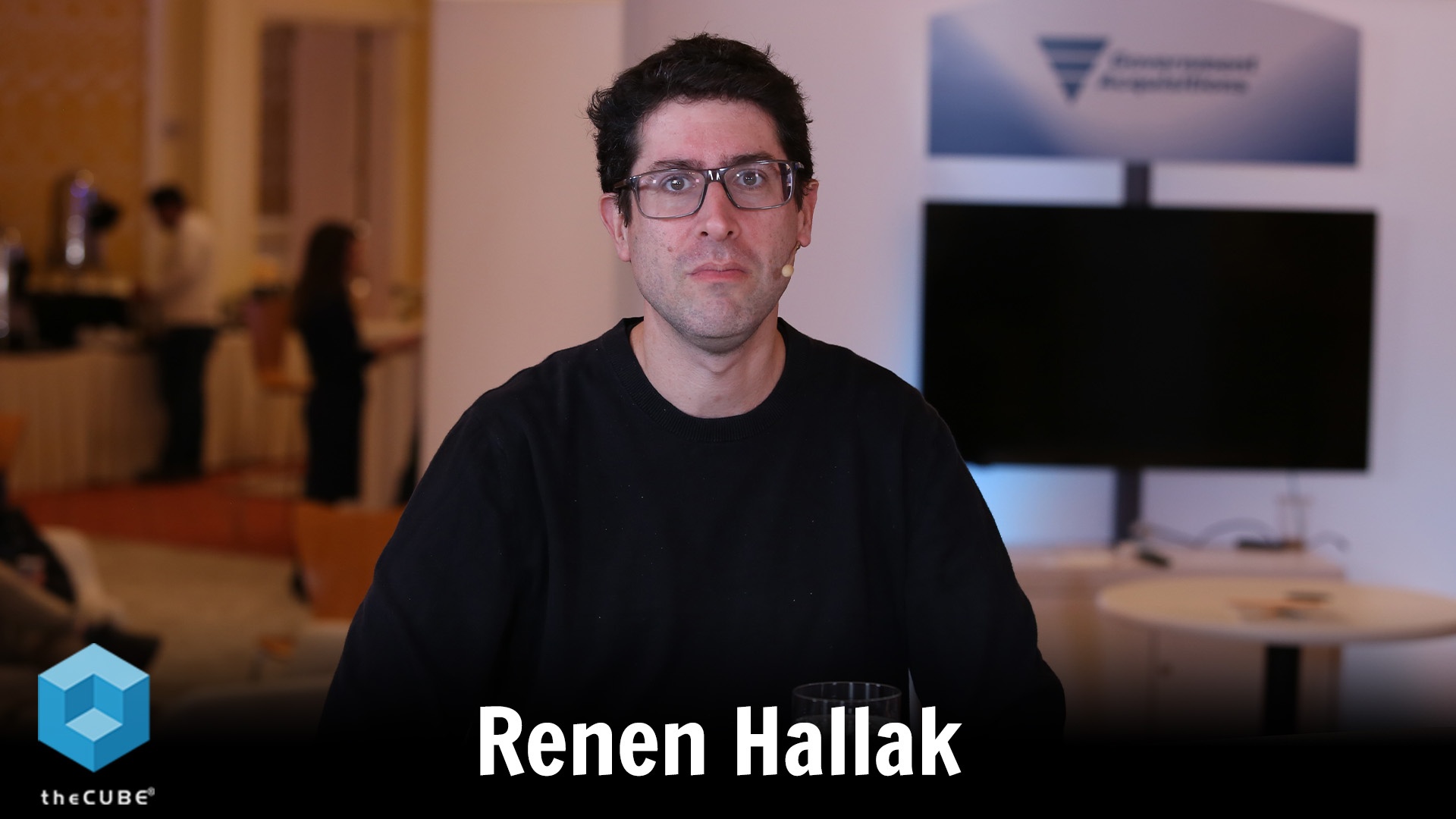
>> But we made it through hell or high water. We're here and, as I said, this is the first ever customer conference that VAST has ever had. So it feels like it's a real defining moment for this company, and it comes at a real inflection point in the AI era too. Talk to me a little bit, set the stage for our viewers a little bit about where VAST is today. It's a 10-year-old company, obviously, founded by Renen Hallak and Jeff Denworth, who we will have on this show later today. Where it's been, where it is, and where you think it's going. Just set the stage.
Dave Vellante
>> So first of all, customer event is about 1,200 people here, just good. We're in an interesting venue in Salt Lake City, which is not common, right? This is, what is it, American Hotel?
Rebecca Knight
>> America Grand Hotel.
Dave Vellante
>> It is a grand hotel. Kind of grand.
Rebecca Knight
>> It is indeed.
Dave Vellante
>> It's a modern grand. It's not the Mount Washington Hotel, but nonetheless, about 1,200 attendees, around 400 customers, so not bad. A lot of partners. Interesting thing in the partners, you see Cisco, you see HPE, you see some of the neoclouds. They don't call them neoclouds. I don't know if you caught that in the keynotes. Renen called them AI clouds and Jeff called them GPU clouds. Maybe they don't like the term neoclouds, but they're here. CoreWeave, Nebius. Lambda is here, Crusoe is here, they build data centers. So the who's who of the AI build out is here. We saw Jensen come in on a pre-record.
Rebecca Knight
>> It wouldn't be a technology conference without a cameo from Jensen Huang.
Dave Vellante
>> My friend, Renen. And of course, Jensen is so good playing up to the host. Okay. So to your point, who was VAST? To go back to 2016, that's what Renen did in his keynote and he laid out, "Hey, we observed that DeepMind was acquired by Google." And people think about, we always talk about how we're early innings in AI. Actually, I don't think it's the first inning anymore. You go back to 2016 with DeepMind and neural networks and deep learning and then transformers and obviously ChatGPT. Really, we are kind of 10 years in, seven or eight years in anyway.
Rebecca Knight
>> It was the same year that OpenAI was founded 10 years ago.
Dave Vellante
>> Yeah. We're at least in the third inning, I would say, maybe even the bottom of the third because you had this sort of initial research and then you had the CUDA marrying with AI, so you could now program parallelism. And then, of course, you had the ChatGPT moment. And so we've gone from research now to broad understanding and adoption. I think now that the middle innings are going to be enterprise ROI and so we'll get there. But anyway, Renen went back and said, "We need something new." Notice at the time that we needed a new architecture. And he made the bet, at least this is the story that he tells today. He made the bet on data and sort of the winners get to rewrite history. I'm not saying that he's rewriting history.
Rebecca Knight
>> Not yet.
Dave Vellante
>> But it sounded pretty clean, but when you first heard VAST back in the early days, you're like, "Huh, this is a storage company?" And then they announced database and they announced all these other capabilities. But the thing about VAST that is I think unique is it's a universal storage platform where everything is inside of VAST, and that was a first principle. Renen said something to the effect that we don't live by rules, we live by principles. And one of their first principles was in order to serve AI, you have to have the data at least in one logical place, and you have to be able to serve multiple data formats. So they're not a box company, they don't have a box for file, a box for block, a box for object, which is kind of common in the hardware industry. They have the VAST architecture. It's software-based, so it can run on any hardware, and they're serving up AI and they're positioning themselves as the OS for the thinking machine, which is interesting. We're from Boston, we go back to Cambridge, Massachusetts and thinking machines. And Danny Hillis back in, I said in my piece, I first met him in 1986 when he introduced The Connection Machine. It was all about neural networks and solving new problems. And that was an inspiration according to Renen and Jeff for the early days of VAST. And their basic premise is you have to have everything integrated into a single stack that's tightly integrated from the low-level hardware all the way up to the SDK, and then you got to feed that AI massive amounts of data that can come in from anywhere. So they made a lot of announcements to support that. They laid out their vision, they laid out their roadmap and pretty reasonably transparent indications of where they're headed. And even Renen said, "We're not worried about it, because we don't think anybody else can do this." Which I found was kind of interesting. But from your perspective, Rebecca, as somebody who's not like daily geeking out in the storage world or the data world, what was your take as a sort of an independent observer who cares about AI, who cares about job loss, who cares about the impact of AI broadly on society? What did you think?
Rebecca Knight
>> I think that this is a really interesting company and one to watch, but the fact that this is its first customer conference showed a little bit and showed in its authenticity in the sense that we didn't have speakers who were up there and very smooth, and there were even a few little hiccups with the presentation, which made it feel more real, more authentic. But in terms of laying out here is ... And Renen even started saying that in Hebrew there is this expression that you must know where you are and where you're going. From my perspective, I didn't quite get all of that, but I think that because I'm not daily geeking out, maybe a little bit was lost. But I do think that this is, like I said, an interesting company to watch, precisely because of what you just mentioned, the who's who of AI is here, they are doing dozens of partnerships, he said with Nvidia and all the big companies. They certainly have lots of customers and customers in all walks of industry. They have not only Harvard Med School and Brown University, but also CVS and Pixar and places like that. So I do think this is a company that I will certainly keep tabs on, but in terms of what it's going to do and how it will fundamentally change and become an AI operating system, I'm not quite yet clear. And I hope that that will become clear today in the conversations that we're going to have here on theCUBE.
Dave Vellante
>> So, Rebecca, this is really good points that you made, and I'll make a couple observations. When you go back and look at some of the early conferences of some of the great companies, some aren't around anymore, but they became great companies and either got acquired or are still around. For instance, EMC, the first EMC World was totally geeking out on storage and provisioning and blocks and things that nobody really cared about other than the storage admins. I would say ServiceNow, similar. Another great company they started, their first user conference was in San Diego, and they were talking about at the time IT service management and how to manage IT, the QuickBooks for IT, if you will. And it became this massive global conference VMworld. The first VMware user conference was all about provisioning VMs and spinning up things like that. And then they evolved into global conferences, so I think in that sense it was appropriate.
Rebecca Knight
>> The chief astronaut-
Dave Vellante
>> Eric Wolf.
Rebecca Knight
>> Eric Wolf.
Dave Vellante
>> It was interesting. So he showed some funny videos of what AI can do, and he said it was probably VAST powering those. We have to squint through to get. It was, okay, that was like we could pick out a cat, AI could pick out a cat. We really didn't know at the time how it knew that it was a cat or how it could differentiate a cat from a hotdog. We didn't know how it worked, but we knew it worked pretty reliably. What it's evolved to beyond that is the system that you could do, and they touched on this, Rebecca. Complete the next word. I can finish your sandwich instead of sentence.
Rebecca Knight
>> Do you know that, that is from Frozen? That is a very famous line from a song in Frozen.
Dave Vellante
>> Explain that. Explain that, because I didn't know that.
Rebecca Knight
>> Exactly. Well, that's exactly, and that's AI. It's just predicting token after token. Okay, that's a word. And that's what he was saying. And in the point being, we know where we're going. This is so crazy, we're going to finish each other's sandwiches.
Dave Vellante
>> Sandwiches instead of sentence. What was interesting was, okay, we've gone from we can identify cats to we complete sentences and being able to complete sentences actually fundamentally sets up this new probabilistic world of AI where the system is guessing fairly accurately because it's trained to do so. So now, we enter this world of training and the ChatGPT moment, and we went, "Wow, this is unbelievable." And all this money went into training. VAST was there. So they were there for picking cats out of a lineup. They were there for finishing sentences, guessing the next word, and training LLMs. And now, we're in this era of inference and agentic, so Vast is there, and then that's where they laid out. They have the really audacious goal of being the operating system for AI. Well, what does that mean? What does an operating system do? It manages and allocates resources. "Oh, I have memory. I need to give memory to this workload or that workload or this application. I have IO. I need to feed it, I need to prioritize."
It's basically the orchestrator of all that stuff. So their point is, we need a new operating system because the old world isn't going to get us to the next 20 years. Jensen makes this point all along. We're entering a new era with the new architecture. So what does that operating system do? I feel like VAST is the sort of IO operating system, taking data and making sure that data is accurate, secure, fast, fed to the AI. I feel like there are other parts of the system of intelligence that others will add value, and that's what I want to poke at with Renen and Jeff today. But sort of when you think about the arc of VAST from early days of AI, they were there all the way through to where we are today. I think if you sit back and really squint through all the technical mumbo jumbo, that's kind of what came across. And they want to be there for the future where life sciences and healthcare, and they even said entertainment. We have Pixar coming on later today. Virtually every industry is going to be powered by AI and VAST is going to be feeding the data is their vision.
Rebecca Knight
>> One thing that was really missing, and one thing I would like to ask Jeff and Renen about is the humans that are going to be working with this AI, living with this AI and working with this AI, but then what does that do to our jobs and how if the AI is learning and training, what about the humans that also need to be learning and training and innovating and having the judgment to direct the AI if it is? Because AI, as we know, is incredibly literal. It has a lot of knowledge, but it is incredibly literal. So how are they thinking about the humans in terms of how our jobs will change and evolve with this new AI operating system that they're presenting?
Dave Vellante
>> Well, it's interesting. So they've showed a lot of customers up on stage. They didn't show a lot that I happen to know that are working with VAST. When you spend a lot of time in New York City as we have with our studio down there, you meet a lot of big banks and others that are, and they very often say, "Oh no, VAST. We use VAST. We're building on-prem AI stacks. Oh, yeah, VAST. VAST, VAST, VAST." So you hear that a lot. The point is, I think it was Renen. No, no, it was Jeff who said ... So maybe it was Renen. "We have some customers that are talking about having 2,000 agents per employee." What does that mean? It reminds me of Benioff's article in the Wall Street Journal will be the last generation of managers managing only humans. Can you imagine 2,000 agents at your disposal? It sounds powerful, but it's also of course scary.
Rebecca Knight
>> It is because every employee will become a manager and you need to know what you don't know and have the humility and also the courage to say, "Oh, AI, no, you're going in the wrong direction here. This agent is going off in this direction. I need you to be working together." I don't know, it's very daunting to think about this and 2,000 agents. Can you imagine having 2,000 employees reporting to you? I mean, that's pretty mind-boggling.
Dave Vellante
>> Yeah. And so to your point, who's going to train these new managers?
Rebecca Knight
>> Right.
Dave Vellante
>> They've never been done before. We're going to be kind of making it up as we go along. And you're going to have agents that are going to help you manage the agents. Obviously, there's a big security concern, and this is one of the announcements they're talking about embedding essentially zero trust into their platform. That's critical. We've predicted at theCUBE research that this is going to be the year of AI ROI. We're finally going to see it. You won't see it unless trust is embedded into the platform. And so that's something that every enterprise is going to require and it's not an easy problem in VAST .
Rebecca Knight
>> Well, I want to quote you from the piece that you wrote about this conference. You said in 2026, the AI industry is facing a dual challenge. Agentic systems will fail on architectures that are brittle, ungoverned and impossible to audit. This gets at the trust thing. The market is clearly demanding platforms that can make machine intelligence trustworthy and operable anywhere across footprints and workflows that increasingly take action. And that's exactly what we're talking about here, and that is what Jeff Denworth was starting to talk about today too in terms of this is what's going to win business too is the trust issue.
Dave Vellante
>> Yes. And so spinning up a rag-based chatbot wasn't that hard and frankly wasn't that valuable with all the cancellations in flights. I don't know about you, but I talked to a lot of AI agents. They weren't that good. They could tell me what I already knew, and they were largely these conditioned responses. I can do this, I can do this. I can understand full sentences, but I can't take actions that a human can. Okay, so now as we go into this world of we need return, we need better and we need trust, and we're not going to let these agents loose, unless they are trusted. I also predicted there's going to be a multi-agent hack where a lesser agent infects a more capable agent. And that agent spans not only like the anthropic hack that we saw, but it's going spend multiple systems, multiple workloads, multiple applications, multiple tools, and it will infect them along the way. And it's going to be an insidious hack, and I think you'll see it this year. And at the same time, I don't think it's going to stop any of their progress. People are going to damn the torpedoes in our AI insurance, or cyber insurance costs will go up like our home insurance.
Rebecca Knight
>> That's a sure thing, and we have Nvidia earnings later today. So we will see about whether or not this AI bet is in fact paying off for one company at least.
Dave Vellante
>> I got a text from somebody in New York last night saying, "What do you expect for Nvidia earnings?" And with all this CapEx, I mean we're talking about 700 billion of commitment in CapEx. One would think that Nvidia is going to be a beat and raise again. I don't know this for sure. I, obviously, don't have inside information, so don't be buying the stock ahead of my crappy advice, but you would expect with that demand, it's going to be a beat and raise. We got way more demand than supply. It's going to be interesting to see on margins, because there's such a shortage. But then the countervailing factor there is memory prices, so that could affect margins a little bit. But I also think you're going to hear that GB300s are really doing great compared to what GB200s were doing, because we know a lot of those projects running on GB200s were challenging a whole different thing. The racks were bigger and taking up more power and they were much heavier and things were breaking. GB300s, my understanding from our sources is much, much more reliable. And I think we're going to hear about Vera Rubin. We heard a little bit about Vera Rubin today. Vera Rubin is going to dramatically cut the cost per token. I don't think I listen to the talking heads on the business channels and I keep hearing about competition to Nvidia from hyperscalers and Broadcom and ASICs and everything else and TPUs, and I just think Nvidia is going to blow away the pack. The reason that, that's relevant for VAST-
Rebecca Knight
>> Well, and that's what I wanted to ask you, because there wasn't a lot of this in the keynote talking about the business. They did say that they are tripling their business year over year, but the AI, the IPO potential is something that a lot of people are talking about considering this company's growth trajectory, its market positioning. What's your take? They brought in a new CFO recently this year from Shopify. Do you have any predictions?
Dave Vellante
>> Yeah. Well, so a couple of things. One is I think it's only ... I mean, Jeff said they had dozens of projects going on with Nvidia, so I think they realized, "Wow, Nvidia is the driving force. We better get tight with them." Much in the same way, but different than say what Dell's doing with Nvidia. But Dell announces earnings tomorrow as well. They're like a massive distribution channel for Nvidia, but I think you're seeing VAST say, "Okay, we're going to ride this wave. We're going to do some deeper integration with Nvidia."
Yeah, they didn't give a lot of financial information. They have in the past, they talked about a billion dollar run rate in the past. They talked about tripling their revenues this past year. So I think 24 to 25, they tripled their revenues. If you search it, you'll see they had their last round was a $9 billion valuation. And they're evidently in talks and their aspiration is to $25 or $30 billion valuation. That's not an acquisition for a company with, let's call it a billion dollars in run rate revenue. And I'm not sure how much of that is ARR or what, but let's sort of park that. Nobody's going to buy them because you'd have to do a multiple on 30 billion or maybe they buy them for 30 billion. I just don't see that happening. So that says IPO and I think they've got, like you said, CFO from Shopify. They just hired I think a new general counsel. I think part of the reason why they give us a lot of detail today is because the general counsel was probably saying, "No, no, no, we'll go back on that."
Rebecca Knight
>> Well, and as you said, they were pretty transparent about the roadmap and being very candid with the audience and the fact that they didn't talk about it as you suggest. It's probably under legal advice.
Dave Vellante
>> If I had to predict, I'd say they IPO in 2027 would be my prediction. I think they want to get revenues up a little bit. They've never given any indication on NRR. I like to see that over 120%. They haven't publicly given an indication of the combination of free cash flow and growth. The rule of, the rule of 40. Palantir is the rule of I think 127. It wouldn't surprise me if VAST were higher than that. So I just don't know how sustainable that is, so they'd want to see some patterns before they go public. I know they're cash flow positive. They've made that statement, which is very rare for a 10-year-old startup to be cash flow positive. So I think all those things are interesting in their favor. That could potentially accelerate their time to IPO. But I would say they kind of want to let it bake a little bit, have confidence that they continue to beat and raise. I don't see why there's any rush for VAST to go public. I think they'll probably time it with when they're hitting the enterprise. Very clearly to your points, they're at the tip of the spear of the hardcore AI tech world right now, the technical practitioners. When they start to hit that inflection point where they really want to scale more broadly and be more aware to more CEOs and more companies, because they're selling at a higher level, they don't need to today. People are bringing them in. "Oh, I heard about VAST. The technical people are bringing them in because they're perceived as the AI data solution, you got to have VAST on your short list." And so I think that's how the timing will work. It's going to be kind of a ... That's my 27 predictions.
Rebecca Knight
>> All right. Well, we will learn much more about VAST today. We've got a great lineup including Jeff Denworth and Renen Hallak, who are the founders of course. And then we also have Jonsi Stefansson, John Mao, Chen Goldberg, lots of great guests. We're going to learn-
Dave Vellante
>> Some folks from Solidigm who is the reason why we're here. Our generous sponsor for this event.
Rebecca Knight
>> Indeed, indeed. Yes. Ace Stryker, who is a former journalist. I can't wait to talk to Ace Stryker of Solidigm.
Dave Vellante
>> Yeah, yeah.
Rebecca Knight
>> Anyway, I'm really looking forward to hosting this show with you today. We're going to talk announcements, partnerships, and the future of AI, what better.
Dave Vellante
>> Excellent, Rebecca. I look forward to it too.
Rebecca Knight
>> I'm Rebecca Knight. For Dave Vellante, stay tuned for more of theCUBE's live coverage of VAST Forward 2026. You're watching theCUBE, the leader in enterprise tech news and analysis.