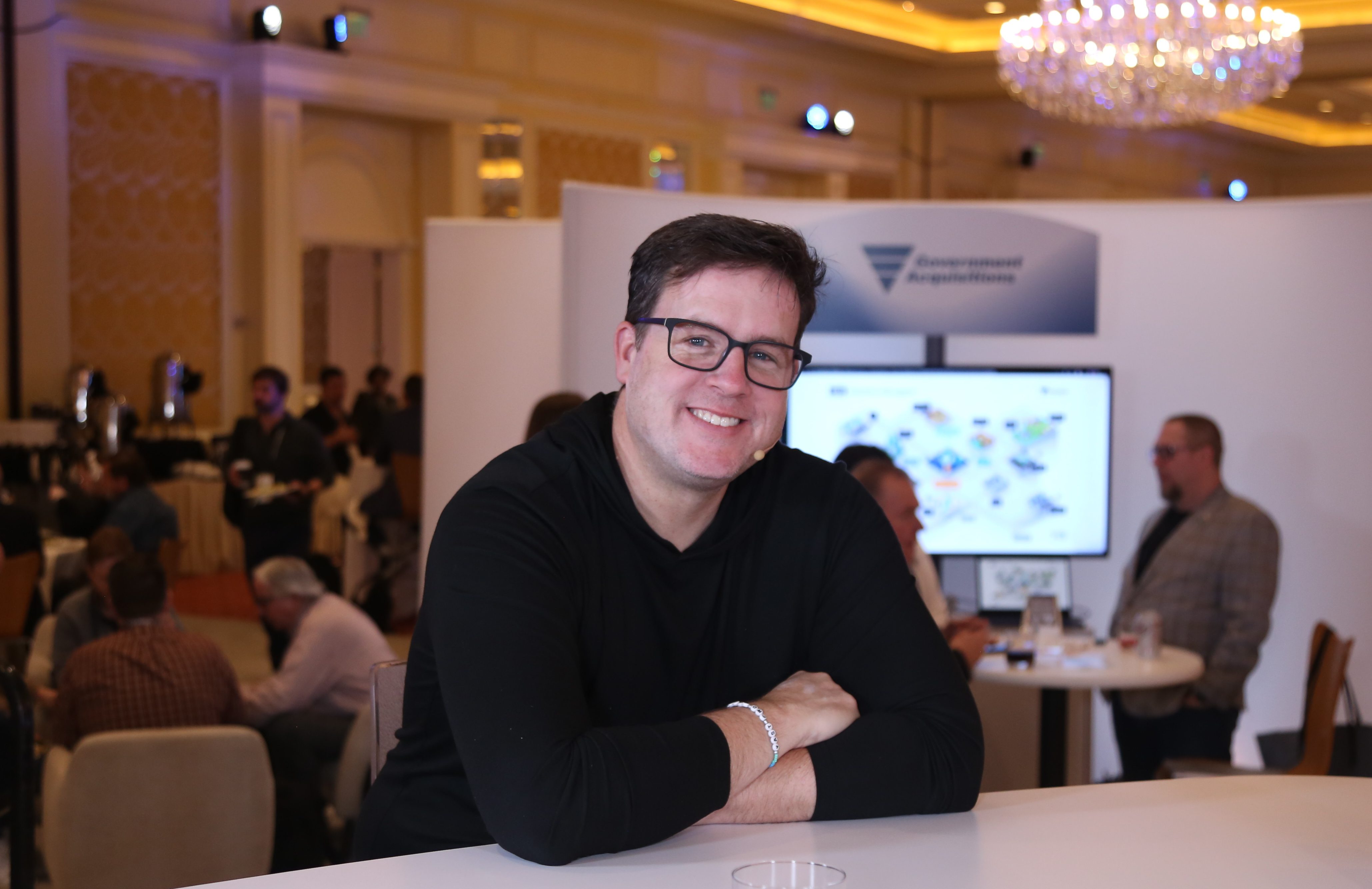
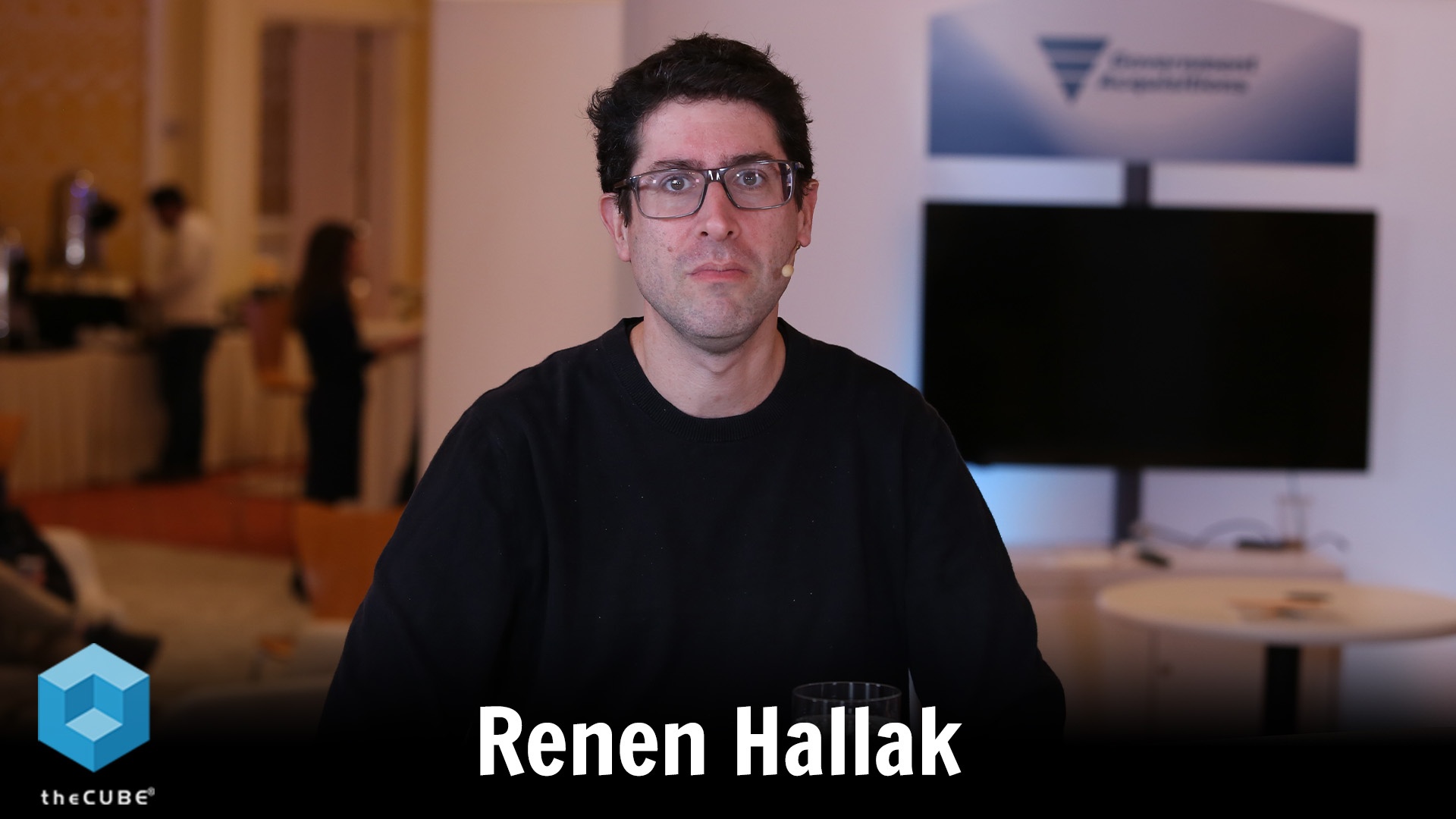
In this interview from VAST Forward 2026 in Salt Lake City, Chen Goldberg, executive vice president of product and engineering at CoreWeave, joins theCUBE’s Dave Vellante and Rebecca Knight to discuss the evolution from "Cloud 1.0" to the purpose-built AI cloud. Goldberg, a founding member of the Kubernetes project, explains why the traditional hyperscaler model requires a fundamental rethink to meet the extreme performance demands of modern AI workloads. She highlights how CoreWeave is prioritizing observability and transparency across the entire stack – from compute to storage – to ensure resiliency and efficiency for large-scale training and inference.
The conversation also explores how CoreWeave’s engineering-led partnership with VAST Data is enabling high-throughput solutions, such as distributed caching mechanisms that optimize data delivery to GPUs. Goldberg delves into the democratization of AI, noting how enterprises in healthcare and finance are moving beyond experimentation to deploy production-ready applications via managed APIs. From the acquisition of Weights & Biases to the critical balance of accuracy, price and latency in inference, she provides a roadmap for how organizations can leverage specialized infrastructure to accelerate innovation and overcome the technical debt of legacy cloud environments.
Forgot Password
Almost there!
We just sent you a verification email. Please verify your account to gain access to
VAST Forward 2026. If you don’t think you received an email check your
spam folder.
In order to sign in, enter the email address you used to registered for the event. Once completed, you will receive an email with a verification link. Open the link to automatically sign into the site.
Register for VAST Forward 2026
Please fill out the information below. You will receive an email with a verification link confirming your registration. Click the link to automatically sign into the site.
You’re almost there!
We just sent you a verification email. Please click the verification button in the email. Once your email address is verified, you will have full access to all event content for VAST Forward 2026.
I want my badge and interests to be visible to all attendees.
Checking this box will display your presense on the attendees list, view your profile and allow other attendees to contact you via 1-1 chat. Read the Privacy Policy. At any time, you can choose to disable this preference.
Select your Interests!
add
Upload your photo
Uploading..
OR
Connect via Twitter
Connect via Linkedin
EDIT PASSWORD
Share
Forgot Password
Almost there!
We just sent you a verification email. Please verify your account to gain access to
VAST Forward 2026. If you don’t think you received an email check your
spam folder.
In order to sign in, enter the email address you used to registered for the event. Once completed, you will receive an email with a verification link. Open the link to automatically sign into the site.
Sign in to gain access to VAST Forward 2026
Please sign in with LinkedIn to continue to VAST Forward 2026. Signing in with LinkedIn ensures a professional environment.
Are you sure you want to remove access rights for this user?
Details
Manage Access
email address
Community Invitation
Chen Goldberg, CoreWeave & Jeff Denworth, VAST
In this interview from VAST Forward 2026 in Salt Lake City, Chen Goldberg, executive vice president of product and engineering at CoreWeave, joins theCUBE’s Dave Vellante and Rebecca Knight to discuss the evolution from "Cloud 1.0" to the purpose-built AI cloud. Goldberg, a founding member of the Kubernetes project, explains why the traditional hyperscaler model requires a fundamental rethink to meet the extreme performance demands of modern AI workloads. She highlights how CoreWeave is prioritizing observability and transparency across the entire stack – from compute to storage – to ensure resiliency and efficiency for large-scale training and inference.
The conversation also explores how CoreWeave’s engineering-led partnership with VAST Data is enabling high-throughput solutions, such as distributed caching mechanisms that optimize data delivery to GPUs. Goldberg delves into the democratization of AI, noting how enterprises in healthcare and finance are moving beyond experimentation to deploy production-ready applications via managed APIs. From the acquisition of Weights & Biases to the critical balance of accuracy, price and latency in inference, she provides a roadmap for how organizations can leverage specialized infrastructure to accelerate innovation and overcome the technical debt of legacy cloud environments.
In this interview from VAST Forward 2026 in Salt Lake City, Chen Goldberg, executive vice president of product and engineering at CoreWeave, joins theCUBE’s Dave Vellante and Rebecca Knight to discuss the evolution from "Cloud 1.0" to the purpose-built AI cloud. Goldberg, a founding member of the Kubernetes project, explains why the traditional hyperscaler model requires a fundamental rethink to meet the extreme performance demands of modern AI workloads. She highlights how CoreWeave is prioritizing observability and transparency across the entire stack – fro...Read more
exploreKeep Exploring
How do you view the current AI-era inflection point, what challenges are enterprises facing as a result, and how do you approach those challenges as a technologist with cloud-native and Kubernetes experience?add
How are GPUs, large language models, and other new AI technologies changing cloud infrastructure needs, and why is there a need for AI-specific clouds?add
How do you approach designing a system/platform for AI workloads, and what guiding principles make it different from traditional cloud architectures?add
Is the AI cloud a single unified "AI factory" or a collection of distinct, workload‑tailored "AI factories" (i.e., one platform vs. multiple specialized services)?add
Who needs an AI cloud — in the past, today, and in the future — and how do you see that need evolving?add
>> Hello everyone and welcome back to theCUBE's live coverage of VAST Forward 2026 here in Salt Lake City. I'm your host, Rebecca Knight, alongside Dave Vellante, my co-host and analyst. I would like to welcome to the program, Chen Goldberg. She is the EVP of Product and Engineering at CoreWeave. Welcome Chen.
Dave Vellante
>> But I got to say, I got to just start off, Kubernetes, wow. Did you ever imagine it would become what it has become? Amazing.
Chen Goldberg
>> No, someone, I would just say reflecting about it, I think that sometimes we work in the industry for so long and that problem that Kubernetes solved existed forever. Forever. Making sure that you can make developers productive and move quickly and build systems at scale. And there was never the technology to solve for it. And then one day, Kubernetes come along and it actually solved for it. I think it's amazing. I'm proud and I feel honored to be part of that journey.
Dave Vellante
>> You should be proud because you guys, wow, that was really remarkable, the impact that's had on the industry. On behalf of the industry, thank you.
Chen Goldberg
>> Thank you so much.
Rebecca Knight
>> So to that point though, Chen, you are an industry veteran. You've worked at the who's who of the technology industry, including Google and HPE, and now of course you're at CoreWeave, in cloud, and AI and engineering. I wonder if you could talk a little bit about this moment, this inflection point that we're at in this AI era and the challenges that you're seeing enterprises facing and how you approach them as a technologist yourself.
Chen Goldberg
>> I think for folks who don't know, I'm part of the founding team of Kubernetes. And I think if you go back 15 years ago, and we talked about cloud transformation and cloud native technologies, what happened back then, there was this new technology, this new stack cloud that make resources available everywhere, but the current tools were not good enough to take advantage of that, right? We needed to change something, right? If we only did lift and shift or just use VMs, that did not work. What we saw happen over the last 15 years is this cloud native ecosystem. You guys have been covering that for our entire journey, and the reason is that it had to solve specific problems. Okay? We talked about stateless workloads, for example. We talked about portability of workload, we talked about simplifying consumption of infrastructure. So now, we're in a similar but probably bigger moment. There is yet a new technology. There's actually several new technologies. We have GPUs, extremely powerful. This morning, we saw Jensen on the video with VAST talk about those powerful GPUs. We have large language models, we have AI models, and then what can you do with them? How can you really unleash innovation and just see what's possible? And that's where the AI clouds come, solving for that moment. Because if you think about the things that have changed, infrastructure, which is compute, storage, and network matters significantly and can impact the performance of your application, which is again, a very different than the cloud-native world. You would say, "Hey, I can build it on ..." Remember those days? I build it on my machine and then it works on the cloud?
Dave Vellante
>> Yeah.
Chen Goldberg
>> It doesn't really work for us anymore. I mean, you actually need to test things at scale. You need to test things with the right storage to make sure that the throughput is enough. So all of those kind of problems require rethinking or reimagining how cloud will look like, and that's really the AI cloud.
Dave Vellante
>> So that's why we need an AI cloud?
Chen Goldberg
>> Yes.
Dave Vellante
>> Okay. We've kind of started it all. If it wasn't the first, it was certainly one of the first. How did you rethink cloud and what are the principles around that rethink?
Chen Goldberg
>> So the key thing of the way we approach it is really going back to first principles. What's important? What is system needs? So just imagine this is you have a blank page, there's nothing there. And just choosing the things that matter for that kind of system. And from a principle perspective, we really focused a lot around observability and transparency across the stack, which is a very different principle than the hyperscalers. Today, when you go to a cloud 1.0, there is a clear layering, right? You have networking and you have storage, and you have compute, and you have the paths, and you have some serverless. Everything is on top of each other, and that works because there is a good contract between those layers. For us, what we have seen with AI workload, because compute matters, storage matter, network matters is we need to make sure that if I'm running a job, a training job, an AI application, I can understand what's happening across the stack and make decisions and be proactive about it. So that's one example of something that we really thought about as a principle, making sure the data is available not just for us, also to our customers, and we've done it by really simplifying the stack and we build a special system that we call mission control that really orchestrates all the data around it.
Dave Vellante
>> So that's interesting. I didn't think you were going to start there with observability because you think about the cloud 1.0, as you call it. Observability kind of a whole industry grew up to solve the problem of observability within those layers. You guys started there so it wasn't bolted on. Did you build a purpose-built data store to enable that?
Chen Goldberg
>> I think that you know some of the things that people maybe don't realize about CoreWeave is that we learn as we go in some senses. So this kind of investment in building the brain for the stack and think about the entire stack, it just came from what we needed in order to operate at scale. Because unlike before, what's happening ... Again, let's talk about Kubernetes and cloud native. The change happened not everywhere across the stack. The rapid change happened at the application. But okay, this is where it's happening, and then can I make all the rest boring? We used to say, "Let's make Kubernetes boring." This is not where we are today. Every piece of the system keeps changing. We have a new generation of GPUs, we have new storage solutions, we have data solutions, we have literally a new model every day. So how do I build a system that is flexible enough without compromising resiliency and without compromising security? That's where you need that kind of approach, production-ready system.
Rebecca Knight
>> And that's why observability was the first principle because you can't have the resiliency and the security without it just being able to-
Chen Goldberg
>> Yes.
Dave Vellante
>> So is your AI cloud an AI factory, or a series of AI factories that are all sort of unique?
Chen Goldberg
>> It is. We have both the breadth and depth in our cloud. What it means is that for different use cases, there will be different way you will consume our cloud services. So most of our customers are of course using our entire stack and some of them will use our Kubernetes. Kubernetes service and that's the way, how to deploy their workloads, and some of them will just use SUNK, which is our Slurm interface for HPC. And I think that understanding how it is very workload-tailored is really important. And it's not just thinking about the entire stack, I think the other thing that we've done, which is unique is within all of these cloud surface area, we've also designed unique solutions to solve specific problems for AI workloads, which for example, one thing that is, for example, we talk about data a lot. One of the challenges that you have, again, Jensen talked about it this morning, okay, I have all those GPUs. How can I get the most data into my GPUs? Why is that important? It's important, because I want it to be more efficient. So the way we solved for that is knowing our stack, knowing how simple it is. We've built a new distributed caching mechanism that sits behind our S3 compatible API. So as a customer, I can use object storage, CoreWeave AI object storage, but under the hood we are optimizing the way we are accessing the data and our customers achieve up to seven gigabytes per second per GPU. So just an example of a unique solution specifically for AI.
Dave Vellante
>> Much faster than you would get out of a cloud 1.0 object store, for example.
Chen Goldberg
>> Yes, exactly.
Dave Vellante
>> Okay. What are the challenges? So a lot of people would ask, the hyperscalers have so much resource, why can't they sort of eventually catch up to what you are doing, build their own AI clouds? What are the challenges of doing that with that technical debt, if you will?
Chen Goldberg
>> Well, you yourself said that, right? It's that technical debt of how can I transform system existing system that are excellent for certain use cases. There is a lot of value with a lot of things that the clouds are doing today, and yet you need to build a new system that will be great for this new set of use cases. So that will be one. I think the other thing that is a benefit, especially when you think about the pace of change, is the ability to move fast and to focus. And that's something that we bring to the table like we are optimizing for this new era. That means that, that's all we are investing. That's where we are putting all of our energy, our best people, our best talent. That's what we are doing. And because of that, we can move quickly and deliver specific solutions. And that speed, by the way, is extremely important to anyone that innovates in AI. That speed, by the way, is measured across the stack. If I'm a researcher, how quickly I can do, run some training jobs, evals, speed of development, how quickly can I get access to new GPUs? As an example, can I have in my inference service all of the new models? There is a thing in the industry we take pride in like zero day support, day zero support. Can you do that? So that's becoming really important because the faster you can innovate, the better you'll compete.
Rebecca Knight
>> So you're here obviously at VAST Forward and the partnership with VAST predates you. It's been around for about three years, you said. Talk a little bit about how your companies work together and your approaches and similar strategies and approaches, I guess, is what I want to say in terms of how you think about these problems.
Chen Goldberg
>> When we think about the partnership, what's been very clear from the very first moment that we share two things. One, passion to solving hard problems. And that's important, because sometimes we hear from our customers, they're asking for things that are not available elsewhere. And we were like, "Why not? Let's go." And I think that, that's something that we really always appreciated with the vast partnership of building new solutions and getting to what customer really need and working with them. And also understanding the importance of that moment of what's possible about that mission. And I know, again, this morning there were discussion about that in the keynote, what's going to look like in the next 10 years and so forth, right? What's possible? So that was one. The second thing is that it's ... And I don't know really what made it. I think that maybe because the partnership was always grounded from engineering to engineering of a relationship. It was always through the work. Okay, what are we building together? What problem we're trying to solve? Who is the customer? We got your back kind of relationship and it's really important, especially in these kind of times that it's hard. It's not easy. I think that we talked about before we started recording. It's not easy to manage AI clusters at scale.
Dave Vellante
>> So we talked about why there's a need for an AI cloud. Who needs an AI cloud yesterday, maybe a year or two ago today and in the future? How do you see that evolving? The biggest, best companies who need access to the best GPUs and the best infrastructure, they come to CoreWeave. That's evolving. Talk about that.
Chen Goldberg
>> It's changing every day. Maybe let's go back to that idea that the pace of innovation, it's literally changing every day. If a year ago, it was mostly those most sophisticated customers that are running what we call foundation model builders. Of course, they needed an AI cloud, they wanted to run efficiently, but this is changing. We see more use cases of training. We see customers realizing how important the data they have and what kind of innovation they can do, and we see more what we call enterprises. I have my data, what can I do with it?
Rebecca Knight
>> And what are they doing? Can you talk a little bit? I know, maybe you can't name names, but if you could-
Chen Goldberg
>> I won't name, but the use case is very ... The more things that I think more people are familiar with, of course, around in the context of health and drug discovery, there's a lot of innovation in that space, for sure. We see a lot of innovation in the world of call center and voice and just automating that experience that we are all experiencing. And it can be a game changer for a company too. Maybe more traditional innovation, I would say. But how can I change the way they experience in my e-commerce platform? What kind of recommendation? How can I help my customers use language and just help them with search? And there's a lot of things that are happening. So to financial services that are now using AI to assess risk, I think that actually in every industry, you see those that are in the lead and are pushing the boundaries of what's possible. And what I love about it, the conversation today is so exciting. A year ago we probably talked more about training, but now it's very even, the conversation between training and inference. Folks in the context of inference are really concerned about. It's always that trade-off between accuracy, price and latency or speed. I want it to be correct, I want it to be fast and I want it to be cheap. How do I play with those three? And if you think about it, the way you manage the tension between the three of us will define how the product will look like. And those kind of conversations are extremely interesting today.
Dave Vellante
>> Now, the balance between training and inference, foundation model builders and more enterprises, presumably some of the larger enterprises that we were talking about earlier that we talked to in some of our research. Guys like JP Morgan, Walmart, Capital One, Lilly, I mean, they're doing some really amazing things. And then there's all these companies in the fat middle, every enterprise that doesn't have those kind of resources. Do you see them at some point? Maybe it's starting to already being able to tap AI services through APIs and transform their businesses.
Chen Goldberg
>> I have no doubt.
Dave Vellante
>> How do you see that playing out?
Chen Goldberg
>> I'm not going to try and say how long it'll take because I will probably be wrong. It'll be probably be sooner. Again, because of the pace of technology and the tools that are available, we are already seeing it today. Okay? We're already seeing growth of usage of APIs. Actually, we are investing a lot in that surface area. So last year, we acquired Weights & Biases, which is a developer in a researcher tool. And part of that work, we are really working on reducing the barrier to AI innovation. We have three big pillars of the portfolio. We have models for researchers. We have Weave, which is a tool to build AI applications. And we have our inference service as an example. So already, the idea around API, managed services, those platforms is something that is, I wouldn't say become common or mainstream, but it's pretty rare to find a company that doesn't have a team that experiment with it. And maybe that's the word I love most about in these times, everybody experiments and that's what we all do.
Dave Vellante
>> So the much maligned MIT study, which says nobody's getting any value out of AI, you see the value, because it's so obvious.
Chen Goldberg
>> First of all, one, it's obvious, but even if you don't talk about our customers, I can speak about what we do internally with AI. It's not just, I don't have to go there.
Dave Vellante
>> You're so advanced. And the reason I bring that up is because we ... I don't know when it's going to happen, but it's going to happen. If you look at spending on technology as a percent of revenue at the macro, it's about 4% overall of company's revenue and spent on technology. Our research suggests that number is going to explode. It's going to go past-
Rebecca Knight
>> I think NVIDIA's earnings today suggests that number is exploding.
Dave Vellante
>> Yeah, but that's different. That's NVIDIA, right? But it's the financial institutions, it's the manufacturers, it's the retailers. They're spending, like I say, on average 4%. We see that number more than doubling over the next five to seven years through API services. And there's going to be a shift from traditional IT cloud 1.0, on-prem 1.0 to token, accessing tokens through APIs and driving productivity, scaling without labor. This is where you get concerned about white-collar labor, we know, but it's happening and you see it in front of your face. I wonder if you could comment on that. Again, timeframe, hard to tell. It could be 10 years, it could be 5 years, it could be 12 years, I don't know, but it's happening.
Chen Goldberg
>> It's definitely happening and it's accelerating. And part of it is the tooling that are becoming available. Again, if you know, this is maybe not something we'll talk about here, but we can talk about the work of a developer, a software engineer, how is that changing? And that happened really quickly. The power that people get through using new tools internally. Internally, we said, "Okay, experiment. Let's see what comes out of it." And it's pretty amazing. And it's not, by the way, I think ... There is some misconception on that, that you don't need to have depth or you don't need to understand. You need to understand what you're doing. I think expertise still matter. Experience matters. But these tools, I was just talking with a friend of mine, she's in marketing and she was saying that she feels like she has this super power now. The things that she either did not have time to do or couldn't do it on her own, suddenly, she can think and get the outcomes she always wanted. Maybe again, I will bring it back to Kubernetes. Finally, the technology is catching up to what people want to do.
Dave Vellante
>> And if you think about the hyperscaler evolution, as they expanded their market opportunity and their TAM, they started developing other parts of the stack. Some like Google and Microsoft, they're in the application layer. Amazon not so much, but they're all in the data stack. Do you see a similar evolution of the CoreWeave stack? And what does that look like over time?
Chen Goldberg
>> We are evolving it pretty quickly. Maybe that will be fair. Just if I look on the past six months, the amount of announcement that we've made, the pace of innovation is faster. We introduce more things because we are working with our customers. I expect a couple of things will happen. One, back to your point around APIs, seeing more of APIs. I do think that there will be more challenges around security and resiliency. I mean, the key thing here in this context is that even when I experiment, it's still my data. These are still my production system. It's really important for people. So I do think that there'll be an ecosystem built around that and set of solutions. There is a lot of innovation happening in the infrastructure and data center place. So that's also something, how do you work with energy efficiency and utilization? So we are actually innovating a lot in that space as well. So we think CoreWeave, you should expect seeing us doing all of that. In addition to that, some of the things that we've been also experimenting with is building, working with industries and helping them in the context of media and entertainment and video generation or robotics, for example. Those kind of industries we think we can bring value of how to make the tools available.
Dave Vellante
>> Any industry, I would think is .
Chen Goldberg
>> So any. Those are just some examples that I know happening right now.
Dave Vellante
>> Right. Excellent.
Rebecca Knight
>> Excellent. Well, Chen, thank you so much for coming on theCUBE. Always a pleasure talking to you.
Dave Vellante
>> We're done already?
Rebecca Knight
>> We are, unfortunately.
Dave Vellante
>> I still have more questions for you.
Rebecca Knight
>> I know.
Chen Goldberg
>> Thank you.
Rebecca Knight
>> Next time.
Dave Vellante
>> We can have you back. Yeah. Come to our New York Stock Exchange Studio.
Chen Goldberg
>> Thank you so much for having me.
Dave Vellante
>> Love to have you.
Rebecca Knight
>> Indeed. I'm Rebecca Knight. For Dave Vellante, stay tuned for more of theCUBE's live coverage of VAST Forward, presented by Solidigm. You're watching theCUBE, the leader in enterprise tech news and analysis.