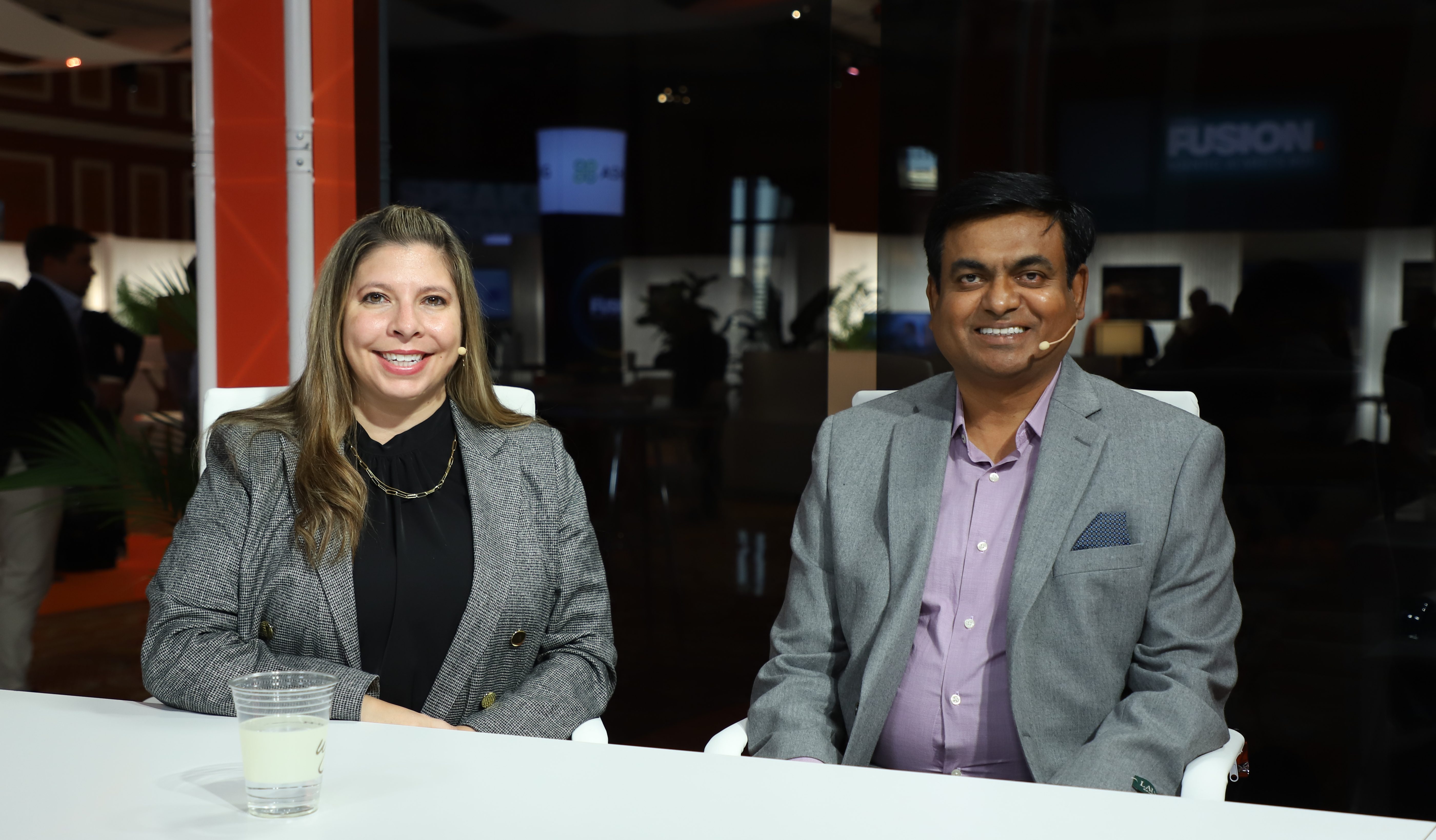
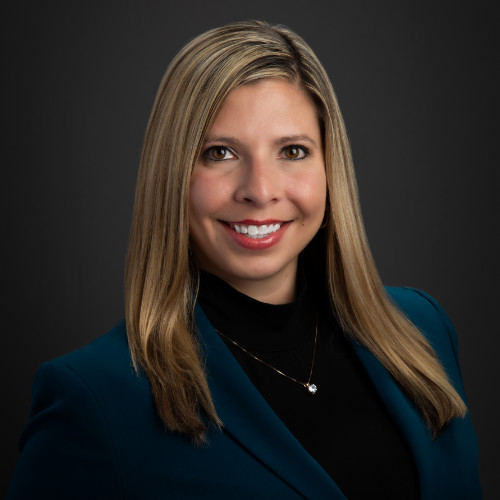
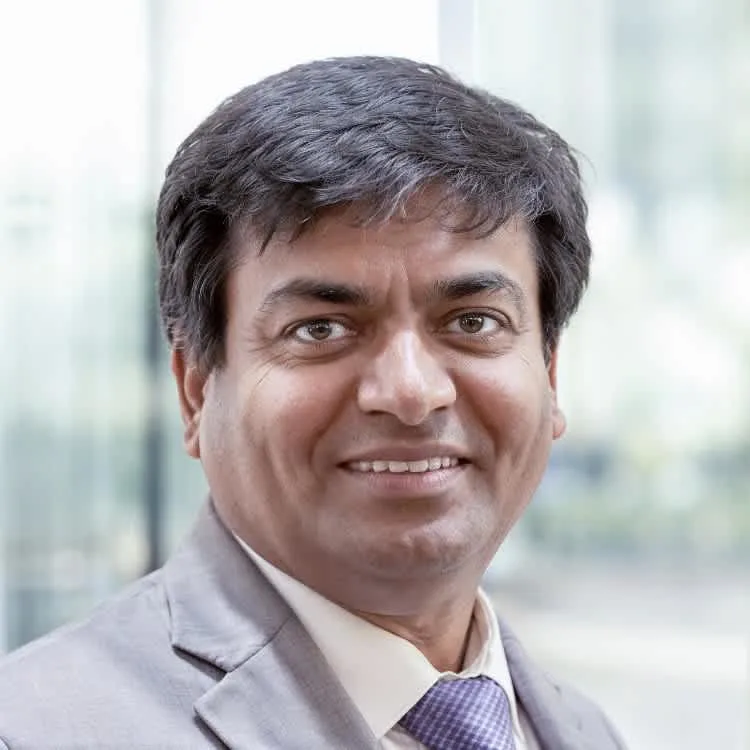
At UiPath Fusion, Cognizant’s Mariesa Coughanour (Head of Advisory, Delivery, Mindshare Automation and Agentic AI) and Pearson Education’s Venkat Bhaskara (Director of Automations-AgentOps) join theCUBE’s Dave Vellante and Rebecca Knight to unpack how organizations are evolving from traditional RPA to agentic automation at scale. Bhaskara details Pearson’s AgentOps journey, including a student enrollment use case for virtual schools where a rules engine verifies documents and streamlines policy updates – while keeping a human in the loop for nuanced, state-by-state decisions. Coughanour dives into the real work behind success: change management, stakeholder prioritization and upskilling, plus creative enablement like hackathons and hands-on events that bring business and technologists together. The discussion surfaces practical lessons on orchestrating people, process and technology, avoiding single-platform lock-in, and applying guardrails and best practices throughout development.
The conversation further explores how enterprises are modernizing legacy automation into intelligent, goal-directed agents – and how platforms like UiPath’s Maestro are shaping orchestration across agents, humans and bots. Listeners will hear candid takes on why “human-in-the-loop” remains essential, how HR and employee experience scenarios are emerging (from PTO planning to name-change workflows), and where intelligent document processing and UI-level agents are already delivering operational impact. Key topics include: orchestrating multiple agents vs. a single “magic bullet,” tackling data/process complexity, building confidence through enablement (e.g., vibe coding weeks), and measuring outcomes – right down to improving reliability in paper-based assessment workflows where even a 99.99% SLA still demands continuous improvement.
Forgot Password
Almost there!
We just sent you a verification email. Please verify your account to gain access to
UiPath Fusion 2025. If you don’t think you received an email check your
spam folder.
In order to sign in, enter the email address you used to registered for the event. Once completed, you will receive an email with a verification link. Open this link to automatically sign into the site.
Register For UiPath Fusion 2025
Please fill out the information below. You will recieve an email with a verification link confirming your registration. Click the link to automatically sign into the site.
You’re almost there!
We just sent you a verification email. Please click the verification button in the email. Once your email address is verified, you will have full access to all event content for UiPath Fusion 2025.
I want my badge and interests to be visible to all attendees.
Checking this box will display your presense on the attendees list, view your profile and allow other attendees to contact you via 1-1 chat. Read the Privacy Policy. At any time, you can choose to disable this preference.
Select your Interests!
add
Upload your photo
Uploading..
OR
Connect via Twitter
Connect via Linkedin
EDIT PASSWORD
Share
Forgot Password
Almost there!
We just sent you a verification email. Please verify your account to gain access to
UiPath Fusion 2025. If you don’t think you received an email check your
spam folder.
In order to sign in, enter the email address you used to registered for the event. Once completed, you will receive an email with a verification link. Open this link to automatically sign into the site.
Sign in to gain access to UiPath Fusion 2025
Please sign in with LinkedIn to continue to UiPath Fusion 2025. Signing in with LinkedIn ensures a professional environment.
At UiPath Fusion, Cognizant’s Mariesa Coughanour (Head of Advisory, Delivery, Mindshare Automation and Agentic AI) and Pearson Education’s Venkat Bhaskara (Director of Automations-AgentOps) join theCUBE’s Dave Vellante and Rebecca Knight to unpack how organizations are evolving from traditional RPA to agentic automation at scale. Bhaskara details Pearson’s AgentOps journey, including a student enrollment use case for virtual schools where a rules engine verifies documents and streamlines policy updates – while keeping a human in the loop for nuanced, state-by-state decisions. Coughanour dives into the real work behind success: change management, stakeholder prioritization and upskilling, plus creative enablement like hackathons and hands-on events that bring business and technologists together. The discussion surfaces practical lessons on orchestrating people, process and technology, avoiding single-platform lock-in, and applying guardrails and best practices throughout development.
The conversation further explores how enterprises are modernizing legacy automation into intelligent, goal-directed agents – and how platforms like UiPath’s Maestro are shaping orchestration across agents, humans and bots. Listeners will hear candid takes on why “human-in-the-loop” remains essential, how HR and employee experience scenarios are emerging (from PTO planning to name-change workflows), and where intelligent document processing and UI-level agents are already delivering operational impact. Key topics include: orchestrating multiple agents vs. a single “magic bullet,” tackling data/process complexity, building confidence through enablement (e.g., vibe coding weeks), and measuring outcomes – right down to improving reliability in paper-based assessment workflows where even a 99.99% SLA still demands continuous improvement.
play_circle_outlineIntroduction of Venkat Bhaskara and Mariesa Coughanour at UiPath Fusion event.
replyShare Clip
play_circle_outlineVenkat's experience in automation at Pearson Education and scaling business processes.
replyShare Clip
play_circle_outlineThe impact of agentic AI on student enrollment and process verification.
replyShare Clip
play_circle_outlineEnhancing Operational Efficiency: Cognizant and Pearson's Collaboration on Automation and Agentic AI for Accurate Assessment Scoring
Head of Advisory, NA Delivery & Mindshare, Automation & Agentic AICognizant
Venkat Bhaskara
Director of Automations- AgentOpsPearson
In this engaging episode from UiPath Fusion, we explore the world of automation with Venkat Bhaskara, director of automations-AgentOps at Pearson, and Mariesa Coughanour, head of advisory delivery, mindshare, automation, and agentic AI at Cognizant. Hosted by Dave Vellante and Rebecca Knight of theCUBE, this session highlights the evolving landscape of agentic AI and its implications for businesses today.
Venkat Bhaskara brings extensive experience in automation at Pearson, where the team constantly pushes the envelope to enhance operational efficiency...Read more
exploreKeep Exploring
What are the roles and responsibilities of Venkat Bhaskara at Pearson Education and Mariesa Coughanour at Cognizant?add
What responsibilities and contributions has the speaker had at Pearson related to automation and operational efficiency?add
What is the approach taken for managing student enrollments in the virtual schools business?add
What are some use cases of automation and agentic AI in educational assessment and qualifications?add
>> Good afternoon, everyone. Welcome back to theCUBE's live coverage of UiPath Fusion. I'm your host, Rebecca Knight, alongside Dave Vellante, my co-host and analyst. I would like to welcome Venkat Bhaskara. He is the director of automation's AgentOps at Pearson Education. Welcome, Venkat.
Venkat Bhaskara
>> Hi.
Dave Vellante
>> And Mariesa Coughanour, head of advisory, delivery, mindshare, automation, agentic AI at Cognizant. That is a mouthful, Mariesa. You're in charge of a lot of stuff.
Mariesa Coughanour
>> I agree. It's never boring and we're doing a lot of exciting things, so it's really exciting to be a part of so many different areas that we're working on with clients.
Dave Vellante
>> So, why don't, actually, we start from the very beginning and both of you tell our viewers a little bit about what you do both at Cognizant and Pearson Education? Mariesa, go ahead.
Mariesa Coughanour
>> Absolutely. So, at Cognizant, in my role, I work not only with the way that we deliver for our clients, so think about that as operational excellence, making sure boots on the ground, partnering with them. As well as we do a lot with consulting advisory too. So, think of that as more the strategy. How do you scale? How do you drive change? How do you really shift how work is going to be done tomorrow? And then, the other piece I wear is also thinking about how do we position ourselves out there, so we're telling our story for clients and in the industry, so it helps people be able to find us to hopefully find good partnerships together?
Rebecca Knight
>> And Venkat, how about Pearson Ed?
Venkat Bhaskara
>> I joined Pearson a few years ago and held multiple roles and responsibilities, but I took this great opportunity when it first landed few years ago on automation. So, it was a game-changer in the aspect that we have to go and automate a lot of the business processes, to be honest. Nothing too fancy, but there was a lot of challenges in all that, but we were able to scale so many automations that are helpful for Pearson, improving their operational efficiency. On a regular basis now, year-on-year we are hitting our OKRs. Good, now I should say. So, now with all of this AI happening in the world, so the agentic AI is something which our team is very close to. And in order to help support the overall journey, we did form this team called AgentOps.
Dave Vellante
>> Cool title. So, what type of agentic processes have you deployed specifically and how has it affected your operation?
Venkat Bhaskara
>> Yeah, sure. So, again, it's not like a rigid workflow, not the traditional automation. When you think agentic, you want to have some reasoning, some decision making happening. So, we have this use case around the student enrollments for our virtual schools business. So, again, just two months ago, it was all the peak school enrollment season and all. So, I think it's mostly about the documents that you need to verify, make sure that the process goes smooth, you know who the caretaker is and all that. So, we have implemented that as a rules engine separate, which is able to make those decisions. And also, we are going to embark on expanding it to further go and do the generative AI as well. The agent will go look into that information. And then, it can make any of the policy changes that happens, so you don't have to go and record and all that. So, that's a big efficiency we are driving now.
Dave Vellante
>> Well, I hope it's also for parents who end up doing all of those forms. I just got through that season myself, so I know exactly where you speak. So, up on the main stage, we heard a lot of the leaders here at UiPath talk about how agentic AI, it seemed like this magic wand. And yet, when it comes down to it, it's really hard. How much did that resonate with both of you in the sense of what you are feeling at Pearson Ed and how you work with clients, Mariesa? Mariesa, do you want to take that to start?
Mariesa Coughanour
>> I think that that's such a true story and I think we're all experiencing it. When you think about this space, the technology part is rarely the challenge. We could deploy technology, but we are shifting how people are working. We're having to bring people along this journey. We're changing culture and that really is a lot of work. It's very difficult and it's something that we're continuing to work with clients on. I think also Venkat and the team at Pearson, they're doing such a nice job of thinking about the change management. How do you prioritize and think about your stakeholders, so they're coming along the journey and they understand what we're doing, why we're doing it? And then, the other piece is thinking about as we shift this work, it's going to take a lot of effort to also think about how do we upskill people differently? How do we hire differently? How do you have career pathing that's evolving? So, it's an exciting space to be in, but it is a lot of work to truly drive this at-scale change and adoption in this agentic space.
Dave Vellante
>> So, Mariesa, my agentic dream is I have an outcome that I want to achieve and I've got agents, I've got tools, I've got resources, people. It knows my enterprise. And I've got constraints that the organization has put on, I've got metrics, goals that we want to hit. And the system says... Maybe it's two plan. Here's plan A, here's plan B with workflows that are recommended, present them. And then, the human says, "I like this aspect of the plan. I don't like this." Put together in the new plan and it gives it to me and you say, "Execute." That's my dream. And so, A, will we ever get there? Where are we today on that nirvana?
Venkat Bhaskara
>> Yeah, great question. Again, the whole point of the agentic AI or the AI in general is to mimic the human and get as close to as possible. But again, would it hit 100% rate every time? Maybe not. Because again, that's how you design your agent, be very aware of what your problem statement that you're trying to solve. Then, you can look at how much is something where you can agentify, right? Still, can you escape the human in the loop? Maybe not. So, still there will be situations where it has to come to a decision. For example, let's say as a caretaker, you got to submit few documents. So, you have agents there to look for like, "Hey, is this a birth certificate? Is this a driver's license?" And so forth. But again, the rules of the states vary, right? Some may say that, "You know what? I need this primary document if you do not have, I need these two specific documents where there is a signature of both, the landlord and the tenant," if it was something like a rental agreement kind of a thing. So, how do you make that if it's all embossed into one document, so there is no platform which can go and read, this is the license, this is this, right? So, you still have to look for some more efficiencies to look for, maybe some more intelligence in it to be able to segregate, but that's something you're looking for a North Star 100%.
Dave Vellante
>> Well, I'm cool with the human in the loop. Of course, I want the human in the loop.
Rebecca Knight
>> You're a little biased. You're the human.
Dave Vellante
>> And I think most organizations would want the human in the loop, for sure. I'm looking for the system to guide me on the best way to do this and remind me when there's an SLA that I forgot about or something like that, that it's keeping track of. So, it's doing all the mundane work that we don't want to fall through the cracks.
Venkat Bhaskara
>> Yeah, I can relate to one other example for you because it's not just the user. Even as an application developer, he might be there trying to develop a new cool app. So, the agent AI, as such, should be able to help me at every stage of the application development, not just say that towards the end saying something is looking good or not, right? First of all, it has to be a great interface where AI and the humans can talk naturally, number one. And two, if I am trying to check against my standards, the practices, the benchmarks, some of the guardrails and so forth, it's all housed in something called as best practices. But if I'm doing a application development and then it is constantly checking against that. So, that's the agent you want, that's the intelligence you want. So, I think that is coming more and more to fruition now, I would say, as we embark on some of the development we are doing in our teams.
Dave Vellante
>> Because what I would do is I would call Cognizant, we ring up Mariesa and say, "Hey, I have this problem. I have this complicated business. It's got these dynamic fluid workflows. Can you help me get there?" And so, what would you guide me in that instance?
Mariesa Coughanour
>> We are seeing it with the human the loop, but also we're seeing agentic really being able to take on a much larger workload than you would've imagined before, especially in different areas. Sometimes it can go make a decision for you. We have a very cool example where it's actually like an HR agent that we show an example... Say an employee's going to be going out, maybe they're getting married. And so, it says, "I'm going to be taking some time off. This is what I'm going to be doing." And then, you actually can watch it. I would describe it as this little agent is going out and checking with all these teams and going to meetings for you, coming back and saying, "Okay, so here's everything I would guide you on the days you need to take off. Here's some other things you may want to consider if you need to change your last name," for example. It might also say, "Actually, maybe you want to take off a couple of days even beforehand. You have extra PTO available and that's a stressful time getting married. You might want to make sure that you have those days to relax." And it has a level of almost humanity also that's building into these tools. And it's really exciting to see what's really potential because there was a lot we wanted to do with automation in the early days, but you needed the rules. And now, we can actually continuously improve. We can give it guidance as it's learning and it's bringing back insights to you that actually help drive business decisions that you do see people saying, "You know what? I'm okay in this situation. I feel confident. Let the agents make those decisions."
Dave Vellante
>> So, the HR person whose job it was previously to check with the teams and guide the employee through that process, what is that person doing? How has their role shifted and their tasks and job?
Mariesa Coughanour
>> Yeah, I think they're shifting away from a lot of the more the task-oriented work, that they were having to answer questions. They get a message, they're responding to it. You get the phone call, "I can't find this document, this policy." And I think they're actually enjoying the higher touchpoints they're getting now with their stakeholders. So, the people in the business units they support, they're thinking about what else does the team need to be aware of in the organization? I find very few people are working 40 hours a week, logging off every day when they want to. They have a to-do list a mile long on their side of their computer that they don't get time to get to. And I think these agents are really freeing up the time that we wanted to be able to free up in the past, give value time back to these employees in the organization. We don't want people working on the mundane, repetitive Q&A thing. Let's put technology to work. Let's make it work for us, so we feel like we're actually getting that value versus all of that, eh, work that we probably didn't want to get to anyway on our list.
Dave Vellante
>> Walk us through the relationship of your organizations. Where did it start? When did it start? What use cases were you working on? Was there prior relationship with RPA and other automations and how has that evolved?
Venkat Bhaskara
>> Yeah, I think Cognizant has been one of our preferred partners for a lot of technologies, so it was natural that the relation around the automations and the agentic AI, it became a natural fit because of the talent that's available. And the use cases that we are working on, again, there are several. Because again, when we talk about peers and education, there are several business units. So, there is the assessment and qualifications, which actually validates the learning and skills of the people or the students or the learners primarily. So, if there is any of the assessment scoring... They expedite the assessment scoring, so that's an automation. There are still parts of the world where it's all paper-driven, right? You're still taking exam on papers and you have certain barcodes on each paper. How do they come together? If they get mixed up, even though you hit the SLA like 99.99%, but still there is that very minuscule person whose life is impacted because something got jumbled up there. So, those are some of the use cases where you want to make sure that those folks are not impacted, and there's a lot of market research use cases as well.
Dave Vellante
>> Mariesa, I want to go back to something you were talking about earlier and that is the cultural shift that is necessary and the change management. Can you describe how you work with clients in terms of cultivating the kinds of mindset and approaches that their people need in order to fully embrace this new era?
Mariesa Coughanour
>> I'll be honest, change management is probably one of the most critical elements that you need to be successful in these programs. Even if we go back to the early days of automation. Where you didn't see the organization scale, it was often where they deprioritized it and it's because people are the core of every company. No matter what you sell and what you do, they are the culture, they're that nervous system of your organization. And so, we work with clients on traditional change management, like communication training, but we've got a lot into what I'll call enablement also. How do you engage? How do you find fun, creative ways to have people involved? We do things like hackathons, but we even run big events for them. We actually have one event, we bring in actually their employee base. So, this is business, technologists, and we bring them together for two days and we up-skill them and we do it with partners because we want them to be engaged. We want them to know what's the latest and greatest. We're working with HR teams right now too because the other thing we're finding is people want these skills and they want to be hands-on with it. And there's some training out there and sometimes it's hard to find training, especially for more of your business-friendly folks. So, we're working with them on how do you build this? How do you build this into the core of what you do? And how do you engage from the grassroots of your organization the entire way to the executive leadership? Because you truly need to have all of those levels interacting, and when you do, there's a shift that starts to happen. And it's really exciting when you sit in a room and you watch two business lines talk about, "You know what? Actually, what we built would work for you. Why don't we come together?" Because that's when you know got that stickiness, you're making that shift and you watch these CFOs and people officers say, "You know what? I see it in the numbers, but more than that, I feel it." That's what we're looking for and that's how we engage with clients. I had a client once say this to me and she said, "Look, it's not about being a consultant or advisor, or come and show us how to do a model. You guys are catalysts and that's what we need more of."
Dave Vellante
>> Sparks. Love it. What's the biggest bottleneck, barrier to success that you find? Is it data quality? Are there human issues, cultural? What are you finding in your organization? And then, I'd love to hear Mariesa broadly across the industry.
Venkat Bhaskara
>> Yeah, I think for the success of the agentic AI or the automation, I think that two things really matter. One, having a thorough understanding of your process, the business process. Make sure everyone understands, everyone speaks the same language, number one. And two, I would say it's more to do with that mindset. Do not just get into that position where you got to decide on a specific platform, because today you cannot build that solution just with one platform, right? It is orchestration of agents. So, that's something what everyone should be more flexible to adopt, I would say, rather than sticking to one because there is no one magic bullet. If someone said that, "Hey, delete all your apps on the iPhone because there is only one app," then I would say you would've probably bought the most expensive calculator in the world. So, that's something where that mindset needs to change.
Dave Vellante
>> Anything you'd add to that?
Mariesa Coughanour
>> I would say a couple of things, and even a few, Venkat, I see you guys doing too at Pearson, I think one is how you orchestrate is really important. How do you bring people process technology all together and also break down all the silos that are just natural in an organization? The more you could bring people together, the more they understand, what are we trying to do, feel a part of it, and also understand the value that's being driven and how it impacts them, the more you see success in this. And I do think there's still challenges out there, like data, process complexity that we're working through. I would also say is, as we think about it, the industry's evolved so fast also. Understanding what is this new technology? How can I be a part of it? How do I get out here and actually not be nervous to use it or scared even, but actually, feel like this is something that's going to make my role better and I can actually be a part of those solutions. And so, it's about overcoming those hurdles. I think some are traditional that we're still working through. They're all definitely achievable. And I think the more we could come up with ways to engage people, help them understand it. Even at Cognizant, we actually just did a vibe coding event. And that, to me, was just phenomenal because you just saw numerous people who would not have picked up this technology get out there and say, "You know what? I can do this." And we built tools for clients, we built tools for the organization. Even some folks built tools to bring the teams together. I know I have one group on my team that they love to travel. So, the one guy during Vibe Coding Week also on the side additionally built this app, essentially, to share everyone's travel tips in it amongst the team because everyone's always reaching out in the Teams chat and just asking for it. And look, to me, that is demystifying the technology. It gets people hands on. And now, they're thinking that much bigger on other ways you can use the tools because there's always ways to relate to solutions. Even like a travel app like that, whether there's a way to connect teams within the organization or working on similar projects. Same concept, slightly different, and now someone who is less likely to use the tech is out there in front of the clients thinking that way, and that's what matters.
Dave Vellante
>> And this is a mix of technical and non-technical people?>> Absolutely. Absolutely.
Dave Vellante
>> Awesome.
Mariesa Coughanour
>> Everyone could be a part of this journey. Everyone doesn't have to build if they're not comfortable yet, but everyone can be a part of this journey.
Rebecca Knight
>> I need that travel tips app. Thank you so much, Mariesa and Venkat. A really fun conversation.
Venkat Bhaskara
>> Thank you.
Dave Vellante
>> Thank you.
Dave Vellante
>> Thanks, guys.
Dave Vellante
>> I'm Rebecca Knight for Dave Vellante. Come back for more of theCUBE's live coverage of UiPath Fusion. You're watching theCUBE, the leader in enterprise news and analysis.










 Dave Vellante
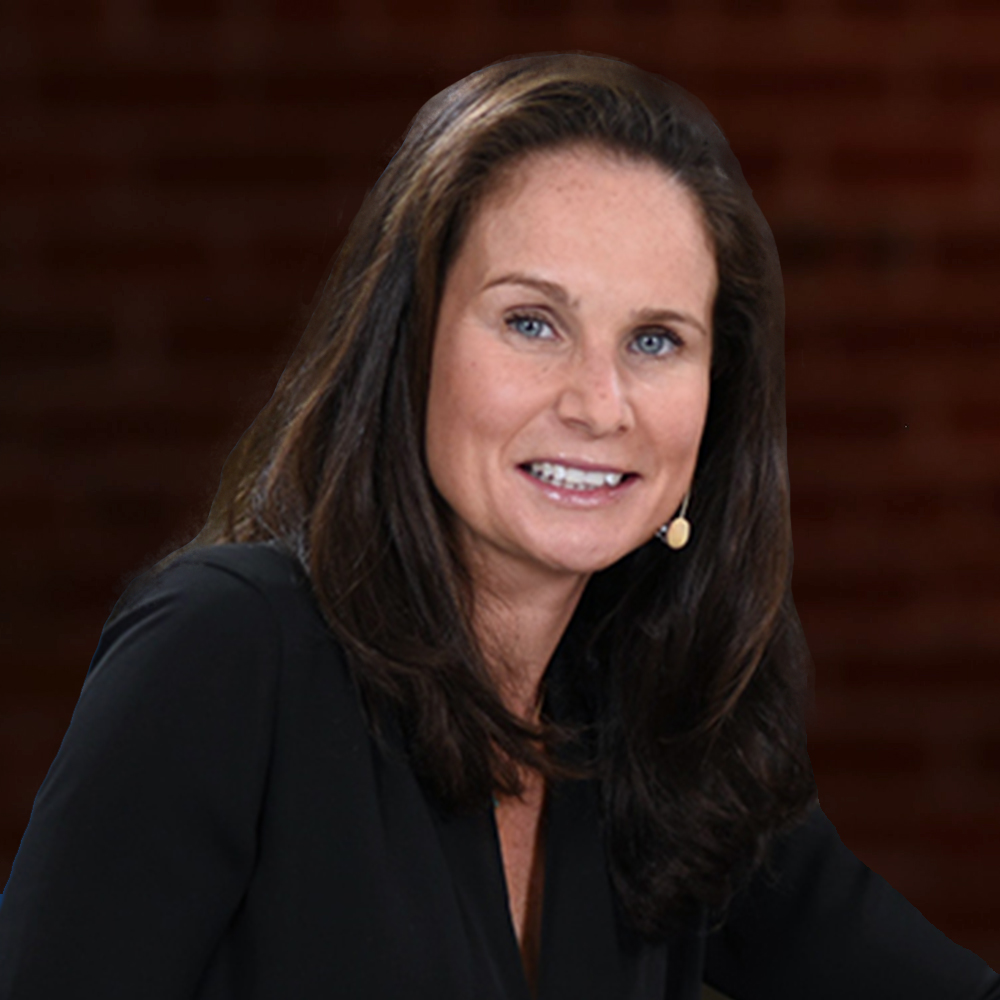 Rebecca Knight