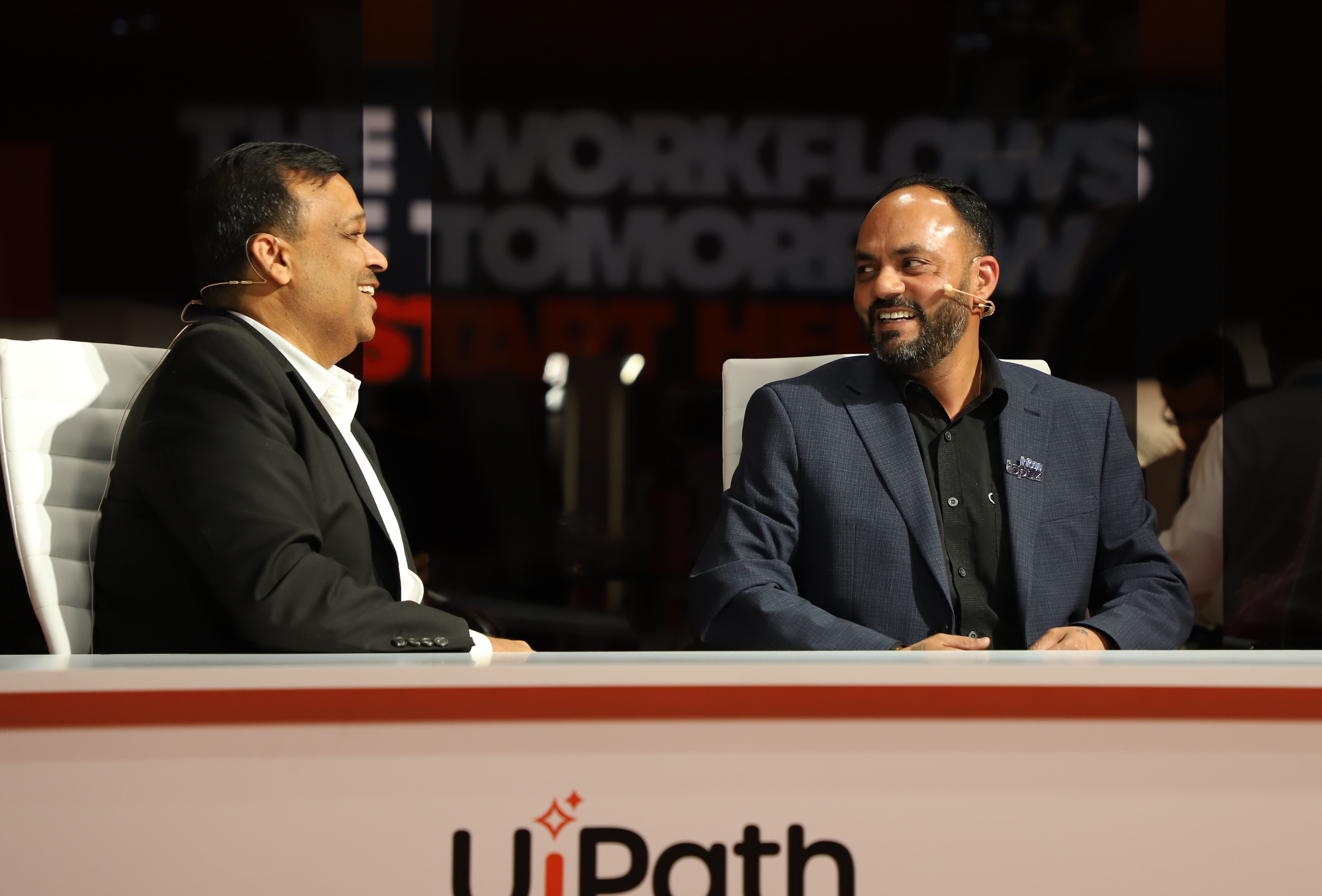
In this UiPath Fusion 2025 segment, Infosys Topaz leaders Vivek Sinha, global head of AI & automation, and Nishant Khare, AVP and head of Americas, join theCUBE’s Dave Vellante and Rebecca Knight to unpack how enterprises are shifting from traditional RPA to agentic automation. They outline Infosys Topaz’s “future-fit organization” approach and a foundry–factory model that tests emerging capabilities before scaling proven solutions. The conversation highlights orchestration with UiPath Maestro and broader ecosystems (e.g., Azure AI Foundry), the move toward “AI shoring,” and a vision for an “internet of agents.” Noteworthy metrics include Infosys’ internal adoption – 35,000 developers using GitHub Copilot daily with ~25 million lines of code generated – and the rapid expansion from dozens to hundreds of agents per quarter as real-world use cases accelerate.
The interview also explores practical outcomes: internal “customer zero” deployments, ‘agentifying’ end-to-end processes (hire-to-retire, order-to-cash), and a sales-helper agent that drafts RFP responses in about an hour instead of one to two weeks. Sinha and Khare address the pilot-to-production gap (citing studies that most POCs stall), the imperative to continuously reimagine business workflows, and the human dimension – reskilling for creativity, empathy and relationship-building even as agentic systems scale. Listeners gain a grounded view of how orchestration, governance and adaptive operating models are turning agentic AI from experimentation into enterprise impact.
Forgot Password
Almost there!
We just sent you a verification email. Please verify your account to gain access to
UiPath Fusion 2025. If you don’t think you received an email check your
spam folder.
In order to sign in, enter the email address you used to registered for the event. Once completed, you will receive an email with a verification link. Open this link to automatically sign into the site.
Register For UiPath Fusion 2025
Please fill out the information below. You will recieve an email with a verification link confirming your registration. Click the link to automatically sign into the site.
You’re almost there!
We just sent you a verification email. Please click the verification button in the email. Once your email address is verified, you will have full access to all event content for UiPath Fusion 2025.
I want my badge and interests to be visible to all attendees.
Checking this box will display your presense on the attendees list, view your profile and allow other attendees to contact you via 1-1 chat. Read the Privacy Policy. At any time, you can choose to disable this preference.
Select your Interests!
add
Upload your photo
Uploading..
OR
Connect via Twitter
Connect via Linkedin
EDIT PASSWORD
Share
Forgot Password
Almost there!
We just sent you a verification email. Please verify your account to gain access to
UiPath Fusion 2025. If you don’t think you received an email check your
spam folder.
In order to sign in, enter the email address you used to registered for the event. Once completed, you will receive an email with a verification link. Open this link to automatically sign into the site.
Sign in to gain access to UiPath Fusion 2025
Please sign in with LinkedIn to continue to UiPath Fusion 2025. Signing in with LinkedIn ensures a professional environment.
Are you sure you want to remove access rights for this user?
Details
Manage Access
email address
Community Invitation
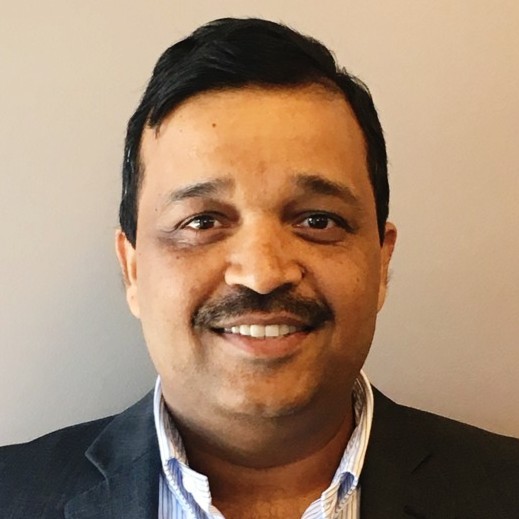
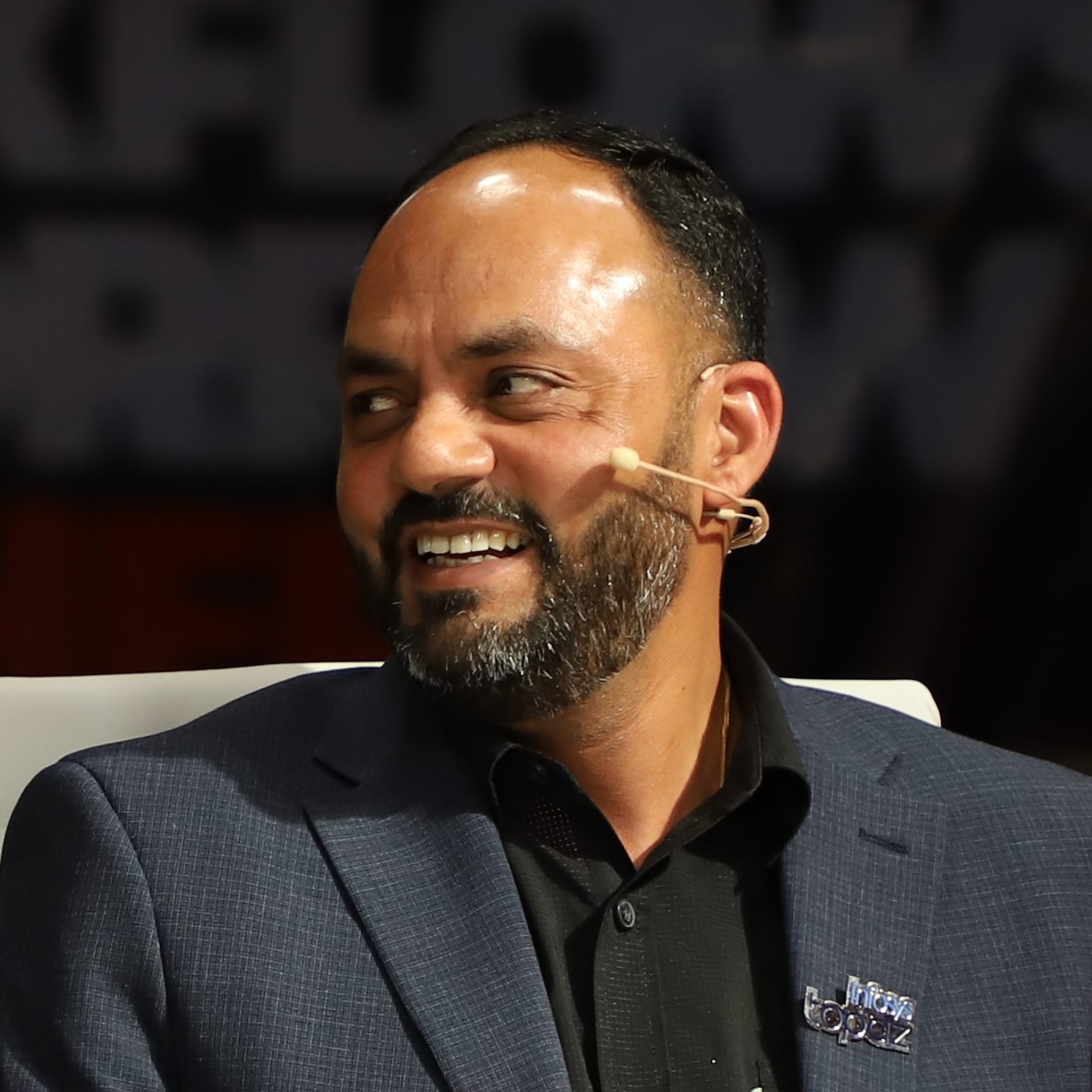
Vivek Sinha & Nishant Khare, Infosys
In this UiPath Fusion 2025 segment, Infosys Topaz leaders Vivek Sinha, global head of AI & automation, and Nishant Khare, AVP and head of Americas, join theCUBE’s Dave Vellante and Rebecca Knight to unpack how enterprises are shifting from traditional RPA to agentic automation. They outline Infosys Topaz’s “future-fit organization” approach and a foundry–factory model that tests emerging capabilities before scaling proven solutions. The conversation highlights orchestration with UiPath Maestro and broader ecosystems (e.g., Azure AI Foundry), the move toward “AI shoring,” and a vision for an “internet of agents.” Noteworthy metrics include Infosys’ internal adoption – 35,000 developers using GitHub Copilot daily with ~25 million lines of code generated – and the rapid expansion from dozens to hundreds of agents per quarter as real-world use cases accelerate.
The interview also explores practical outcomes: internal “customer zero” deployments, ‘agentifying’ end-to-end processes (hire-to-retire, order-to-cash), and a sales-helper agent that drafts RFP responses in about an hour instead of one to two weeks. Sinha and Khare address the pilot-to-production gap (citing studies that most POCs stall), the imperative to continuously reimagine business workflows, and the human dimension – reskilling for creativity, empathy and relationship-building even as agentic systems scale. Listeners gain a grounded view of how orchestration, governance and adaptive operating models are turning agentic AI from experimentation into enterprise impact.
play_circle_outlineSurging AI Implementation: Infosys Topaz Drives Transformation Across Industries with Innovative Use Cases in Manufacturing and Banking
replyShare Clip
play_circle_outlineImportance of adapting to unpredictable pace of AI advancements to remain a future-fit organization.
replyShare Clip
play_circle_outlineTransforming AI Progress: The Foundry Factory Model for Scaling Successful Proof-of-Concept Projects Beyond the Pilot Stage
replyShare Clip
play_circle_outlinePromotion of an AI-first approach within company functions to improve efficiency and productivity.
In this UiPath Fusion 2025 segment, Infosys Topaz leaders Vivek Sinha, global head of AI & automation, and Nishant Khare, AVP and head of Americas, join theCUBE’s Dave Vellante and Rebecca Knight to unpack how enterprises are shifting from traditional RPA to agentic automation. They outline Infosys Topaz’s “future-fit organization” approach and a foundry–factory model that tests emerging capabilities before scaling proven solutions. The conversation highlights orchestration with UiPath Maestro and broader ecosystems (e.g., Azure AI Foundry), the move toward “...Read more
exploreKeep Exploring
What insights can be gained regarding the impact of AI on business growth and the realizations about demand and capacity?add
What are the challenges of predicting the future demand and trends in AI technology?add
What strategies can organizations implement to ensure successful outcomes from agentic AI initiatives?add
What was the journey started by the organization and what were its main objectives?add
>> Good afternoon everyone. Welcome back to theCUBE's Live coverage of UiPath Fusion 2025 here at the Wynn. My name's Rebecca Knight, I'm your host alongside Dave Vellante, my co-host and analyst. I would like to welcome two guests to this stage. We have Nishant Khare, AVP, Head of Americas at Infosys Topaz.
Dave Vellante
>> Hi, Rebecca.
Dave Vellante
>> Welcome. And I'd like to welcome back the Vivek Sinha, Global Head of Sales AI and Automation at Infosys Topaz.
Vivek Sinha
>> Thank you. Good to see you, Rebecca.
Dave Vellante
>> Yes. It's great to have you back. So why don't you set the stage for our viewers and tell them a little bit about your roles at Infosys Topaz. Why don't you start us out, Nishant?
Vivek Sinha
>> Infosys Topaz is our AI practice, and I had the Americas for the practice on the sales side, and Topaz is all things AI. So anything and everything that we do in AI is part of Topaz, so that is what it is.
Rebecca Knight
>> Okay. And Vivek?
Vivek Sinha
>> So look, I don't know how much of your audience knows about Infosys, but we are 350,000 odd size people approximately globally. I globally head AI and automation for all verticals. And so the kind of sentiment and the kind of use cases we are solving for our customer is amazing. What Topaz is, the accumulation of all of those learnings from those use cases across manufacturing, banking, and other industries as such. So it is the sum of all of our learnings from building out infrastructure, building out use cases, building out talent to deploy for agentic AI work, and so on and so forth. So very happy to be here and talk to you both Dave and Rebecca.
Dave Vellante
>> Yeah, it's good to have you guys back. So Vivek, last year you brought Conagra on and we were looking at some of the use cases, and last year you talked about, it was early days of agentic, you said, "Well, you got to build a framework and then you got to identify the use cases, prioritize those use cases, and then figure out the business case. Then bring AI and the capabilities in." Okay, so now we're a year on. You've implemented many of these use cases. I know... Well, why don't you tell me, what have you learned in the last year? How far have we come?
Vivek Sinha
>> Oh, here is the first learning that I can share with you. We grossly underestimated ourselves. We thought we would be at certain place when we were talking about Conagra with Robert there, but what we realized is the pace of change that AI is is huge. We thought we would be able to deliver 5, 10, 15 use cases around agentic and retrieval augmented generation. But look, now we are building hundreds of agents in quarters that we do for our customers. And so that sudden explosion of AI is real for us. From Infosys point of view, we are really, really, really seeing an uptake. So anything that we predict is at the risk of, again, falling out next year, which is scary as well as good for us from business point of view.
Dave Vellante
>> Well, it's consistent with what Jensen says. He says, "I way underestimated the demand for AI and it's just exploding." Any thoughts-
Vivek Sinha
>> No, I think like Vivek said, you are not able to right now predict the pace as well. Today you think that, okay, agentic is the hero, tomorrow something else can come in. So we in fact have a theme internally, we call it as a future fit organization, wherein we recommend the organizations to always be in an adaptive mode Wherein they'll have to evolve, adapt with whatever is coming their way, and in fact be more proactive.
Rebecca Knight
>> So... No, go ahead.
Vivek Sinha
>> I will just add something. What Nishant is saying is extremely important. Some of this unpredictability in the speed and implementation and successes around that has led us to believe that instead of saying, hey, here is a prescriptive way of creating a center of excellence and delivering value to your business and customers is going for a toss. And what we are now saying is, just make yourself fit so that you can run the distance. And what are the key attributes to becoming this future fit organization? Make sure you go to your gym, make sure you have your good dietary supplements and so on and so forth. It's exactly the same. What we are now preaching or proposing to our customers is get yourself organized, structured in such a way that you become a future fit organization. You make changes in the short term, but with the longer term horizon in mind that can come at you at a very, very fast pace.
Dave Vellante
>> So so many of these projects though, stay stuck in pilot stages and it sounds futuristic, it sounds wonderful, you're painting a picture, but so what is the path to getting real outcomes from agentic AI?
Vivek Sinha
>> What we believe is as part of the future fit organization, what we also recommend of our customers is have a foundry factory method, wherein the foundry is looking at all the new things that are coming in, testing them out, testing those solutions and proving those solutions. And the factory is using only the proven solutions and is starting to take that at a scale for the company. So that way you know what is coming your way, what is proven, and then when you do the pilots using those proven solution, then actually it can make it to the production.
Vivek Sinha
>> And you are right, I think MIT or somebody came up with a study saying 95% of the POCs are not going and progressing further. In my view, if you open the hood and look at those results, the sample size was also very, very small in a way. But like Nishant is mentioning, we go and advise CEOs or the board to please be prepared to throw away some of those things that you are doing, because what we are thinking is a great idea to do today that is giving you 10, 20, 30% ROI is suddenly there'll be a new one which will give you 40, 50%. Just getting stuck to an idea instead of re-imagining yourself quickly is going to be the key.
Dave Vellante
>> And that's what it really requires. It's not just, oh, here's a little problem we're trying to solve. It's as you say, it's fundamentally re-imagining how we do business.
Dave Vellante
>> Let's talk about what you guys are doing internally with some of the use cases. I call it the dog fooding.
Rebecca Knight
>> Champagne is nicer.
Dave Vellante
>> Vendors call it drinking their own champagne. Champagne will ferment in the bottle. You ever try it before it's time, it's not that good.
Rebecca Knight
>> I prefer champagne to dog food, but okay.
Dave Vellante
>> But anyway. So maybe we'll call it barrel tasting. But anyway, what are you doing internally? What was your journey like? Last year, you were probably thinking about the frameworks, prioritizing, pairing down, classifying, making business cases. What have you brought into production?
Vivek Sinha
>> There is an interesting term that we have coined. We wanted to be customer zero for ourselves. So we get away from the dogs and the cats.
Dave Vellante
>> Yeah, customer zero. We like that.
Vivek Sinha
>> So look, what we have done, both Nishant and myself, there are two mandates that we have from organization point of view. One is to look at Infosys internally and see how can AI help us become better? How do we ourselves become AI first companies to begin with and how do we take the same paradigm or the customer zero learnings to our future customers and so on and so forth. So that is the path that we have have taken for ourselves in progressing that forward. Nishant, you can add.
Dave Vellante
>> We started on this journey close to three years back. Our chairman, Mr. Nandan Nilekani gave us this charter that enforces we need to practice before we preach. So we wanted to do this to ourselves, learn from that and then get to go to customers with that learning enforces. As Vivek said earlier, we are a large organization ourselves. So whatever we are able to showcase internally, that is of great value to our customers as well because it is implemented at a scale already. We started with this journey. We looked at all the business functions, be it marketing, sales, our education function. All of that we are trying to reimagine again to see how we could do it in an AI first manner. We have created several tools and accelerators internally as well as we are utilizing some of the market products like UiPath and Microsoft Office 365 Copilot and others. But at the end, what we are looking for is to improve that productivity for the human potential. So that's what we are looking at.
Dave Vellante
>> So obviously software development, coding is a big use case. It's been very successful. What are you doing there and can you speak to the full life cycle beyond just helping developers write code?>> See, in fact, on our team we say that everyone should code. Vivek and I being in sales role, still we code because that's how you learn. Because now things are changing so fast. When we go to customers and talk to them about things, unless we have the first-hand experience, we are not able to speak to the detail. And obviously now some of these tools, the agents that are coming in, SDLC, they are now helping people do more. In fact, Andrew Ung, somebody asked him that now that agents are doing all the coding, should we stop learning? He said it is in fact opposite to it. When things become easier, more people should start to do it. So that's what we are trying to do. But to come to your question, the SDLC has great potential. In fact, when we started out, we started out with smaller things like code completion using chat-based systems. But now with these agents like GitHub, Copilot agent, Cloud code or Cursor, these have made lot of things possible. In fact, just to give you a trivia here, Infosys is one of the largest consumer of GitHub Copilot. In fact, over 35,000 developers use it on daily basis. We have in fact created close to 25 million lines of code within using GitHub Copilot agents. So it is real and people are using it. The productivity boost is real, but there are some downsiders as well. But we use some of the techniques like a spec-based coding, that way we are still have control.
Dave Vellante
>> Okay, so we saw earlier this year, UiPath announced Platform, Maestro. We're hearing really a coming out party here of the platform. Some partnerships, so a lot of talk about orchestration. So let's talk about how you're applying all that new innovation internally. We go way beyond RPA and what we used to know as enterprise automation. Now we're upping the level big time. What are you guys... What's real? What still needs work? Where are you getting business results?
Vivek Sinha
>> Yeah, so you are absolutely spot on. Their orchestration is the key. Look from Infosys point of view, we are a system integration company. We look at the end-to-end processes that the customer have, the hire-to-retire processes, the order-to-catch process and so on. What we have done is what we call blueprints that we have developed and we look at each of these processes for the customer, break that down into sub-processes and activities, and then we look at each of those activities and see can we, in one way or fashion, agentify them? And when you have each of those agents built to do a very specialized function orchestration platforms like Maestro from UiPath or Azure AI Foundry, the agentic service on Microsoft, help us string them together in the end-to-end process. Because if you look at the people that are performing these processes, they do all of this in their life. In order to make them efficient, you cannot just do a sliver of it and say, "Hey, you should be efficient now." So our approach has been very, very holistic. We are looking at end-to-end processes and then looking at activities and seeing if agents can really help. And I must commend UiPath here. I think some of their platforms and tools have been amazing along with other system ecosystem providers and we see a lot of uptick of that.
Dave Vellante
>> See, the world is going to be the agentic world going forward. Everything is going to be agent-driven. Consider that today a lot of providers expose their APIs and then they're consumed by the subscribers or consumers consider a travel website exposes a API that is consumed by another one and then that's how they're able to show all these hotels or cars or airlines or whatnot. But we believe that in very, very near future, maybe in a year or two, instead of APIs, people will start to expose agents and now agents, there are several technologies that you could use to build, including Maestro. You can build using LangGraph, LangChain, CrewAI, there's several of them. But now there are protocols available when Google released recently this year A2A protocol which helps these agents talk to each other regardless of which technology they're working in. And that is where that orchestration comes into play because now that you are not restricted by the technology. Regardless of which technology that agent was written in, you're able to talk to each other.
Dave Vellante
>> So Nishant, you've said, and you're really talking up that there's a huge productivity boost for the individual employee. And yet on the other hand there's a lot of fear and anxiety that we know that AI replaces jobs and it will and it already is starting to, particularly entry-level jobs. That's why we're having such a crisis among recent college graduates. Can you describe some of the ways in which you've seen agentic AI have that productivity boost and also empower that individual to do more creative, innovative, meaningful work too?>> Yeah, so I'll give you an example of our sales team itself. So we, as a company, our 40-year-old company, more than 40 years now, and we respond to thousands of RFPs and each RFP is several page document, which we'll have to first go through and then prepare the response. We did have, do have rather, the repository of these 40 years of RFP responses that we have done, but it was not best used because going through that, searching through it is very difficult.
Rebecca Knight
>> It's a pain.>> So now one of the agentic ways that we have done is we have created a sales helper agent, which our sales team can use. They can upload the document, whatever we have received from customer, the agent will go through all the documents that are available, prepare the response relevant to that particular RFP and create that draft ready for the sales team to review. So it has given great productivity boost, what used to take a week or two weeks just to get the first draft ready, now that first draft is ready in one hour. So great productivity boost and they can now focus their attention to really what matters rather than going through the boilerplate things. Suppose there is a question about what is Infosys doing in XYZ area? That is readily available response that agent can get. But if there is a very specific question that customer has asked about the solutioning, what they're looking for, that is where sales team and solution team can now focus.
Dave Vellante
>> So Rebecca-
Vivek Sinha
>> Can I?
Dave Vellante
>> Oh, please, please Vivek.
Vivek Sinha
>> I'll add and back to your question, I think as a society, we haven't done great job in taking people along whenever there has been a revolutionary technology like this. Steam engines came and handloom industry suffered when new age machines came in. I think it is our collective responsibility that we take along people in terms of making sure that they are upgraded in their skills. There'll be new native jobs that will be born. How do we make sure the college graduates that are coming are at a place and a time where we can utilize them in building some of these AI solution. We believe software itself will at least go 10x times it is developed today and we will need all of that talent. This is not a net sum negative game. I would think this is a net sum positive game for talent.
Dave Vellante
>> So you guys have a point of view on this. Rebecca, you just called it, I think you said a crisis.
Dave Vellante
>> A crisis, yes. An unemployment crisis among recent college graduates. The data bear that out, Dave.
Dave Vellante
>> When I graduated from college, the unemployment rate was 10.2%. Today it's 4% and I couldn't drive an Uber. I guess my point is-
Rebecca Knight
>> But for entry level white collar knowledge work jobs. It's taking those away.
Dave Vellante
>> Okay, but they have so many other opportunities with-
Rebecca Knight
>> They can drive an Uber.
Dave Vellante
>> They can drive an Uber or they can-
Rebecca Knight
>> Make some money, but-
Dave Vellante
>> They can do social media which didn't exist in previous generations.
Dave Vellante
>> And that is helping there as well.
Dave Vellante
>> So are you telling these people to go be an influencer and that could be their career?
Dave Vellante
>> I'm just saying there are more outlets today than there were in 1982 when you had to go to the library to actually do research. I can just search online now today. It's not a crisis, I would say, but maybe, maybe. The data bears it out, whatever. But do you guys have a point of view on this. Not to debate Rebecca. We're always getting into it. My question relates to companies that want to do a labor arbitrage and you're seeing some of that, they'll come to you and say, "Hey, can you help me here?" What's the state of that? How does AI fit in that? Is that on the uptick? Is it on the down swing because they can use AI to do that labor arbitrage? What are you seeing there?
Dave Vellante
>> What we believe is definitely there are some jobs which are impacted, which are like monotonous laborers job. Now those people can do better things. That is what we believe. AI can enable them to do better things rather than thinking that it is going to eliminate. And to go back to the Vivek's point, it is individual's responsibility to basically learn about these things. Now, you talked about the content creators. The content creators job has become significantly easier now with these technologies. A lot of these content creators don't even need to appear on a screen. They can create their AI avatars, their entire script, video, the audio, all of that is generated by Ai and instead of doing just one video a week, now they can do 10 videos a week. So I think-
Vivek Sinha
>> There is an interesting perspective down there. Look, we have always utilized labor arbitrage to improve productivity. We used to do farm shoring where we would bring farmers from Mexico to work in the fields and then they would go back. We did outsourcing or offshoring, which is move technology work to outsourcing. What we think now is the time for what we call AI shoring, which is it doesn't matter where the agents are. If they can do the job that you're looking for, then great.
Dave Vellante
>> But there's the big question. I mean, every new wave has created more jobs, but this is the first time in history where we're really attacking cognitive functions.
Vivek Sinha
>> Oh, absolutely.
Dave Vellante
>> So that's what has Rebecca really scared.
Dave Vellante
>> I'm more scared for my kids than I... I'm okay. I think I'll be okay.
Dave Vellante
>> They'll run circles around you with AI. They'll be just fine.
Rebecca Knight
>> Okay. All right.
Dave Vellante
>> I hope.
Dave Vellante
>> I hope so too.
Dave Vellante
>> At least I believe that. But it's scary because we don't know what's on the other side. We don't know what we don't know, I guess.
Vivek Sinha
>> Guess. But the key human skills like empathy and understanding, I don't think any of these have actually to do with intelligence explosion that we see a lot with models.
Dave Vellante
>> So these models can do a lot better in the intelligence side, but not on the creativity, empathy. There are still people who are going to be needed to do that.
Dave Vellante
>> To do the relationship building. The trust building, I think too.>> Yeah.
Dave Vellante
>> I hope so. And I think so. I believe that's going to be the case. And again, I asked this question earlier, at least thus far, AI hasn't reduced our workload. It's actually exploded our workload because we now have so many new ideas. Now maybe the AI gets so good that it'll do all that stuff for us, but I'm hopeful that we'll come up with new ways and maybe AI will help us come up with new ways that humans can do things that the AI can't. I mean, empathy is one-
Rebecca Knight
>> There will be new problems that we'll discover for us to solve now. Right now maybe we are not even thinking about those problems. They're not problems yet for us. But these all new technologies will uncover new problems for us to solve as well.
Dave Vellante
>> Sorry, Rebecca. Jensen came out, I think it was this week, said, "Electricians and plumbers, they got a great future."
Dave Vellante
>> It's really true. It's true. So you were here last year and you're back with us at Fusion, and who knows what it'll be called then in 2026. Best case scenario, what will you be talking about in terms of how agentic has transformed Infosys?
Vivek Sinha
>> From next year?
Rebecca Knight
>> Yeah, for next year. What's on your list for the next 12 months?
Vivek Sinha
>> Only I had the crystal ball, I would invest in Jensen or anybody else that talks about it. But look, what we talk about today are agents that can do single tasks, maybe stringing together a multi-task. What we think is the era that is unfolding in front of is what we call internet of agents. So what we mean by that is at some point of time, my personal assistant will actually place an e-commerce order for me. And the party that is serving will also be an agent on the Amazon website that will figure out and sell with specifications and so on so forth. Where I think is some of these concepts of internet of agent or multi-agentic orchestration are going to become really, really prime. And therefore, there are infinite possibilities that exist and we need all of the intelligence and might of all of us to go deliver those benefits.
Rebecca Knight
>> Yeah, and I also think that the organizations have started to now scale. We are seeing for some of our customers now they're scaling. They're also investing in some of these agentic AI platforms because they now realize the value that agentic can bring to the table. So next year we should hope to see more and more customers investing in this technology and making best use of this technology for their businesses as well as their employees.
Dave Vellante
>> Excellent. Nishant and Vivek, thank you so much for coming on theCUBE.>> Yep, thanks.
Vivek Sinha
>> Good to see you again, Rebecca and Dan.
Dave Vellante
>> Thanks you guys.
Vivek Sinha
>> It's always our pleasure to talk to you guys. It's fantastic.
Dave Vellante
>> Stay tuned more of theCUBE's live coverage of UiPath Fusion. I'm Rebecca Knight for Dave Vellante. You're watching theCUBE, the leader in enterprise tech news and analysis.














 Dave Vellante
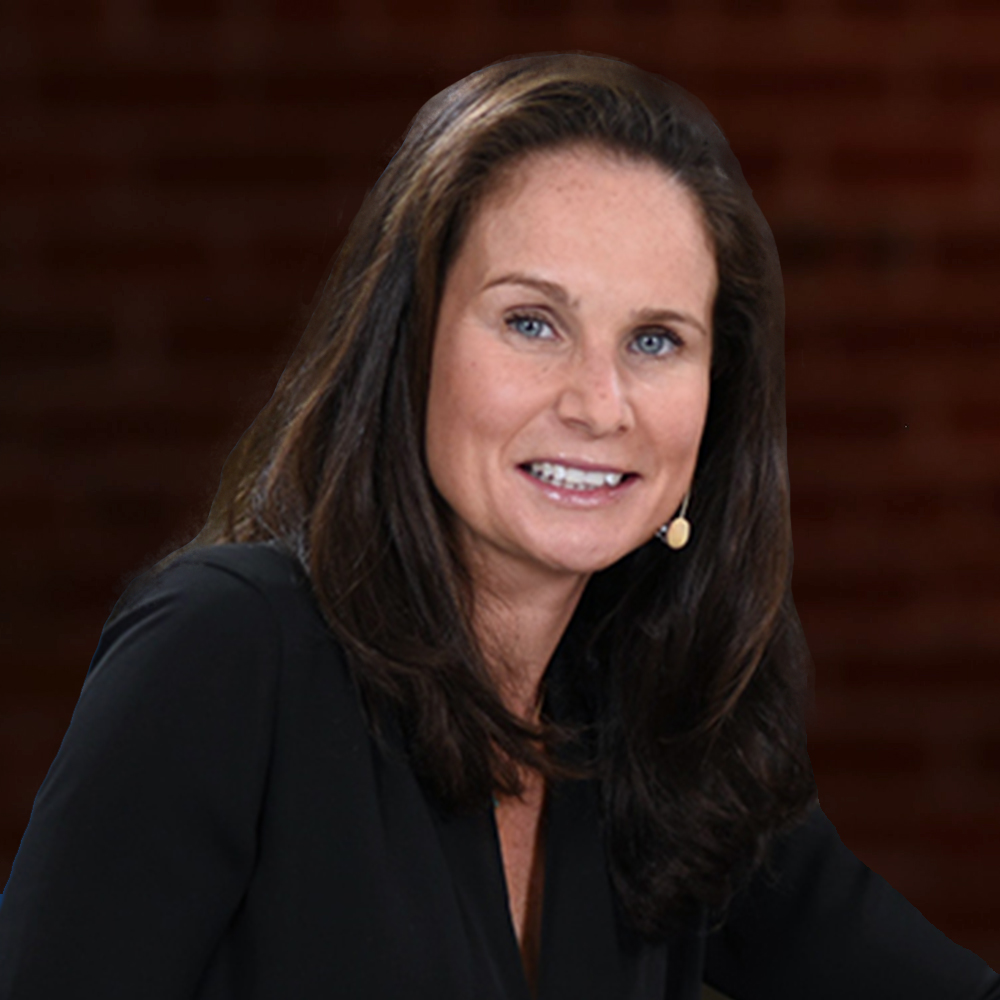 Rebecca Knight